The Rise of “African Jade”: The Glamorous Double of Jadeite
When Gems Become the Royal Court
If the jewelry world were an imperial harem, every gemstone would be a unique beauty — some elegant, some fiery, all competing for the emperor’s favor.
The queens and noble consorts — the world’s five major gemstones: diamond, ruby, sapphire, emerald, and alexandrite — have ruled the throne for centuries. Their royal status is unshakable.
Then come the rest of the consorts— pearl, Hetian jade, and jadeite — born of long heritage and still adored by generations.
Beyond them, the palace overflows with thousands of dazzling beauties: spinel, tourmaline, peridot, aquamarine, opal — each with its own charm and following.
But every once in a while, a new favorite rises — a mysterious beauty who sweeps through the court with unmatched allure. Some become legendary; others burn bright and fade fast.
And today’s story is about one such sensation — the latest star in the gemstone world, Whose sales in China surged by over 200% in late 2024 compared to the first half of the year. It’s a gem with highly volatile prices — bracelets that appear almost identical can range anywhere from around $100 to over $10,000, depending on quality and craftsmanship.
Its name sounds lush and regal, echoing the queen jade herself. Sellers call it the “affordable alternative to jadeite.”
Yes — meet the year’s most talked-about stand-in heroine: African Jade.
African Jade vs Jadeite: The Battle of the Green Beauties
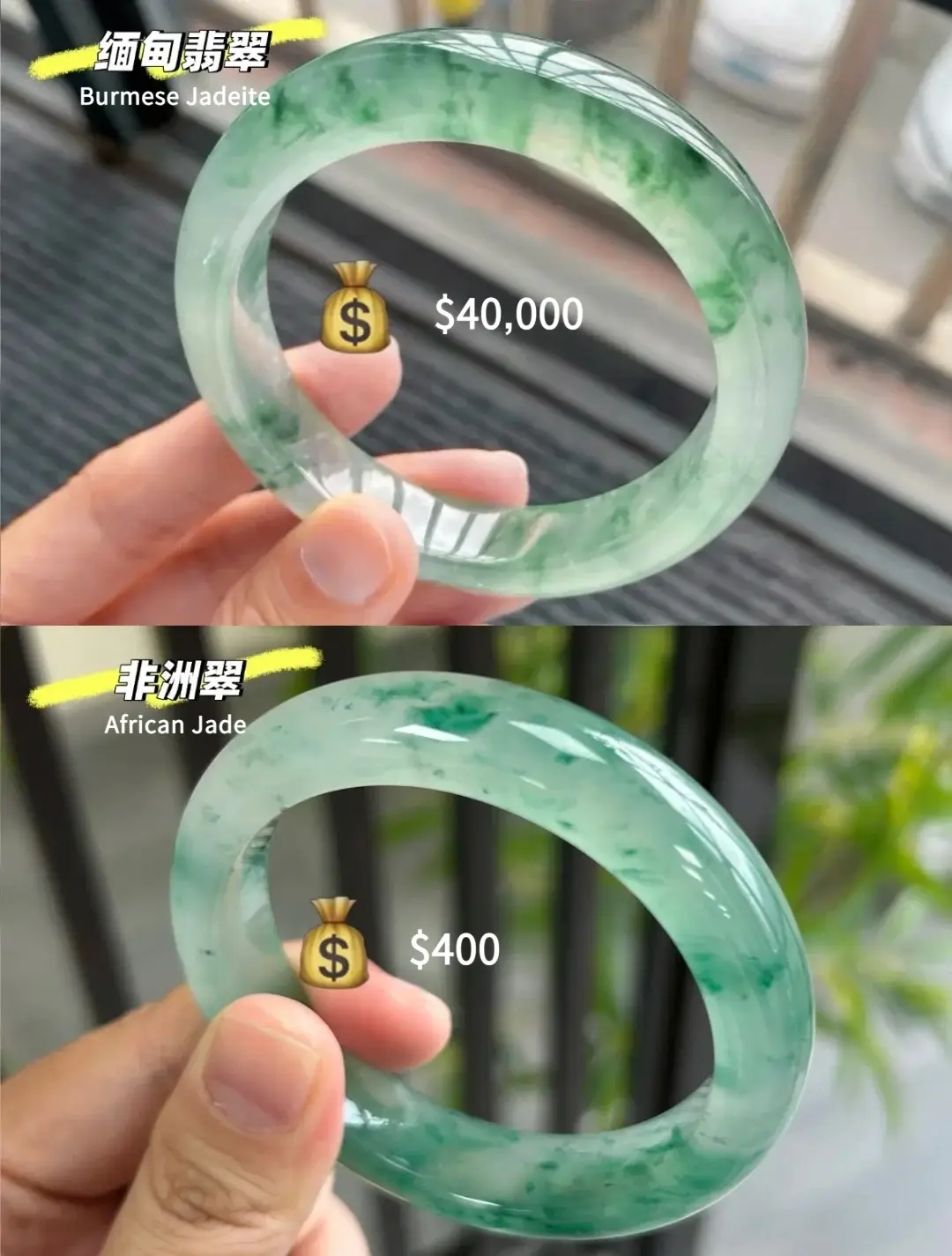
If you ask an unreliable seller, they might say:
“African Jade is also jadeite — the same family, just cheaper.”
If you’re an experienced gem lover, you’ll know better. You’ll notice that African Jade and China’s Dulong Jade look almost identical — twin sisters separated by geography.
So, let’s settle it once and for all:
1. African Jade and jadeite are not the same thing.
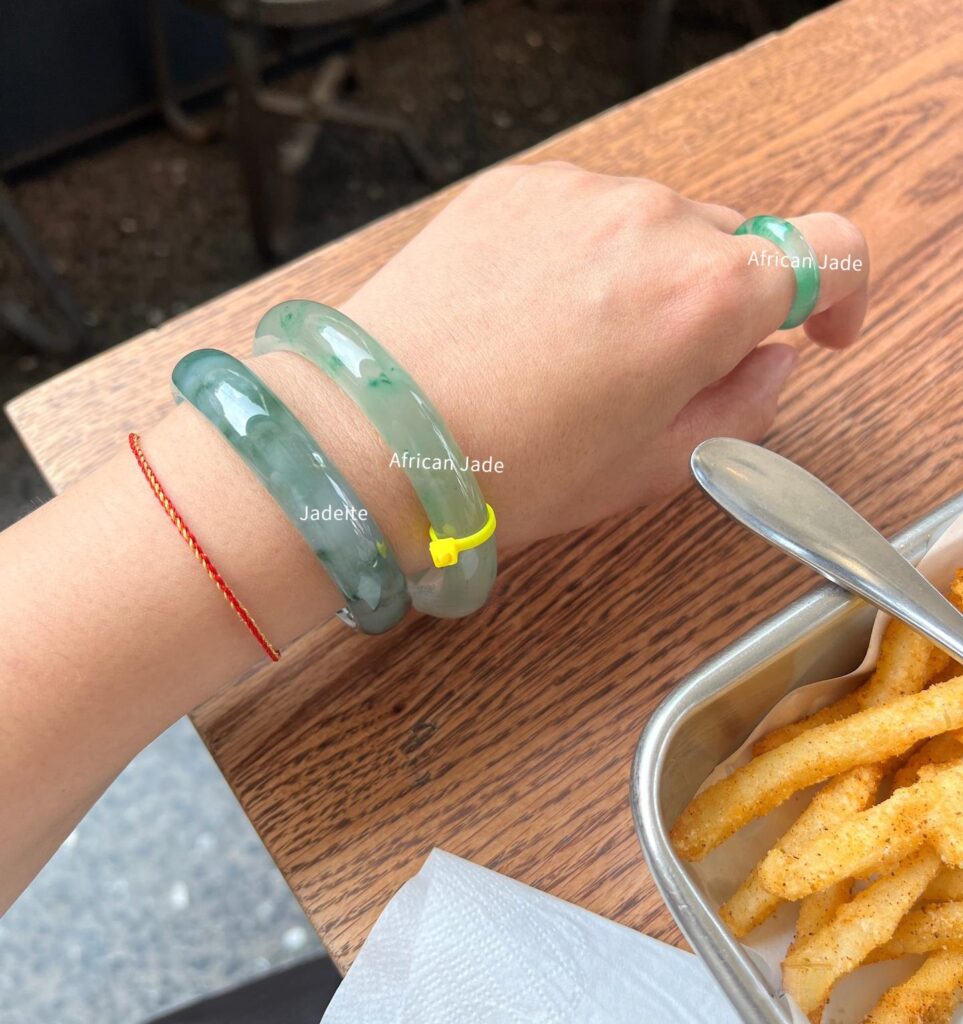
Jadeite is a pyroxene mineral (hard jade), while African Jade is a quartzite jade — completely different in mineral composition.
Their relationship is like that of your neighbor’s child vs the kid next door — they might both wear green, but they’re not family.
(If anyone insists African Jade is real jadeite, do yourself a favor and block them immediately.)
For a deeper dive into understanding jade and navigating the market, check out our Peonyjewels blog article: Jadeite Buying Guide: How to Understand Jade Trade Terms Before You Buy. It’s a helpful resource for both new buyers and seasoned collectors.
2. African Jade and Dulong Jade are essentially the same material.
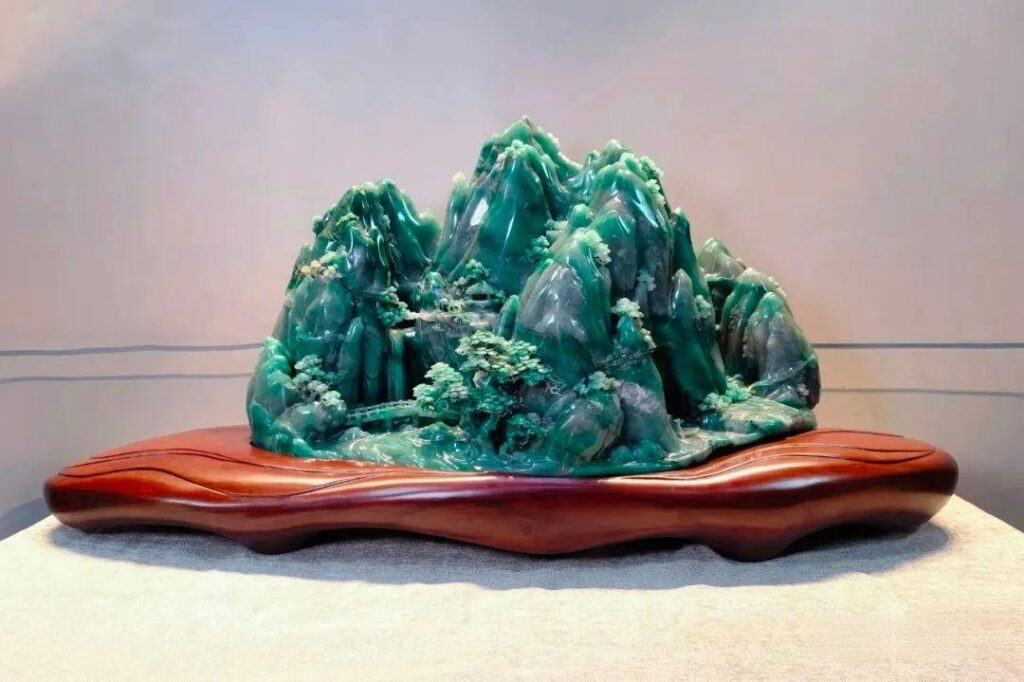
They share nearly identical mineral composition, refractive index, hardness, and density, with only slight differences in inclusions and coloring elements — similar to how Colombian and Zambian emeralds differ subtly but belong to the same gem family.
3. African Jade / Dulong Jade at a Glance
- Main chemical composition: Silicon dioxide (SiO₂), with traces of Fe, Al, Mg, Ca, Na, K, Mn, Cr, Ti, etc.
- Primary mineral: α-quartz (low-temperature quartz), sometimes with mica, pyrite, or barite inclusions.
- Mohs hardness: 6–7
- Density: 2.64–2.77 g/cm³
- Luster: Oily to vitreous
- Refractive index: 1.53–1.55
In short — it’s a green quartzite jade, not true jadeite.
From Huanglong Jade to Dulong Jade: A Relay of Capital and Resources
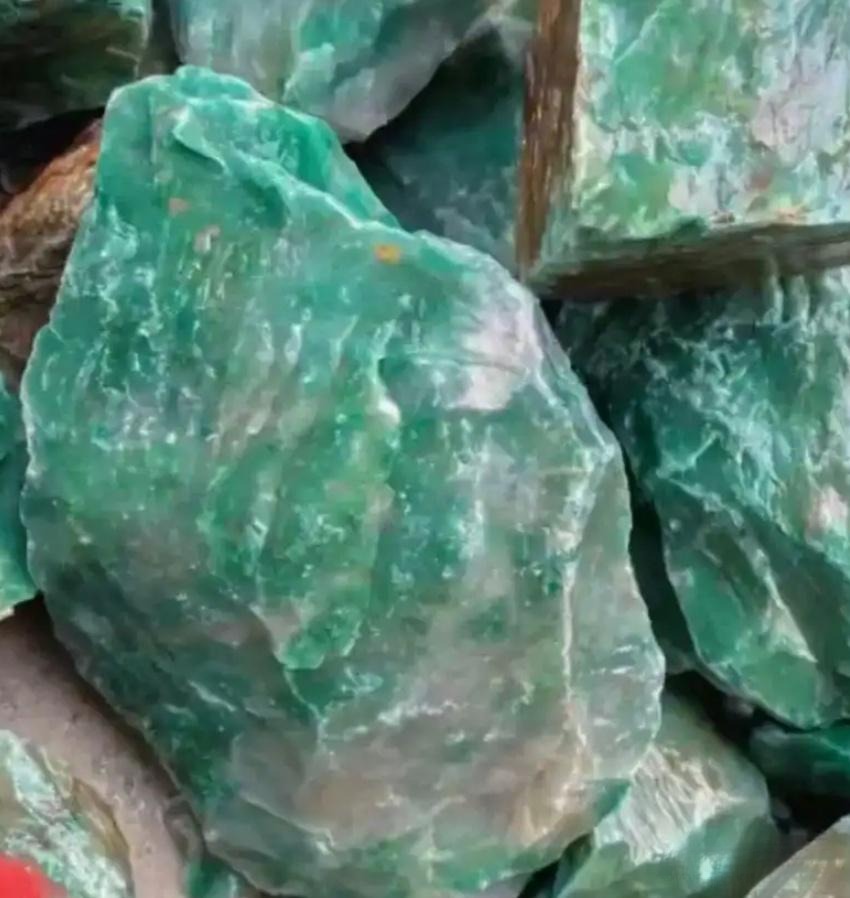
Before the alluring name “African Jade” ever appeared in the market, Dulong Jade was known as a quiet mountain gem, discovered in the remote valleys of Yunnan, China.
It was first found along the Dulong River basin, near the China–Myanmar border, mainly in Gongshan Dulong and Nu Autonomous County—the only autonomous county of the Dulong ethnic group in China.
Around 2010, while jade traders from other regions were buying up Yellow Dragon Jade in Gongshan, they noticed local deposits of green, flower-patterned quartzite. Small-scale mining and testing sales began, but market response was lukewarm.
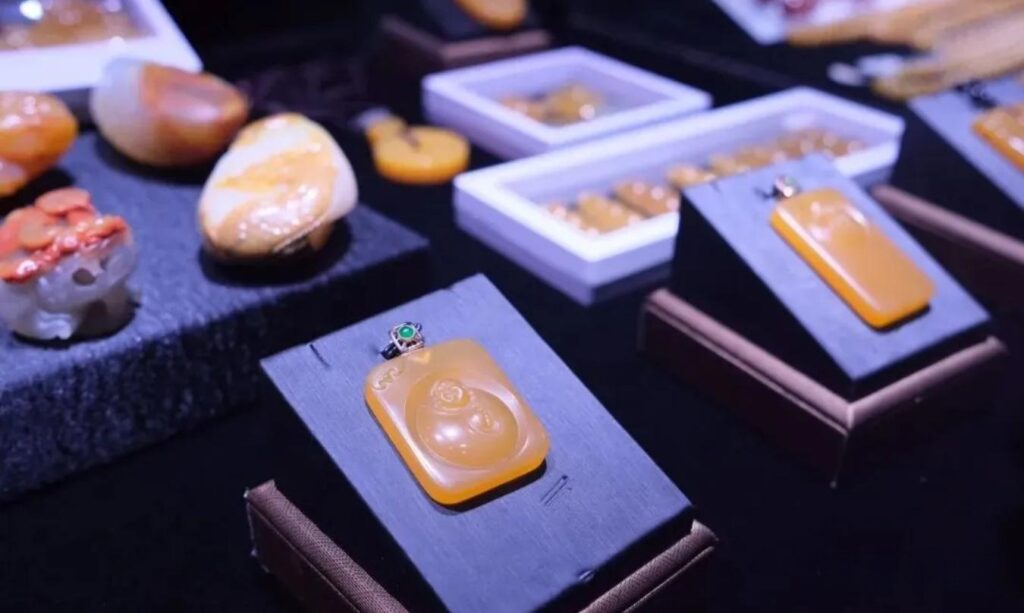
Ironically, that was right when the Yellow Dragon Jade bubble burst. After a meteoric rise of 60,000 times in price between 2000–2009, its crash left investors scrambling for the next hot gem.
Capital doesn’t sleep — and soon, eyes turned to Gongshan’s green quartzite. A marketing story began:
“A rare gem born in the remote valleys of China, shimmering with icy clarity and green grace.”
They gave it a romantic local name — Dulong Jade — linking it to cultural identity and “rare origin” storytelling.
For those interested in learning more about this gem and its rise as a jadeite alternative, check out our Peonyjewels blog article: Dulong Jade: The Rising “Ice-Glutinous Green Jadeite Alternative” from China.
The Turning Point: When Africa Joined the Story
Yunnan’s deposits were limited, and Dulong Jade might have remained a regional curiosity — until 2020.
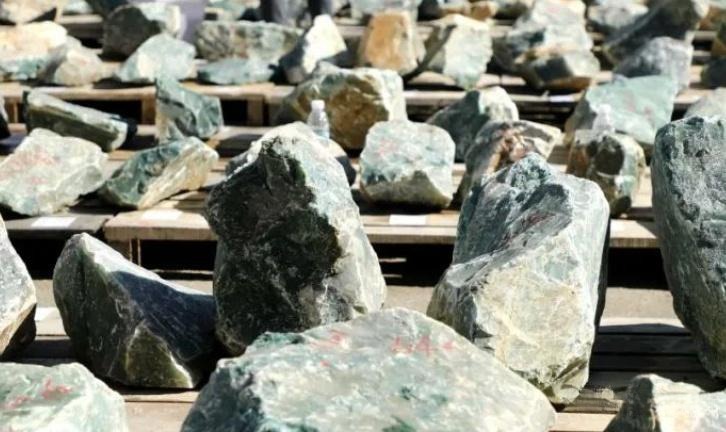
Around that time, gem dealers discovered a strikingly similar green quartzite in Africa, along the Barberton–Makonjwa Mountains on the border between South Africa and Eswatini.
Testing revealed that its composition matched Dulong Jade almost perfectly.
And thus, “African Jade” was born.
Then came a marketing whirlwind:
- 2022: Large-scale mining began.
- May 2024: African Jade entered the Chinese market as “African Dulong Jade.”
- June 2024: Group standards for African Jade were proposed.
- Nov 2024: The first raw material auction was held in Tengchong.
- Dec 2024: The official African Jade standard was published.
- March 2025: African Jade took center stage at the Beijing Jewelry Fair — even earning the main banner placement.
There’s now even a short drama titled “The Legend of Feicui” in production — talk about a full marketing campaign!
The Curse of the Stand-In: Can African Jade Escape Its “Jadeite Shadow”?
The resemblance is undeniable — even the name Feicui literally means “jade-green.”
From branding to aesthetics, African Jade has always lived under jadeite’s glow.
Just like moissanite once became the “diamond alternative,” Quartzite Jade has become the “jadeite alternative.”
Beautiful, yes — but still a substitute.
Every part of its marketing mirrors jadeite:
- “Icy floating patterns”
- “High-transparency texture”
- “Glass-like luster”
Even quality grading uses jadeite standards:
The cleaner the base, the livelier the floating patterns, the better the gloss — in short, the more it looks like jadeite, the higher its value.
And honestly, who can blame people? Beauty, after all, follows universal rules.
For those who want to explore jadeite in its own right and understand what makes natural jadeite authentic, check out our Peonyjewels blog article: How to Identify Natural Jadeite: Color, Texture & Authenticity. It’s a great resource for both new collectors and seasoned buyers.
How to Identify African Jade and Distinguish It from Jadeite
Even a high-quality piece of African Jade can look almost identical to jadeite at first glance.
However, there are clear telltale signs:
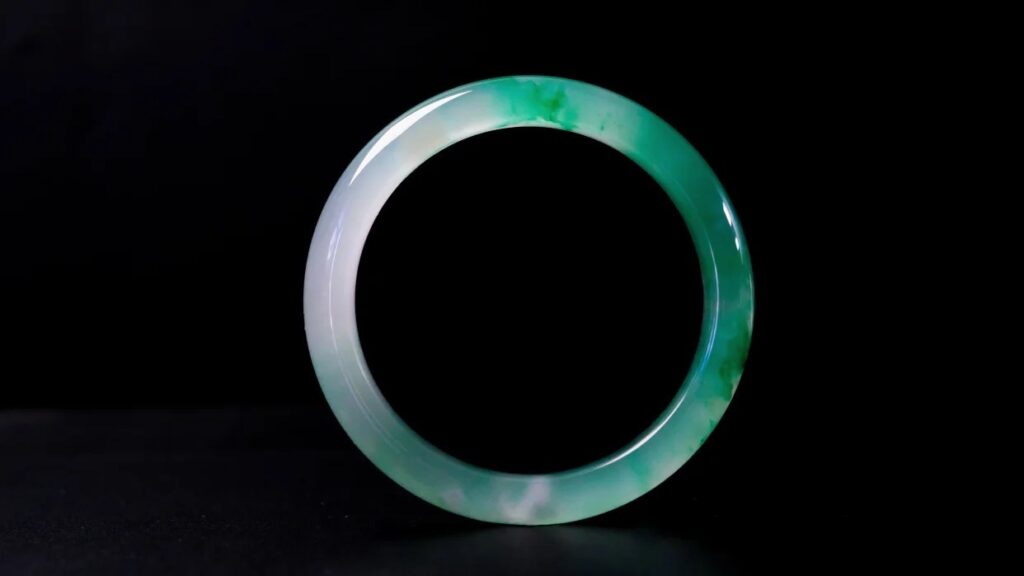
- Luster: Jadeite has a stronger, more vitreous shine; the quartzite stone has a softer luster.
- Weight: This jade-like stone is lighter due to its lower density.
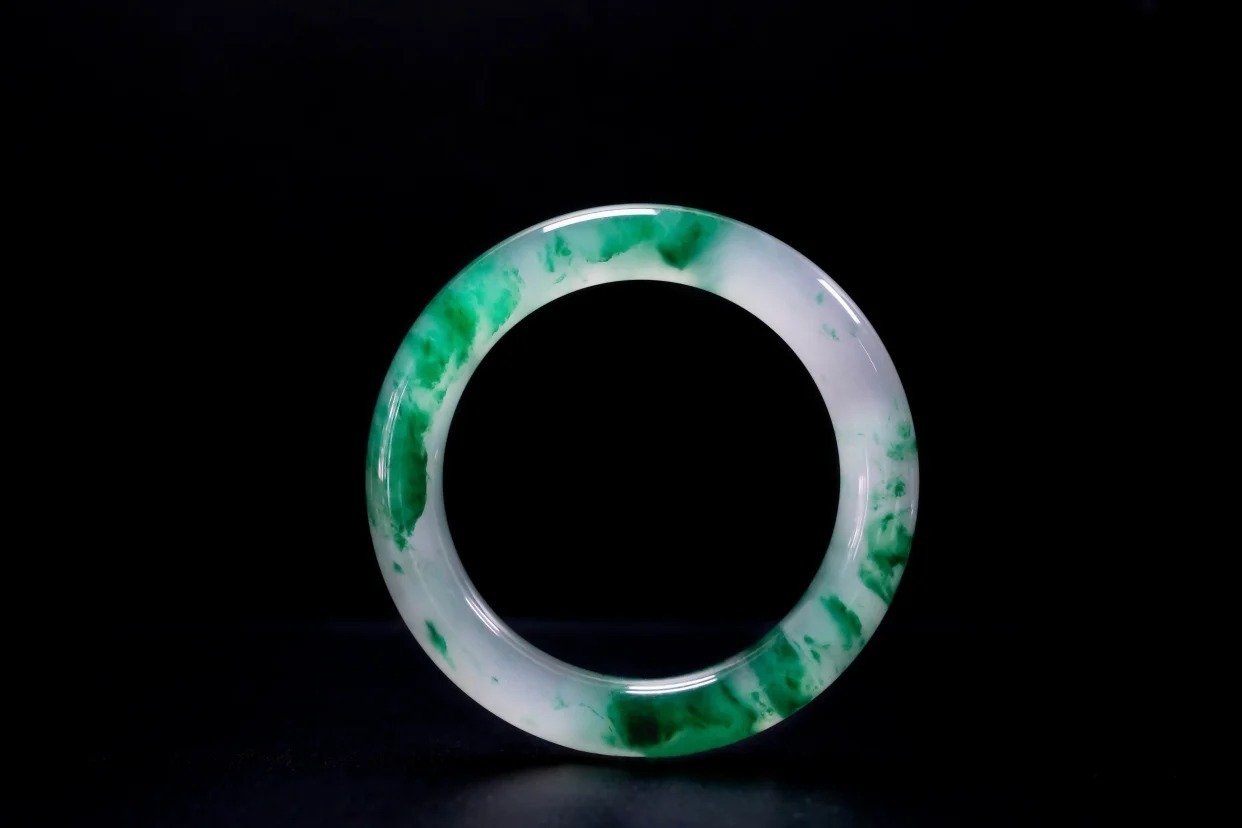
- Pattern: The “floating patterns” (piaohua) in Quartzite Jade come from chromium-rich mica inclusions, while jadeite’s colors result from chromium ions diffused into the crystal structure.
Quick tip:
If the “green flowers” look too clustered or grainy, it’s African Jade.
If they melt smoothly into the base like watercolor, it’s likely jadeite.
Common Questions About African Jade
Are the “floating patterns” in African Jade the same as in jadeite?
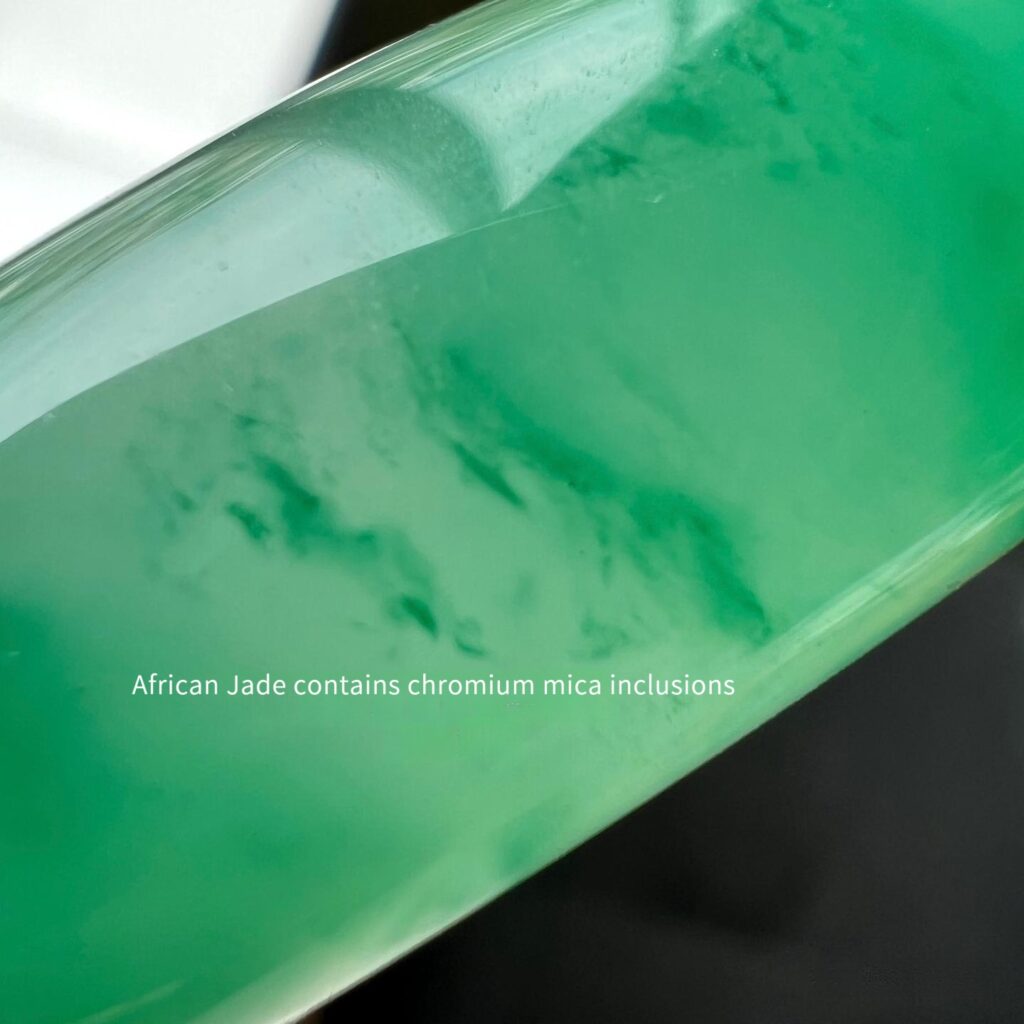
Jadeite’s floating patterns come from color-causing ions diffusing into the crystal, forming sheet-like, thread-like, or dot-like distributions. When fully integrated, this “color dissolved in water” creates high-quality colored jadeite.
By contrast, African Jade’s floating patterns arise from chromium-rich mica inclusions that cluster naturally. These inclusions cannot blend with the base, so their distribution is key. Evenly spaced dots or threads resemble jadeite, but overly dense areas can look rigid.
Is African Jade the same as Dulong Jade?
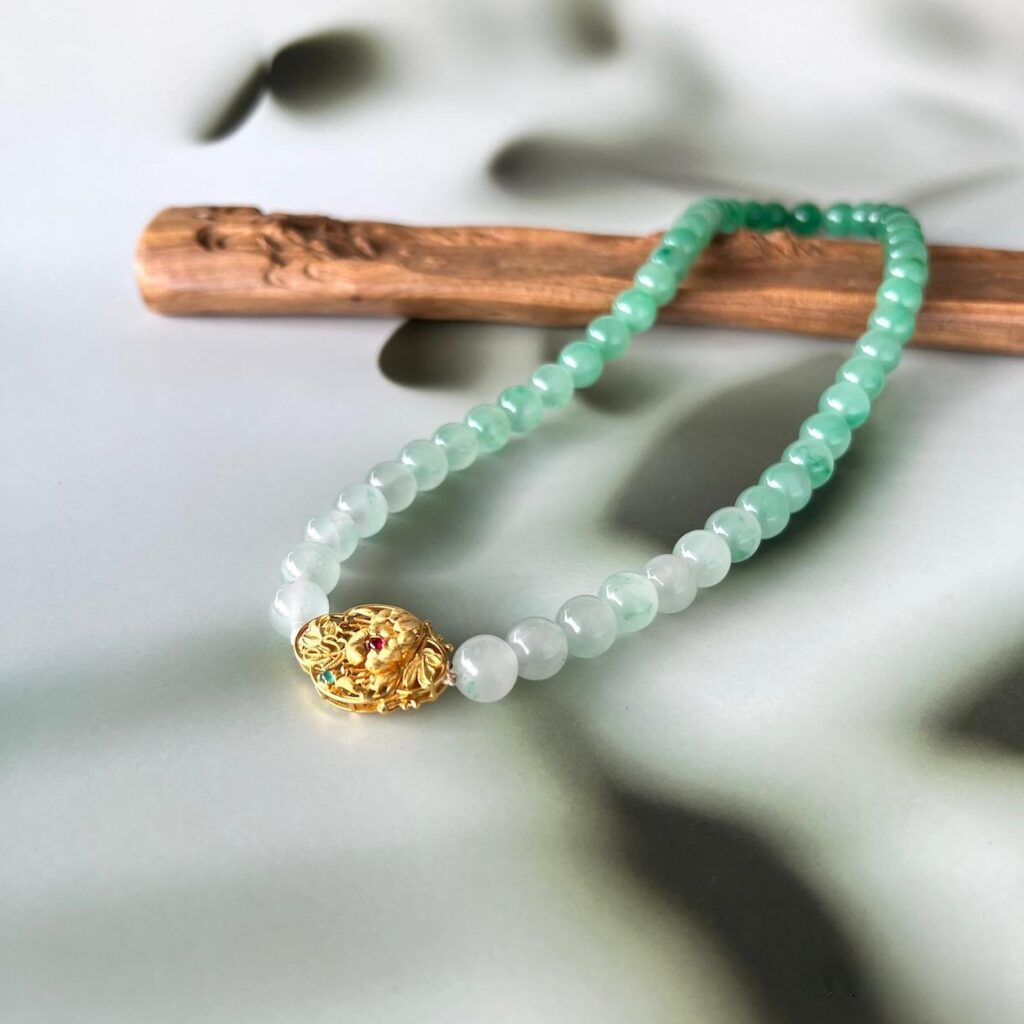
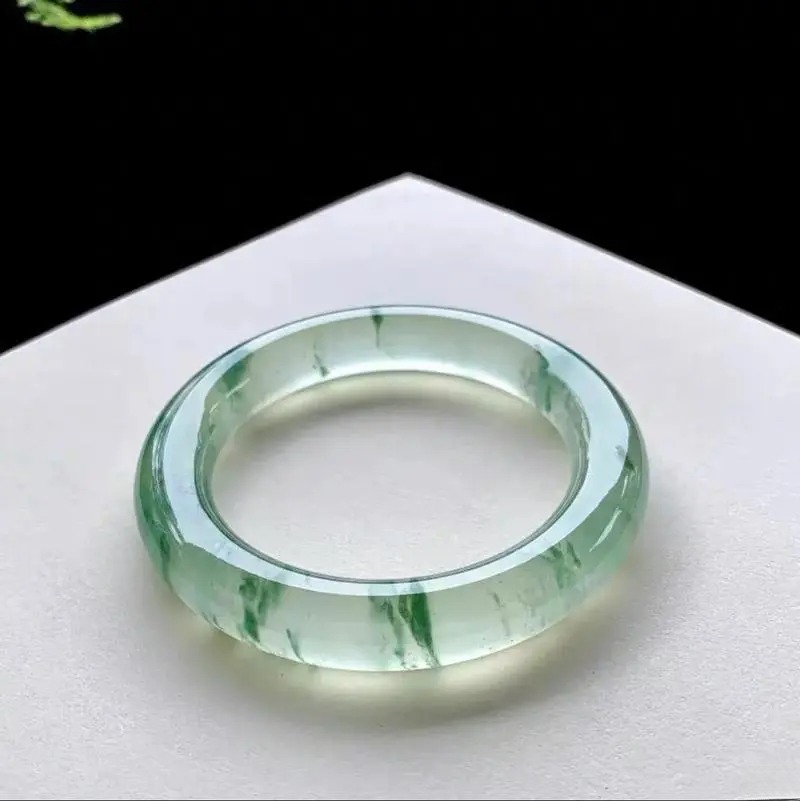
Almost. Both are quartzite jades with similar physical properties.
The only differences lie in trace elements:
- Dulong Jade is colored mainly by Cr (chromium) and Fe (iron).
- The African quartzite gem contains Ba (barium) and Cr, but no Fe, giving it a slightly different hue.
- This gem also features nickeline (NiAs) inclusions, which are absent in Dulong Jade.
What is the “golden sprinkle” in African Jade?
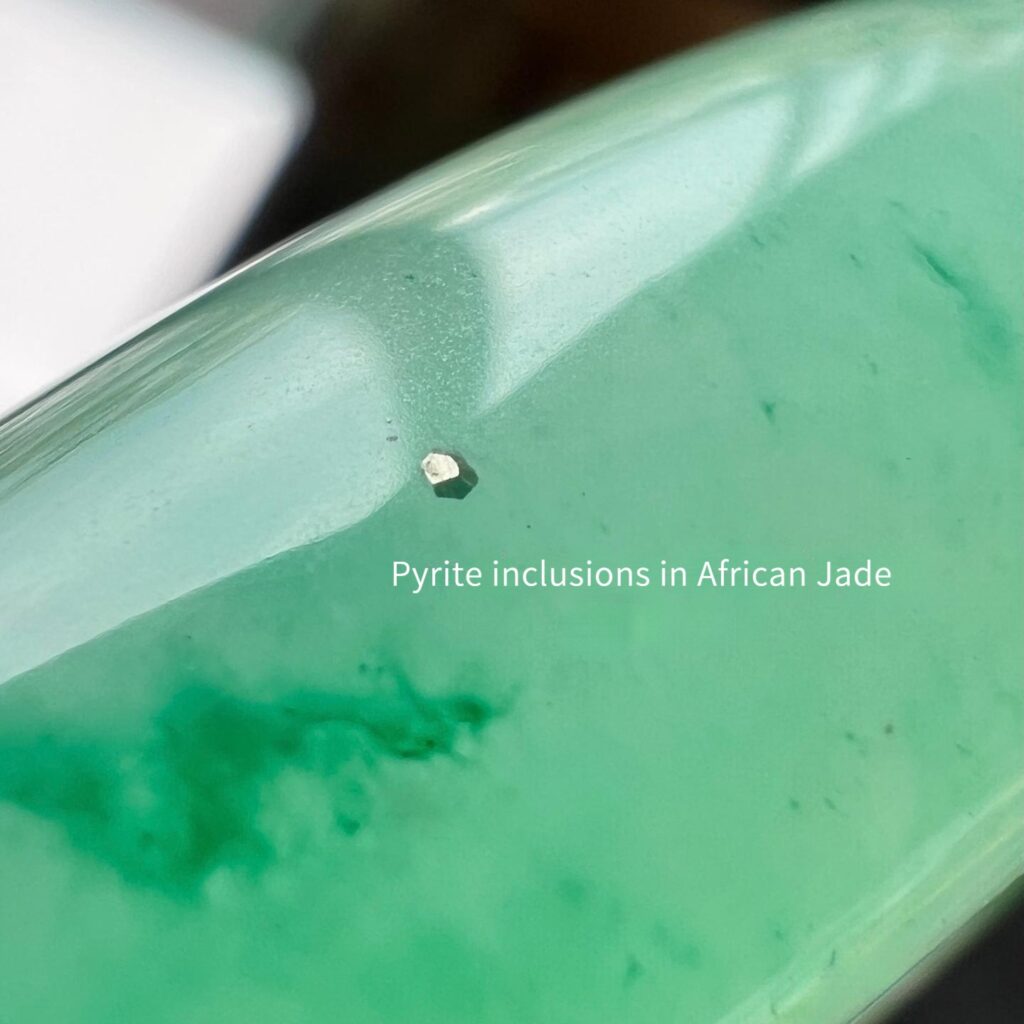
That’s pyrite — small metallic inclusions that appear as golden specks.
Traders call it “gold dust,” but gemologists usually treat it as an imperfection.
What about the “yellow jade” in African Jade?
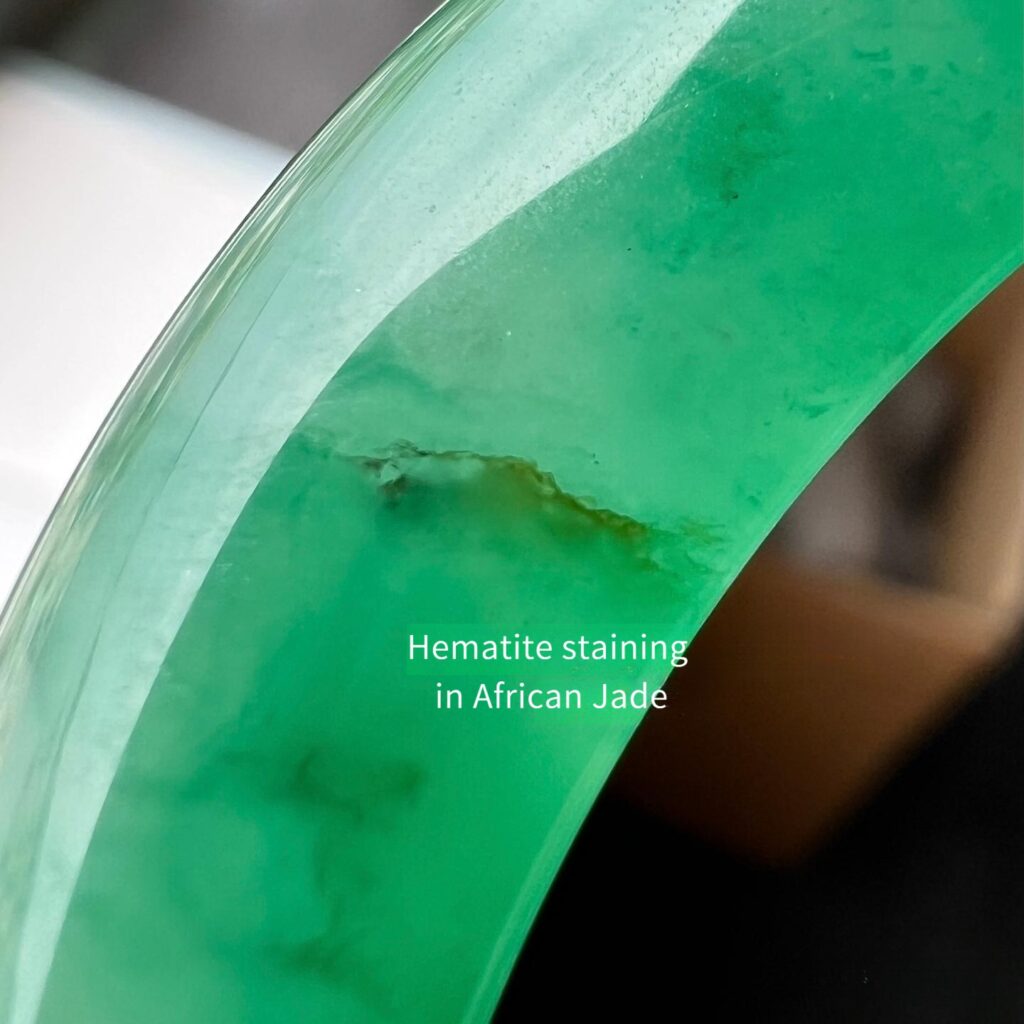
That’s caused by hematite and other secondary minerals, which tint parts of the stone yellow to reddish-brown.
When the color blends harmoniously, it can be marketed as bicolor jade; otherwise, it’s considered discoloration.
Is African Jade a good investment?
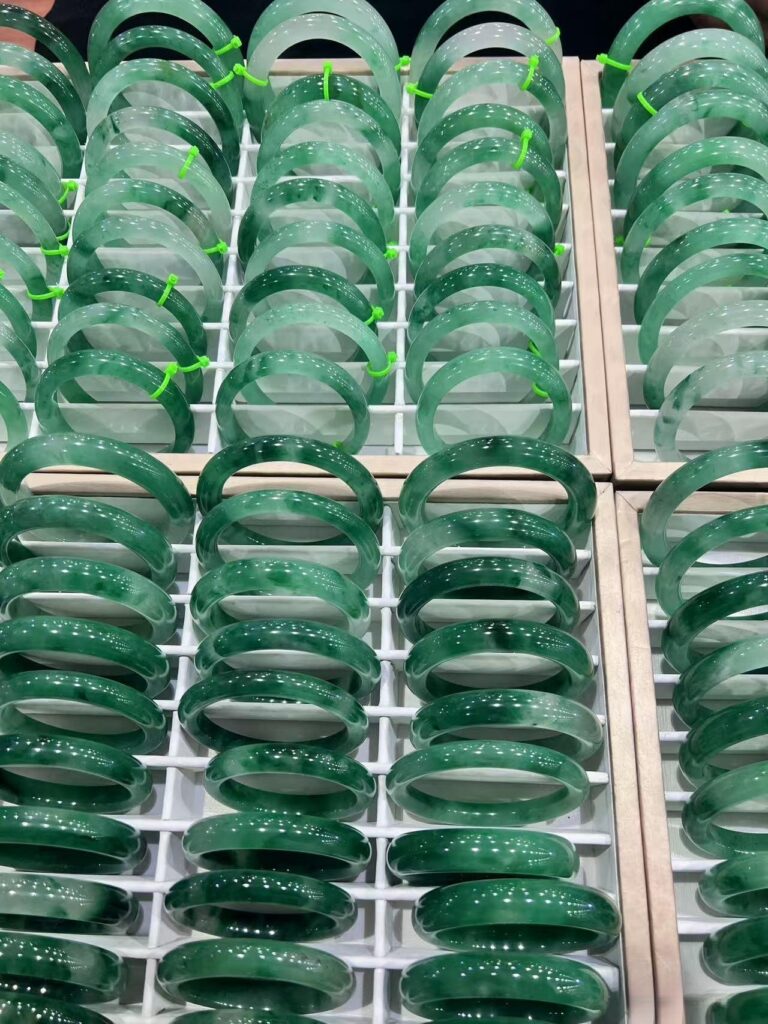
Beauty and durability — yes. Rarity — not really.
Since quartzite deposits are abundant worldwide, long-term high-value investment isn’t likely.
However, as a decorative gem or jewelry material, It offers excellent aesthetics at a reasonable price point.
Final Thoughts: Every Gem Has Its Stage
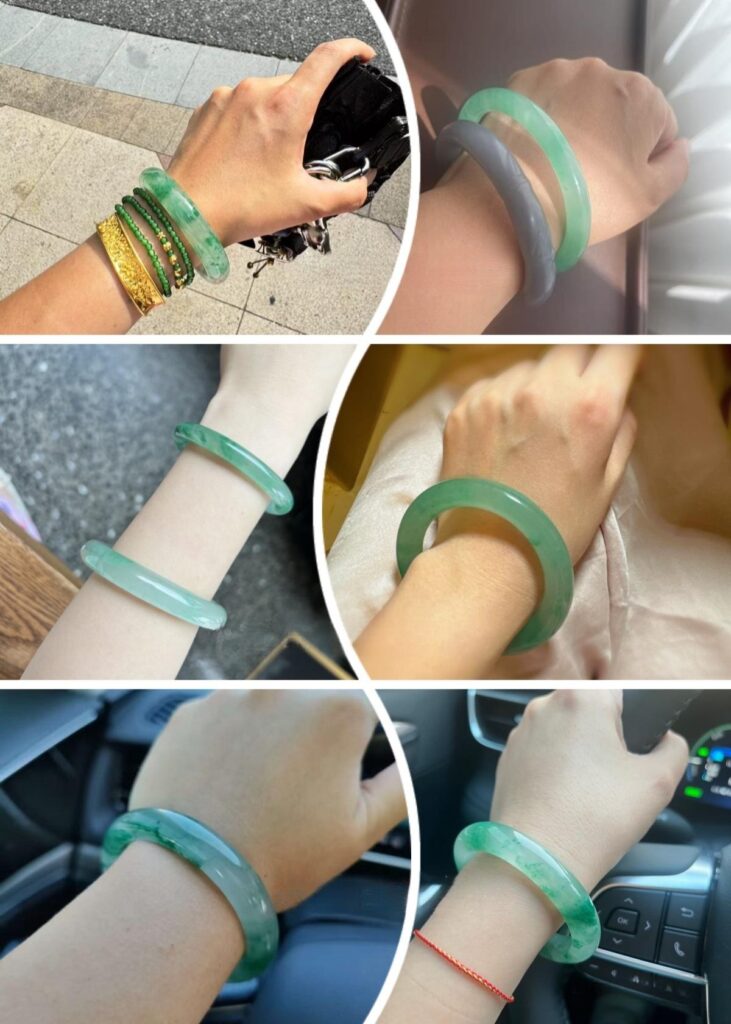
African Jade may have started as jadeite’s look-alike, but its charm lies in being unapologetically beautiful on its own terms — vibrant, accessible, and full of modern character.
At Peonyjewels, we celebrate gems like quartzite jade not just for their sparkle but for their stories — of earth, artistry, and transformation.
Our handmade vintage earrings combine traditional craftsmanship with retro aesthetics, and we also offer custom jewelry design for clients seeking something truly personal.
Because whether queen or consort, every gem deserves its moment under the spotlight.