Chameleon Diamonds: The Mesmerizing Gemstone That Changes Its Color
Welcome to the captivating world of the Chameleon Diamond.
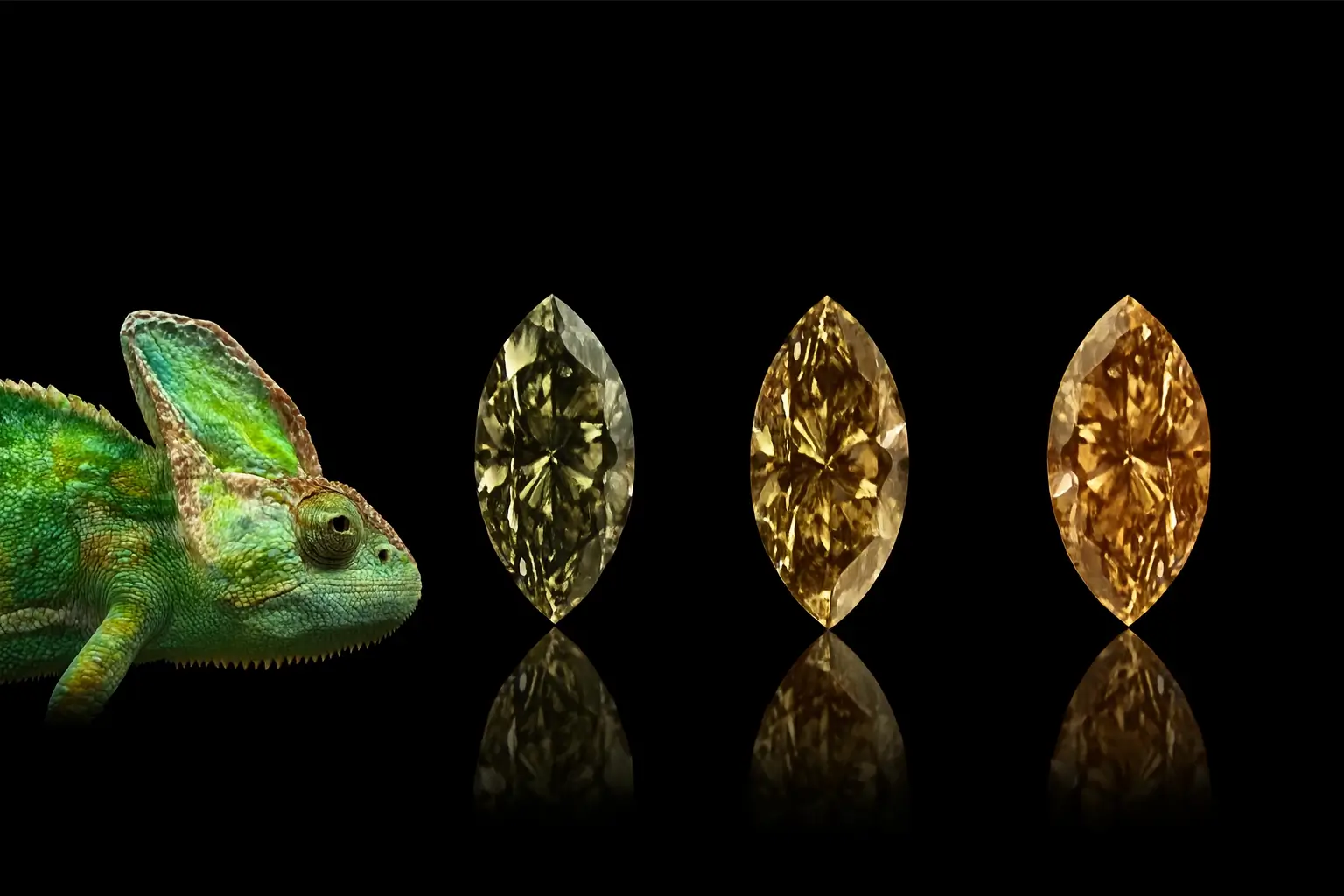
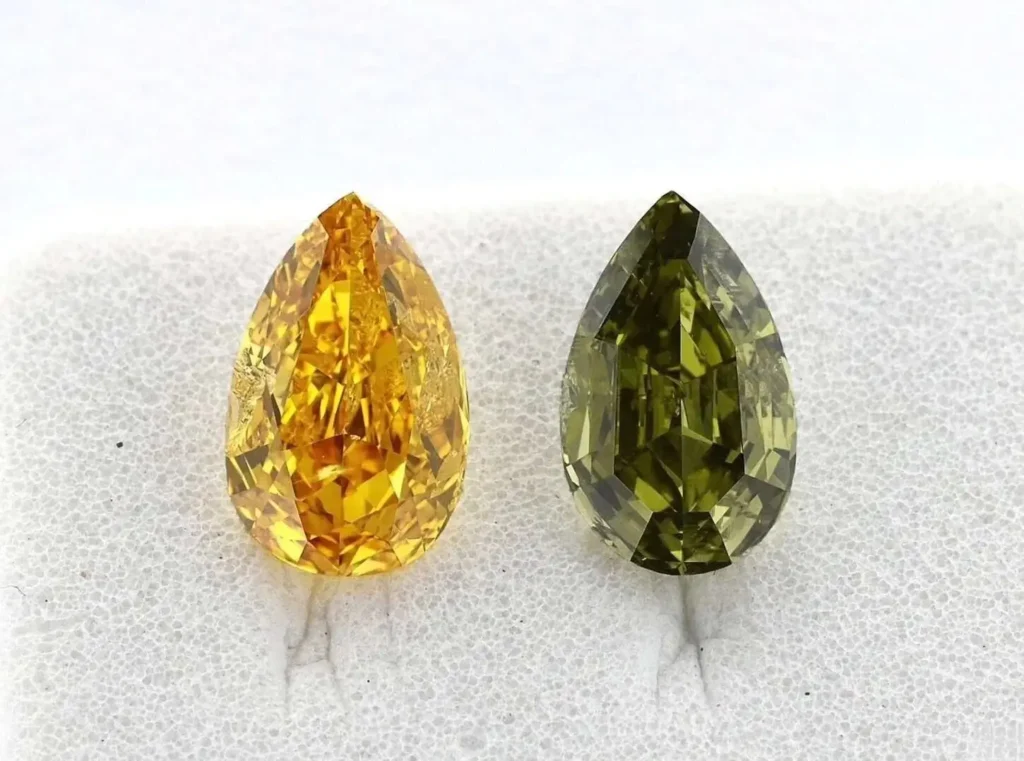
These natural fancy colored diamonds are not only exceptionally rare but also hold one of the greatest secrets in the gemological world: they temporarily change color.
Imagine a gemstone that seemingly possesses a mind of its own. This dazzling jewel shifts its hue from a mysterious olive green to a vibrant canary yellow, simply based on the temperature or light around it.
Chameleon Diamonds are often overlooked in favor of the more famous pinks or blues. However, they offer an unparalleled spectacle of nature’s artistry. If you are searching for a diamond that is both a spectacular investment and a perpetual conversation starter, then continue reading to uncover the fascinating definition, properties, and history behind this shape-shifting wonder.
🔬 The Chameleon Diamond: Definition and Characteristics
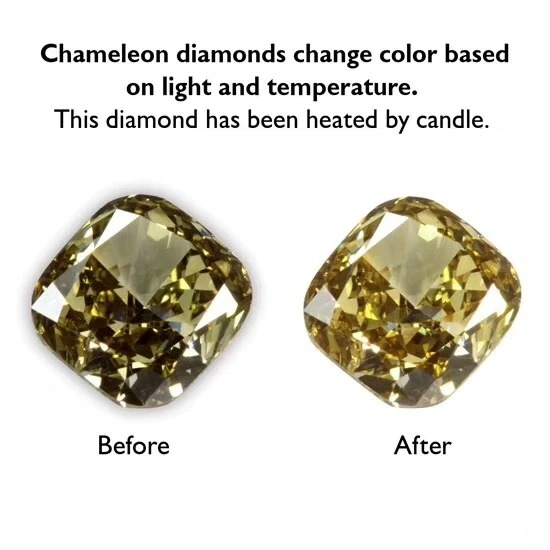
The term Chameleon Diamond applies to a specific, extremely rare variety of natural fancy colored diamond. Crucially, their defining feature is the ability to exhibit a temporary color change. They react to two external stimuli: heat (Thermochromism) or light (Photochromism).
How to Observe the Chameleon Diamond’s Color Change
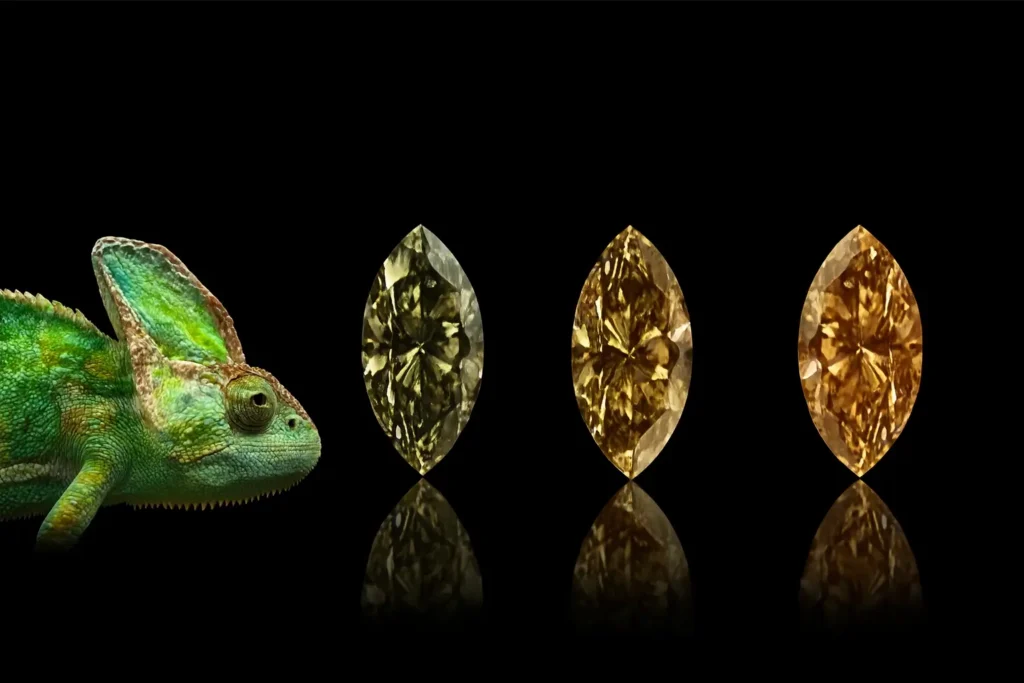
The diamond’s “stable” or default color is typically a moderate to deep shade within the grayish-green, brownish-green, or yellowish-green spectrum. In contrast, the temporary color is a vivid and sought-after yellow, golden yellow, or orange-yellow.
- Thermochromism (Change due to Heat): This change is the most dramatic and reliable. When you gently heat the diamond—typically to temperatures around 100°C to 150°C (for example, briefly placing it on a warm surface or polishing it)—its color instantly transforms into the striking yellow/orange hue. Immediately afterward, the color reverts to its original green shade once the diamond cools down.
- Photochromism (Change due to Light/Darkness): This change is often less pronounced and less durable. If you place the diamond in complete darkness for an extended period (usually 24 hours or more), then suddenly expose it to light. It will briefly display a lighter yellow-to-orange color before settling back to its stable green state.
📜 The Accidental History: How We Discovered the Chameleon Diamond
While miners or traders may have encountered these color-changing gems much earlier, the industry did not officially document or recognize the unique phenomenon until an accidental discovery brought it to light.
A Timeline of Recognition
- Early Accounts (1866): The earliest recorded mention of a color-changing diamond dates back to 1866. Georges Halphen, a prominent Parisian diamond merchant, noted the existence of a diamond with the peculiar ability to change its tint.
- Formal Naming (1943): The phenomenon finally received its official name and industry attention thanks to an incident involving diamond cutter Peter Kaplan Inc. (Peter Kaplan).
- The Incident: Around 1943, an employee at the Kaplan firm noticed something unusual. The diamond they were polishing momentarily turned a deep yellow or golden yellow after brief exposure to the high heat of the polishing wheel. Significantly, the color reverted to its original green tint as soon as the diamond cooled.
- The Name: The diamond’s ability to temporarily alter its appearance like a chameleon struck everyone. Therefore, the name “Chameleon Diamond” was quickly adopted within the jewelry trade.
- Wider Recognition (1970s): Another frequently cited event in the early 1970s further solidified the diamond’s unusual nature in the public eye. A customer bought a light yellowish-green diamond and placed it in a closed jewelry box. Later, upon retrieving it, he found it had turned a deep green. Confused, the customer believed the stone had been swapped and requested a refund. This unusual photochromic behavior prompted gemologists to initiate more systematic study and documentation.
Today, authoritative bodies like the Gemological Institute of America (GIA) formally include the “Chameleon” designation on their grading reports for any diamond exhibiting this temporary color-changing ability.
Why Does the Chameleon Diamond Change Color?
Currently, scientists have not formulated a single, universally accepted explanation for the Chameleon Diamond’s color change. Furthermore, researchers have been unable to successfully replicate the color-shifting phenomenon in other non-chameleon fancy colored diamonds.
Diamonds develop color because they absorb different chemical compounds during their formation. While scientists have successfully identified several elements that cause color in typical fancy diamonds, no one yet fully understands the exact mechanism driving the Chameleon Diamond’s unique hue shift.
The Scientific Consensus
Despite the lack of a final answer, scientific inquiry has established a strong working hypothesis:
The color change results from a specific, complex defect structure within the diamond’s crystal lattice, which involves Hydrogen (H), Nickel (Ni), and Nitrogen (N). Specifically, this defect undergoes a temporary electronic state change when it receives thermal or light energy. This process temporarily alters how the diamond absorbs visible light.
Consequently, rather than finding a “breakthrough explanation,” the scientific community is continuously strengthening and refining this complex hypothesis model using new experimental data.
Research Challenges
Because Chameleon Diamonds display color changes when exposed to both light and heat, multiple mechanisms may drive the color transformation. In addition, obtaining research samples presents significant challenges for scientists, primarily because the diamonds are exceptionally rare and valuable.
🏆 The World’s Most Famous Chameleon Diamonds
Because of their extreme scarcity and captivating performance, Chameleon Diamonds are highly prized by collectors and investors. In fact, they often command premium prices at auction.
The World’s Largest Chameleon Diamond Ring
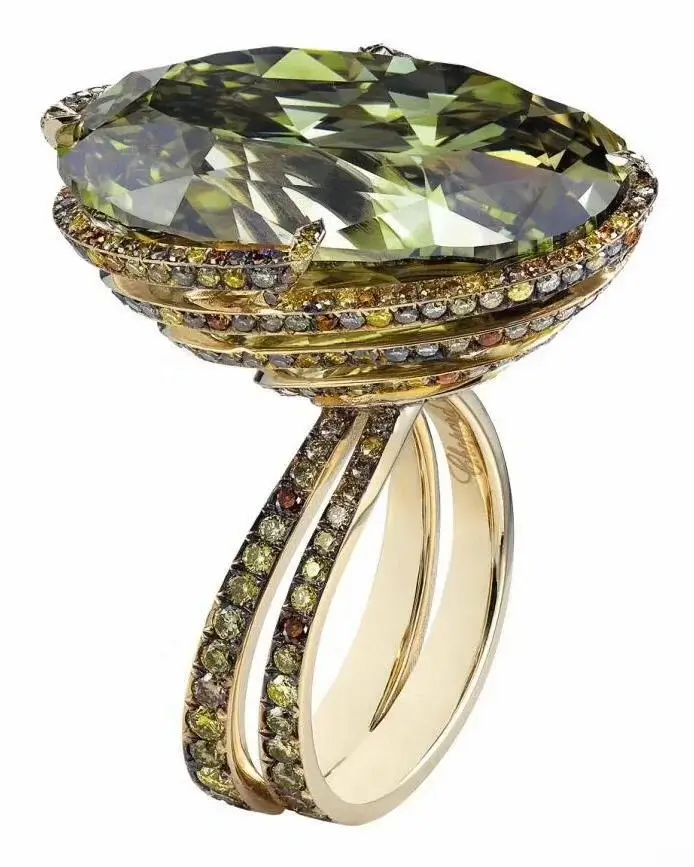
The most famous and often-cited record holder is the Chopard Chameleon Diamond.
- Carat Weight: This spectacular diamond weighs 31.32 carats.
- Cut: It features an elegant Oval Cut.
- Significance: In 2007, the renowned Swiss jeweler Chopard designed this stone into a diamond ring, encircling it with smaller, lighter fancy colored melee diamonds.
- Public Debut: Furthermore, the ring made its public debut at the 2008 Baselworld Watch and Jewellery Show, where experts estimated its value at an astounding $10 million USD.
Record-Breaking Single Stone Prices
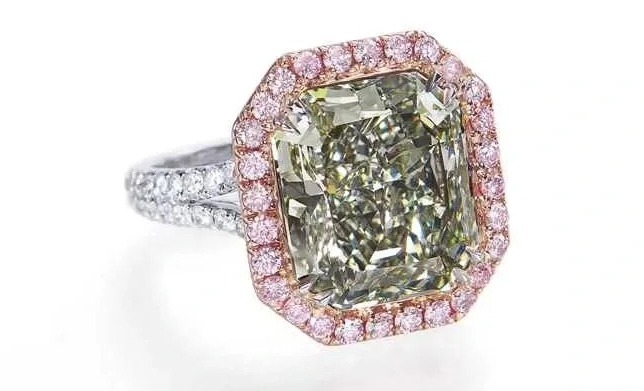
The 8.04 Carat Fancy Dark Gray-Green Chameleon Diamond represents another major milestone.
This magnificent ring showcased the 8.04 carat diamond, which surrounding pink diamonds framed. The entire piece was set in an 18K colored gold ring mount. Ultimately, this exceptional piece fetched a staggering $21 million USD, underscoring the extreme rarity and desirability of large Chameleon Diamonds.
Notable Auction Pieces
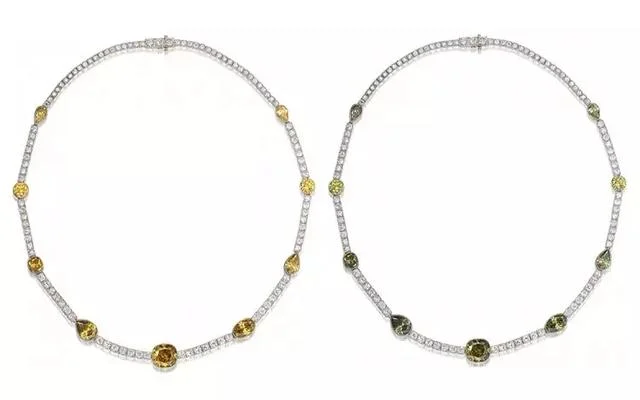
The Bonhams Necklace: A record-setting necklace, which features nine individual Chameleon Diamonds totaling 13.87 ct, went to auction at Bonhams Hong Kong on November 25, 2001. This piece became the single jewelry item set with the highest number of Chameleon Diamonds ever publicly auctioned. Experts estimated its value between 1.6 and 3 million HKD.
Conclusion: Own the Magic of a Chameleon Diamond
Chameleon Diamonds truly stand apart in the world of fine jewelry. They offer a dynamic beauty that no other gemstone can match. Ultimately, they are a testament to the complex and wondrous processes of nature, making them a fascinating and historically significant addition to any collection.
At Peony Jewels, we appreciate the distinct character and rarity of these phenomenal stones. We specialize in sourcing and designing custom pieces that celebrate the unique nature of each gem.
Learn more about how we maximize the beauty in our blog:The Art and Science of Fancy Colored Diamonds: How Design Enhances Color and Value.
So, are you ready to own a colored diamond that literally holds a secret?
Let us help you create a bespoke setting for your very own Chameleon Diamond, or explore our collection of original, handmade vintage earrings and other unique designs. Contact us today to begin your custom design journey!