Chrysoberyl Cat’s Eye: The Only True “Cat’s Eye” Guide
“Is your ‘cat’s eye’ gemstone actually the real deal?
An uncomfortable truth most buyers never hear:
Over 90% of gemstones sold as “cat’s eye” are not true Chrysoberyl Cat’s Eye.
Most are quartz, synthetic glass, or low-value imitations with no gemological or investment significance.
In strict gemology, only Chrysoberyl Cat’s Eye deserves the title ‘Cat’s Eye’ without a prefix. It often regarded as one of the so-called ‘Big Five’ precious gemstones, alongside diamonds, rubies, sapphires, and emeralds.
In this guide, we will cut through market confusion. You will learn why Chrysoberyl Cat’s Eye gemstone maintains its royal status. And you will discover how to spot a priceless masterpiece from a clever imitation—with expert precision.
What Is a “True” Cat’s Eye Gemstone?
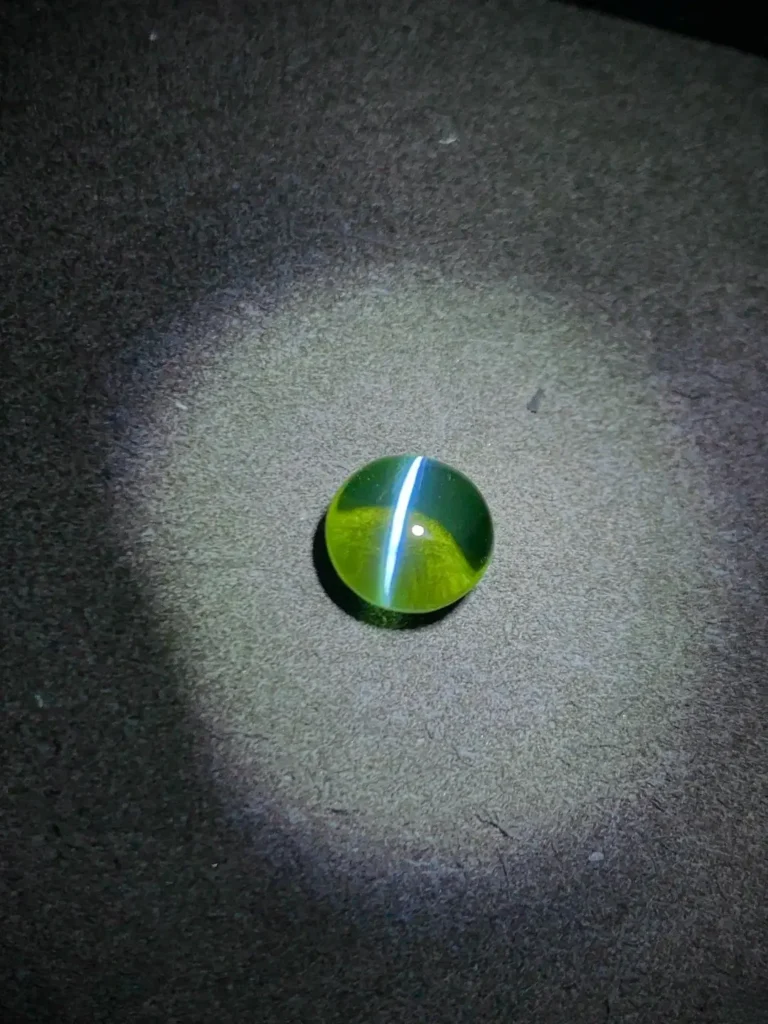
Nature produces many minerals that display a chatoyant effect, such as quartz or tourmaline. However, their value rarely rivals that of the legendary Chrysoberyl Cat’s Eye. In fact, as the most famous member of the chrysoberyl family, it holds an elite position in the jewelry world. Indeed, it stands alongside diamonds, rubies, sapphires, and emeralds as one of the “Big Five” precious gemstones.
In international gemological standards:
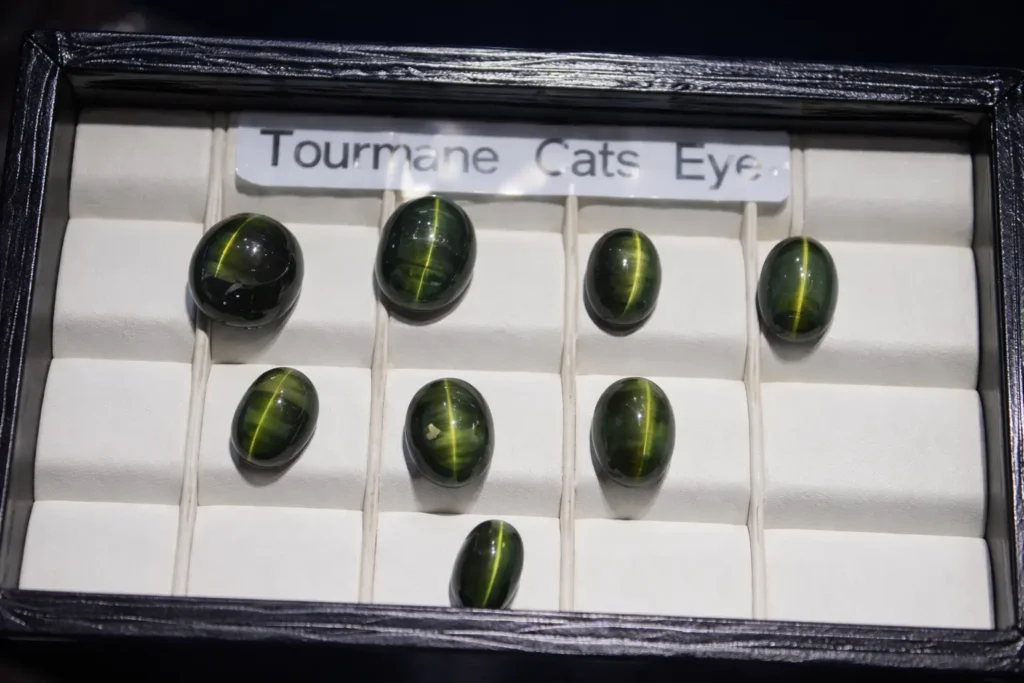
- The Exclusive Title: Only the chrysoberyl variety owns the standalone name “Cat’s Eye.” It requires no further explanation or prefix.
- All other materials must be named with a modifier, such as:
- Quartz Cat’s Eye
- Tourmaline Cat’s Eye
This distinction is not marketing—it is gemological law.
Gemological Properties and Formation of Chrysoberyl Cat’s Eye
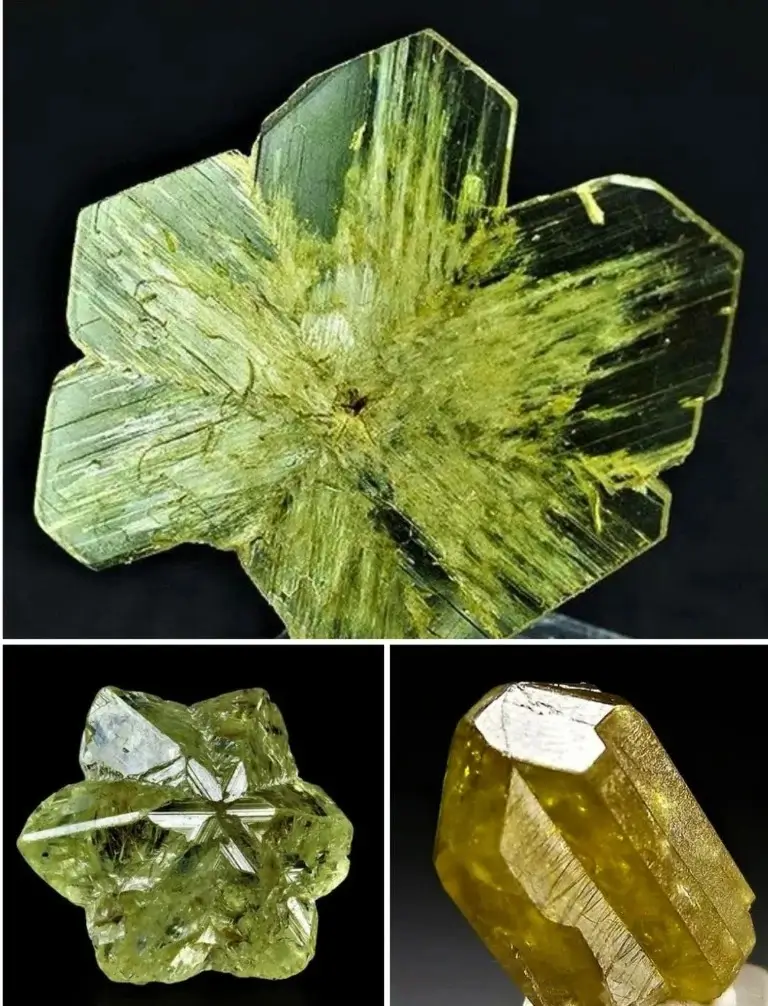
To understand why this gemstone is so prized, we must first look at its unique physical structure. Not only is it beautiful, but it is also one of the most durable treasures on Earth.
1. Core Physical Parameters
- Chemical Composition: BeAl₂O₄ (Beryllium Aluminum Oxide).
- Mohs Hardness: 8.5.
- Crystal System: Orthorhombic.
- Refractive Index: 1.74 – 1.76.
Chrysoberyl ranks just below diamond and corundum, making it exceptionally durable and suitable for daily wear.
2. How the Cat’s Eye Effect Forms
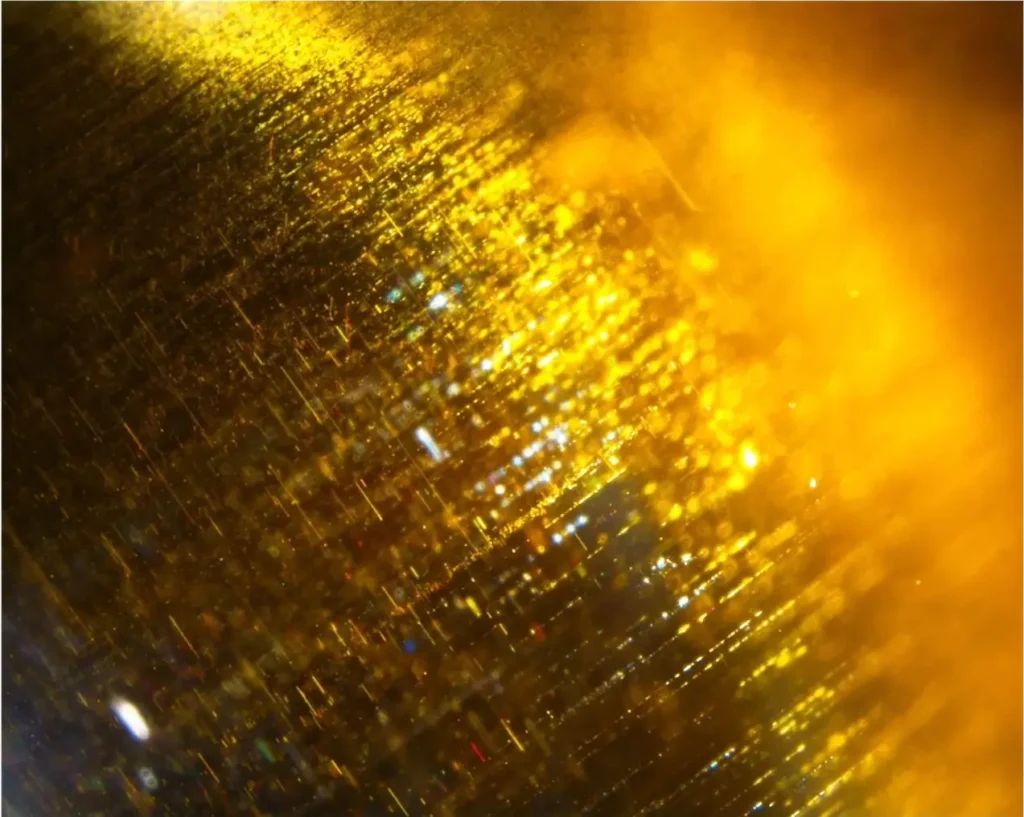
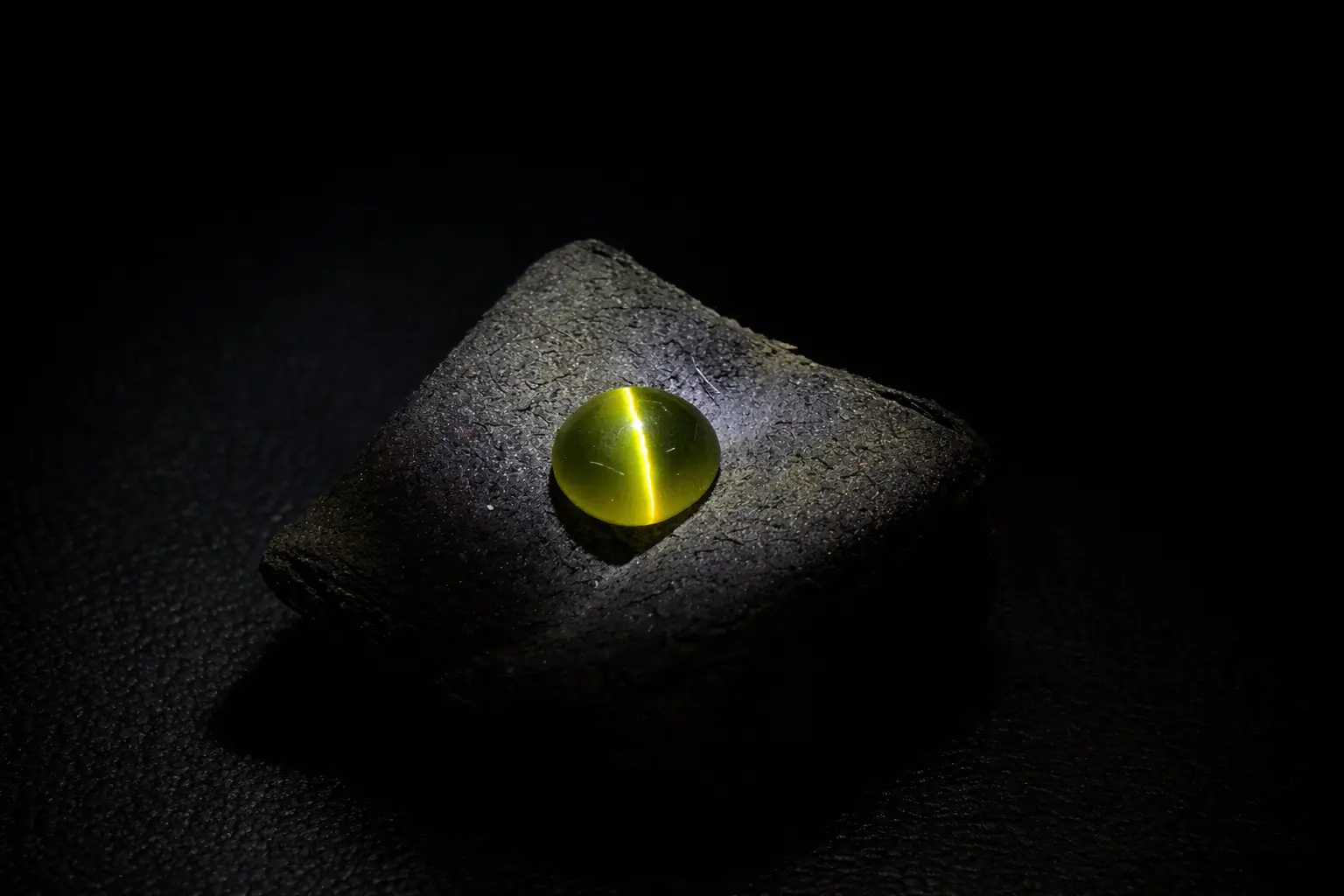
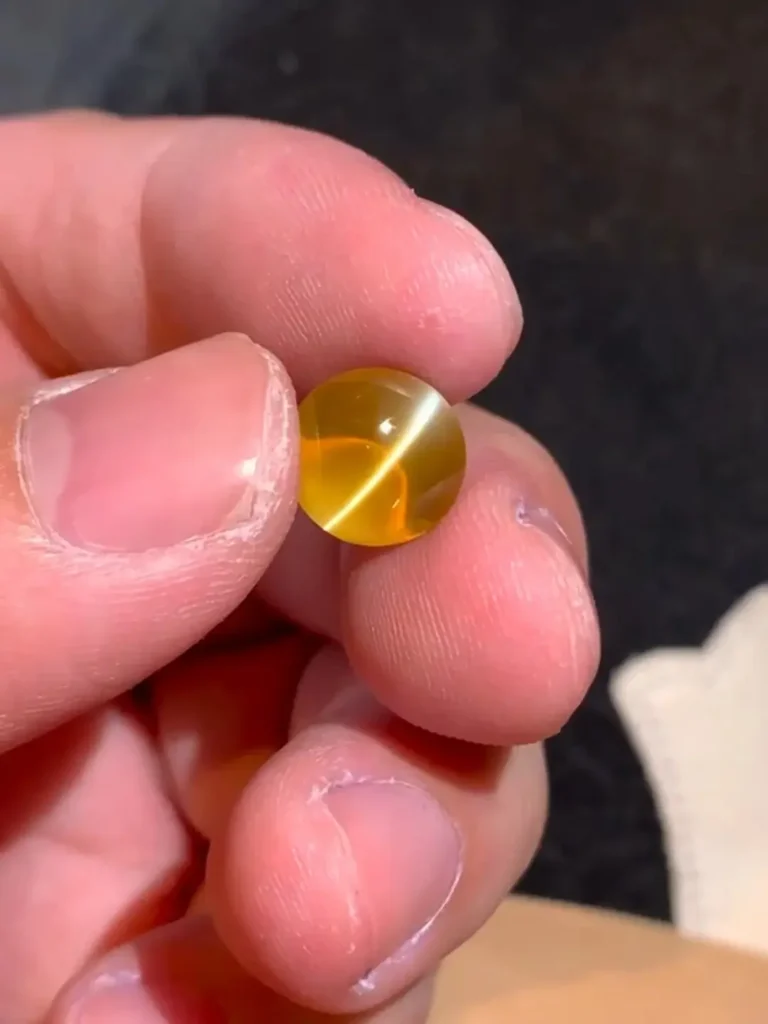
The legendary cat’s eye is not a surface marking but a complex optical phenomenon. It originates from dense, fine parallel tubular or needle-like inclusions (often referred to as rutile-like) trapped deep within the Chrysoberyl gemstone.
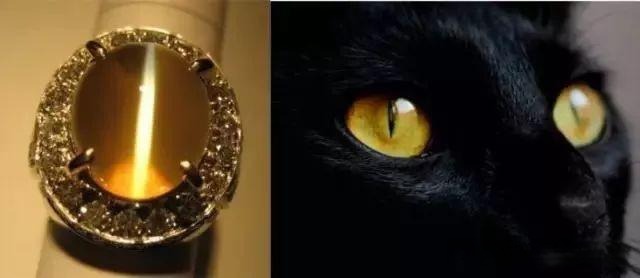
When a lapidary cuts the stone into a cabochon shape, they carefully align the base parallel to these inclusions. As a result, light reflects off the internal fibers in a concentrated band, producing a sharp, luminous line that moves across the surface—mirroring the slit-like pupil of a living cat.
How to Evaluate a Top-Tier Chrysoberyl Cat’s Eye Gemstone
To evaluate the true value of a Chrysoberyl Cat’s Eye gemstone, experts focus on four critical pillars: body color, the eye line, transparency, and carat weight. By carefully considering each factor, collectors can distinguish a museum-quality masterpiece from a standard commercial-grade stone.
1. Color Grading (Body Color)
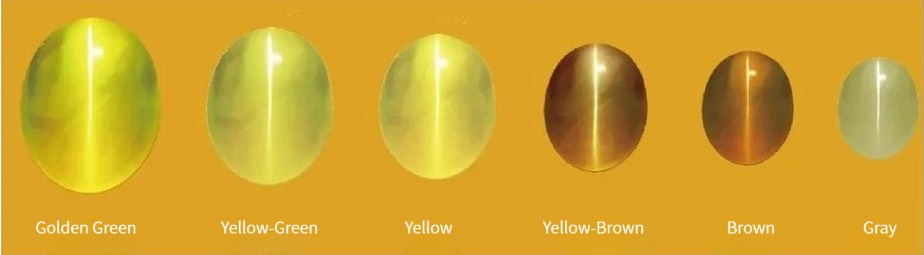
While chrysoberyl primarily features yellow hues, its value fluctuates significantly based on saturation. Specifically, the hierarchy of color is as follows:
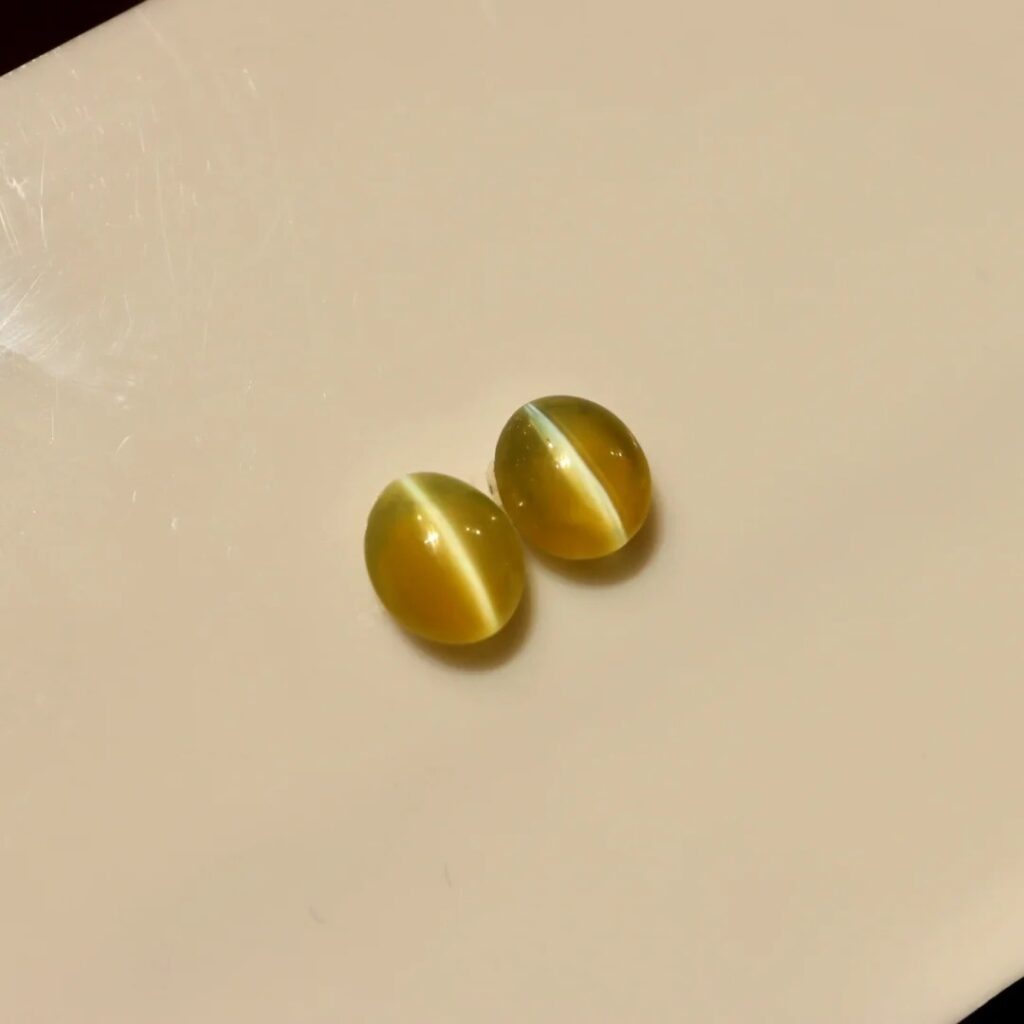
- Honey (The Gold Standard): This is the most coveted shade. It resembles rich, warm honey with high saturation.
- Golden or Yellow-Green: These stones appear bright and vibrant, much like a fresh lemon or a new leaf.
- Brownish-Green/Brown: These darker tones are more common and generally hold less market value.
- Gray: In contrast, stones with grayish-white undertones are less desirable. Therefore, we do not recommend them for serious investment collections.
2. The “Eye” Line (The Soul of the Gem)
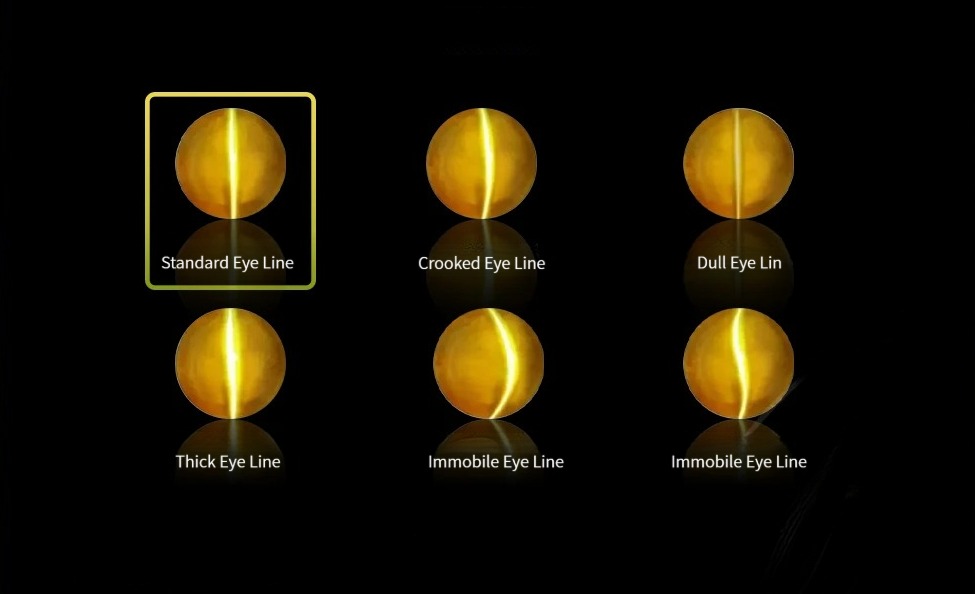
The “eye” is the most vital element. To be considered high quality, the line must meet three strict criteria:
- Sharpness: The band of light should be razor-sharp and visible under any light source without ghosting.
- Symmetry: Furthermore, the line must sit perfectly in the center and remain continuous from top to bottom.
- Fluidity: The line must “dance” or glide across the surface as the gem moves. Top-tier specimens even exhibit the famous “Open and Close” phenomenon.
3. Transparency and Weight
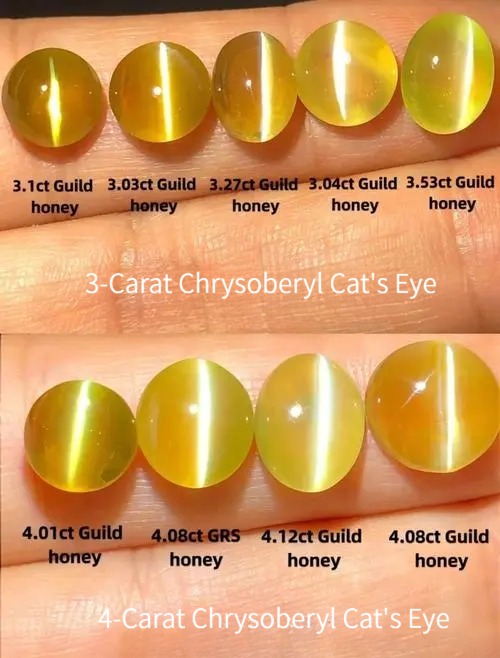
- Transparency: Surprisingly, “semi-transparent” is the ideal state. This is because excessive transparency scatters the light, making the eye blurry. Conversely, an opaque stone lacks the “inner glow” that characterizes fine jewelry.
- Weight: Size plays a massive role in rarity. High-quality specimens over 2 carats are already collectible. However, once a stone exceeds 5 carats, it enters the realm of rare museum-grade treasures.
Origin and Market Value of Chrysoberyl Cat’s Eye
The geological origin of a Chrysoberyl Cat’s Eye significantly influences its physical appearance and market classification. While chrysoberyl is found in several regions, each locality produces distinct characteristics that experts use to determine the stone’s grade.
1.Key Geographic Sources
- Sri Lanka (Ceylon): This is the world’s most prestigious source. Specifically, Sri Lankan stones are famous for their “Honey-Gold” body color and exceptional “living light” (active chatoyancy). As a result, they command the highest collector premiums in the global market.To ensure you are purchasing a genuine gem, learn How to Identify Real vs Fake Cat’s Eye Gemstones from Sri Lanka.
- Brazil: Brazilian specimens often display a distinct apple-green hue. However, their eye lines are generally softer and less sharp than those from Sri Lanka.
- Other Sources: These include Russia, Myanmar, India, and Madagascar. While these regions contribute to the global supply, high-grade specimens from these areas remain rare.
2. Market Supply and Scarcity
Currently, the global supply of high-quality Chrysoberyl Cat’s Eye is declining. Many historical mines, particularly in Sri Lanka, have been active for centuries and now face a natural reduction in output. Consequently, large, high-clarity specimens are increasingly rare in the global trade. Specifically, stones exceeding two carats with a sharp, centered eye represent only a tiny fraction of total annual production.
🌍2026 Global Market Value for 5ct Chrysoberyl Cat’s Eye
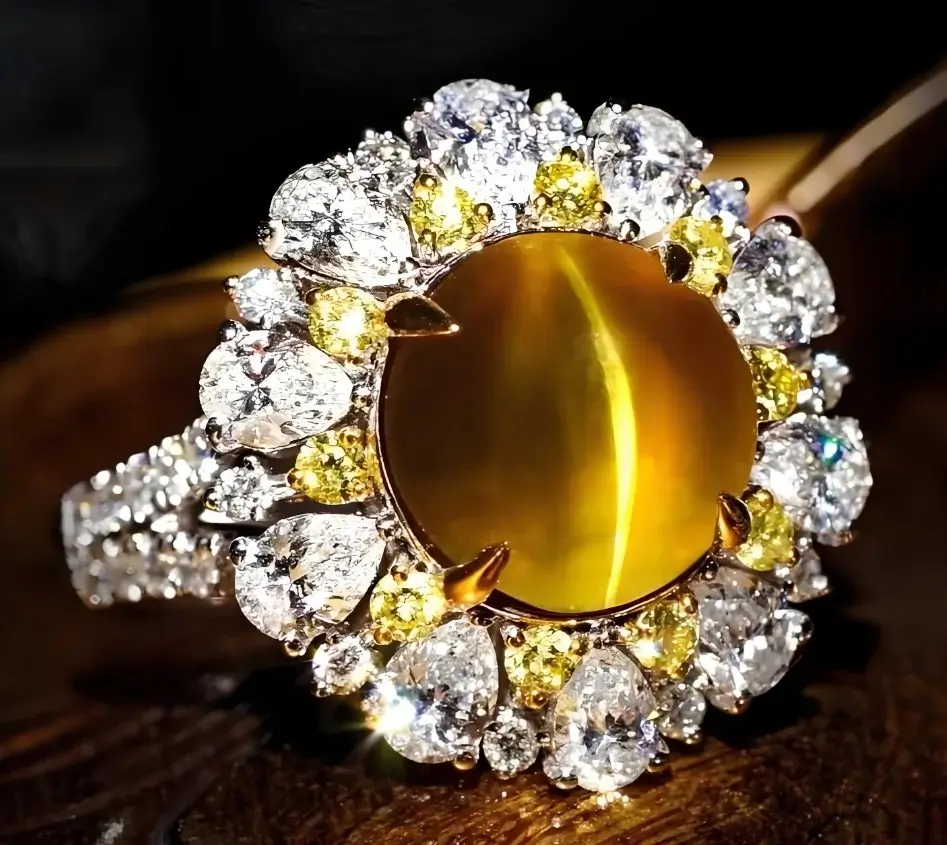
As of 2026, the market for Chrysoberyl Cat’s Eye remains highly stratified. Due to the continued depletion of traditional mines, the price gap between premium origins and commercial-grade material has widened.
| Origin / Type | Key Characteristics | Estimated Market Price (USD/Ct) |
| Sri Lanka | Honey-Gold + Sharp, Active Light | $3,000+ |
| Brazil | Apple Green + Slightly Softer Band | $1,000 – $2,000 |
| India | Grayish-Green + High Inclusions/Fissures | $200 – $800 |
| Lab-Created | Synthetic Glass / Fiber Optic Coating | < $20 |
Note: Pricing reflects market averages up to January 2026 for eye-clean specimens and is provided for reference only. Actual prices may vary depending on clarity, eye sharpness, and overall quality. Exceptional stones often exceed these ranges at international auctions.
Heritage and Symbolism: The Cultural Legacy of Chrysoberyl Cat’s Eye
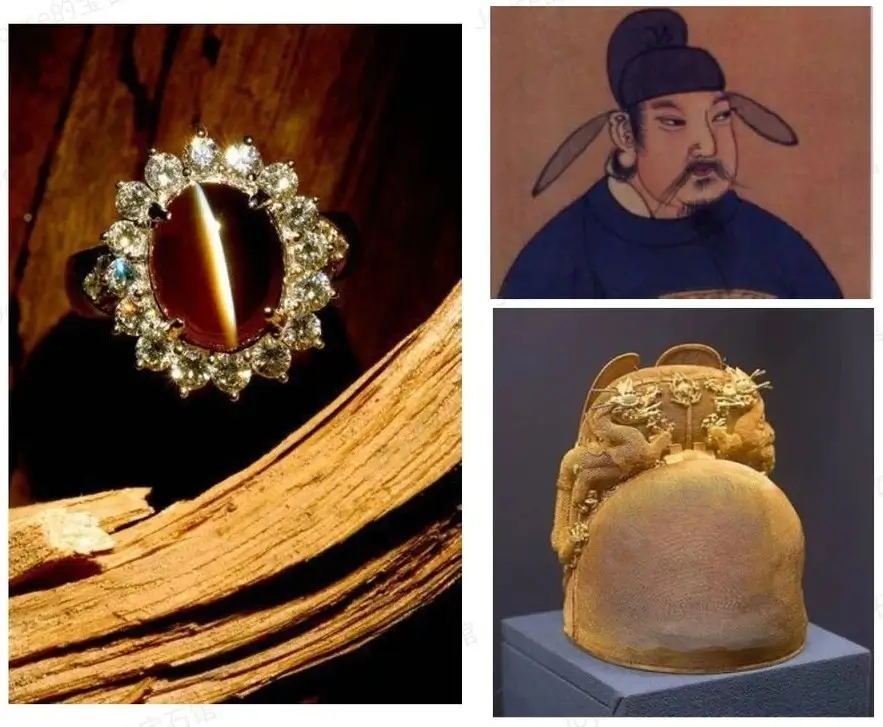
Beyond its physical beauty, the Chrysoberyl Cat’s Eye carries a profound historical weight. For millennia, diverse civilizations have revered this stone, weaving it into the regalia of emperors and the folklore of ancient empires.
1. A Royal History Across Continents
Historically, the influence of this gemstone spans from the East to the West:
- Ancient China: Known as “Shifu” (Lion’s Burden) or “Maoer Yan” (Cat’s Eye), it fascinated the imperial court. Notably, Emperor Xuanzong of the Tang Dynasty used the stone’s sharpest “noon line” as a benchmark for timekeeping. Furthermore, both the Wanli Emperor of the Ming Dynasty and Empress Dowager Cixi of the Qing Dynasty cherished large, high-quality cat’s eyes in their private collections.
- Ancient Egypt: Mysterious legends surround the pharaohs, who reportedly wore cat’s eye rings to channel divine protection.
- The Persian Crown: One of the most famous specimens in history is the 147.7-carat chrysoberyl cat’s eye set into the crown of the Shah of Iran.
- Russian Imperial Jewelry: In 1830, Tsar Alexander II received a magnificent crown adorned with chrysoberyl for his 21st birthday, cementing the stone’s status among European royalty.
2. Symbolic Meaning and Spiritual Significance
Today, the stone remains a powerful symbol in both Eastern and Western traditions. While interpretations vary, the core themes of protection and power remain consistent:
- In Asia: Many cultures view the stone as a guardian of health and a magnet for good fortune. Specifically, believers hold that it protects the wearer from the hardships of poverty.
- In the West: The gemstone symbolizes courage, self-confidence, and a commanding presence. Consequently, it has become a preferred choice for “career-driven” individuals seeking to enhance their leadership and personal charisma.
Expert Tips: Identification and Care for Chrysoberyl Cat’s Eye
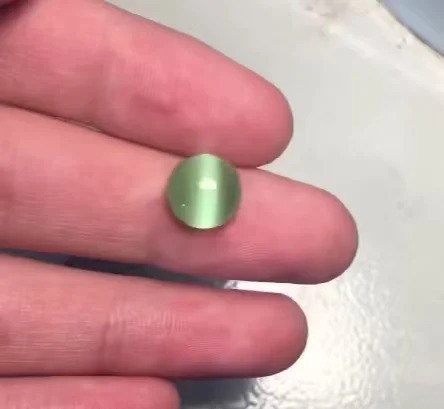
Buying a Chrysoberyl Cat’s Eye requires a keen eye and technical knowledge. Because the market is flooded with imitations like quartz or synthetic glass, you must understand the subtle differences that separate a true treasure from a cheap substitute.
Learn more about these deceptive materials in Glass Imitation Gemstones: How to Spot Fake Gem Glass Before You Buy.
1. How to Spot an Imitation (Identification)
While modern fakes can be convincing, they always leave clues. To identify a genuine stone, pay close attention to the following:
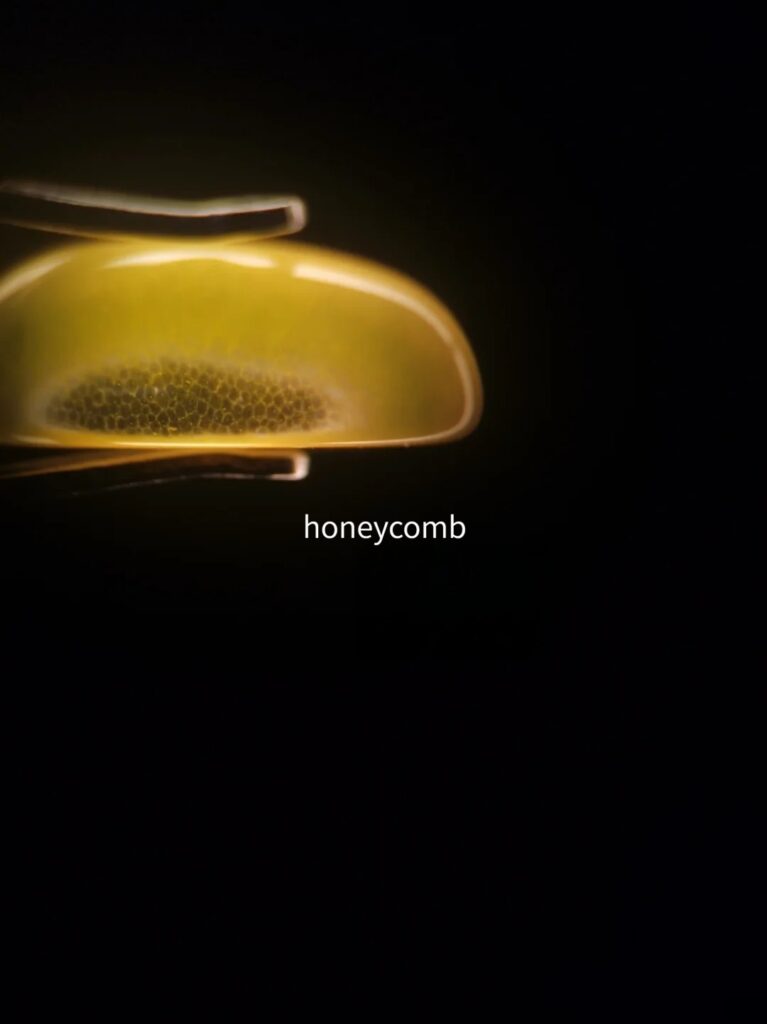
- The Honeycomb Test: If you examine a synthetic glass cat’s eye from the side under magnification, you will notice a “honeycomb” structure. In contrast, natural chrysoberyl never exhibits this artificial pattern.
- The “Eye” Dynamics: A natural eye line is composed of golden or silvery-white light that is sharp, straight, and incredibly fluid. As you rotate the stone, the line should glide effortlessly. Furthermore, under a 10x loupe, you will see that the internal needle-like inclusions are extremely fine and organic, unlike the overly rigid structure of artificial fibers.
- Visual Depth: Genuine stones possess a rich, multi-layered depth. Conversely, synthetic varieties often look “flat” or too perfect to be natural.
Ultimately, visual inspection has its limits. Therefore, we strongly recommend requesting a certificate from an authoritative laboratory, such as NGTC, GRS, or GIA, to verify the stone’s origin and authenticity.
2. Daily Care and Maintenance
Even though Chrysoberyl ranks an impressive 8.5 on the Mohs scale, it still possesses natural brittleness. Consequently, you must handle it with care to maintain its brilliance:
- Avoid Impact: Protect your gemstone from sharp blows or hard surfaces to prevent chipping.
- Gentle Cleaning: Use only a soft, lint-free cloth to wipe the surface. In addition, keep the stone away from harsh alkaline chemicals or ultrasonic cleaners, which may damage the surface over time.
Final Thoughts from Jewea
Understanding the Chrysoberyl Cat’s Eye is about more than just identifying a stone; it is about appreciating a masterpiece of nature that has captivated humanity for centuries. At Jewea, we believe that every gemstone tells a story of time, pressure, and extraordinary light.
In the spirit of this timeless beauty, we occasionally channel our passion for rare optical effects into our original, handcrafted vintage earrings. Each piece is designed to echo the elegance of the past while celebrating the natural character of authentic materials.
If you find yourself drawn to the hypnotic charm of cat’s eye effects and the soul of hand-finished jewelry, feel free to explore our latest creations. Whether you are here to learn or to find your next heirloom, we hope this guide empowers you to choose with confidence and clarity.