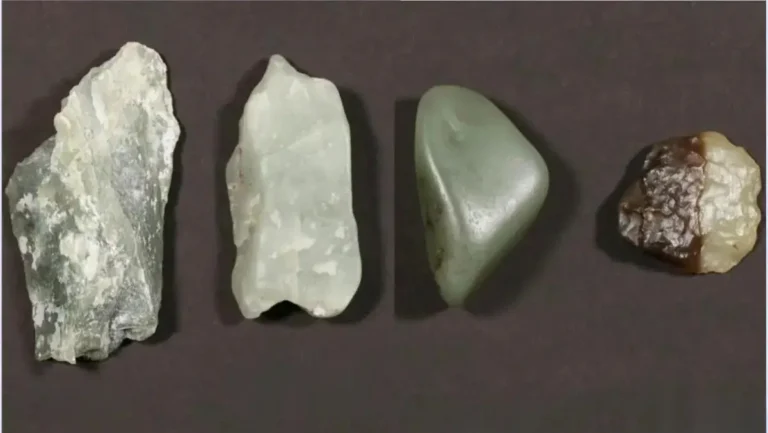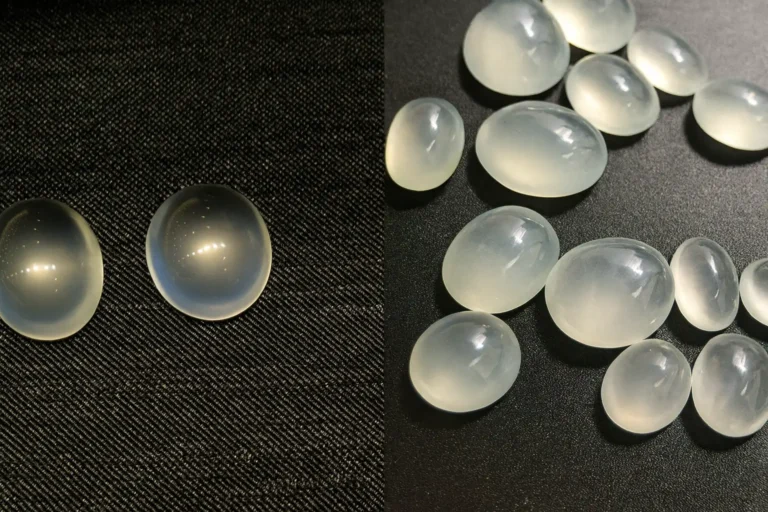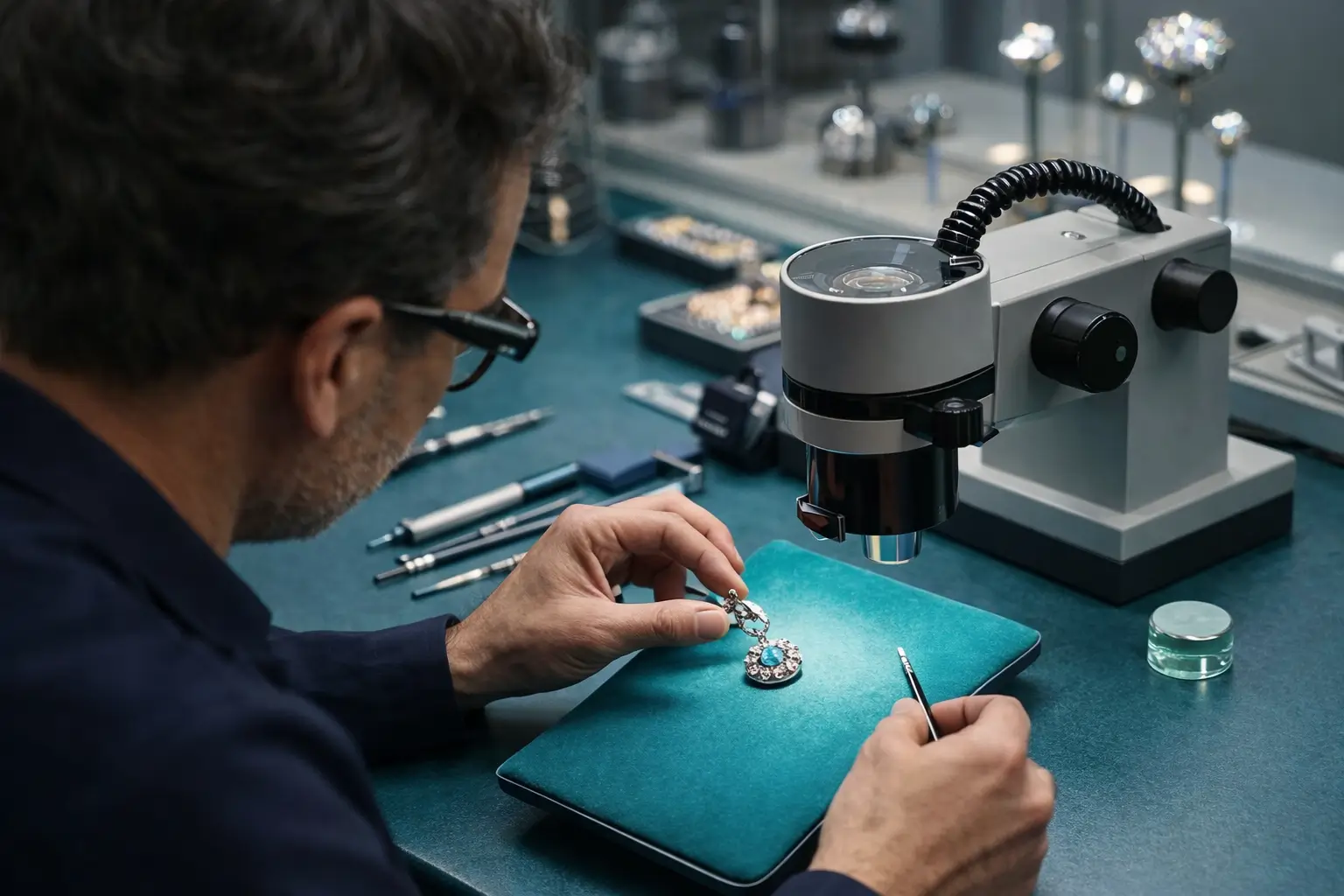
How to Spot Fake Jewelry Certificates: A Buyer’s Guide to Authentic Reports
Welcome to PeonyJewels fake jewelry certificate guide.
Buying jewelry is both an emotional and financial investment, so it’s crucial to ensure your stones are genuine. Unfortunately, counterfeiters don’t just fake gemstones — they also create fake jewelry certificates, offering a complete “stone + forged report” package. That means the document you see may not be genuine at all.
A jewelry certificate may look small and simple, but it contains a large amount of critical information. If you have ever bought jewelry, are planning to buy, or might purchase in the future, this guide is essential reading.
While gemstone prices can vary widely even for authentic stones, after reading this guide, you’ll be able to confidently identify fake jewelry certificates and avoid scams.
What Is a Jewelry Certificate? How to Spot Fake Reports
A jewelry identification certificate is an official document that verifies the authenticity and material properties of precious metals, gemstones, or finished jewelry pieces.
It must be issued by:
- A qualified gemological testing institution, and
- Certified gemologists who hold legal professional credentials
Legitimate certificates are legally regulated and carry public credibility.
Common Types of Jewelry Certificates: Diamonds, Gemstones & Metals
Jewelry certificates are usually categorized based on the type of jewelry being tested.
1. Diamond Certificates
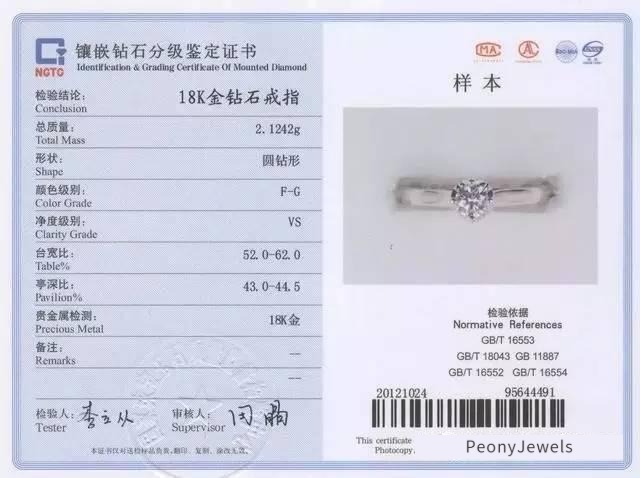
Issued for:
- Loose diamonds
- Diamond-set jewelry
What makes diamond reports unique is the inclusion of Diamond 4C grading:
- Carat
- Color
- Clarity
- Cut
Large loose diamonds typically come with more detailed proportion data.
Want to learn more about how the 4Cs affect diamond value and choosing the perfect ring? Check out the PeonyJewels Blog: The Ultimate Guide to the 4Cs of Diamonds – Finding Your Perfect Engagement Ring.
2. Gemstone Certificates
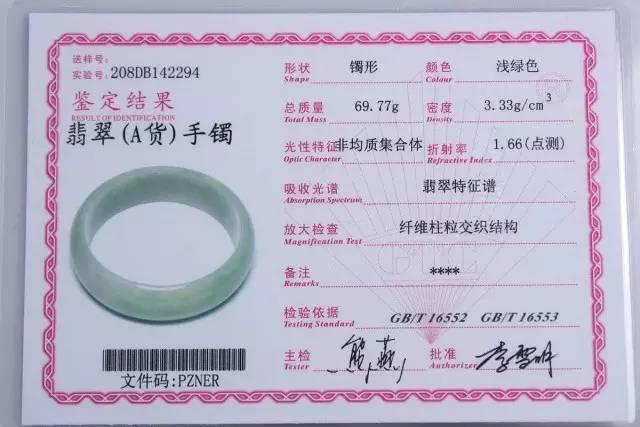
This is the broadest category and covers the widest range of materials, including:
- Colored gemstones: sapphire, ruby, emerald, tourmaline, etc.
- Jade & jade-like materials: Hetian jade, jadeite, lapis lazuli, turquoise, opal
- Organic gemstones: pearl, coral, amber
3. Precious Metal Certificates
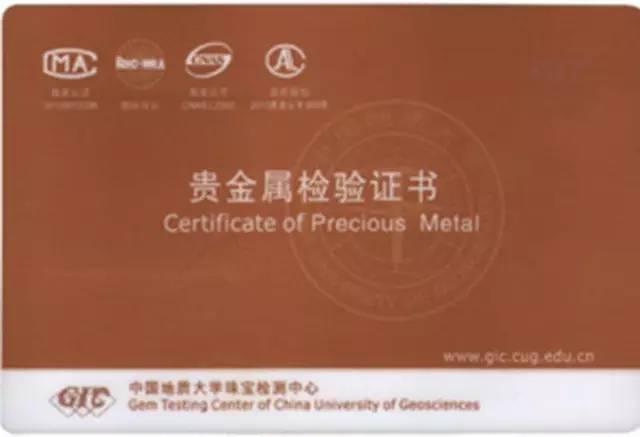
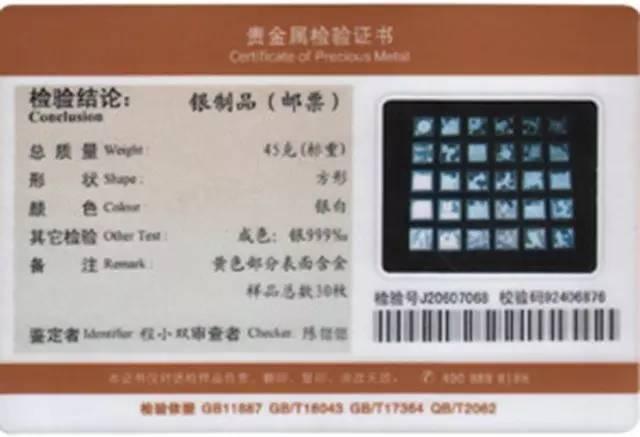
Issued for jewelry made of:
- Gold
- Karat gold (K-gold)
- Platinum
- Silver
These usually appear as either:
- A formal certificate, or
- A metal content tag
4. Other Reports (Supplemental Fake Jewelry Certificate Guide)
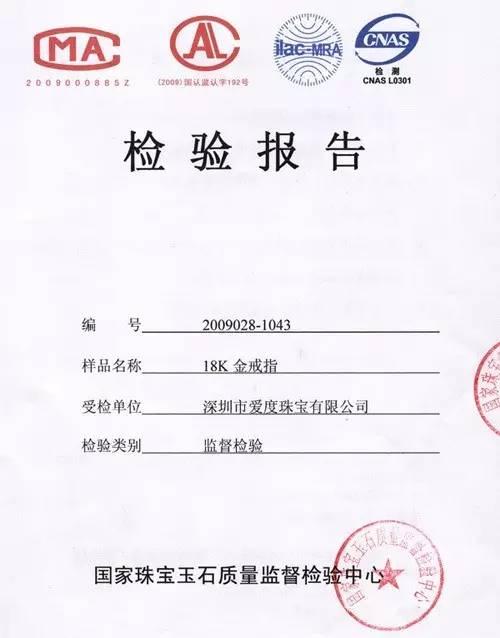
Such as inspection reports or testing summaries, which are rare in retail jewelry circulation. While these are less common, our fake jewelry certificate guide recommends treating any non-standard report with extra caution to ensure your purchase is fully protected.
How to Verify Jewelry Certificate Marks: CMA, CNAS & ILAC-MRA
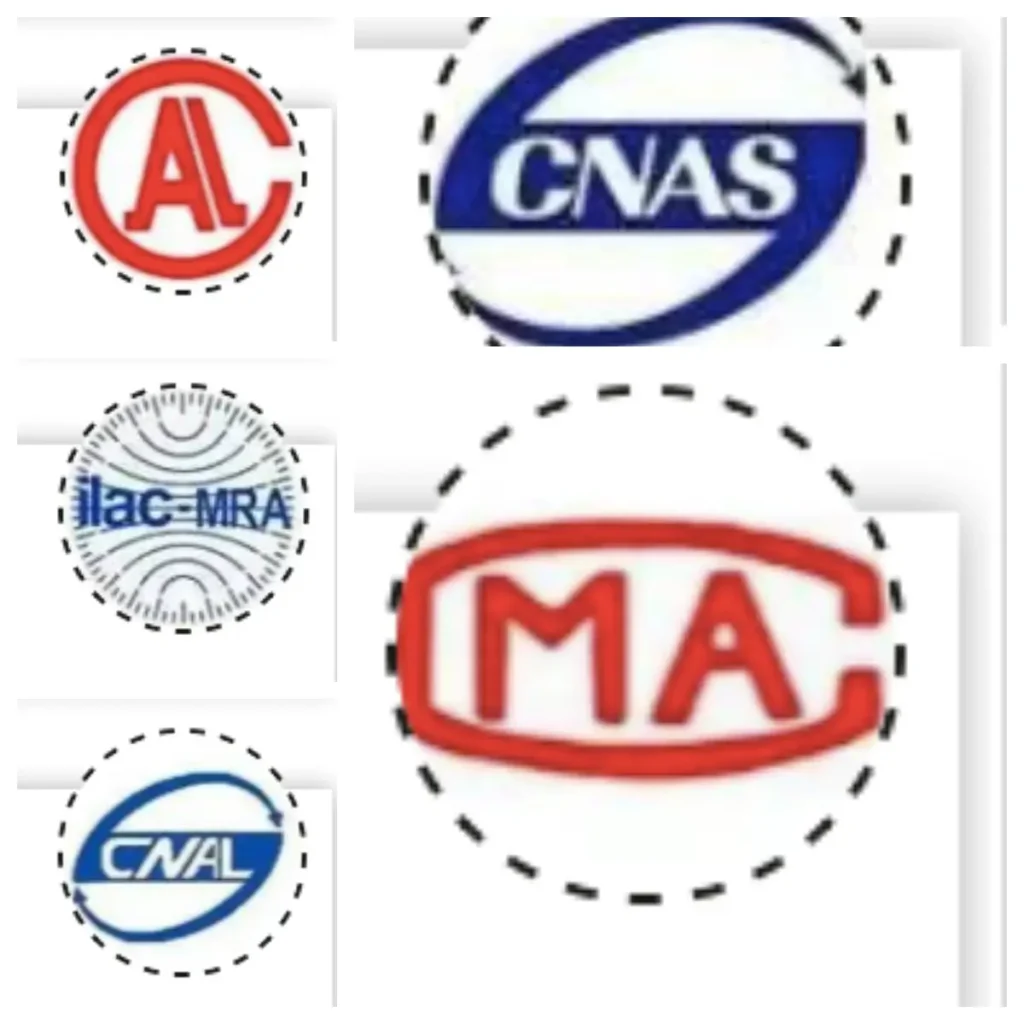
This is the most important section for determining whether a certificate is trustworthy.
In China, legitimate gemological laboratories are regulated by national law.
As a result, official jewelry certificates must display one or more of the following accreditation marks:
| Logo | Full Name & Meaning | Key Details | Validity |
| CMA | China Metrology Accreditation | Mandatory by law under the PRC Metrology Law. Verifies the lab’s testing capability and data reliability. | 2 Years |
| CAL | China Accredited Laboratory | Advanced authorization granted after CMA. Allows government-entrusted market spot inspections. | 2 Years |
| CNAS | China National Accreditation Service | International standard. Confirms compliance with global testing and calibration competence. | 3 Years |
| ILAC-MRA | International Laboratory Accreditation Cooperation (ILAC-MRA) | Global mutual recognition. Results accepted by 56 accreditation bodies across 46 economies. Often paired with CNAS. | 3 Years |
| CNAL | China National Accreditation Laboratory | Legacy mark. Former national accreditation system. Generally unnecessary for CNAS-accredited labs. | Legacy |
CMA is the minimum legal requirement.
If a certificate does not show any of these marks, it is essentially unreliable.
Government authorities regularly inspect certified laboratories. Institutions that fail inspections may be required to correct issues — or even lose accreditation entirely.
Remember the symbols — not the wording.
If you have certificates at home, take them out and check the accreditation marks immediately.
China Gem Testing Labs: National, Provincial & City-Level
1. National-Level Institutions
Established by China’s national quality supervision authorities.
- NGTC — National Gemstone Testing Center (China)
Website: China Ministry of Natural Resources Jewelry Center - NJQSIC — National Jewelry Quality Supervision and Inspection Center (China)
Website: National Jewelry Quality Supervision Center
2. Provincial-Level Institutions
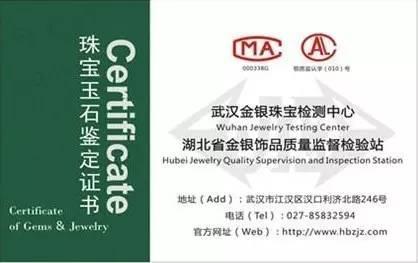
Authorized by provincial geological bureaus or quality supervision departments.
- GTC — Guangdong Gem & Precious Metal Testing Center (China)
Website: GTC Guangdong Official Site - Hubei Gold & Silver Jewelry Quality Inspection Station (China)
Website: Hubei Jewelry Inspection Station
3. Regional / City-Level Institutions
Legally established local laboratories with metrology certification.
- Ruili Testing Station, Dehong Prefecture, Yunnan (China)
- Xinjiang Gemstone & Jade Quality Supervision Station (China)
4. University-Affiliated Institutions
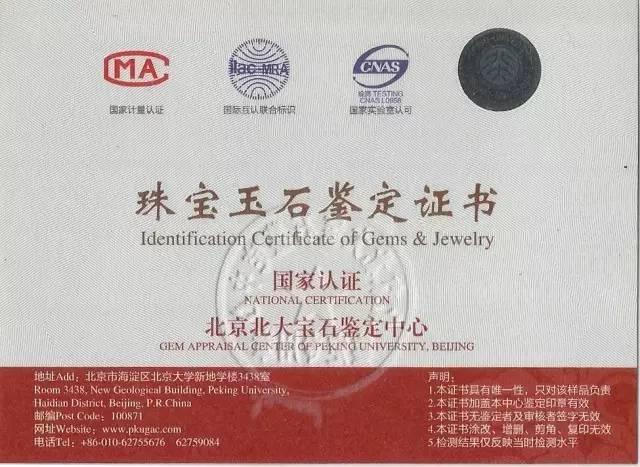
Established by universities with gemology departments and independent legal status.
- Peking University Gem Identification Center (China)
- GIB — China University of Geosciences Gem Testing Center (Beijing)
- GIC — China University of Geosciences Jewelry Testing Center
5. Association & Market-Based Institutions
Independent laboratories affiliated with trade associations.
- CCGTC — All-China Federation of Industry & Commerce Jewelry Testing Center
- CQT — China Quality Testing Jewelry Center (Beijing)
- Zhongwei Gem & Jade Quality Testing Center (China)
How to Spot a Fake Jewelry Certificate: Step-by-Step Guide
1. Certificate Photos: Visual Proof of Authenticity
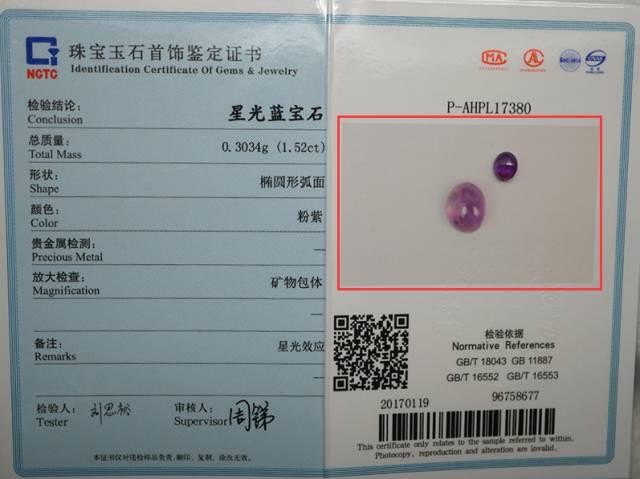
Every legitimate jewelry certificate includes a real, item-specific photograph of the tested piece. This image is your first checkpoint for verifying a report’s legitimacy.
1. Match the Photo to the Jewelry
Carefully compare the certificate photo with the actual item, focusing on overall appearance rather than style alone.
2. Verify Shape, Color, and Category
Confirm that the shape, color tone, and jewelry category (ring, bracelet, pendant, etc.) align exactly with the item in hand.
3. Use Weight as a Secondary Verification Point
Because many jewelry designs appear similar, recorded weight becomes a critical cross-checking metric, especially for finished pieces.
4. Look for Distinctive Physical Details
Some certificates document unique identifying features, such as:
- Sugar coloration or inclusions in jade
- Ring size
- Bracelet inner diameter
⚠️ Red Flag:
A generic photo, mismatched color tone, or missing item-specific details often indicates a reused or fake jewelry certificate.
2. Core Certificate Content: What Really Matters on a Jewelry Report
Not all certificate data carries the same weight.
Knowing which sections to prioritize is essential for correctly interpreting any jewelry report and avoiding fake jewelry certificates.
2.1 Diamond Grading Reports: Prioritize the 4Cs
For diamond certificates, the most critical information lies in the Diamond 4C grading system:
1. Color Grade
Indicates the diamond’s color quality and directly impacts value.
2. Clarity Grade
Reflects the presence and visibility of internal inclusions and surface blemishes.
3. Cut Proportions (Loose Diamonds Only)
For loose stones, cut proportions determine brilliance, fire, and overall performance.
2.2 Precious Metal Reports: Purity Comes First
For gold, platinum, and silver jewelry, focus on:
1. Metal Type
Confirms whether the item is gold, karat gold, platinum, or silver.
2. Purity Percentage
Verifies metal fineness (e.g., Au 750, Pt 950), which directly affects durability and value.
2.3 Gemstone Identification Reports: The Name Is the Verdict
For colored gemstones and jade, the identification conclusion (gemstone name) is the most important line on the certificate.
2.4 Critical Naming Rules (Based on Chinese National Standards)
According to official Chinese gemological standards:
1. Natural gemstones do NOT include the word “natural”
If no treatment or synthesis is involved, the gemstone name appears alone.
2. Treated gemstones must be clearly labeled
Any enhancement process must be disclosed and explained in the remarks section.
3. Synthetic materials must be explicitly identified
Laboratory-created stones are never named the same as natural ones.
Examples:
- “Tourmaline” → Natural gemstone
- “Tourmaline (treated)” → Natural stone with disclosed enhancement
- “Synthetic Tourmaline” → Laboratory-created material
2.5 Supporting Descriptive & Testing Data
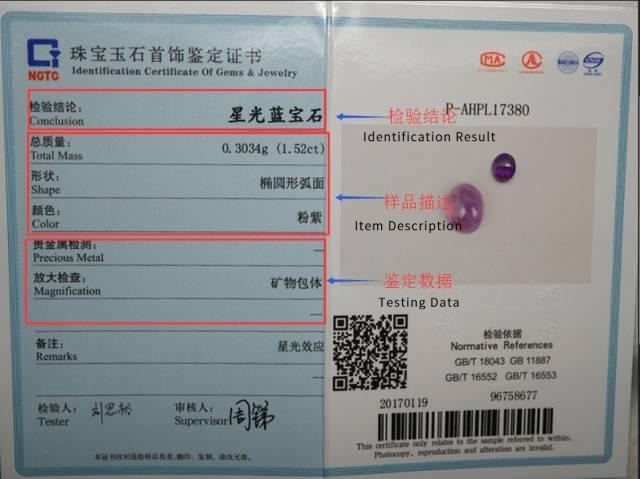
In addition to the identification result, legitimate certificates also include:
- Color
- Shape / cutting style
- Weight
- Gemological testing data, such as:
- Refractive index
- Density
- Spectroscopy results
- Microscopic (magnification) observations
⚠️ Red Flag:
Vague gemstone names, missing treatment disclosure, or incomplete testing data are strong indicators of a fake or unreliable jewelry certificate.
3. Remarks Section: Where Treatments Are Revealed
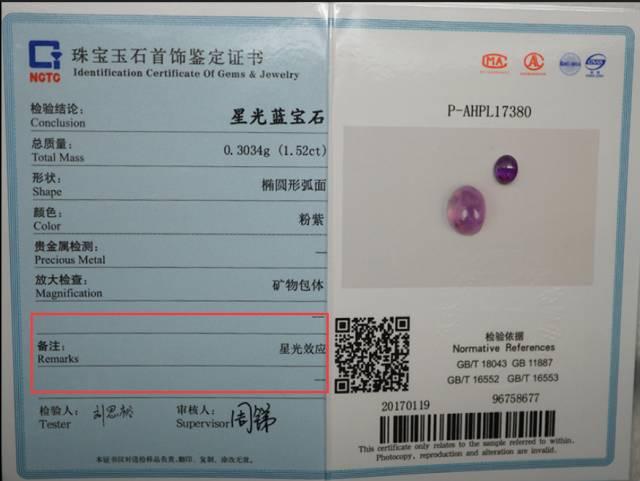
The Remarks section is one of the most critical—and most frequently overlooked—parts of a jewelry certificate. This area acts as the laboratory’s “full disclosure” zone, where the true nature of the stone is revealed.
1. Disclosure of Gemstone Treatments
Any enhancement or optimization must be clearly stated here.
For example, oil-treated emeralds are typically labeled as having clarity enhancement.
2. Explanation of Commercial Names
If a gemstone is sold under a trade or commercial name, the remarks section clarifies its gemological identity to prevent misleading descriptions.
3. Accent Stones in Finished Jewelry
For completed jewelry pieces, this section often lists secondary or accent stones, ensuring transparency about all materials used.
⚠️ Red Flag:
A blank remarks section on a gemstone that is commonly treated — or vague wording that avoids specifics — is a strong warning sign of a fake or incomplete jewelry certificate.
4. Applied Testing Standards: The Legal Foundation for Authentic Certificates
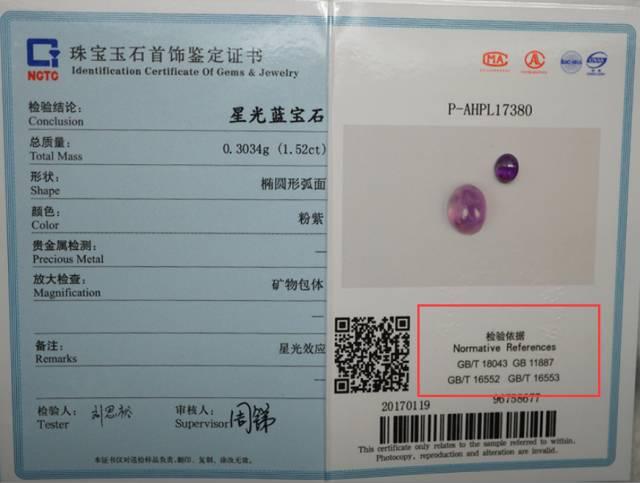
A legitimate jewelry certificate is not just a document—it is a legal proof backed by national testing standards.
In China, authorized laboratories must strictly follow the Guobiao (GB/T) system.
1. Gemstone Nomenclature (GB/T 16552)
Defines the official naming rules for all gemstones, ensuring consistency and preventing mislabeling (see Section 2.4).
2. Gemstone Identification (GB/T 16553)
Specifies the testing protocols for physical and optical properties, such as refractive index, density, and magnification observations.
3. Diamond Grading (GB/T 16554)
Covers color, clarity, cut, and carat standards, essentially the Chinese equivalent to the GIA 4Cs system.
4. Precious Metals Testing (GB/T 18043 & GB/T 11887)
- Ensures metal type and purity (e.g., Au 750, Pt 950) are verified using XRF (X-ray fluorescence) testing.
- Guarantees naming and labeling follow strict national purity laws.
⚠️ Red Flag:
Fake or outdated certificates often omit these references, cite old codes, or use incorrect standards.
If the report lists all the current GB/T standards, it demonstrates compliance with strict governmental oversight, making it significantly more trustworthy.
5. Verified Signatures
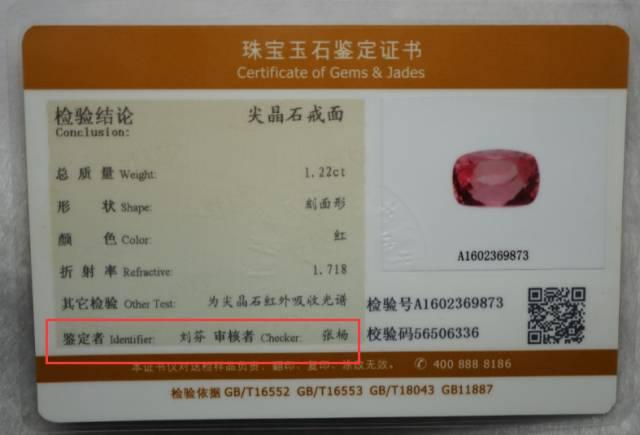
Most legitimate jewelry certificates require dual-level authentication to ensure testing accuracy and accountability.
1. Tester and Reviewer System
Authentic reports typically list both a Tester (Gemologist) and a Reviewer (Senior Examiner), reflecting an internal verification process.
2. Handwritten vs. Printed Signatures
While many laboratories use handwritten signatures, high-resolution printed or digital signatures are acceptable only if used consistently by the issuing lab.
3. Visual Integrity Check
Be cautious if signatures appear pixelated, mechanically identical, or reused across certificates for different jewelry items — a common indicator of a fake jewelry certificate.
⚠️ Red Flag:
Missing roles, duplicated signatures, or inconsistent signature formats strongly suggest a forged report.
6. Official Seal & Certificate Number
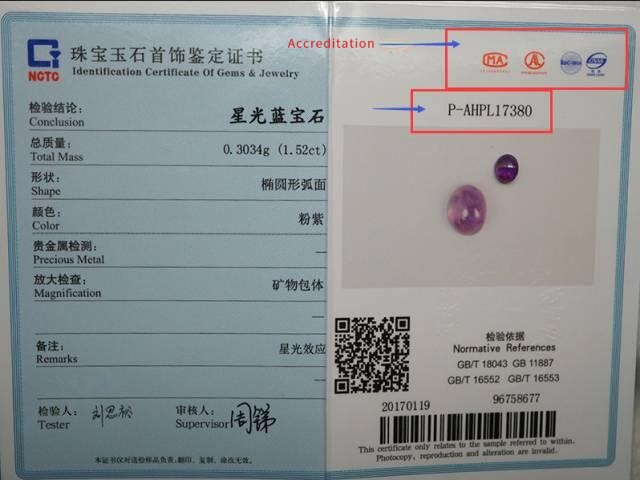
Every legitimate jewelry certificate includes physical and numerical identifiers that are extremely difficult to replicate. The absence of these elements is one of the clearest signs of a forged report. To ensure authenticity, pay close attention to the following:
1. Embossed Official Seal
Authentic certificates feature a raised, tactile seal that can be felt by touch. The seal should clearly display the laboratory’s full legal name and remain intact under light pressure.
2. Full Institutional Name
The issuing authority’s complete official name must be printed consistently across the certificate, seal, and verification records.
3. Unique Certificate Number
Each certificate is assigned a single, non-repeatable identification number that should correspond exactly to the jewelry item and be verifiable through the institution’s official database.
⚠️ Red Flag:
Flat printed seals, duplicated certificate numbers, or mismatched institution names strongly indicate a fake jewelry certificate.
7. Contact Information & Logo: Verifying Authenticity
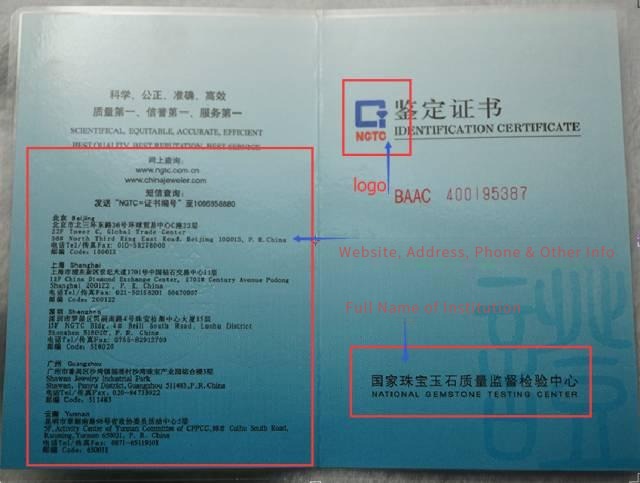
A genuine jewelry certificate serves as a legal document and must provide clear, verifiable contact information. Missing or vague institutional details are among the most common red flags for consumers.
To identify a fake jewelry certificate, look for these five official verification markers:
1. Official Institution Name
The full legal name of the testing laboratory should be clearly visible. Be wary of abbreviated names or commercial nicknames that don’t match official government registries.
2. Recognizable Official Logo
Look for a high-resolution, professionally printed logo. It should be crisp and identical to the branding shown on the institution’s official website.
3. Physical Address
A complete and traceable physical address is mandatory. Be cautious of certificates listing only a city name, a P.O. box, or no address at all.
4. Telephone Number
A fixed-line or official service hotline is a mark of a real lab. If the number provided is a mobile phone or consistently goes unanswered, it is likely a fake jewelry certificate.
5. Independent Official Website
The website must be independently operated by the institution. Ensure it is not a third-party portal or a cloned domain designed to mimic a real database.
6. Accreditation Symbols (CMA, CAL, CNAS)
Valid accreditation marks such as CMA, CAL, and CNAS should be clearly printed. These indicate the lab’s legal authorization status to issue professional reports.
⚠️ Important Safety Tip:
Always verify contact details by searching the institution independently via a search engine. Never rely solely on URLs or QR codes printed on the report, as counterfeiters frequently create convincing clone websites to validate fake jewelry certificates.
8. Anti-Counterfeiting Features
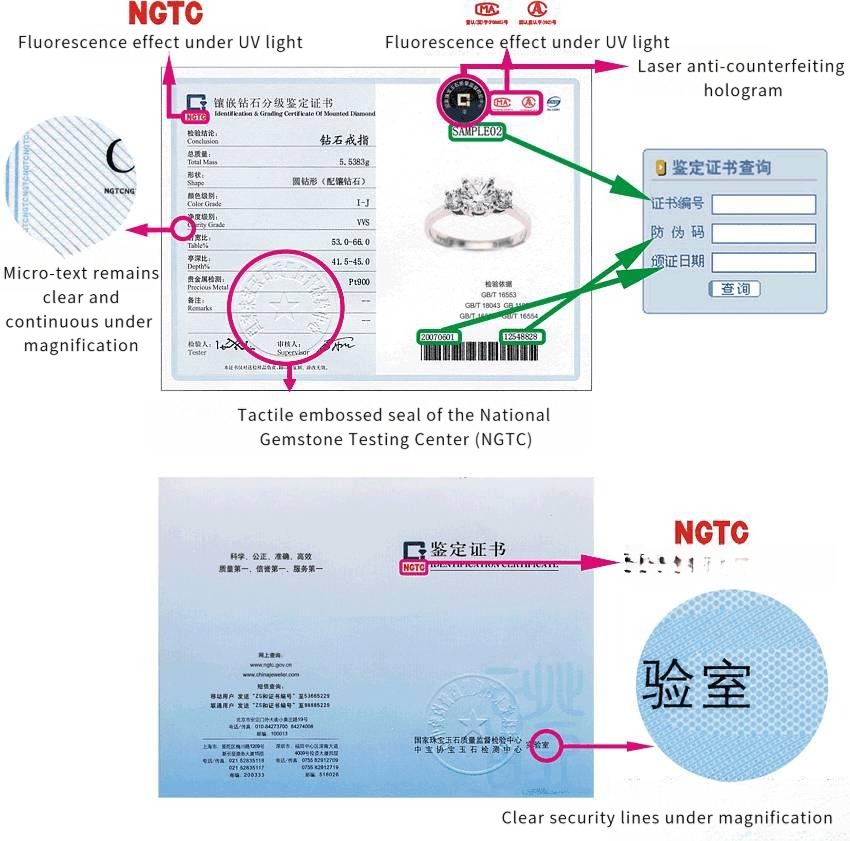
Don’t just look at the data—examine the physical certificate itself. Legitimate institutions employ sophisticated anti-counterfeiting measures to prevent cloning and fraud. To ensure your documentation is authentic, we recommend verifying the following elements:
1. Digital Verification
Scan the QR code or enter the verification number on the laboratory’s official website — not the URL printed on the certificate.
2. Holographic Security Seals
Authentic reports often feature laser holograms that shift color or pattern when tilted.
3. UV-Reactive Logos
Many legitimate labs use logos or symbols that glow under a UV lamp — a common method to detect fake jewelry certificates.
4. Physical Texture & Micro-Details
Feel for a tactile embossed seal and check for continuous micro-text using a 10× loupe.
5. Dynamic Security Elements
Some institutions, such as GTC, use heat-sensitive ink that changes color when warmed by your hand.
University-affiliated labs may also use proprietary holographic features.
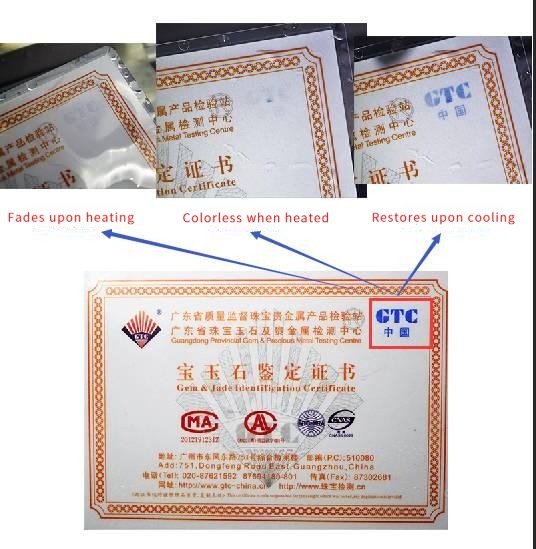
Conclusion: If any of these features are missing or appear blurry, consult our full fake jewelry certificate guide or contact the issuing lab directly to protect your investment.
Common Signs of Forged Jewelry Certificates
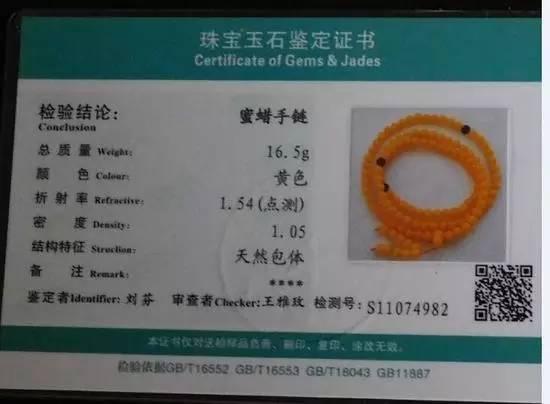
Counterfeit jewelry certificates often exhibit obvious signs of forgery. Common red flags include:
- Incorrect paper color: Professional labs use specific security paper.
- Wrong website URLs: Scammers create “clone” sites that look official but have slightly different domains.
- Incorrect logos: Fake certificates often use outdated or low-resolution accreditation marks.
- Random layout formatting: Real certificates follow a strict, standardized layout.
- Mismatched accreditation claims: Claiming a status that doesn’t exist or is expired.
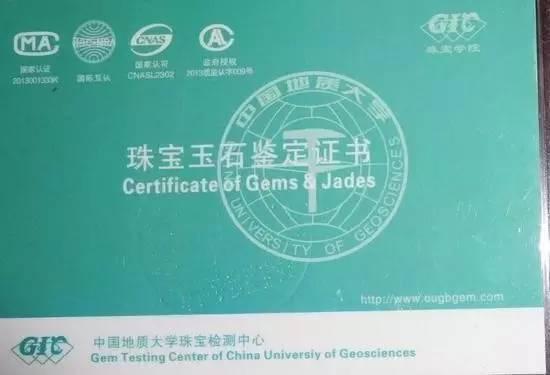
Example: China University of Geosciences (GIC) certificates are orange-toned, not green. Finding a white certificate claiming to be from GIC is a major red flag.
Carefully checking these details can help buyers identify potentially fake jewelry certificates and avoid scams.
Quick Checklist to Verify Your Jewelry Certificate
- Plastic-sealed certificate with embossed seal
- One certificate = one unique number
- Jewelry photo matches the actual item
- Weight deviation under 0.02g for items under 200g
- Website, address, phone match the official institution site
- “Natural color” wording = fake
- Identification result includes jewelry type (e.g., “Jadeite Bracelet”)
- Verify through official institutional websites, not printed URLs
- CMA accreditation present (preferably with CAL + CNAS)
Final Thoughts: Your Fake Jewelry Certificate Guide to Protection
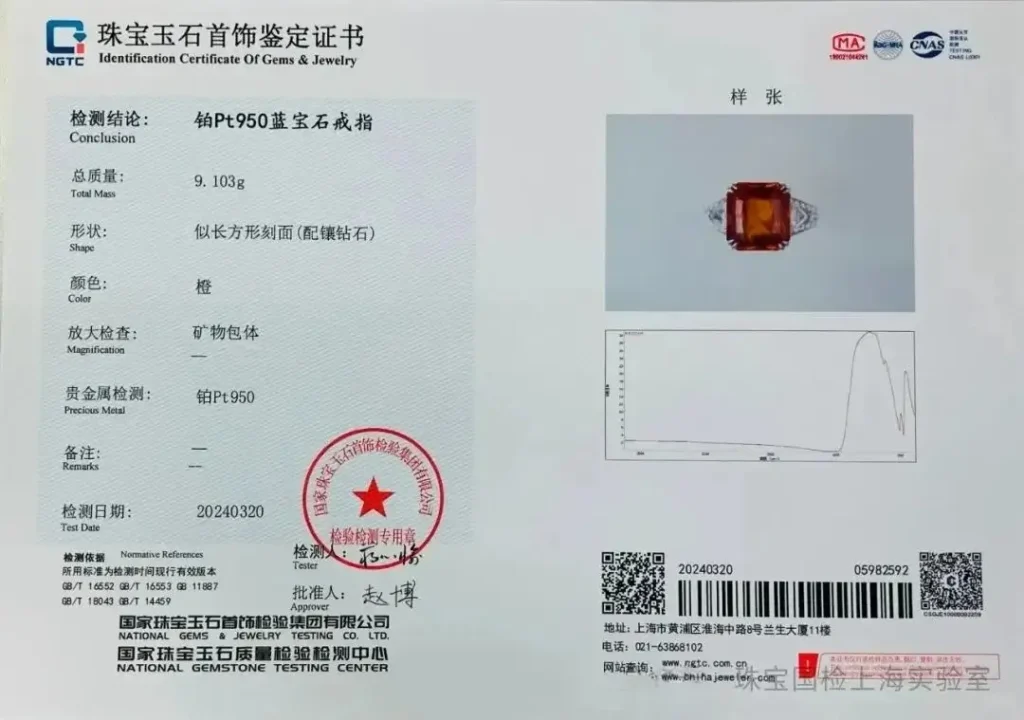
By understanding how jewelry certificates really work — and how fake ones are made — you can confidently separate authenticity from deception.
At PeonyJewels, we believe true luxury begins with honesty, transparency, and education. That’s why we carefully select every material, work exclusively with credible testing institutions, and openly explain gemstone characteristics to our customers.We apply this same level of integrity to our curated collection of Handmade Vintage Earrings, ensuring that every intricate design is matched by genuine quality. Because a beautiful piece of jewelry should never come with doubt — only confidence.
Not sure if your certificate is genuine? At PeonyJewels, we offer professional guidance for our customers. [Send us a message] if you need help verifying a piece or if you want to learn more about the craftsmanship behind our vintage-inspired collections!
If you found this guide helpful, consider saving it for future reference.