Do You Really Need a Gemstone Certificate?
Gemstone Certificate Needed—or Is the Certificate Just a Piece of Paper?
Many customers ask the same questions:
- “Why does the same diamond cost so much more with a certificate?”
- “Is the seller hiding something if there’s no report?”
- “Can I get a gemstone certificate for $20–$30?”
These are fair questions — especially in an online market where prices vary wildly.
The short answer is this:
A gemstone certificate is not just paper. It is time, expertise, technology, and accountability.
In this guide, we’ll explain:
- Why certified stones cost more
- What major gem labs actually do
- How much certificates really cost
- Which reports make sense for everyday buyers — and which are meant for auctions
By the end, you’ll know exactly when a certificate is essential — and when it isn’t.
📑 Table of Contents
- Why Certified Gemstones Cost More
- What You’re Really Paying For
- GIA Diamond Reports: Global Standard for Diamond Certification
- Why GIA Is the Global Standard for Diamond Grading
- GIA Report Types Explained
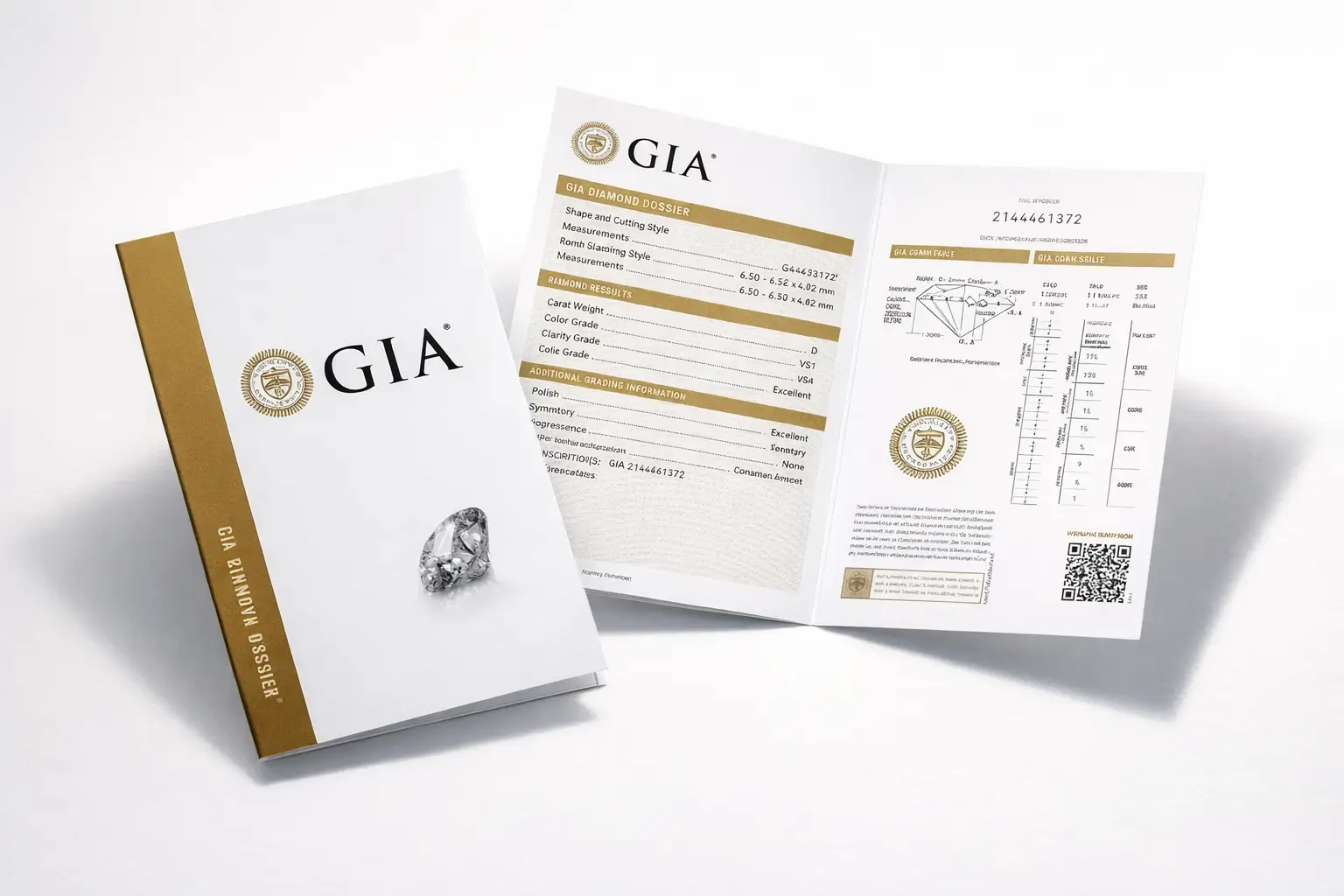
- GIA Dossier (Small Report)
- GIA Full Grading Report (Large Report)
- Typical GIA Pricing (Approximate)
- Why GIA Certification Adds Real Cost
- GRS Reports: Market Authority for Colored Gemstone Certification
- Why GRS Dominates the Colored Stone Market
- The Anatomy of a GRS Laboratory Report
- Understanding GRS Pricing & Turnaround
- Do You Need a GRS Gemstone Certificate?
- Gübelin Reports: Auction-Level Gemstone Certification Standard
- Why Auction Houses Trust Gübelin
- Why Gübelin’s Grading Feels “Heart-Stopping” for Dealers
- Do You Need a Gübelin Gemstone Certificate?
- SSEF Reports: Scientific Authority in Gemstone Certification
- The Benchmark for Museum-Grade and Auction-Level Gems
- The Cost of Scientific Rigor
- Do You Need an SSEF Gemstone Certificate?
- NGTC Reports: Practical Gemstone Certification for China
- The Mounted Jewelry Advantage
- How NGTC Compares to GIA: The 0.50 Carat Rule
- Unmatched Efficiency: Cost, Speed, and Security
- Do You Need an NGTC Gemstone Certificate?
- So—When Is a Gemstone Certificate Needed?
- When a Gemstone Certificate Is Truly Needed
- When a Gemstone Certificate May Not Be Needed
- The PeonyJewels Perspective
- Truth, Craftsmanship, and Responsible Certification
Why Certified Gemstones Cost More
Understanding when a Gemstone Certificate Needed is key to avoiding both overpaying and under-protecting your investment. More than just paper, a professional report is your ultimate guarantee of scientific certainty.
Behind every certificate are:
- Highly trained gemologists
- Advanced spectroscopy and imaging equipment
- Strict grading standards
- Long testing timelines
- International shipping and insurance
In other words, you are paying for verified facts, not opinions.
That’s why a “$30 certificate” for a diamond or fine gemstone simply doesn’t exist — at least not from a lab the global market trusts.
GIA Diamond Reports: Global Standard for Diamond Certification
Why GIA Is the Global Standard for Diamond Grading
GIA (Gemological Institute of America) is widely regarded as the most authoritative and trusted diamond grading institution in the world.
Founded in 1931, GIA does not sell diamonds, broker stones, or profit from transactions. This strict independence is precisely why retailers, auction houses, and institutional buyers worldwide rely on GIA reports as the pricing foundation of the diamond market.
GIA sets the industry standard because it:
- Applies consistent and conservative grading criteria
- Operates as a non-profit, independent laboratory
- Established and maintains the global Diamond 4C grading system
- Uses advanced gemological instruments rather than subjective judgment
In practical terms, a GIA report functions as a common language—allowing buyers and sellers across countries to evaluate diamonds using the same benchmarks.
To better understand the 4C markings and buy with confidence, check out our PeonyJewels blog post: The Ultimate Guide to the 4Cs of Diamonds: Finding Your Perfect Engagement Ring.
GIA Report Types Explained
GIA issues two main types of diamond reports. The difference is not cosmetic—it reflects how much information is required for stones of different sizes.
GIA Dossier (Small Report)
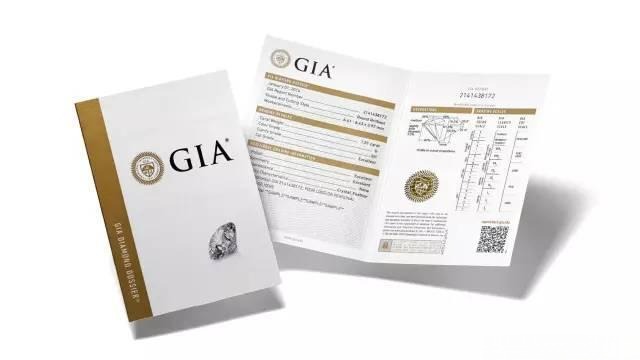
The GIA Dossier is designed for small to mid-size diamonds, where full clarity mapping is often unnecessary.
Key features:
- Compact report format
- No plotted clarity diagram
- Includes a laser inscription of the report number on the diamond’s girdle
- Most commonly used for 0.25–0.99 carat diamonds
- Typical cost: tens of USD
Because smaller diamonds tend to trade in standardized ranges, the dossier provides sufficient verification without unnecessary expense.
GIA Full Report (Large Report)
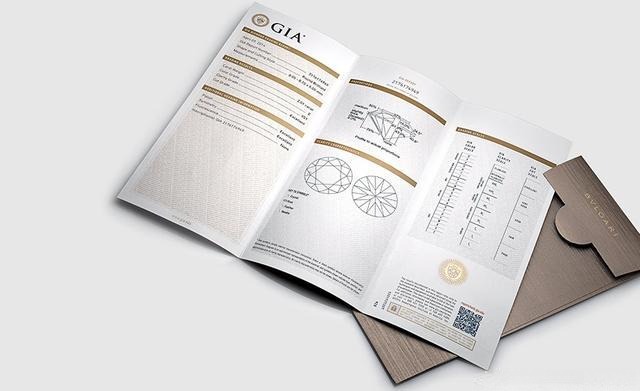
The GIA Full Grading Report is the gold standard for 1 carat and above diamonds, where even minor clarity differences can significantly affect value.
Key features:
- Comprehensive grading information
- Includes clarity plots (often described as the diamond’s “fingerprints”)
- Laser inscription may be optional or omitted on larger stones
- Most commonly used for 1.00 ct and above diamonds
- Base price starts around $100 USD, increasing with size
For higher-value diamonds, clarity plots provide critical identification and long-term traceability—especially important for resale or insurance purposes.
Typical GIA Pricing (Approximate)
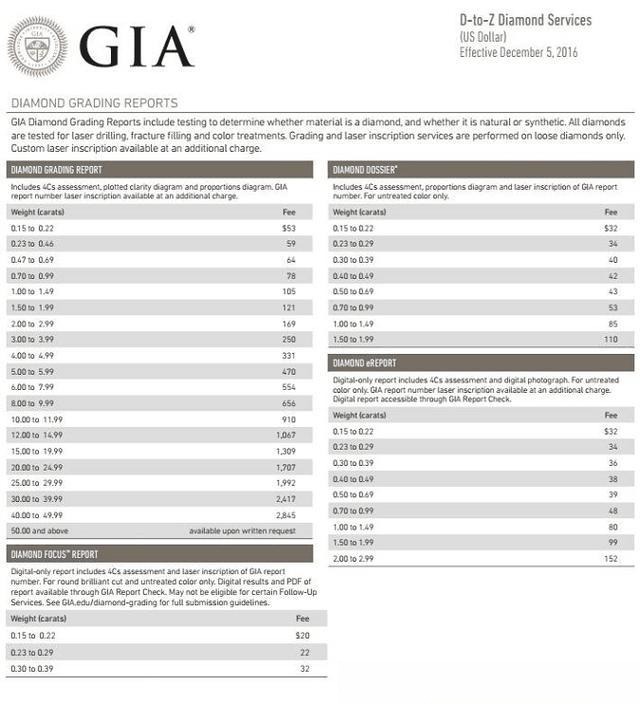
GIA fees increase progressively with carat weight due to longer examination time and higher insurance risk:
- 1.00–3.99 ct: $105–250
- 4.00–9.99 ct: $331–656
- 10.00–24.99 ct: $910–1,707
- 25.00–49.99 ct: $1992–2,845
- 50 ct and above: Price upon request
GIA fees increase progressively with carat weight due to longer examination time and higher insurance risk. These costs reflect laboratory services only and do not include shipping, insurance, or customs-related expenses.
While the laboratory fees may seem high, they represent only a fractional investment to safeguard the six-figure value of a truly high-quality stone.
Why GIA Certification Adds Real Cost
All GIA grading laboratories are located in the United States. For international sellers and buyers, this means:
- Secure international shipping
- High-value insurance coverage
- Longer turnaround times
While these factors increase cost, they also ensure that grading remains centralized, consistent, and globally recognized.
This is why a GIA-certified diamond often commands a higher price—and why that premium is rooted in verifiable trust rather than marketing.
GRS Reports: Market Authority for Colored Gemstone Certification
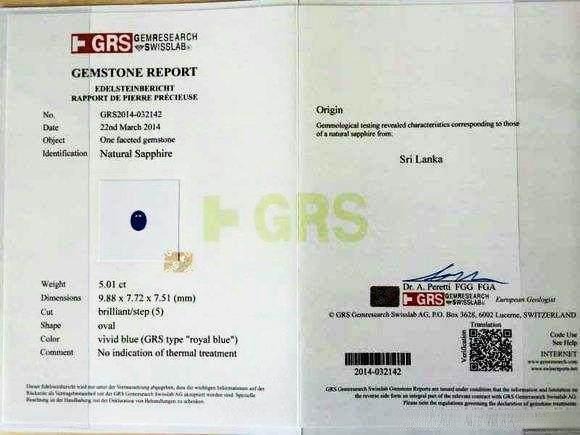
If GIA represents the global benchmark for diamonds, GRS (GemResearch Swiss Lab) stands as the undisputed authority in the world of fine colored gemstones.
For buyers and collectors of high-end rubies, sapphires, and emeralds, a GRS report is more than documentation—it is a globally recognized signal of quality, rarity, and market legitimacy.
Why GRS Dominates the Colored Stone Market
Founded in 1996 by renowned gemologist Dr. Adolf Peretti, GRS has become the preferred laboratory for:
- Major international auction houses, including Sotheby’s and Christie’s
- Elite gemstone dealers and trading houses
- Serious collectors and investment buyers
What truly distinguishes GRS is that it does not merely grade gemstones—it defines the language of the colored gemstone market.
GRS pioneered and standardized trade terms that now directly influence global pricing, including:
- Pigeon’s Blood Ruby — the benchmark for the most vivid, saturated red
- Royal Blue Sapphire — the most desirable depth of blue in sapphires
When these terms appear on a GRS report, they are not marketing descriptions. They represent market-accepted classifications that can materially impact a gemstone’s value.To learn more about systematic ruby grading, read our PeonyJewels blog post: Pigeon’s Blood? Royal Red? Understanding Six Major Ruby Grading Systems.
The Anatomy of a GRS Laboratory Report
A standard GRS report provides a comprehensive and objective profile of a gemstone, including:
- Grades Color Professionally
Uses proprietary, trade-trusted terminology recognized by the global market. - Detects Treatments Accurately
Identifies whether a gemstone is untreated, heat-treated, or enhanced. - Assesses Possible Origin
Provides expert opinions on sources such as Burma (Myanmar), Sri Lanka, or Colombia, upon request.
Together, these factors allow buyers to assess not just beauty, but authenticity, rarity, and long-term value.
Understanding GRS Pricing & Turnaround
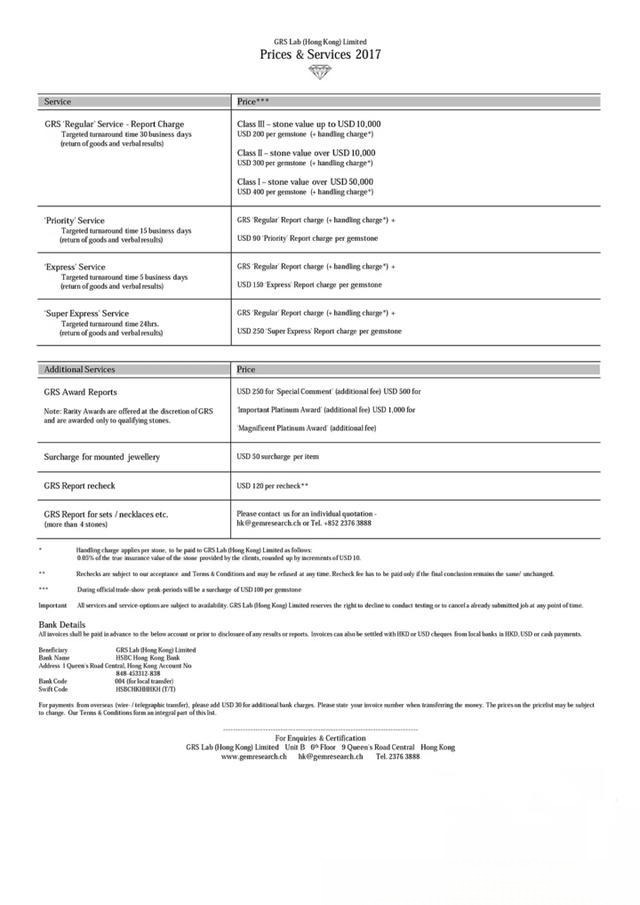
Obtaining a GRS report is a strategic investment, not merely an added cost.Because GRS employs rigorous testing standards and internationally recognized methodologies, certification requires both time and investment:
- Standard service: Typically starts at $100+ USD, with a turnaround of 4+ weeks
- Express service: For time-sensitive transactions, expedited options range from $200 to $500 USD
While these fees may exceed those of local gem labs, the liquidity, trust, and resale confidence a GRS report provides often outweigh the upfront cost.
Do You Need a GRS Gemstone Certificate?
For most buyers of fine colored gemstones, GRS offers the ideal balance between global authority and practical accessibility.
It delivers what many consumers need most:
- International credibility
- Market-aligned grading
- Strong value protection
—without the extreme costs or ultra-conservative grading standards associated with elite scientific institutions like SSEF or Gübelin.
Pro Tip
If you are purchasing a ruby or sapphire for investment, the Gemstone Certificate Needed is undoubtedly a GRS report. It ensures you are paying for verified quality—not a dealer’s description.
Gübelin Reports: Auction-Level Gemstone Certification Standard
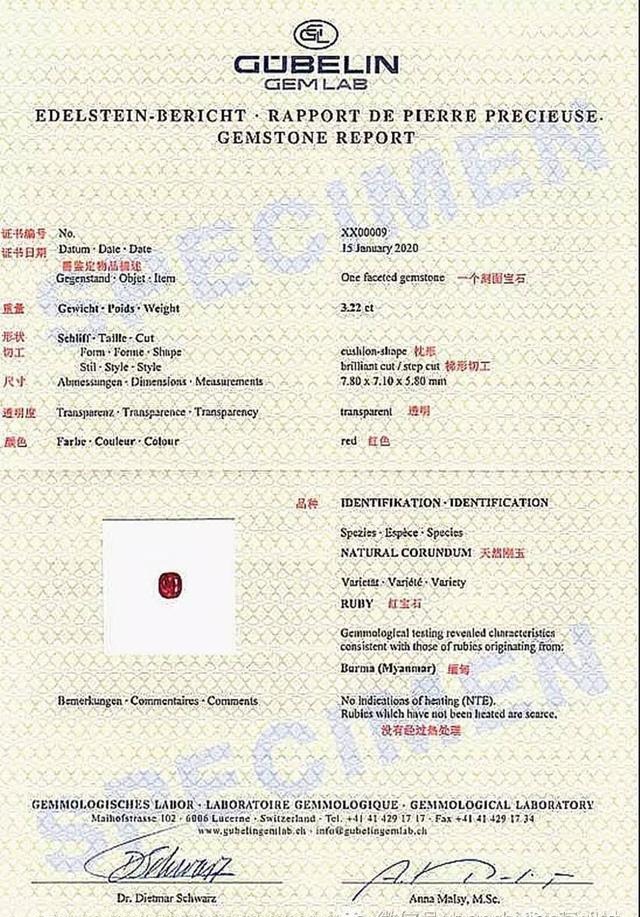
Founded in 1923, Gübelin is one of Switzerland’s most prestigious gemological institutions and widely regarded as the highest benchmark for auction-level gemstone certification.
If GIA defines global standards and GRS dominates the commercial colored stone market, Gübelin operates at an even higher tier—where scientific rigor outweighs commercial convenience. Its reports are trusted by major auction houses, royal collections, elite jewelers, and serious gemstone collectors worldwide.
Why Auction Houses Trust This Swiss Institution
Gübelin has earned its reputation through nearly a century of absolute independence and uncompromising scientific discipline.
The laboratory is globally recognized for:
- Extremely Conservative Grading
Gübelin is famously strict. A gemstone graded as “Pigeon’s Blood” or “Vivid” by other labs may be described more cautiously by Gübelin. While this can feel “emotionally brutal” for sellers, it offers maximum protection and confidence for buyers. - Independent Academic Standards
Every conclusion is grounded in advanced scientific research and supported by one of the world’s most comprehensive reference collections of gemstones from historic mines. - Unmatched Auction Credibility
In high-stakes environments such as Sotheby’s and Christie’s, a Gübelin report often serves as the final authority influencing bidder confidence and hammer price.
Why Gübelin’s Grading Feels “Heart-Stopping” for Dealers
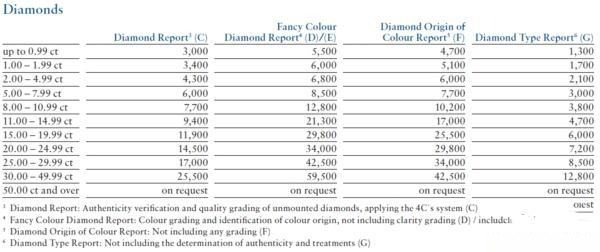
This level of precision comes at a premium. Gübelin’s fees reflect the intensive scientific analysis required for each stone. Using diamonds as a reference (based on Hong Kong laboratory rates):
- 1–2 ct colorless diamond: approximately HKD 3,400 (~USD 435) for a full grading report
- 1–2 ct fancy color diamond: approximately HKD 6,000 (~USD 770)
Note: For high-value rubies, sapphires, and emeralds, additional fees often apply for origin determination and advanced treatment analysis.
Do You Need a Gübelin Gemstone Certificate?
Gübelin represents the elite tier of certification, but it isn’t the only Gemstone Certificate Needed for every purchase. It is a strategic choice reserved for high-stakes investments.
Gübelin is strongly recommended if:
- You are acquiring an investment-grade gemstone (for example, an unheated Burmese ruby or a rare sapphire over 5 carats)
- You are preparing a gemstone for international auction
- You require the most scientifically rigorous verification available today
Reality check:
getting a Gübelin report can be a ‘heart-stopping’ experience even for a seasoned dealer.
For everyday fine jewelry, engagement rings, or high-end commercial pieces, Gübelin is often unnecessary. Its high cost and conservative grading standards mean that, for most consumers, GIA (diamonds) or GRS (colored gemstones) provide more than sufficient protection—without the financial and emotional pressure that Gübelin certification can bring.
Editorial Insight
Gübelin is not “too expensive” or “too strict”—it is simply built for a different level of the market. At PeonyJewels, we help our clients navigate these complexities to determine which certification aligns best with their specific investment goals. Understanding when this authority is essential is the key to making a rational, confident purchasing decision.
SSEF Reports: Scientific Authority in Gemstone Certification
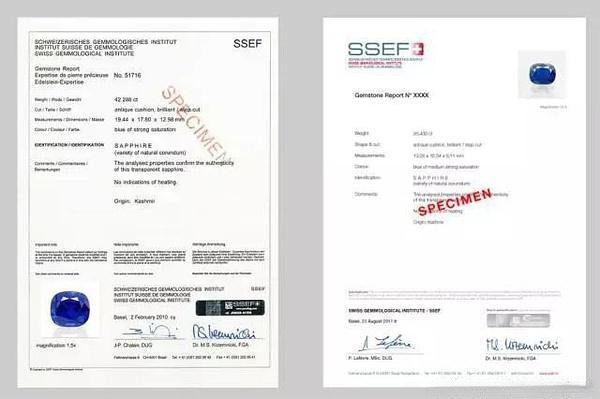
While GRS dominates the commercial gemstone market, SSEF (Swiss Gemmological Institute) operates in a very different realm—pure science, historic preservation, and academic authority.
Founded in 1974 as a non-profit research foundation, SSEF is not merely a gem laboratory. It is a world-renowned scientific institute whose research has helped define modern gemological standards. As a result, its reports carry exceptional weight among museums, auction houses, and institutional collectors.
The Benchmark for Museum-Grade and Auction-Level Gems
In the world of exceptional gemstones, SSEF is often regarded as the final word.
If a gemstone is destined for a museum collection or positioned as a centerpiece lot at Sotheby’s or Christie’s, it is highly likely to be accompanied by an SSEF report.
The global trade relies on SSEF primarily for:
- Historic and Rare Gemstones
SSEF specializes in stones with documented provenance, cultural significance, and multi-million-dollar valuations. - The World Authority on Pearls
SSEF is the premier choice for Natural Pearl identification.
The institute is widely considered the leading authority in distinguishing natural vs. cultured pearls, as well as saltwater vs. freshwater origins. - Unheated and Untreated Stones
Through advanced chemical, spectroscopic, and microscopic analysis, SSEF provides some of the most rigorous verification available for gemstones claimed to be “completely natural.”
The Cost of Scientific Rigor
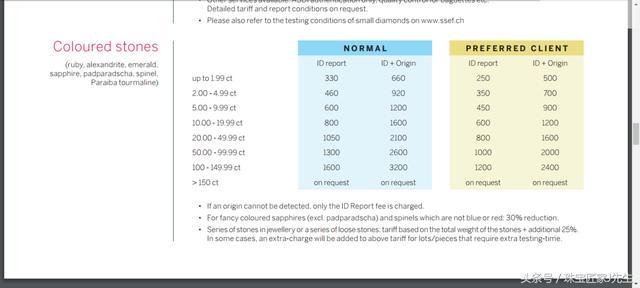
Because SSEF functions as a high-level research facility rather than a commercial grading lab, its services require a meaningful financial and logistical commitment.
To illustrate:
- Example Case
A report for a 2–5 ct colored gemstone, including origin determination, costs approximately
CHF 920, which is roughly USD 1,040 / RMB 7,500+. - Important Logistics Note
This fee does not include the additional cost of insured, armored international shipping, nor the extended turnaround times required for such in-depth scientific analysis.
In other words, commissioning an SSEF report is as much a strategic decision as it is a technical one.
Do You Need an SSEF Gemstone Certificate?
In the professional trade,
the SSEF vs GRS distinction is clear: while GRS provides commercial speed and market-recognized terms, SSEF provides unmatched scientific depth.
The SSEF vs Gübelin comparison often comes down to intent: while Gübelin is the arbiter of historical prestige and aesthetic strictness, SSEF is a specialized scientific tool built for laboratory-grade certainty.
It delivers unmatched scientific authority, but its conservative standards, higher costs, and longer timelines mean it is best reserved for truly exceptional cases.
SSEF is the right choice if:
- You own a museum-grade or historically significant gemstone
- You are dealing with high-value natural pearls
- You require a scientific heavyweight to support a high-stakes investment or auction placement
For the Everyday Collector:
For most fine jewelry purchases—even at the high end—an SSEF report is usually unnecessary. While its prestige is unparalleled, the practical protection and market recognition offered by GIA or GRS reports are more than sufficient for over 95% of the global fine jewelry market.
NGTC Reports: Practical Gemstone Certification for China
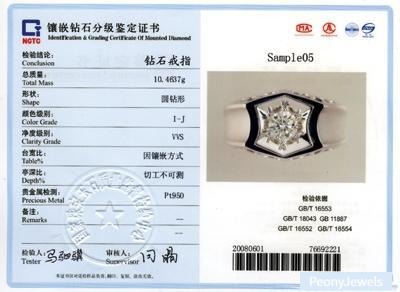
While Swiss laboratories dominate the international auction world, NGTC (National Gemstone Testing Center of China) provides the most practical, efficient, and reliable certification framework for the Mainland Chinese market. As China’s state-supervised gemological authority and a recognized cooperation partner of GIA in Mainland China, NGTC plays a critical role in bridging international grading principles with local trade realities.
The Mounted Jewelry Advantage
One of NGTC’s most valuable strengths lies in its ability to grade mounted diamonds.
Unlike many international laboratories that focus primarily on loose stones, NGTC routinely evaluates diamonds already set in finished jewelry. This makes it an indispensable authority for verifying engagement rings, pendants, earrings, and heirloom pieces without the need for costly and risky stone removal.
For everyday buyers and sellers, this practical capability alone often determines the choice of laboratory.
How NGTC Compares to GIA: The 0.50 Carat Rule
Although NGTC aligns its grading philosophy closely with GIA, it applies a more conservative interpretive lens in certain weight categories. Understanding this distinction is essential when comparing reports:
- Stricter Clarity Standards for Small Diamonds
For diamonds under 0.50 ct, NGTC is known for particularly rigorous clarity assessment. Stones previously graded by GIA may receive a slightly lower clarity grade at NGTC—commonly referred to in the trade as “downgrading,” but in reality reflecting NGTC’s built-in safety margin. - Strong Consistency for Larger Stones
For diamonds above 0.50 ct, grading results between NGTC and GIA typically align closely, with minimal variance in clarity or overall assessment.
This weight-based distinction explains most perceived discrepancies between the two laboratories.
Unmatched Efficiency: Cost, Speed, and Security
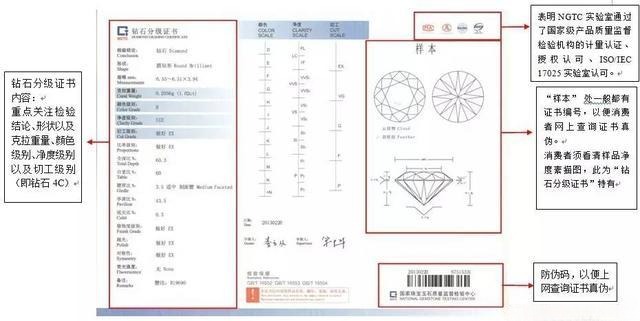
From a logistical and economic standpoint, NGTC offers advantages that international laboratories cannot easily replicate within China:
- Exceptional Affordability
Certification fees often remain under RMB 100 (≈ $14 USD), making NGTC the most cost-effective option for professional verification. - Zero International Logistics Risk
By eliminating overseas shipping, customs clearance, and high-value transit insurance, NGTC significantly reduces both financial exposure and waiting time.
For domestically traded jewelry, this efficiency is difficult to match.
Do You Need an NGTC Gemstone Certificate?
NGTC is the practical winner for everyday luxury, though it serves a fundamentally different purpose than the Swiss laboratories.
NGTC is the ideal choice if:
- You are buying or selling jewelry within Mainland China
- Your gemstone is already mounted in a finished piece
- Speed, affordability, and logistical simplicity are top priorities
The Bottom Line:
For international resale or investment diamonds, GIA remains the global benchmark. However, for domestic trade and daily wear, NGTC delivers outstanding value—making it the most pragmatic gemstone certificate needed for the Chinese market to ensure dependable authenticity.
So—When Is a Gemstone Certificate Needed?
Not every gemstone requires laboratory certification. However, in certain situations, a report becomes an essential layer of protection rather than an optional extra.
When a Gemstone Certificate Is Truly Needed
- The gemstone represents significant monetary value
- Color, clarity, origin, or treatment materially affects pricing
- You are purchasing online or from an unfamiliar seller
In these cases, a respected lab report helps replace uncertainty with verifiable facts. It’s also important to know how to spot fake certificates—see our PeonyJewels blog post: How to Spot Fake Jewelry Certificates: A Buyer’s Guide to Authentic Reports, for practical guidance.
When a Gemstone Certificate May Not Be Needed
- The piece is design-driven, not investment-focused
- You are working with a trusted, transparent jeweler
- The primary value lies in craftsmanship rather than material rarity
In other words, certification should match the purpose of the purchase—not automatically inflate it.
The PeonyJewels Perspective
At PeonyJewels, we believe a gemstone’s true value begins with truth, not marketing language.
That’s why we:
- Clearly disclose materials, origins, and treatments
- Recommend certification only when it adds real value
- Prioritize craftsmanship and integrity over hype
Our collections reflect this philosophy through:
- Handmade, vintage-inspired earrings
- Original, one-of-a-kind designs
- Custom jewelry services using carefully selected gemstones
Whether a gemstone certificate needed for your investment or you are simply choosing a timeless handcrafted piece, our goal remains the same
honest information, thoughtful design, and jewelry you can trust.
Explore Our Handmade Jewelry
Discover our original handmade vintage earrings and custom designs at PeonyJewels—
where craftsmanship meets transparency, and beauty is never guesswork. ✨