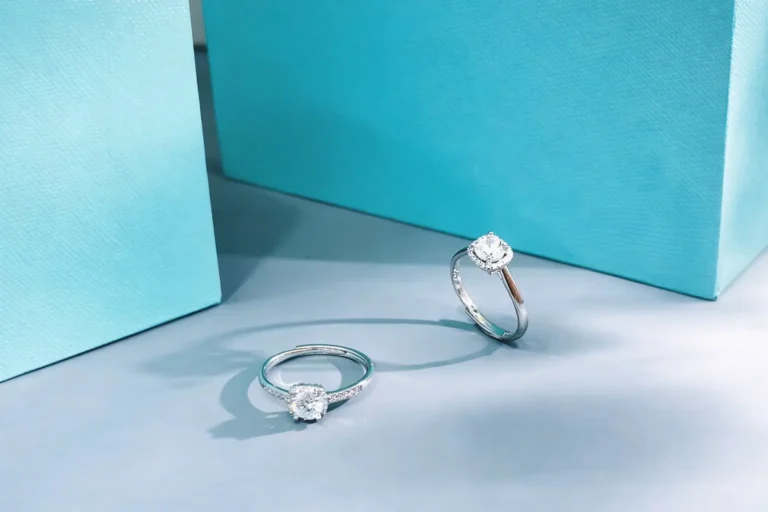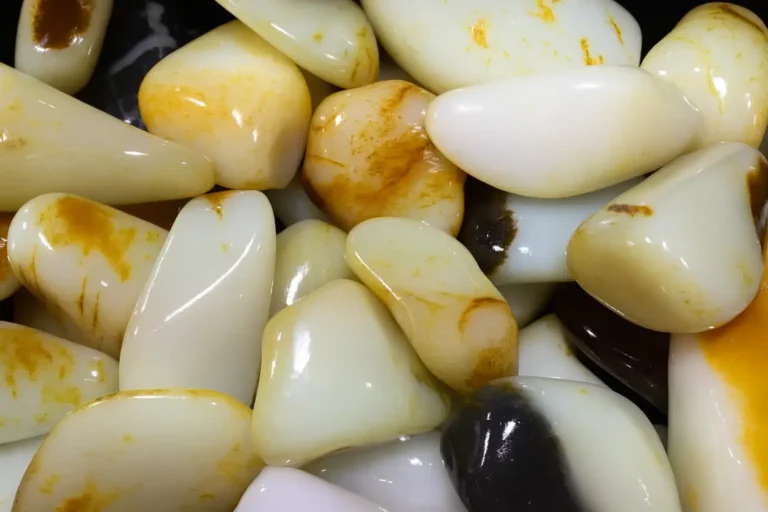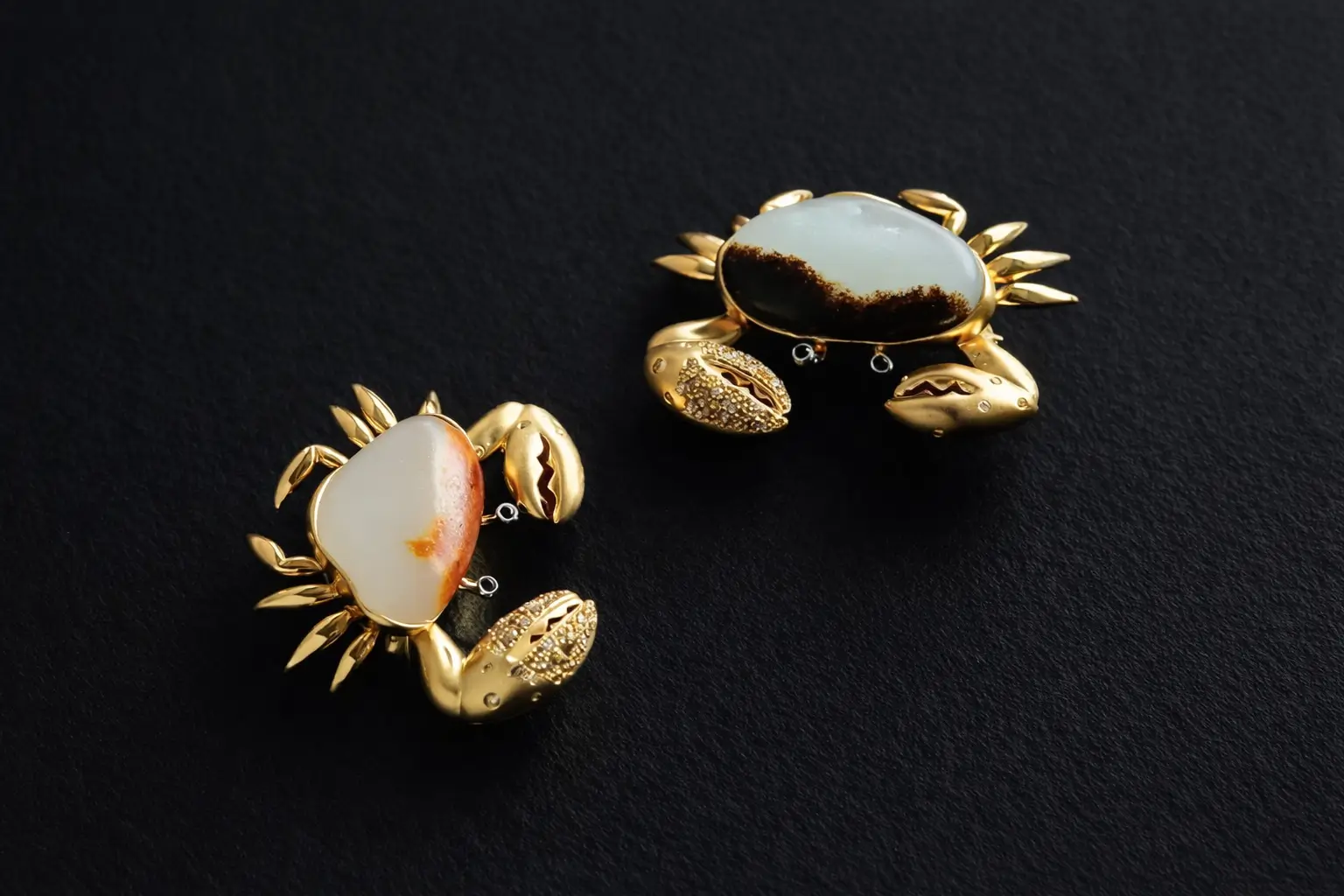
Gold-Inlaid Jade Jewelry: How to Identify Genuine Pieces and Avoid Scams
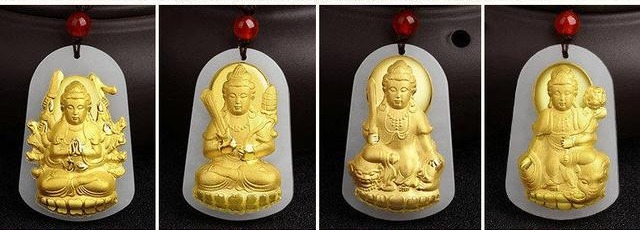
Let’s Expose the Gold-Inlaid Jade Jewelry Scam!
Have you ever encountered offers like these?
“Spend USD 100 and receive a free lucky draw with a guaranteed prize.”
“In-store promotion: ‘You’ve won store credit’, redeemable only toward jewelry purchases.”
Tourist shops advertising “90% OFF – Gratitude Sale” on jade or gemstone jewelry.
“Gold-inlaid jade — original price ¥20,000 (≈ USD 2,800), now only ¥998 (≈ USD 140).”
The wording may vary from place to place, but the structure remains the same.
It feels like a stroke of luck.
It sounds like exceptional value.
And it creates a powerful sense of urgency—the fear of missing out (FOMO).
Before you make a purchase, let’s take a closer look at a real story—one that plays out far more often around the world than most people realize.
Gold-Inlaid Jade Jewelry Buying Scams
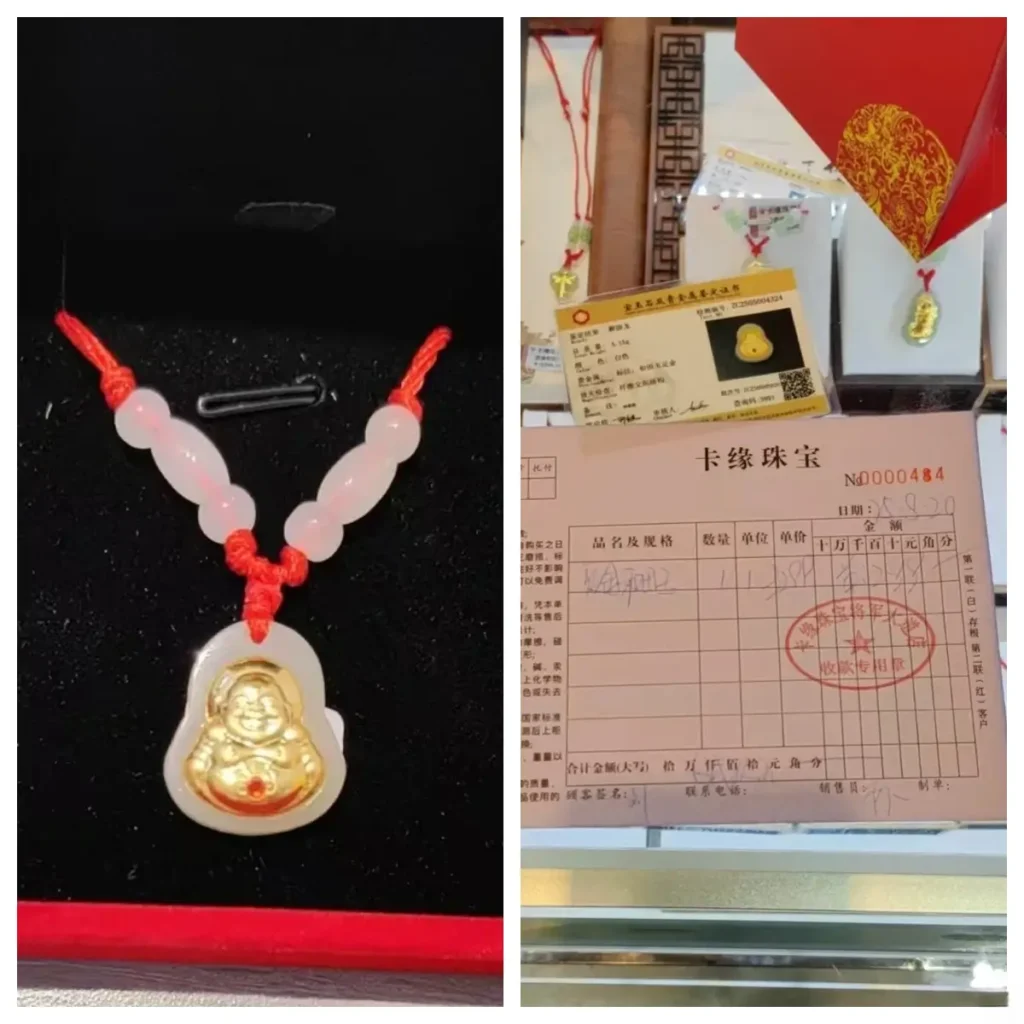
This story comes from a friend, and it involves his father.
One Wednesday evening, after grocery shopping, his father received a scratch card at the store exit.
He scratched it and saw the words everyone hopes for:
“First Prize.”
The prize claimed that he could receive ¥3,000 (≈ USD 420) off any jade or jewelry purchase.
Curious and excited, he followed the instructions and visited the jewelry counter.
The salesperson recommended a “gold-inlaid jade” pendant with a listed price of ¥3,299 (≈ USD 460).
After enthusiastic explanations and reassurance, the “discount” was applied.
Final price: ¥299 (≈ USD 42).
He felt lucky.
He carefully chose a Buddha design and happily said it would be a gift for his wife.
When I heard the story, something felt off immediately.
I explained that similar promotions appear everywhere and often rely on the same sales logic.
He didn’t believe it. He insisted he was simply lucky.
So I said one thing:
“Why don’t you ask a gold recycling shop if they would buy it?”
The next day, he did.
The response was straightforward:
They don’t buy gold-inlaid jade.
Still hopeful, he asked,
“Is the gold real?”
The answer was polite but telling:
“We can’t determine that. In the future, try not to buy this type of jewelry.”
He returned to the original shop to request a refund.
The staff delayed, deflected, and ultimately refused.
In the end, ¥300 (≈ USD 42) became the price of a lesson.
Why “Lucky Draw” Jewelry Promotions Deserve Extra Caution
These promotions appear in many forms:
- Supermarket entrances
- Shopping malls
- Tourist attractions
- Temporary pop-up counters
They work especially well on parents, not because they lack intelligence, but because they value meaning, symbolism, and gifts for loved ones.
Once purchased, refunds are often difficult or impossible.
To understand why, we need to separate real craftsmanship from marketing language.
The Royal History of Gold-Inlaid Jade Jewelry: From Legend to Craft

The origins of gold-inlaid jade trace back to the late Western Han Dynasty in China. When the ambitious official Wang Mang attempted to seize power from the young Emperor Ruzi Ying, Empress Dowager Xiaoyuan resisted. In a moment of defiance, she struck the Imperial Jade Seal (He Shi Bi), chipping one corner of this priceless symbol of authority.
Rather than hiding the damage, court artisans ingeniously inlaid the missing corner with pure gold. This repair did more than restore the seal—it transformed gold into both a structural and symbolic element, giving birth to the craft known today as gold-inlaid jade.
Unfortunately, many modern vendors rely on the fact that tourists and casual buyers cannot distinguish this ancient royal craft from cheap imitations.
The Master Craftsmanship Behind Authentic Gold-Inlaid Jade
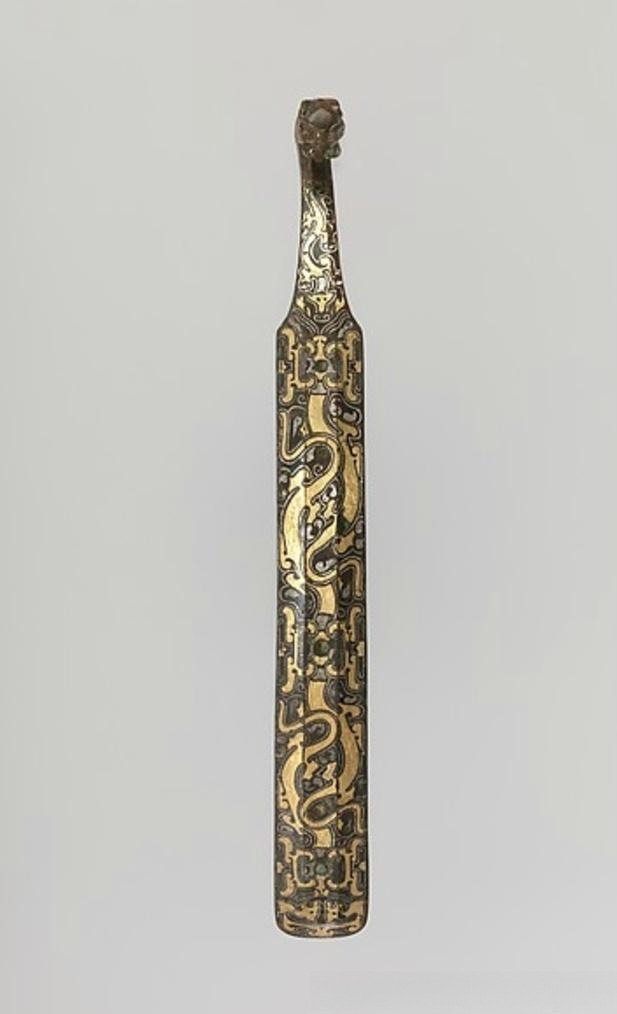
True gold-inlay is not surface decoration. It is a permanent and irreversible craft that requires exceptional precision:
- Carving: Craftsmen engrave fine, deliberate grooves directly into the jade or stone surface.
- Embedding: Solid gold or silver wire, or carefully shaped sheets, are hammered into these grooves by hand.
- Polishing: The surface is repeatedly polished until metal and jade sit perfectly flush, forming a seamless whole.
When executed correctly, the metal is not applied onto the jade—it becomes part of it. The result is a unified object where stone and precious metal enhance one another, both visually and structurally.
How Gold-Inlaid Jade Reentered the Modern Spotlight
The modern misuse of “gold-inlaid jade” did not emerge randomly.
It can be traced back to a very specific and influential moment: the 2008 Beijing Olympic Games.
From Ancient Craft to a Global Stage
During the 2008 Beijing Olympics, organizers reintroduced the traditional concept of gold-inlaid jade to the world by incorporating it into the official Olympic medals. For the first time in Olympic history, the medals included more than just gold, silver, and bronze. Instead, they incorporated jade, symbolizing harmony, balance, and cultural continuity.
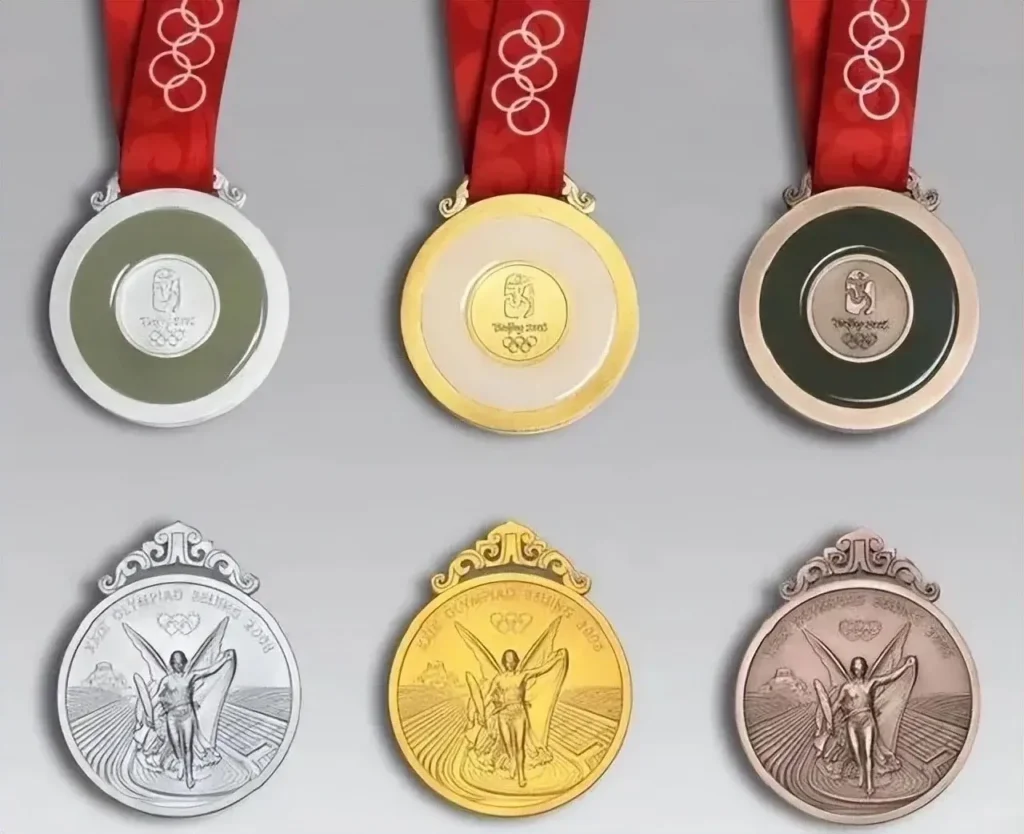
Each medal combined gold with Hetian jade, not as surface decoration, but as an integrated material choice inspired by historical inlay traditions.
The front of the medal followed International Olympic Committee standards, depicting the Greek Goddess of Victory and the Panathenaic Stadium.
The reverse featured a jade disc framed by a traditional dragon motif, encircling the official Olympic emblem.
This resurgence brought gold-inlaid jade into global attention—not as a commercial product, but as a modern reinterpretation of an ancient craft.
However, greater visibility also opened the door for misuse. Today, many mass-market vendors mimic the appearance of gold-inlaid jade while neglecting its traditional craftsmanship. Instead of proper structural inlay, these products often rely on:
- Minimal gold content
- Adhesives rather than metal settings
- Low-grade or substitute stone
The name remained. The craftsmanship did not.
How to Spot Fraudulent Gold-Inlaid Jade Jewelry in the Market
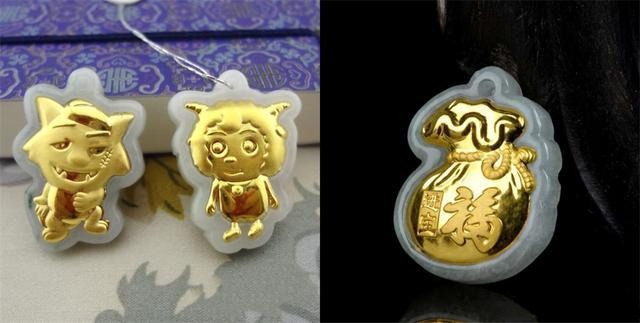
To protect consumers, it is essential to understand how modern fake gold-inlaid jade is actually made.
Fake Gold — It’s Almost Never Solid Gold
Sales staff often reassure buyers with confident claims:
“This is real gold. It comes with a national certificate. You can test it however you like.”
In reality, buyers are simply gambling.
- Best case: ultra-thin gold foil
- Common case: gold-plated brass or silver
- Worst case: no gold at all—and even the certificate is fake
Gold Foil
One gram of gold can be hammered into at least 0.5 square meters of gold foil. In many mass-market pendants, the actual gold content weighs around 0.014 grams.
Even at high gold prices, that amount of gold is worth only a few dollars.
Gold Plating
Manufacturers use electroplating to coat brass or silver with a microscopic layer of gold. The result looks convincing at first glance but wears off quickly. It is decoration, not value.
For a deeper comparison of gold-plated and gold-filled jewelry, see our PeonyJewels blog guide: Gold-Filled vs Plated Jewelry: The Ultimate Guide to Quality & Value.
Fake “Inlay” — Glued, Not Set
The word “inlay” has a clear definition:
It refers to carving space into metal so that another material—such as jade—can be structurally set into it.
What most consumers encounter is not inlay at all. It is gluing.
That semi-transparent substance under the “gold”?
It isn’t jade. It’s adhesive.
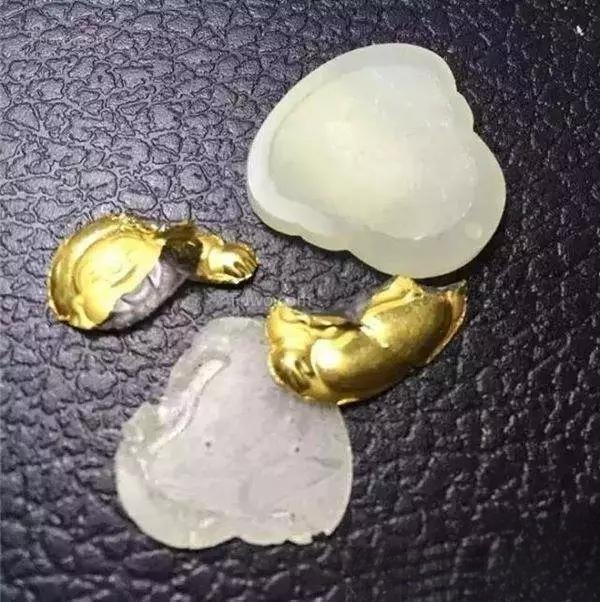
The glue layer is intentionally thick because gold foil is too fragile to hold its shape. This is also why sellers quietly warn buyers:
- “Don’t get it wet.”
- “Don’t scratch the gold.”
They are not protecting the jewelry. They are protecting the glue.
💡 Expert Tip
If a salesperson discourages you from touching the gold or getting the piece wet, you are looking at glue, not jewelry. > Authentic gold-inlaid pieces are structurally sound; they don’t rely on surface adhesives that dissolve in water.
Fake Jade — Or No Jade at All
Finally, we reach the most overlooked issue: the stone itself.
In better cases, manufacturers may use:
- Low-grade Korean material
- Low-quality Qinghai jade
- Entry-level commercial jadeite
In worse cases, they skip jade entirely and use glass or stone composites.
These pieces are mass-produced using molds. There is no hand carving, no artistry, and no cultural craftsmanship—only surface imitation.
Fake Pricing — The Final Illusion
So how much are these “gold-inlaid jade” pieces actually worth?
In Chinese markets, two mass-produced pieces can cost as little as ¥10 (≈ USD 1.40), illustrating how cheap these fakes are despite flashy promotions.
How to Identify Genuine Gold-Inlaid Jade Jewelry
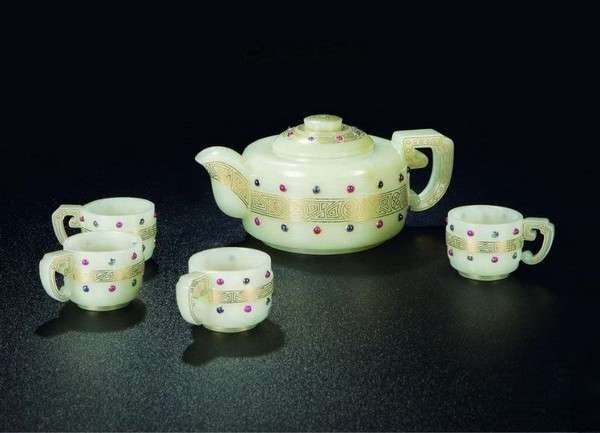
Today, the term “gold-inlaid jade” no longer refers exclusively to the ancient gold-and-silver inlay technique. Instead, it broadly describes jewelry where gold or silver is structurally used to set jade or jadeite.
Fortunately, skilled designers and craftsmen still create authentic, well-made gold-inlaid jade pieces. These works respect both materials and allow classical jade to evolve into something modern and wearable.
To separate genuine craftsmanship from mass-market imitations, focus on three core elements: the gold, the setting, and the jade itself.
The Gold — Sufficient Weight, Intentional Design
In quality gold-inlaid jade jewelry, gold is not an afterthought.
Designers use gold as a structural and visual element, shaping it into flowing lines that frame and enhance the stone. The gold has visible thickness, continuity, and purpose—it behaves like a brushstroke, not a surface coating.
What to Look For
- Gold lines have depth and weight
- Edges remain crisp after polishing
- The gold contributes to both strength and design
If the “gold” looks like it could peel, scratch off, or bend with light pressure, it is not real inlay—it is decoration.
The Setting — Seamless, Precise, and Secure
True inlay or high-quality setting leaves no visible gaps between metal and stone.
Gold and jade should meet cleanly, with tension and precision. When done correctly, the two materials feel unified—solid in hand, balanced in weight, and refined in finish.
Warning Signs
- Visible glue lines or cloudy filler
- Uneven edges between gold and stone
- Instructions like “avoid water” or “don’t touch the gold”
These are not care tips. They are red flags.
The Jade — Beauty Comes First
Whether the piece uses Hetian jade or jadeite, the stone itself must be beautiful before any metal touches it.
Authentic craftsmanship follows one rule:
The setting exists to enhance the jade—not to disguise it.
The jade should display natural texture, translucency, and harmony. It should stand on its own, even without gold.
Ask Yourself
- Would this stone still be attractive without the metal?
- Does it show natural character rather than uniform perfection?
- Is it carved or shaped with intention, not molded in bulk?
Mass-produced pieces rely on metal to distract from mediocre or fake stone. Fine jewelry never does.
High-Risk Sales Situations to Watch For
Consumers should exercise particular caution when gold-inlaid jade is sold through:
- “Lucky draw” or prize-redemption counters
- Temporary promotional booths
- Tourist-focused shops emphasizing urgency over craftsmanship
- Deep-discount campaigns framed as “once-in-a-lifetime” offers
These setups prioritize speed and impulse, not long-term value. The jewelry is often designed to look convincing at first glance, while minimizing material cost and labor.
Why These Scenarios Are Risky
In these environments, pricing and presentation do not reflect craftsmanship. Instead, value is created through storytelling, perceived luck, and artificial discounts.
You may still receive:
- Real gold (in extremely small quantities)
- Real jade or jadeite (often of very low grade)
Yet the final piece rarely matches the implied value of the promotion.
The issue, therefore, is not authenticity alone, but how the jewelry is misrepresented.
The Practical Rule for Buyers
A simple rule applies worldwide:
The more a piece relies on urgency, prizes, or dramatic discounts,
the less it relies on craftsmanship.
Quality gold-inlaid jade does not need pressure tactics. It sells through transparency, proportion, and design—whether online or offline.
The PeonyJewels Perspective
Buying gold-inlaid jade can be confusing, especially when flashy promotions promise irresistible deals. For parents, gift-givers, and first-time collectors worldwide, it is easy to be misled by appearances or certificates.
The key is knowledge and careful selection. Genuine gold-inlaid jade is defined by craftsmanship, material integrity, and thoughtful design—not by discounts, lucky draws, or mass-market hype. By learning how to identify real gold, proper inlay, and authentic jade, you can confidently choose pieces that truly last, both in value and meaning.
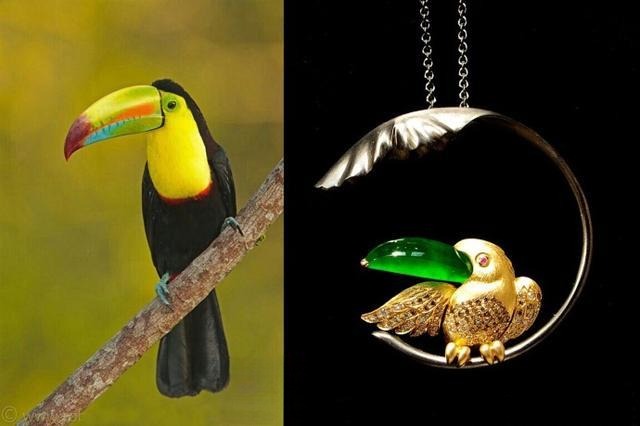
At PeonyJewels, we believe jewelry should never depend on manufactured luck or exaggerated discounts.
We focus on:
- Thoughtfully designed jade and gemstone jewelry
- Honest materials and transparent craftsmanship
- Custom jewelry services tailored to individual stories
- Original handmade vintage earrings created in small batches
Our goal is simple:
to help parents everywhere avoid costly traps and choose pieces worth keeping.
Knowledge protects better than any certificate, and good design never relies on lucky draws.