Granulation (Zha Zhu): The Mastery of Ancient Chinese Gold Jewelry Craft
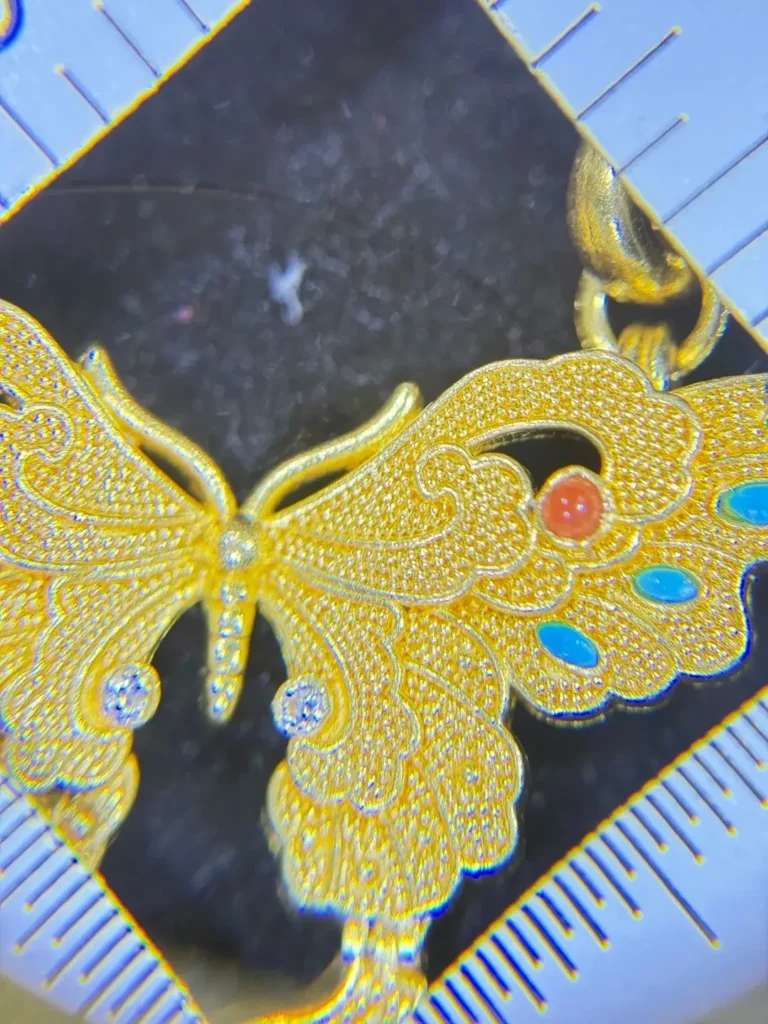
Granulation jewelry is often referred to as “China’s Diamond.”
It is not a gemstone, but an ancient goldworking technique that creates a diamond-like sparkle through hundreds of microscopic gold beads.
This craft demands extraordinary precision. Each tiny bead is formed, positioned, and fused entirely by hand. The process relies on high-purity gold and extremely precise heat control. Even with modern technology, machines still cannot fully replicate this technique at scale.
In this article, we explore what granulation is, where it originated, how artisans make it, why royalty once prized it, and how to recognize fine granulation jewelry today.
What Is Granulation Jewelry?
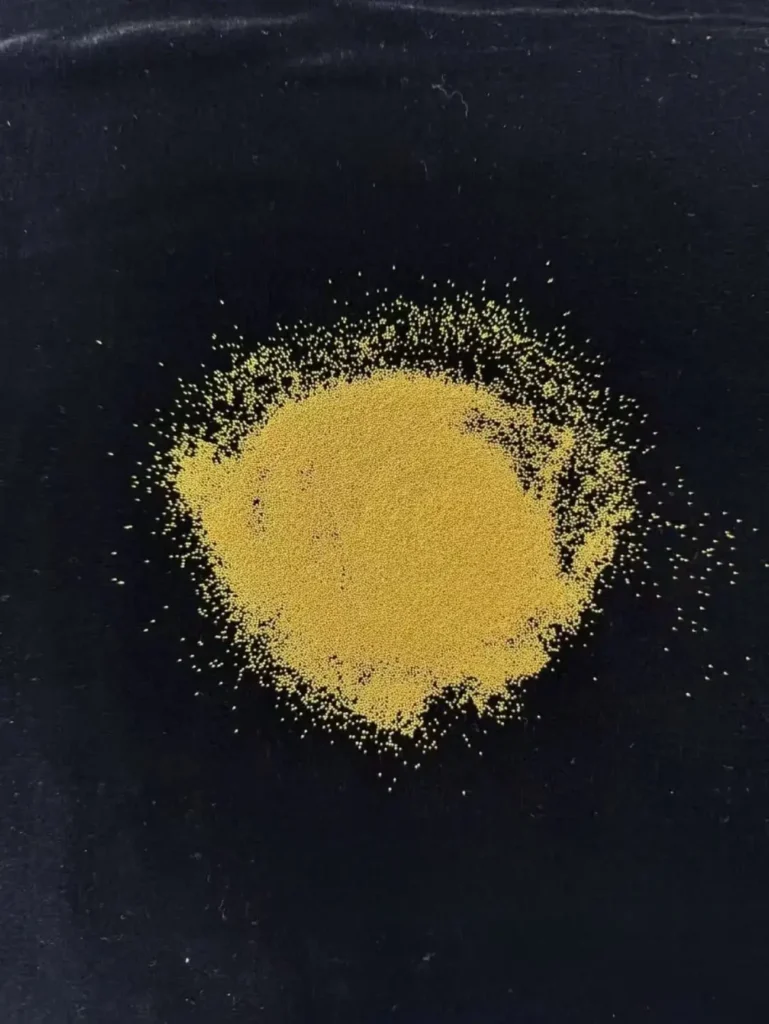
Granulation is one of China’s eight ancient goldworking techniques. Also known as Jin Su (“gold millet”) or Lei Zhu (“accumulated beads”), this craft defines the pinnacle of traditional Chinese goldsmithing.
To see how these techniques fit into the broader revival of heritage crafts, explore our PeonyJewels guide: Traditional Techniques Vintage Jewelry: The Timeless Charm of Chinese Gu Fa Gold. We dive deep into the unique allure of Gu Fa Gold and its enduring influence on modern mastery.
This technique allows metal to produce a delicate, star-like shimmer. At its core, gold is melted and allowed to naturally condense into tiny spherical beads. Although often described as “millet-sized,” these beads are in fact much smaller, typically around 1 millimeter in diameter or less.
Artisans then arrange and fuse these beads onto a metal surface to form intricate decorative patterns. The entire process relies on manual control, and even today, machines cannot fully replicate it. Granulation is most commonly found in jewelry and ritual objects used by Tang Dynasty nobility.
The History of Granulation jewelry
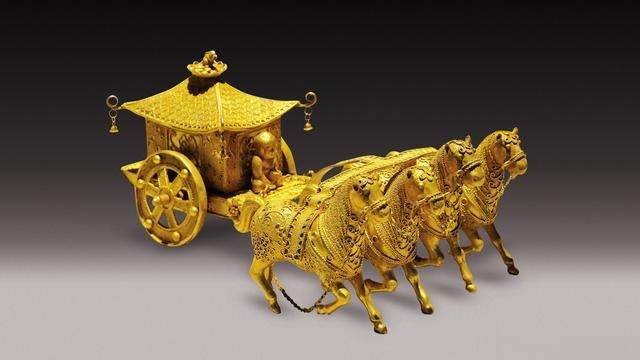
According to Goldsmith’s Art: 5000 Years of Jewelry and Hollowware by German scholar Hermann Schadt, granulation appeared as early as 3000 BCE. Between the 9th century BCE and the 1st century BCE, the Etruscans of central Italy adopted bead welding as their most important decorative technique and developed it to an exceptionally high level.
In China, granulation dates back to the Shang Dynasty. It developed further during the Han Dynasty, influenced by cultural exchanges along the overland and maritime Silk Roads, and reached its peak during the Tang Dynasty.
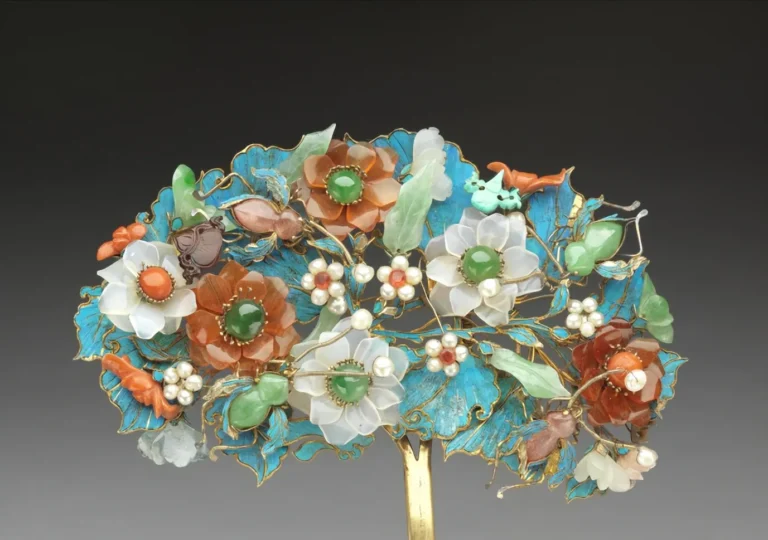
People believed that gold and silver vessels could promote longevity. Combined with the complex craftsmanship and the luxurious appearance of gold and silver beadwork, granulation became a symbol of imperial and aristocratic status. For example, artisans often adorned Tang Dynasty gold crowns and buyao (dangling hair ornaments) with granulated beads.
So, how is granulation jewelry made?
Before exploring the making process, let’s first examine a rare masterpiece unearthed from the Eastern Han Dynasty tomb of King Mu of Zhongshan: the ‘Jin Bixie’ (Gold Mythical Beast).
The “Jin Bixie” Gold Mythical Beast — A Masterpiece of Granulation
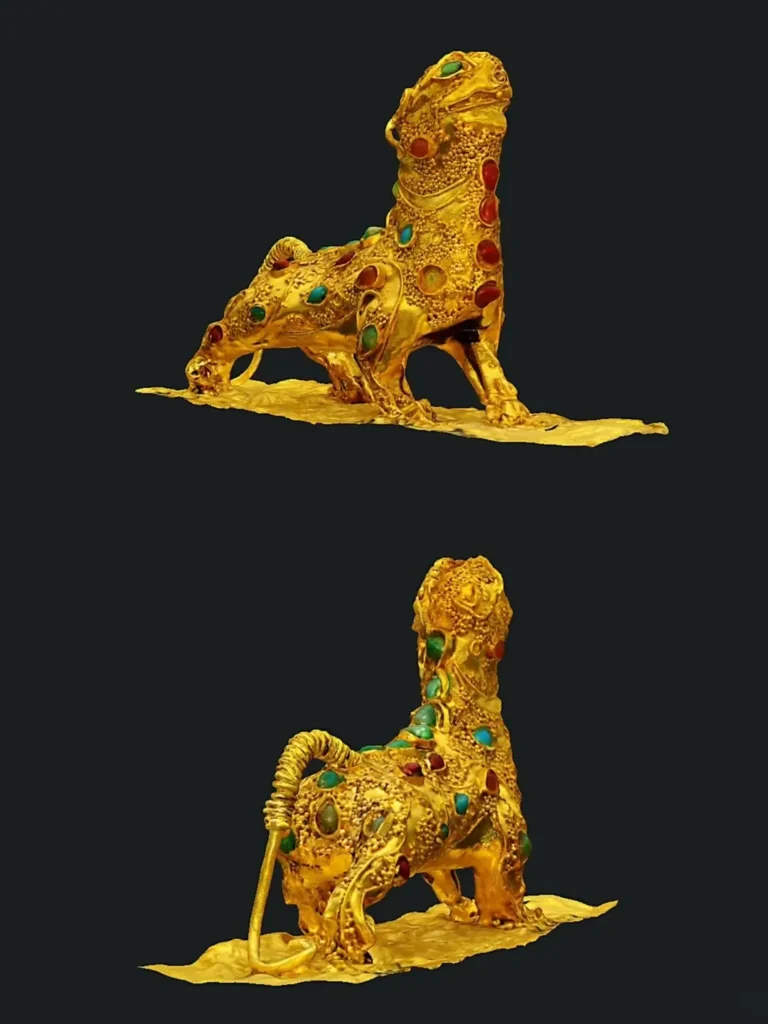
This pair of Jin Bixie figures is one of the three most important treasures of the Dingzhou Museum. Each figure measures approximately 5 cm in length, 3.4 cm in height, and weighs about 50 grams.
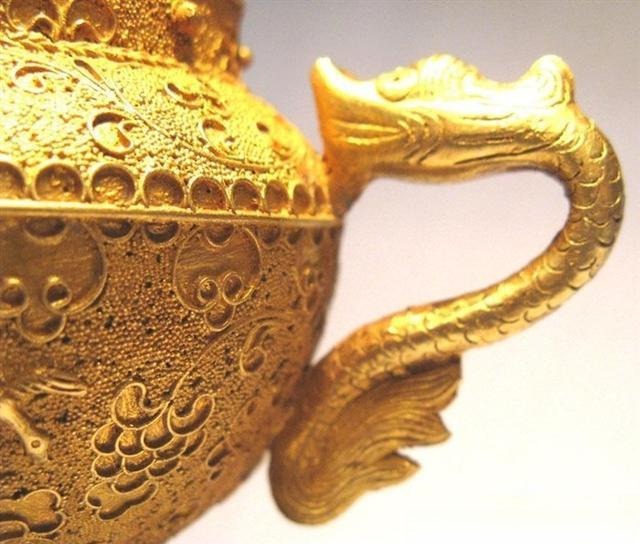
Despite their small size, these pieces encapsulate the extraordinary ingenuity of Han Dynasty craftsmen. A gold sheet engraved with flowing cloud patterns forms the base. Gold wire weaves to create the body and wings. Artisans then use granulation to filter molten gold into millet-sized beads, which densely cover the surface, simulating the texture of curled fur.
The finest gold wires measure only 0.2 millimeters in diameter—comparable to a human hair. Even under high magnification, the fusion points are difficult to detect. Such precision remains extremely challenging to replicate even with modern technology.
How to Create Granulation Jewelry
At PeonyJewels, our master goldsmiths bring these ancient masterpieces to life through a meticulous three-step process:
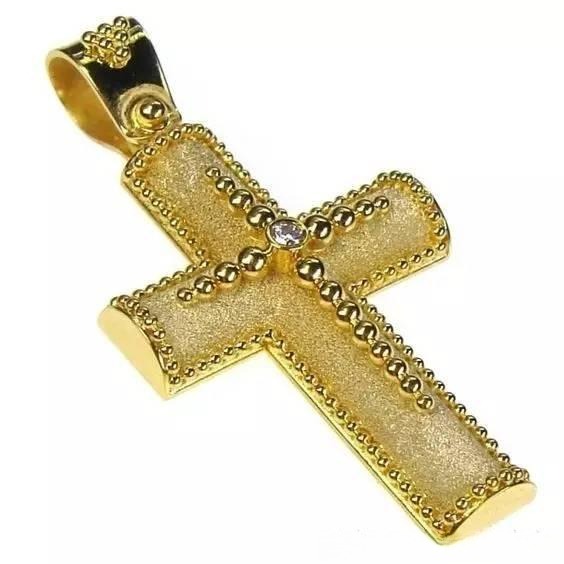
1. Making the Beads
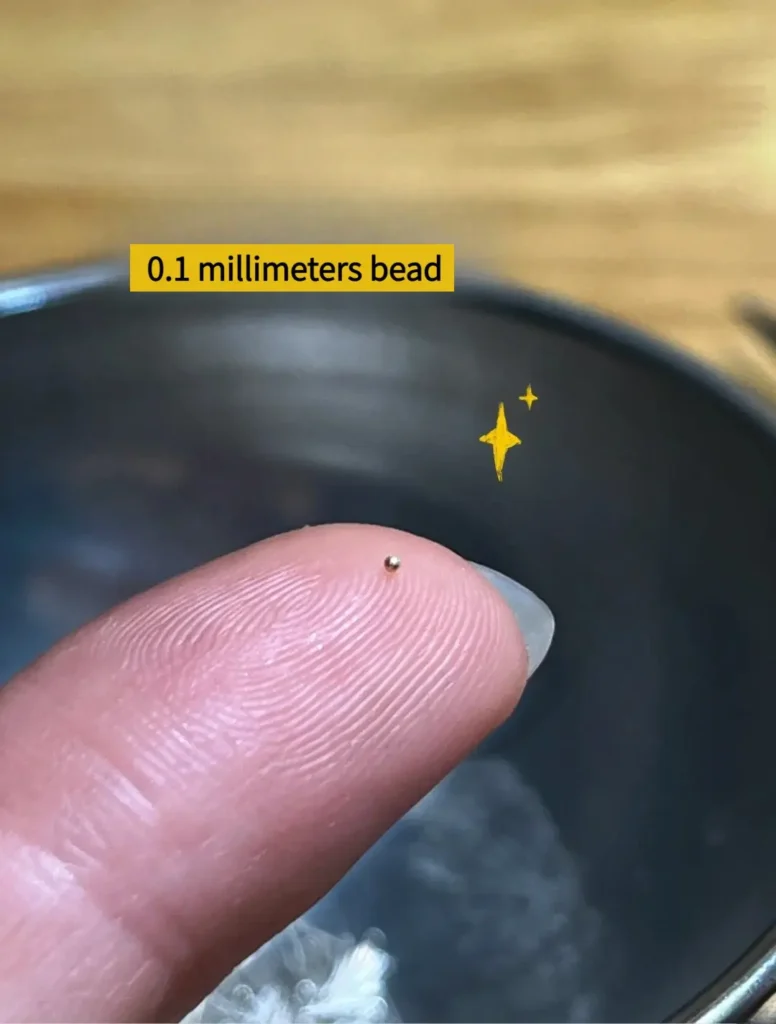
Artisans cut pure gold into evenly sized small segments and scatter them onto charcoal. They heat the gold until it melts, then drop it into cold water or hot oil. Due to surface tension, the molten droplets naturally contract into uniform spheres. Artisans then sort the beads by size, with the smallest beads measuring as tiny as 0.1 millimeters—finer than the tip of a needle.
2. Fusing the Beads
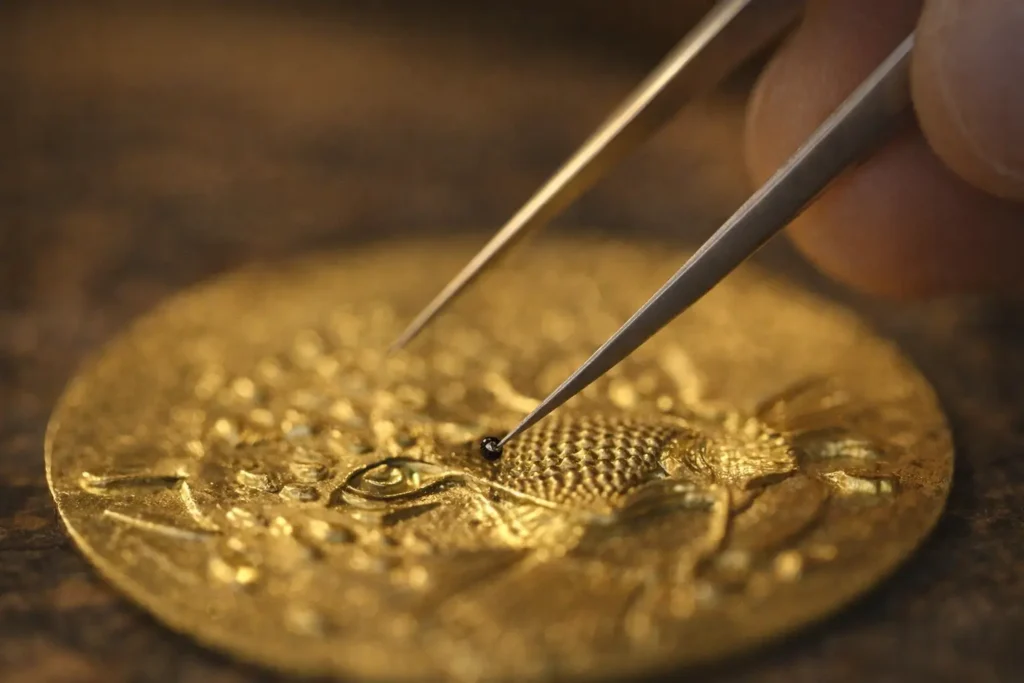
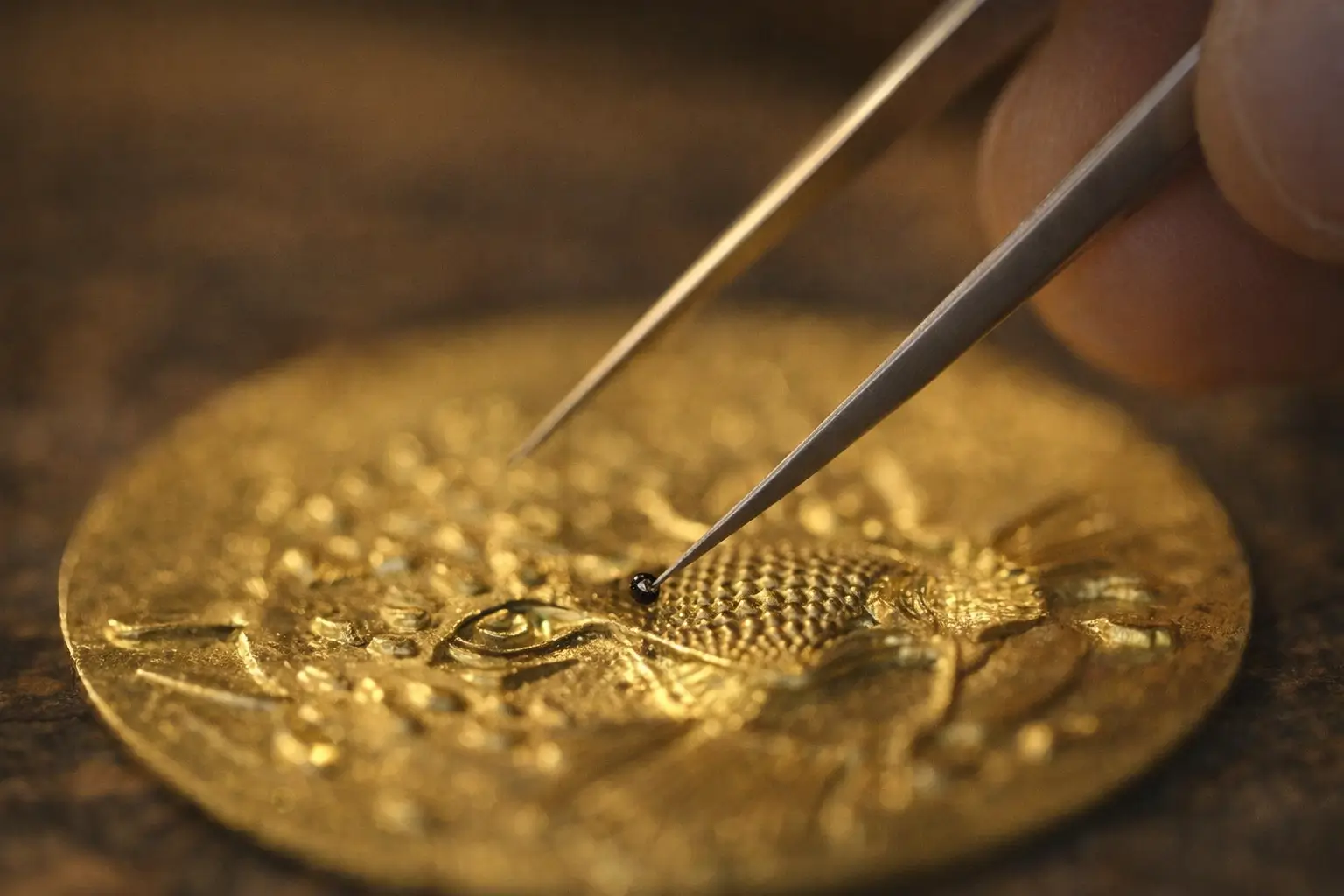
Using a special flux, the artisan carefully places hundreds of beads one by one onto the jewelry base, arranging them according to a predetermined pattern. Precise temperature control is critical: too much heat will cause the beads to melt or collapse. This step requires exceptional patience and a steady hand.
3. Finishing and Polishing granulation jewelry
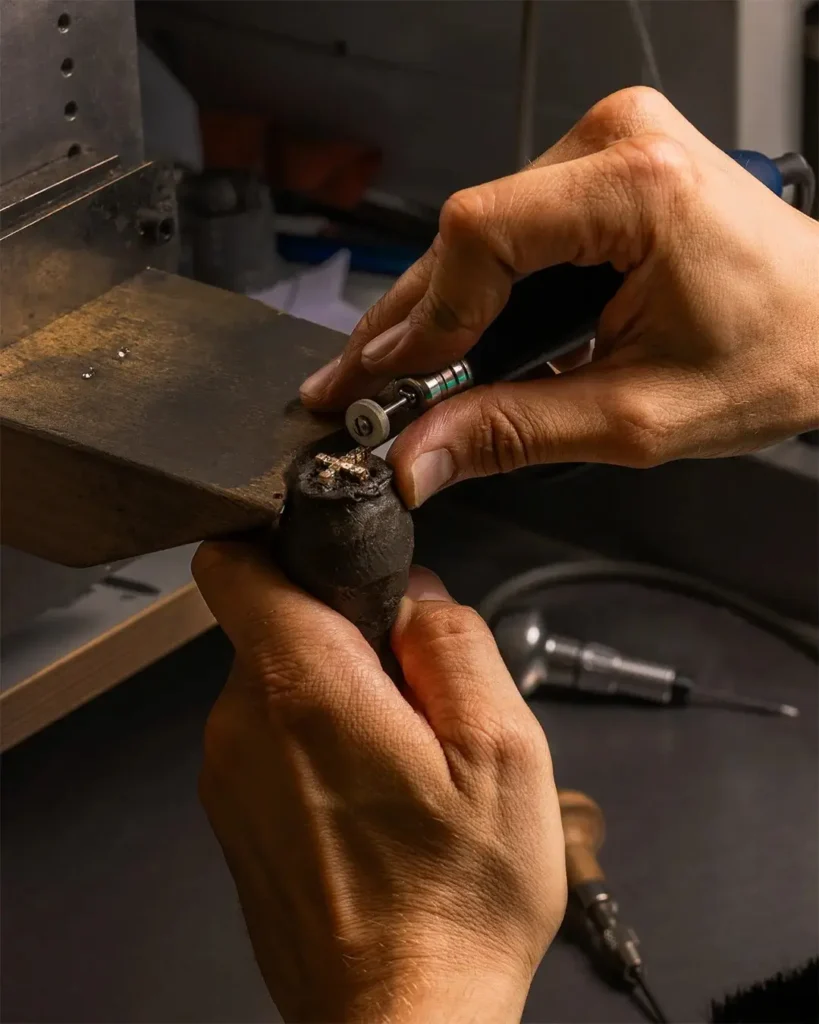
After fusion, the piece is meticulously polished so that the beads blend seamlessly into the base. The resulting surface has a texture often described as resembling “crushed diamonds.” This decorative effect is also known as the “linked bead pattern” or “fish roe pattern.” Under light, it reflects a soft yet densely layered luster.
Five Ancient Methods of Gold Granulation: From History to Craft
Ancient sources describe five primary methods for producing gold granules:
- Dropping molten gold into warm water, or throwing molten gold onto a smooth stone submerged in water. When the molten gold contacts the cold water, it solidifies, but the resulting beads often take a teardrop shape rather than being perfectly round.
(Pliny the Elder, Natural History) - Dropping molten gold into charcoal ash, which produces well-rounded beads. This technique was already in use among the Etruscans thousands of years ago.
(Hermann Schadt, Goldsmith’s Art) - Melting natural gold sand obtained from panning, then placing it into a crucible filled with charcoal ash and rotating the crucible so the gold rolls into spherical shapes as it cools.
(Hermann Schadt, Goldsmith’s Art) - Hammering high-purity gold into thin sheets, cutting them into uniform fragments, layering them alternately with charcoal ash inside a crucible, and heating the crucible until the fragments melt into round beads.
(Hermann Schadt, Goldsmith’s Art) - Heating one end of a gold or silver wire and using a blowpipe to melt the tip, allowing a bead to form and drop, or to remain and cool at the end of the wire for later use.
(Qi Dongfang, Research on Tang Dynasty Gold and Silver Ware)
Among these methods, artisans still widely use the second method—melting gold on charcoal ash—with various refinements.
The Key to Granulation
Why is pure gold melted on charcoal at high temperatures?
Charcoal ash supports the forming bead as it cools, allowing it to become a complete sphere. Pure gold does not oxidize during melting, which makes it possible to fuse the beads directly to the base metal without solder. This oxidation-free fusion process, known as Zou Shui (“flowing metal”), forms the technical foundation of granulation.
Case Study: John Paul Miller’s Mastery of Granulation
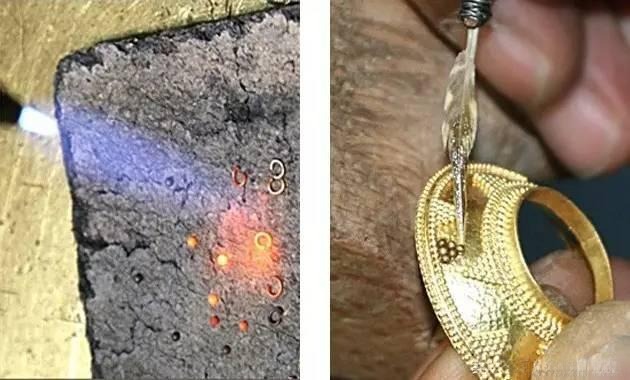
John Paul Miller, a renowned American jeweler and professor at the Cleveland Institute of Art, has modernized the ancient art of granulation with precision and mastery. His method highlights the importance of technique at every step:
Creating Uniform Beads
To create uniform beads, Miller begins by wrapping gold wire around a rod, similar to making jump rings. He then cuts the coils into equal segments, ensuring each bead is the same size. Next, Miller carves small concave pits into charcoal to melt the gold. Without these pits, the beads would form with flat bases, ruining their spherical perfection.
The Delicate Process of Assembly
After preparing the beads, Miller applies a special adhesive to the area of the jewelry that needs decoration. He carefully places each bead using tweezers or a fine-tipped brush. Once the beads are in position, he lets the adhesive dry completely before applying heat. This crucial step ensures that the delicate arrangement of beads stays intact.
Fusion Without Solder
The most critical stage, however, is the firing. To achieve a perfect bond, Miller emphasizes that both the granules and the base metal must reach their melting points at the exact same moment. Consequently, maintaining simultaneous temperature control is paramount; even a slight deviation in heat can cause the beads to collapse or, alternatively, leave an unsightly “orange-peel” texture on the metal surface.
In contrast to conventional soldering, which relies on a filler metal to bridge gaps, this technique utilizes autogenous fusion. By doing so, the beads connect to the surface at only a single, microscopic point without the need for messy solder. Ultimately, this creates the crisp, clean aesthetic that defines high-end handcrafted jewelry—a signature of true mastery.
Pro Tip: Why Material Choice Matters
Goldsmiths prefer using 22K gold (or higher) and fine silver for granulation. While 14K gold, 18K gold, and sterling silver are also usable, their alloys often result in beads that are less round and smooth compared to higher-purity metals. Furthermore, these alloys have a small difference between their solidus and liquidus temperatures. This narrow margin makes precise timing crucial during fusion. If the goldsmith doesn’t retract the flame at the right moment, the granules will collapse or melt into the base, ruining the intricate pattern.
How to Choose Granulation Jewelry: Avoid These 3 Pitfalls
- Check bead density
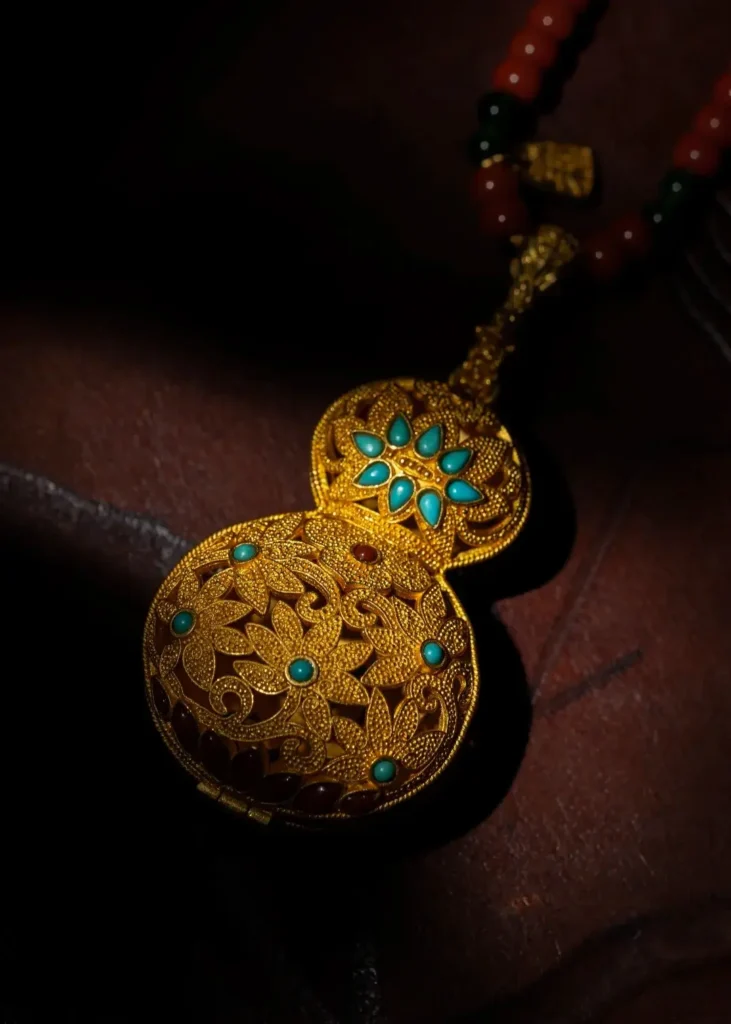
High-quality granulation features beads of uniform size arranged tightly without visible gaps. Uneven bead sizes or bead loss usually indicate poor craftsmanship. - Start with simple designs
For first-time buyers, we recommend selecting rings or small pendants with simple patterns, such as fully granulated surfaces or basic circular motifs. These styles are versatile and clearly showcase the craftsmanship. - Silver granulation offers better value
Gold granulation is expensive, while silver granulation typically costs from a few hundred yuan, making it more suitable for everyday wear and first-time buyers.
The true charm of granulation lies in its ability to hide complexity within subtle detail. Without exaggerated forms, it transforms ordinary jewelry into pieces with depth, texture, and story—one tiny bead at a time.
PeonyJewels Summary: Wearing History, Subtly
From ancient artifacts to modern jewelry, the art of granulation carries a refined legacy passed down through millennia. Its “luxurious yet understated” texture softens the cold rigidity of metal, adding warmth that polished surfaces simply cannot match. Even in silver, granulation whispers a story of quiet luxury. To wear it is to carry history—subtly, with grace.
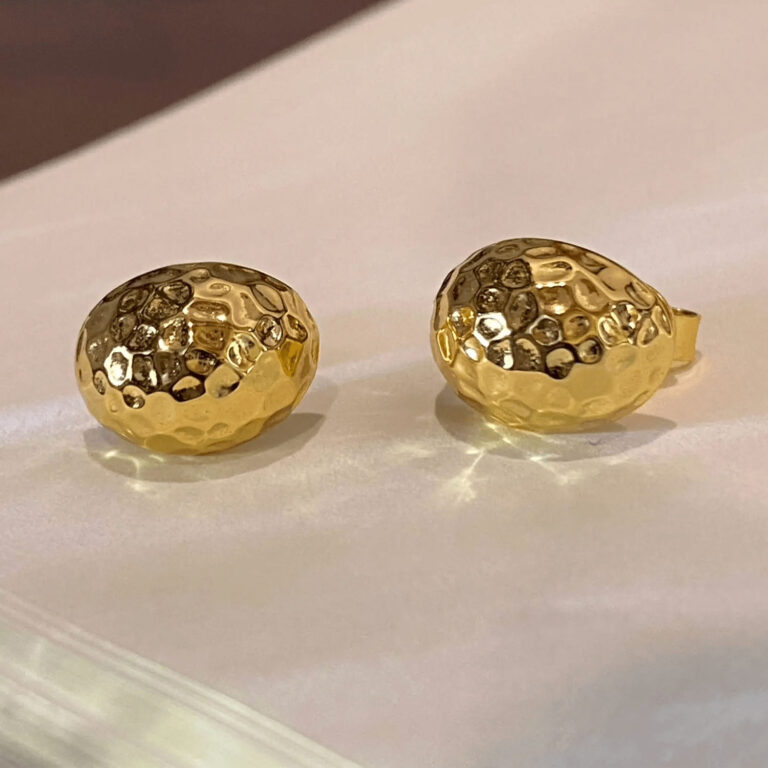
At PeonyJewels, we bring this “diamond-like” ancient craft into the modern day. Our Handmade Vintage Earring Collection is an homage to Tang Dynasty artisans, blending the intricate “Gold Millet” technique with timeless, wearable silhouettes. Each tiny sphere reflects patience and the beauty of handcraft.
Have you experienced the intricate beauty of granulation firsthand? Or are you looking for a piece that tells a story of timeless elegance? Explore our collection and find the piece that speaks to you. We’d love to hear your thoughts in the comments below or see how you style your own granulation jewelry!