Hetian Jade Basics: 10 Essential Facts to Stop Buying Blind
Hetian Jade Basics begin with one core truth: understanding Hetian Jade (Nephrite) means valuing internal structure, material maturity, and a naturally “greasy” texture—rather than transparency or sparkle.
Too often, beginners apply jadeite standards, such as chasing watery translucency, to nephrite jade. This fundamental mistake leads to overpaying, confusion, and falling for common market myths.
In this comprehensive guide, we cut through marketing noise and outdated assumptions. We explain the professional logic behind jade classification, pricing, and evaluation based on current national standards and real-world trading practices. As a result, readers can accurately distinguish origins, recognize natural flaws, and approach the Hetian jade market with informed confidence.
Table of Contents
- The 8 Color Categories: Essential Hetian Jade Basics
- White Hetian Jade (Bai Yu): Purity, Grading & Oiliness
- Celadon Hetian Jade (Qing Yu): Color Spectrum & Structure
- Green-White Hetian Jade: Balance of Color and Texture
- Spinach Green Jade (Bi Yu): Vibrant Colors
- Yellow Jade (Huang Yu): The Rare “Golden” Find
- Sugar Jade (Tang Yu): Nature’s Caramel in Nephrite
- Ink Jade (Mo Yu): The Scholar’s Stone
- Emerald-Green Hetian Jade (Cui Qing Yu): Modern Favorites
- Hetian Jade Basics: Why Origin and Formation Define Value
- Xinjiang Hetian Jade — The Unmatched Gold Standard
- Russian Nephrite — Bright Whiteness and Vivid Greens
- Qinghai (Kunlun) Jade — Translucency and Pastel Palettes
- Korean Nephrite — The Budget-Friendly Entry Point
- Understanding Formation: Why “Where” It Was Found Matters
- The Four Categories of Jade Occurrence
- Seed Jade (Zi Liao)
- Mountain Material (Shan Liao)
- Alluvial Jade (Shan Shui Liu)
- Gobi Jade (Ge Bi Liao)
- The Four Categories of Jade Occurrence
- The Aesthetics of Jade: Oiliness vs. Wateriness
- Structure and Oiliness: The Soul of Nephrite
- The Economics of Seed Jade: Factors That Drive Price Per Gram
- Real-World Pricing Guide for Xinjiang Seed Jade
- Important Pricing Caveats
- “Broad Definition” Hetian Jade vs. Authentic Xinjiang Origin
- The Regional Average Rule for White & Green Jade
- The “NBA Giant” Exception — Why Averages Aren’t Absolutes
- Understanding Natural Imperfections in Hetian Jade
- Fissures and Cracks (Liu & Lie)
- Water Lines (Shui Xian)
- Cotton Inclusions (Mian)
- Calcification and Stone Grains (Jiang)
- Natural Mineral Inclusions (Zang)
- Mutton Fat Jade: Grading, Rarity, and Market Value
- 2026 Price Breakdown: The Massive Value Gap in White Jade
- Identifying Fakes: Artificial Seed Jade and Market Traps
- Behind the Seal: The Truth About Master Jade Studios
- From Hetian Jade Basics to PeonyJewels
The 8 Color Categories: Essential Hetian Jade Basics
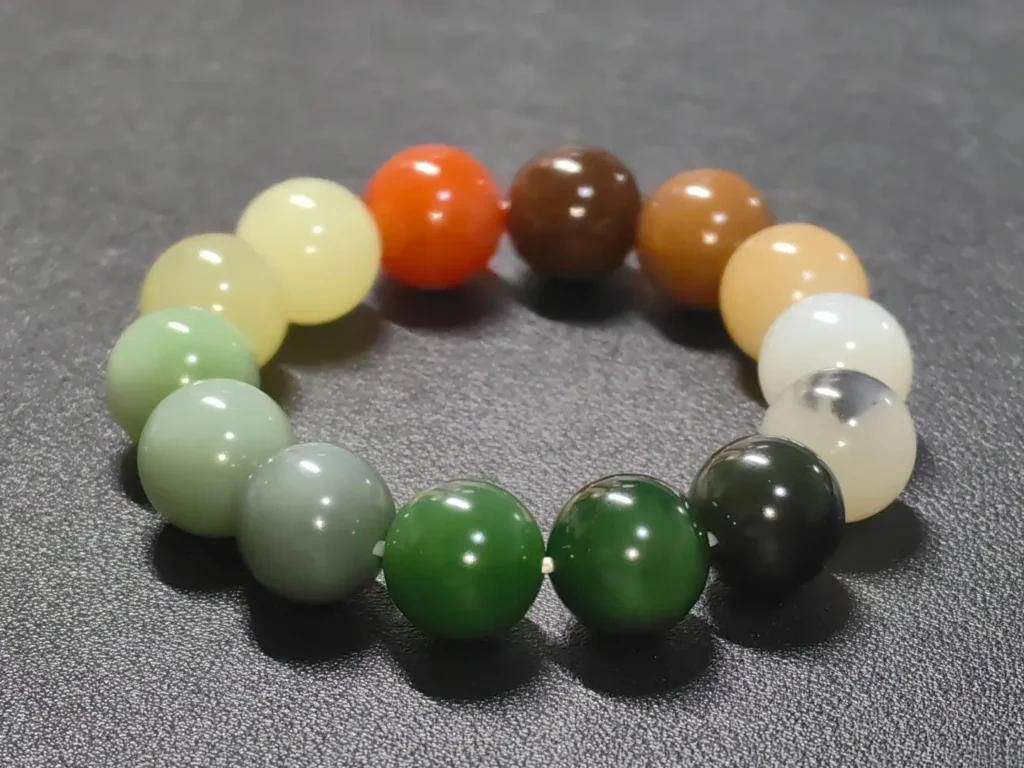
Under the current national standard, Hetian jade (nephrite jade) is officially classified into eight color categories.
This system replaces vague trade terms with mineralogical logic, making it the foundation of modern Hetian Jade Basics.
White Hetian Jade (Bai Yu): Purity, Grading & Oiliness
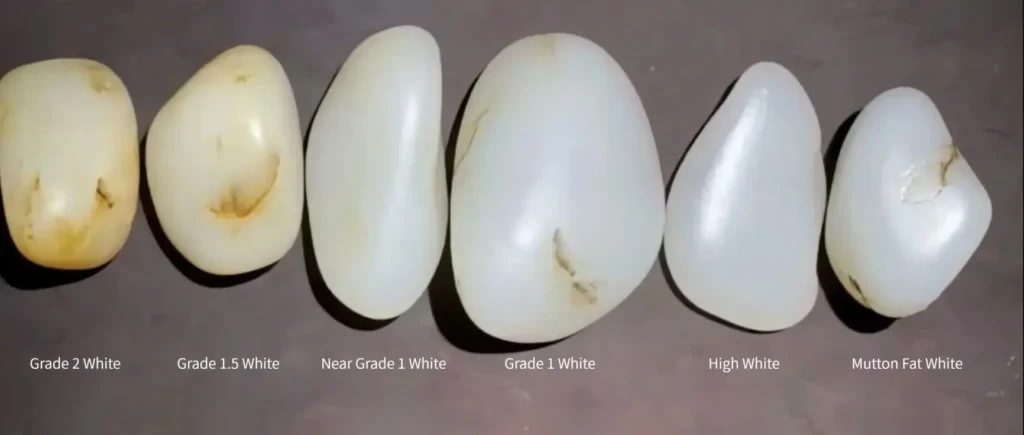
White jade consists primarily of tremolite and actinolite. Unlike synthetic white stones, its color spectrum is nuanced, including pinkish white, yellowish white, and the highly coveted “bluish white” (often referred to as ‘cold white’). Understanding these subtle tones is a vital part of Hetian Jade Basics.
The industry evaluates white jade through a precise grading system. While beginners often chase “pure white,” experts look for the right balance of tone:
- Extra Grade White & Grade 1 White: The gold standard for collectors.
- Grades 1.2 to 2: Offer excellent value for jewelry enthusiasts.
Buyer’s Tip: Remember, whiteness is secondary to texture. A “Grade 1.5” stone with high oiliness is more valuable than a “Grade 1” stone that looks dry like bone.
Celadon Hetian Jade (Qing Yu): Color Spectrum & Structure
Iron ions define the sophisticated palette of Green Jade, often called “Celadon Jade” in Western art circles. Rather than a vibrant grass green, this variety offers a spectrum of medium to deep teals, gray-greens, and yellow-green tones.
Collectors often seek out specific sub-types known for their unique aesthetics:
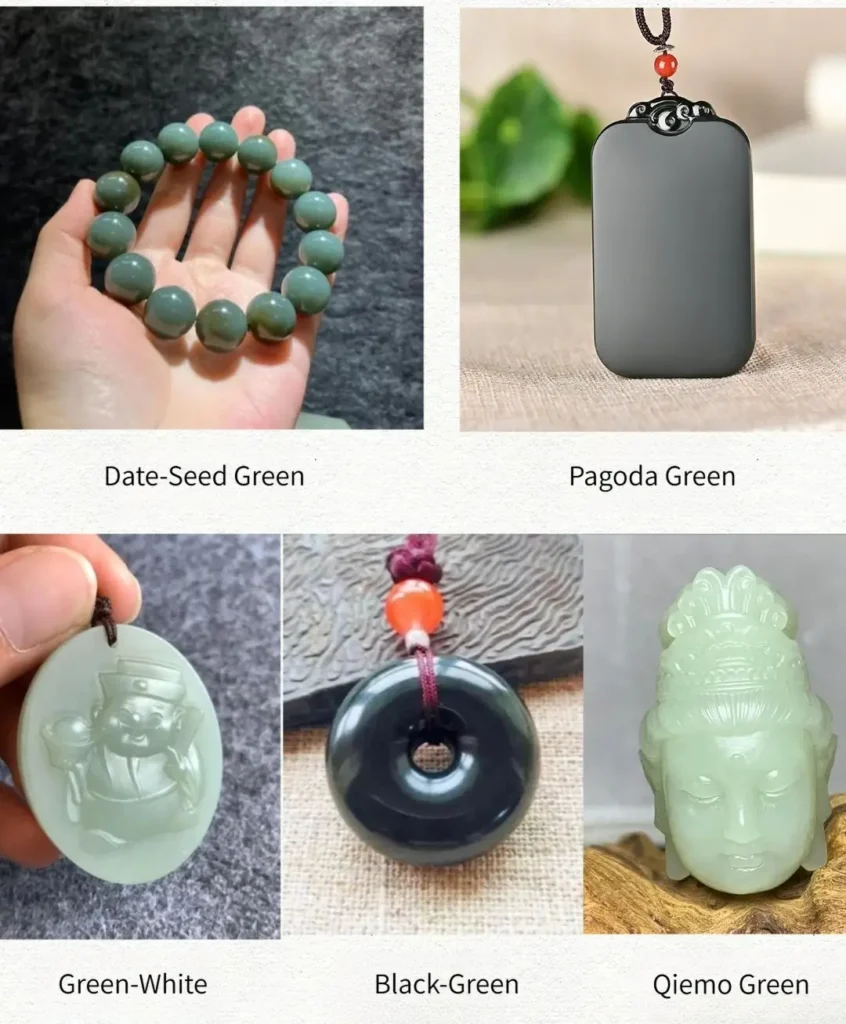
- Black-Green (Hei Qing): Appears black in natural light but reveals a deep green glow under a flashlight.
- Date-Seed Green (Sha Zao Qing): Highly prized for its silky, matte texture and unique “dusty” blue-green hue.
- Qinghai & Pagoda Green: Known for their structural stability, making them favorites for large-scale carvings.
Buyer’s Tip: Don’t overlook Qing Yu. From a Hetian Jade basics perspective, while White Jade gets the headlines, Celadon Jade often possesses the finest internal structure and is far more affordable for daily wear.
Green-White Hetian Jade: Balance of Color and Texture
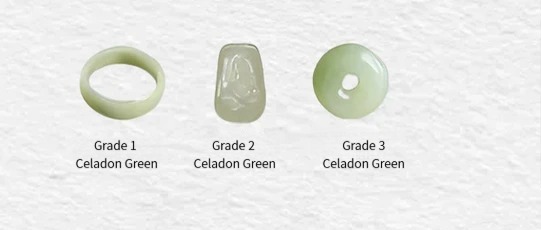
Bridging the gap between the two previous categories, Green-White Jade is also colored by iron ions. It serves as a beautiful transition, offering a “best of both worlds” aesthetic for those who find White Jade too stark and Green Jade too dark.
Its tones range from a soft, light greenish-white to a misty, bluish-white hue. In the trade, this is often the most common material found in high-quality bangles and pendants because of its pleasing, neutral appearance.
Buyer’s Tip: Green-White Jade is the “sweet spot” for value. It offers the brightness of White Jade with the structural integrity of Green Jade at a much more accessible price point.
Spinach Green Jade (Bi Yu): Vibrant Colors
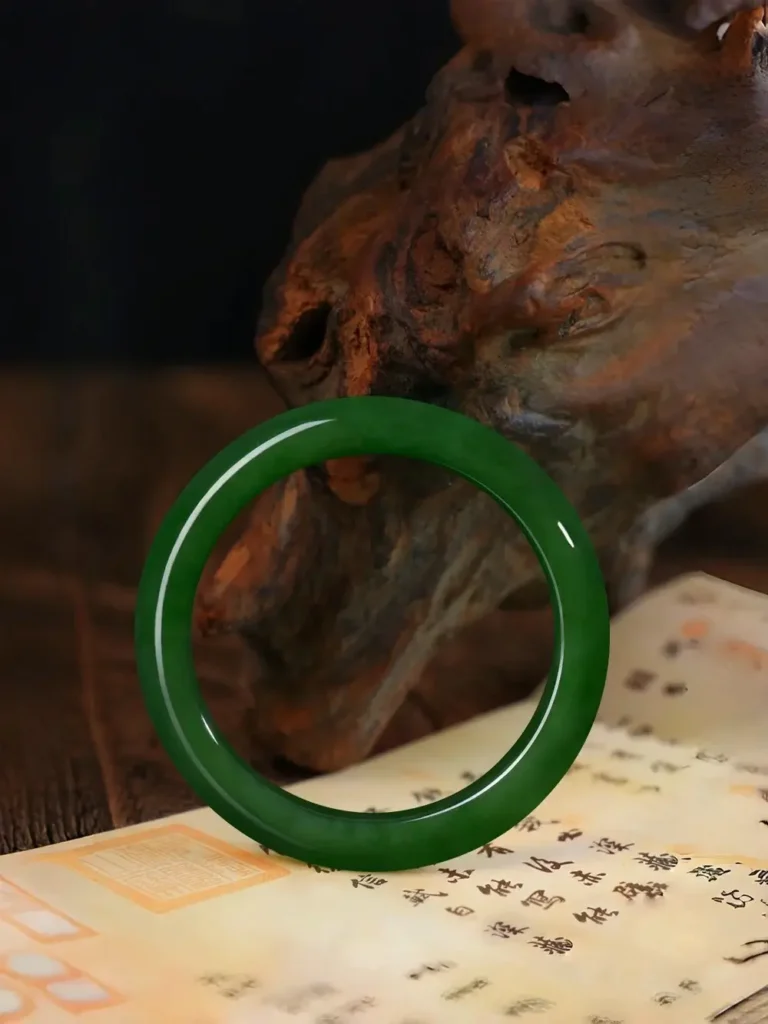
Another colorful chapter in Hetian Jade Basics is Bi Yu (Spinach Green), which gets its intense color from Chromium ions. This creates a striking resemblance to Imperial Jadeite, making it one of the most popular varieties in the global market.
The Bi Yu family is diverse:
- Bi Yu Series: Includes Spinach Green, Apple Green, and Bright “Yang” Green.
- The Duck-Egg Subgroup: Features pastel, “porcelain” textures in powder green, porcelain blue, and minty teal.
Buyer’s Tip: High-quality Russian Bi Yu is currently the market leader for color intensity. If you prioritize “vividness,” look for Russian material with minimal black specks (iron inclusions).
Yellow Jade (Huang Yu): The Rare “Golden” Find
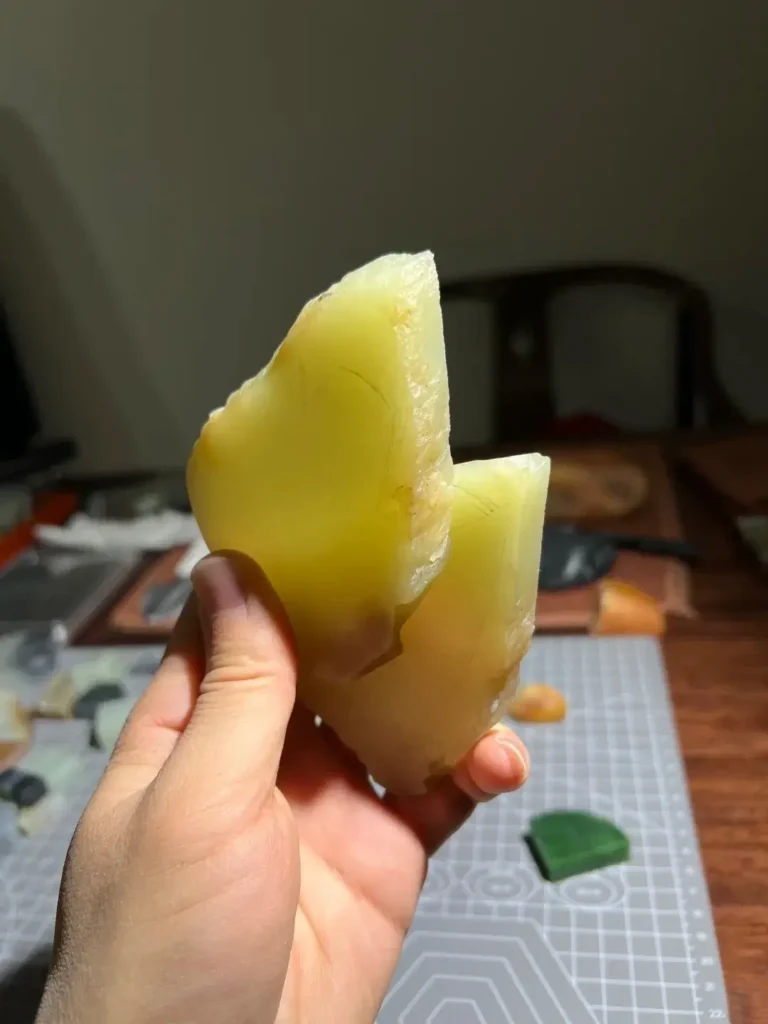
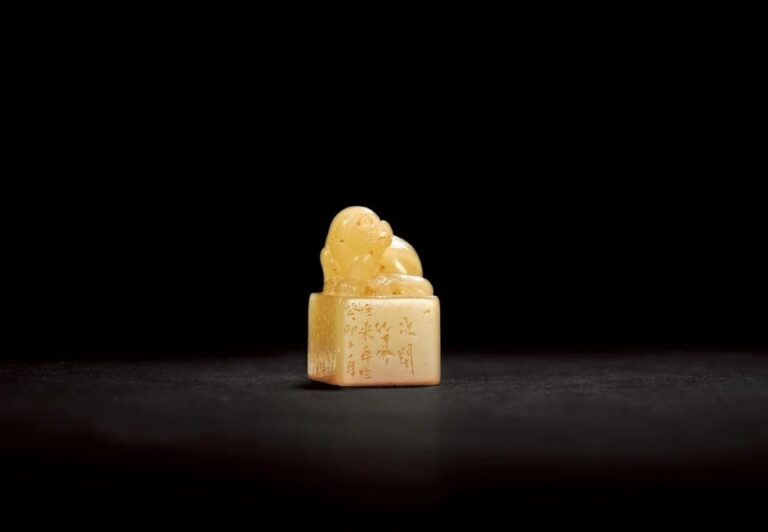
True Yellow Jade is a primary mineral, meaning it was formed yellow underground, not stained by external minerals over time. This makes it distinct from “yellow-skinned” white jade.
Ranging from light greenish-yellow to the legendary “Chestnut Yellow,” this material is exceptionally rare. In fact, most “yellow jade” seen in tourist shops is actually a different stone entirely or secondary-stained white jade.
Buyer’s Tip: Authentic, high-grade Yellow Jade is an investment-level asset. Because it is so rare, ensure any purchase comes with a reputable lab certificate confirming it as a primary-color nephrite.
Sugar Jade (Tang Yu): Nature’s Caramel in Nephrite
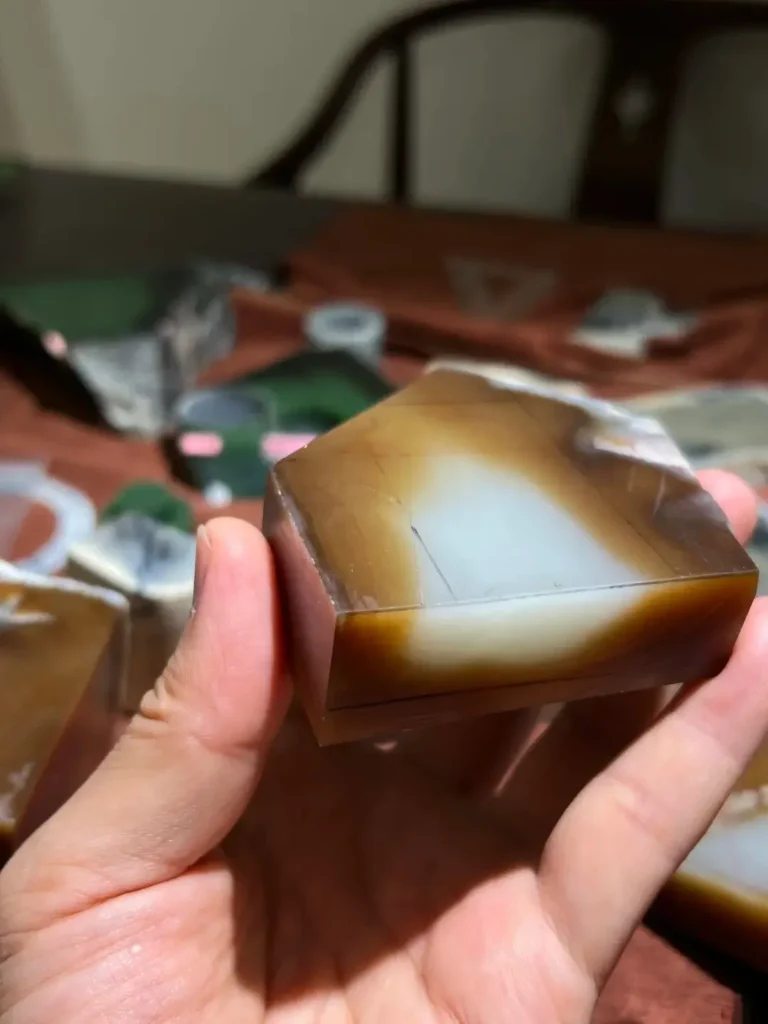
Sugar Jade earns its name from its distinctive reddish-brown color, caused by ferric iron (Fe³⁺) soaking into the stone over millions of years. It looks remarkably like caramelized sugar or dark chocolate.
Classification by Coverage
- Sugar Jade: Over 80% of the stone is brown/caramel.
- Sugar-White/Sugar-Green: A bi-color effect where 30%–80% of the stone shows the sugar color, creating a beautiful contrast for “clever carving” (using the color to represent different subjects).
Buyer’s Tip: Look for “Red Sugar” with high oiliness. The contrast between the dark sugar and a white jade core is highly sought after by collectors for its artistic potential.
Ink Jade (Mo Yu): The Scholar’s Stone
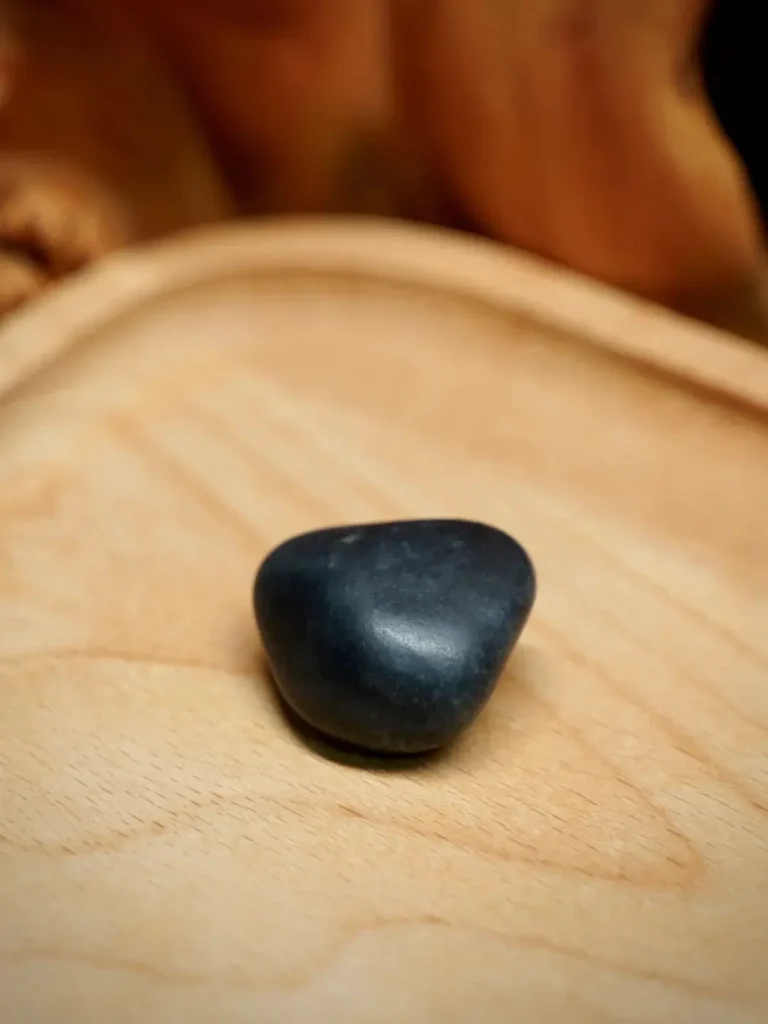
The deep black of Ink Jade is caused by graphite inclusions within the white or green jade base. Depending on the density of the graphite, the patterns can appear as delicate mist, dots, or solid bands.
When the black graphite covers less than 85% of the stone, it is called Qinghua (Black-and-White) Jade. Often referred to as “Ink-Wash Jade,” it resembles traditional Chinese landscape paintings.
Buyer’s Tip: To test for authenticity, use a strong flashlight. True Ink Jade will usually show a thin rim of green or white light around the edges, proving it is nephrite and not common black stone.
Emerald-Green Hetian Jade (Cui Qing Yu): Modern Favorites
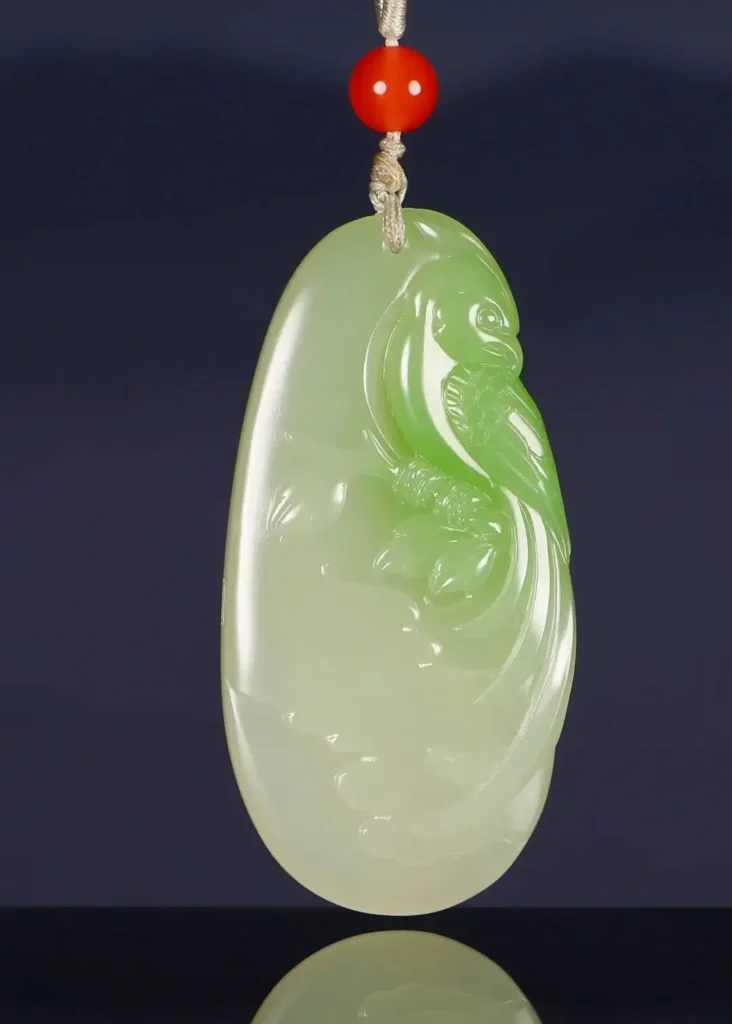
Similar to Bi Yu, this variety is colored by Chromium but is characterized by a “vibrant green on a white base.” To be classified as Cui Qing, the green portion must be distinct and cover at least 1% of the stone.
The most coveted pieces feature a stark contrast between a “frozen-fat” white base and a vivid, emerald-green splash. It is particularly popular in the Qinghai region and has become a darling of the modern jewelry market.
Buyer’s Tip: This is currently one of the fastest-appreciating categories in the Hetian Jade market. Its resemblance to high-end Jadeite makes it very appealing to the international market.
Hetian Jade Basics: Why Origin and Formation Define Value
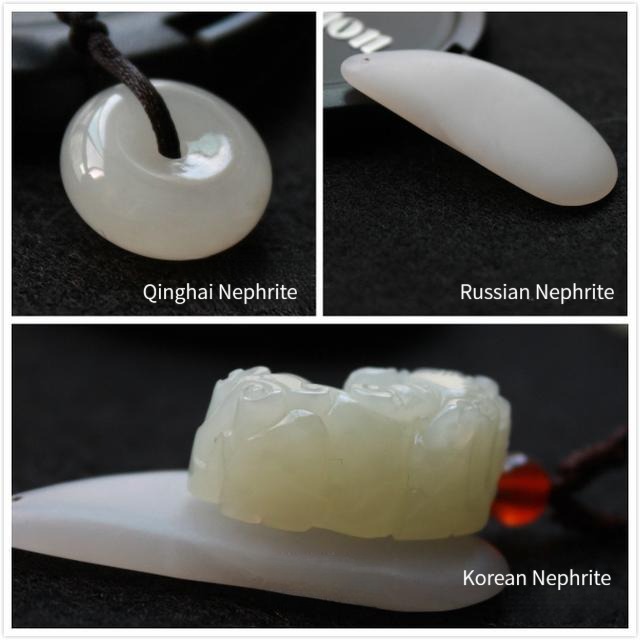
If you are looking to enter the world of Nephrite, understanding origin is your first real test. While all these stones are mineralogically “Hetian Jade,” their internal structures, oiliness, and “water lines” vary dramatically by location. Knowing these regional differences is the key to mastering Hetian Jade basics and identifying a high-value investment.
Xinjiang Hetian Jade — The Unmatched Gold Standard
Authentic Xinjiang Nephrite hails from the legendary Kunlun Mountains, including famous mining areas like Khotan (Hetian), Qira, Ruoqiang, and Manas.
The “Wool Blanket” Structure
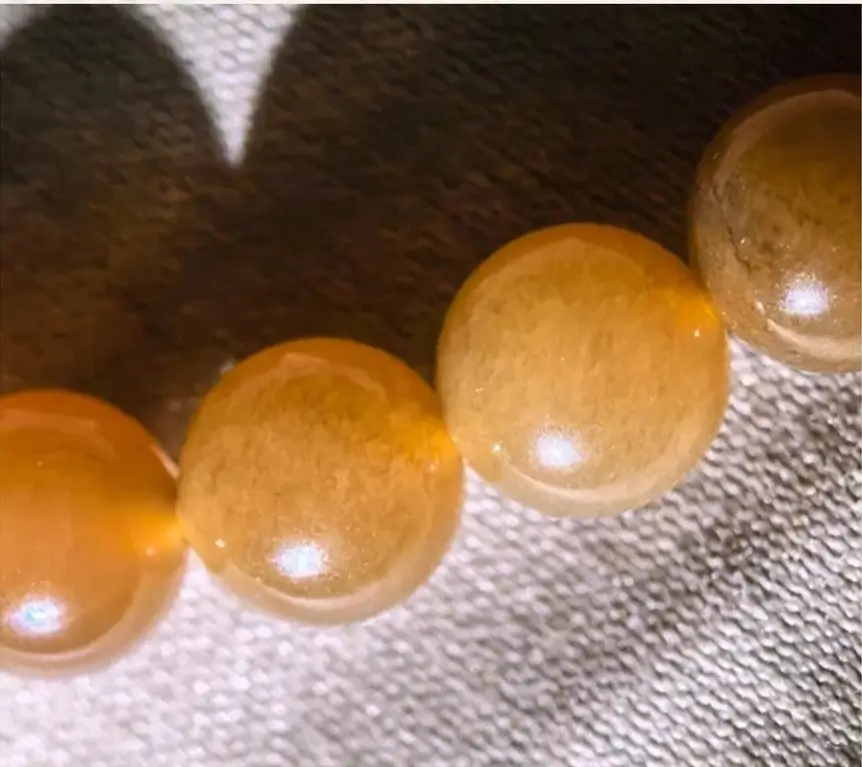
The defining characteristic of Xinjiang material is its internal weave. Under a strong backlight, you will see a tight, felt-like fibrous structure. It is evenly distributed and incredibly fine—think of the interlocking threads of a meticulously unraveled wool blanket. This microscopic “felted” weave is what gives the stone its legendary toughness and smooth texture.
Key Physical Traits — Superior Oiliness
This is the “soul” of Xinjiang jade. It possesses a natural, greasy luster that seems to glow from within, rather than a superficial glass-like shine.
- High Density & Toughness: It feels substantial and “heavy” in the palm (high specific gravity).
- Aging Potential: Unlike other origins, Xinjiang jade becomes increasingly lustrous and “warm” the more it is worn or handled by the owner.
Buyer’s Tip: Because Xinjiang material is the rarest and most expensive, it is the most frequently faked. Always look for that signature “felted” structure; if the grain looks too organized or too transparent, proceed with caution.
Russian Nephrite — Bright Whiteness and Vivid Greens
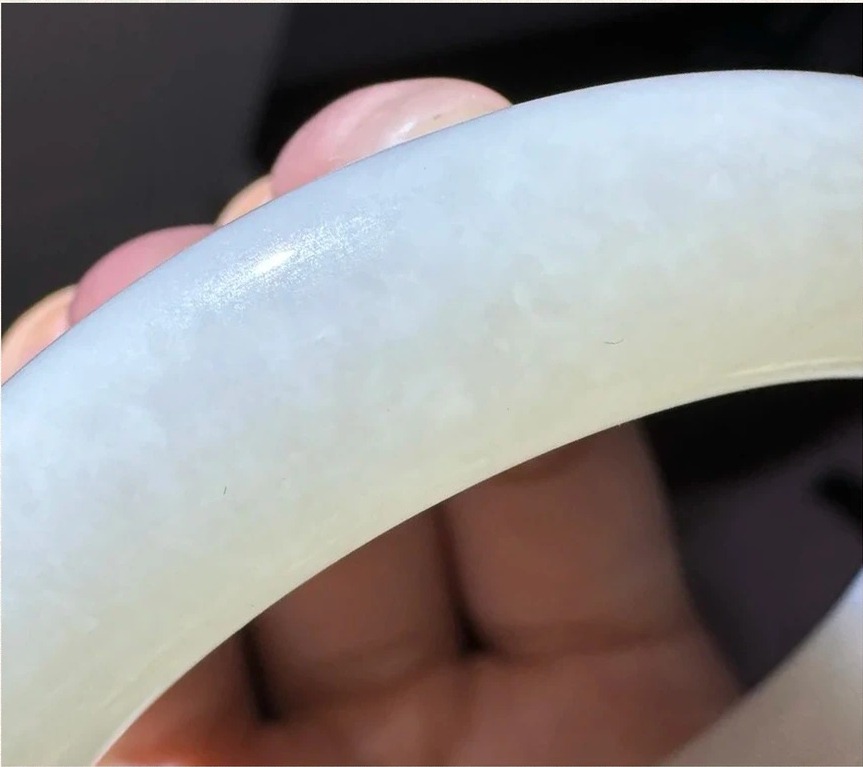
Sourced from the pristine Lake Baikal region, Russian nephrite is a powerhouse in the global jade market. Its internal structure is distinctive: under a flashlight, the grain often resembles “rice porridge.”
- Entry-level material: Displays a loose, coarse grain similar to overcooked rice.
- Premium material: Exhibits a tight, dense texture akin to a smooth rice paste.
Vivid Colors and “Cat’s Eye” Bi Yu
While Xinjiang is known for oiliness, Russia dominates in color saturation.
- The “White” King: Russian white jade often achieves a “porcelain-white” or “cold-white” level that is difficult for other origins to match.
- Superior Green Jade (Bi Yu): Russian green jade is world-renowned. From vibrant Apple Green and “Yang” Green to deep Spinach Green, the colors are intense and concentrated.
- The “Eyeliner” Effect: High-end Russian Bi Yu often features a “Cat’s Eye” chatoyancy—a natural, moving line of light that looks like “eyeliner,” adding a regal and dynamic charm to the stone.
Market Position and Caution
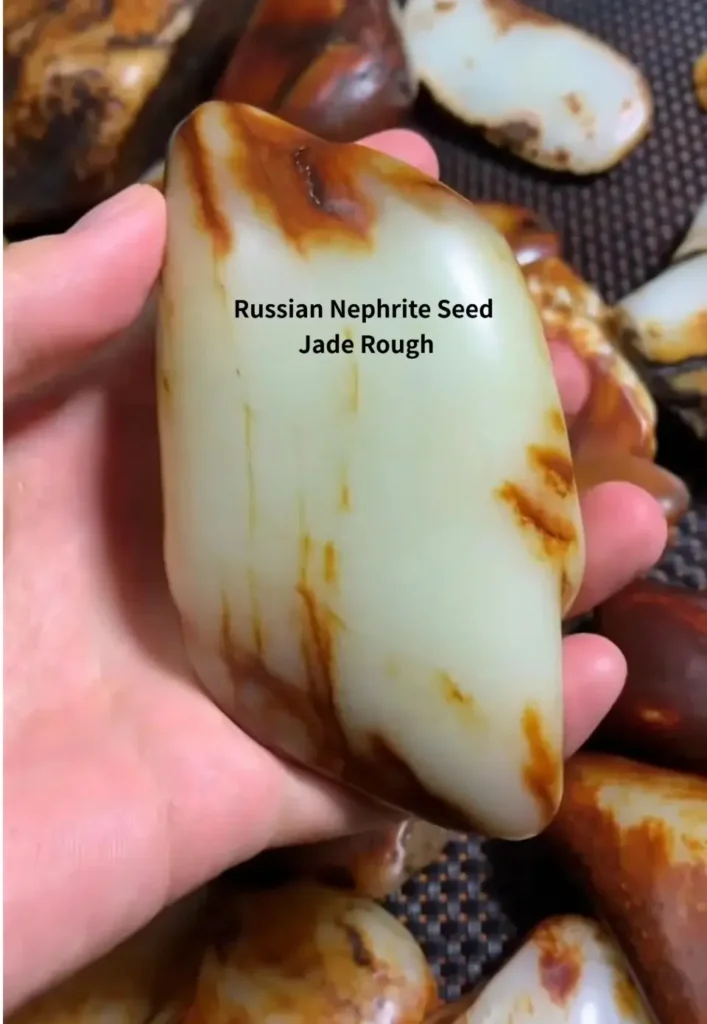
Russian jade occupies the medium-to-high-end market. While top-tier Russian stones can command prices near those of Xinjiang material, they generally feel “stiffer” and less oily.
- The Imitation Trap: Because of its extreme whiteness, pure Russian white jade is frequently used to impersonate the rare and expensive Qiemo white jade from Xinjiang.
Buyer’s Tip: As you learn more Hetian Jade Basics, you’ll realize that if you prioritize visual impact and vibrant color (especially in greens), Russian jade is your best bet. However, if you are looking for that classic “oily” feel, you may find Russian material a bit “dry” or “bone-white” compared to its Xinjiang counterparts.
Deep Dive: Want to see how Russian and Xinjiang prices stack up? Check our Nephrite Jade Price Guide: Quality Grades, Value Factors, and Origins.
Qinghai (Kunlun) Jade — Translucency and Modern Pastel Palettes
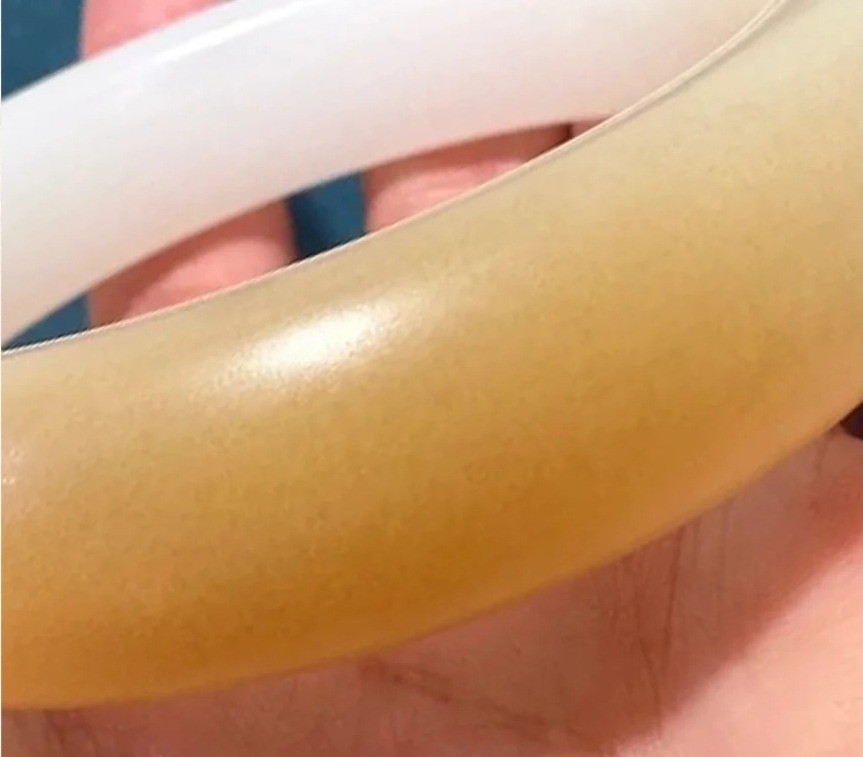
Mined in the Golmud region of the Kunlun Mountains, Qinghai jade offers a distinct visual departure from other origins. When you inspect this material under a flashlight, you will notice a fine, granulated sugar-like structure. Unlike the “felted” texture of Xinjiang jade, the particles here are smaller and more dispersed, contributing to its signature transparency.
The “Watery” Aesthetic and Unique Color Varieties
Qinghai jade is the favorite of modern designers due to its high translucency (water feel) and an incredible array of trendy, pastel colors:
- Emerald-Green (Cui Qing): The “signature move” of Qinghai. It features vivid green splashes on a white base, creating a striking contrast.
- Lotus Root Powder (Ou Fen): A recent market sensation. Its soft, slightly “sticky” pink tone—resembling fresh lotus root starch—marks a clear departure from traditional nephrite aesthetics and has reshaped modern collecting trends, as explored in The Rise of Pink Nephrite Jade: Sweet, Chic, and Breaking the Traditional Mold.
- Smoky Purple (Yan Qing): A unique, moody gray-purple tone that you won’t find in other origins.
- Clear Water & Lake Green: Refreshing, translucent greens that capture a “misty lake” aesthetic.
Physical Characteristics and Market Cautions
While visually stunning, Qinghai jade generally possesses lower oiliness and can feel more “glassy” or “watery” than greasy.
- The “Water Line” Signature: It frequently contains water lines (transparent crystalline veins) and “water-grass” patterns, which serve as natural ID cards for this origin.
- Fragility: Be aware that some Qinghai material is brittle. It is more prone to micro-cracking during carving or if dropped compared to the tougher Xinjiang material.
- Market Identity Theft: High-quality, oily Qinghai white jade is often used to impersonate the rare Qiemo Blue or “High-Fine White” from Xinjiang.
Buyer’s Tip: If you love the look of Jadeite but prefer the price point and history of Nephrite, Qinghai jade is your perfect match. Its “watery” translucency and feminine colors like Lotus Root Powder make it ideal for contemporary, high-fashion jewelry.
Korean Nephrite — The Budget-Friendly Entry Point
Sourced primarily from Chuncheon, South Korea, Korean nephrite represents the entry-level tier of the Hetian jade market. Unlike the interlocking fibers found in premium origins, Korean jade features a loose internal structure. When carving this material, artisans often encounter “chipping” or “collapsing” at the edges because the stone lacks the extreme toughness of its Xinjiang counterparts.
Waxy Luster and Color Profile
While Xinjiang jade is “oily” and Qinghai is “watery,” Korean jade is best described as “waxy.”
- Predominant Colors: You will mostly find it in yellowish-green or dull gray-white tones.
- Tactile Feel: It often lacks the “substantial weight” and cool, dense feel of high-quality nephrite, appearing somewhat “light” or “plastic-like” to the untrained eye.
Market Risks and Identification
Because of its high output and low cost, Korean jade is the primary “canvas” for market imitations.
- The “Imposter” Seed: Sellers frequently tumble Korean mountain material into pebble shapes and apply artificial dyes to mimic expensive Xinjiang Seed Jade.
- Color Mimicry: Through clever polishing and wax application, it can be made to resemble Russian white jade or even Xinjiang material at first glance.
Buyer’s Tip: Korean jade has its place as affordable fashion jewelry, but it does not hold the same investment value as other origins. If you encounter a “bargain” white jade seed that feels waxy rather than oily, you are likely looking at Korean material. Exercise caution and always verify the origin.
Understanding Formation — Why “Where” it was Found Matters
Beyond origin, understanding the four formation types is a core pillar of Hetian Jade basics that determines ultimate value. In the industry, we separate these into four distinct “occurrence” types.
Important Note: Do not confuse “Origin” with “Formation.” For example, a “Russian Seed” and a “Xinjiang Mountain Material” are two completely different categories.
The Four Categories of Jade Occurrence
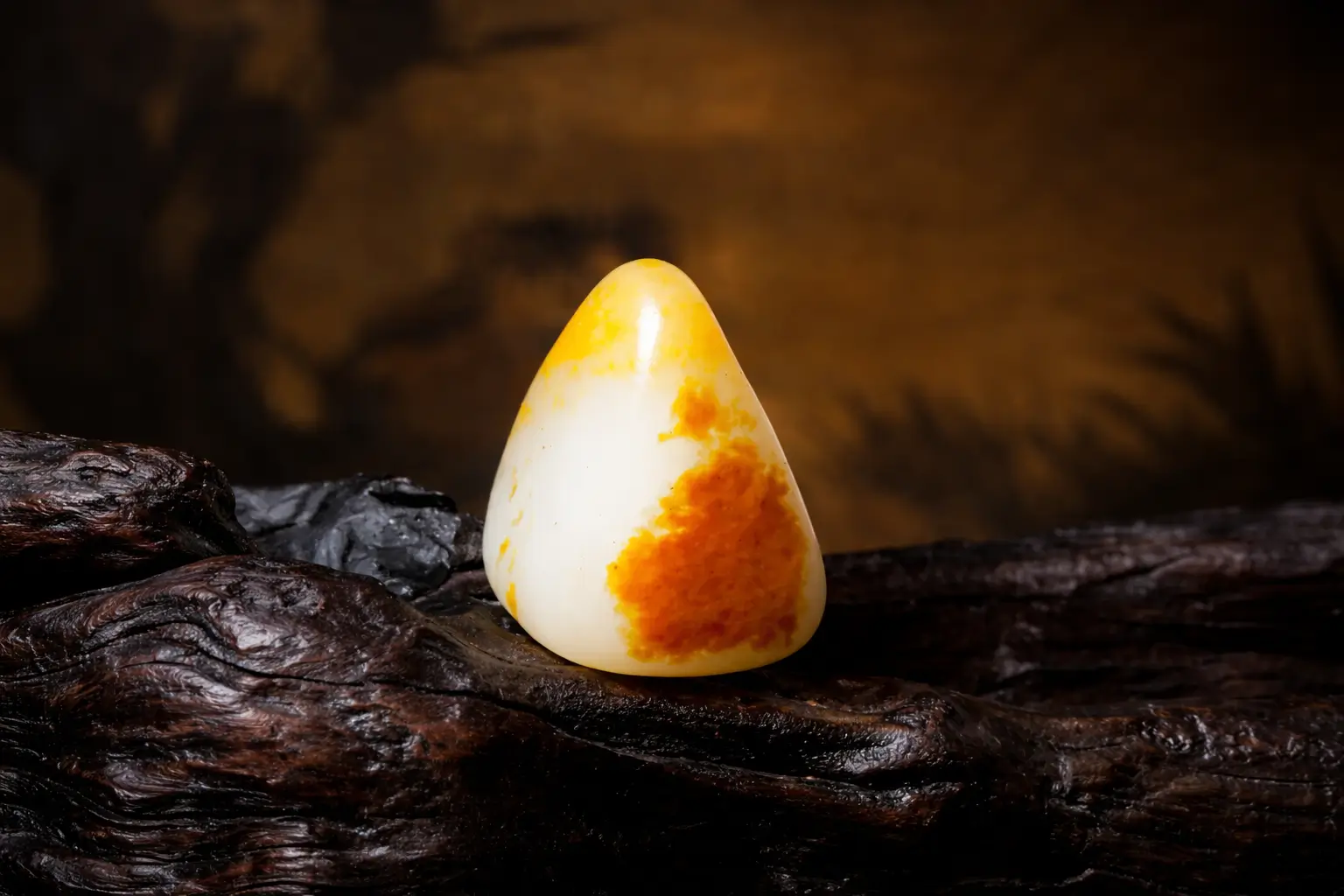
- Seed Jade (Zi Liao): The undisputed king of nephrite. These are river-born pebbles tumbled by water for millions of years. This natural process “filters” the stone, leaving only the densest, oiliest core.
- Mountain Material (Shan Liao): Mined directly from primary ore deposits high in the mountains. These are angular, large blocks and form the majority of the jewelry market.
- Alluvial Jade (Shan Shui Liu): The “middle child” found in riverbeds near the mountains. They have started to round out but haven’t reached the refined state of a true “Seed.”
- Gobi Jade (Ge Bi Liao): Desert-born stones shaped by wind and sand erosion. They possess a unique, rugged “weathered skin” that is highly prized by niche collectors.
Next Step: For an in-depth exploration of these formations, read our PeonyJewels specialized guide: Hetian Jade Types: From Mountain Material to Seed, Alluvial & Gobi Jade.
The Aesthetics of Jade — Understanding “Oiliness” vs. “Wateriness”
One of the most important Hetian Jade Basics to learn is the shift from “sparkle” to “tactile richness.” However, Hetian Jade plays by a different set of rules. To appreciate nephrite, you must shift your perspective from visual clarity to tactile richness.
Structure and Oiliness: The Soul of Nephrite
The highest aesthetic standard for Hetian Jade is “Maturity” (Lao Shu) and “Finest Texture” (Xi Du).
- The “Greasy” Luster: A premium piece should look like a block of solidified butter or sheep’s fat. It has a “warm” glow that feels soft and inviting.
- The Texture Trap: Do not dismiss a stone because it isn’t “watery” or transparent. In the nephrite world, excessive transparency often indicates lower density or a different origin (like Qinghai).
Buyer’s Tip: If you are chasing a “watery” or “translucent” look, you are looking for Jadeite, not Nephrite. We often tell clients: “If you want transparency, turn right to the Emerald shop; if you want the warmth of a soul-soothing stone, stay here with Hetian Jade.”
Learn More: To avoid confusing these two distinct gems, read our expert guides: How to Identify Natural Jadeite.
The Economics of Seed Jade: Factors That Drive Price Per Gram
Unlike many gemstones sold by the carat or by the piece, high-end Xinjiang Seed Jade (Zi Liao) is traded by the gram. Prices fluctuate significantly, ranging from $10 to over $1,500 per gram, depending on a precise matrix of quality factors.
- Natural Skin Color (Pi Se): In the world of Seed Jade, the “Skin” is the stone’s birth certificate. Natural oxidation colors like Red Skin (Hong Pi) or Golden Skin (Jin Pi) can double or even triple the value of the stone compared to a “naked” white seed.
- Whiteness Grade: As discussed, Extra White and Grade 1 White command the highest premiums.
- Texture Fineness & Oiliness: The tighter the internal structure (the less visible the “fibers” under light), the higher the value.
- Craftsmanship: Hand-carving by a recognized master or studio adds significant artistic and collectibility value.
Real-World Pricing Guide for Xinjiang Seed Jade
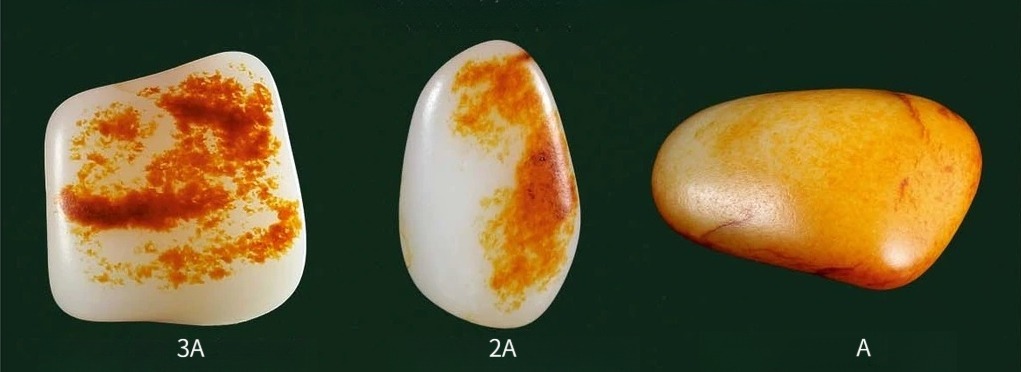
To help you navigate this complex market, we have categorized top-tier Xinjiang Seed Jade based on recent international trading data.
The “Golden Range”: You will notice that pieces between 20g and 200g command the highest price per gram. This is because they are the ideal size for high-end pendants and “hand-play” pieces (objects designed to be held and rubbed to improve their luster).
| Quality Grade | < 20g (Exquisite/Small) | 20g – 200g (The Golden Range) | 200g – 500g (Rare/Investment) |
| 3A Top Collector Grade | $1,200 – $2,200 /g | $2,500 – $3,300+ /g | $1,800 – $2,200 /g |
| 2A Premium Collector Grade | $500 – $900 /g | $1,000 – $1,400 /g | $800 – $1,100 /g |
| 1A Quality Collector Grade | $270 – $400 /g | $400 – $780 /g | $310 – $400 /g |
Important Pricing Caveats
These figures represent Top-Tier Xinjiang Material. A stone’s price can exceed these estimates if it features an exceptionally vibrant “Red Skin” or comes from a world-renowned carving studio. Conversely, lower-quality material from other regions will be priced significantly lower.
Buyer’s Tip: Don’t Fall for the “Seed” Label Alone A common mistake is believing that any seed jade is valuable. In reality, a high-quality Mountain Material (Shan Liao) piece with perfect oiliness is a far better investment than a “junk” seed jade that is full of cracks and impurities. Judge the jade, not just the category.
“Broad Definition” Jade vs. Authentic Xinjiang Origin
Historically, people reserved the term ‘Hetian Jade’ exclusively for nephrite mined in Xinjiang. However, in 2003, authorities broadened the national standard, allowing any stone composed primarily of tremolite to be legally labeled ‘Hetian Jade,’ no matter where it comes from.
This is the most critical lesson for any beginner: A “Hetian Jade” certificate does not guarantee Xinjiang origin. Most jade circulating in today’s global market is sourced from Russia, Qinghai, or Korea. Understanding this “Broad Definition” is the first step to navigating the market without overpaying.
The “Regional Average” Rule for White & Green Jade
While every stone is unique, the industry follows specific professional observations based on origin:
White Jade Varieties:
- Xinjiang Material: The gold standard for oiliness. It has a “warm” texture that feels organic and dense.
- Russian Material: Known for its stark, “bone-dry” whiteness. It offers high brightness but can feel porcelain-like.
- Qinghai Material: Noted for its watery, translucent appearance (high “water feel”).
- Korean Material: Characterized by a waxy, “lightweight” feel and a common yellow-green tint.
Green Jade (Bi Yu) Varieties:
- Xinjiang Bi Yu: Typically features a deeper, more somber green with a very fine, oily texture. However, it often contains numerous black spots (chromite inclusions).
- Russian Bi Yu: The market favorite for color. It boasts vibrant, vivid greens with significantly fewer black spots and a more obvious crystalline structure.
Price Hierarchy (General): Xinjiang Material > Russian Material > Qinghai Material > Korean Material.
The “NBA Giant” Exception — Beware of Generalizations
While averages help us understand the market, they aren’t absolute. Think of it like height: statistically, people from Southern China may be shorter than those from the North, but the South still produced Yao Ming (an NBA giant), and the North has its shorter individuals.
In the jade world:
- Russian jade has museum-quality masterpieces.
- Xinjiang jade has “junk” stones that aren’t worth carving.
The Golden Rule: Never judge a stone solely by its “birth certificate” or origin label. You must evaluate each individual piece based on its structure, oiliness, and soul.
Veteran Insights: Field Experience Beyond Standards
(Comparative Observations, Not Origin Identification Rules)
Experienced collectors often develop intuitive judgments through long-term handling rather than certificates or lab data alone. The following observations are hands-on market experience, widely recognized among seasoned traders—but they are not formal standards and should never be used as sole criteria for origin identification.
Xinjiang Hetian Jade: “Icy Transparency” (冰透)
High-quality Xinjiang material, especially fine white or green-white jade, may exhibit what collectors describe as “icy translucency.”
This is not watery transparency, but a restrained, cool penetration of light that feels dense and calm—like ice infused with oil.
- Light enters slowly and diffuses evenly
- The stone remains visually “quiet,” never flashy
- High density and oiliness coexist with controlled translucency
This trait is often misunderstood by beginners, who may mistake it for Qinghai jade. In reality, true Xinjiang material tends to absorb light rather than leak it.
Qinghai (Kunlun) Jade: “Watery Transparency” (水透)
Qinghai jade is best described as water-transparent. Light passes through quickly and directly, often revealing:
- Prominent water lines (Shui Xian)
- Granulated or crystalline internal textures
- A visually refreshing but structurally looser feel
While highly appealing in modern jewelry, this “water feel” is usually accompanied by lower oiliness and a more glassy surface impression compared to Xinjiang material.
Russian Nephrite: “Pure Whiteness” (白)
Russian nephrite is renowned for its striking whiteness, sometimes reaching a porcelain or bone-white tone that few origins can match.
- Whiteness is strong and direct
- Internal structure often appears more crystalline
- Oiliness is typically lower, giving a drier tactile feel
This visual brightness is precisely why Russian white jade is frequently used to imitate high-grade Xinjiang white jade in the international market.
Hardness Differences: A Real Phenomenon—With Limits
Even within the same origin, nephrite jade exists in high, medium, and low hardness ranges due to variations in structure and mineral intergrowth.
One commonly observed phenomenon among collectors is mutual abrasion:
when two nephrite pieces are gently rubbed together, the stone with lower hardness may produce fine white powder.
However, this phenomenon comes with an important warning:
Hardness differences are real, but they are NOT a reliable method for determining origin.
Hardness can vary widely within the same mine, and improper use of this method can damage valuable jade. It should be understood as a comparative tactile observation, not an identification technique.
A Critical Reminder for Buyers
These experiential cues help seasoned collectors sense quality, not prove origin.
True identification still relies on a holistic evaluation of:
- Internal structure
- Oiliness
- Texture maturity
- Formation type
- Provenance and market context
In Hetian Jade basics, intuition refines judgment—but standards, structure, and integrity always come first.
Understanding Natural Imperfections in Hetian Jade
In the world of jade, perfection is rare. Experienced collectors often say, “Ten seeds, nine cracks,” highlighting that flawless river-born pebbles are nearly impossible to find. Instead of seeing these as defects, professionals view them as nature’s fingerprints—evidence that the stone survived millions of years of geological forces. Recognizing these traits will help you make informed purchases and avoid overpaying for stones that appear “too perfect.”
Fissures and Cracks (Liu & Lie)
Collectors use the terms Liu (fine fissures) and Lie (cracks and stone veins) to classify fractures in Hetian Jade. These fractures arise either from natural internal stress or from external forces during mining and handling.
Fine Fissures — Liu
- Static Fissures (Si Liu): These are obvious, deep cracks that vary in length, width, and depth. They remain static and are easy to spot.
- Dynamic Fissures (Huo Liu): Tiny, hair-like fractures often running in the same direction on the surface. Detecting these requires a careful eye.
Cracks and Stone Veins — Lie
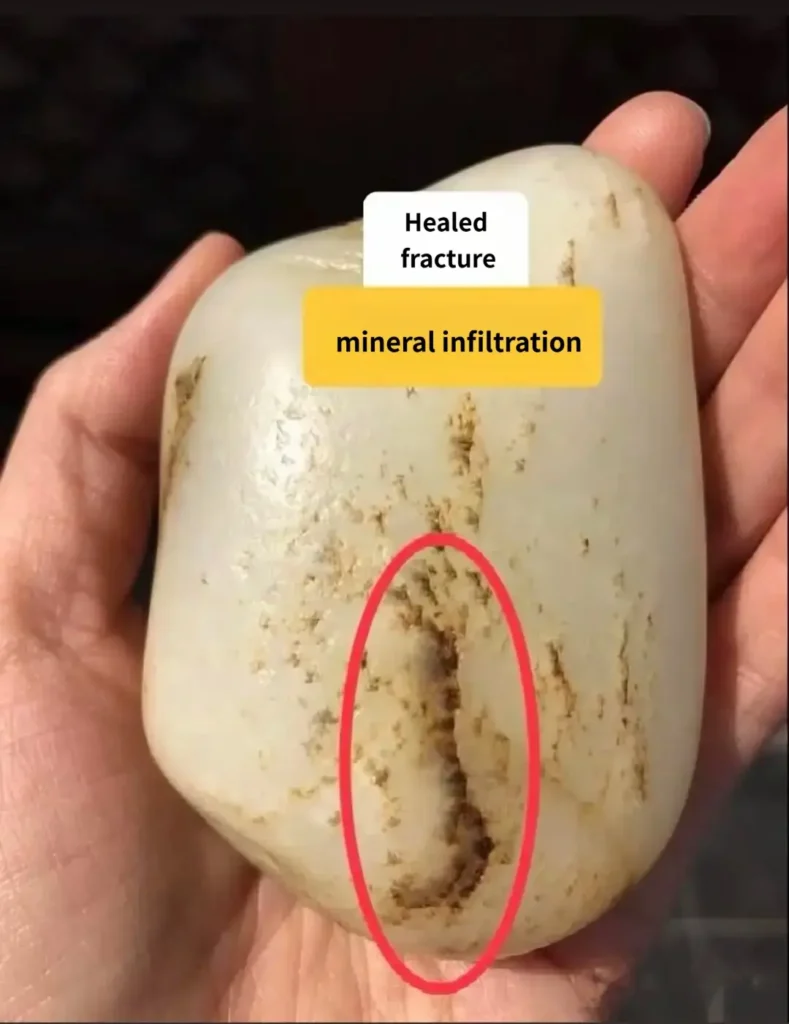
- Stone Veins (Healed Cracks): Internally healed fractures that cannot be felt with a fingernail. They rarely compromise structural integrity, and expert carvers often use them to enhance design.
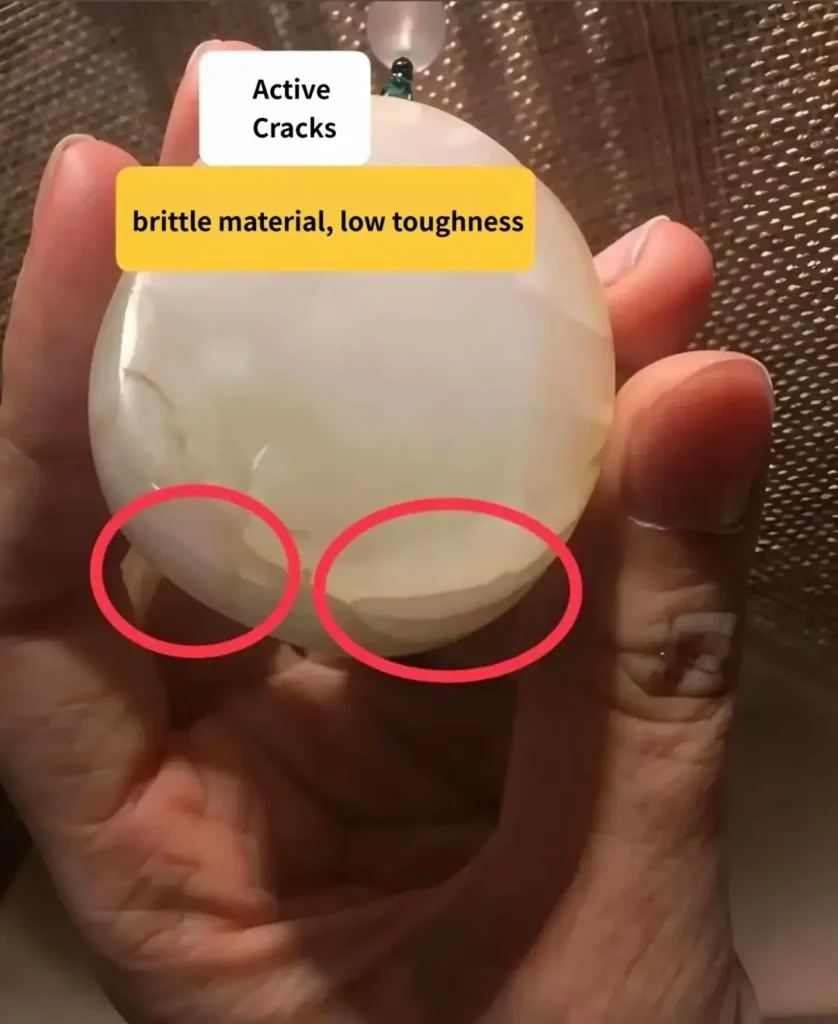
- Active Cracks: Open fractures that catch the fingernail. These significantly reduce the jade’s durability and value, so inspect carefully.
Water Lines (Shui Xian)
Transparent linear veins, often mistaken for flaws. While some buyers avoid them, veterans appreciate water lines as indicators of density and natural formation. These lines are a hallmark of authentic Hetian Jade.
Cotton Inclusions (Mian)
White, misty, or petal-shaped crystalline formations. Excessive cotton can reduce transparency and value, but aesthetically placed “Snowflake Cotton” can add artistic appeal.
Stone Grains and Calcification (Jiang)
In the industry, we use the term “Jiang” to describe stony, calcium-rich areas. This occurs when high concentrations of calcium oxide precipitate within the nephrite. While a touch of calcium can actually make jade look “whiter and oilier,” excessive amounts create opaque, stony patches.
- Hard Jiang (Localized Calcification): These are well-defined, calcified blocks that have a sharp boundary with the “jade meat.” Because they stay on the surface or in concentrated clusters, carvers can easily remove them to reveal the clean jade beneath.
- Sinking Jiang (Diffuse Internal Calcification): This is the high-risk variety. Here, the calcified spots disperse deep into the interior like scattered salt. These “sinking” spots make it nearly impossible to find clean, usable jade meat, so you should approach stones with scattered white spots with extreme caution.
Natural Mineral Inclusions (Dark Spots)
The term “Zang” covers all foreign mineral impurities that infiltrate the jade over millions of years. These occur as the stone reacts with minerals in its environment. We generally categorize them into three types:
- Mineral Dots: Tiny black or brown specks formed by metallic particles. In Green Jade (Bi Yu), these are common graphite inclusions; while they can affect beauty, they are a hallmark of natural origin. In Ink Jade (Qing Hua), however, scattered black dots can be artistically carved into stunning “landscape” patterns.
- Water-Grass Inclusions: These are delicate, branch-like patterns formed by manganese ions crystallizing in water. They look like tiny fossils or moss trapped in the stone.
- Sugar Staining (Yi Tang): This is a natural “soak” of iron-rich minerals. It creates a spectrum of hues from yellowish-brown to deep chocolate. Unlike a “dirty” impurity, high-quality sugar staining is highly collectible.
Buyer’s Tip
Do not demand perfection. Accepting these marks is a sign of maturity in Hetian Jade basics. Each mark is a testament to the stone’s journey, through the Kunlun Mountains and the abrasive currents of the Yurungkash River. Understanding these natural “birthmarks” will help you stop fearing flaws and start appreciating the story behind every piece of Hetian Jade.
Mutton Fat Jade: Grading and Market Value
In the jade industry, there is a well-known saying: “It is not frightening if you never buy Mutton Fat Jade in your lifetime; it is frightening if everything you buy is called Mutton Fat.”
This phrase exists for a reason. True Mutton Fat Jade (Yang Zhi Bai Yu) is an ultra-rare natural anomaly—not a material that appears in bulk or repeats itself endlessly in the marketplace.
If you encounter a vendor selling “Mutton Fat” bangles for a few hundred dollars, or labeling every white stone as such, walk away immediately. These are almost certainly low-grade Russian material or synthetic imitations.
Deep Dive: To protect yourself from sophisticated scams, read our PeonyJewels blog guide:The Truth Behind “Miracle Whitening” and Other Hetian Jade Forgery Techniques.
2026 Price Breakdown: The Massive Value Gap in White Jade
The price of White Seed Jade (Zi Liao) varies more than almost any other gemstone. A one-kilogram raw stone can range from approximately $14,000 to over $14 million USD, depending on three non-negotiable factors: Whiteness, Fineness, and Oiliness. To provide a realistic market perspective, here is how the top-tier Xinjiang material currently prices:
1. The Pinnacle: Mutton Fat Jade (Ultra-Rare)
- Characteristics: A texture as dense and white as solidified sheep’s fat. It shows zero visible structure even under a strong flashlight and possesses legendary natural oiliness.
- Price Range: Approximately $14,000 – $70,000+ USD per gram.
- The “Kilogram” Reality: A museum-grade 1kg stone can command round $14 million to $70 million USD(these pieces usually only appear at elite auction houses like Sotheby’s or Christie’s).
2. First-Grade White Jade (Investment Grade)
- Characteristics: High whiteness with a very fine, “felt-like” internal weave. It represents the top 1% of the accessible market.
- Price Range: Approximately $1,400 – $7,000 USD per gram.
- The “Kilogram” Reality: Expect a price tag between around $1.4 million to $7 million USD for a high-quality 1kg raw boulder.
3. Commercial-Grade White Jade (Daily Wear)
- Characteristics: The color may lean slightly toward gray or celadon-green, and you might see some internal structure.
- Price Range: Approximately $70 – $700 USD per gram.
- The “Kilogram” Reality: These stones typically trade between around $70,000 to $700,000 USD per kilogram.
Why Does the Price Span So Far?
You might wonder why a slightly “whiter” stone costs ten times more. In the collectors’ world, the “last 5%” of quality—that perfect balance of oiliness and structurelessness—represents the highest level of rarity.
Buyer’s Warning: High-grade Russian jade often achieves “First-Grade Whiteness” but lacks the “Oiliness” of Xinjiang material. Sellers frequently exploit this by mislabeling dry Russian stones as “Mutton Fat” to unsuspecting international buyers.
Identifying Fakes: The Reality of Artificial Seed Jade
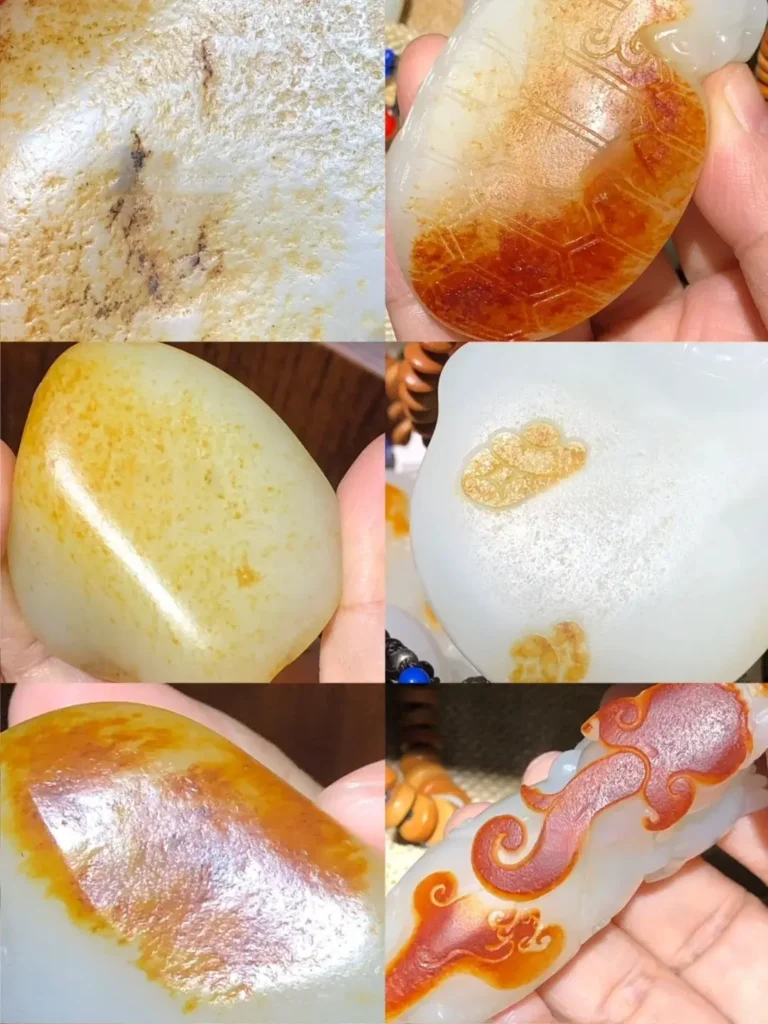
The market currently overflows with non-natural “Seed Jades.” Scammers frequently use Mountain Material from Russia or Korea, tumbling it in industrial machines to mimic river-worn pebbles and applying chemical dyes to create fake “skins.” Even with authentic seed jade, some sellers perform secondary coloring (re-dyeing) to inflate value—a common trap that Hetian Jade basics can help you avoid.
While forgery techniques evolve daily, entry-level imitations always leave clues. Remember the universal truth: You get exactly what you pay for. If a vibrant “Red Skin Seed Jade” carries a suspiciously low price, it is almost certainly a product of a laboratory, not a river.
Expert Guide: To distinguish real treasures from clever fakes, explore our detailed resource:The Nephrite Deception: Your Expert Guide to Authentic Hetian Jade and Its Natural Imposters.
Behind the Seal: The Truth About Master Jade Studios
Many newcomers fall into the trap of “Master Fetishism,” believing that a famous signature or studio seal guarantees quality. However, you must look beyond the brand. In reality, many prestigious studios outsource their labor to external factories and simply apply their official stamp to the finished product.
High-end jade carving remains a slow, meticulous manual craft. If a studio floods social media with “Masterpieces” every single day, it is physically impossible for a single artist to have produced them all. Much like how the sales of “Lafite” wine once far exceeded its actual production, the market is saturated with “Master” pieces that never touched a master’s hand.
Technology now allows for incredible precision through CNC (Computer Numerical Control) machines. While these pieces often appear visually “perfect,” they tend to lack the subtle rhythm, depth, and fluidity that define true hand-carved jade.
To understand how these differences show up in real pieces—and how to identify them with a trained eye—see our detailed guide: The Art of Jade Carving: Understanding Machine-Carved and Hand-Carved Jade Types.
From Hetian Jade Basics to PeonyJewels
Understanding Hetian Jade basics is a lifelong journey of the senses. We hope this guide serves as your foundation for navigating the complex world of nephrite with confidence. At PeonyJewels, we believe that every authentic stone tells a story of the mountains and rivers from which it came.
We invite you to explore our collection of original handmade vintage jewelry, where we prioritize the natural integrity and “soul” of the stone over marketing hype. If you are looking for something truly personal, we also offer bespoke custom design services. Whether you wish to source a specific grade of Xinjiang Seed Jade or want to transform a hand-selected stone into a one-of-a-kind heirloom, our artisans will work with you to bring your vision to life.
Discover the warmth of authentic nephrite and start your collection with a piece that is as unique as your own story.