The Hidden Royalty of Topaz: Why Imperial Topaz is a World-Class Rarity
When most people hear the word “Topaz,” they immediately picture familiar shades like Sky Blue, Swiss Blue, or London Blue. If you ask about price, the response is predictable: “It’s just an affordable, entry-level stone.”
Yet, the vast Topaz family hides a true aristocrat: Imperial Topaz.
Unlike mass-produced blue varieties, Imperial Topaz comes primarily from the historic mines of Ouro Preto in Minas Gerais, Brazil. Collectors rightly call it the “King of Gemstones.” Its brilliance and fire rival fine diamonds, crowning it as Brazil’s most celebrated gemological treasure.
This article explores the remarkable history and extraordinary value of Imperial Topaz. Discover why discerning collectors and savvy investors now covet this rare masterpiece.
The Color Spectrum of Topaz
The value of topaz is closely tied to its color. In today’s market, irradiated blue topaz is by far the most common, which often confuses buyers: why is a gemstone traditionally called “yellow topaz” frequently seen in blue? If you’ve ever wondered about this, you can find a detailed explanation here: Topaz: Why Is It Called ‘Yellow Jade’ When Most Stones Are Blue?
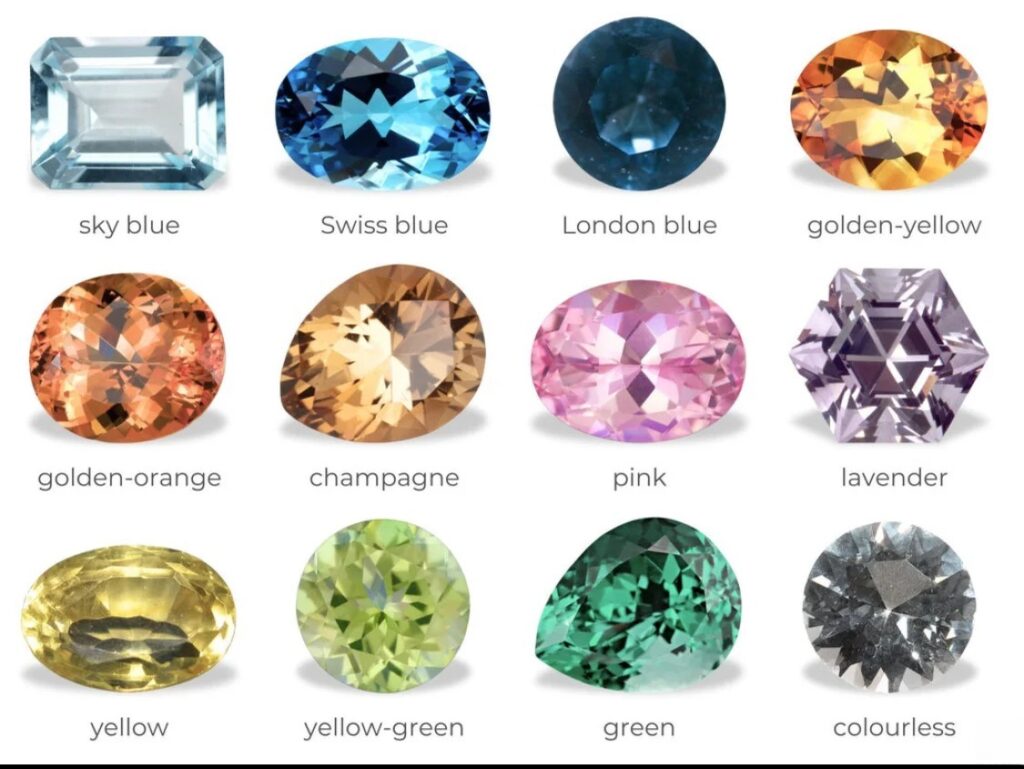
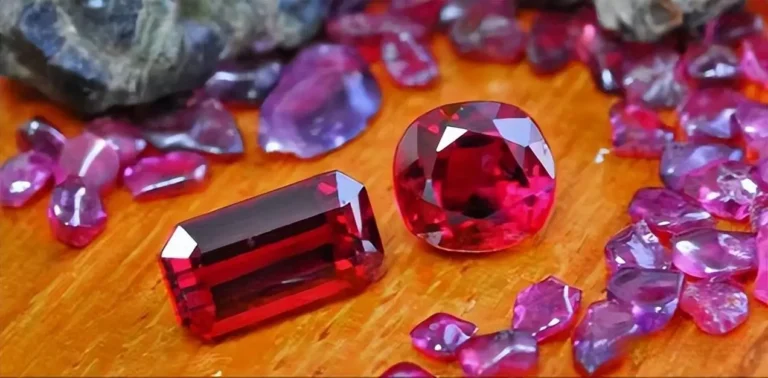
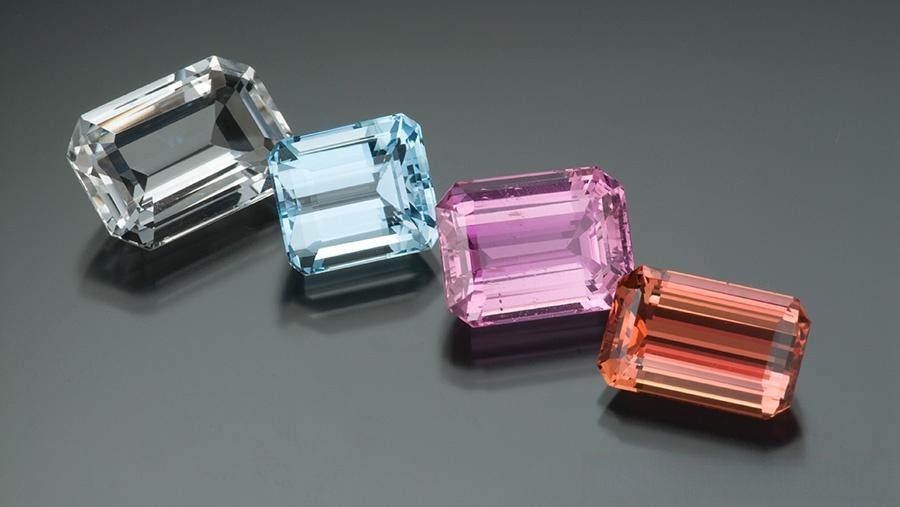
Natural topaz, however, displays a remarkably diverse range of colors. Most stones appear colorless or in shades ranging from yellow-brown to brownish yellow. Less commonly, topaz may take on light to medium blue tones, pinkish violet, pink to reddish brown, or orange to reddish orange. On rare occasions, a greenish tint may also occur.
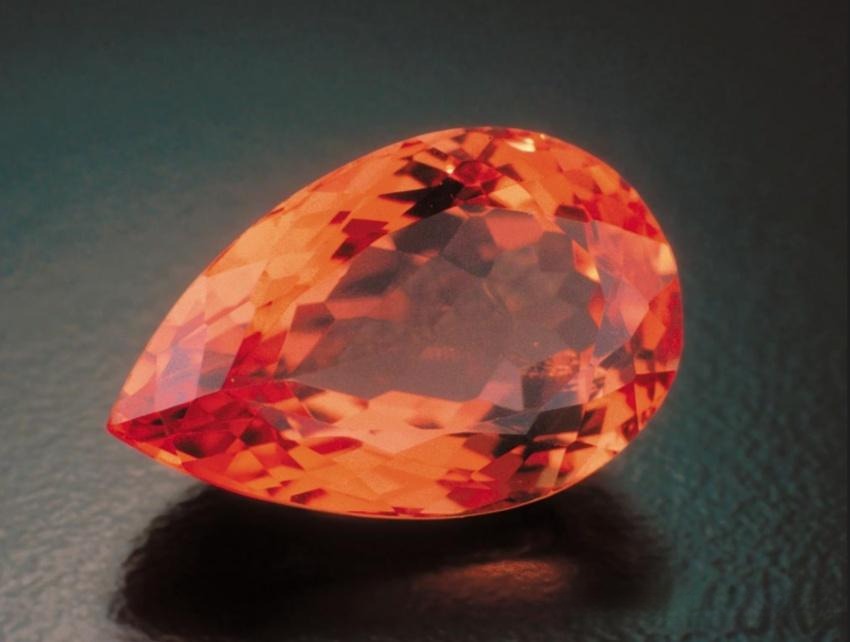
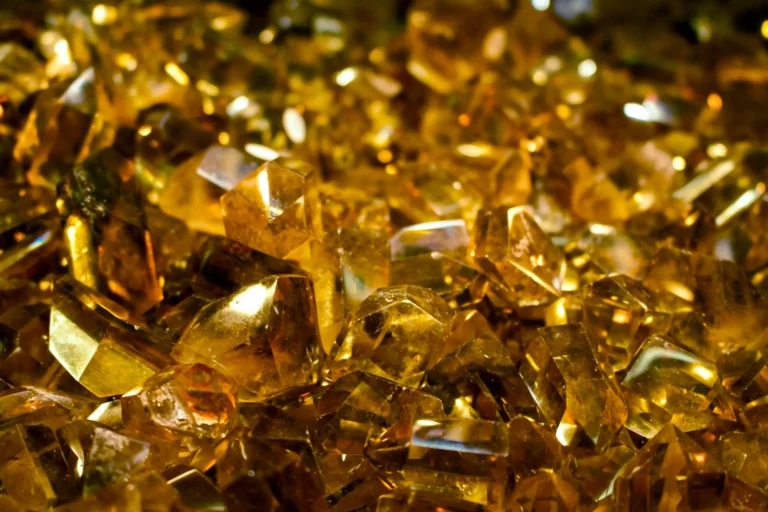
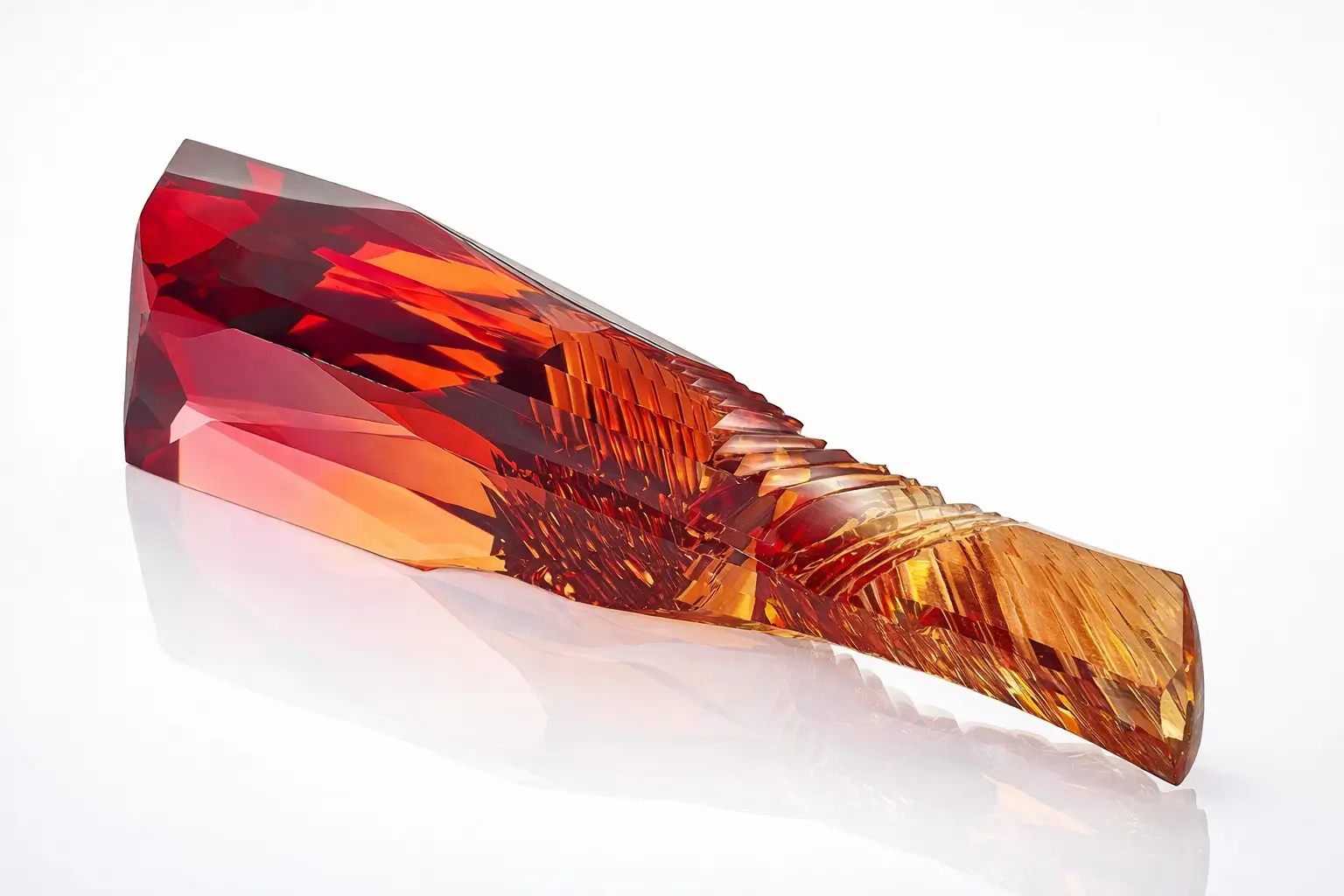
Amid this wide color spectrum, Imperial Topaz truly stands out. The finest stones exhibit rich golden yellow to vibrant orange tones. In exceptional examples, the color can extend into sherry, salmon pink, pink-orange, or soft peach hues. By contrast, pale yellow stones, overly dark brown specimens, or topaz with muddy or dull yellow undertones do not meet the standard for true Imperial Topaz.
The Mineralogical Essence of Imperial Topaz
Imperial Topaz is not a separate mineral species; instead, it represents the pinnacle of gem-quality Topaz. Its chemical structure, a fluorine-bearing aluminum silicate (Al₂SiO₄(F,OH)₂), owes its captivating warmth to trace amounts of chromium. Moreover, its durability and brilliance make it ideal for collectors and jewelry enthusiasts alike.
Key Mineralogical Features
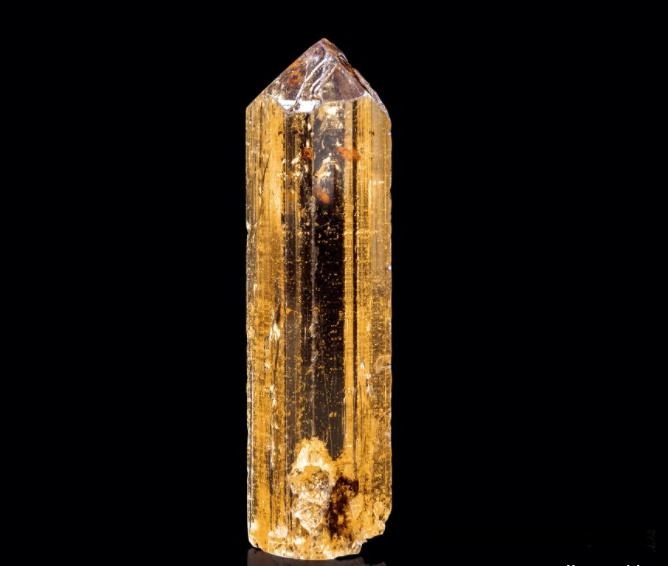
The defining characteristics of this rare gemstone include:
- Crystal system: Orthorhombic, prismatic, which contributes to its distinctive faceted appearance
- Luster: Vitreous, enhancing visual appeal and reflective quality
- Transparency: High, thereby increasing fire and brilliance
- Refractive index: 1.619–1.627, creating subtle optical effects
- Dispersion: 0.014, producing delicate scintillation under light
- Hardness: Mohs 8, ensuring durability for everyday wear
- Color source: Trace chromium, responsible for rich golden to reddish tones
- Fire & brilliance: Outstanding due to the combination of transparency and refractive properties
A Brief History and Origin of Imperial Topaz
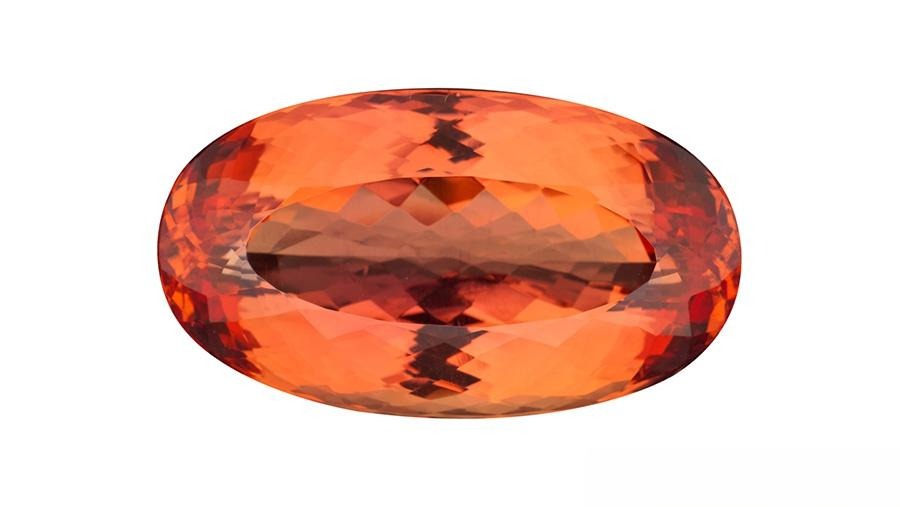
Imperial Topaz, also known as Imperial Yellow Topaz, has long been associated with royalty. Its striking red-orange hues and rarity made it a gemstone of choice for kings and emperors throughout history.
The first significant discovery of red-orange Topaz occurred in the 1750s near Ouro Preto in Brazil’s Minas Gerais region. At that time, Brazil was still a Portuguese colony. By 1768, these gemstones began entering the market, and in 1772, the Portuguese royal family formally recognized their value. Later, in 1881, the Brazilian emperor and empress personally visited Ouro Preto and received a magnificent Imperial Topaz directly from the mine owners as a royal gift.
Meanwhile, in the 19th century, miners in Russia’s Ural Mountains discovered a rare sunset-colored Topaz and immediately presented it to the Tsar, who reserved it exclusively for the royal family. This association with royalty ultimately gave the gemstone its enduring name: Imperial Topaz.
Today, the majority of gem-quality Imperial Topaz comes from Brazil, particularly from the Vermillion and Capão mines in Minas Gerais. However, these gemstones are fragile and prone to fracture. Consequently, only about 1–2% of Topaz mined achieves the color and clarity necessary for high-end jewelry. As a result, large, top-quality specimens remain exceptionally rare and highly valuable.
Color Determines the Value of Imperial Topaz
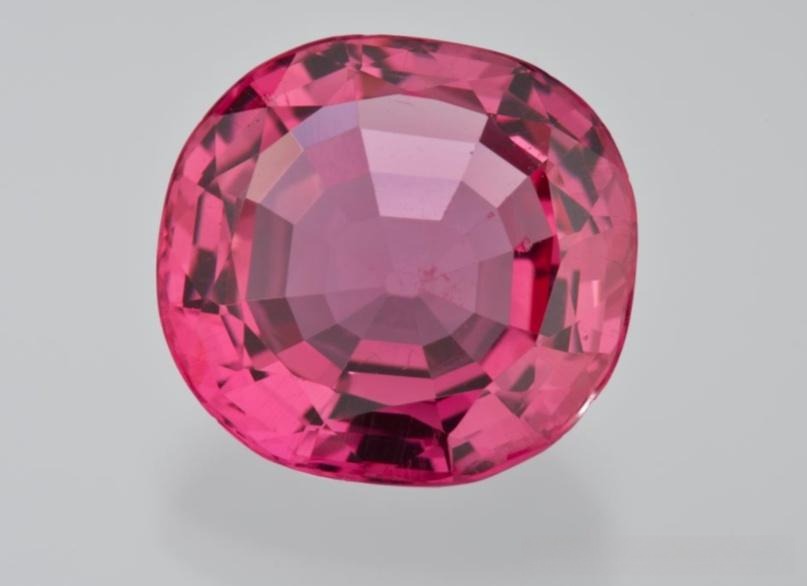
The color range of Imperial Topaz is remarkably broad, and its value on the international market depends largely on hue. In fact, the deeper and more intense the red tones, the higher the gemstone’s worth.
- Golden yellow: Entry-level
- Orange hues: Moderately high value
- Red and pink shades: The rarest and most expensive
At the heart of Imperial Topaz’s appeal lies its signature sherry-colored tone. These stones display a gradient from golden orange to reddish-brown, reminiscent of aged sherry wine. Moreover, their color falls within wavelengths of 620–590 nm, perfectly aligning with the human eye’s most sensitive color spectrum. This range often includes subtle variations such as purplish-red, salmon pink, and pink-orange, which further enhance the gem’s allure.
Unlike diamonds, which follow standardized pricing, every Imperial Topaz is unique. Experts determine its value through a meticulous analysis of its specific color, clarity, and carat weight.
Iconic Auction Records: The Rising Value of Imperial Topaz
Extreme scarcity and unparalleled beauty continue to drive the market value of Imperial Topaz to new heights. For instance, in 2024, an 8.2-carat Burmese Imperial Topaz shattered records, selling for $280,000 and setting a new high for price-per-carat. Moreover, as of early 2026, data shows that top-tier specimens have appreciated at an average annual rate of approximately 15%. Consequently, this gemstone has become a preferred asset for serious collectors and global investors.
Legendary Sales at International Auctions
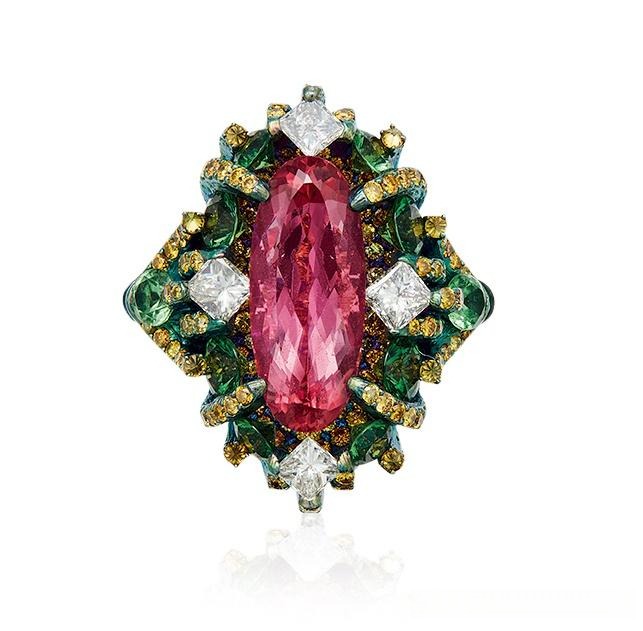
The world’s most prestigious auction houses frequently showcase the breathtaking potential of this “hidden royal.” Among contemporary masterpieces, the “Wild Geese” (or “Transcendent Beauty”) Ring by world-renowned jewelry artist Wallace Chan stands out for its extraordinary design and auction performance.
Featured at the Beijing Yongle 2021 Spring Auctions, this masterpiece achieved staggering results:
- Estimated Value: Approximately $125,000 – $167,000 (RMB 900,000 – 1,200,000)
- Central Stone: 7.44-carat oval-shaped pink Imperial Topaz
- Accent Gemstones:
- 1.31 carats of baguette-cut diamonds
- 4.09 carats total of vibrant demantoid garnets
- 3.70 carats of radiant yellow diamonds
- Craftsmanship: Handcrafted from aerospace-grade titanium, featuring a sophisticated two-tier design
- Certification: Includes a certificate from Wallace Chan’s studio, confirming the center stone is a natural, non-irradiated specimen.
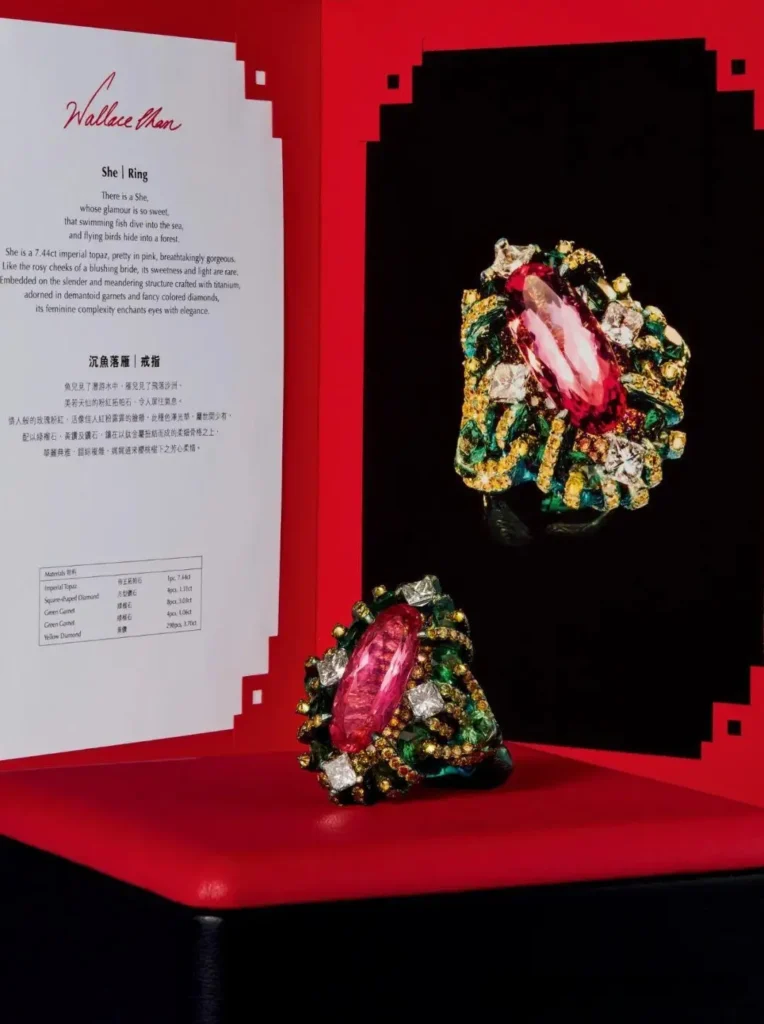
In addition, the design showcases Chan’s signature style by layering the pink Imperial Topaz above a bed of pavé-set yellow diamonds and green demantoid garnets. Consequently, this bold color palette creates a shimmering, multi-dimensional aesthetic that epitomizes modern high jewelry art.
Other Remarkable Market Benchmarks
Beyond museum-grade art pieces, this gemstone consistently commands strong prices in international markets. For example, recent sales and estimates highlight the steady demand for these vibrant gemstones:
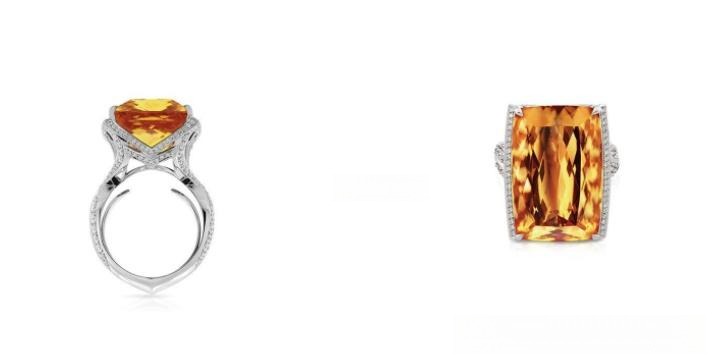
- 42.16-Carat Cushion-Cut Yellow-Orange Topaz Ring – Set in 18K white gold with approximately 1.50 carats of diamonds; sold for about $20,800 (RMB 149,742).
- 4.25-Carat Imperial Topaz Diamond Ring – 18K gold setting with 0.267 carats of diamonds; estimated at approximately $1,700–$2,500 (RMB 12,000–18,000).
- 19.89-Carat Imperial Topaz Pendant Necklace – 18K gold, featuring round and pear-shaped diamonds; estimated at $27,800–$38,900 (RMB 200,000–280,000).
- Tiffany & Co. 12.20-Carat Topaz Necklace – 18K platinum with diamonds and natural Topaz; estimated at $38,900–$50,000 (RMB 280,000–360,000).
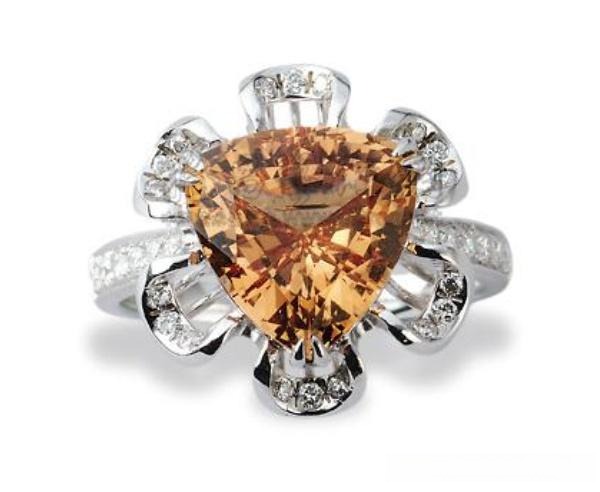
Expert Tip: While golden and orange hues appear more frequently, investors should exercise caution. Specifically, overly saturated yellow or brown “muddy” tones can significantly decrease a stone’s market value. Therefore, selecting Imperial Topaz with balanced color and clarity is essential for both investment and aesthetic purposes.
Why Is Imperial Topaz So Valuable?
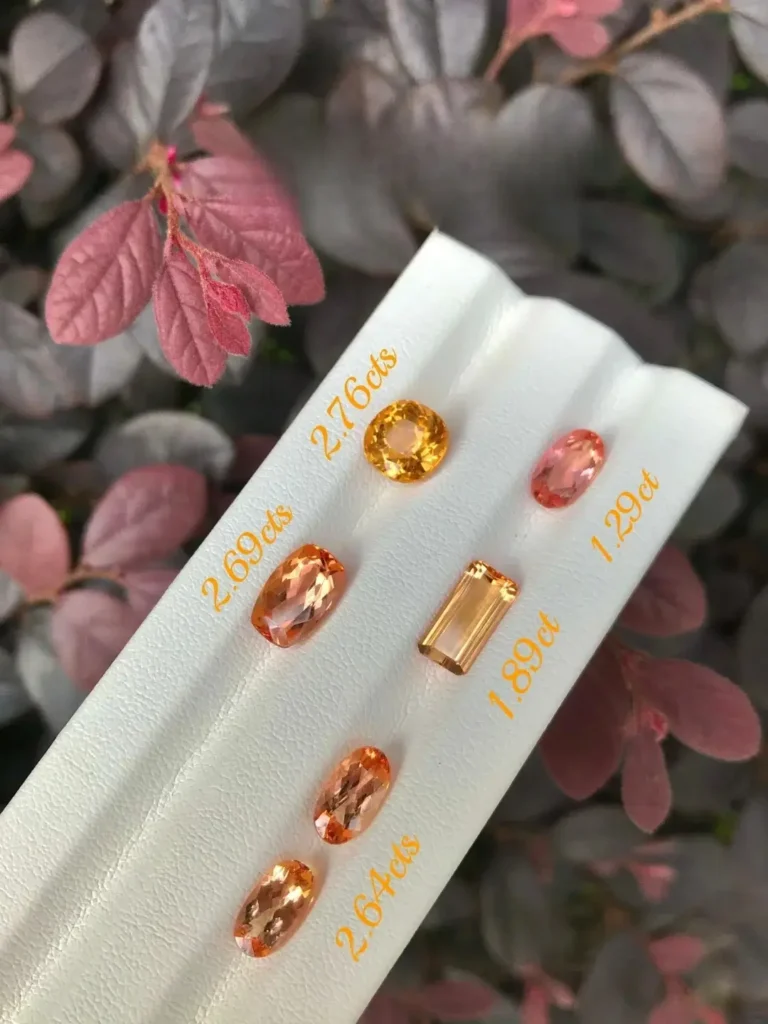
Imperial Topaz commands exceptional value due to its rarity, historical significance, and unique color properties. Several factors explain its extraordinary status.
1. Extreme Rarity and Limited Sources
Imperial Topaz is mined primarily in Brazil’s Minas Gerais state. In fact, two of the three major mines have permanently closed. Additionally, open-pit mining is possible only about six months a year, as heavy rains frequently flood the pits. As a result, newly unearthed stones are becoming increasingly rare, keeping the supply of gem-quality Imperial Topaz highly constrained.
2. Royal Legacy
Imperial Topaz has long been associated with royalty. For example, ancient Roman emperors believed it enhanced decisiveness. Later, Russian tsars incorporated it into crowns and restricted its ownership to the royal family. Even today, it continues to serve as a traditional gift for 23rd and 50th wedding anniversaries, thereby reflecting its enduring cultural and symbolic significance.
3. Magical Color Play
Imperial Topaz captivates collectors with its unique color-changing properties. Under different lighting conditions, a single stone can display a gradient from cherry red to sunset orange to champagne gold. This remarkable optical effect has earned it the nickname “the gemstone that holds all the colors of the sun.” Such dynamic color variations make each stone visually unique and highly sought-after.
Buying Guide: How to Select, Identify, and Care for Imperial Topaz
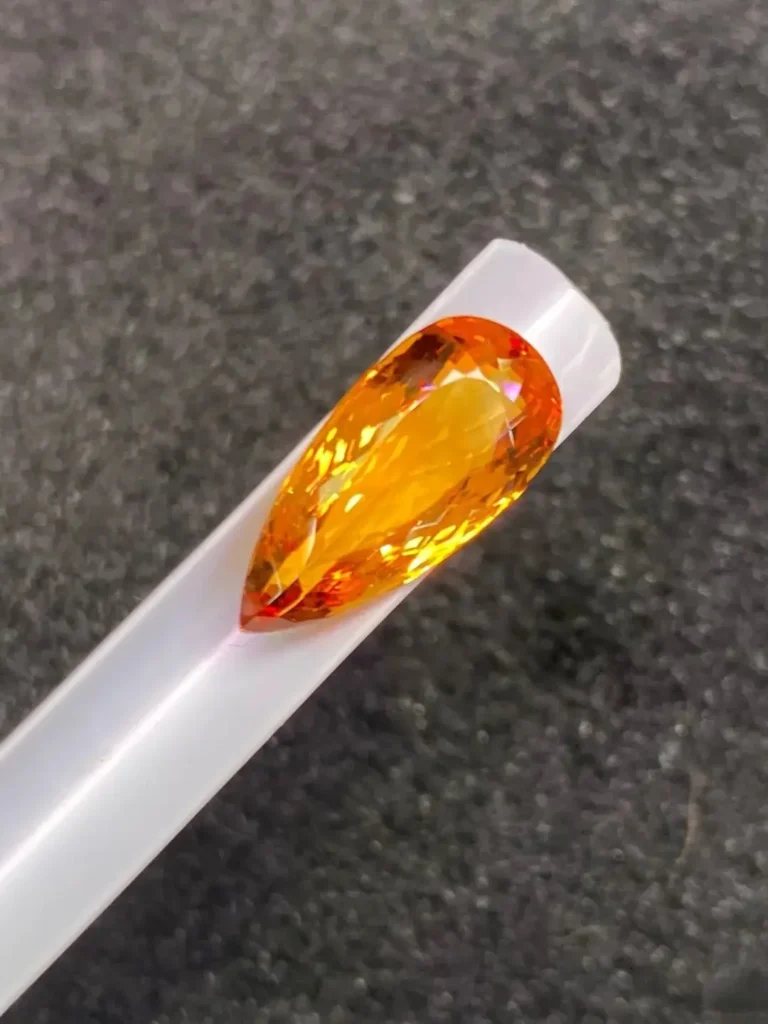
Imperial Topaz is highly coveted, but buyers must exercise caution to ensure they select authentic, high-quality stones. The following guidelines help collectors and investors make informed decisions.
1. Selection Tips
- Beware of heat-treated stones: Heat can transform yellow-to-orange Topaz containing chromium into pink tones. Always request certification to confirm that the stone remains untreated.
- Avoid coated or artificially enhanced gemstones: Some vivid pink Topaz stones result from surface treatments applied to colorless Topaz. Do not rely solely on visual appeal to verify authenticity.
- Evaluate key factors: Consider color, clarity, size, and provenance to confirm the stone’s value and legitimacy.
2. Key Identification Comparisons
- Imperial Topaz vs. Yellow Diamond: Imperial Topaz displays warm orange-red undertones within its yellow hue, giving it depth and richness. In contrast, yellow diamonds exhibit a pure bright yellow color, higher brilliance, and greater hardness.
- Imperial Topaz vs. Mandarin Garnet: Mandarin garnets display an intensely saturated orange color, while Imperial Topaz reveals complex color layers and distinct pleochroism, showing multiple hues under different lighting conditions.
3. Care and Maintenance
Topaz requires careful handling due to its brittleness. Follow these recommendations to preserve its beauty and longevity:
- Prevent impacts: Avoid knocking or dropping the gemstone.
- Store separately: Wrap in a soft cloth to prevent scratches from harder stones.
- Avoid chemicals: Keep away from household cleaners, perfumes, and acidic substances.
- Gentle cleaning: Use warm, soapy water and a soft brush; avoid ultrasonic or steam cleaners.
Conclusion: A Masterpiece for Your Collection
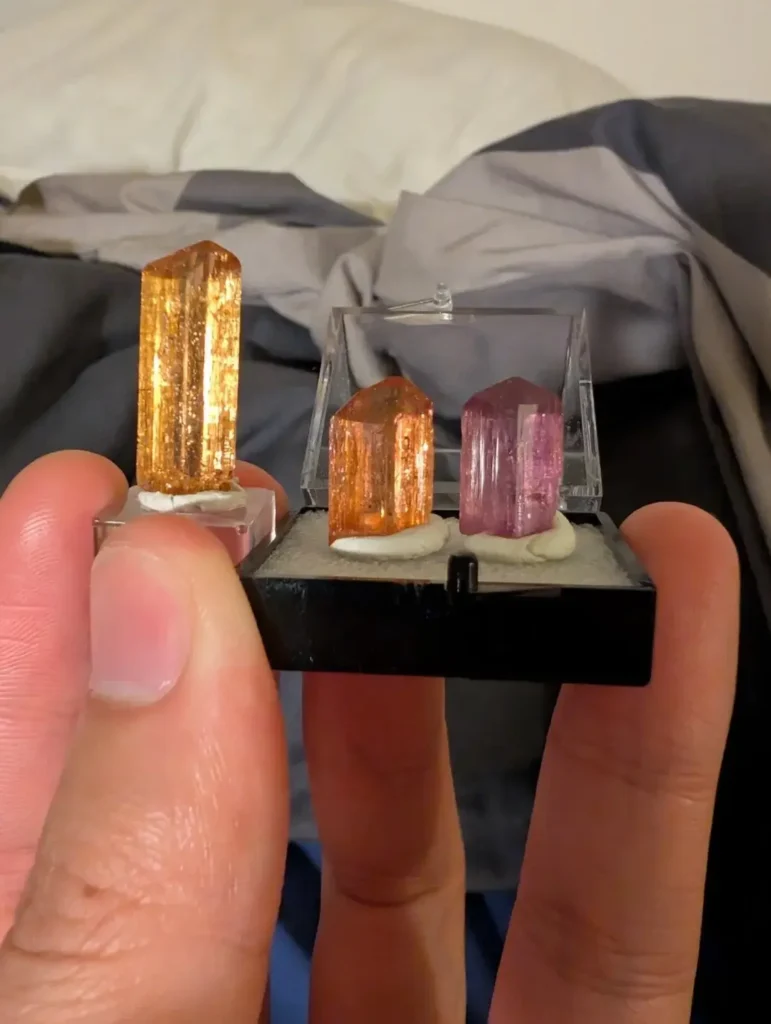
In the world of fine gems, every Topaz remains a one-of-a-kind original. Therefore, by selecting carefully, you secure one of nature’s most exquisite artworks.
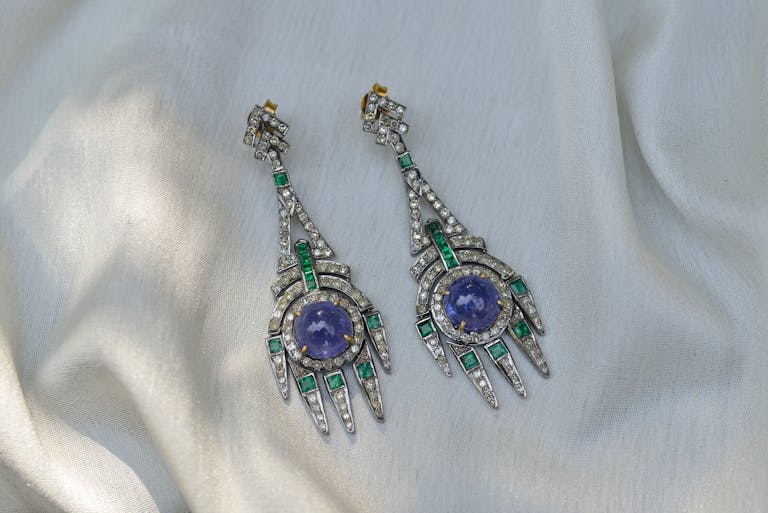
At Jewea, we celebrate this unique spirit of individuality. Consequently, we translate the timeless allure of rare gemstones into our original, handcrafted vintage earrings. Moreover, our artisans meticulously blend old-world charm with modern sophistication, ensuring that every pair tells a story as unique as the Imperial Topaz itself.
Explore the Jewea Handmade Vintage Earrings Collection — discover handcrafted elegance that captures the soul of the past and brings it into your everyday style.