Does Russian Jadeite Qualify for Certification? The Truth About Jadeite Certification and Origins
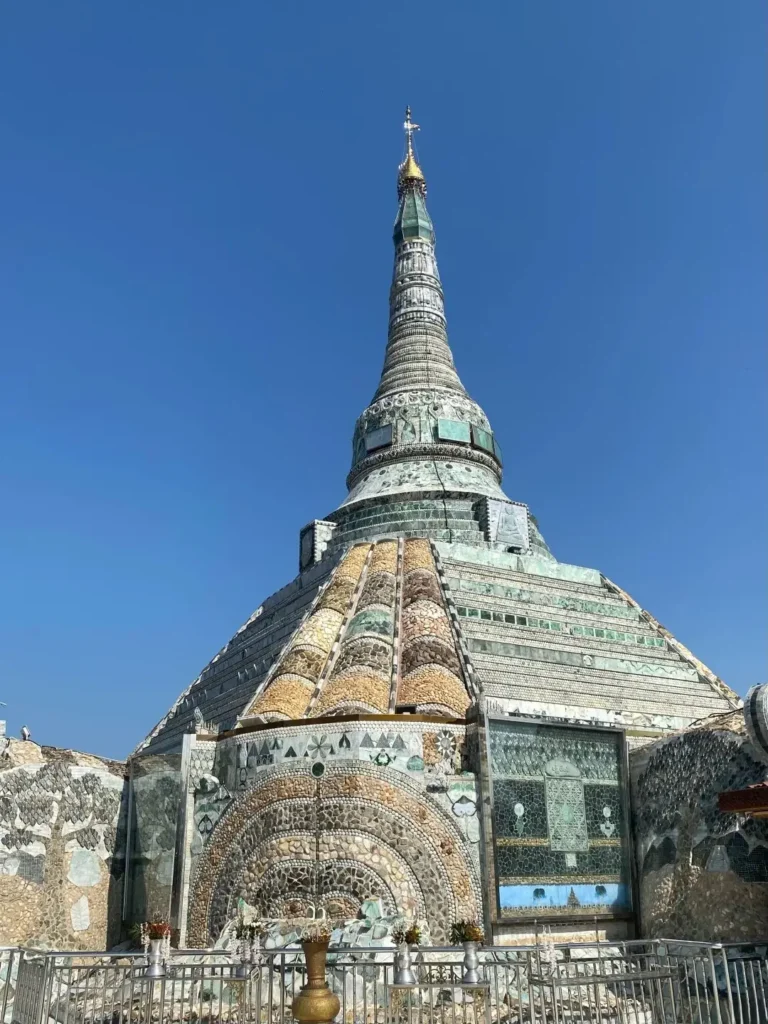
Does Authentic Jadeite Only Come from Myanmar?
As Myanmar’s supply of jadeite becomes more limited, jadeite from Guatemala and Russia is drawing increased attention. But can these alternative sources be authentically certified through Jadeite Certification?
The truth is, Jadeite Certification is based on a stone’s mineral composition, not its place of origin. In this article, we’ll explore how gemological labs verify authenticity, what minerals can disqualify a stone, and how to ensure your investment is a genuine Grade A gemstone.
The Science of Jadeite: Composition and Gemological Standards
To understand Jadeite Certification, we must first explore the stone’s composition. In gemology, experts determine jadeite’s authenticity by its precise mineral makeup, not its appearance.
What is Jadeite?
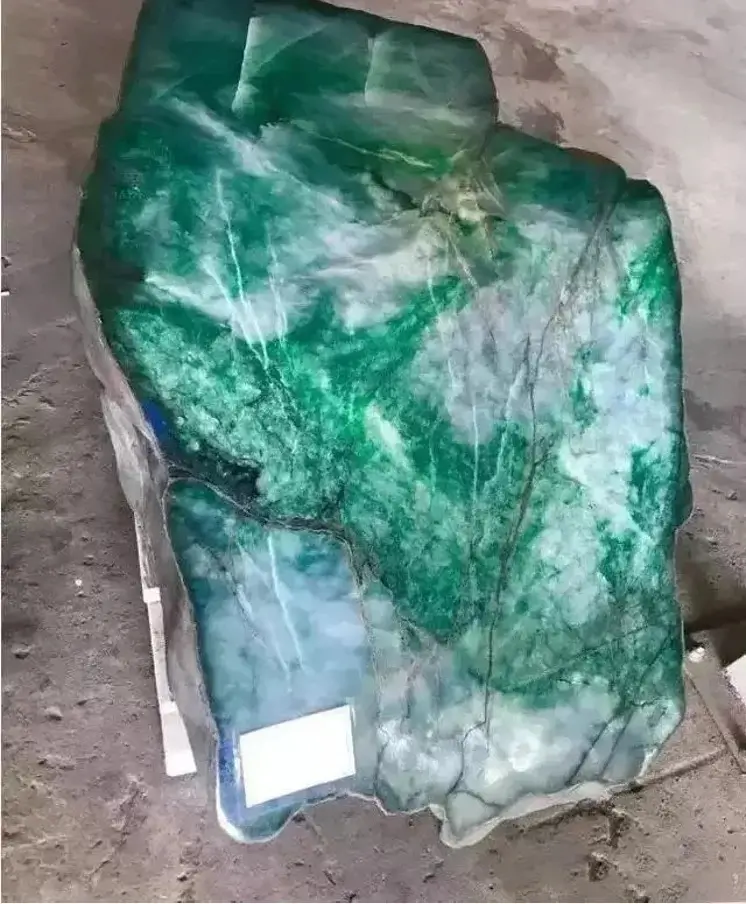
Natural jadeite is a polycrystalline aggregate, mainly composed of minerals from the pyroxene group. While many call it simply ‘jade,’ true jadeite primarily consists of the mineral jadeite, a sodium aluminum silicate with the chemical formula NaAlSi₂O₆.
The Mineral Architecture of Jadeite
A single piece of jadeite is rarely pure. It consists of a complex “community” of minerals. The proportions of these components determine whether the stone can be certified as jadeite.
- Primary Mineral (Jadeite): This is the main ingredient. To qualify for Grade A certification, the jadeite content typically must exceed 50%.
- Associated Pyroxenes: Jadeite often shares space with other pyroxene minerals like Omphacite and Kosmochlor. Their concentration can affect the stone’s classification.
- Trace Minerals & Secondary Components: Minerals like amphibole, feldspar, chromite, and hematite are considered “impurities.” Though secondary, they significantly impact the stone’s texture, transparency, and market value.
How Composition Affects Color and Quality
Jadeite’s visual beauty comes from its internal chemistry.
- Chromium’s Role: When chromium replaces aluminum in the crystal structure, it creates the vibrant green hues of “Imperial Jade.”
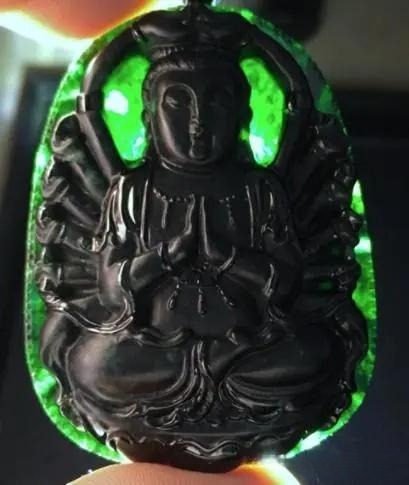
- The Role of Omphacite: Pure jadeite is colorless or white. However, Omphacite gives it deep blue-green or “oil green” (Youqing) tones. In high concentrations, Omphacite forms Black Jade (Mo Cui), which appears black in reflected light but vivid green when light passes through it.
- The “Blue Flower” Effect: The well-known “Floating Blue Flowers” (Piao Lan Hua) in high-end bangles often come from alkaline amphibole inclusions. These inclusions create delicate, moss-like patterns in the translucent jadeite matrix.
Classifying Jadeite: How Chemical Profiles Define Market Value
Not all stones labeled as “jade” are created equal. The internal chemistry plays a pivotal role in determining whether a stone is a high-end investment piece or a low-value “non-jadeite” rock. Gemologists classify these variations into three primary groups, based on their dominant mineral content.
1. Pure Jadeite — The Gold Standard of Authenticity
Traditional jadeite, which dominates the high-end market, consists primarily of the jadeite mineral.
The 20% Rule: To be classified as pure jadeite, the content of associated minerals such as Omphacite or Kosmochlor must remain below 20%.
Chromium Variations: Within this category, the concentration of chromium oxide (Cr₂O₃) dictates the stone’s color intensity.
- Pure Jadeite: Minimal chromium content.
- Chromium-bearing Jadeite: Cr₂O₃ ranges from 0.2% to 1.0%, producing softer greens.
- Chrome Jadeite: Cr₂O₃ content between 1.0% and 3.0%, producing the deep, vivid greens prized by collectors.
- Transitional Stones: If the content of Omphacite or Kosmochlor increases to 20%-50%, the stone is classified as Omphacitic Jadeite—still authentic, but with a unique visual character.
2. Omphacite-Dominant Jadeite — The Secret to Blue Water and Mo Cui
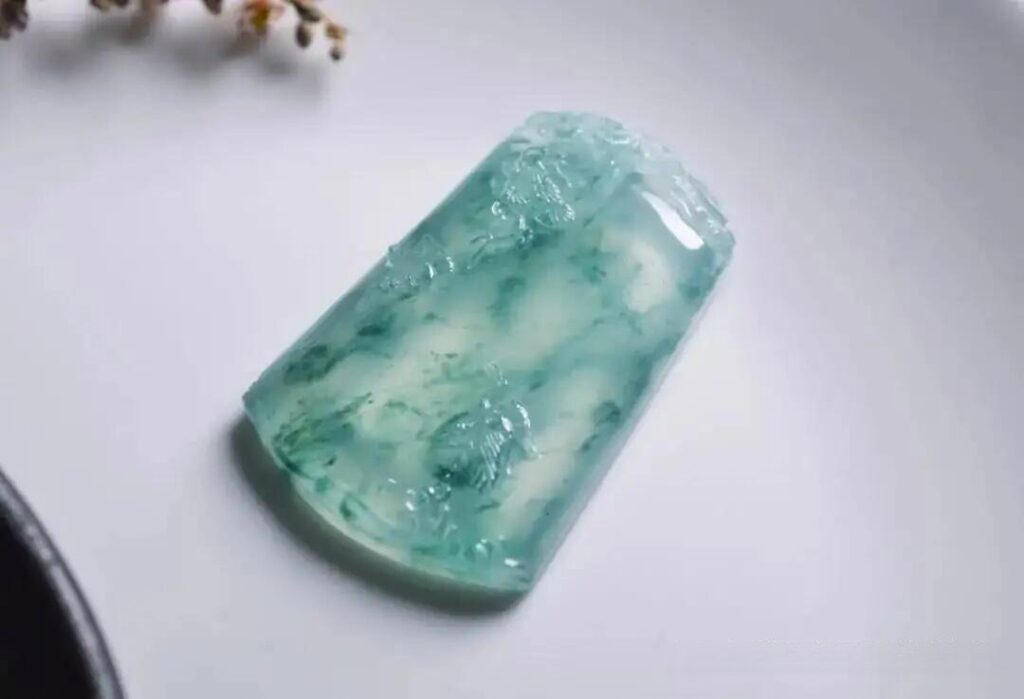
When Omphacite plays a significant role in the mineral mix, some of the most sought-after varieties emerge in the market.
- Blue Water (Lan Shui) & Floating Flowers: A touch of Omphacite in high-quality jadeite creates the ethereal blue tones and “Floating Blue Flowers” (Piao Lan Hua) that top-tier collectors covet.
- Black Jade (Mo Cui): The finest Mo Cui is essentially Omphacite-rich jadeite. Its high iron and magnesium content gives it a solid black appearance, yet it reveals a stunning emerald green under transmitted light.
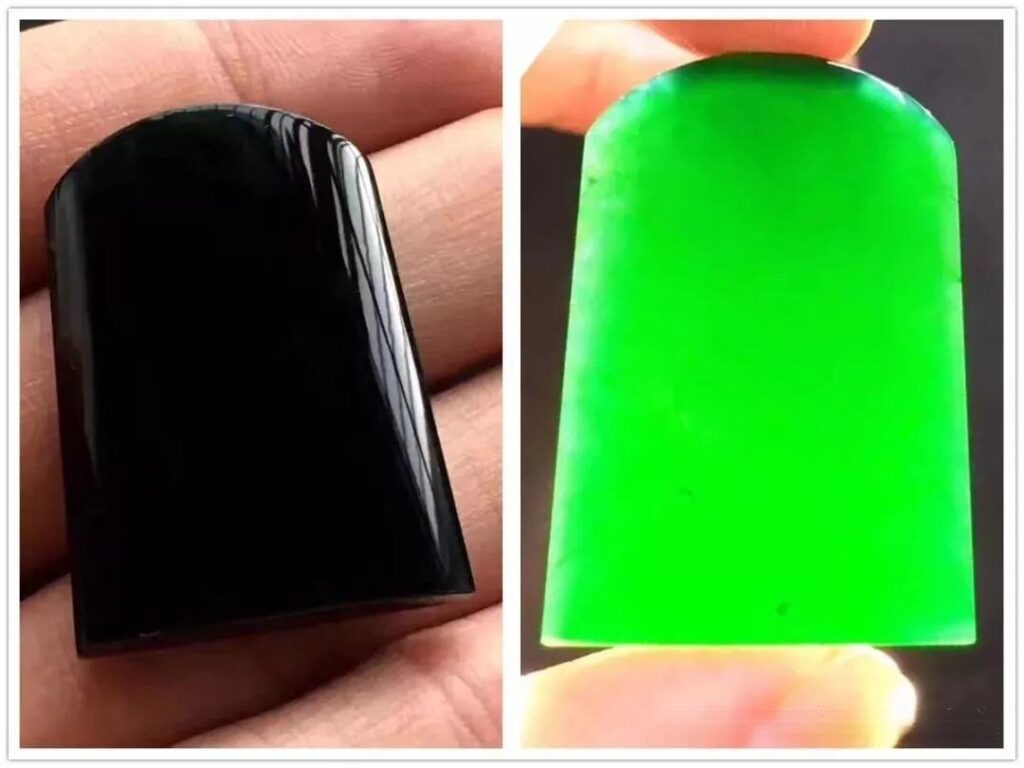
A Word of Caution: If Omphacite exceeds 50%, the stone transitions into Omphacite Jade. While beautiful, it may be subject to different certification standards.
3. Kosmochlor-Dominant Varieties — The “Non-Mainstream” Greens
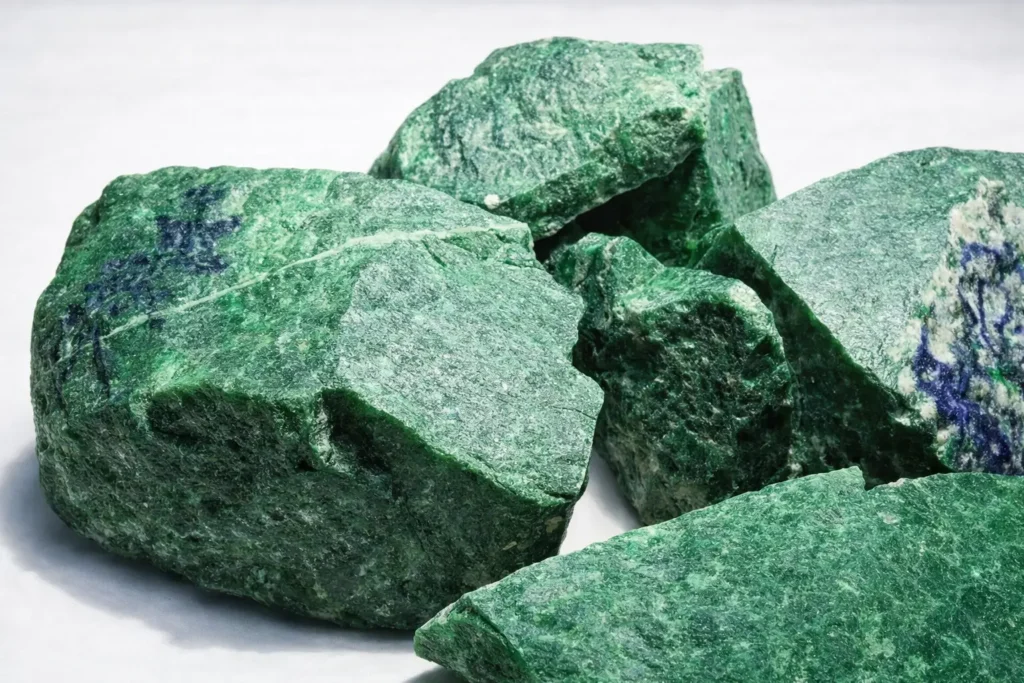
Kosmochlor (sodium chromium pyroxene) creates an intense green, but these stones often appear “dry” and less vibrant. They are more common in the mid-to-low-end jadeite market.
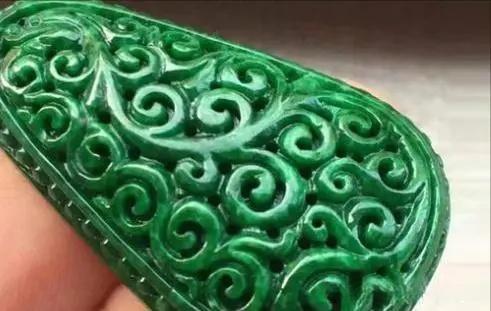
- Dry Green Jade (Gan Qing): The most famous Kosmochlor-based variety. While high-quality Gan Qing can be certified as Kosmochlor-rich Jadeite, lower-quality versions are classified simply as Kosmochlor Rock and often fail to qualify for jadeite certification.
- Kosmochlor Black Jade: Unlike high-end Mo Cui, this is an opaque, dark green-black stone formed by a mix of Kosmochlor and jadeite. It is generally considered a lower-value alternative in the market.
Quick Reference: Jadeite Varieties and Their Mineral DNA
To help you navigate these complex mineral structures, we have summarized the most common jadeite varieties and their chemical profiles in the table below:
| Variety (Commercial Name) | Primary Mineral | Secondary Minerals | Key Characteristics |
| Jadeite Jade (Standard) | Jadeite | Amphibole, Omphacite | The classic “Grade A” standard. |
| Tie Long Sheng | Chromium-rich Jadeite | Amphibole | Intense, deep green; often thin-cut. |
| Blue Water (Lan Shui) | Omphacitic Jadeite | Albite, Zeolite | Ethereal blue tones; high translucency. |
| Floating Blue Flower | Jadeite / Omphacite | Amphibole, Albite | Moss-like blue/green patterns. |
| Mo Cui (Black Jade) | Omphacite | Jadeite | Black in reflection, green in light. |
| Gan Qing (Dry Green) | Kosmochlor | Chromite, Jadeite | Vibrant but opaque; “Dry” texture. |
| Maw Sit Sit | Kosmochlor / Albite | Chromite | A beautiful companion; not certified as jadeite. |
Why Some “Jade-Lookalikes” Fail Jadeite Certification
In the world of gemstones, a beautiful green color does not always guarantee an “A-Grade” certificate. When secondary minerals exceed specific thresholds, the stone no longer qualifies as ‘Jadeite.’ Understanding these boundaries is crucial for any serious collector.
The Mineral Threshold: When Jadeite Becomes Something Else
Gemological laboratories categorize pyroxene minerals using a strict percentage-based system. If a stone’s composition strays too far from pure jadeite, its classification changes:
- The Transitional Zone: If a stone contains 20% to 50% jadeite, it is classified as Jadeite-bearing Omphacite or Jadeite-bearing Kosmochlor.
- The Disqualification Zone: If the jadeite content falls below 20%, the stone is simply classified by its dominant mineral (e.g., Omphacite or Kosmochlor). At this point, it is no longer considered “Jadeite” by gemological standards.
The “Dry Green” (Gan Qing) Challenge
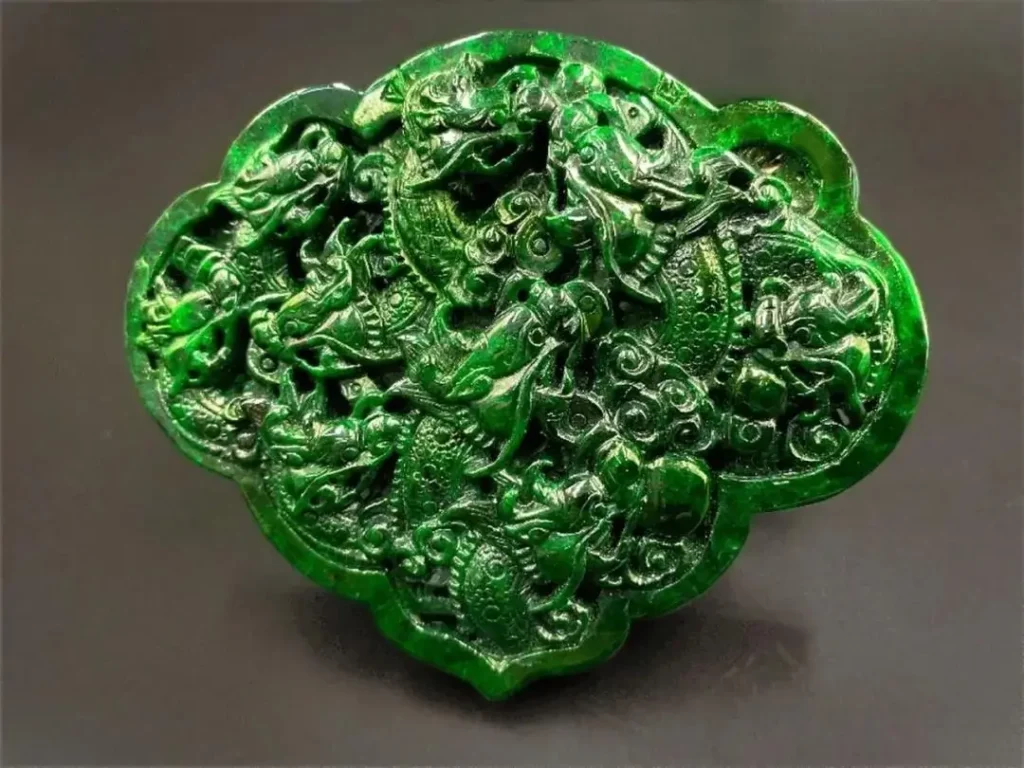
“Dry Green” jadeite, or Gan Qing, is a prime example of a “borderline” gemstone. While high-quality Gan Qing may pass as Kosmochlor-rich Jadeite, lower-quality batches often fail Jadeite Certification for two key reasons:
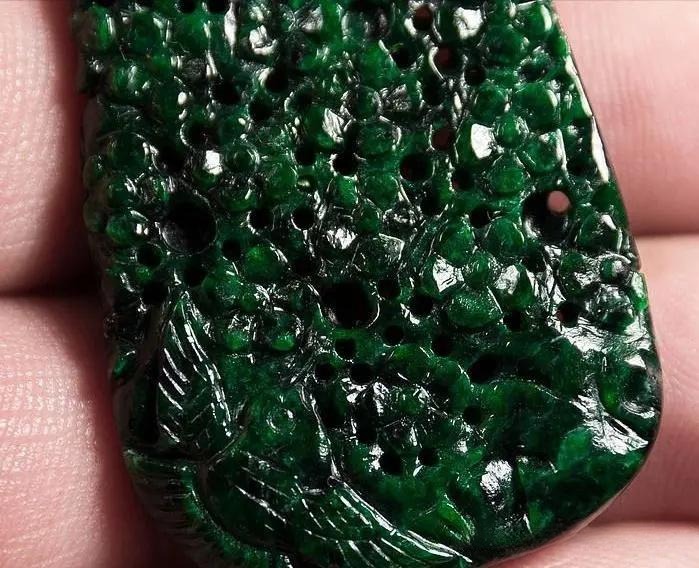
- Chemical Disqualification: The stone may be classified as a Kosmochlor Rock rather than a pyroxene aggregate dominated by jadeite. It lacks the necessary “DNA” to qualify for a Jadeite Certificate.
- Structural Instability & Treatments: Low-grade Gan Qing is often brittle, porous, and lacks a natural luster, appearing “dry” or “crumbly.” To improve durability and shine, manufacturers commonly inject polymers (B-Jade) or apply heavy waxing. These treatments automatically disqualify the stone from receiving a Natural Grade A certificate.
Expert Tip: Verify Before You Buy
Since “Dry Green” stones fall into a gray area in the market, visual inspection alone is often insufficient. Always request a report from a reputable gemological laboratory. A genuine certificate will clarify whether you’re purchasing a rare mineral variety or a treated rock that only looks like jadeite.
Maw Sit Sit: The Beautiful Companion That Isn’t Jadeite
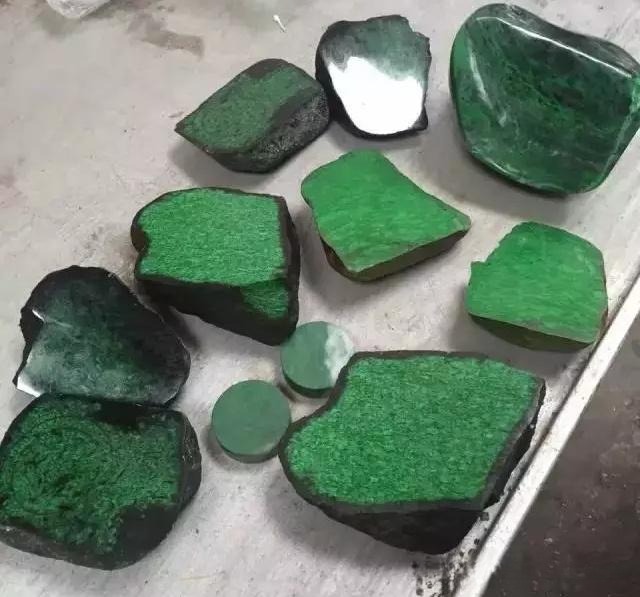
In the gemstone world, Maw Sit Sit often causes confusion due to its striking resemblance to “Dry Green” (Gan Qing) jadeite. While it originates from the same mining regions in Myanmar, its chemical composition places it in a completely different category.
Why Maw Sit Sit Fails Jadeite Certification
Although Maw Sit Sit is commonly found alongside jadeite, it doesn’t meet the scientific criteria to be classified as natural jadeite. The key distinction lies in its mineral composition:
- Dominant Mineral Composition: True jadeite must be primarily composed of the mineral jadeite. In contrast, Maw Sit Sit is technically a Kosmochlor-Albite stone, with Albite (sodium feldspar) being the dominant mineral.
- The 70% Factor: Over 70% of Maw Sit Sit consists of Albite. Since jadeite is only a minor component, gemological labs cannot issue a Jadeite Certificate for this material.
Physical Differences
Beyond its mineral composition, Maw Sit Sit also differs physically from true jadeite. It has a lower density and hardness compared to jadeite. These physical differences ensure that even the most vibrant green Maw Sit Sit will fail the rigorous tests required for a Grade A Jadeite certification.
Classification Matters
While Maw Sit Sit is a beautiful and collectible gemstone in its own right, it is a “companion” to jadeite, not a variety of jadeite. For collectors, the key takeaway is clear: no matter how intense the green color may appear, the Jadeite Certification process will always distinguish between a feldspar-dominant rock and a true pyroxene-based gemstone.
Global Sources: Can Non-Burmese Jadeite Get Certified?
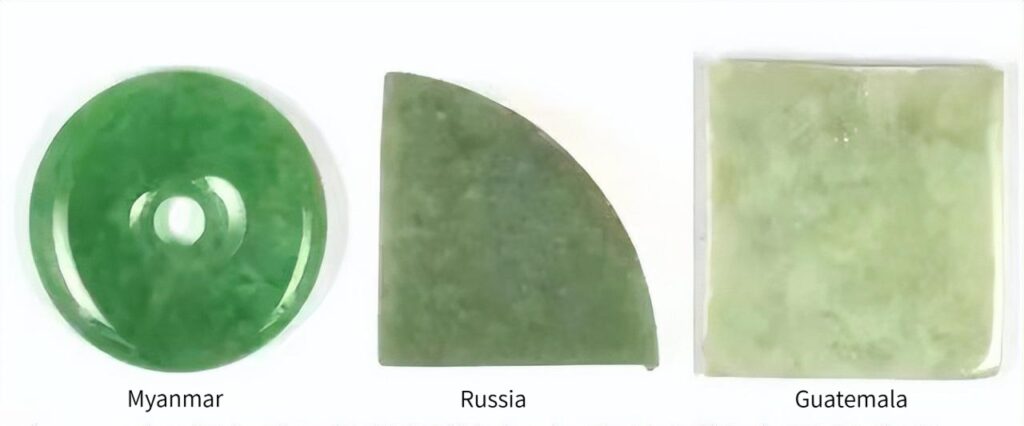
While Myanmar (Burma) accounts for over 95% of the world’s commercial jadeite supply, it is no longer the only significant source. As Myanmar tightens its export controls, jadeite from Guatemala and Russia has increasingly found its way into the global market, becoming an “open secret” within the industry.
Beyond Myanmar: Emerging Origins
Apart from Myanmar, natural jadeite deposits can be found in Guatemala, Russia, Japan, and Kazakhstan. Among these, Guatemalan and Russian jadeite have reached an industrial scale and are beginning to significantly influence the international market.
Historically, jadeite from these alternative sources has faced criticism for lower quality or higher concentrations of associated minerals. However, this perception is changing. Just as high-quality Nephrite jade from Russia or Qinghai can meet global standards, jadeite from Guatemala and Russia can also be certified as Grade A if they meet the necessary gemological criteria.
The Certification Standard: Quality Over Geography
Gemological certification does not depend on a stone’s geographic origin, but on its chemical composition and quality. If a stone’s jadeite content falls below the required threshold, no reputable lab will issue a Jadeite Certificate, regardless of where it was mined. On the other hand, “gem-grade” jadeite from Guatemala or Russia that meets international standards is legally and scientifically recognized as Grade A Jadeite.
We advocate for a balanced approach: Respect the origin, but don’t be swayed by it. While Myanmar remains the “King of Jadeite,” modern mining efforts in Russia and Guatemala are yielding high-quality specimens that challenge traditional hierarchies.
Why Science Wins the “Origin” Debate
Ultimately, a gemstone’s true value resides in its intrinsic qualities: its captivating beauty, translucency, vivid color, and mineral purity. When a stone from an emerging origin excels in these attributes, it earns its place alongside the finest Burmese counterparts. Jadeite Certification acts as the ultimate equalizer, ensuring that authenticity is judged by the stone’s internal character rather than its geographic roots.
Russian Jadeite: Exploring the Siberian Frontier
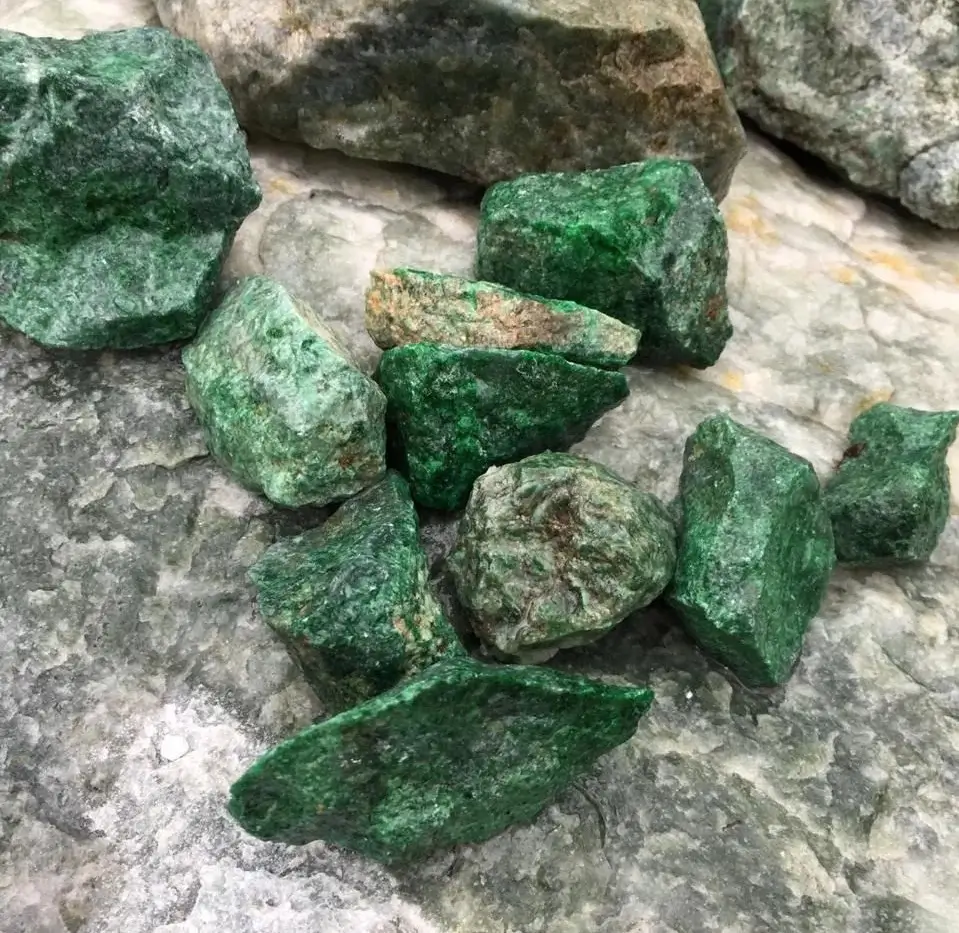
While Myanmar remains the undisputed leader in the jadeite industry, Russian jadeite has carved out its own niche since its discovery in 1959. By the late 1990s, these Siberian stones began appearing in major markets like Hong Kong, eventually making their way into the global supply chain.
This jadeite is just one part of a vast geological legacy; beyond the emerald-green rivers of the east, you can explore more Russian Gemstones: 9 Extraordinary Treasures from the Urals to Siberia, showcasing the incredible mineral wealth found across the continent.
1. Myanmar (Burma): The Undisputed King
Myanmar is the primary source of world-class, investment-grade jadeite.
- Key Mining Regions: Phakant, Nam Si, Lonkhin, and Hweka.
- Distinctive Traits: Known for producing the legendary Imperial Green, Glassy (Glass species), and Icy varieties. Burmese jadeite is celebrated for its high saturation, exceptional translucency, and “watery” luster.
- Market Value: Due to its premium quality, Burmese jadeite commands the highest prices in the global market.
2. Russia: The Dark Green Specialist
Russian jadeite, mostly sourced from the Transbaikal region of Siberia, is often regarded as a lower-tier alternative to Burmese jadeite. However, the reality is more complex.
- Distinctive Traits: Russian jadeite typically displays a deep, rich green or dark forest-green hue. Its texture tends to be coarser than that of Burmese jadeite, often with a more crystalline appearance.
- Visual Character: While many Russian pieces may appear “dull” or opaque—making them ideal for intricate carvings—rare high-quality specimens can achieve impressive translucency and a finer texture.
- Market Impact: Most Russian jadeite serves mid-to-low-end markets, but it has significantly impacted the industry by providing a more affordable entry point into the green jadeite market. Some varieties closely resemble high-end Burmese jadeite.
Is Russian Jadeite Worth Buying?
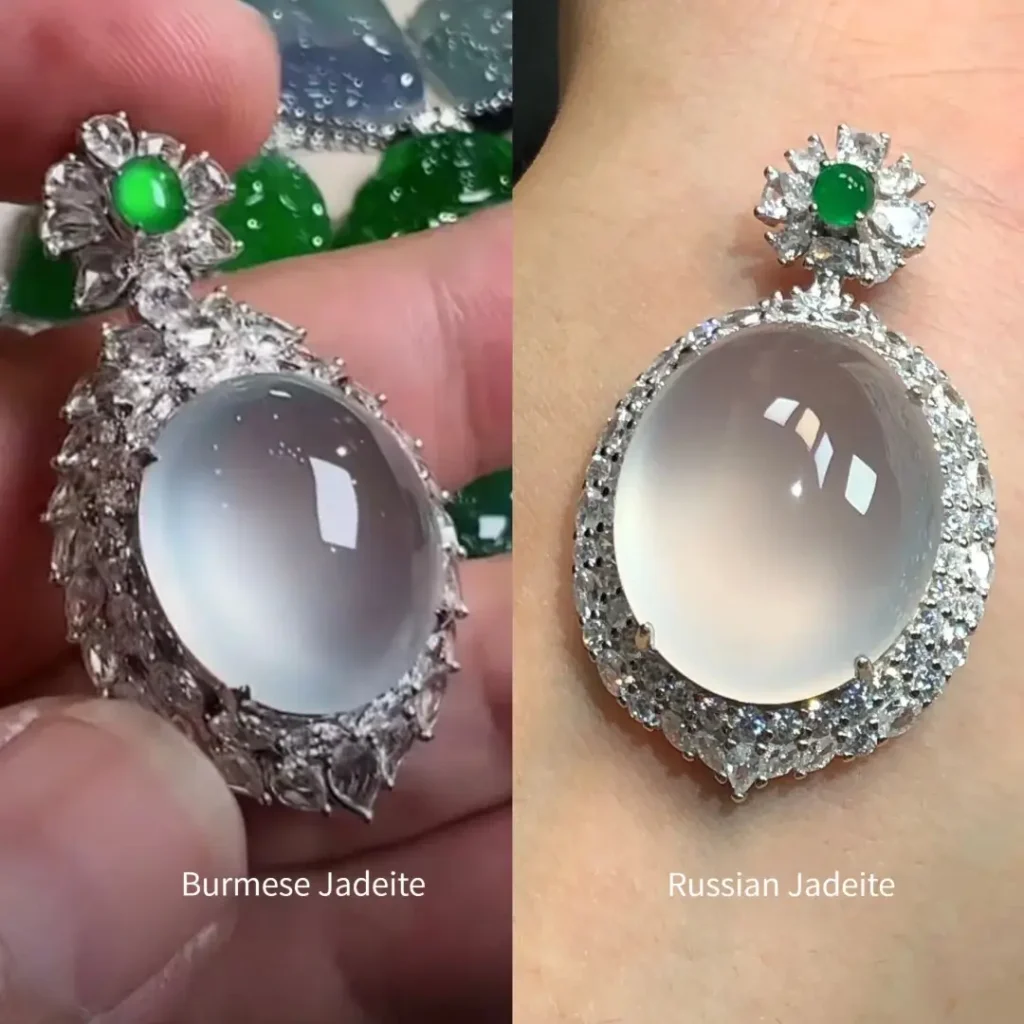
Opinions on Russian jadeite vary, but it’s essential to judge each piece on its own merit. While it may lack the “ethereal” glow of top-tier Burmese icy jadeite, its intense, deep green color offers a striking aesthetic for those who appreciate solid, rich hues.
For gemologists, as long as the mineral composition meets the necessary pyroxene threshold, Russian jadeite can still pass Jadeite Certification. This ensures that even if the origin is Siberian, the stone can still be authenticated as Grade A.
Guatemalan Jadeite: Controversial Yet Certified
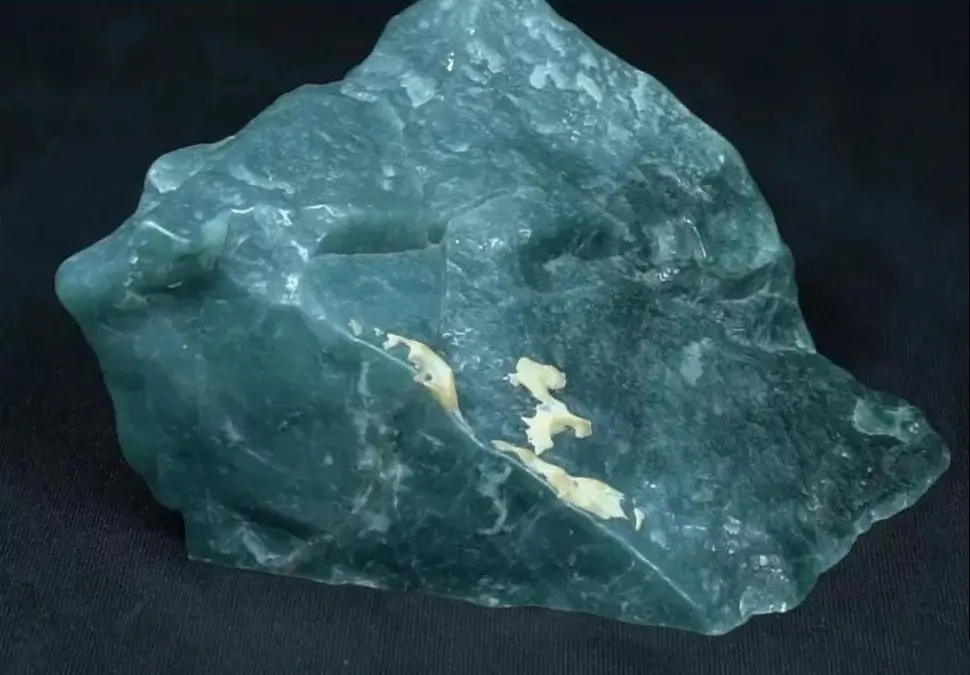
Guatemalan jadeite, often criticized for its darker tones, is nonetheless an important player in the global jadeite market. With a history dating back to the ancient Maya civilization, Guatemala has established itself as the world’s second-largest exporter of jadeite, right behind Myanmar.
Why Does Guatemalan Jadeite Qualify for Certification?
Despite the historical dominance of Burmese jadeite in the market, Guatemalan jadeite (often referred to as “Wei Liao”) has successfully passed Jadeite Certification as Grade A jadeite. While there are subtle differences in physical parameters, Guatemalan jadeite falls within the internationally recognized scientific range for jadeite. In gemological terms, authenticity is based on mineral composition rather than geographical origin.
Scientific Breakdown: Myanmar vs. Guatemala
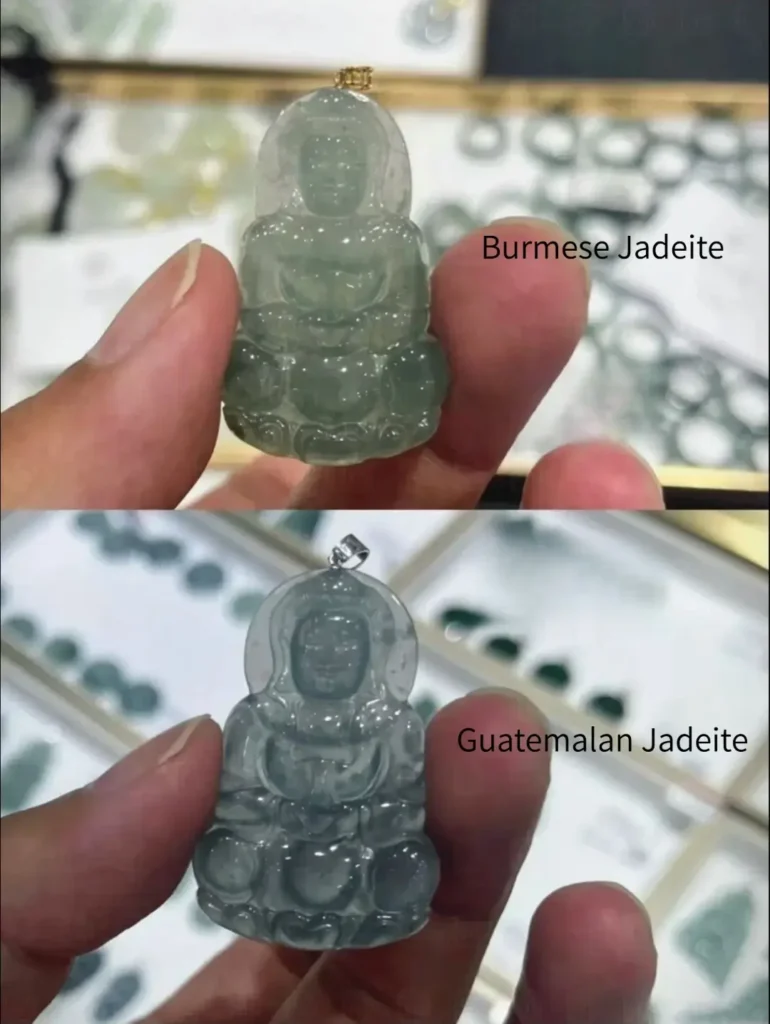
The visual differences between Burmese and Guatemalan jadeite stem from their unique chemical compositions. Here’s a breakdown of how their elements differ:
- Primary Mineral Content: Both types consist primarily of jadeite (NaAlSi2O6), but Guatemalan jadeite generally contains a slightly lower percentage of jadeite and a higher concentration of diopside and hedenbergite.
- Chromium (Cr) vs. Iron (Fe):
- Myanmar: Higher chromium levels create vibrant, vivid green colors.
- Guatemala: Contains less chromium, but a higher concentration of iron, leading to darker green, greyish-blue, or “oil blue” hues.
- Trace Elements (Ca & Mg): Guatemalan jadeite has higher levels of calcium (Ca) and magnesium (Mg), which often results in a coarser texture and lower transparency compared to the more translucent Burmese jadeite.
Should You Collect Guatemalan Jadeite?
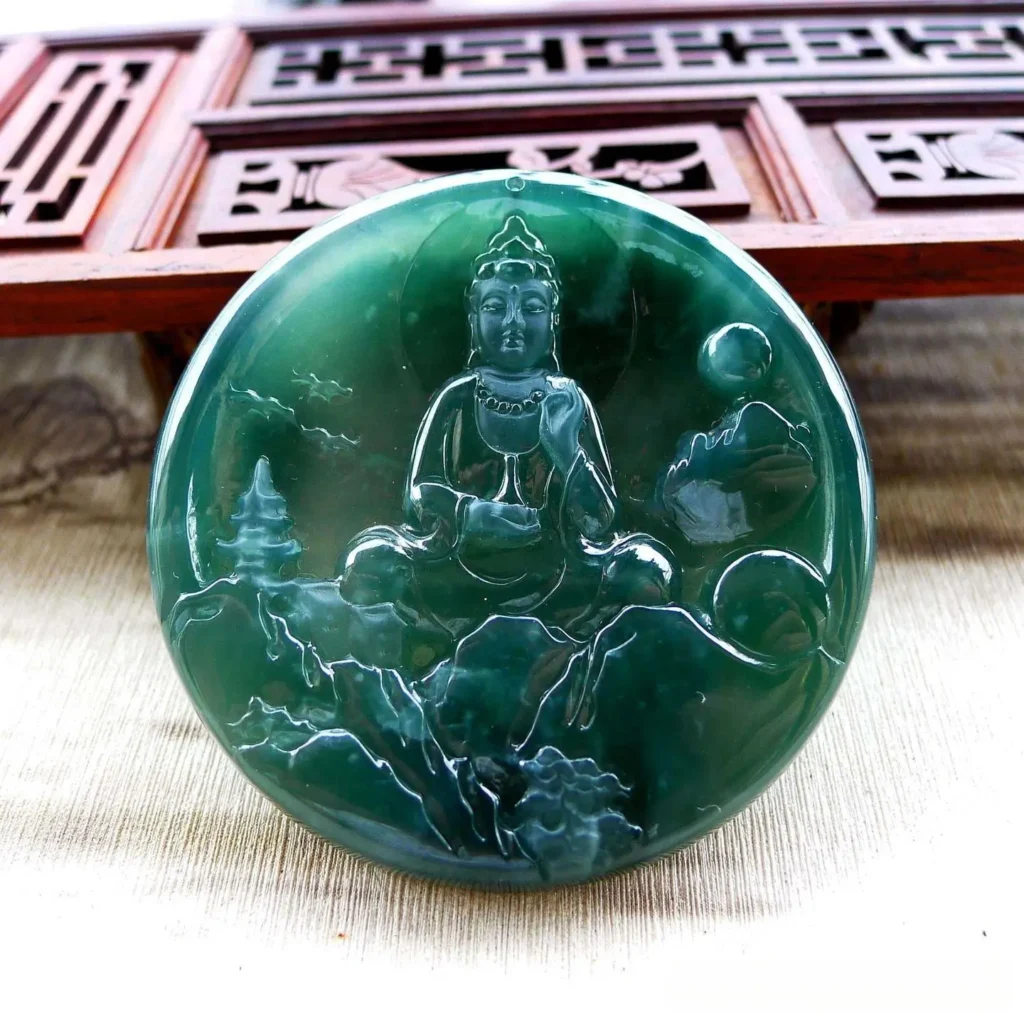
The market for Guatemalan jadeite is evolving. While most Guatemalan stones are opaque and dark, often used in black or blue-toned jewelry, modern mining is bringing to light high-quality “Guatemalan Blue” jadeite that rivals Burmese jadeite in both beauty and value.
As the saying goes, “Heroes are not judged by their origin.” If a Guatemalan jadeite stone boasts exceptional aesthetics and comes with a legitimate Grade A Jadeite Certificate, it holds its own value in the world of fine gemstones.
Read More: Is Guatemalan Jadeite taking over the market? [Revisiting the Potential of “Wei Liao” Jadeite].
Conclusion: Where Science Meets Art – Define Your Own Beauty
In the debate over jadeite’s origins, one thing is clear: Jadeite Certification is the ultimate measure of authenticity. Whether sourced from Myanmar’s mist-covered mountains, Russia’s rugged terrain, or Guatemala’s ancient mines, a stone’s “Grade A” status guarantees its natural purity and mineral integrity.
But once science confirms authenticity, the journey is yours to shape. High-quality jadeite isn’t just a gemstone—it’s a work of art. It tells a story, blending chemistry with creativity, culture, and beauty.
At PeonyJewels, we celebrate this uniqueness by offering only certified natural jadeite, meticulously selected for its color, character, and craftsmanship. Each piece in our collection is a harmonious blend of nature’s raw power and timeless elegance.
Ready to discover jadeite that speaks to your soul? Explore our Handmade Vintage Earrings today—where every design is a bridge between the Earth’s strength and vintage artistry. Celebrate the rare, the refined, and the truly exceptional with PeonyJewels.