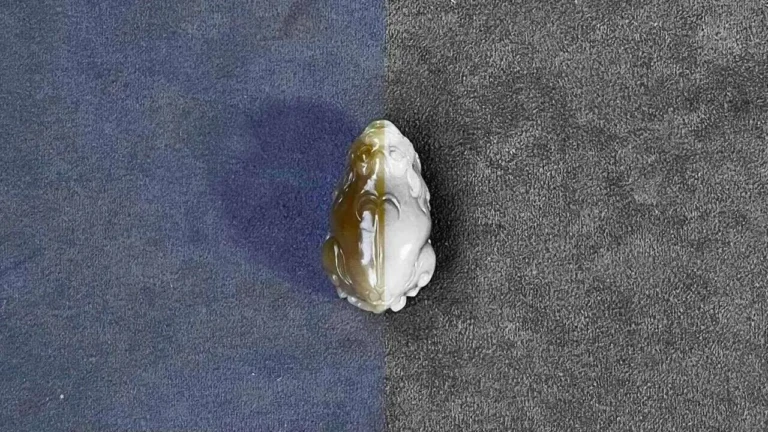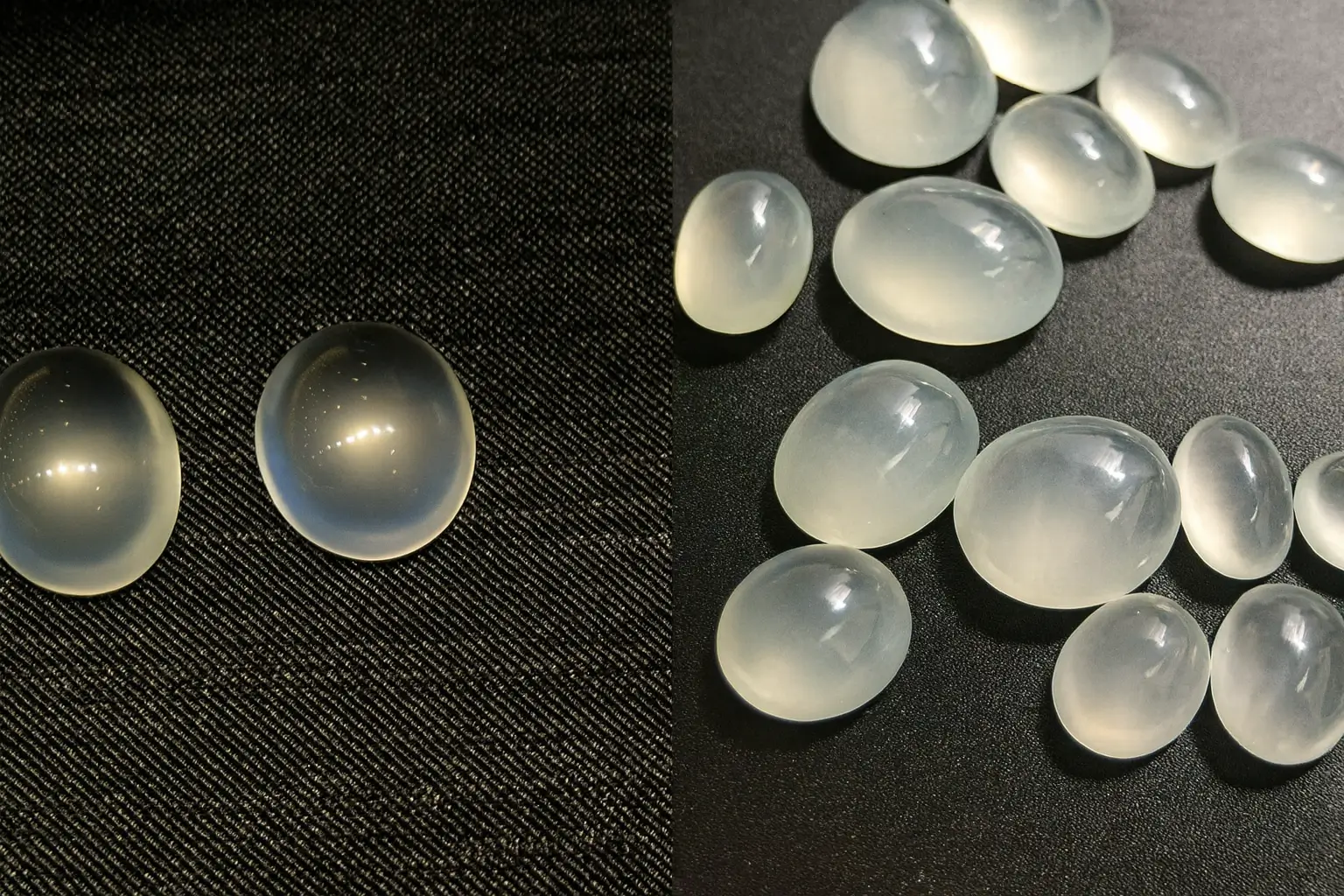
Stop the Scam: The Ultimate Guide to Spotting Fake Ice Jadeite
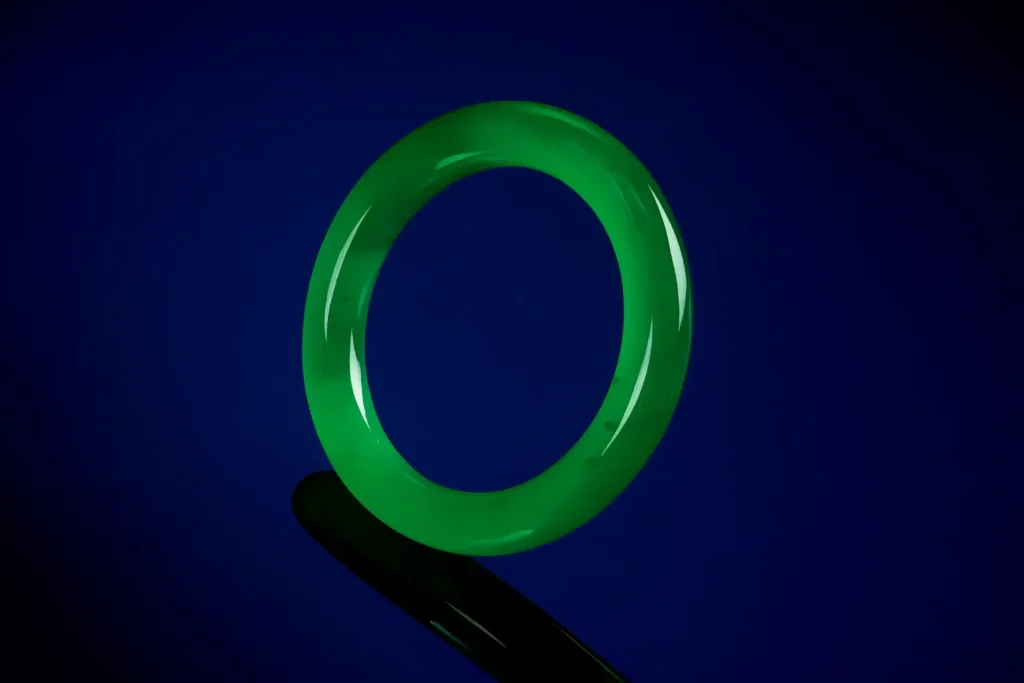
Introduction: Hard Jadeite – The Stone of Heaven and Investment
Welcome to the definitive guide on Jadeite Simulants!
In the global gem trade, “Jade” refers to two distinct mineral species: common Nephrite (Soft Jade) and rare, highly-valued Jadeite (Hard Jade). It is Jadeite that holds the title of the “King of Jade.”
Jadeite’s immense value stems not only from its superior geological properties—incredible toughness and density—but also from its powerful cultural status. Revered since the Qing Dynasty, particularly within Chinese culture, high-grade Jadeite is recognized as the “Stone of Heaven,” a universal symbol of purity, status, and longevity, driving its global appeal as an investment gem.
The Jadeite Simulants Threat: This soaring global demand, especially for the translucent White Ice Jade (Bái Bīng Fěi Cùi), has fueled a market full of deceptive simulants. New materials, such as “Ice Jade Quartzite”, are aggressively marketed as cheap substitutes.
To protect your investment, scientific knowledge is essential. This comprehensive guide provides the crucial geological and physical distinctions you need to differentiate genuine, valuable Jadeite from its five most convincing impostors.
The Five Pillars: Assessing Genuine Jadeite Value
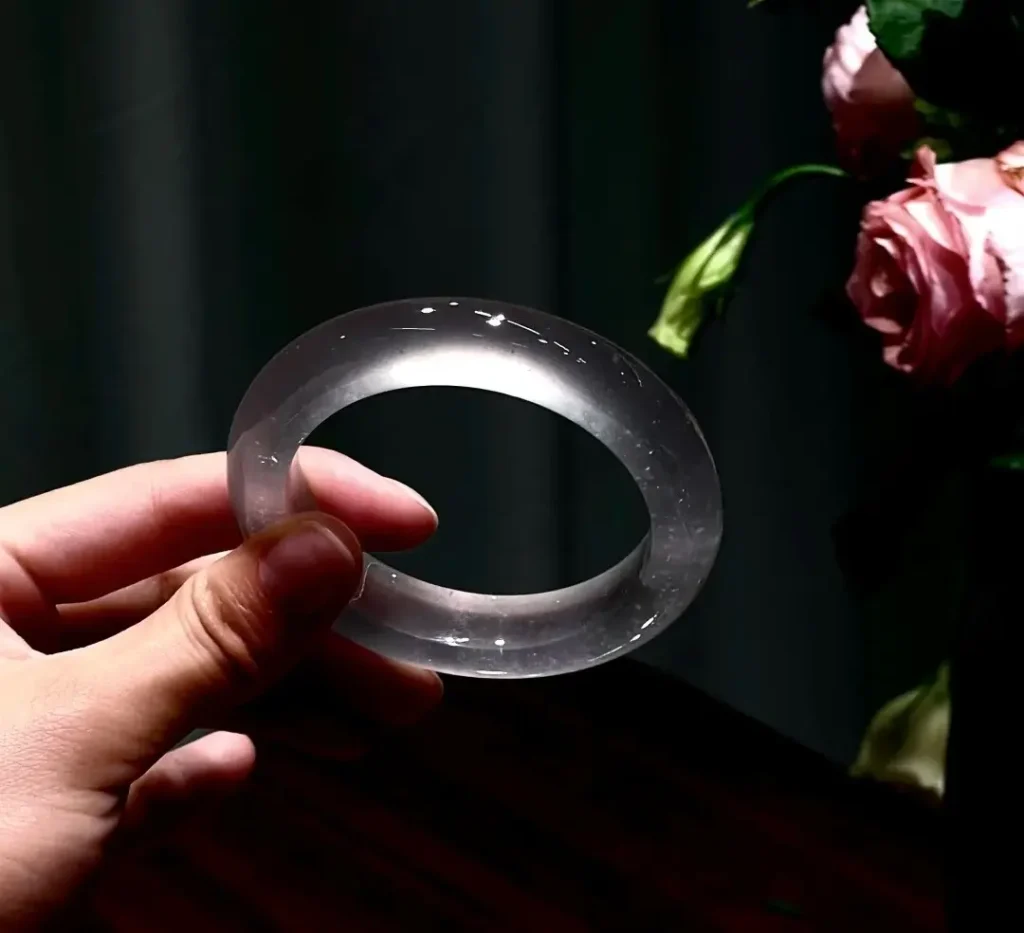
To understand why genuine Jadeite Jade is so valuable, we must look at the five key factors gemologists use to assess its quality. Understanding these pillars—especially “Kind” (Zhong), or translucency—is vital for exposing common Ice Jadeite Simulants.
| Factor | Description | Why It Matters |
| Color | The hue, saturation, and uniformity of the color (e.g., Imperial Green, Lavender). | A significant determinant of price; rich, pure colors are highly valued. |
| Translucency | Often called “Water Head” or “Kind”, referring to the stone’s clarity and light penetration (e.g., Icy, Glassy). | High translucency (“Kind” or “Zhong”) is essential for a luminous, glowing effect. |
| Texture | The fineness and tightness of the mineral structure. | A finer texture results in a better polish and greater durability. |
| Size & Thickness | The overall volume and substantiality of the piece. | Larger, thick pieces of high-quality material are extremely rare and command the highest prices. |
| Carving/Craftsmanship | The quality and artistic merit of the cut and polish. | Poor craftsmanship can significantly devalue a piece, even with good material. |
Pro Tip: In the trade, there’s a saying: “Experts look at the ‘Kind’ (Zhong), novices look at the color.” A piece with exceptional “Kind” (meaning great translucency/texture), even if it’s a colorless White Ice Jade, can be incredibly expensive due to the luminous internal glow it exhibits.
To truly master the nuances of Jadeite assessment and understand how these factors relate to value, dive deeper into PeonyJewels dedicated guide:How to Identify Natural Jadeite: Color, Texture & Authenticity.
Ice Jade Quartzite: The Newest Ice Jadeite Simulants
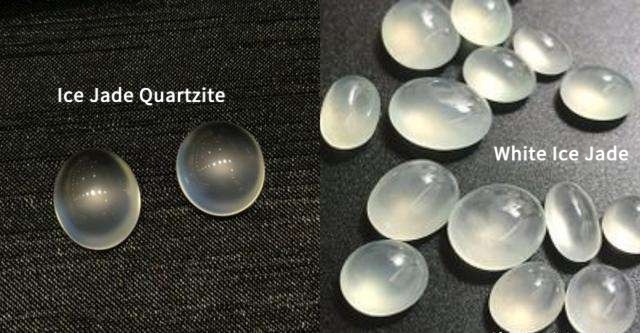
A material often aggressively marketed to resemble high-grade White Ice Jade is known commercially as “Ice Jade” or “Ice Ying Yu”. This stone is essentially leveraging its resemblance to genuine jadeite for market appeal.
What is Ice Jade Quartzite?
- Gemological Name: Quartzite
- Chemical Formula: Silicon Dioxide SiO2
- Common Trade Names: Russian Jade (sometimes), Ice Ying Yu, White Chalcedony (less common in this context).
- Origin: Primarily sourced from Russia.
As a member of the massive Quartz family (which includes Agate, Chalcedony, Aventurine, etc.), Quartzite is highly abundant. Its high yield directly correlates to its low cost. In contrast, high-grade Ice Jadeite is rare, meaning the price comparison between the two is immediately irrelevant.
How to Distinguish Ice Jade Quartzite from Jadeite
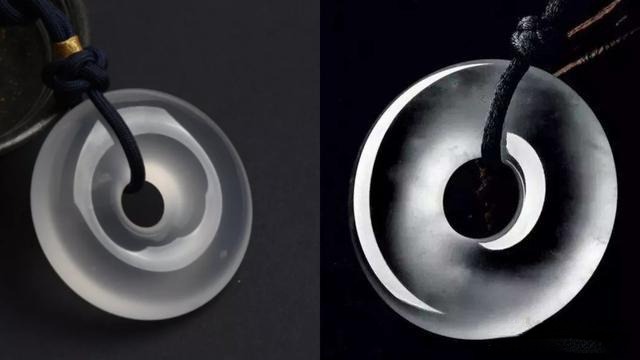
While they may appear similar at first glance, the differences in their physical properties are key to identification:
| Feature | Genuine Jadeite Jade (White Ice) | Ice Jade Quartzite (Ice Ying Yu) |
| Luster/Refractive Index | High, glassy luster (Vitreous). Refractive Index ≈ 1.66. | Lower, waxy-to-greasy luster. Refractive Index ≈ 1.54-1.55. |
| “Hand Weight” (Density) | Feels significantly heavy for its size. Relative Density ≈ 3.33. | Feels lighter or less “dense” in the hand. Relative Density ≈ 2.60. |
| Internal Structure | Fine interlocking fibrous structure (visible under magnification). | Granular structure, often transitioning between Chalcedony and Quartzite. |
| The Safest Method | Always demand an authoritative gemological certificate. | — |
Identifying Other Common Jadeite Simulants
Besides Ice Jade Quartzite, several other Jadeite Simulants are frequently mistaken for different types of high-grade jadeite:
Albite: The Feldspar Impostor of White Ice Jade
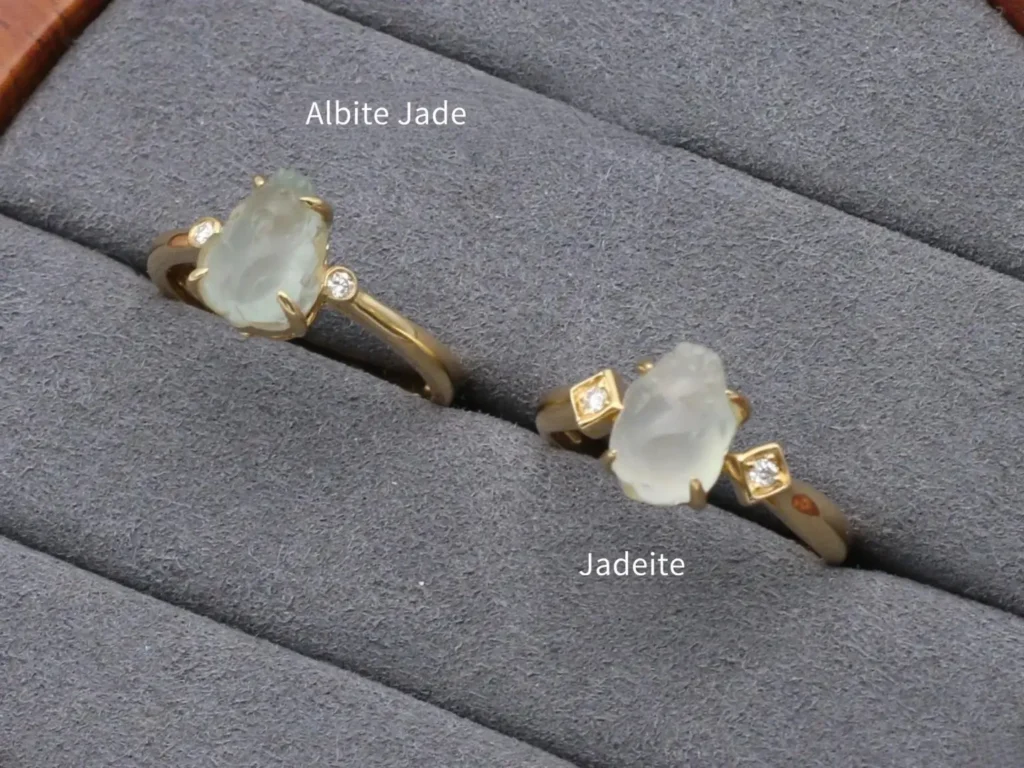
While Ice Jade Quartzite is the newest pretender, Albite, often sold as “Water-Mousse Jade” (Shuǐ Mò Yù), is a more established impostor. For years, particularly around 2013, large quantities of this material appeared in major jade markets like Ruili and Tengchong. Its high transparency and appealing appearance led many novice buyers to mistake it for genuine, high-quality White Ice Jadeite.
However, Albite is chemically and physically distinct from precious jadeite.
🔍 Gemological Identity
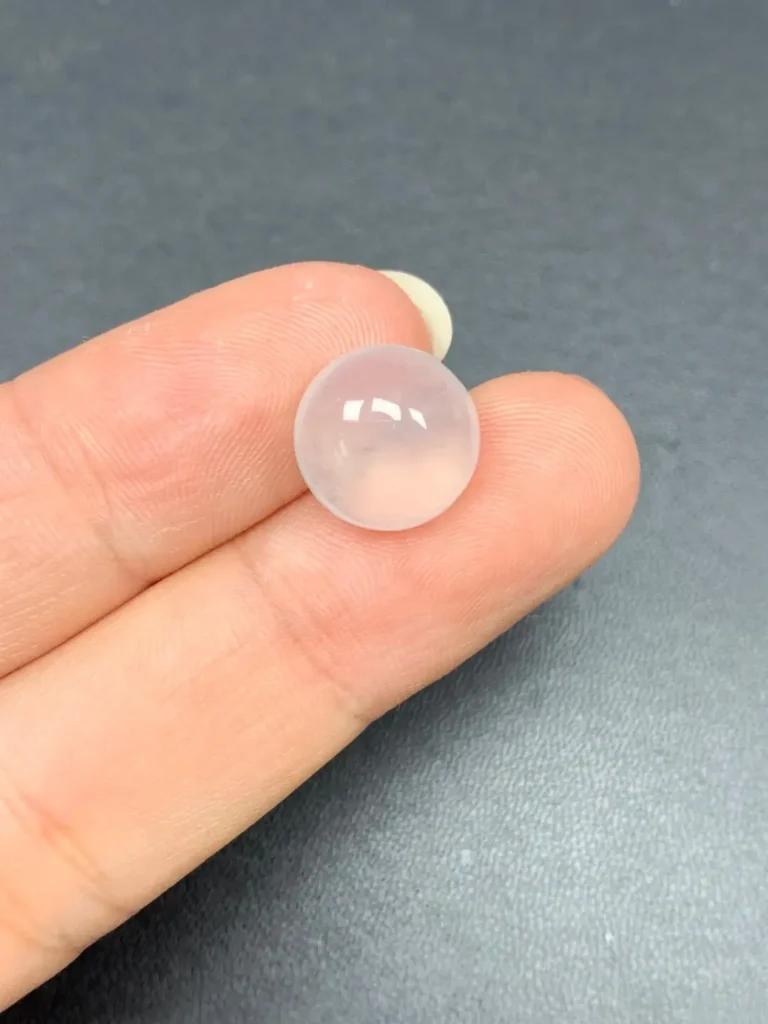
Despite being incorrectly labeled by some as a “by-product” of jadeite mining, Albite is not chemically similar to jadeite at all. It actually belongs to a completely different geological family:
- Gemological Name: Albite
- Chemical Group: Plagioclase Feldspar Group
- Chemical Formula: Sodium Aluminum Silicate (NaAlSi3O8)
- True Relatives: Albite is a true relative of gemstones like Moonstone and Labradorite, not jadeite.
❌How to Differentiate Albite from Genuine Ice Jadeite
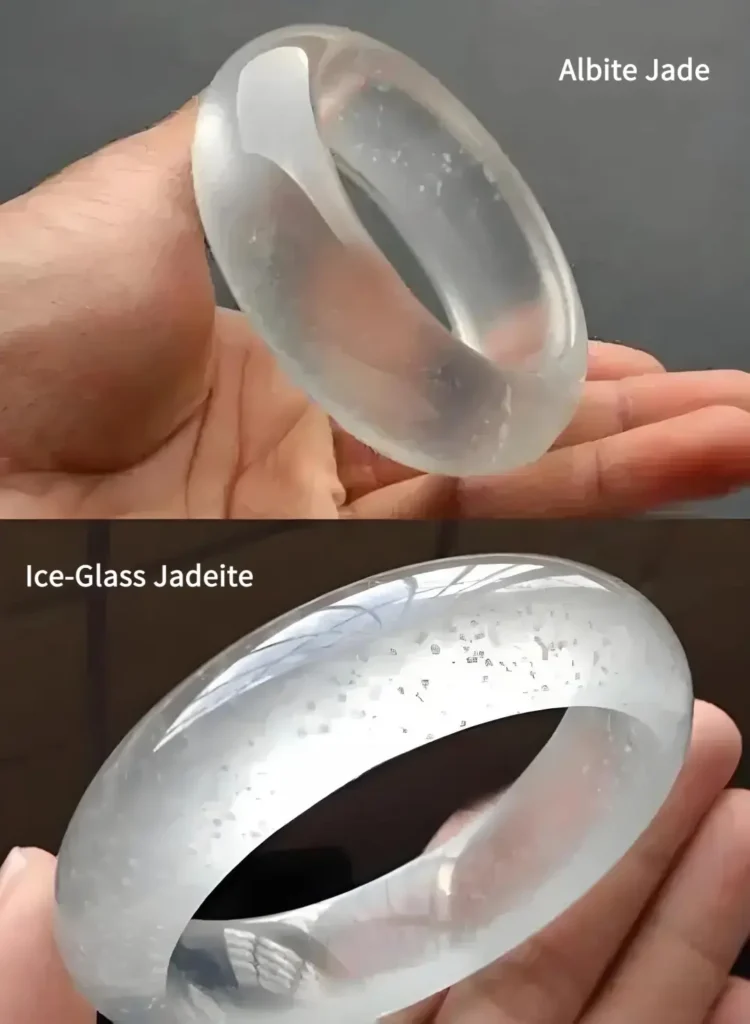
The most effective way to distinguish Albite from White Ice Jadeite is by focusing on three key physical properties—especially density and internal structure.
| Feature | Genuine Ice Jadeite | Albite (Water-Mousse Jade) |
| Specific Gravity (Density) | High; feels significantly heavy and substantial. (≈ 3.33) | Low; feels noticeably “floaty” or “light” for its size. (≈ 2.60) |
| Hardness (Durability) | High (Mohs 6.5-7); resistant to scratching and daily wear. | Lower (Mohs 6-6.5); highly susceptible to surface scratching and abrasion. |
| Internal Inclusions | May contain “cotton” (mian) but typically appears fine and fibrous. | Often displays characteristic “Water Mousse” or bubble-like white patches or milky cotton inclusions. |
| Availability & Price | Extremely rare in large pieces; commands a high price . | Abundant; easily available in large, full-bodied carvings and cabochons at a very affordable price . |
In summary, if a large, highly translucent white piece of “jade” feels surprisingly light in your hand and the price is budget-friendly, you are almost certainly holding Albite, not genuine White Ice Jadeite.
To learn more about Albite, read the PeonyJewels blog post: Albite Jade vs Jadeite: Stop Buying Fakes! The Definitive Identification Guide.
Prehnite: The Green Jadeite Simulants for Clear Water Tones
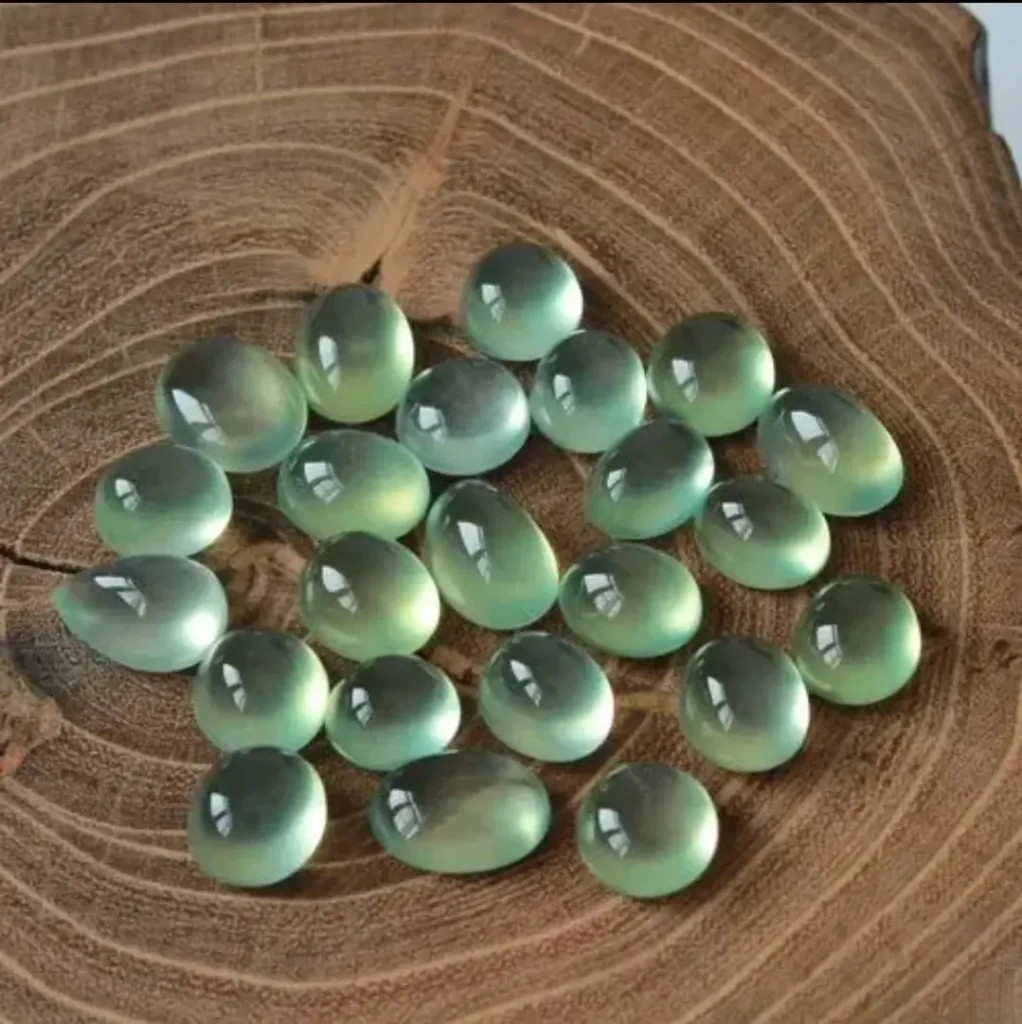
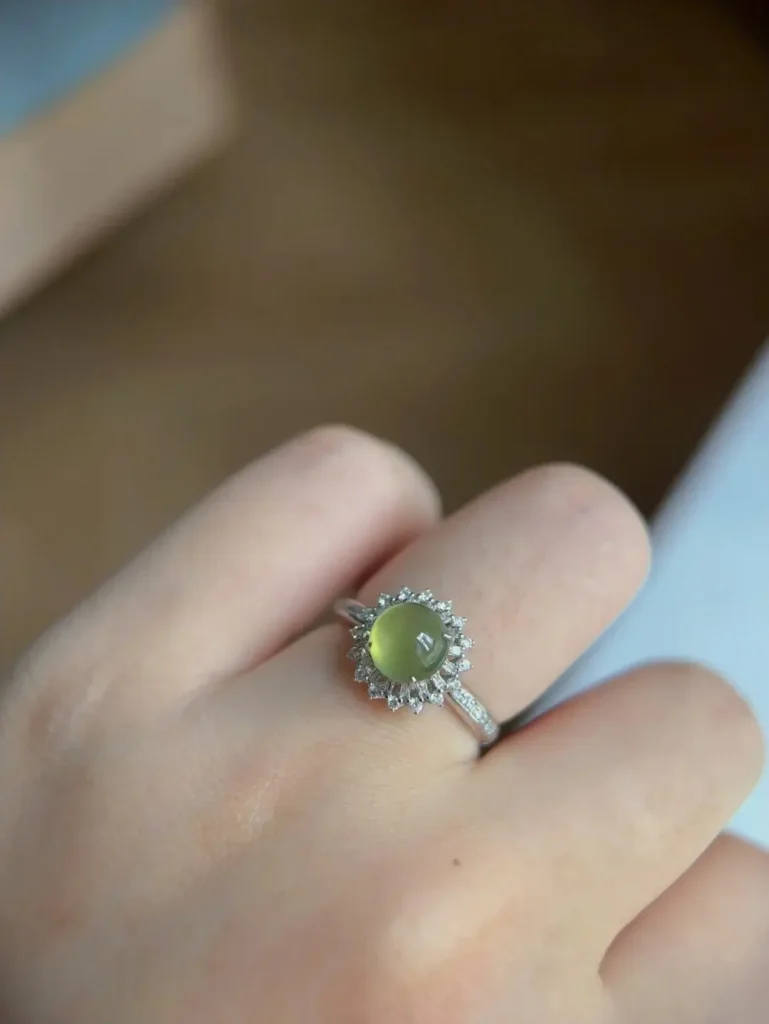
While Albite mimics the colorless “Ice Kind,” Prehnite is often recognized as the most sophisticated visual double for high-grade Clear Water Jadeite (Qíng Shuǐ Fěi Cùi). This grade of jadeite is prized for its highly translucent “icy” quality combined with a delicate, cool, watery blue-green hue.
🔍 Gemological Identity
Prehnite is a beautiful, naturally occurring mineral but is chemically unrelated to jadeite.
- Gemological Name: Prehnite
- Chemical Group: Inosilicate (Calcium Aluminum Silicate)
- Color & Texture: Top-grade Prehnite features a fine, translucent texture and a soft, pleasing green color.
❌ The Key Color Distinction
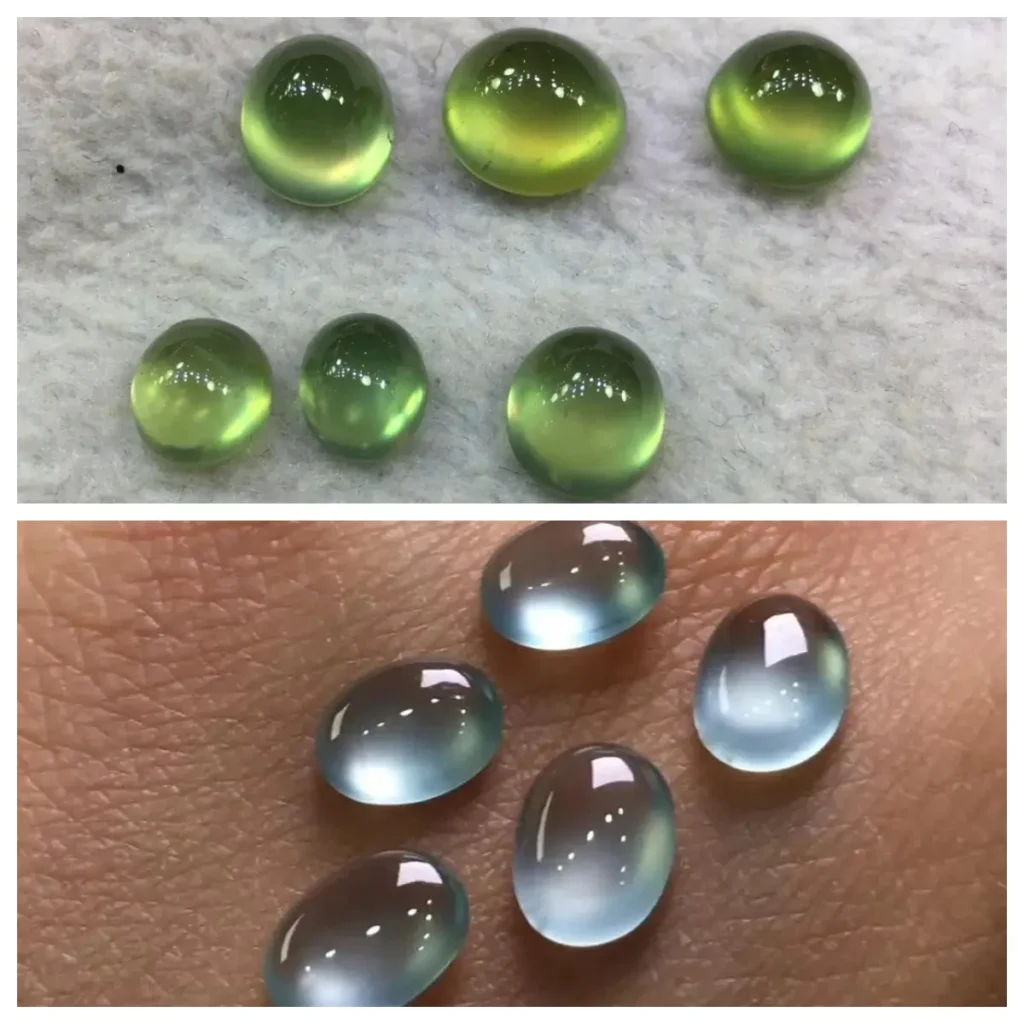
High-grade jadeite’s value often lies in its purity of color. Prehnite, by its chemical nature, cannot achieve the exact cool tones of its expensive counterpart.
| Feature | Genuine Clear Water Jadeite | Prehnite |
| Color Tone | Pure, cool blue-green tone (like clear water). | Always carries a definitive yellowish or chartreuse undertone (warm green). |
| Purity/Saturation | Excellent color saturation without muddiness. | Can sometimes appear slightly “muddy” or possess a greenish-yellow cast. |
| Visual Evidence | The distinction is generally less obvious in small cabochons but becomes immediately apparent in larger, carved pendants or bangles. | The warmer, yellowish cast is often visible when viewed under natural light. |
Green Chalcedony: The Perfect Color Simulant
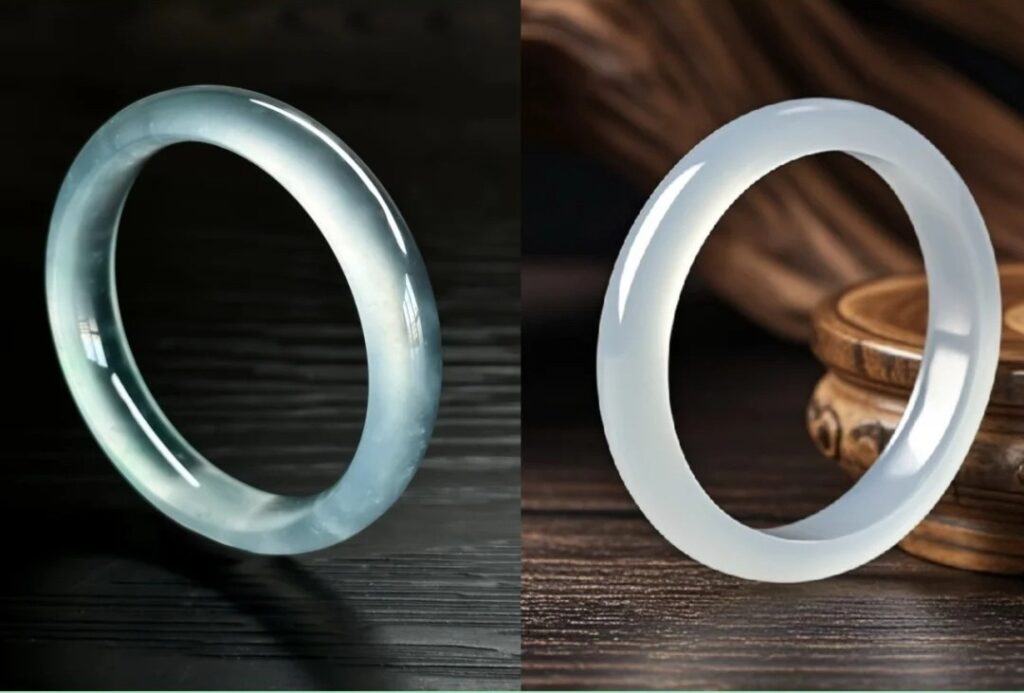
In the West, Chalcedony is a well-known, affordable, and durable gemstone. However, when highly color-saturated varieties appear in the jade market, they are often attempts to imitate the most valuable jadeite colors, namely “Imperial Green.”
🔍 Gemological Identity
- Gemological Name: Chalcedony (Cryptocrystalline Quartz)
- Chemical Group: Quartz Family (Silicon Dioxide – SiO2)
- Types in Market:
- Natural Chrysoprase (Australian Jade): The naturally occurring, desirable apple-green variety (rare and valuable in its own right).
- Dyed Chalcedony: The vast majority of market imitators—white chalcedony chemically treated and dyed to mimic jadeite’s color.
❌ Spotting the Dyeing Treatment
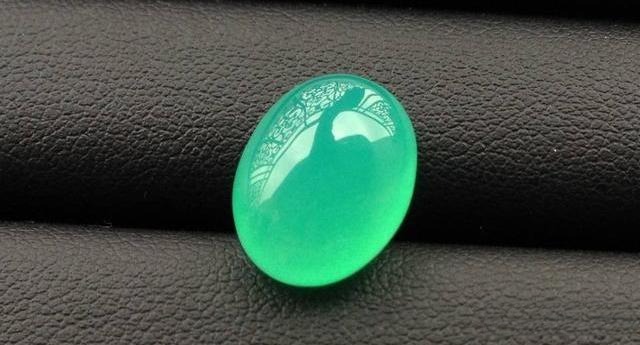
The primary deceit involves dyed green chalcedony being sold as high-grade jadeite. Consumers must be vigilant for these tell-tale signs:
- Color Uniformity: The color of the dyed stone is often too perfect and unnaturally uniform throughout the material, lacking the subtle color zoning or natural variations found in genuine jadeite.
- Transparency: Dyed pieces can appear excessively clear or “watery” and sometimes display an artificial, slightly fluorescent sheen.
- The Price Red Flag: This is the most critical warning. As PeonyJewels advises: If a piece with the vibrant color and translucency of “Imperial Green” jadeite is being offered at a price that seems too good to be true, it is guaranteed to be a treated imitation. Genuine Imperial Green can cost hundreds of thousands of dollars per carat.
Xiuyan Jade: The Fragile Serpentine Simulant
Known as a national stone of China, Xiuyan Jade is a popular carving material. High-quality, translucent pieces, especially the modern trend known as “Tiannqing Dong”, are being intentionally cut to visually mimic the highly sought-after, expensive Blue Water Jadeite (Lán Shuǐ Fěi Cùi) or even jadeite displaying Muna “snowflake cotton.”
🔍 Gemological Identity
Xiuyan Jade is structurally and chemically classified as a Serpentine stone, making it the softest of the major jade simulants.
- Gemological Name: Serpentine
- Chemical Group: Serpentine Group (Magnesium Silicate)
- Durability Rating: Mohs Hardness 2.5-5.5 (Vastly softer than Jadeite’s 6.5-7)
⚠️ The Crucial Difference: Durability and Wear
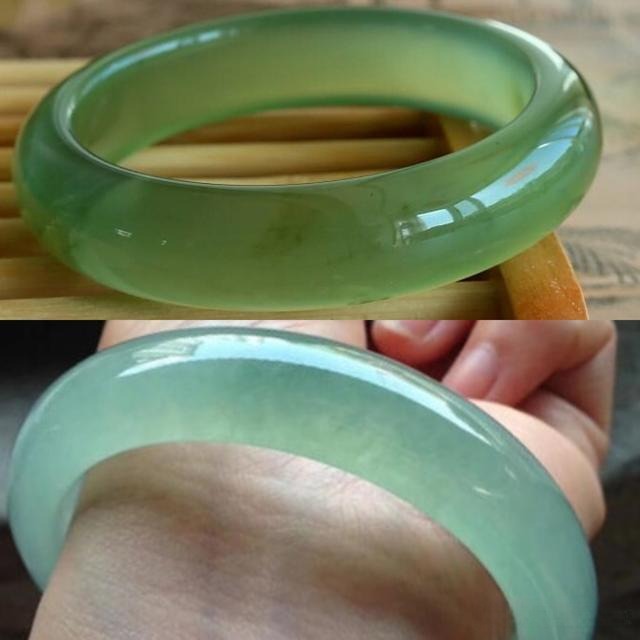
For the Western consumer, the most significant difference is durability. Xiuyan Jade is fundamentally unfit for jewelry that is subject to daily wear, especially rings or bracelets.
| Feature | Genuine Jadeite Jade | Xiuyan Jade (Serpentine) |
| Density/Weight | High Specific Gravity (≈ 3.33). | Low Specific Gravity (≈ 2.5-2.6). |
| Hardness/Wear | Extremely tough; holds a high polish and resists scratching. | Very soft and fragile. Extremely prone to scratching, chips, and loss of surface polish. |
| Long-Term Consequence | Durable heirloom stone. | The surface will dull and acquire noticeable scratches after only a short period of wear. |
Consumer Warning: While beautiful for display or occasional-wear pendants, purchasing Xiuyan Jade under the belief it is durable jadeite is a costly mistake due to its rapid degradation with use.
To truly understand the rich history and composition of this ancient material, and to properly manage expectations regarding its durability, read PeonyJewels blog comprehensive guide:Xiu Jade (Xiuyan Jade) Guide: Serpentine, Tremolite, and Why This Ancient Chinese Gem is Underrated.
Expert Summary: Why Jadeite Simulants Fail the Test
While the five materials discussed above may perfectly imitate the form of precious Jadeite Jade, they fundamentally lack the essence. They fall short in every critical measure: chemical composition, physical properties (hardness, density, luster), cultural significance, and market recognition.
If your goal is to acquire a beautiful, inexpensive accessory, these alternatives offer high visual appeal at low cost. However, if you are seeking the investment-grade, durable, and culturally significant heirloom of genuine Jadeite Jade, caution is paramount.
To protect your investment and ensure authenticity, always remember the most crucial step: Insist on an accredited, authoritative gemological certificate that clearly identifies the stone as Natural Jadeite Jade.
🌟 Elevate Your Collection with PeonyJewels
At PeonyJewels, we believe in the genuine beauty and enduring value of authentic craftsmanship. While we specialize in providing the highest quality genuine gems, we also cherish unique, artistic expression.
- Are you looking for a bespoke engagement ring or a signature piece of custom jewelry design?
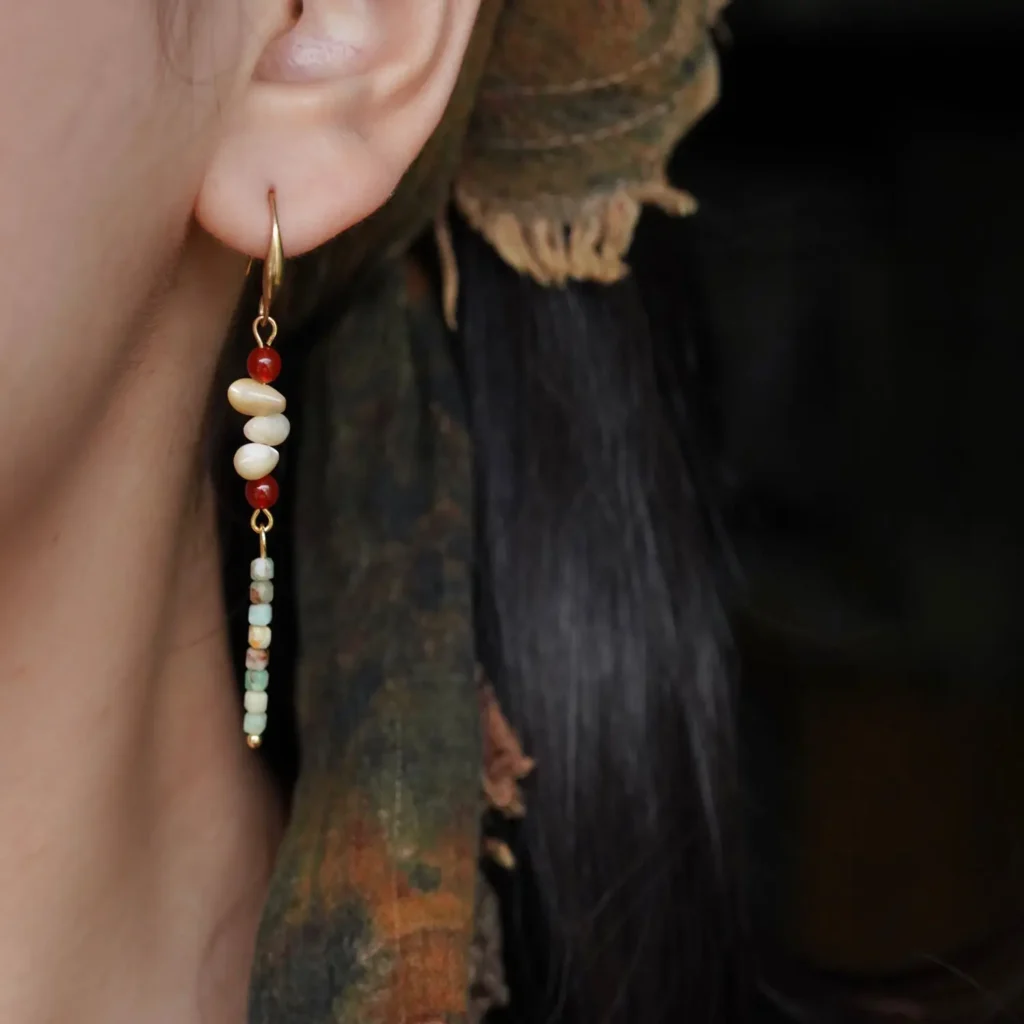
- Do you love the charm of history? Explore our exquisite collection of handmade vintage earrings, each piece a blend of classic elegance and unique artistry.
Contact us today to discuss your custom project and discover a piece that is truly unique to you!