Nanyang Dushan Jade: The Ancient Chinese Gemstone Unveiled
China boasts four great ancient jades: Hetian Jade, Xiuyan Jade, Lantian Jade, and Dushan Jade (also known as Nanyang Jade). With its rich colors and fine texture, Dushan Jade is not only a favorite among master carvers but also holds a significant place in the history of Chinese jade culture. There’s even an intriguing theory among historians that the legendary “Heshibi” (the most famous lost jade artifact in Chinese history) might have actually been a piece of Dushan Jade—though the true identity of the Heshibi remains a subject of ongoing debate. Setting the myths aside, let’s delve into the facts and fascinating details of this unique gemstone.
What is Dushan Jade? A Geological Look
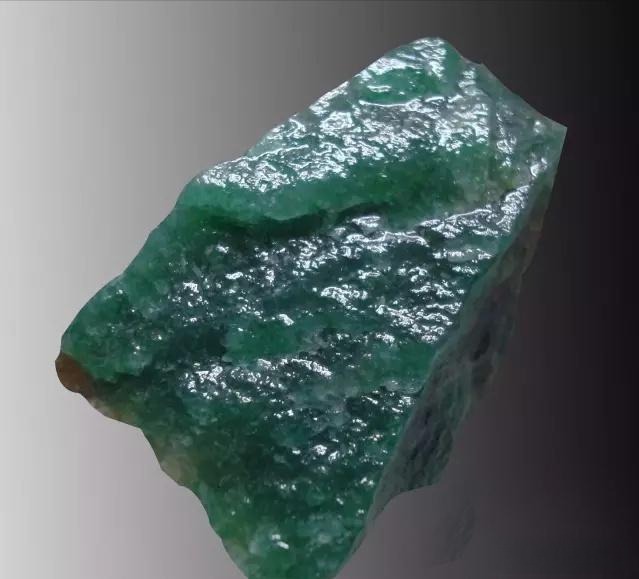
Dushan Jade, often simply called “Du Jade” or Nanyang Jade, is exclusively mined from Dushan Mountain in Nanyang City, Henan Province, China.
While many mistake the green varieties of Dushan Jade for the more famous Burmese Jadeite, they are fundamentally different. Geologically, Dushan Jade is classified as a zoisitized plagioclase anorthosite. This is a multi-mineral rock with a complex composition, making it truly unique among jades.
Key Characteristics of Dushan Jade
| Property | Value | Notes |
| Mohs Hardness | 6 to 7 | Harder than many traditional ‘jades’ like Serpentine. |
| Specific Gravity | ≈ 2.90 g/cm³ | Lower than Jadeite (3.34) but higher than Xiuyan Jade. |
| Main Minerals | Plagioclase (20%-90%), Zoisite (5%-70%) | Zoisite (the ‘zoisitized’ part) gives it hardness and color. |
| Secondary Minerals | Chrome Mica (5%-15%), Prehnite, Zeolite, Actinolite | These minerals are responsible for the wide spectrum of colors. |
Although its gemological properties might not match those of “Jade King” Jadeite, Dushan Jade easily passes the standard threshold for a durable and beautiful gemstone.
📜 A Timeline of Dushan Jade’s Historical Significance
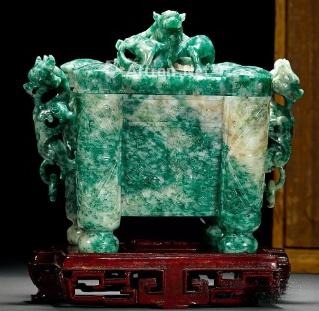
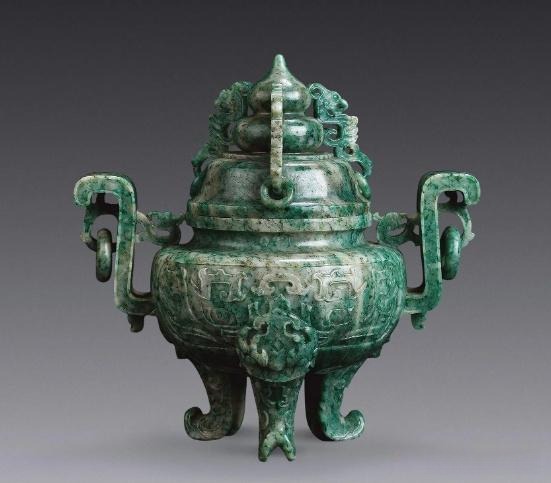
The cultural footprint of Nanyang Jade is extensive, dating back millennia.
- Neolithic Period (Pre-2000 BCE): Archaeological evidence confirms that extensive mining of Dushan Jade began in this era.
- Yin-Shang Dynasty (c. 1600–1046 BCE): A significant number of jade artifacts unearthed from the Yin Ruins (near Anyang) show the use of Dushan Jade.
- Han and Tang Dynasties (206 BCE – 907 CE): This was the golden age for Dushan Jade. Historical texts from the Eastern Han Dynasty record the long history of jade mining in Nanyang.
- Ming and Qing Dynasties (1368–1912): While craftsmanship became more refined and favored by royalty, the rise of superior materials like Hetian Jade (Nephrite) and Jadeite saw Dushan Jade lose its dominant position in the market.
- Modern Era (Post-1978): Following China’s reform and opening-up, the Dushan Jade industry revitalized. The introduction of modern carving techniques has made it a foundational pillar of Nanyang’s economy, with Dushan Jade carvings frequently winning major national awards.
🎨 The Stunning Color Varieties and Value Ranking
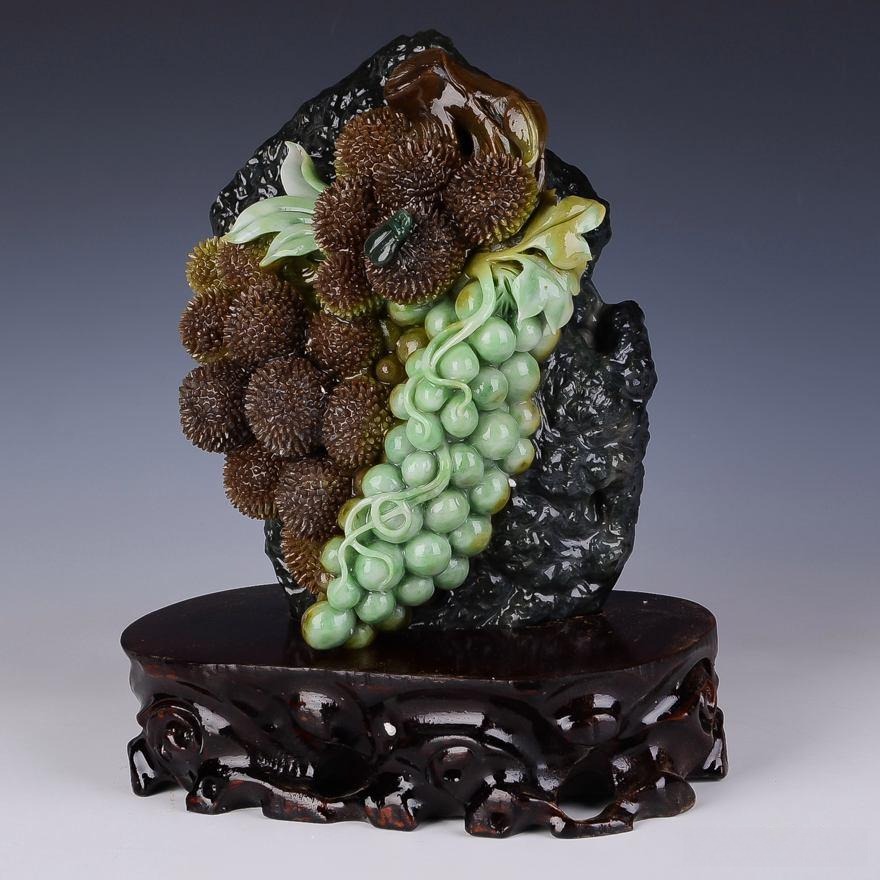
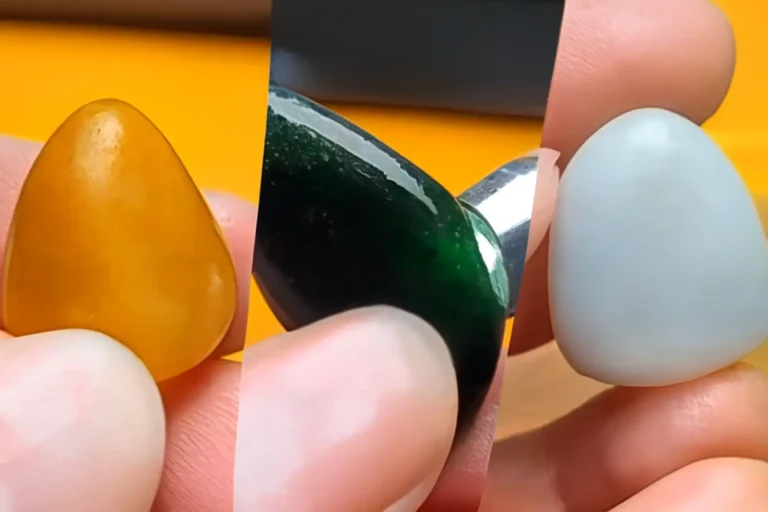
The complex mineral makeup of Dushan Jade, featuring chromophores like Cr3+, Fe2+, and Mn2+ ions, results in an extraordinary range of colors. The spectrum includes white, green, purple, blue-green, yellow, brown, and black. However, it is most often found as a multi-colored or mottled stone.
The value of Nanyang Jade is largely determined by the purity, saturation, and desirable combination of these colors.
High-Value Dushan Jade Varieties
While Dushan Jade may hold a less prestigious position than Hetian Jade among the four ancient jades, pieces exhibiting exceptional color and clarity command significant attention. These premium grades are highly sought after by collectors.
1. Green Dushan Jade (Lu Du Yu):
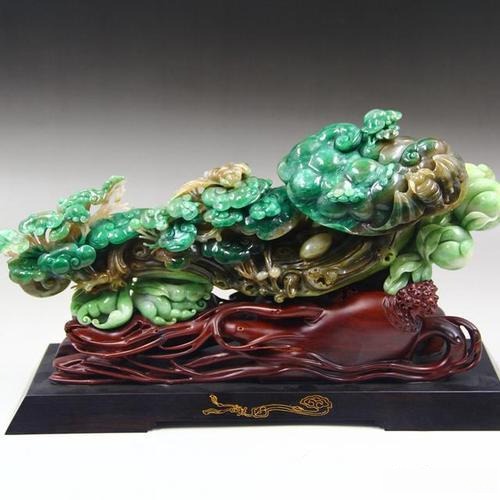
Green Dushan Jade often closely resembles Jadeite but offers a wider spectrum, including shades of grayish-green, blue-green, and yellowish-green.
- Features: The colors are characteristically uneven, appearing as irregular bands, threads, or patches, and are frequently intermingled with white Dushan Jade.
- Clarity and Luster: Transparency varies from semi-translucent to opaque. The semi-translucent varieties boast a moist, “good water head” appearance (a desirable jade quality).
- Best Grade: Translucent Blue-Green Jade is the finest Dushan Jade variety. This top-quality grade is commercially marketed as “Sky Blue Jade” or “Nanyang Jadeite”.
2. Mottled/Multi-Color Dushan Jade (Za Se Du Yu):
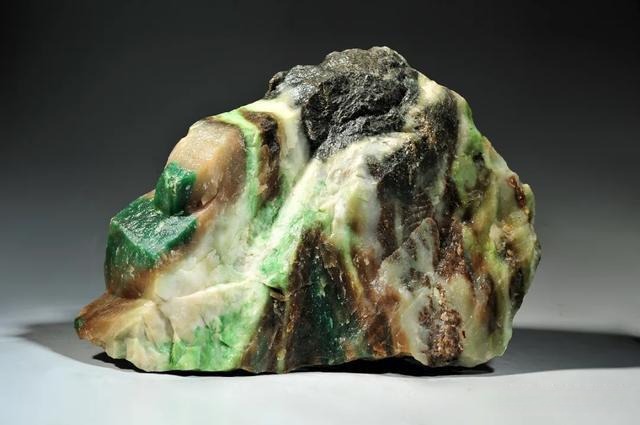
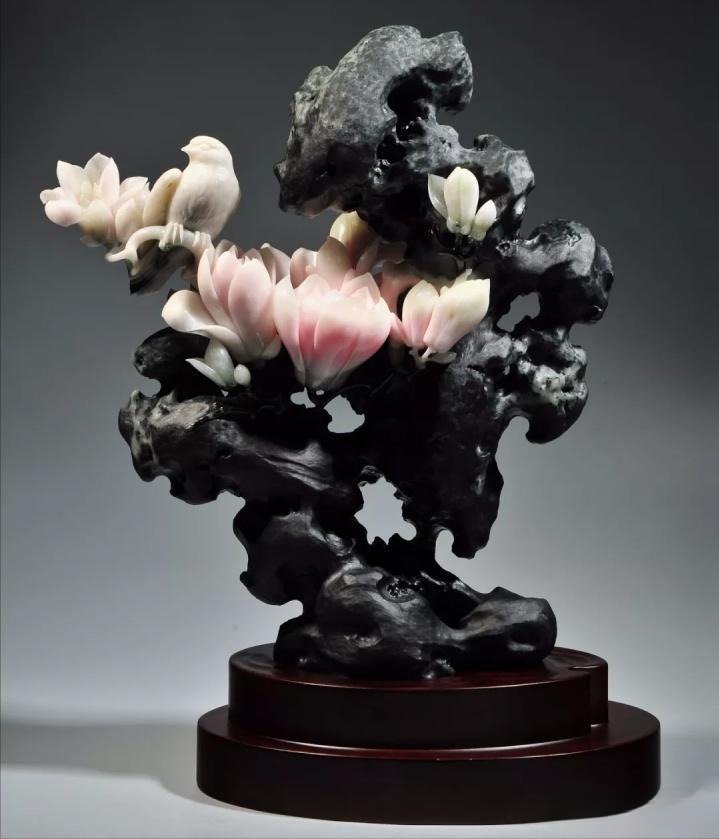
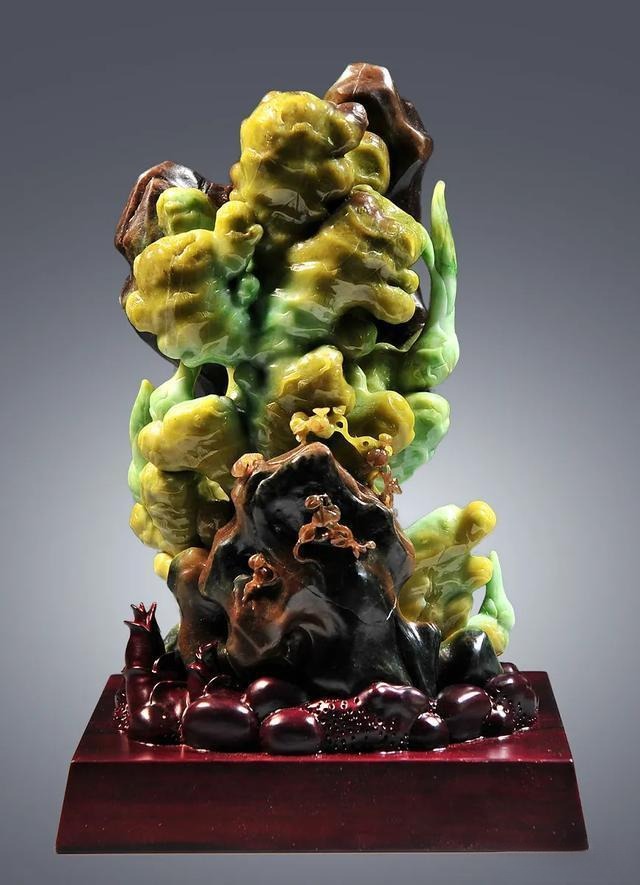
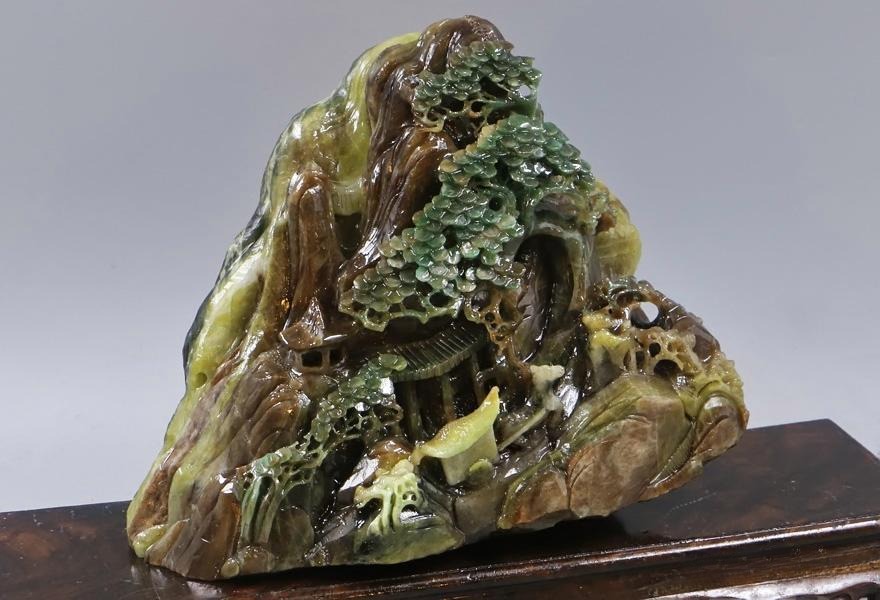
The multi-color nature of Dushan Jade is its defining feature. Most rough stones or finished pieces naturally display two to three color tones or more, distributed in bands, patches, or gradual transitions. Larger raw materials or carvings often exhibit four, five, or even more colors.
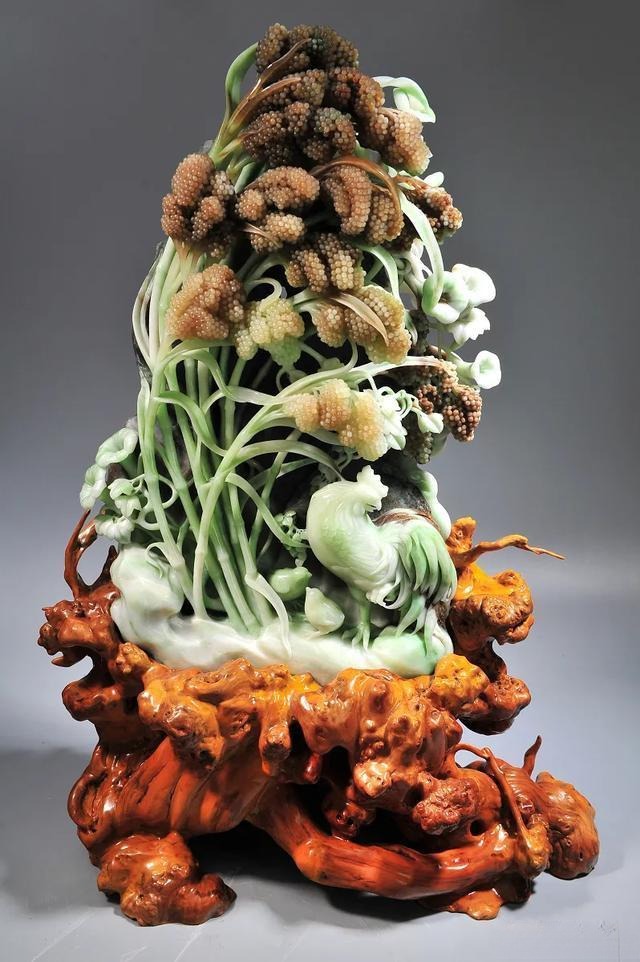
- Common Combinations: The most frequent mixed color palettes include combinations of green, white, brown, bluish-grey, and black hues.
- Value Factor: The value significantly increases for mottled jade that is free of impurities and boasts more vibrant colors.
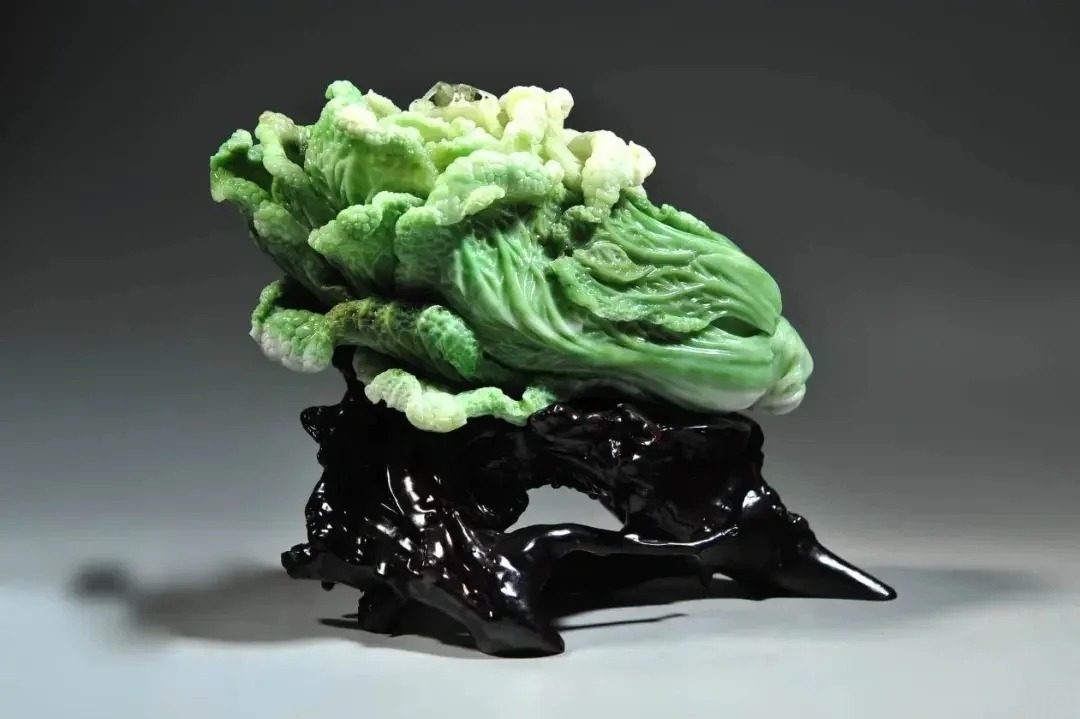
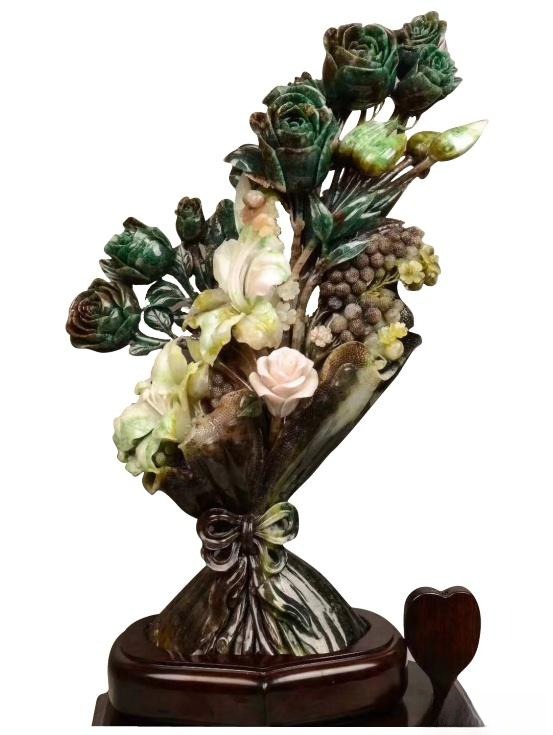
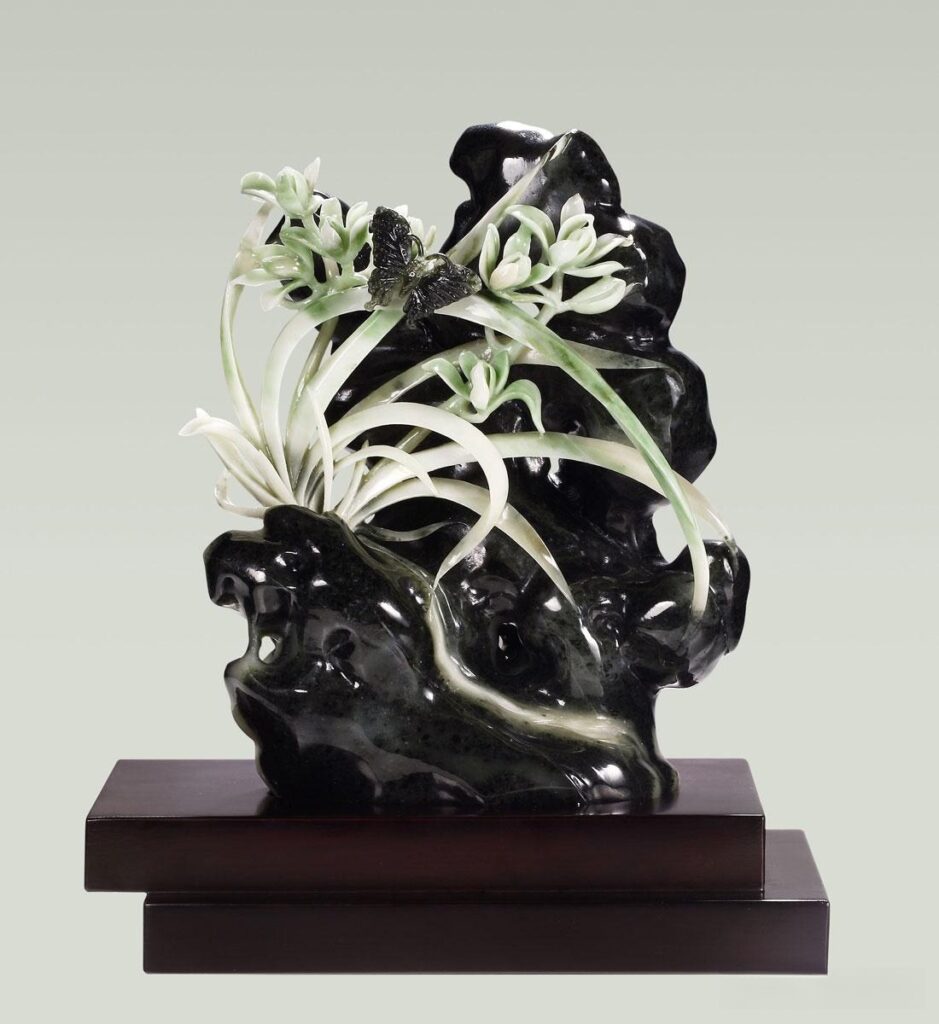
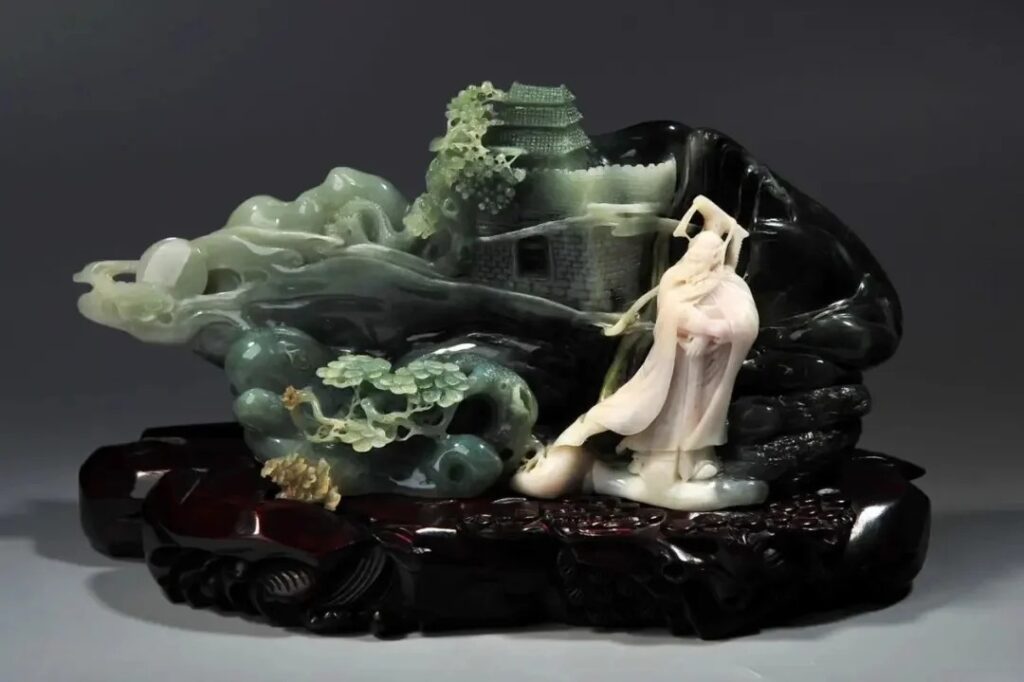
- Artistic Impact: Multi-color pieces that are expertly utilized by a master carver (Qiao Diao – Ingenious Carving) achieve the highest value. By matching the design to the material (yin cai shi yi), these works often result in breathtaking creations of unparalleled artistry.
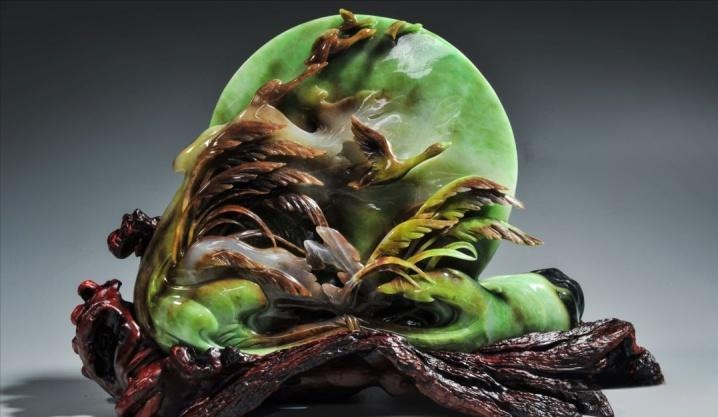
3. Purple Dushan Jade (Zi Du Yu):
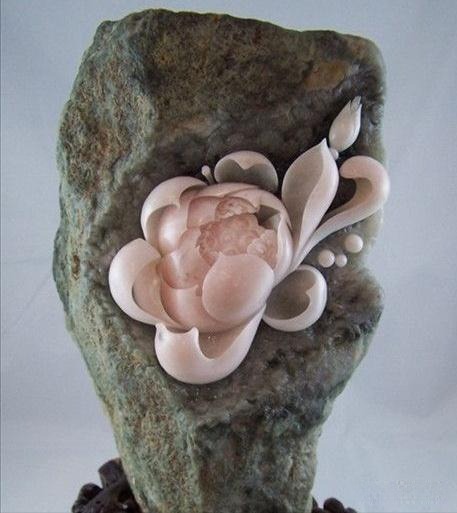
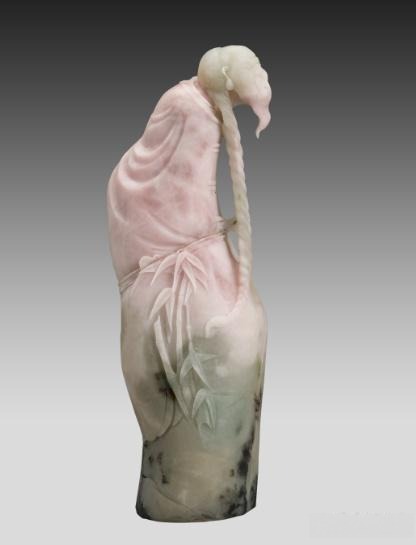
Purple Dushan Jade generally presents in soft shades of lavender, light violet, or pale pink.
- Rarity: While not as common as the green or white varieties, its lovely color makes it one of the rarer and more valued Dushan Jade colors on the market.
- Artistic Impact (Value Factor): This variety is highly prized for use in Qiao Diao (clever use of color) due to its gentle and beautiful tones. Carvers utilize the subtle purple to create delicate accents, such as flowers or flowing drapery on figures.
- Composition Note: The soft, delicate color palette makes it ideal for integrating with white or green sections of the stone, enhancing the overall multi-color effect.
📝 Mid-to-Low Value Dushan Jade Varieties
| Variety | Description | Value Note |
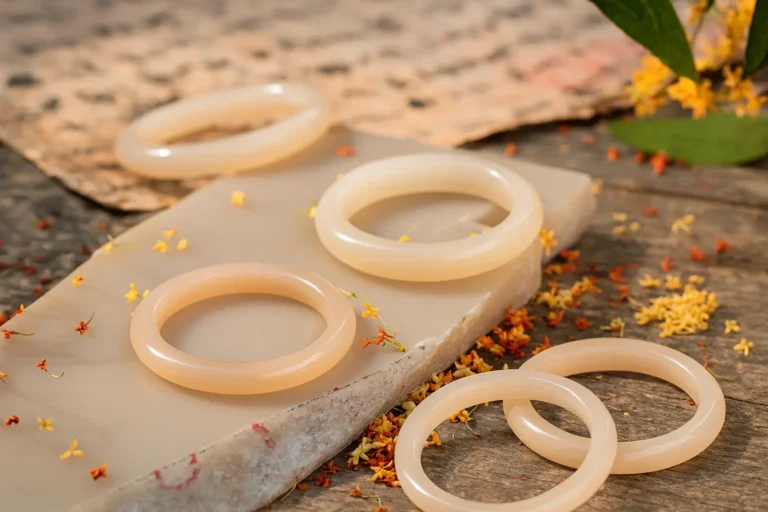
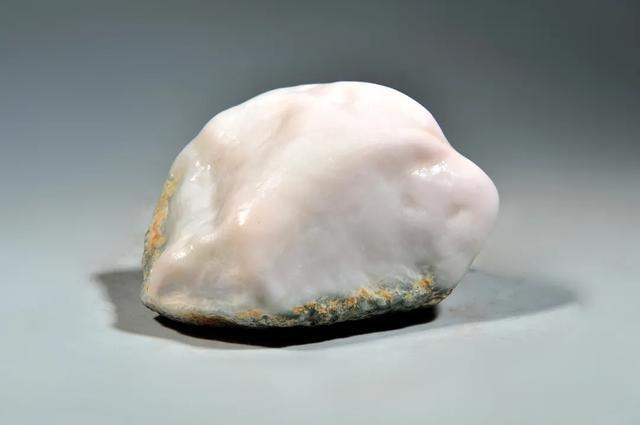
| White Dushan Jade (Bai Du Yu) | 1. Color:Ranges from white to milky white tones. 2. Clarity & Grades: The material’s clarity varies significantly, resulting in three specific commercial grades: * Translucent Water White (Best Grade: High transparency and luster) * Oil White (Semi-translucent with an oily sheen) * Dry White (Opaque with a less desirable ‘dry’ texture) 3. Identification Note: White Dushan Jade is often confused with other white materials, including Hetian Jade, Quartzite, and Serpentine Jade in the market. | Translucent Water White is the finest grade and holds higher collectible value; other lower grades are common. |
| Yellow Dushan Jade (Huang Du Yu) | 1. Color: Displays different depths of yellow or brownish-yellow hues. 2. Clarity: often semi-translucent. 3. Features: Frequently presents with white or brown patches that show gradual, transitional colors. | Most pieces are dull yellowish-brown with low commercial worth; pure, vivid yellow is rare and significantly increases value when used for Qiao Diao (clever use of color). |
| Brown Dushan Jade (He Du Yu) | 1. Color: Generally dark brown, grayish-brown, or yellowish-brown; colors are often uneven. 2. Clarity & Features: Is often semi-translucent, and commonly transitions into adjacent colors, such as blue-gray or green jade. | Generally low-value due to poor color saturation and inconsistency. |
| Black Dushan Jade (Hei Du Yu) | 1. Color: Also known as Dushan Ink Jade. It is black or dark greenish-black and opaque. 2. Texture & Features: Has a coarser grain and often appears as blocks, patches, or spots. It is frequently intermingled with white Dushan Jade. | It is the lowest-value variety; it has no collectible value unless the carving craftsmanship is exceptional. |
| Bluish-Gray Dushan Jade (Qing Du Yu) | 1. Color: Can appear as blue, grayish-blue, or light bluish-gray hues. 2. Features: Is often opaque and appears in blocky or banded forms. | It is a common variety with little to no collectible value. |
🔍How to Distinguish It from Other Jades
Dushan Jade is often confused with other popular jades due to its “mass appeal” appearance, but a closer look reveals clear differences. For consumers, the key lies in understanding the variances in density, structure, and luster.
1. 📊 Dushan Jade vs. Jadeite (Fei Cui) Comparison
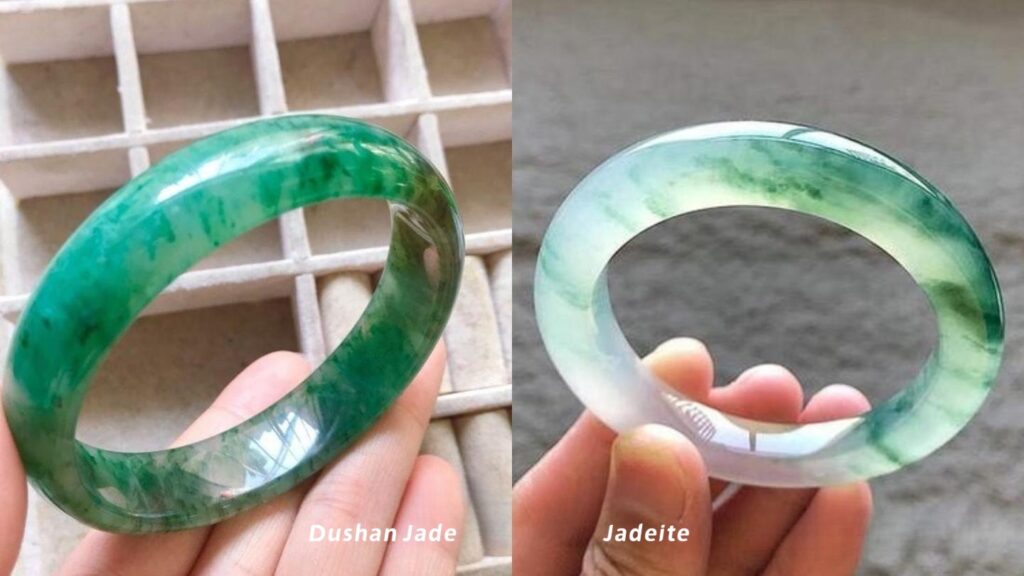
This is the most common confusion, especially with the highly valued green varieties. Here is a guide to spotting the differences:
| Feature | Dushan Jade | Jadeite (Fei Cui) |
| Density/Weight | Lower(2.90 g/cm³). A large piece feels noticeably lighter. | Higher (3.34 g/cm³). A large piece feels noticeably heavier (“hand weight”). |
| Hardness | Mohs 6 to 7. (Slightly softer than Jadeite). | Mohs 6.5 to 7. (Slightly harder, often reaching 7). |
| Internal Structure | Granular Metamorphic Structure (Anorthosite). Formed by granular mineral aggregates. | Interlocking Fibrous Structure (Felted Texture). |
| Luster | Greasy or Oily Sheen. Due to the varying hardness of constituent minerals, the polished surface is slightly less brilliant. | Vitreous (Glassy) Luster. Highly brilliant and reflective. |
| Color Purity | Green often contains gray, yellow, or blue undertones. Can be less pure than high-grade Jadeite. | Green can be more vivid and purer (especially Imperial Green). |
| Color Distribution | Green appears in clumps, patches, or granular aggregates. | Green appears in veins or lines (bands/streaks). |
🔑 Key Identification Points:
Jadeite’s specific gravity is higher than Dushan Jade’s; a large piece of Jadeite of the same volume weighs more than Dushan Jade.
While understanding the physical differences between Dushan Jade and Jadeite is crucial, buyers need to know the complex terminology used in the jade trade. Therefore, the PeonyJewels blog offers this essential resource: Jadeite Buying Guide: How to Understand Jade Trade Terms Before You Buy.
2. 📊 Dushan Jade vs. Hetian Jade (Nephrite) Comparison
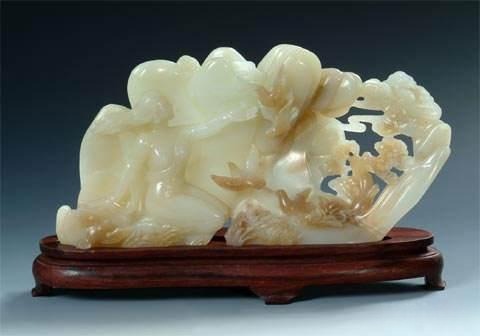
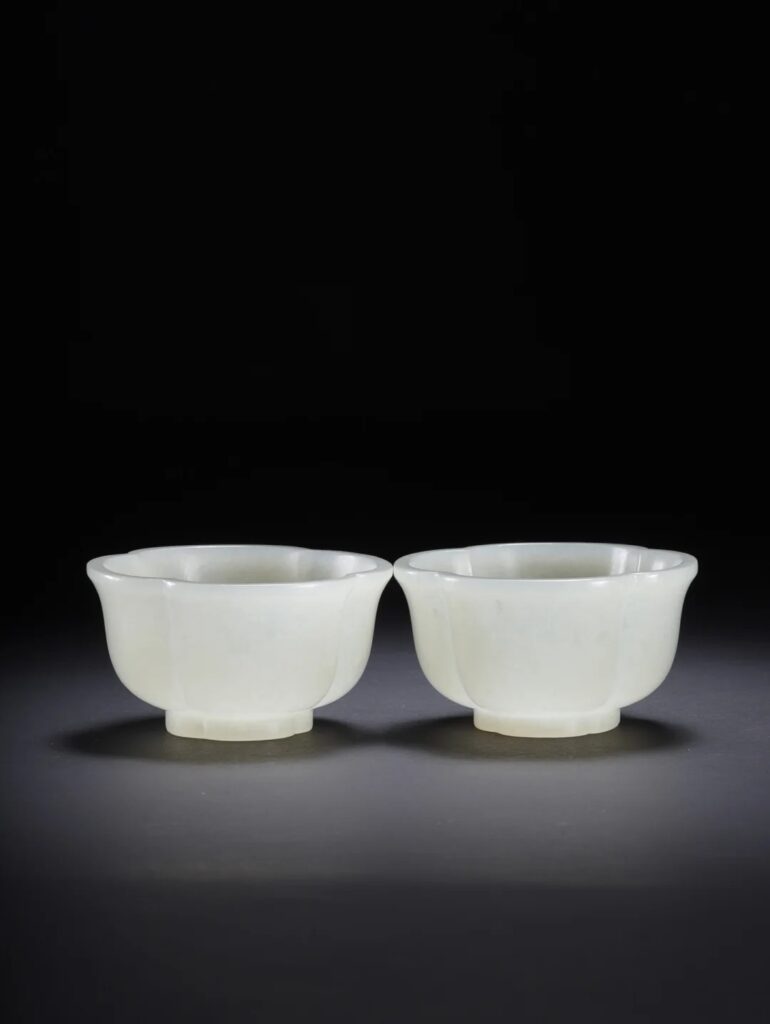
White Dushan Jade is often confused with white Hetian Jade. Use these key differences to distinguish between the two:
| Feature | Dushan Jade | Hetian Jade |
| Origin (China) | Dushan Mountain, Nanyang, Henan Province. Found in rock layers (Mountain Material). | Xinjiang (Kunlun Mountains: Shache—Tashkurgan, Hotan—Yutian, Qiemo County, etc.). Found as Mountain Material or rounded River Pebbles (Seed Jade. |
| Mineral Composition | Plagioclase, Zoisite, and minor minerals (Anorthosite). | Tremolite-Actinolite group. |
| Hardness (Mohs) | Mohs 6 to 7. (Slightly harder than Hetian Jade). | Mohs 5.5 to 6.5. (Slightly softer than Dushan Jade). |
| Luster | Greasy or Slightly Vitreous (Glassy) Sheen. Polished surface is brighter than Hetian Jade under the same polish. | Oily Luster. Distinctive soft, waxy sheen. |
| Internal Structure | Granular Metamorphic Structure. Formed by granular mineral aggregates. | Interlocking Fibrous Structure (Felted Texture). |
| Color/Purity | Often multi-colored (green, white, blue, etc.). White is often accompanied by a degree of mixed color or impurities. | Predominantly single-colored (white, greenish-white, black, yellow). White is typically more uniform. |
| Structure/Color Distribution | Visibly more chaotic/mottled in both structure and color distribution. | Structure and color distribution are more uniform and subtle. |
🔑 Key Identification Note
The crucial distinction by eye is the luster difference: Dushan Jade often appears brighter and more reflective after polishing compared to the soft, oily sheen of Hetian Jade. The internal structure and color distribution of Dushan Jade are also visibly more chaotic.
While our comparison highlights the key differences, identifying authentic Hetian Jade requires expert knowledge due to frequent deception. For comprehensive guidance, refer to the PeonyJewels blog article: The Nephrite Deception: Your Expert Guide to Authentic Hetian Jade and Its Natural Imposters.
3. 📊 Dushan Jade vs. Xiu Jade Comparison
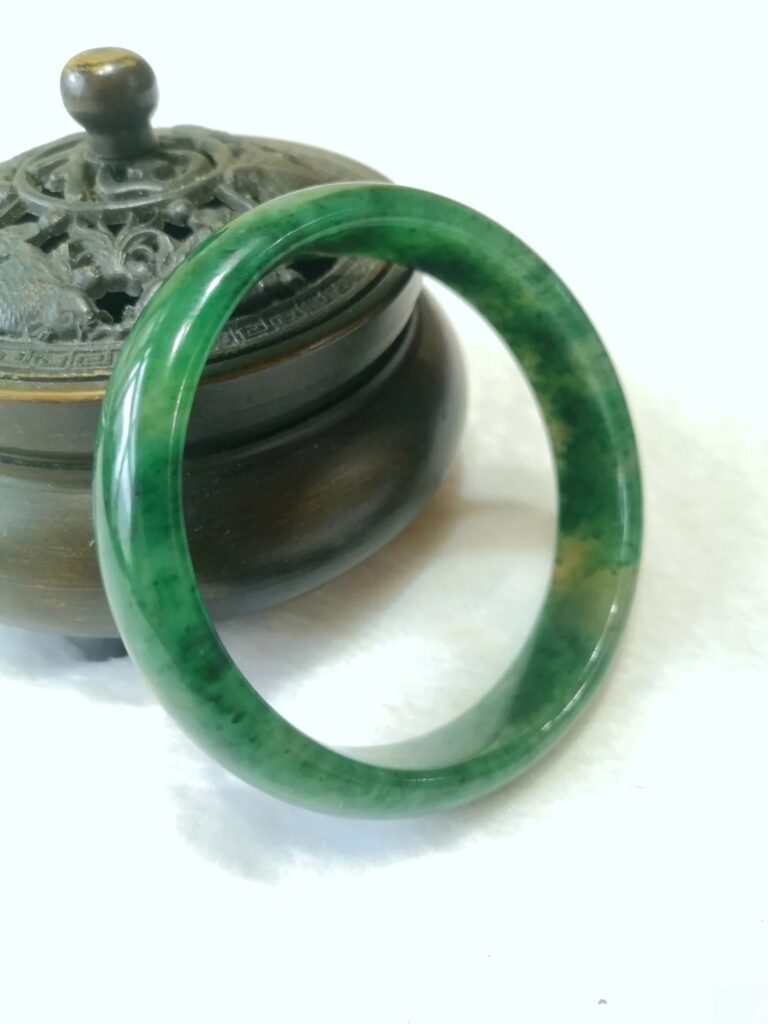
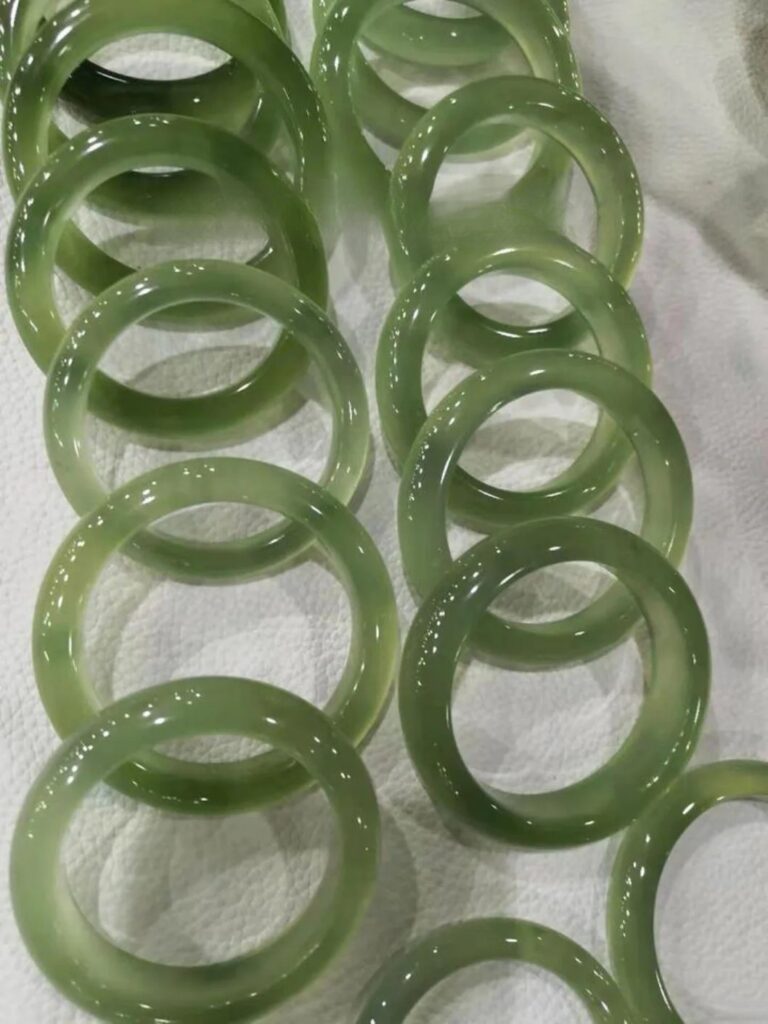
Xiu Jade is a soft jade often confused with Nanyang Dushan Jade due to its diverse colors and translucency. Use these characteristics to tell them apart:
| Feature | Dushan Jade | Xiu Jade |
| Mineral Composition | Plagioclase, Zoisite, and minor minerals (Anorthosite). | Serpentine. (Note: Older, high-quality “Lao Yu” is Tremolite/soft jade). |
| Hardness (Mohs) | Mohs 6 to 7. (Significantly harder and scratch-resistant). | Mohs 3.5 to 5. (Soft Jade—easily scratched by steel or quartz). |
| Luster | Greasy or Slightly Vitreous Sheen. Polished surface is generally brighter. | Waxy Luster. Gives a distinctive, soft appearance. |
| Color | Highly diverse (Green, White, Blue, Purple, Black, Brown). | Predominantly Greenish-Yellow or Greenish-Blue. |
| Texture & Clarity | Granular structure; clarity varies from opaque to semi-translucent. | Known for being moist, lustrous, fine-grained, and highly translucent. |
| Origin (China) | Dushan Mountain, Nanyang, Henan Province. | Xiuyan County, Liaoning Province. |
🔑 Key Identification Note
The most reliable distinction is Hardness: Xiu Jade is much softer (Mohs 3.5-5.0), making it far easier to scratch or damage than the durable Dushan Jade (Mohs 6-7). The waxy luster of Xiu Jade also differs distinctly from Dushan Jade’s brighter sheen.
4.📊 Dushan Jade vs. Quartzite Jade Comparison
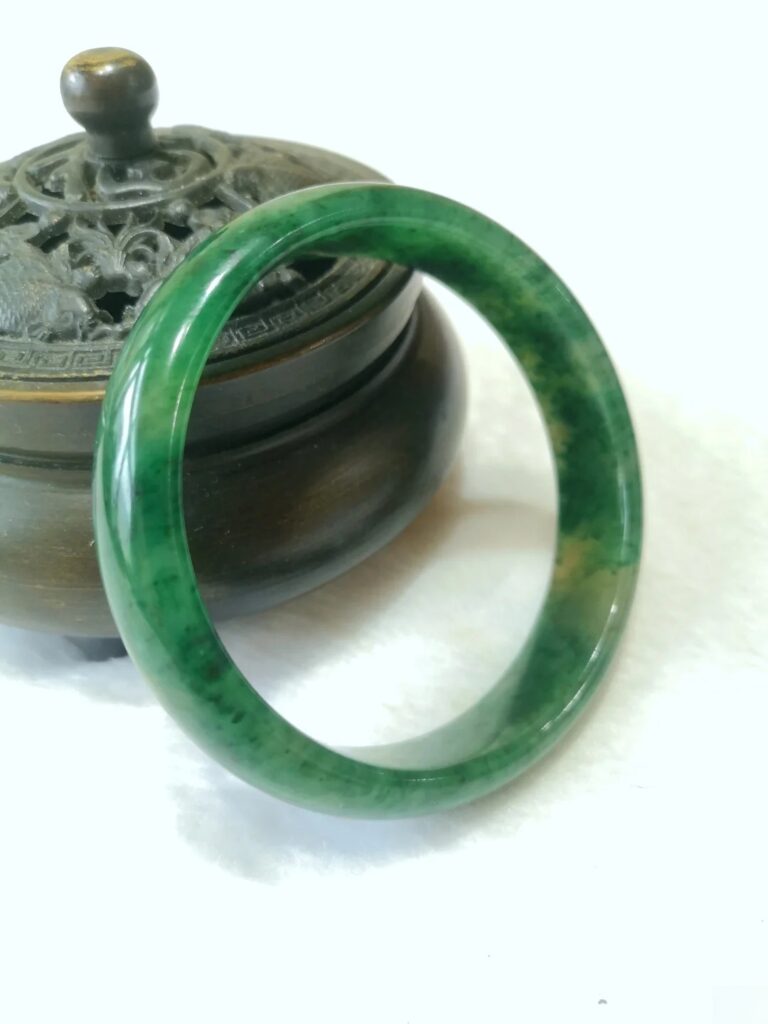
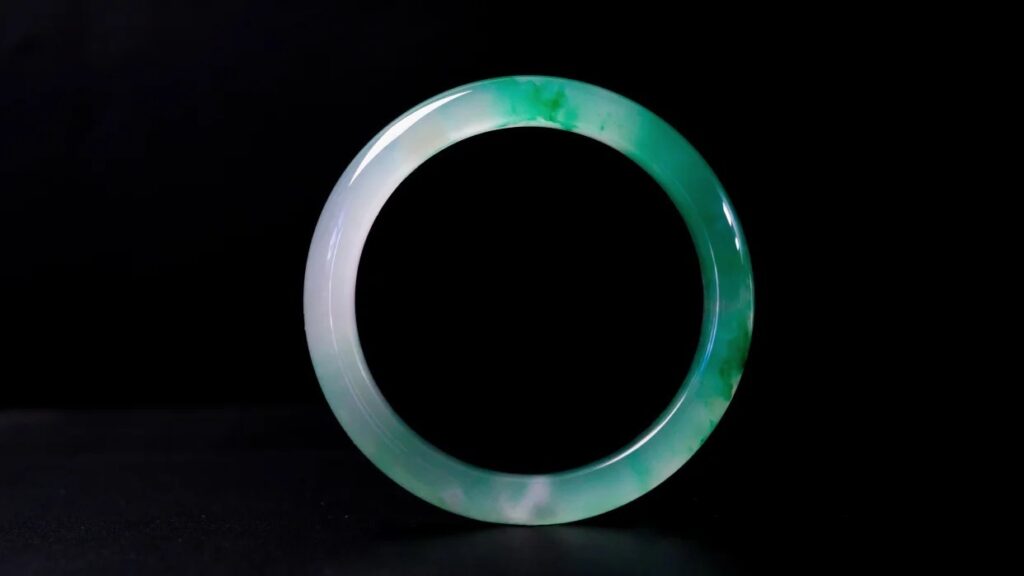
Quartzite Jade is a common material often used to imitate high-value jade. Here are the key differences when compared to Dushan Jade:
| Feature | Dushan Jade | Quartzite Jade |
| Mineral Composition | Plagioclase, Zoisite, and minor minerals (Anorthosite). | Silica / Silicon Dioxide (SiO₂), often >90%. |
| Chemical Formula | Complex Silicate(Ca,Na)Al₂Si₂O₈) | SiO₂ |
| Specific Gravity | ≈ 2.90 g/cm³ (Higher density). | ≈2.55-2.71 g/cm³ (Lower density). |
| Hardness (Mohs) | Mohs 6 to 7. | Mohs ≈ 7. (Very hard; similar to or slightly harder than Dushan Jade). |
| Internal Structure | Granular Metamorphic Structure. (Anorthosite). | Granular Metamorphic Structure / Massive Structure. |
| Refractive Index | Varies based on minerals. | ≈1.54. |
| Color | Highly diverse (Green, White, Blue, Purple, Black, Brown). | Pure when clean (White); can show Green, Red, Yellow, Purple, or Black when trace elements are present. |
| Durability/Care | Durable, but moderate hardness. | High hardness, acid and alkali resistant, suitable for daily wear. |
🔑 Key Identification Note
Since both materials share a similar granular structure and high hardness, the most reliable initial checks are:
- Weight: Dushan Jade will feel heavier in the hand due to its higher specific gravity (≈ 2.90 g/cm³ vs. 2.55-2.71 g/cm³).
- Luster/Texture: The distinct mineral mixture in Nanyang Dushan Jade often gives it a characteristic oily or slightly greasy sheen, unlike the typical vitreous (glassy) luster often seen on pure Quartzite.
The wide range of commercial Quartzite Jade varieties requires further specialized knowledge for identification.
To gain a deeper understanding of two main Quartzite Jade varieties—Dulong Jade and African Jade (jadeite imposters)—please refer to the following PeonyJewels blog articles:
- Dulong Jade: The Rising “Ice-Glutinous Green Jadeite Alternative” from China.
- The Rise of “African Jade”: The Glamorous Double of Jadeite.
♻️ The Future of Dushan Jade and Resource Protection
Due to millennia of continuous excavation, the highest quality Nanyang Dushan Jade reserves are finite and increasingly scarce. To protect the geological landscape and ensure sustainability, the Chinese government has recently implemented planned, protective mining policies, including the consolidation of smaller mines and targeted closures.
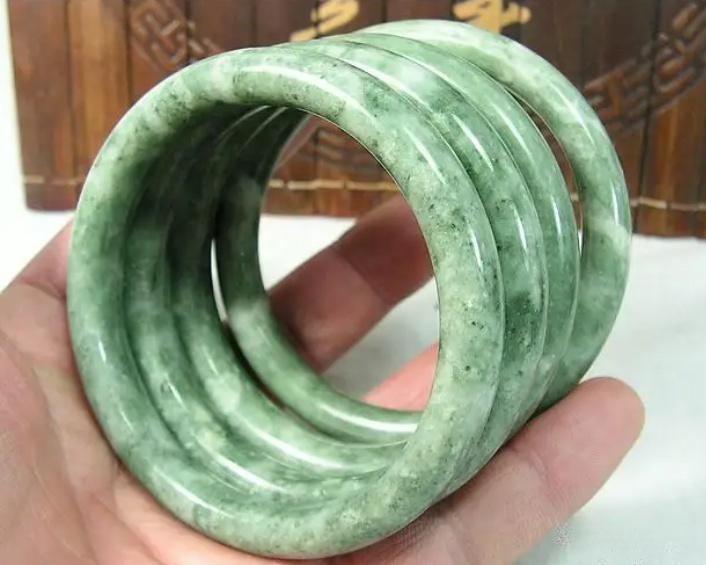
While low-grade Nanyang Dushan Jade remains inexpensive, the scarcity of top-quality, translucent, multi-colored pieces has caused their market price to rise significantly. This shortage reaffirms Dushan Jade’s place as a precious and finite natural resource.
✨ Discover the Art of Jade with PeonyJewels
At PeonyJewels, we appreciate the rich history and unique beauty of Nanyang Dushan Jade. Its incredible palette and multi-colored nature make it a spectacular choice for bespoke jewelry.
Are you inspired by the ancient elegance of this unique stone?
- Custom Design Service: Let us help you realize a one-of-a-kind piece using beautiful, ethically sourced Dushan Jade. Its vibrant colors are perfect for creating custom pendants or statement rings that tell a story.
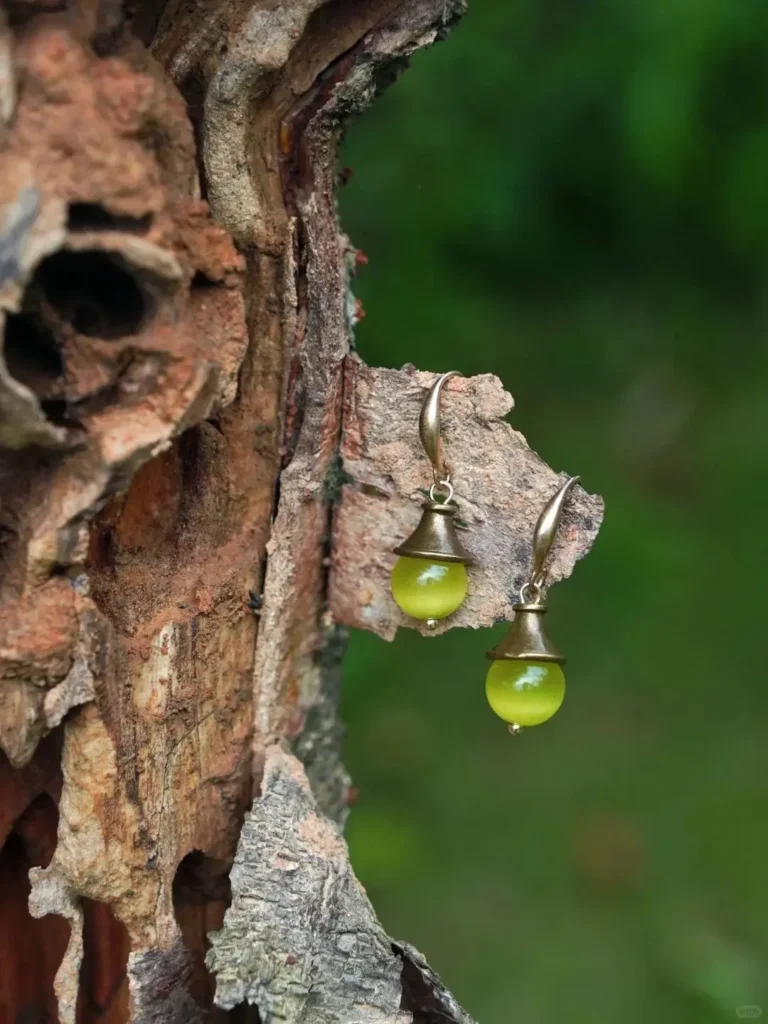
- Explore Our Collection: Be sure to browse our existing collection of handmade vintage earrings and original designs, where we blend historical techniques with modern aesthetics.
Ready to create a piece of history? Contact us today to start your custom jade jewelry journey!