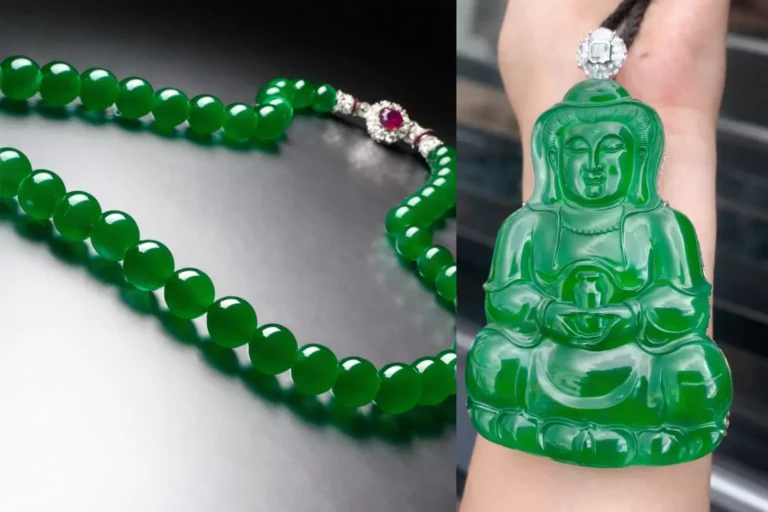
Nephrite Jade Price Guide: Quality Grades, Value Factors, and Origins
Many of our clients ask about the Nephrite Jade Price Guide:
“The green jade in your shop looks similar, so why is there such a massive price gap?”
When it comes to Nephrite Jasper (Biyu), appearances can be deceiving to the untrained eye. Understanding the nuances of origin, color saturation, and internal structure is key to making an informed investment.
This guide pulls back the curtain on green jade, helping you understand what truly determines its value in China’s market before 2026.
How Nephrite Jade Origins Influence Prices
While Xinjiang (Hetian) dominates the white jade world, the crown for green Nephrite belongs to Russia. Although jade from Canada or New Zealand exists, these two sources set the standard for luxury Nephrite.
1. Xinjiang Nephrite (Hetian): The Rare Heritage
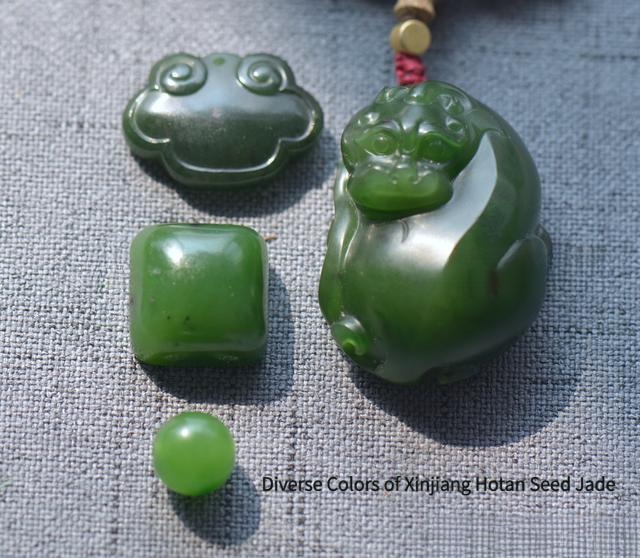
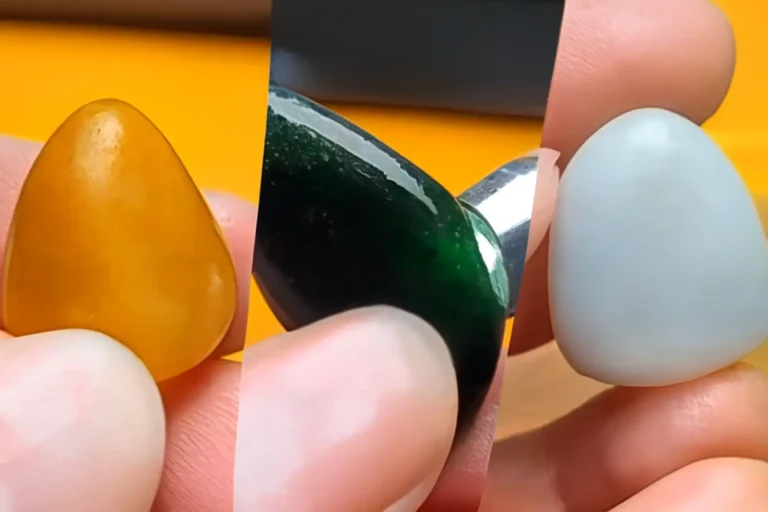
Sourced from the riverbeds of Hotan, Xinjiang jade is mostly found as Seed Jade (Ziliaohuo). Because it is naturally tumbled by rivers for millennia, it possesses an unmatched “soulful” texture.
- The Vibe: Deep, moody greens with a legendary “waxy” feel.
- The Reality: It is increasingly rare and often comes in smaller sizes with natural “birthmarks” (black spots).
2. Russian Nephrite: The Gold Standard for Beauty
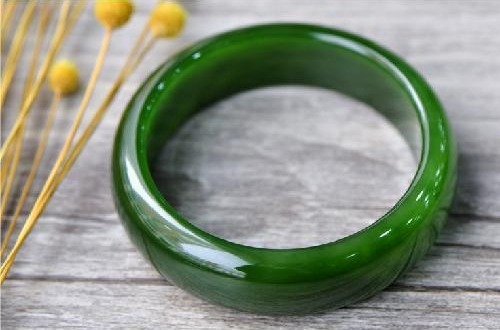
If you are looking for that vibrant, “eye-popping” green, you are likely looking at Russian Material (often referred to as Old-mine 7-grade).
- The Vibe: Vivid, uniform, and clean. It provides the “life” and brilliance that high-end jewelry requires.
- The Reality: Its superior clarity and large, crack-free yields make it the primary choice for luxury bangles and statement pieces.
Key Takeaway: Think of Xinjiang Jade as a rare vintage wine—prized for its depth and history. Think of Russian Jade as a flawless diamond—prized for its immediate visual brilliance and perfection.
Xinjiang vs. Russian Nephrite: Key Differences
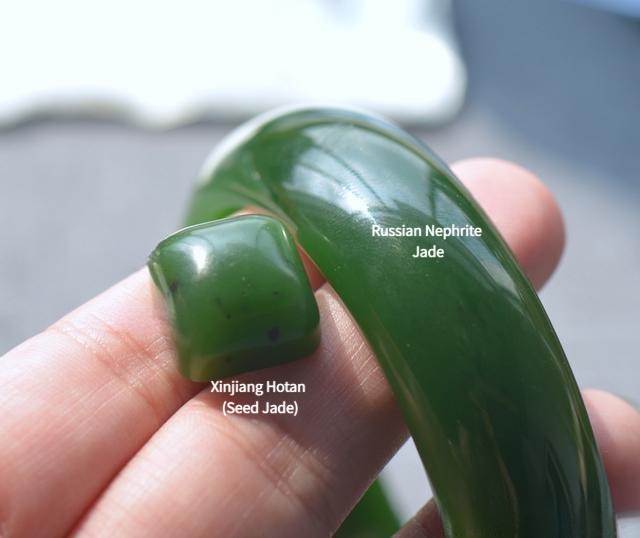
While both are technically Nephrite, they offer entirely different sensory experiences. To help you choose the right investment, let’s break down the four key pillars of jade quality: Color, Structure, Inclusions, and Tactile Feel.
1. Color: Forest Depth vs. Vibrant Vitality
- Xinjiang (Hotan): These pieces lean toward a heavy, saturated, and “moody” green. Often described as Ink Green or Deep Forest, the color is dense but rarely “bright.”
- Russian Nephrite: This material is the champion of vibrancy. It offers a uniform, bright green that evokes a sense of “vibrant life.” If you want a piece that pops against your skin and glows across the room, Russian jade is the winner.
2. Internal Structure: The “Hidden” Pattern
- Xinjiang: The crystalline particles are incredibly fine—often invisible to the naked eye. This gives the stone a solid, uniform appearance even under light.
- Russian: When held against a strong light source, Russian jade often reveals a “felt-like” or “interlocking” structure. While these micro-fibers are a natural characteristic, they are more distinct than those found in Xinjiang materials.
3. Inclusions: The Story of Black Spots
- Xinjiang: Naturally occurring black spots (Chromite) are very common here. Finding a large, completely “clean” piece of Xinjiang Jasper is a rare and expensive feat.
- Russian: Generally much “cleaner.” Russian mines produce a higher volume of material with a clear background and fewer visible black inclusions, making it ideal for high-end, minimalist jewelry.
4. Tactile Feel: The Famous “Oily” Luster
- Xinjiang: This is where Hotan jade shines. It possesses a legendary “Oiliness” (Waxy Luster). It feels warm, delicate, and increasingly smooth as you wear it.
- Russian: While beautiful, Russian jade can feel slightly “dryer” or “stiffer” in comparison. It has a glassier brilliance but lacks that deep, buttery softness of its Xinjiang cousin.
Xinjiang vs. Russian Nephrite Prices: A 2025 Guide
Understanding market value is crucial when using this Nephrite Jade Price Guide. As of 2025, here’s how Xinjiang and Russian Nephrite compare in the Chinese market.
| Feature | Xinjiang (Hotan) Seed Jade | Russian (7-Grade/Old Mine) |
| Market Role | Rare Collector’s Item | High-End Jewelry Standard |
| Price Point | $700+ USD per gram (Bangles can exceed $30,000) | $1,500 – $4,500 USD per piece (Bangles) |
| Value Driver | Rarity and Tactile “Oiliness” | Color Purity and Visual Clarity |
The Bottom Line: If you see a “perfect, vivid green” bangle for a few hundred dollars, be wary. In the world of premium Jasper, the price is dictated by the delicate balance of these factors. If it looks “too perfect” for a bargain price, it is likely a synthetic or a low-grade imitation.
The 3 Factors of Our Nephrite Jade Price Guide
While the origin of a stone sets its “story,” the physical characteristics—inclusions, color, and texture—ultimately determine whether a piece is a daily accessory or a high-value investment.
1. Inclusions: Flaws or Artistic Features?
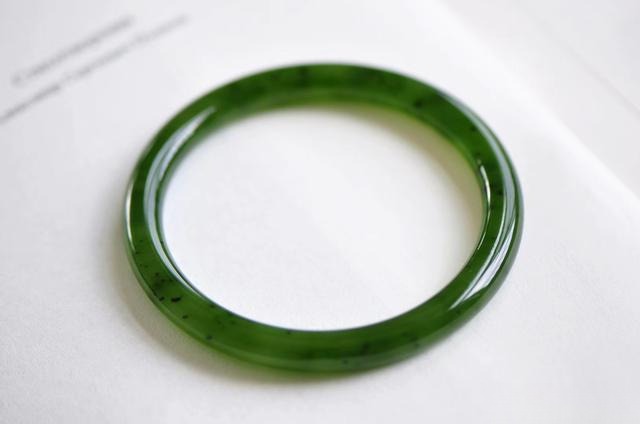
Black spots, usually chromite, are the primary factor that affects a Jasper’s price.
The Clean Premium:
For simple jewelry like bangles or bead bracelets, visible black spots significantly reduce value. Therefore, “eye-clean” stones command a high premium. If you seek a long-term investment or collector’s piece, always prioritize clean material.
Value Opportunity:
Conversely, if you want a stunning piece for everyday wear, selecting Jasper with minor natural spots provides excellent value without compromising beauty.
Turning Imperfections into Art:
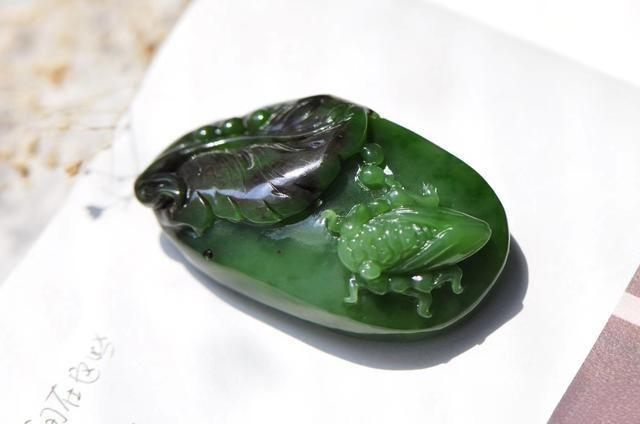
Skilled jade carvers often transform black spots into design features.
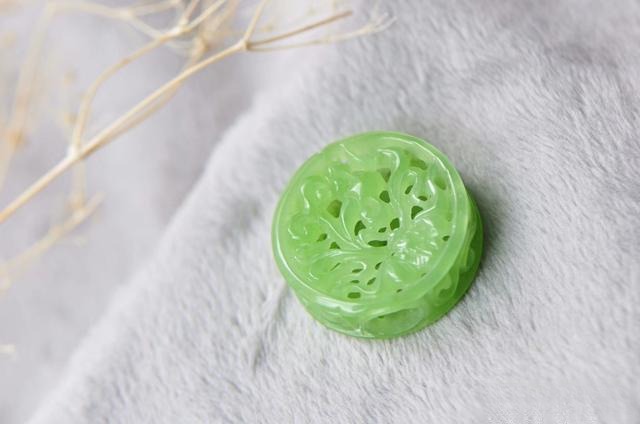
- Hollowing (Lace-work): Carvers remove localized spots by hollowing areas, creating intricate, lace-like patterns.
- Artistic Camouflage: Larger black patches are integrated into the design—like a bird’s wing or a mountain shadow—adding unique character and artistic value that can exceed the raw stone’s base price.
2. The Color Spectrum: From Royal Greens to Pastels
Color is the most immediate factor buyers notice. In the Western market, Nephrite Jasper is categorized by saturation and hue.
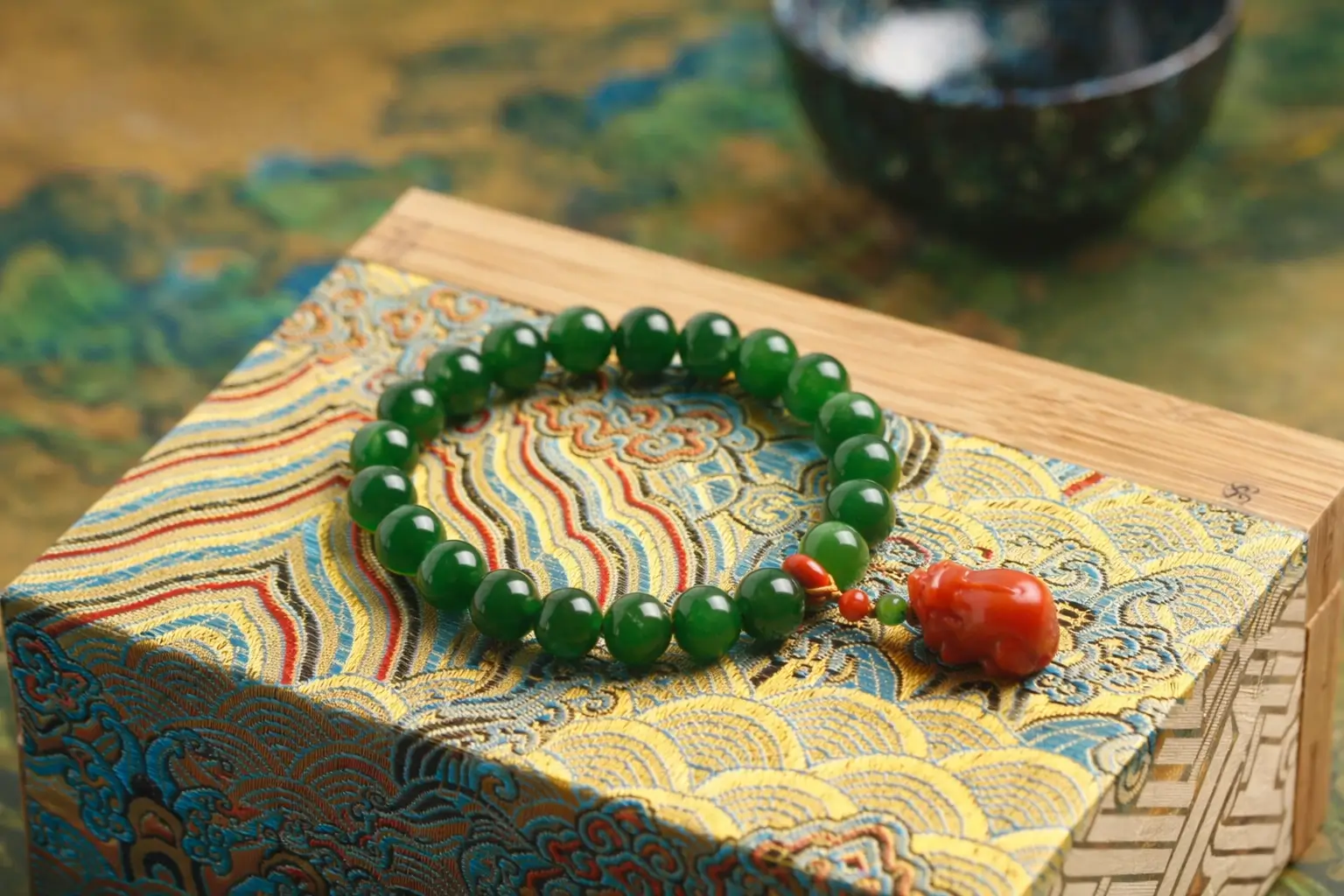
Spinach Green (Deep, Regal, Mature)
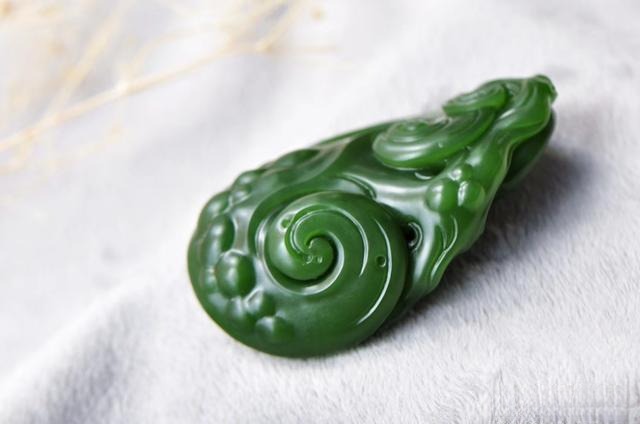
Intense and luxurious, Spinach Green remains the gold standard. However, it is light-sensitive—vivid outdoors, darker indoors. This color suits collectors seeking a classic, sophisticated look.
Bright Green & Apple Green (Vibrant and Youthful)
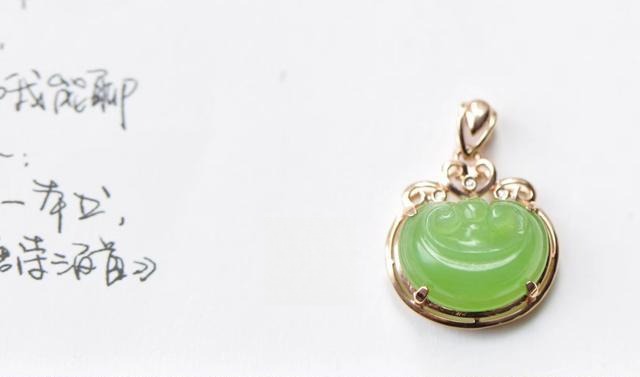
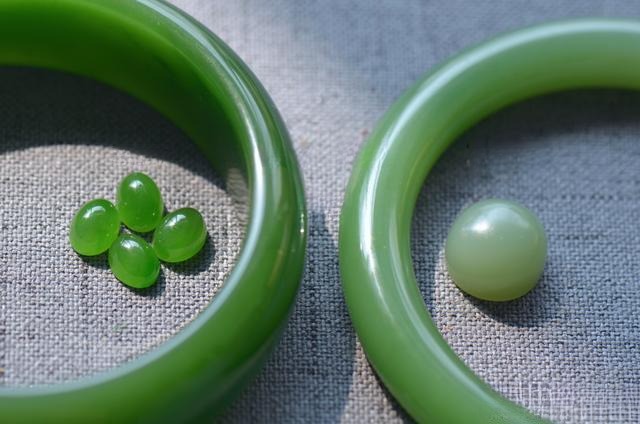
Bright Green, sometimes called “Ice-bottom” in the trade, exhibits a glowing semi-translucency reminiscent of fine Emerald. Apple Green is slightly lighter and trendy but often requires skilled carving to navigate natural inclusions.
Duck Egg Blue & Powder Green (Pastel Modern Favorites)

Previously overlooked, these soft hues are now highly sought after. Their dense, fine structure makes them surprisingly valuable. For example, a Duck Egg Blue bangle priced at $500 USD a decade ago can now reach $4,000–$8,000 USD if it is clean and vivid.
Pro Tip for Online Buyers
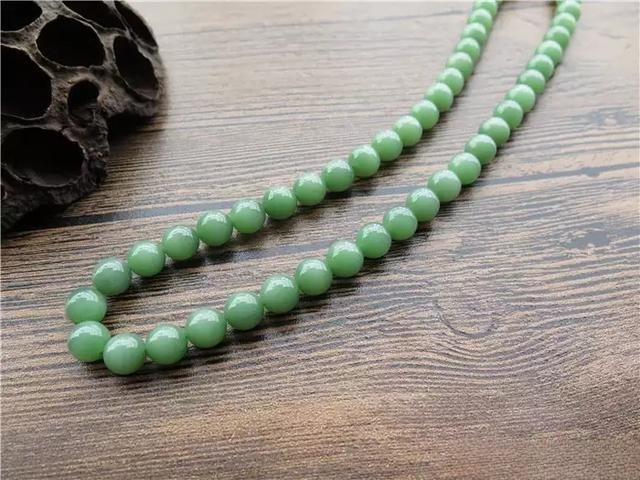
When following the nephrite jade price guide, remember that jasper is light-sensitive. Always request photos in natural sunlight and indoors. If a seller only provides filtered or dim lighting, proceed with caution.
For those who want to go deeper, check out PeonyJewels blog: The Nephrite Deception: Your Expert Guide to Authentic Hetian Jade and Its Natural Imposters. This guide explains how to spot genuine Hetian jade versus common imitators, helping you confidently distinguish high-quality pieces from look-alikes before making a purchase.
3. Fineness and Structure: The Secret to Jasper’s Glow
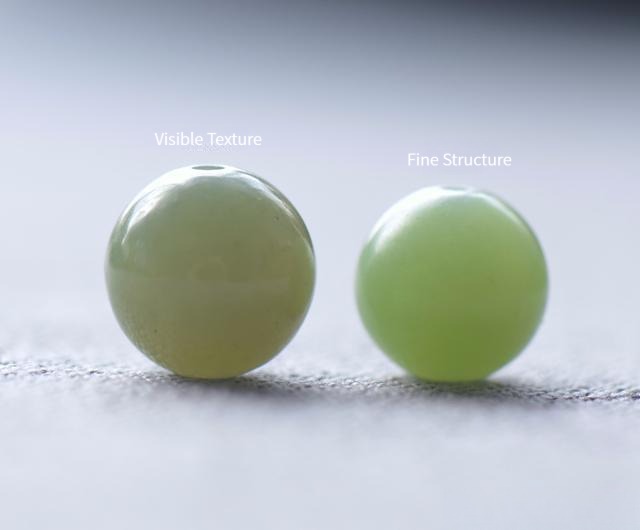
Western buyers often focus on color, but true connoisseurs evaluate Fineness—the tightness of internal crystal fibers.
Understanding Structure:
- Visible Structure: Loose, coarse grains appear like “radish shreds,” reducing visual uniformity.
- No-Structure: Crystals are tightly interlocked, giving the stone a buttery, creamy look. Even under strong light, the surface remains smooth and uniform.
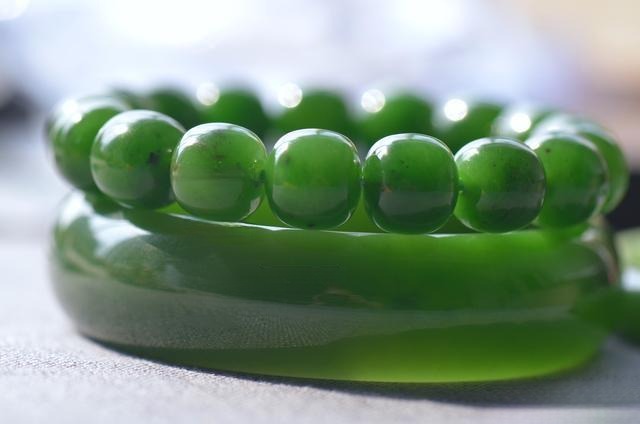
The Trade-off:
There is a natural paradox: the deeper the green, the coarser the structure. Conversely, lighter shades like Duck Egg Blue often have the finest texture. Finding a piece that is both intensely green and structure-less is exceptionally rare and commands a premium.
Golden Rules for Buyers:
- Color uniformity is crucial: even shades fetch higher prices.
- Black spots should be scattered, not clustered.
- Texture defines value: seek smooth, oily luster, not dry or chalky surfaces.
- Beware “too good to be true”: if a vivid green piece is priced far below market expectations, it may be glass or synthetic.
Nephrite Jade Price Guide: The 4-Tier Quality Grading System
In the professional jade market, experts assess Nephrite Jasper (Biyu) based on color purity, uniformity, and saturation. Understanding the four-level grading system helps buyers see why a stone might be priced at $50 or soar to $5,000 USD.
1. Collector Grade: “Imperial Green”
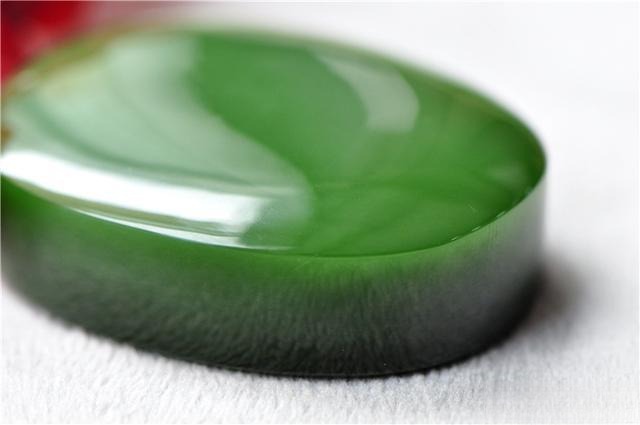
Core Characteristics:
- Deep spinach-green base with vivid bright-green undertones.
- Completely free of inclusions, black spots, or visible color streaks.
- High saturation without appearing dull or gray.
Market Insight:
- Collector-grade Imperial Green is extremely rare, found mostly in elite Russian or Xinjiang deposits.
- Prices can range approximately from $400 to $1,500+ USD per gram, making it the pinnacle of Biyu collecting.
- This grade is ideal for serious investors and museum-quality acquisitions.
Key Takeaway:
Think of Imperial Green as a geological masterpiece—its rarity and flawless presentation make it the ultimate benchmark for Biyu.
2. Premium Grade: “Spinach Green”
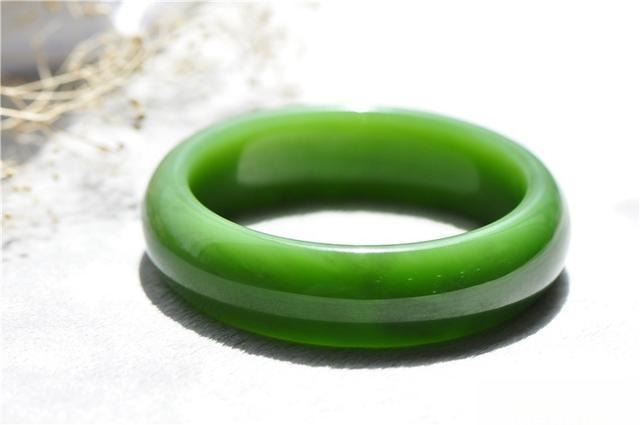
Core Characteristics:
- Rich, thick green reminiscent of mature spinach leaves.
- Allows minimal pin-prick black spots as long as they don’t affect the overall visual appeal.
- Uniform color with subtle banding; visually appealing for high-end jewelry.
Market Insight:
- Premium Spinach Green dominates the luxury jewelry market.
- Russian Spinach Green offers the best value-for-money, priced around $50–$300 USD per gram.
- It combines beauty, structural integrity, and accessibility, making it the top choice for collectors and fashion-conscious buyers.
Key Takeaway:
This grade balances rarity, elegance, and affordability, offering a luxurious look without the extreme investment of Imperial Green.
3. Commercial Grade: “Bright & Apple Green”
Core Characteristics:
- Lighter, fresher shades than Spinach Green. Bright Green is vibrant and eye-catching; Apple Green is soft, delicate, and trendy.
- May feature scattered black spots or slight color variations (color bands).
- Saturation is moderate, appealing to a broad audience.
Market Insight:
- Ideal for everyday wear and stylish accessories.
- Prices typically range from $10–$50 USD per gram.
- Popular for buyers seeking lively color and decent quality at a reasonable price.
Key Takeaway:
Commercial-grade Biyu offers a perfect entry point for newcomers and a practical choice for fashion jewelry.
4. Entry Grade: “Pale & Gray-Green”
Core Characteristics:
- Pale green or grayish tones with low saturation.
- Frequent and noticeable black spots; color may appear uneven.
- Less visually uniform, often lacking vibrancy.
Market Insight:
- Entry-grade stones are priced by the piece rather than by gram, often under $100 USD per item.
- Low investment value but suitable for basic fashion ornaments or practice materials for carving.
Key Takeaway:
This grade offers accessibility and natural energy but does not deliver high aesthetic or collector value.
Critical Market Factors to Keep in Mind
Beyond the four-tier grading system, two key factors significantly influence price:
1. The Black Spot Rule
- Within the same grade, the price hierarchy is: No black spots > Sparse black spots > Dense black spots.
- These spots are natural Chromite inclusions. Truly flawless, high-end stones are extremely rare, making them highly prized.
2. Origin Connection
- Russian Material: Dominates the Imperial and Spinach Green categories due to superior color purity and clean structure.
- Xinjiang Material: Often carries gray tones and more frequent inclusions, but prized for its soulful, river-tumbled texture.
- Qinghai Material: Usually lighter in tone, specializing in Bright Green shades suitable for daily wear and carving projects.
Nephrite Jade Price Guide Summary
By understanding color, uniformity, saturation, inclusions, and origin, buyers can make informed decisions and avoid overpaying for low-quality jade. Remember: the rarity, structure, and aesthetic harmony of a piece ultimately define its market value.
PeonyJewels: Authentic Nephrite Jade and Custom Jewelry
In conclusion, if you come across a “bargain” spinach green Hetian nephrite bracelet or an alleged imperial green jadeite bangle priced suspiciously low, it’s best to smile and walk away. While it can be fun to collect samples for study, true value requires careful selection.
At PeonyJewels, we focus on authenticity and craftsmanship. Every piece is carefully curated to ensure genuine, high-quality jade that reflects both natural beauty and lasting value. Moreover, we offer custom jewelry services, allowing you to design one-of-a-kind pieces tailored to your taste and style.
In addition, our original handmade vintage earrings and unique artisan creations are designed for collectors and everyday wear alike. Each item blends classic elegance with modern sensibility, making it easy to enjoy authentic craftsmanship in your personal collection.
By choosing PeonyJewels, you invest in quality and originality, ensuring every piece you purchase is both meaningful and enduring. Explore our collection today and experience jewelry designed to delight and last a lifetime.