The Ultimate Opal Buying & Investment Guide 2026
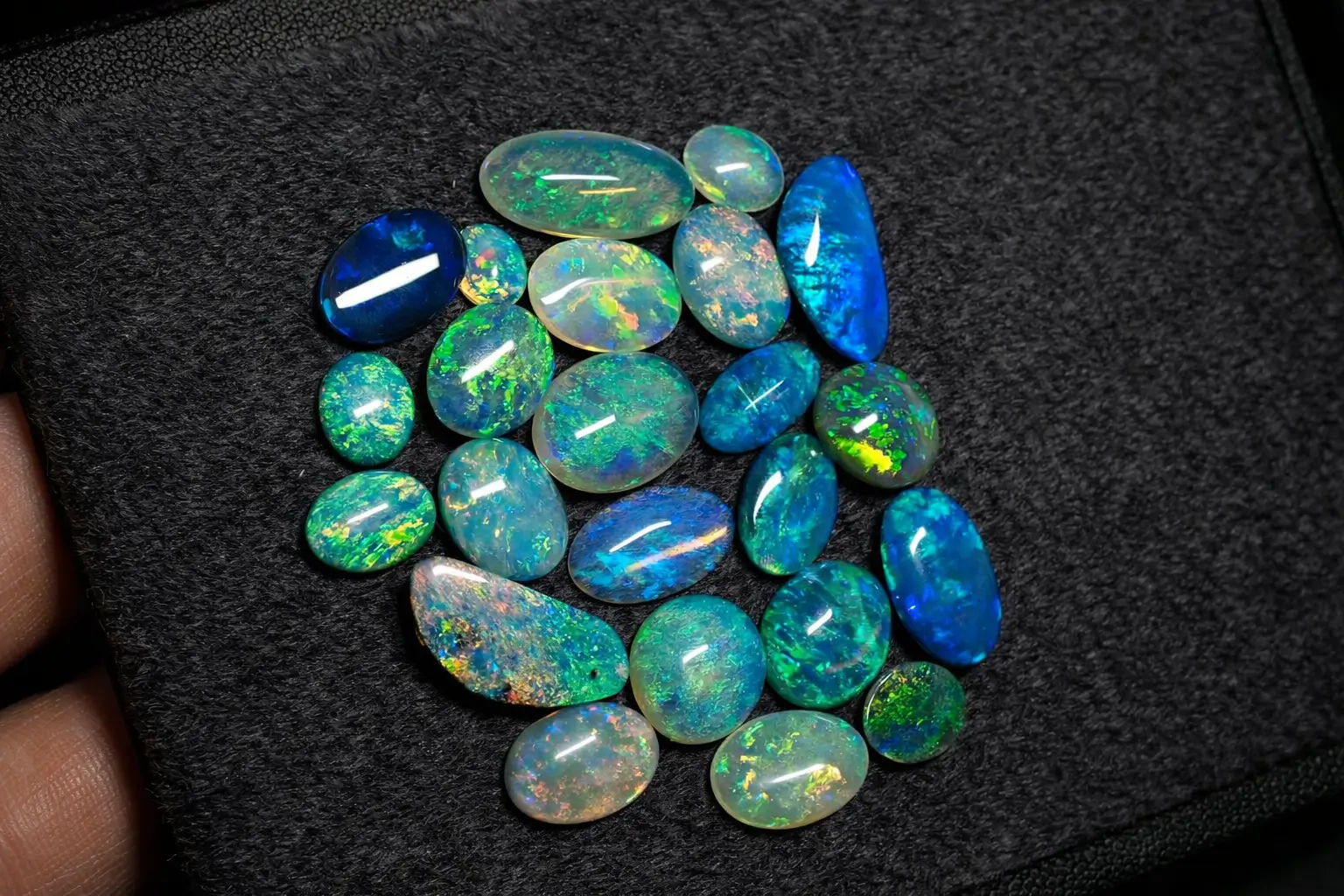
For centuries, opal has captivated collectors—from the Roman scholar Pliny the Elder to modern connoisseurs. Yet for many buyers, navigating the opal market still feels confusing. In this Opal Buying Guide 2026, we answer the questions most jewelry lovers ask before purchasing.
Why does one opal cost under $100 while another sells for $20,000?
Can opals truly ‘lose water’ or crack over time?
How can you tell a high-end Australian Black Opal from a more affordable Ethiopian opal?
Whether you are buying your first October birthstone or evaluating an opal for long-term value, this guide explains opal types, origins, pricing logic, and essential care—so you can choose with confidence and enjoy its beauty for a lifetime.
📑Opal Buying Guide 2026 – Table of Contents
- What Is Opal? A Professional Gemological Overview
- Key Gemological Properties
- The Anatomy of Color: Body Tone vs. Play-of-Color
- Body Tone: The Visual Foundation
- Play-of-Color: Opal’s Defining Optical Phenomenon
- Core Categories by Body Tone
- Global Origins: Where Opal Excellence Is Mined
- Australia: Stability and Investment Value
- Mexico: Volcanic Fire and Inner Glow
- Ethiopia: Modern Brilliance and Hydrophane Considerations
- Australian Opals: The Global Benchmark of Quality
- Black Opal from Lightning Ridge
- Gemological profile
- Rarity, value, and market position
- Best use and audience
- White Opal from Coober Pedy
- Identification and Visual Characteristics
- Price Range and Wearability
- Best use and audience
- Crystal Opal: Depth and Floating Fire
- Origin and Body Tone Variation
- Market Position and Value
- Best use and audience
- Boulder Opal (Ironstone)
- Formation & Visual Character
- Major Types of Boulder Opal
- Fossil Opal: Nature Preserved
- Black Opal from Lightning Ridge
- Mexican Fire Opal: Volcanic Warmth and Pure Radiance
- Fire Opal Without Play-of-Color
- Precious Fire Opal With Play-of-Color
- Valuation hierarchy
- Market pricing and ideal buyers
- African Opals: Ethiopian Welo Opal and Hydrophane Characteristics
- Visual traits and clarity
- Hydrophane behavior and care requirements
- Pricing and target buyers
- Treated, Assembled, and Synthetic Opals: How to Identify Them
- Doublets and Triplets
- Sugar–Acid Treated Opal
- Synthetic Opal
- Practical identification tips
- Natural vs. Synthetic Opal: A Practical Identification Guide
- Color structure clues
- Side-view inspection
- Depth, surface, and touch
- Observing color movement
- 2026 Opal Price Guide & Investment Perspective
- The investment case for Australian Black Opal
- 2026 Global Price Benchmark (USD per carat)
- Why Prices Scale Non-Linearly
- Key takeaways for buyers
- Opal Buying Guide & Appreciation
- Recommendations for investment, collecting, and daily wear
- How to appreciate opal: lighting, rotation, angles
- The Definitive Opal Care Guide
- Cleaning and storage
- The “Three Fears”: Dryness, Heat, Impact
- Best practices for longevity
- Conclusion: Finding Your Perfect Piece
1. What Is Opal? A Professional Gemological Overview
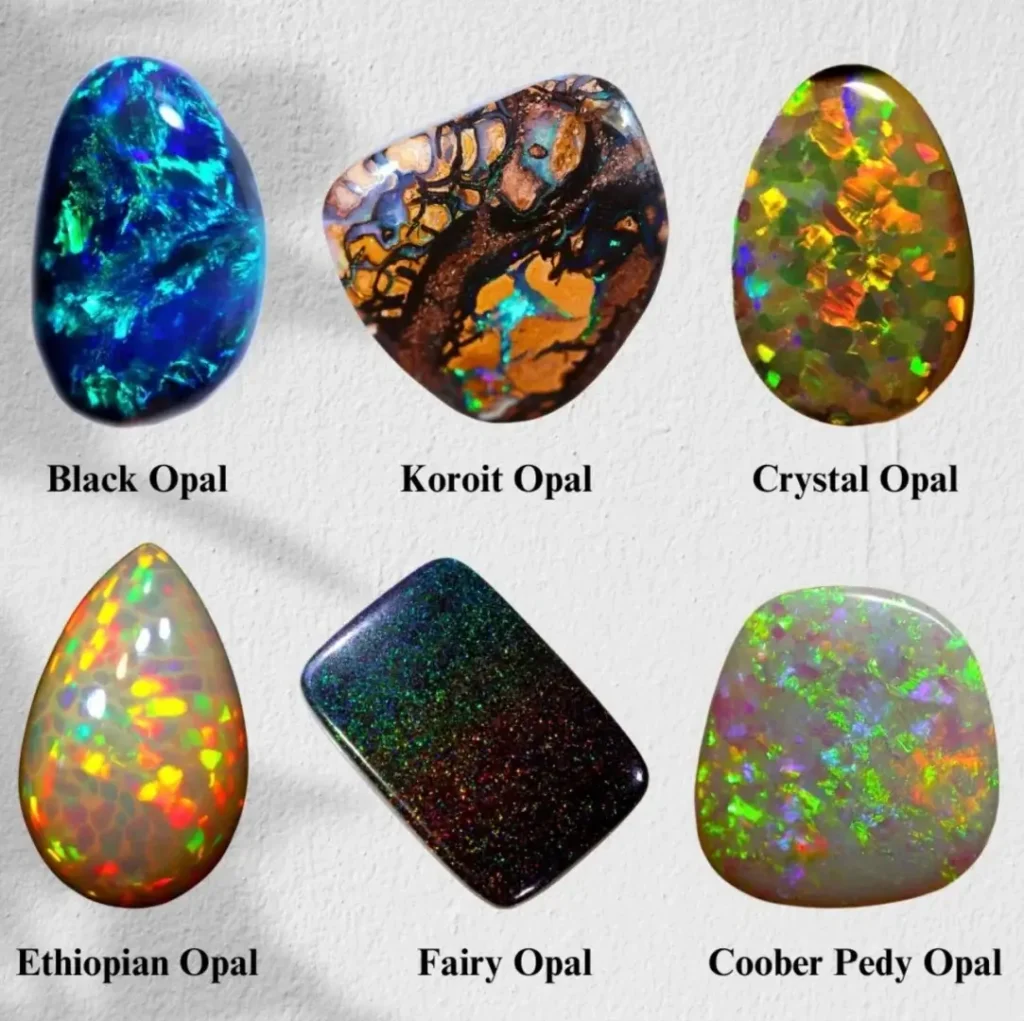
Unlike crystalline gemstones such as diamonds or sapphires, opal is a natural hydrated silica mineraloid rather than a true crystal. This unique internal structure gives opal its mesmerizing “play-of-color” while also making it inherently fragile—a factor that directly affects its appearance, value, and care requirements.
Opal’s internal water content is fundamental to its optical performance, setting it apart from nearly all other gemstones and giving it a distinct “living” quality.
Key Gemological Properties
Understanding opal begins with its core properties. The table below summarizes the essential gemological characteristics:
| Property | Description |
|---|---|
| Mineral Classification | Opal (hydrated silica mineraloid) |
| Chemical Composition | SiO₂·nH₂O |
| Water Content | Typically 5–10%, up to 20% in some varieties |
| Transparency | Semi-transparent to opaque |
| Common Body Colors | White, gray, blue, black |
| Refractive Index | 1.37 – 1.47 |
| Density | 1.9 – 2.3 g/cm³ |
| Mohs Hardness | 5.5 – 6.5 |
Key Takeaway:
Opal is a natural silica gel. Its stability depends on maintaining the balance of hydration, which is crucial to preserving its vibrant play-of-color over time.
The Anatomy of Color: Body Tone vs. Play-of-Color
Opal’s beauty comes from the interaction of two distinct elements: body tone and play-of-color. Distinguishing between these factors is essential when evaluating quality, rarity, and market value.
Body Tone: The Visual Foundation
Definition: Body tone refers to the underlying base color of the opal material, formed during geological growth by trace elements in the surrounding environment—not surface impurities.
Formation Examples:
- Dark gray to black tones often develop in iron-rich environments.
- Subtle greenish hints may appear in nickel-bearing material.
- Light-colored silica hosts produce white or milky bases.
Why it Matters:
Body tone acts as the visual backdrop for play-of-color. Darker tones enhance contrast, making spectral colors appear more vivid and dynamic—a key reason black opals command premium prices.
Play-of-Color: Opal’s Defining Optical Phenomenon
Definition: Play-of-color is the signature effect that distinguishes precious opal from common opal.
The Science:
Microscopic silica spheres (150–460 nanometers in diameter) arrange in a regular, three-dimensional grid. As light enters the stone, it diffracts between these spheres, producing flashes of color that shift with viewing angle and movement.
The Effect:
Because this phenomenon originates within the stone, opal displays a characteristic “living” quality—its colors seem to dance and shimmer, creating depth and intrigue not found in crystalline gemstones.
Core Categories by Body Tone
From a gemological and trade perspective, opals are commonly grouped into three main categories based on body tone:
| Category | Body Tone | Key Features |
|---|---|---|
| Black Opal | Dark gray to black | Provides the highest contrast for play-of-color; typically the rarest and most valuable. |
| White Opal | Light or milky | Offers a softer, classic aesthetic; play-of-color is generally subtler. |
| Fire Opal | Orange to red | Often transparent; valued for its warm body color even if play-of-color is minimal. |
Note:
Crystal opals can technically fall under either black or white opal categories, depending on their body tone. Their pricing usually sits between black and white opals, balancing brilliance with relative affordability.
Summary
Opal is unlike any other gemstone. Its hydrated silica structure gives it both mesmerizing beauty and delicate fragility. By understanding body tone, play-of-color, and core gemological properties, buyers and collectors can make informed decisions, appreciate its unique optical effects, and care for their stones properly.
2. Global Origins: Where Opal Excellence Is Mined
Opal occurs in many parts of the world, but the modern fine jewelry market is shaped primarily by three major producing regions. Each region forms opal under different geological conditions, resulting in distinct visual traits, stability profiles, and long-term wear characteristics—factors that directly influence pricing, collectability, and care requirements.
Rather than ranking opals by beauty alone, professionals evaluate origin as a structural foundation for understanding how an opal will perform over time.
Australia: Stability and Investment Value
Australia remains the undisputed reference point for precious opal worldwide.
- Industry benchmark for quality, durability, and long-term stability
- Renowned for consistent body tone, strong contrast, and reliable play-of-color
- Source of Black Opal, White Opal, Crystal Opal, and Boulder (Ironstone) Opal
Australian opals are widely regarded as the gold standard for collectors and fine jewelry, especially where longevity and investment value matter.
Mexico: Volcanic Fire and Inner Glow
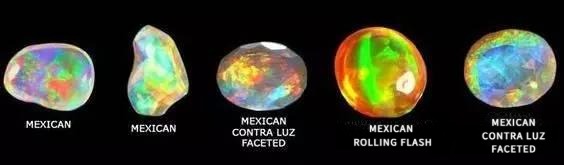
Mexican opals form in volcanic environments, giving them a distinctly different visual character.
- Celebrated for vivid body color and natural transparency
- Fire Opal and Precious Fire Opal define the region
- Emphasis on internal glow and saturation rather than contrast-driven color play
These opals appeal to buyers drawn to warmth, individuality, and expressive color rather than traditional black-and-white contrast.
Ethiopia: Modern Brilliance and Hydrophane Considerations
Ethiopia’s Welo region has emerged as a major opal source in the 21st century.
- Known for high transparency and bright, floating color play
- Many stones display hydrophane behavior, absorbing and releasing water
- Offers strong visual impact at more accessible price levels
While visually striking, Ethiopian opals require a clearer understanding of stability and care, making origin awareness especially important for buyers.
Transitional Insight:
Understanding these regional differences provides the foundation for evaluating opal quality, pricing logic, and long-term wearability. In the sections below, we explore each origin in detail—examining how geology translates into beauty, value, and care in real-world buying decisions.
3. Australian Opals: The Global Benchmark of Quality
Australia stands as the world’s most important opal-producing country and is often described as “a nation sitting on a mine cart.” Nearly every opal variety recognized in fine jewelry—Black Opal, White Opal, Crystal Opal, and Boulder (Ironstone) Opal—originates from Australian soil.
What truly distinguishes Australian opals is not appearance alone, but geological stability. Compared with opals from newer deposits, Australian material shows low water sensitivity, reliable color retention, and long-term durability, making it the global standard for collectors, investors, and high-end jewelry designers.
Black Opal from Lightning Ridge: The Crown Jewel of Opals
Among all opal varieties, Australian Black Opal occupies the highest tier of rarity and value.
Lightning Ridge, located in northern New South Wales near the Queensland border, has produced the world’s finest black opals since commercial mining began in 1903. Today, it is universally recognized as the capital of Black Opal.
Gemological Profile of Black Opal
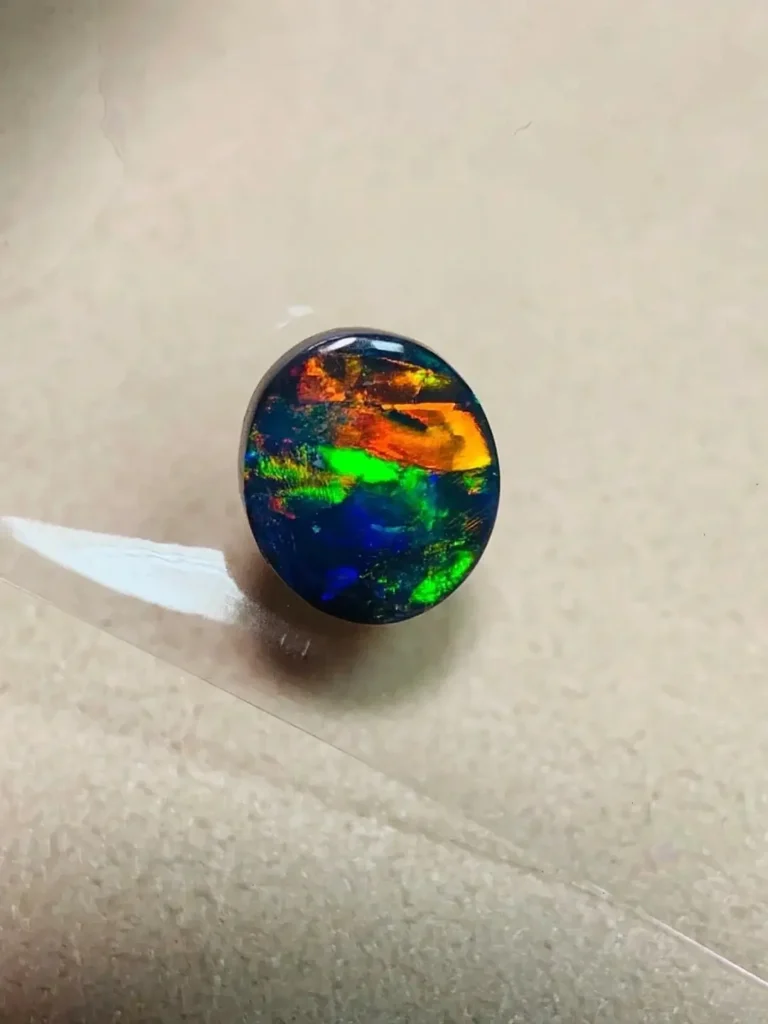
In gemological terms, Black Opal refers to opal with a dark body tone, ranging from true black to deep gray, dark blue, dark green, or brown.
Key characteristics include:
- Water content typically between 6–10%
- Amorphous (non-crystalline) internal structure
- Vitreous luster
- Semi-transparent to opaque appearance
- Strong play-of-color intensified by the dark background
Because darker body tones create higher contrast, spectral colors appear brighter, sharper, and more electric than in lighter opals.
Rarity, Value, and Market Position
Natural Black Opal is widely regarded as the rarest and most valuable opal variety.
Exceptional stones—particularly those displaying rare Harlequin (mosaic) patterns—rank among the most expensive colored gemstones in the world, alongside fine rubies and emeralds.
Even high-quality Black Opals weighing less than one carat are commonly priced in the thousands of U.S. dollars per carat, reflecting both scarcity and sustained collector demand.
Best use and audience
Australian Black Opal is best suited for:
- Serious collectors and gem investors
- Connoisseurs seeking long-term value and geological stability
- High-end fine jewelry designed for generational wear
White Opal from Coober Pedy: The Classic and Accessible Choice
White Opal represents the most familiar and widely worn expression of Australian opal.
Coober Pedy—often referred to as “the Opal Capital of the World”—is the primary source of White and Crystal Opals, producing material prized for its lighter body tone and softer visual contrast.
Formed in Australia’s arid desert environment, Coober Pedy opals reflect stable geological conditions, making them suitable for both daily wear and fine jewelry.
Identification and Visual Characteristics
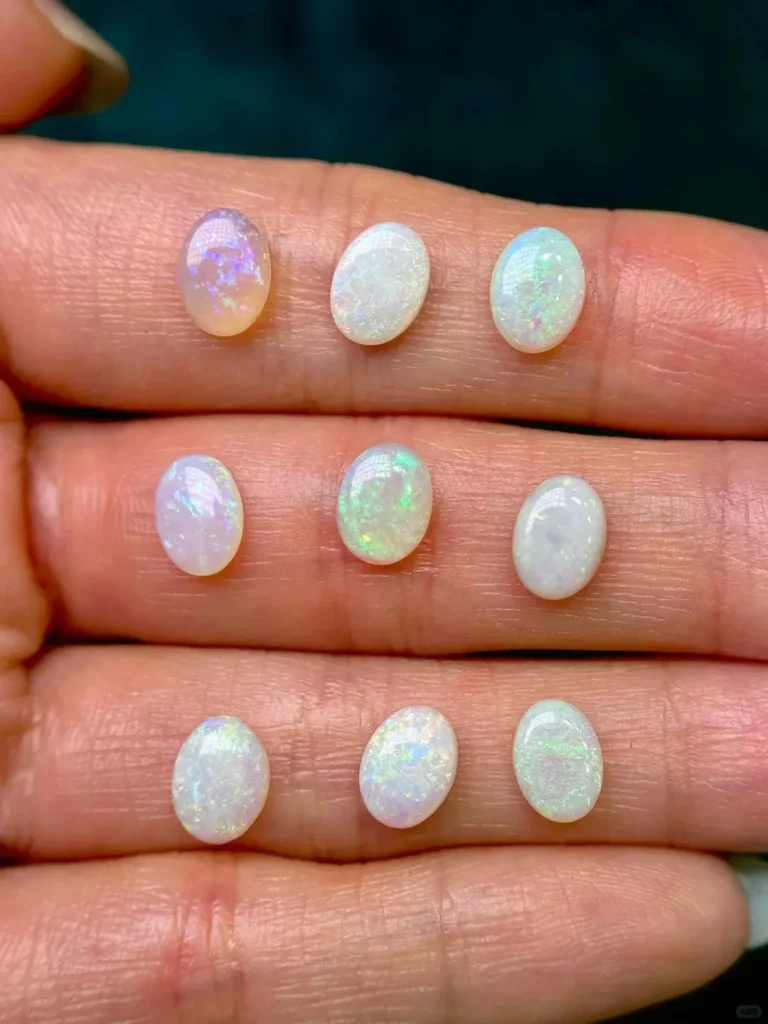
White Opal typically displays a light body tone, which serves as a gentle backdrop for play-of-color rather than a high-contrast stage.
Key identification features include:
- White, milky, or light gray body color
- Transparency ranging from opaque to semi-transparent
- Visible play-of-color or subtle iridescent flashes
Important clarification:
The distinction between White Opal and Black Opal depends entirely on body tone, not origin, transparency, or brightness. Any opal with a light base color is classified as White Opal under gemological standards.
Price Range and Wearability
White Opal prices vary widely—from under USD $100 to over USD $10,000—depending on:
- Brightness and saturation of play-of-color
- Pattern definition
- Overall clarity and cut quality
Rather than a strict price boundary, White and Black Opals exist on a continuous value spectrum, with darker body tones gradually commanding higher premiums.
Best use and audience
White Opal is ideal for:
- First-time opal buyers
- Daily or frequent wear
- Elegant, understated jewelry designs
Its softer contrast and generally accessible pricing make it one of the most versatile opal varieties on the market.
Crystal Opal: Floating Fire Within the Stone
Crystal Opal is prized for its transparent to semi-transparent body, allowing play-of-color to appear as though it is suspended within the stone itself. This creates exceptional visual depth and a refined, luminous effect.
Unlike White Opal, where color appears closer to the surface, Crystal Opal draws the viewer inward—making it especially popular in high-end jewelry design.
Origin and Body Tone Variation
Australian Crystal Opals are primarily found in two regions:
- South Australia — lighter body tones with softer contrast
- Lightning Ridge — darker body tones with stronger contrast
Because classification depends on body tone rather than transparency, Crystal Opal can fall under either White Opal or Black Opal categories.
Market Position and Value
Crystal Opal prices typically sit between White and Black Opals, offering a balance of:
- Vivid brilliance
- Visual depth
- Relative accessibility
This middle positioning makes Crystal Opal attractive to buyers who want stronger visual impact than White Opal, without entering the highest Black Opal price tier.
Best use and audience
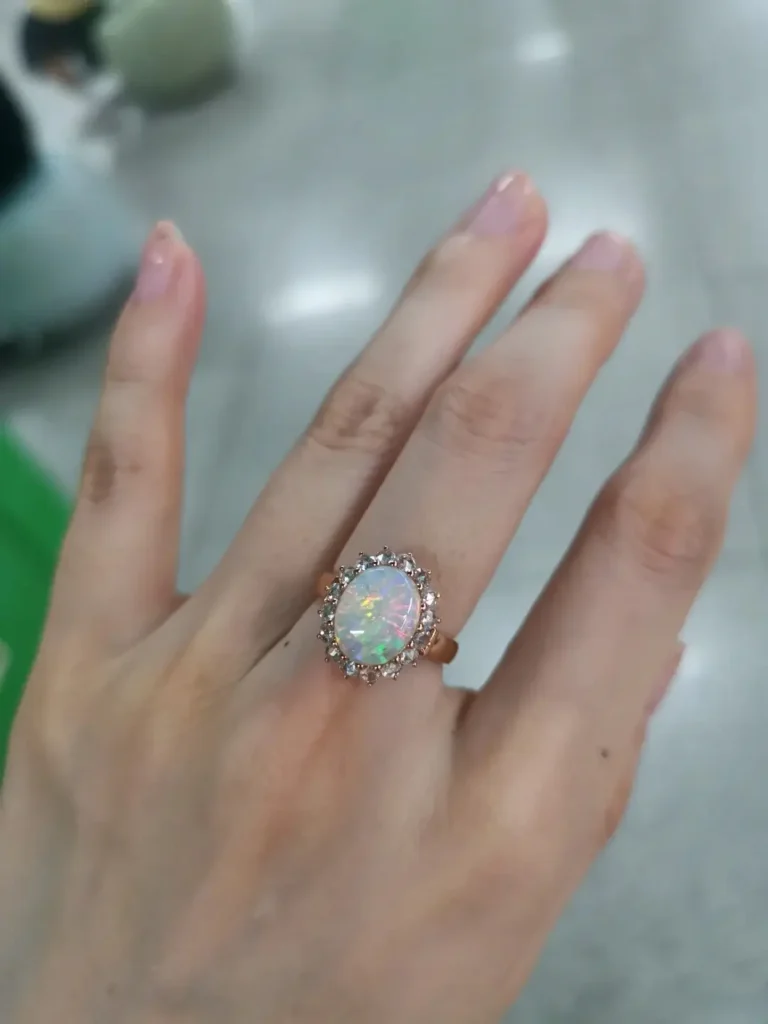
Crystal Opal is best suited for:
- High-end and bespoke jewelry designs
- Buyers who value depth, light interaction, and elegance
- Collectors seeking refined beauty without extreme rarity premiums
Boulder Opal (Ironstone Opal): Raw Power from Queensland
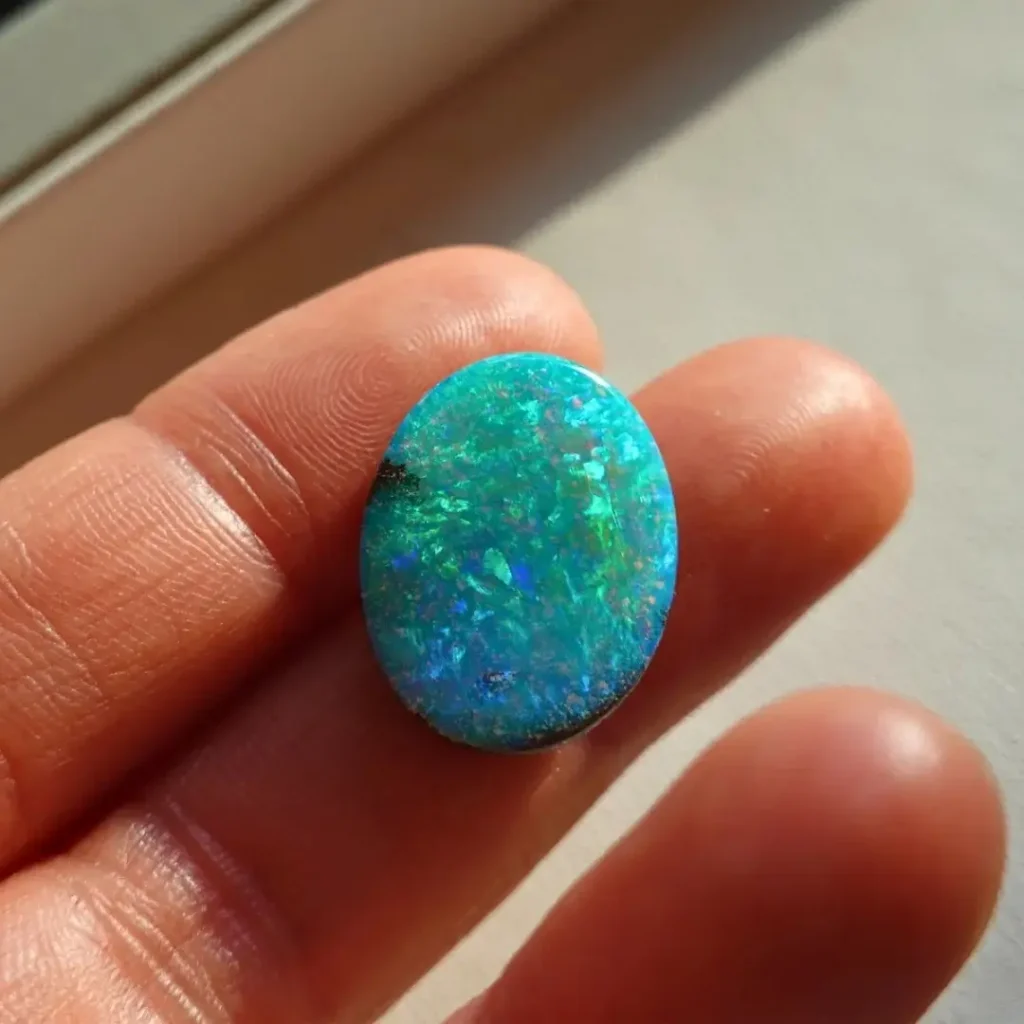
If Lightning Ridge represents the pinnacle of Black Opal, Queensland is globally synonymous with Boulder Opal, also known as Ironstone Opal.
Central Queensland hosts more than a dozen major opal fields, spread across ancient desert sandstone formations formed hundreds of millions of years ago. These opal-bearing layers cover over 300,000 square kilometers, making Queensland one of the largest opal-producing regions on Earth.
As a result, the area primarily yields Boulder Opal—stones prized not for delicacy, but for their raw, untamed, and geological character.
Formation & Visual Character
Boulder Opal forms as thin seams or veins of precious opal permanently bonded to ironstone. Because the opal layer cannot be separated from its host rock, cutters work with both materials together—hence the trade name Ironstone Opal.
Importantly, the naturally dark ironstone base dramatically enhances color contrast.
Even extremely thin opal layers can display intense, vivid play-of-color, giving Boulder Opal a bold and sculptural appearance unmatched by other opal types.
Major Types of Boulder Opal
Layered Boulder Opal
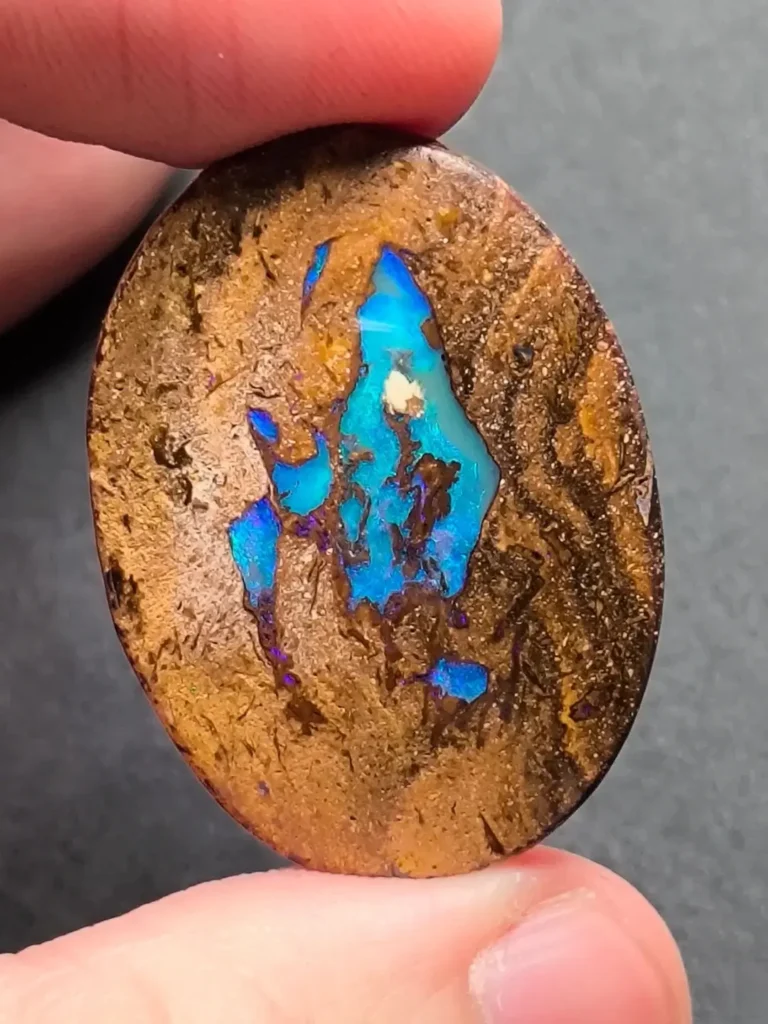
Opal seams appear in wavy or folded layers, sandwiched between ironstone strata—often forming dramatic, natural “landscape” patterns.
Fossil Boulder Opal (Wood Replacement)
Formed when ancient wood fossils are replaced by opal, these stones retain fingerprint-like growth textures, combining organic structure with vibrant color.
Vein Boulder Opal
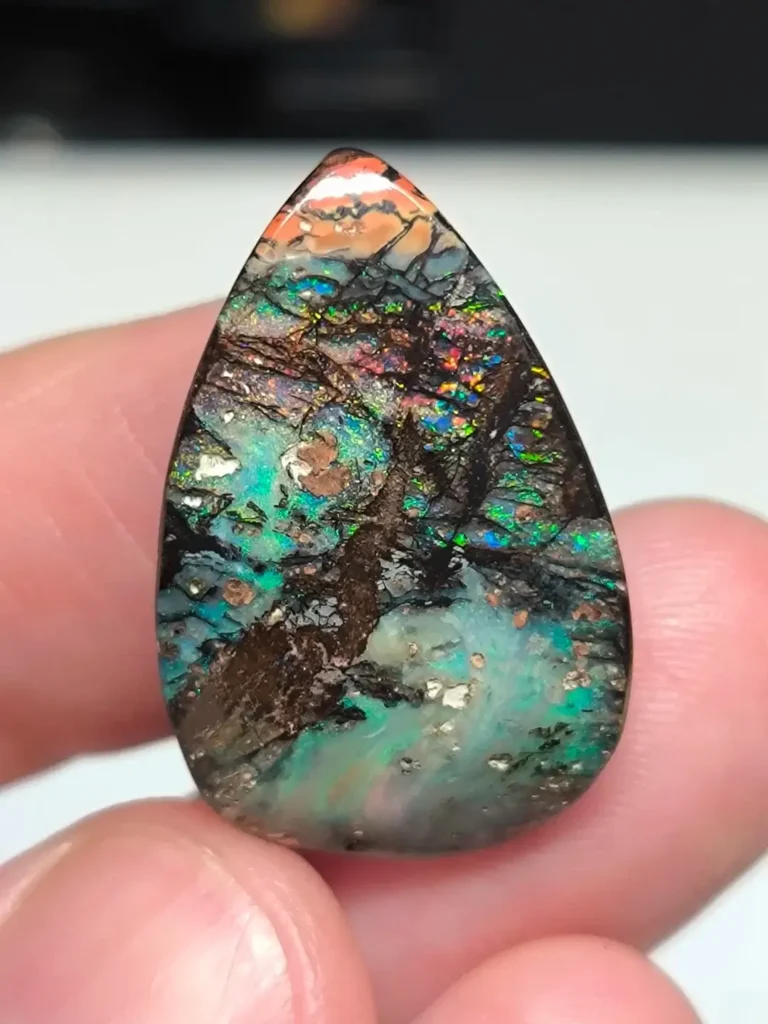
Here, opal penetrates the ironstone in branching, web-like, or dendritic patterns.
These highly artistic stones are especially prized by collectors for their one-of-a-kind, almost abstract appearance.
Pricing Structure & Market Logic
Unlike most opals, Boulder Opal is typically priced per piece rather than per carat.
Value is assessed holistically, based on:
- Thickness of the opal color layer
- Brightness and pattern quality
- Overall size, composition, and visual balance
Prices range from under USD $100 for common pieces to tens of thousands of dollars for rare and exceptional Boulder Opals.
Best Suited For
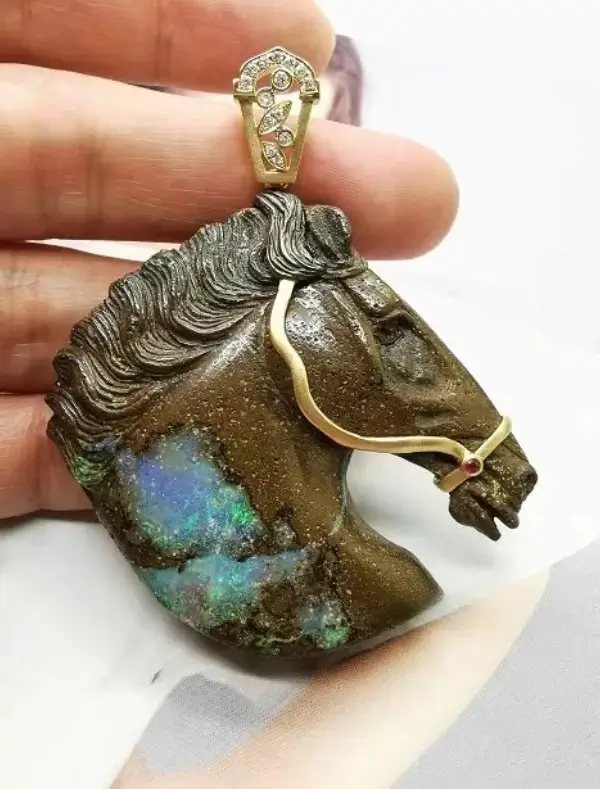
Collectors, designers, and experienced buyers who value natural structure, raw beauty, and sculptural design over uniform perfection.
Fossil Opal: Nature Preserved in Fire
By contrast, Fossil Opal represents one of the rarest intersections between gemology and paleontology.
Fossil Opal forms when ancient shells, bones, or plant material are gradually replaced by opal, preserving both internal biological structures and external surface patterns, while simultaneously displaying genuine play-of-color.
Shell fossils are particularly well known. Once cut and polished, they are often referred to as Shell Opal, prized for both their scientific significance and visual complexity.
Because true fossil opal requires highly specific geological conditions, it remains extremely rare and highly collectible.
Best Suited For
Advanced collectors, museums, and buyers seeking museum-grade specimens that capture deep geological time in gemstone form.
4. Mexican Fire Opal: Volcanic Warmth and Pure Radiance
While Australian opals are defined by their deep contrast, Mexican Fire Opals offer a completely different aesthetic: transparency, glowing body color, and volcanic energy. Formed in the silica-rich rhyolite of ancient volcanoes, these stones are prized for their warm, flame-like hues that seem to glow from within.
Mexican Fire Opal: Pure Flame to Subtle Play-of-Color
Mexican Fire Opal is defined first by color and transparency, not by play-of-color alone.
Unlike Australian opals, where contrast dominates value, Fire Opal follows a body-color–driven value logic, with play-of-color acting as a rare and powerful multiplier rather than a requirement.
From a gemological perspective, Fire Opal exists on a continuous spectrum, ranging from pure, transparent flame-colored stones to rare examples displaying subtle but vivid internal color play.
Two Visual Expressions of Fire Opal (One Unified Category)
Rather than treating Fire Opal as two unrelated gemstones, professionals recognize two expressions within the same Fire Opal family, distinguished by color behavior and optical structure.
1. Fire Opal Without Play-of-Color — Pure Flame Expression
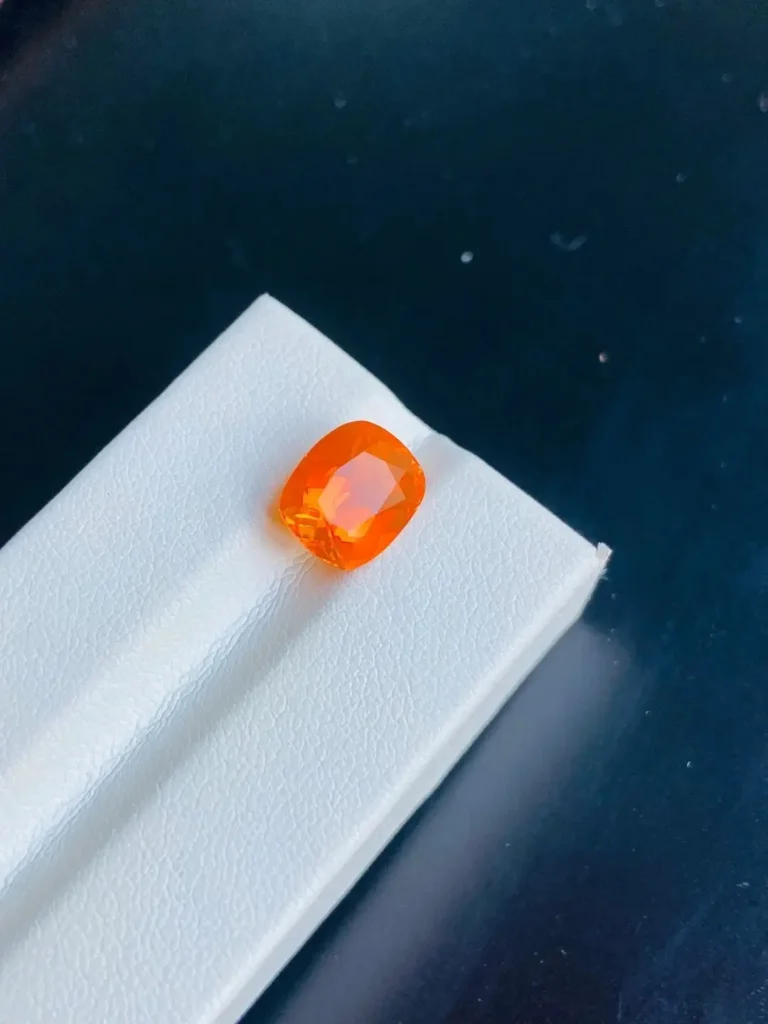
This is the most common and classic form of Fire Opal.
Key visual traits:
- Transparent to semi-transparent body
- Clean, vivid body color without spectral flashes
- Glassy to vitreous luster
Color range (value-driven):
- Deep red (most valuable, often described as “burning flame”)
- Orange-red
- Bright orange
- Golden yellow (more affordable)
Quality evaluation focuses on:
- Color saturation and uniformity (primary)
- High transparency
- Absence of cracks, inclusions, or cloudiness
In the Fire Opal market, color depth outweighs all other factors.
A richly saturated red stone can significantly outperform a larger but paler specimen in value.
Market note:
Even without play-of-color, premium Fire Opals above 5 carats with high transparency and strong red tones hold collector appeal. Stones exceeding 10 carats are considered rare.
2. Fire Opal With Play-of-Color — Precious Fire Opal (Rare Enhancement)
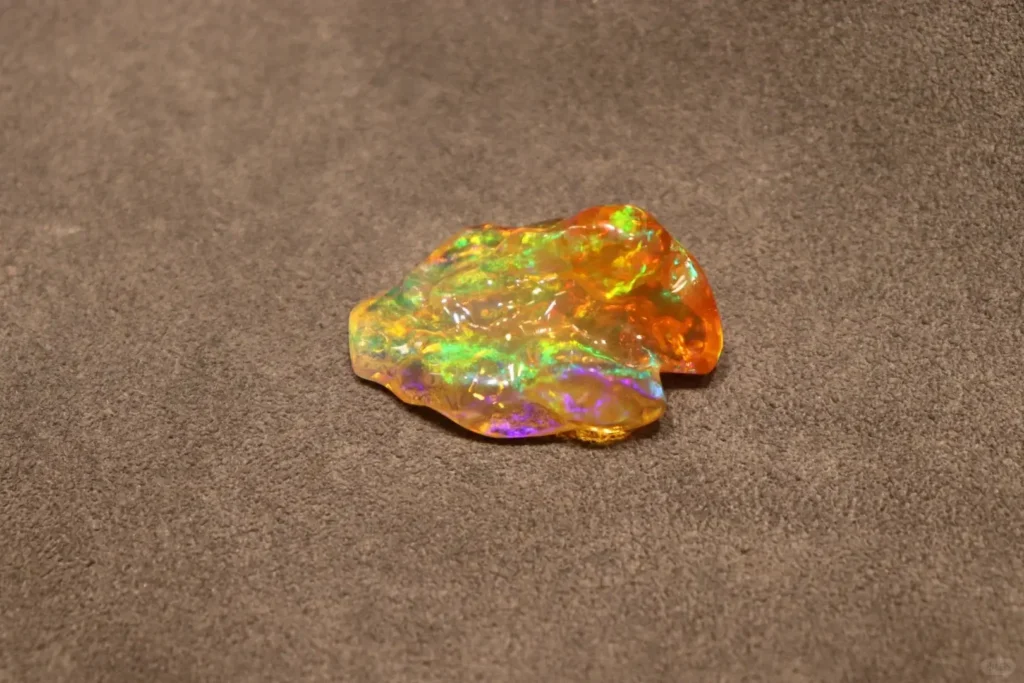
A small percentage of Fire Opals display genuine play-of-color layered within their transparent body. These are classified as Precious Fire Opals.
Rarity insight:
Only 10–15% of Fire Opals show visible play-of-color, and most of it appears in red or orange spectral flashes, rather than full rainbow patterns.
Defining characteristics:
- Transparent to semi-transparent flame-colored body
- Internal flashes of color that move with light and angle
- Often described as a “flowing flame” or “liquid fire” effect
Value multipliers include:
- Brightness of play-of-color
- Number of visible colors (red-based flashes are most prized)
- Coverage area
→ ≥30% color coverage is considered top-tier - Retention of high transparency and clean structure
When play-of-color appears without sacrificing body color purity or clarity, value can double or increase exponentially, especially in stones over 5 carats.
How Fire Opal Is Valued: A Clear Hierarchy
Across all Fire Opals, professionals evaluate quality in this order:
- Body color depth (red > orange-red > orange > yellow)
- Color saturation and evenness
- Transparency
- Structural integrity (no cracks or haze)
- Presence and quality of play-of-color (rare bonus, not a requirement)
This hierarchy explains why a non-play Fire Opal can still outperform a poorly saturated Precious Fire Opal in both beauty and price.
Price Positioning & Market Reality
Because Fire Opal does not rely solely on play-of-color, it remains one of the most accessible high-impact opals on the market.
- Entry to Commercial Grade (Yellow to Orange): > $20 – $100 per carat.
- Fine Quality (Intense Red, High Transparency): > $150 – $400 per carat. (Exceptional specimens over 10 carats may command $500+).
- Precious Fire Opals (With Strong Play-of-Color): > $300 – $1,200+ per carat. Top-tier collector stones with “Red-on-Red” fire can exceed $2,500 per carat in high-end boutiques.
Larger stones increase in value non-linearly, as size and color purity become increasingly rare.
Who Fire Opal Is Best For
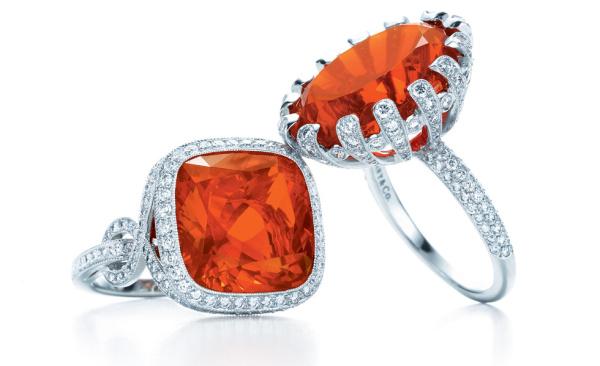
Fire Opal is ideal for buyers who:
Want a statement gemstone with strong visual presencena
Prefer bold color over contrast-heavy sparkle
Appreciate transparency and inner glow
Seek individuality rather than traditional black–white opal aesthetics
5. African Opals: Ethiopian Welo Opal and Hydrophane Characteristics
African opals, commonly referred to as Ethiopian opals, are primarily mined in the Welo (Wollo) region of Ethiopia. Over the past two decades, Welo Opal has become one of the most visible opal varieties in the global jewelry market—valued for its brightness, transparency, and accessible pricing.
However, these opals differ fundamentally from Australian material in structure and long-term behavior. Understanding their hydrophane nature is essential before buying.
Ethiopian Welo Opal: Bright, Clean, and Visually Striking
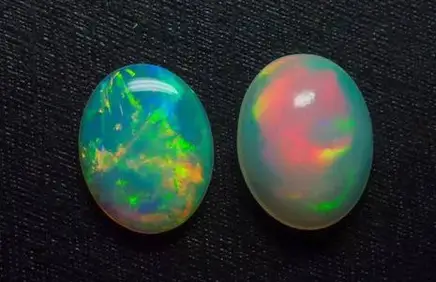
Welo Opals are known for their high clarity and luminous appearance, which often makes them visually impressive at first glance.
Typical visual features include:
- Transparent to semi-transparent body
- Strong, floating play-of-color
- Body tones ranging from white and crystal to honey and dark brown
- Occasional honeycomb or mosaic-style color patterns
Because light penetrates easily, color often appears close to the surface, creating a bright and lively effect under direct illumination.
Hydrophane Behavior: Beauty with Care Requirements
Most Ethiopian opals are hydrophane, meaning they readily absorb and release water.
As a result, their appearance can change temporarily depending on moisture exposure.
This behavior may cause:
- Increased transparency when wet
- Temporary color shifts
- Reduced durability if repeatedly hydrated and dehydrated
While hydrophane behavior does not make the opal “fake” or inferior, it does require more controlled storage and careful wear compared to Australian opals.
Pricing and Market Position
Due to their porosity and lower long-term stability, Ethiopian opals are generally priced below Australian opals with similar visual brightness.
- Entry-Level / Commercial Grade: $10 – $40 per carat. (Commonly used in silver jewelry or for hobbyists).
- Fine-Quality Welo Opals: $50 – $150 per carat. (Stones with clear patterns, e.g., Honeycomb or strong Neon flashes).
- Top-Tier Collector Pieces: $200 – $500 per carat
(Rare dark-based Ethiopian opals or exceptional large stones with strong, well-defined patterns.)
Their affordability makes them attractive, but price reflects structural reality rather than appearance alone.
Who Ethiopian Opals Are Best For
Ethiopian Welo Opals are ideal for buyers who:
- Love a bright, crystal-clear look
- Prefer strong visual impact at an accessible price
- Understand and accept hydrophane care requirements
- Wear opal jewelry occasionally rather than daily
For collectors prioritizing long-term stability or generational wear, Australian opals remain the preferred choice. However, for visual beauty and expressive color, Welo Opal offers compelling value when properly cared for.
6. Treated, Assembled, and Synthetic Opals: How to Identify Them
Before considering origin, rarity, or price, buyers must first understand whether an opal is solid, assembled, treated, or synthetic.
Although opal treatments are relatively limited compared to many gemstones, composites and imitations are widespread—and easy to identify once you know the key signs.
This section focuses on the most common non-solid opals on the market and how to recognize them quickly.
Doublet and Triplet Opals (Assembled Opals)
Manufacturers create assembled opals by bonding a thin slice of natural opal to other materials.
While these stones contain genuine opal, they are not solid opals and should be priced accordingly.
Doublet Opal
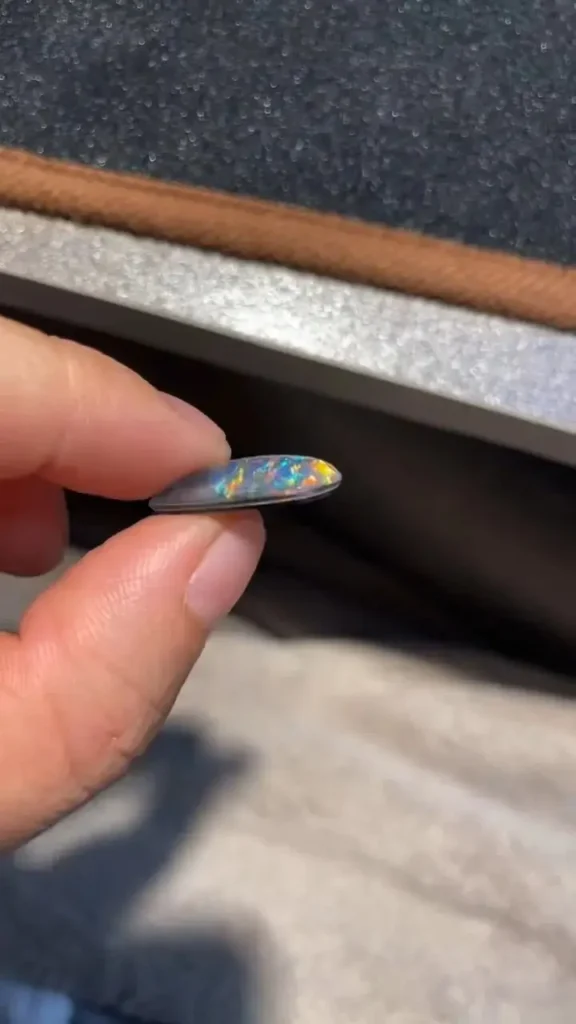
A doublet consists of:
- A thin natural opal layer
- Bonded to a dark backing (ironstone or black potch)
How to identify it:
- From the side, a clear bonding line is usually visible
- Body color often appears unnaturally dark or bluish
- Color looks attractive face-up but lacks internal depth
Triplet Opal
A triplet builds on a doublet by adding:
- A transparent quartz or glass dome on top
Key indicators:
- Colors appear magnified but shallow
- Optical depth feels artificial
- The domed surface looks glassy and uniform
👉 Important:
Doublets and triplets can look impressive in photos, but their value, durability, and resale potential differ significantly from solid opals.
Sugar–Acid Treated Opal
Some African opals undergo sugar–acid treatment to darken their body tone and imitate black opal.
What this treatment does:
- Darkens the base color artificially
- Produces uneven or unnatural contrast
- Permanently alters the stone
Market reality:
- Long-term stability is poor
- Color changes may worsen over time
- The result cannot replicate the natural depth of Australian Black Opal
For these reasons, treated opals do not hold long-term collector value.
Synthetic Opal
Synthetic opals are laboratory-created materials designed to mimic natural play-of-color.
Although visually striking at first glance, their optical behavior is fundamentally different.
Common traits:
- Color patches appear overly regular
- Patterns repeat mechanically
- Movement lacks organic flow
Synthetic opals may serve decorative purposes, but they are not natural gemstones and should never be priced or marketed as such.
7. Natural vs. Synthetic Opal: A Practical Identification Guide
Instead of memorizing complex tests, buyers can rely on visual behavior and structure, which remain the most reliable indicators.
Color Structure: The Most Reliable Clue
Natural Opal
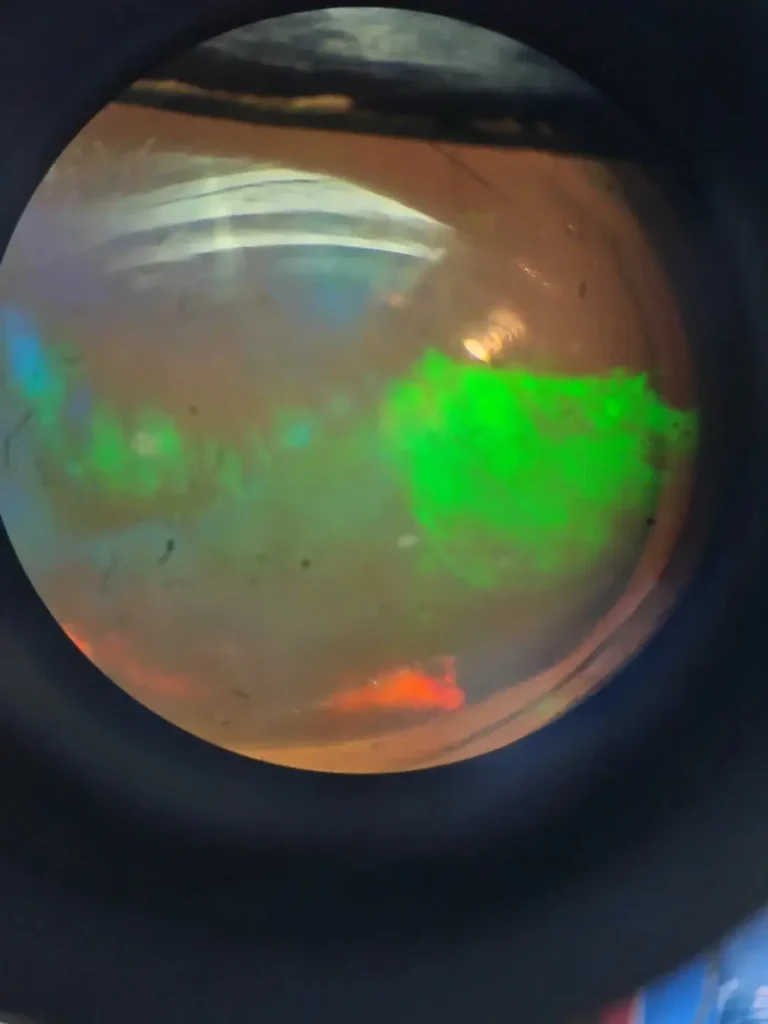
- Soft-edged color patches
- Random, layered, three-dimensional patterns
- Play-of-color visible from multiple angles
- Overall effect resembles an oil painting
Synthetic Opal
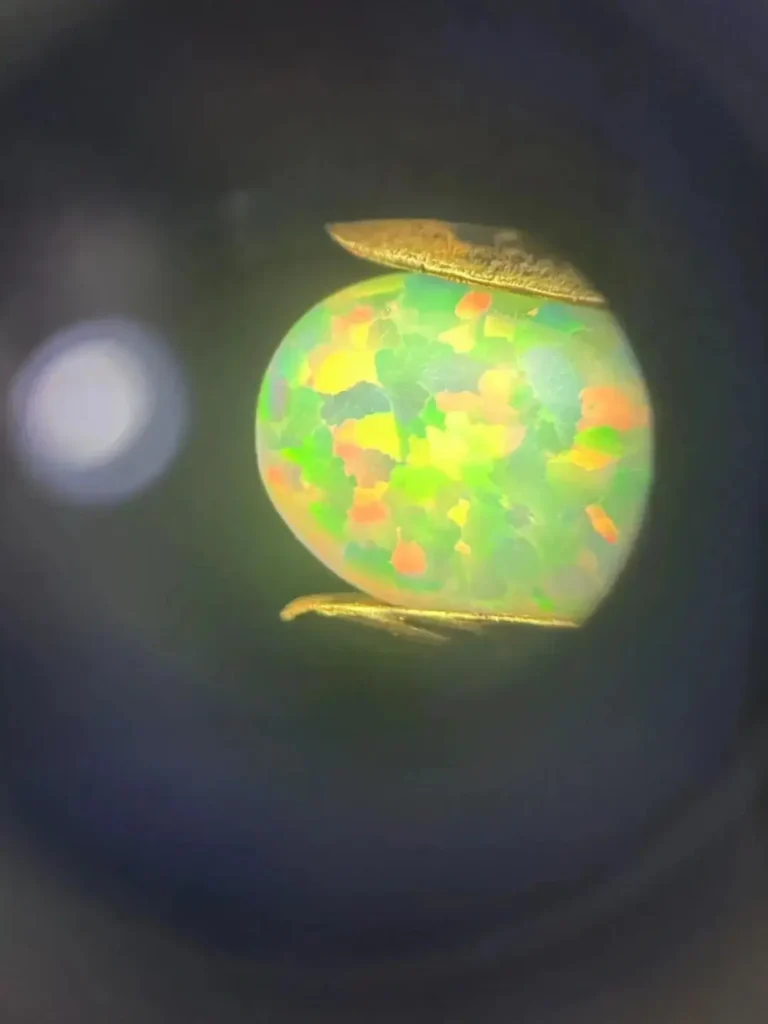
- Sharp, rigid color boundaries
- Repeating grid-like patterns (“lizard skin” or “chicken wire”)
- Flat, mechanical optical behavior
Side-View Inspection (Critical Step)
Always examine an opal from the side.
- Doublets: clear bonding line between layers
- Triplets: visible transparent cap
- Solid opals: no glue lines, no separation
This single step eliminates most misidentifications.
Depth, Surface, and Touch
- Triplets magnify color but lack true depth
- Solid opals allow the eye to visually “enter” the stone
- Natural opals feel cool to the touch and show a soft, resin-like luster
- Artificial domes feel glassy and uniform
Final Identification Tip
Observe how the color moves.
- Natural opal: flashes unpredictably and dynamically
- Synthetic or assembled stones: display controlled, repetitive movement
Once you see the difference, it becomes unmistakable.
8. 2026 Opal Price Guide & Investment Perspective
Opals are celebrated for their mesmerizing colors and unique play-of-color, but their market value varies dramatically depending on type, origin, and rarity. Understanding pricing and investment potential is essential for both collectors and jewelry enthusiasts.
The Investment Case for Australian Black Opal
Among all opal varieties, Australian Black Opal stands out as a blue-chip gemstone investment.
- Scarcity Drives Value: Production at Lightning Ridge has declined significantly over the past decade. Top-tier “Red-on-Black” stones (N1-N2 body tone) are exceptionally rare.
- Historical Appreciation: High-grade specimens have consistently outperformed many traditional luxury assets, with steady annual price growth.
- Collector Demand: Serious gem collectors and investors actively seek these stones, particularly those with rare patterns such as Harlequin, Flagstone, or Red Fire flashes.
While most opals are prized for their beauty, only top-tier Australian Black Opals are reliably treated as portable hard assets.
2026 Global Price Benchmark (Per Carat in USD)
Note: Prices reflect solid, high-quality opals. Assembled stones (doublets/triplets) or treated opals are valued significantly lower. Prices are rounded for clarity and reflect retail market norms in North America and Europe.
| Opal Type | Commercial Grade | Fine Quality | Investment Grade |
|---|---|---|---|
| Black Opal (N1-N4) | $300 – $1,000 | $1,000 – $4,500 | $5,000 – $15,000+ |
| Boulder Opal (Australian origin) | $150 – $800 | $800 – $2,500 | $3,000 – $10,000+ |
| White / Crystal Opal | $50 – $200 | $200 – $800 | $1,000+ |
| Ethiopian Welo Opal | $20 – $80 | $80 – $250 | $300 – $600 |
Note: While secondary wholesale markets may offer lower prices, our benchmarks reflect curated, solid gemstones with verified stability and premium cutting—ensuring long-term value for our clients.
Definitions:
- Commercial Grade: Stones primarily valued for jewelry or decorative use.
- Fine Quality: Higher brightness, stronger patterns, suitable for collectors or high-end jewelry.
- Investment Grade: Rare, top-tier stones with exceptional color, pattern, and origin—mainly applicable to Australian Black and select Boulder Opals.
Why Prices Scale Non-Linearly
Opal value does not increase in simple proportion to size or color intensity. Several factors exponentially influence price:
- Body Tone & Contrast: Darker tones, especially N1 Black Opal, command a premium due to rarity.
- Play-of-Color & Pattern: Red flashes, Harlequin or Flagstone patterns, and evenly distributed fire can double—or even triple—a stone’s value.
- Stability & Origin: Australian opals, formed over millions of years, carry a “stability premium” versus hydrophane African opals.
- Rarity & Collector Demand: One exceptional feature, such as a large Red-on-Black stone with a perfect Harlequin pattern, can place it in a completely different investment tier.
In other words, a $200 opal and a $15,000 opal may appear similar in photos, but the factors above create enormous value differentiation.
Key Takeaways for Buyers
- Investment Buyers: Focus exclusively on top-tier Australian Black Opal and select Australian Boulder Opals. Prioritize scarcity, pattern, and body tone.
- Consumer Buyers: White Opal, Crystal Opal, Fire Opal, and Ethiopian Welo Opal are excellent for beauty, fashion, and daily wear—but should not be considered high-return investments.
- Price Transparency: Always verify solid stones versus doublets, triplets, or treated opals, as these significantly affect value.
By understanding both type-based pricing and investment potential, buyers can confidently navigate the opal market for collection, daily wear, or long-term value preservation.
9. Opal Buying Guide & Appreciation
Choosing the right opal is a balance of science and personal connection. Whether you are a first-time buyer or a seasoned collector, understanding how to select and view your stone is essential.
Buying Recommendations for Different Purposes
When selecting an opal, consider your intention and lifestyle:
- For Investment or Serious Collecting: Focus on quality over size. Choose stones with stable structures, vivid color, and proven origin—especially top-tier Australian Black Opals. These factors ensure long-term preservation and potential value appreciation.
- For Daily Wear: Balance beauty with practicality. Opt for stones that combine durability with striking visual appeal. African Welo or Crystal Opals can be excellent daily-wear choices if properly cared for.
By clearly defining your purpose, you make smarter decisions and avoid common pitfalls in opal buying.
How to Appreciate Your Opal
Optimal lighting reveals an opal’s full potential. Follow these guidelines:
- Use Proper Light: Sunlight or strong artificial light brings out the play-of-color most vividly.
- Rotate Slowly: Turn the stone gently to observe the complete color spectrum.
- Examine Multiple Angles: Subtle color shifts often appear only from certain viewpoints.
Experiencing an opal in proper light lets you truly appreciate its depth and natural beauty, enhancing both enjoyment and informed evaluation.
10. The Definitive Opal Care Guide
Opals are often called “living gemstones” due to their water content. With a Mohs hardness of 5.5–6.5, they require specialized care to maintain their luster for generations.
Cleaning Tips
- Wipe gently with a microfiber cloth lightly dampened with 35°C distilled water.
- Avoid ultrasonic or steam cleaning, which can cause micro-cracks.
Storage Guidelines
- Store stones individually in 40–60% humidity.
- For African hydrophane opals, maintain hydration by wrapping in distilled water–dampened cotton.
- Avoid high temperatures above 80°C and rapid temperature swings (>±15°C per hour).
Three Critical Threats (“The Three Fears”)
- Dryness: Excess dehydration can cause cracking or color loss. Occasionally wipe with a damp cloth or store in slightly humid conditions—but never soak for extended periods.
- Heat: Avoid prolonged direct sunlight, heaters, or sudden environmental temperature changes to prevent dehydration and color damage.
- Impact: Due to brittleness, protect opals from sharp impacts. Remove jewelry during household chores, bathing, or sports.
By following these practical guidelines, collectors and jewelry enthusiasts alike can enjoy the full beauty and durability of their opals for years to come.
Conclusion: Finding Your Perfect Piece
As we have explored, no two opals are ever identical. This natural variance is what makes opal the ultimate gemstone for self-expression. However, finding a high-quality stone is only the first step—how it is set and styled is what transforms it from a mineral specimen into a wearable masterpiece.
Bring Your Vision to Life with PeonyJewels
At PeonyJewels, we specialize in bridging the gap between raw geological wonder and refined artistic design.
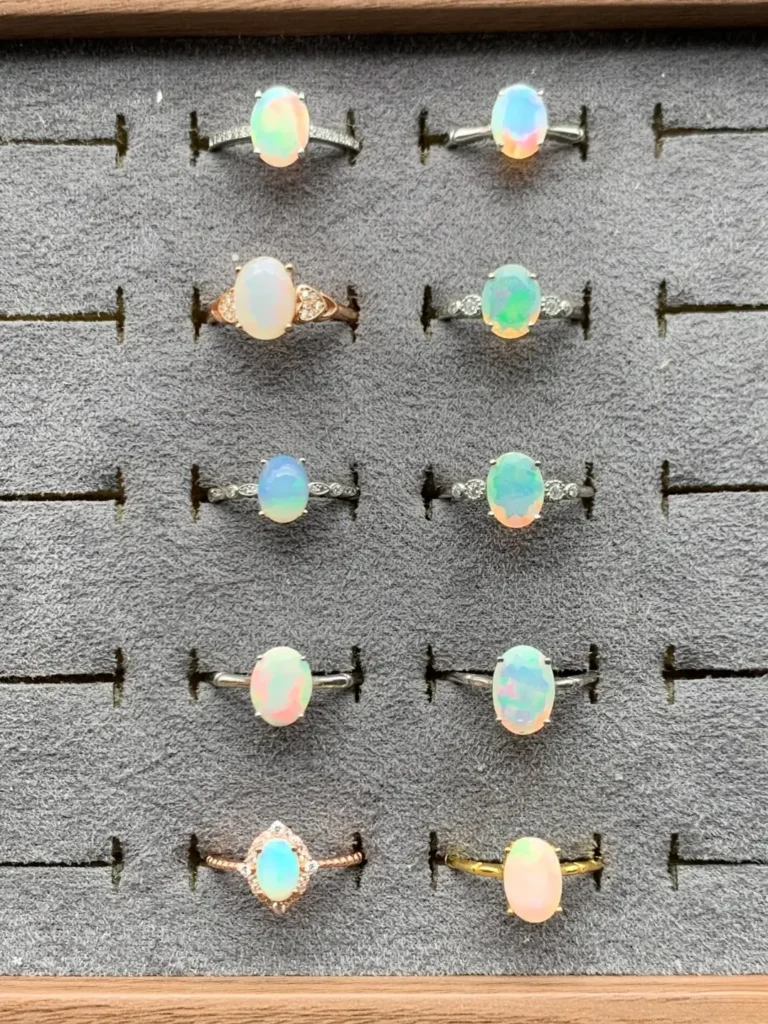
- Bespoke Customization: If you have been captivated by a specific type of opal mentioned in this guide—whether it’s the dramatic fire of a Lightning Ridge Black Opal or the raw charm of a Queensland Boulder Opal—our master jewelers are here to help you source and set the perfect stone for your unique story.
- Original Handcrafted Vintage Collections: Our signature aesthetic draws inspiration from the golden ages of jewelry design. We invite you to explore our Original Handmade Vintage Earring Collection, where we pair ethically sourced opals with intricate, old-world metalwork to create pieces that feel like modern heirlooms.
Ready to Start Your Opal Journey?
Every opal has a soul, and every wearer has a style. Whether you are looking for a statement investment piece or a pair of handcrafted earrings for daily elegance, we are here to guide you.