Paraiba Tourmaline: Why It Is Called the “King of Tourmalines”
When people think of Paraiba Tourmaline, they often realize it defies the common perception of tourmaline as a merely “affordable” gemstone.
While most varieties of the tourmaline family are celebrated for their vibrant colors and accessibility, Paraiba Tourmaline stands in a category of its own—rivaling the world’s most precious stones in both rarity and price.
Gem miners first discovered Paraiba Tourmaline in 1989 in Brazil’s Paraíba state. Soon after, the gem earned the title “the King of Tourmalines.” Collectors often call it the “Hermès of the tourmaline world.” In less than four decades, its market value has risen faster than that of most gemstones. Today, top-quality Paraiba Tourmalines can exceed USD 60,000 per carat, placing them alongside rubies, sapphires, and emeralds in both prestige and investment appeal.
What Is Paraiba Tourmaline?
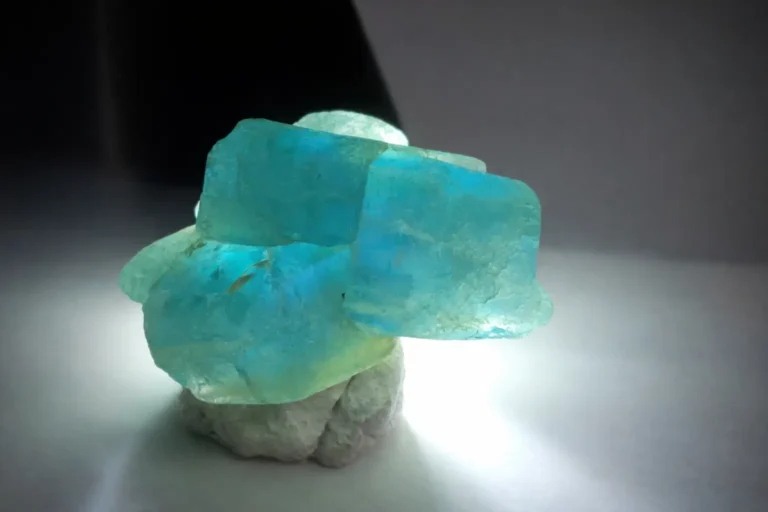
Paraiba Tourmaline belongs to the tourmaline family, yet it stands apart for one key reason: its distinct chemical composition and extraordinary visual appearance.
In gemology, Copper (Cu) defines Paraiba Tourmaline. Without this essential trace element, it is simply another tourmaline. This copper content produces the gem’s signature bright blue to blue-green coloration, which experts consider unique to this type of tourmaline.
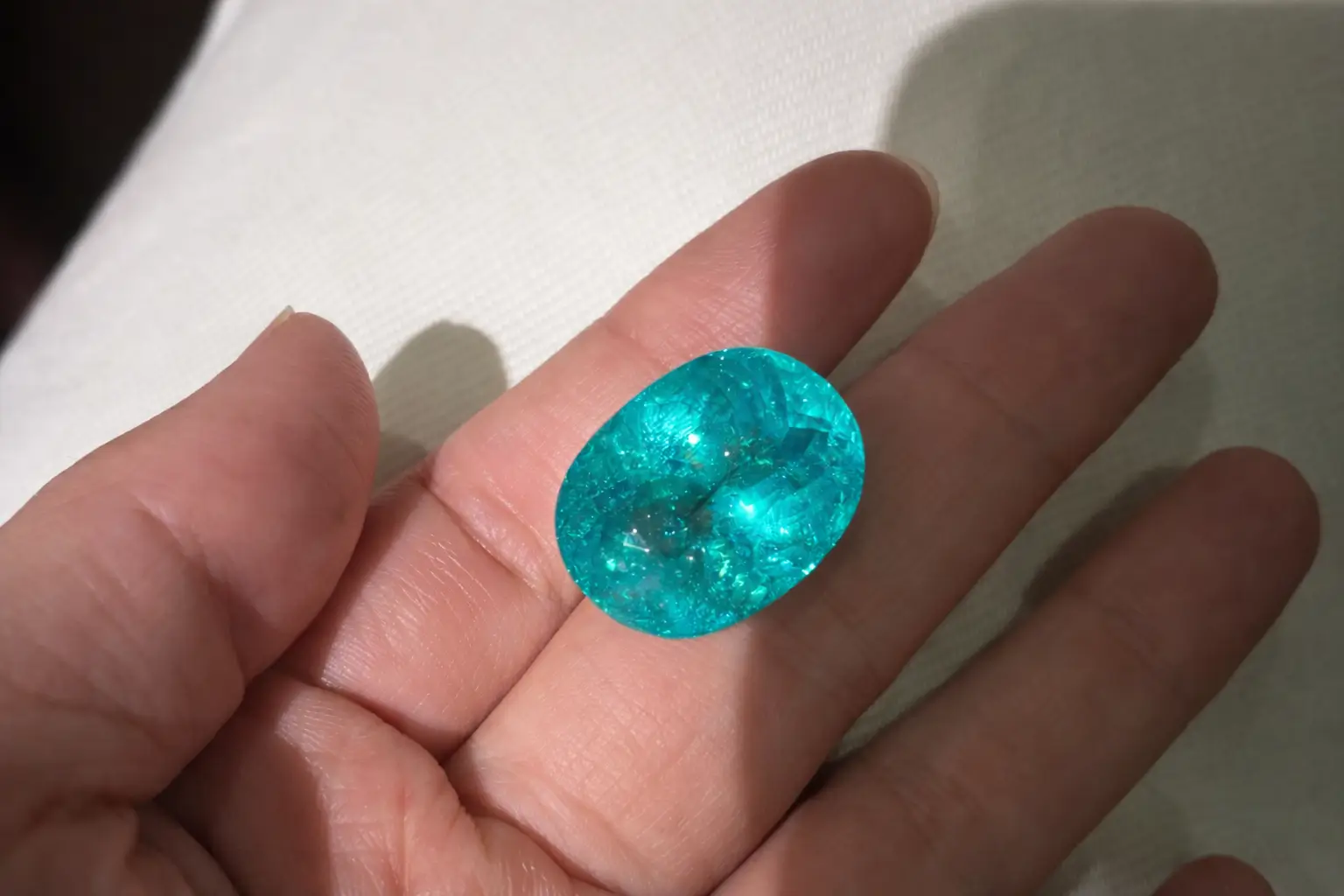
Copper, often working in combination with trace amounts of manganese, creates a color effect rarely seen in other gemstones. As a result, Paraiba Tourmaline displays exceptional brightness, high color saturation, and a vivid neon-like glow that immediately sets it apart from other tourmaline varieties.
Why Is Paraiba Tourmaline So Special?
The Unique “Neon Blue” Effect
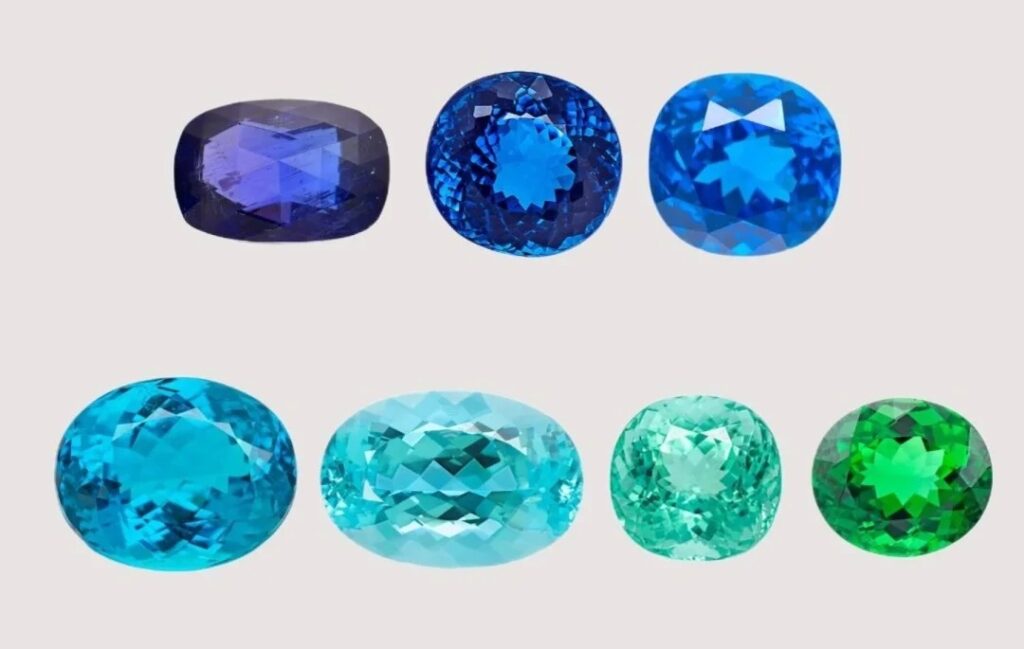
Unlike most other tourmaline varieties, Paraiba Tourmaline rarely appears dark or muted. Its copper-bearing chemistry ensures that its color remains vivid even in low-light environments. The spectrum typically ranges through:
- Vivid Electric Blue
- Neon Blue-Green
- Bright Bluish Green
- Vibrant Green
Beyond its color, the gemstone displays exceptional liveliness. Light seems to move freely within the stone, creating a bright, shimmering effect that appears almost self-illuminated—a phenomenon collectors often describe as:
“A lake frozen in motion.”
The Ultimate Rarity: Cat’s Eye Paraiba
This visual magic reaches its pinnacle in the rarest of all varieties: Cat’s Eye Paraiba. Beyond the classic faceted stones, an even more elusive phenomenon occurs when dense, parallel inclusions align within the crystal to create a sharp, shimmering “eye” that floats across the neon surface. Finding a stone that combines both the signature electric glow and a sharp cat’s eye effect is a collector’s dream.
However, because of its extreme scarcity, a true Cat’s Eye Paraiba remains a museum-grade rarity that is out of reach for most. If you are captivated by this mesmerizing optical effect but seek a more accessible way to own it, you may find that [Apatite: The Affordable Alternative to Paraiba Tourmaline] offers that same hypnotic “eye” and neon brilliance at a fraction of the cost.
Key Gemological Properties
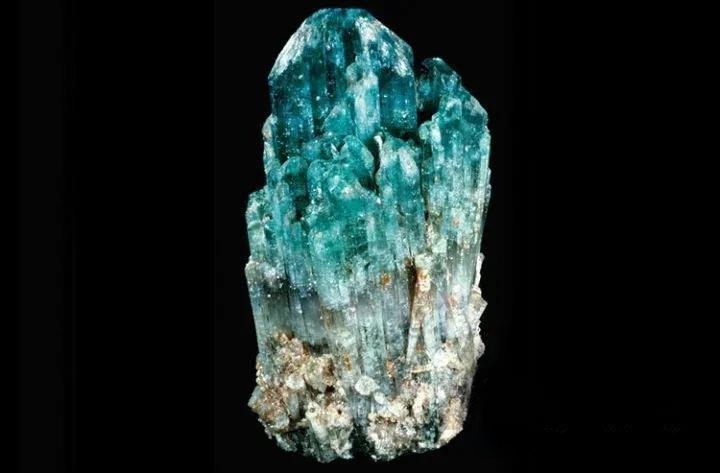
Paraiba Tourmaline exhibits a set of distinctive gemological properties, which help gemologists and collectors identify and evaluate it more effectively. Specifically, these properties include:
- Crystal system: Trigonal
- Mohs hardness: 7.5
- Refractive index: 1.624 – 1.644
- Luster: Vitreous
In addition, the gemstone’s main sources include:
- Brazil
- Mozambique
- Nigeria
By understanding these properties and their origins, collectors can more accurately distinguish Paraiba Tourmaline from other tourmaline varieties. Moreover, this knowledge allows them to assess the gemstone’s quality and investment potential with greater confidence.
Paraiba Tourmaline Value by Origin: Brazil vs. Africa
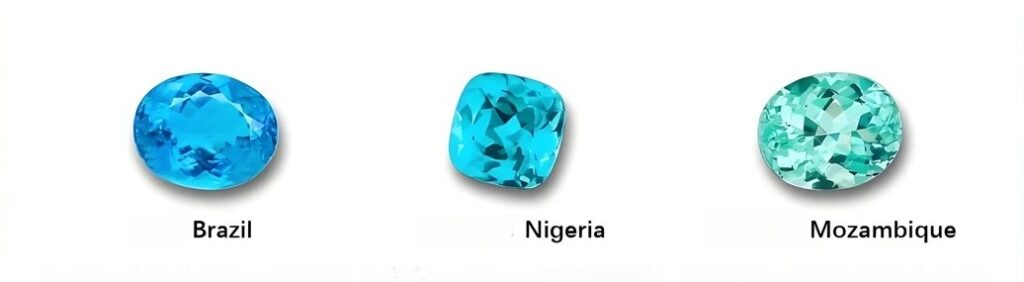
Although copper-bearing tourmalines appear in several countries, their color, visual appeal, and market positioning vary significantly depending on the source. Understanding these differences helps collectors evaluate stones more accurately.
🇧🇷 Brazil: The Historic Benchmark
Brazil remains the “Gold Standard.” Much of the finest historical material originated from the Batalha Mine in Paraíba state, with additional notable deposits in neighboring Rio Grande do Norte.
This region is so central to the world of fine jewelry that it remains a cornerstone of the [8 Treasured Brazilian Gemstones from the World’s Colored Gem Capital].
- Defining Character: Known for the highest concentration of copper, producing the most intense “Neon” and “Electric” blues.
- Investment Value: Commands significantly higher prices (often 3–5 times more) than African stones of similar appearance.
- Market Status: Mineral deposits are nearly exhausted. Finding a new, high-quality Brazilian Paraiba over 1 carat is now considered a major market event.
🇳🇬 Nigeria: The African Pioneer
Nigerian deposits, discovered in 2001, introduced the global market to the commercial potential of African copper-bearing tourmaline. This discovery was a turning point for the industry.
- Defining Character: While the neon effect is generally softer than Brazilian stones, Nigerian Paraiba often yields larger, eye-clean crystals.
- Tones: Known for its subtle elegance, often appearing in sophisticated lake blue, mint green, and violet-blue hues.
- Market Position: Offers an excellent entry point for collectors who value clarity and substantial carat weight over raw “electric” intensity.
🇲🇿 Mozambique: The Modern Powerhouse
Since their discovery in 2005 (Alto Ligonha region), Mozambique has become the primary source for the global Paraiba market.
- Defining Character: Displays remarkably even color distribution and exceptional transparency. Many stones are large enough to be cut into stunning 5+ carat gems.
- Geological Link: Interestingly, from a geological perspective, Brazil and parts of Africa were once connected as part of the ancient Gondwana supercontinent. This shared geological history helps explain why Mozambique can occasionally produce stones approaching the neon intensity of classic Brazilian material.
- Market Status: Currently the most prevalent source, offering a wide range of qualities from affordable “commercial” stones to “investment-grade” masterpieces.
Market Value & Price Evaluation (Neon Blue Reference)
The price of Paraiba Tourmaline is determined by a combination of origin, color intensity, and carat weight. Unlike standard gemstones, Paraiba’s value is driven by its “Neon factor”—the more the stone appears to self-illuminate, the higher the price.
To give you a clearer perspective on the current market, let’s look at how color saturation and carat weight dramatically influence the price per stone.
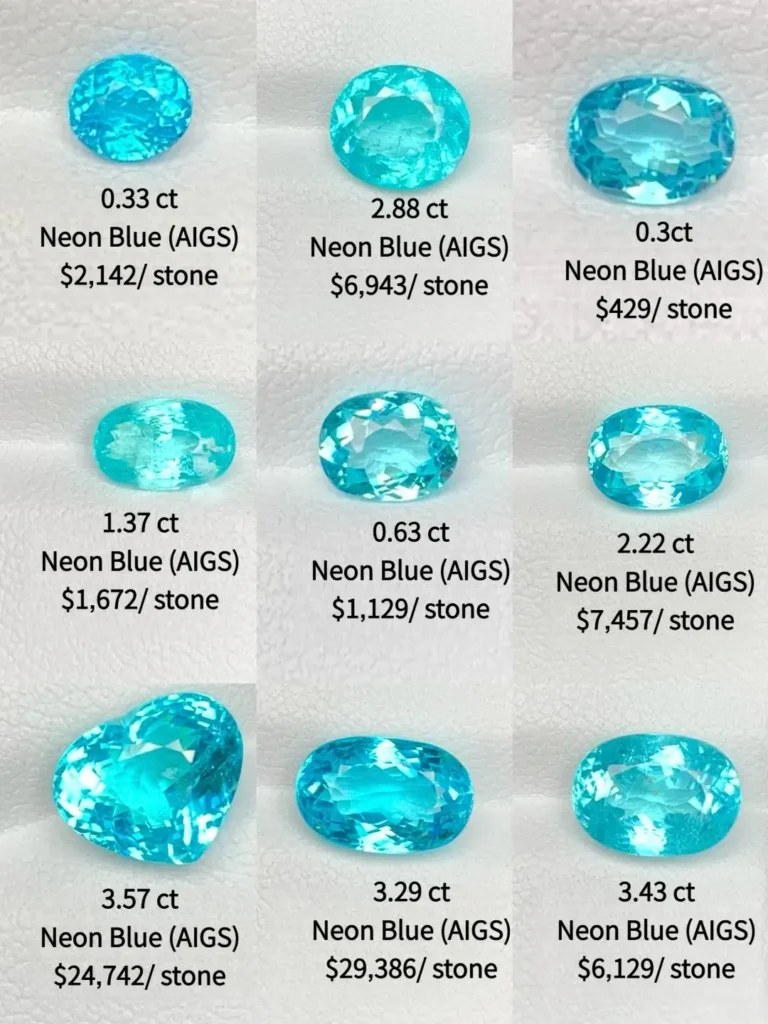
Real-World Price Reference (Neon Blue Grades)
The following examples illustrate the price diversity in the market today. Note how a smaller stone with superior “Neon” intensity can sometimes rival the price of a much larger, paler counterpart.
Key Observations from the Market:
- The Carat Premium: As seen above, prices don’t rise linearly; they skyrocket as the stone passes the 1ct and 3ct marks. A 3.29ct high-saturation stone can reach nearly $30,000, reflecting its extreme rarity.
- Saturation is King: Even at 0.33ct, a stone with a vivid “Neon Blue” (AIGS) grade commands over $2,100, proving that in the world of Paraiba, color quality often outweighs sheer size.
- Origin Matters: While these prices reflect high-quality African material, original Brazilian stones of the same intensity would typically be 3 to 5 times more expensive.
Color Classification: Decoding the “Neon” Value
Color is the absolute soul of Paraiba Tourmaline. While other gemstones are judged on clarity or cut, Paraiba’s value relies almost entirely on its specific hue and saturation.
The AIGS Color Framework
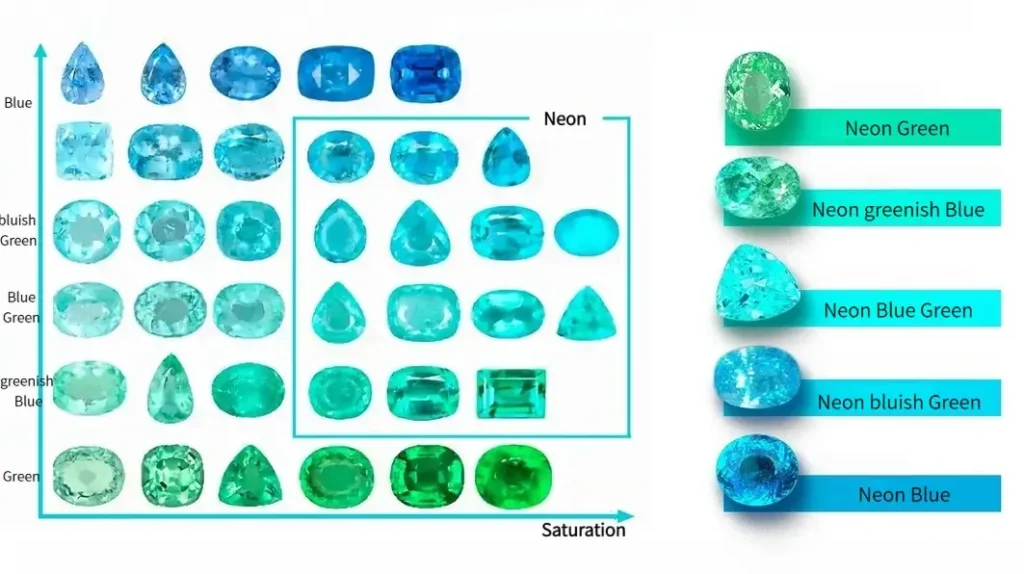
The Asian Institute of Gemological Sciences (AIGS) categorizes these stones into five primary hues:
- Blue
- Blue-Green
- Bluish Green
- Greenish Blue
- Green
Market Hierarchy: Neon vs. Electric
In the elite gemstone market—including top-tier auction houses like Christie’s and Sotheby’s—two terms define the ultimate investment grade: “Neon Blue” and “Electric Blue.”
When a stone reaches peak saturation and brightness, it earns the “Neon” prefix. Among these, Neon Blue (sometimes called “Swimming Pool Blue”) commands the highest price premiums worldwide. As the color shifts away from pure blue toward green, the market value remains high but generally begins to soften.
A Critical Note on Green Hues
While “Neon Green” Paraiba is a recognized category, buyers should be cautious. If the green tone dominates the blue (shifting into a pure, yellowish-green), the market appeal often drops significantly. Even if the stone contains copper, a lack of that signature “blue-green” glow can impact its liquidity and long-term resale value.
Why Are Purple Tourmalines So Uncommon in the Market?
Compared to other purple gemstones, purple tourmalines have limited commercial appeal. Specifically:
- Their color is less intense than amethyst.
- Their hardness is lower than sapphire, making them less durable for everyday jewelry.
As a result, the market generally shows lower demand for purple tourmalines, and they remain relatively rare in retail and auction settings.
Are Purple Tourmalines Considered Paraiba?
According to the Swiss Gemmological Institute SSEF,
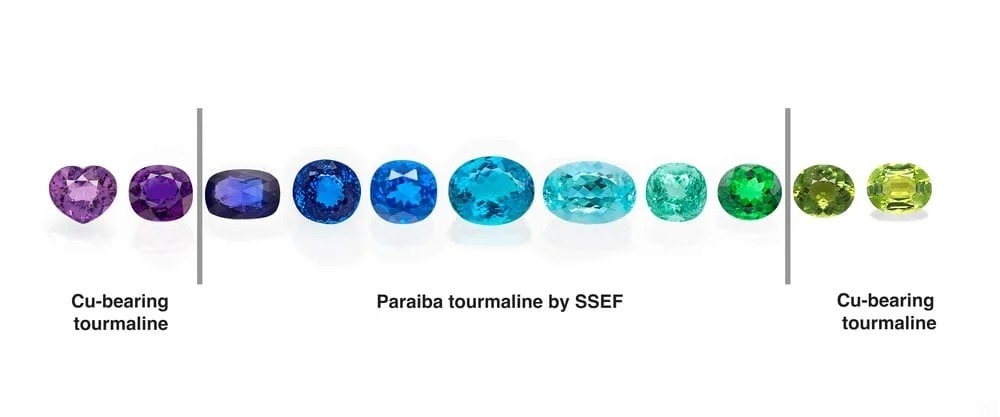
only copper-bearing tourmalines with colors ranging from deep blue to vivid green are officially classified as “Paraiba Tourmaline.”
Other copper-bearing stones, such as those in purple or yellow-green hues, even if they contain detectable copper, are officially labeled in gemological reports as “Cu-bearing Tourmaline.”
Therefore, while purple copper-bearing tourmalines are scientifically fascinating, they do not qualify as Paraiba Tourmaline and generally have lower market value compared to the iconic blue and green varieties.
Heat Treatment and Purple Copper-Bearing Tourmaline
So, where did all those “disappearing purple Paraiba Tourmalines” go?
The answer lies in heat treatment.
The diagram below shows 16 sets of Paraiba Tourmaline slices:
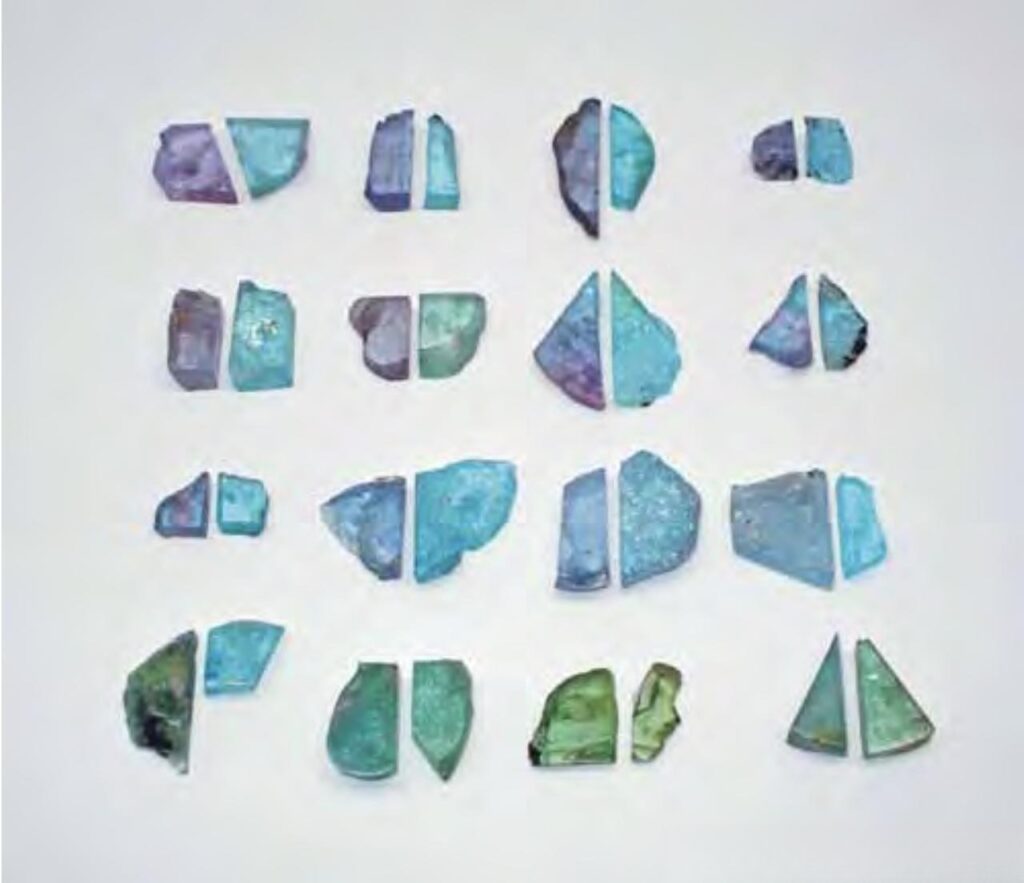
- Left: Before heating
- Right: After heating
By heating copper-bearing tourmalines at around 550°C, stones that were originally purplish or grayish-purple often transform into neon blue hues that carry significantly higher commercial value.
Consequently:
- The presence of purple copper-bearing tourmalines usually indicates a natural, untreated state.
- Over 95% of Paraiba Tourmalines on the market have undergone heat treatment, and the popularity of neon blue stones primarily reflects market preferences rather than intrinsic quality differences.
Gemstones themselves do not have intrinsic “better” or “worse” qualities; instead, human taste assigns different commercial value to each color and hue.
How to Choose Paraiba Tourmaline
1. Prioritize Color
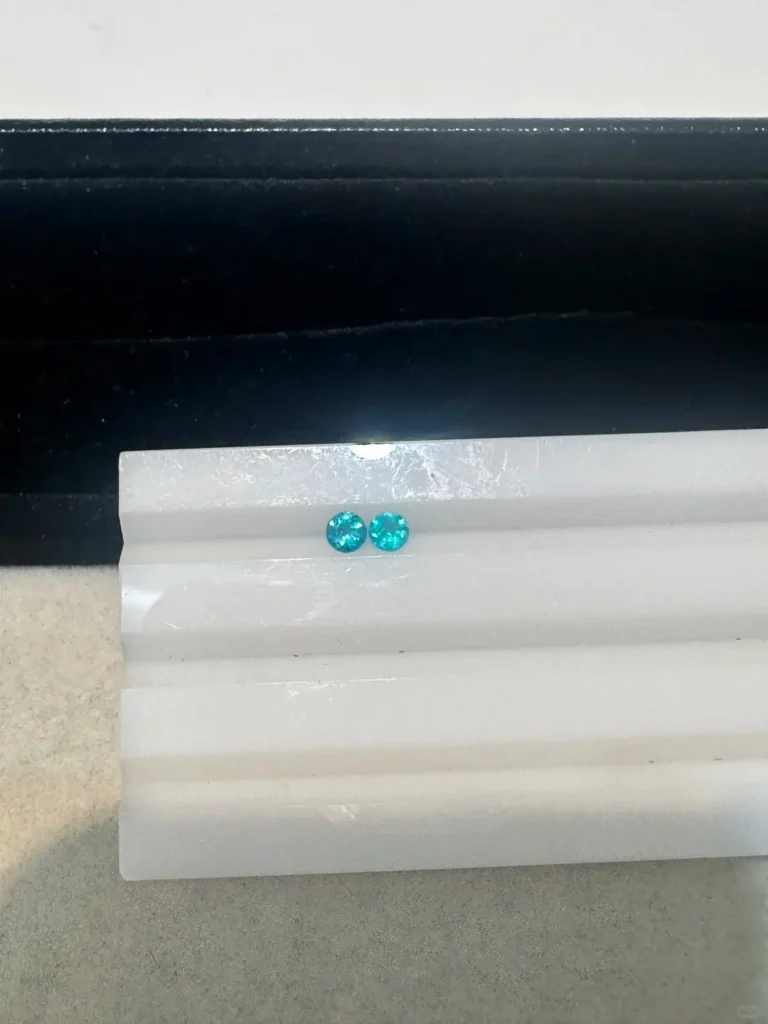
Choose stones with high saturation and bright blue or blue-green hues, as color remains the most critical factor in determining value.
2. Consider Treatment
- Natural, untreated stones are ideal.
- High-quality heat-treated stones are acceptable.
- Avoid stones that have undergone artificial irradiation, dyeing, or coating.
3. Pay Attention to Origin
- Brazilian Paraiba commands the highest prices due to its superior color and rarity.
- African stones (Mozambique, Nigeria) offer better value for money while still displaying attractive hues.
4. Evaluate Clarity
- Slight inclusions are acceptable in natural stones.
- While clarity can enhance value, do not overly prioritize flawless stones, as natural inclusions are common.
5. Look for Authoritative Certification
- Always prefer stones with internationally recognized gemological reports to verify authenticity and quality.
6. Avoid Common Confusions
- Paraiba Tourmaline is often mistaken for aquamarine.
- However, Paraiba generally exhibits more pronounced green undertones and higher color saturation, making it easily distinguishable.
How to Care for Paraiba Tourmaline
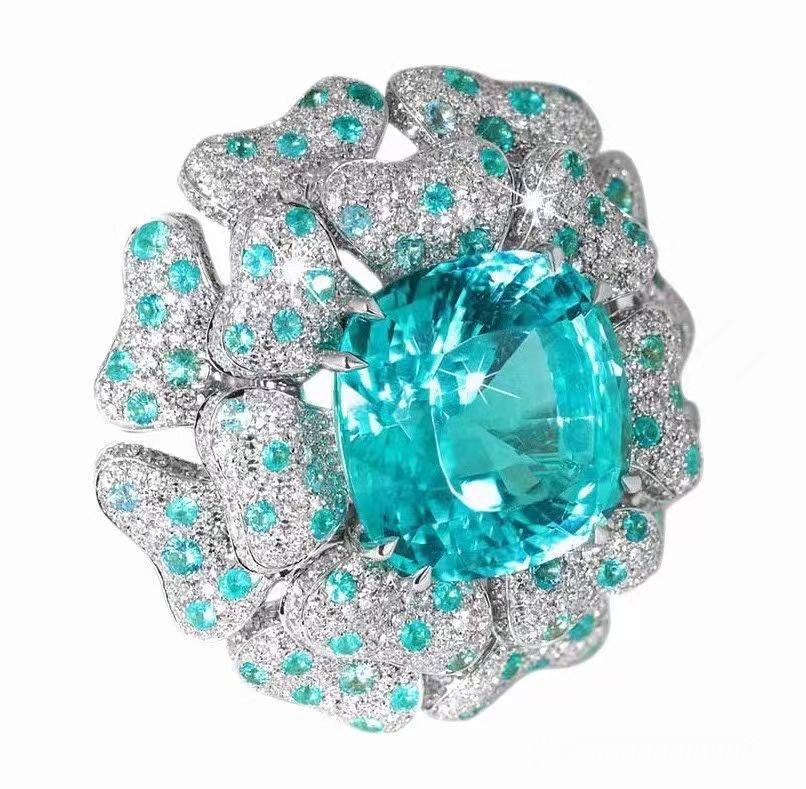
Regular Cleaning:
- Soak your Paraiba in warm water for 30 minutes, gently brush with a soft-bristle brush, and pat dry with a soft cloth.
- Avoid ultrasonic cleaners, which may damage the stone.
Frequent Polishing:
- Lightly wipe the surface with a cotton cloth to maintain its natural luster.
Avoid Physical Damage:
- Remove Paraiba jewelry during housework, exercise, or other activities.
- Store pieces separately in a jewelry box to prevent scratches and impact.
From Rare Treasures to Everyday Elegance
Whether you’re drawn to the legendary neon of Paraiba or the subtle charm of more accessible gems, jewelry is ultimately about how a piece makes you feel. At Jewea, we believe that the soul of a gemstone deserves a frame that is just as unique.
Our original handmade vintage earrings are inspired by the timeless silhouettes of the vintage era, blending old-world craftsmanship with modern sensibilities. Each pair is meticulously crafted to capture light and color, offering you a piece of “wearable history” that complements your individual style.