How to Identify Real vs Fake Cat’s Eye Gemstones from Sri Lanka
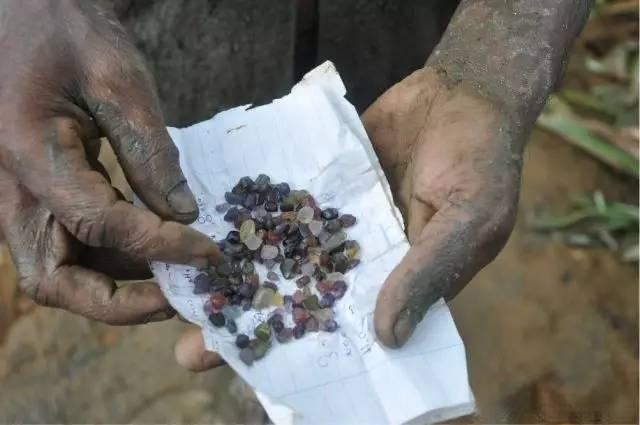
Cat’s eye gemstones have recently become a rising star in the jewelry world. Many collectors dream of owning one, drawn to its mysterious glow and shifting light band — the famous “cat’s eye effect.” However, the market is full of fakes, especially in tourist hotspots like Sri Lanka. To help you avoid costly mistakes,I personally bought a few “fake cat’s eyes” from local sellers and brought them back for a Real vs Fake Cat’s Eye comparison. Let’s uncover the truth behind these shimmering stones.
The Reality of Sri Lankan Cat’s Eye Gemstones
Besides being famous for blue sapphires, Sri Lanka is also renowned for its Chrysoberyl Cat’s Eye gemstones. However, true Sri Lankan cat’s eyes differ from those found elsewhere. They typically display a yellowish body tone and slightly lower transparency, which gives them their distinctive natural appearance. To learn more about the cat’s eye effect and value of Chrysoberyl Cat’s Eye, see Chrysoberyl Cat’s Eye: The Only True “Cat’s Eye” Guide.
Today, most of the cat’s eyes you see on the market actually come from other countries — these tend to have higher clarity and more vivid body colors, and are often sold at lower prices.Furthermore, glass imitation cat’s eyes have even appeared on the market (to learn how to identify glass imitations, see Glass Imitation Gemstones: How to Spot Fake Gem Glass Before You Buy).
High-quality, large Sri Lankan cat’s eyes have become rare, and when available, their prices can be surprisingly high.
How to Tell Real vs Fake Cat’s Eye Stones
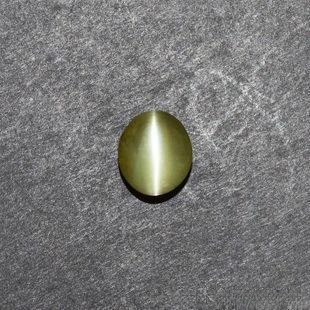
Let’s look at one of the “cat’s eyes” I bought. At first glance, it seems decent — a warm yellow tone and a bright, centered eye line.But in truth, it’s nothing more than a synthetic glass imitation. Here’s how to spot the difference.
1. Observe the Luster and Texture
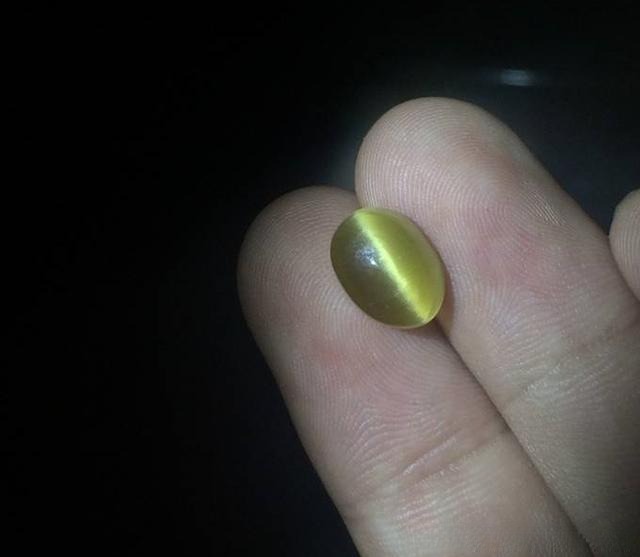
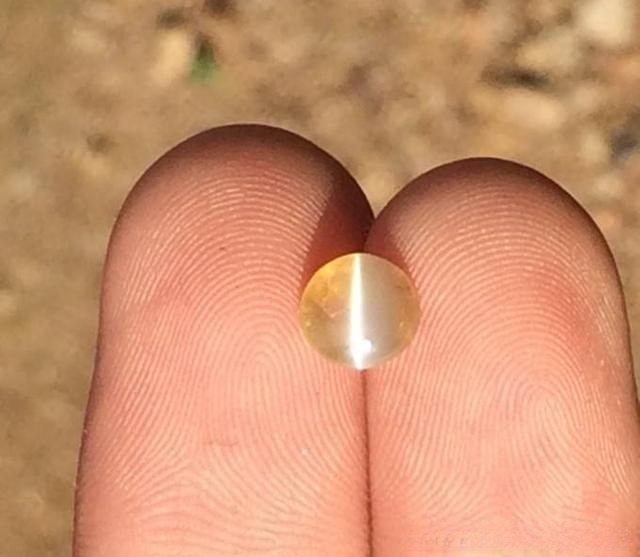
A genuine chrysoberyl cat’s eye exhibits a strong, glass-like luster with a smooth, silky surface reflection. The fake glass ones, on the other hand, lack that depth and energy. It’s something you recognize after handling real gems — a tactile intuition that words can hardly describe.Compare both
under direct light, and you’ll notice that real cat’s eyes have more depth and inner movement, while glass fakes look static and overly shiny.
2. Examine the Gem’s Base
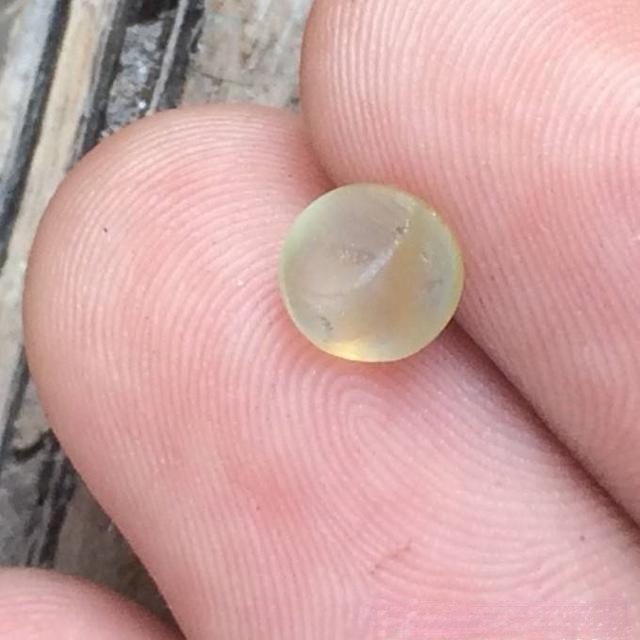
Whether it’s a star stone or any cabochon-style gem, natural cat’s eyes rarely have a perfectly flat, polished base. Their bottoms are often roughly ground and irregular. In contrast, synthetic or glass versions tend to have an unnaturally smooth and even surface.
- Natural Cat’s Eye: Shows small dark inclusions and a slightly uneven bottom.
- Rose Quartz Star Stone: Base appears rough and irregular.
- Star Sapphire (Blue Dabiz): Uneven bottom with visible growth patterns extending outward.
- Glass Cat’s Eye Imitation: Base is perfectly flat and machine-like in symmetry.
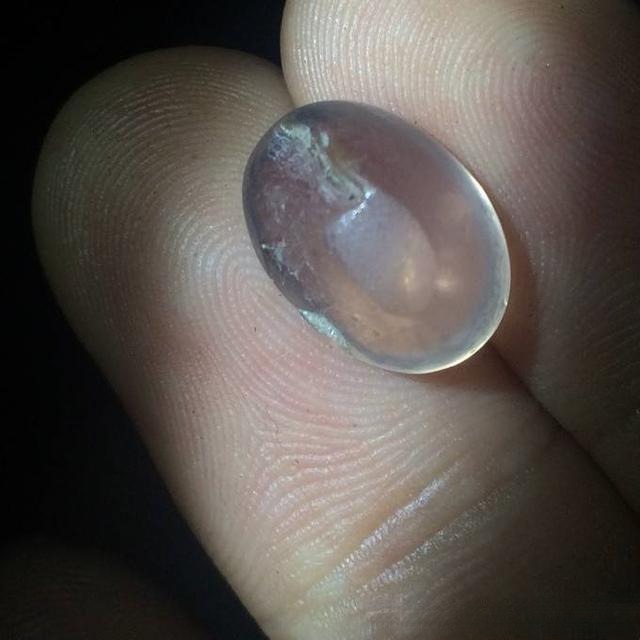
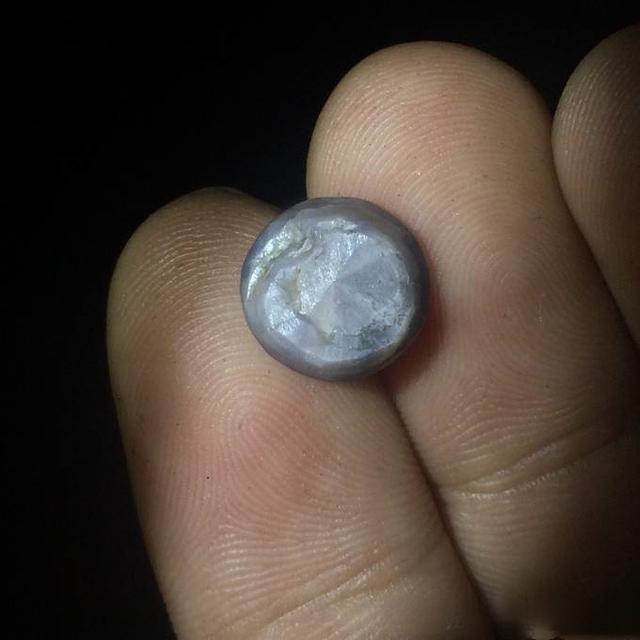
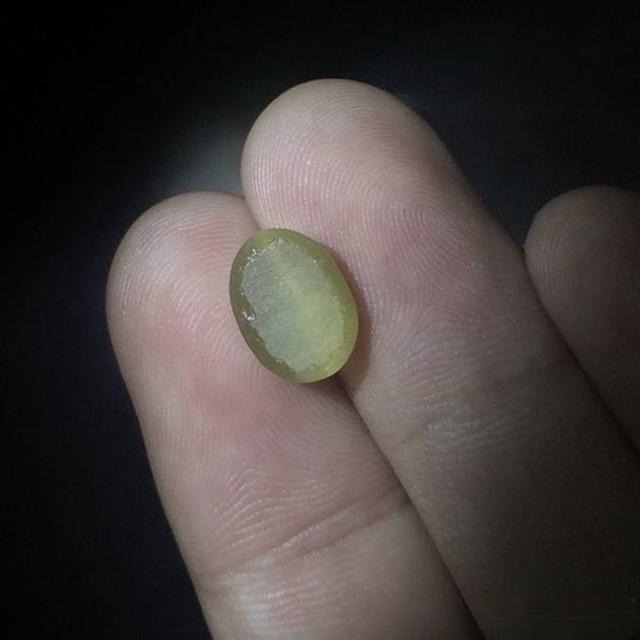
3. Look Inside: The Inclusions Tell the Truth
Here’s where things get interesting — and a little creepy (warning for trypophobia sufferers!).
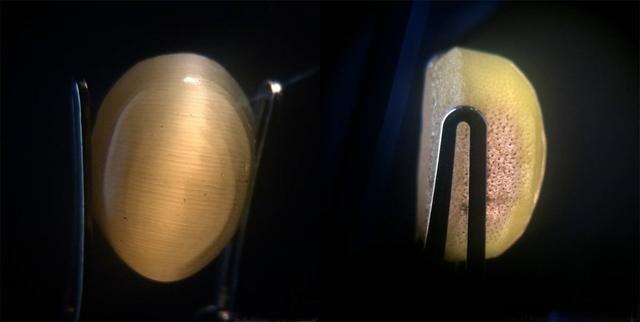
Artificial cat’s eyes are made by heating bundles of fine, fiber-like materials until they fuse together. Under magnification or from the side view, you can see that these fibers form a honeycomb or hexagonal pattern, aligned perpendicularly to the eye line.
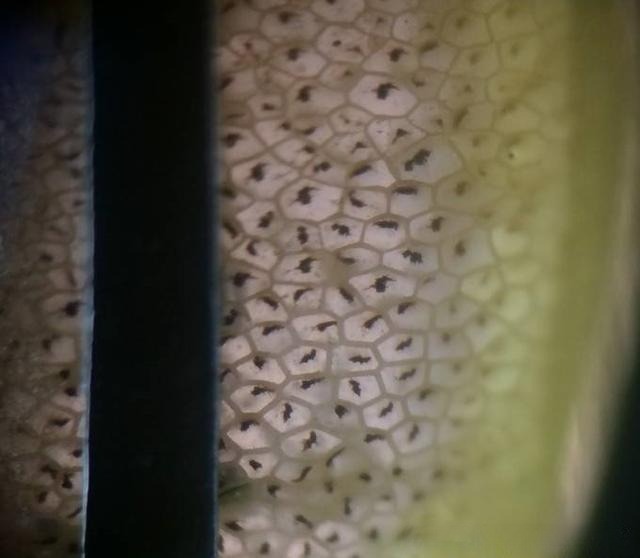
If you notice these dense, orderly “honeycomb inclusions,” don’t hesitate — tell the seller politely (or not so politely):
“Get the hell out of here, now!”
Flame-Fusion Synthetic Sapphires: The Common Trap
Many tourists fall for fake cat’s eyes or sapphires because they:
- Don’t understand gemology
- Assume local gems are cheap
When a local vendor shows them genuine stones, they might hesitate at the higher price. So the seller simply shows them a flame-fusion synthetic sapphire instead — bright, flawless, and inexpensive — and the buyer walks away thinking they’ve scored a deal.
In truth, they’ve just bought a lab-grown piece of glass.
Real vs Fake Cat’s Eye: Think Twice Before Buying Gems on the Street
Buying gemstones in unfamiliar places can be exciting, but also dangerous if you’re not an expert. Never purchase gems casually on the streets, even in mining regions. The romantic idea that “Sri Lankan gems are cheap like cabbages” is a myth.
Yes, there are inexpensive stones at the mines — but most of them are synthetic. I’ve met plenty of travelers proudly showing me “Sri Lankan sapphires,” only to discover they were actually lab-grown stones from Wuzhou, China.
Let’s be honest — why travel so far just to buy synthetic stones? If you really want them, I can source kilograms of high-quality synthetics right here for a fraction of the price!
Nobody can buy a 2–3 carat natural royal blue sapphire for 1,000–2,000 Sri Lankan rupees (around $45–90 USD). It’s just not realistic.
👉 Learn more before you buy: Read our Peonyjewels blog post: Buyer’s Guide|Real or Synthetic Sapphire? How to Spot the Difference Without a Microscope to understand how to identify genuine sapphires from lab-grown ones — even without special tools.
Final Thoughts on Real vs Fake Cat’s Eye
Being in a gem-producing country doesn’t mean gems are cheap.
Repeat after me:
Don’t buy jewelry while traveling.
Don’t buy jewelry while traveling.
Don’t buy jewelry while traveling.
At Peonyjewels, we believe that every gemstone deserves to be understood before it’s admired. That’s why we don’t sell loose gems or ready-made gemstone jewelry — instead, we offer bespoke gemstone customization for those who truly appreciate authenticity and craftsmanship.
Our everyday collection focuses on handmade vintage earrings, blending artistic design with timeless beauty. Each piece captures the quiet elegance of daily life — sincere, graceful, and made to accompany you, not just decorate you.