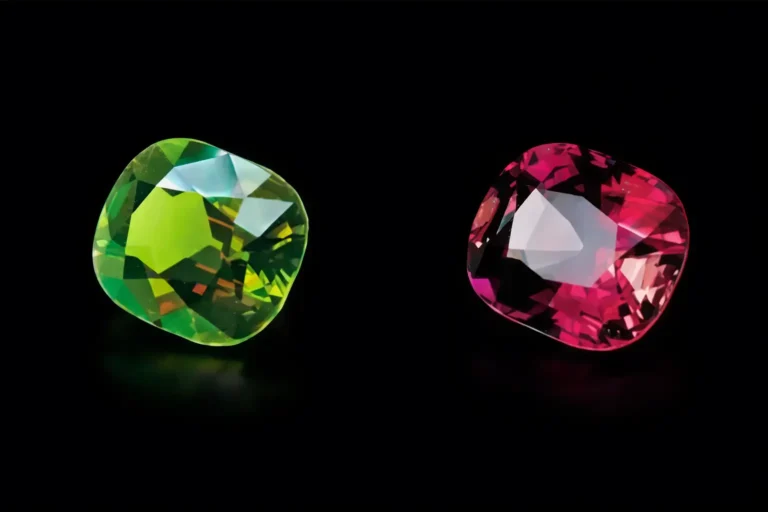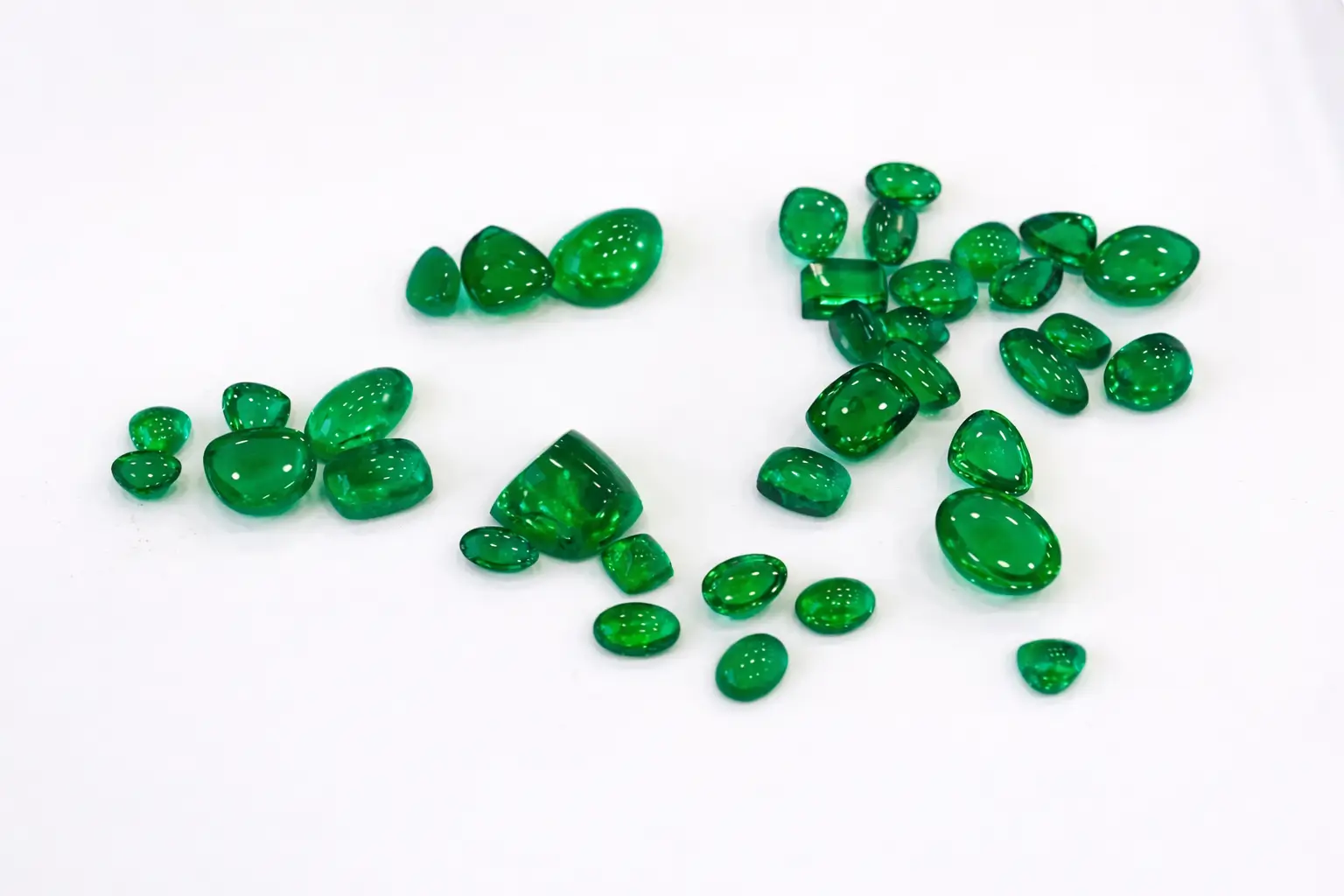
Russian Gemstones: 9 Extraordinary Treasures from the Urals to Siberia

As of January 10, 2026, the Russo-Ukrainian war has lasted 1,417 days. This fierce conflict, known as “Europe’s largest land war,” has claimed nearly a million lives, displaced countless people, and caused immense damage to both countries and the world.
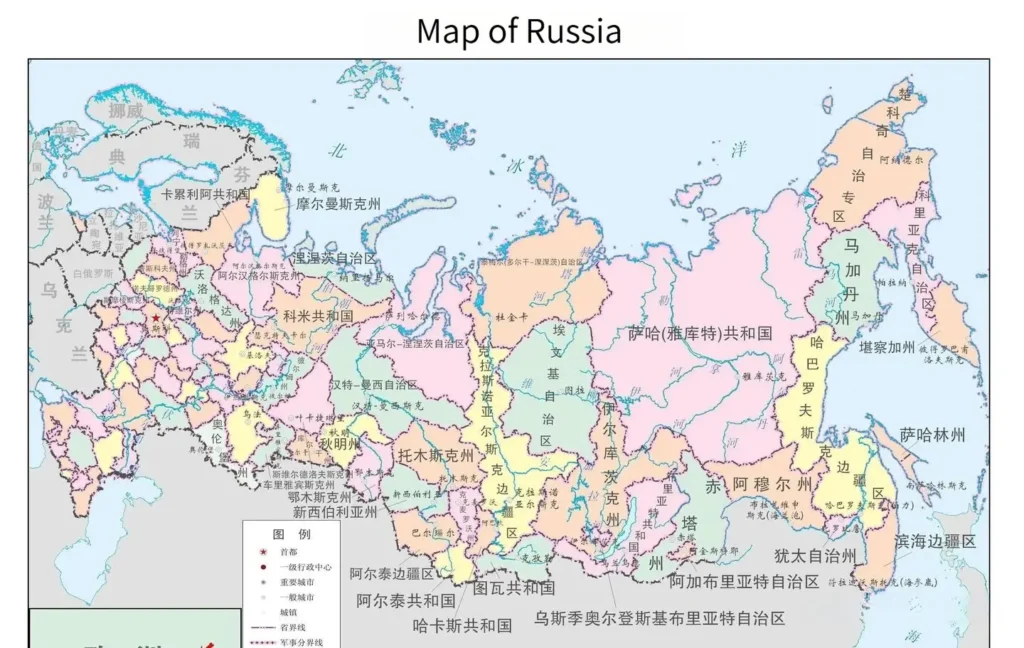
Russia, one of the key participants, has long earned the nickname “warrior nation.” From the early Kievan Rus’ to the Moscow Principality, and now the Russian Federation, the nation’s rulers have expanded their territory through constant warfare. Today, Russia covers 17.098 million square kilometers, making it one of the largest countries in the world.
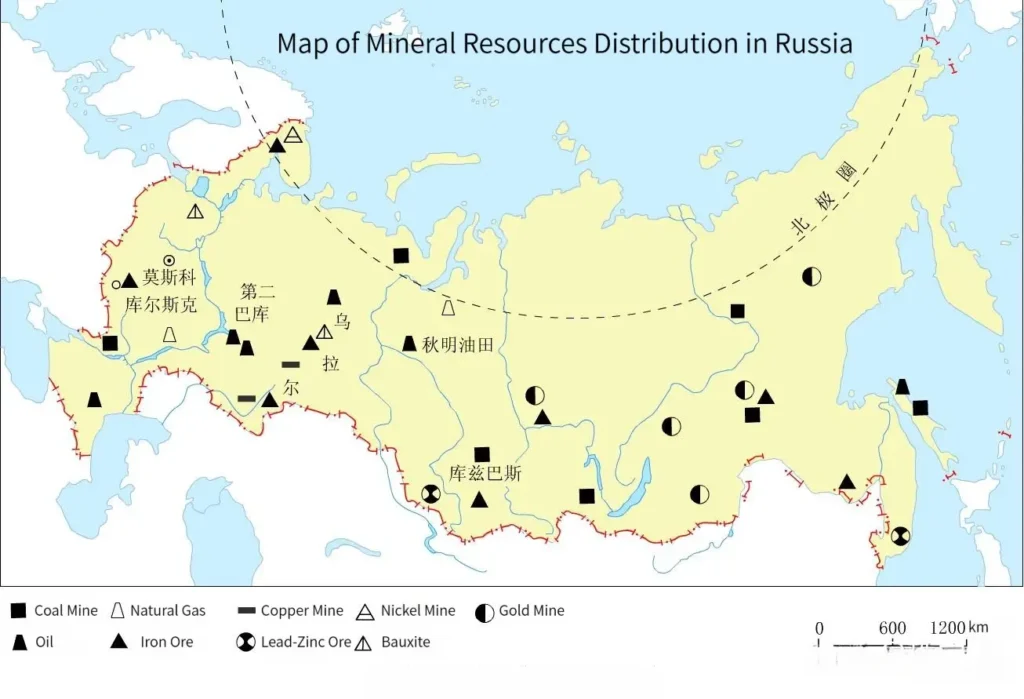
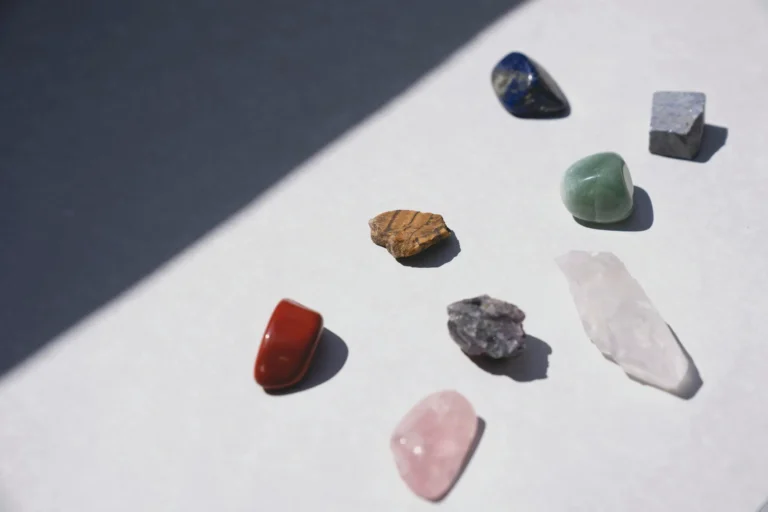
Beyond its vast land, Russia is rich in natural resources, including a wide variety of gemstones. Over 100 types of precious and semi-precious stones, such as emeralds, jade, garnet, tourmaline, and chrome diopside, have been discovered in the country.
In this Gemstone Nation series, we invite you to explore the extraordinary world of Russian gemstones and the unique mineral heritage they represent.
Contents: 9 Legendary Russian Gemstones
- Emeralds: The Crown Jewel of Russian Gemstones
- Tsavorite Garnet: The Rare Russian Gemstones
- Jadeite: A Deep Dive into Russia’s Gemstone Deposits
- Chromium Diopside: A Rare Russian Gemstones from Siberia
- Tourmaline: The Russian Gemstone Loved by Collectors
- Amazonite: The Beautiful Green and Blue Russian Gemstone
- Amber: Russian Gemstones from the Baltic Region
- Nephrite Jade: The Dominant Force Among Russian Gemstones
- Alexandrite: The Chameleon of Russian Gemstones
Emeralds: The Crown Jewel of Russian Gemstones
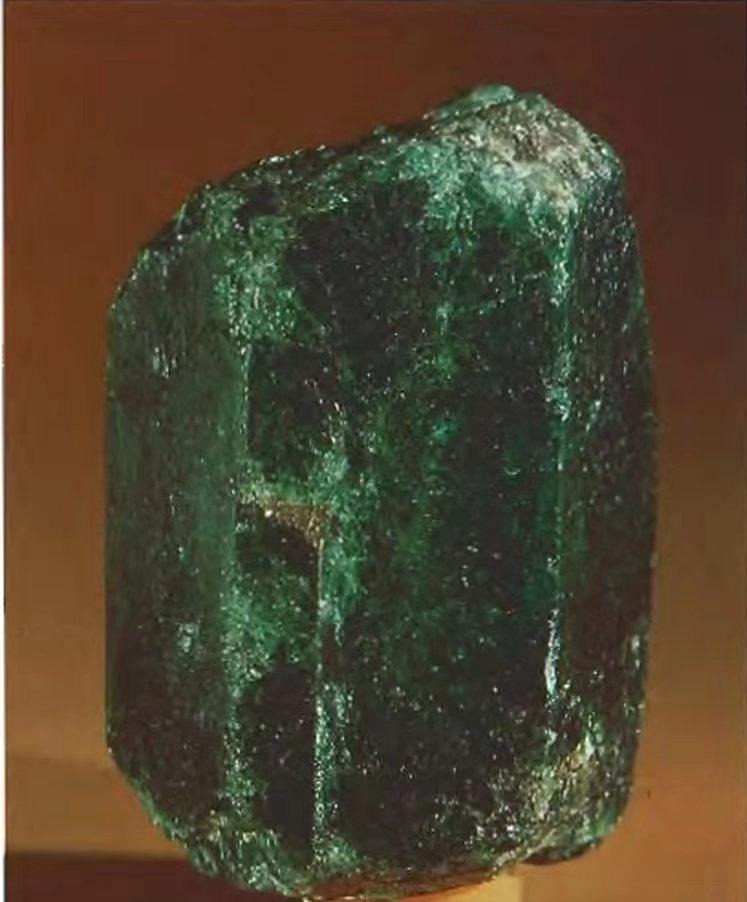
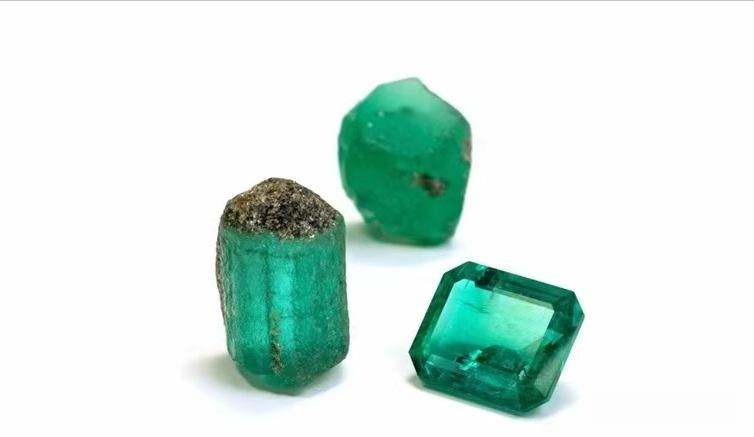
Emerald is one of the “Big Five” most precious gemstones, known for its stunning green hue that captivates all who see it. As the value of any emerald is deeply tied to its saturation and tone, understanding these nuances is essential for any collector. To learn more about professional color evaluation, explore our comprehensive guide: Understanding Emerald Color Grading: Your Guide to the World’s Most Captivating Green.
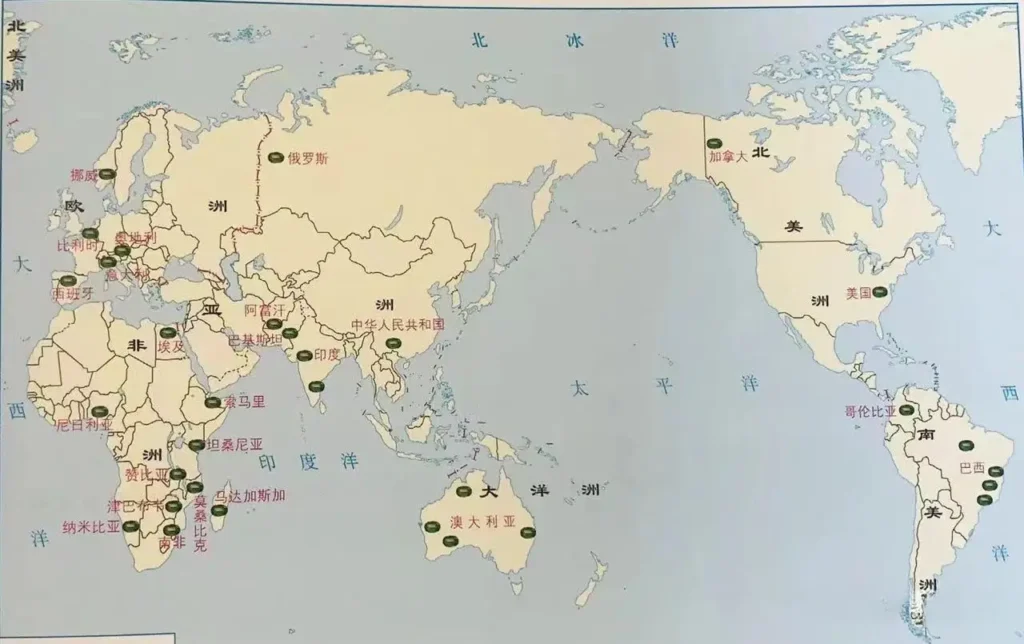
Emeralds are commonly associated with countries like Colombia, Zambia, and Brazil. However, Russia also has significant emerald deposits. In previous articles, we explored emeralds from Colombia, Afghanistan, and Brazil. Now, let’s turn our attention to Russia’s emeralds.
The Rich Legacy of Russia’s Ural Mountain Emeralds
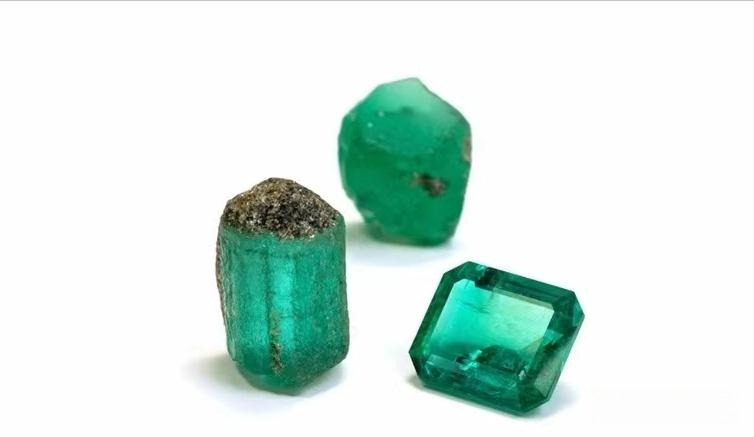
Russia’s emeralds come mainly from the Asian side of the Ural Mountains, with the Malysheva Emerald Mine being the most well-known. Discovered in 1833 and mined starting in 1834, the Malysheva mine was one of the largest sources of emeralds in the world until the early 20th century.
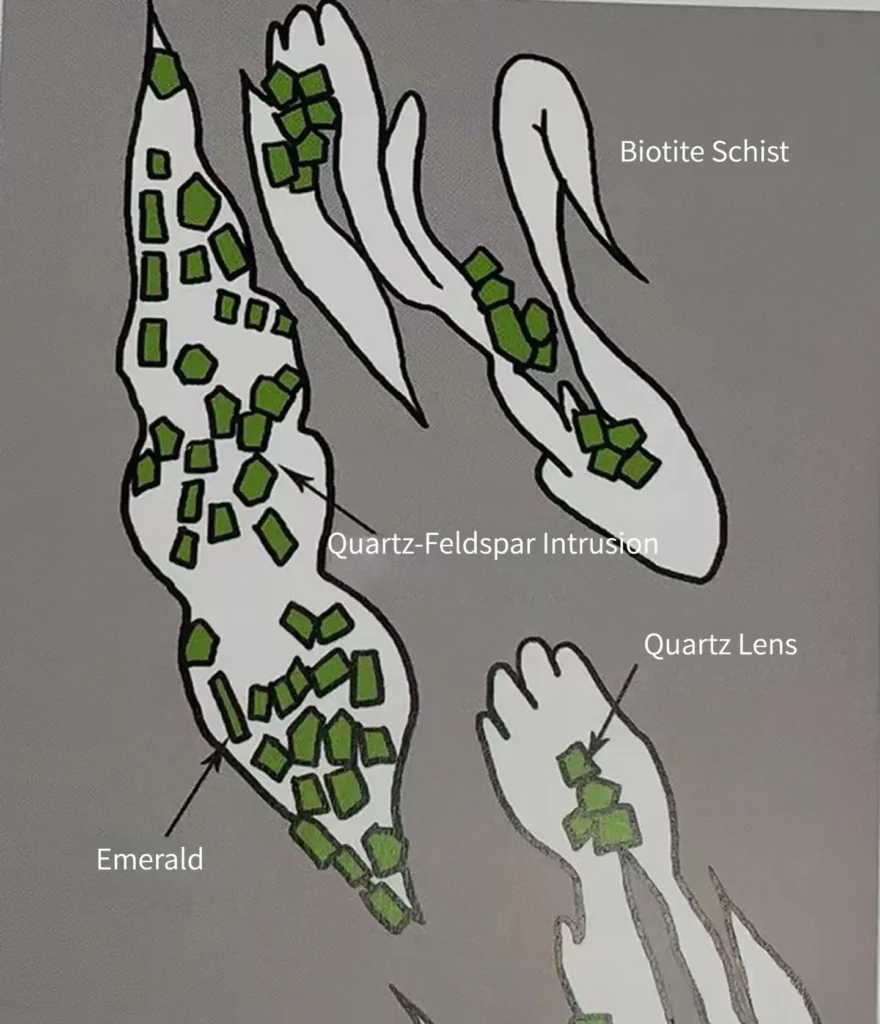
Emeralds from this region are typically larger and have higher clarity and saturation. However, their color tends to be slightly yellowish due to the presence of iron, making them less intensely green compared to Colombian emeralds.
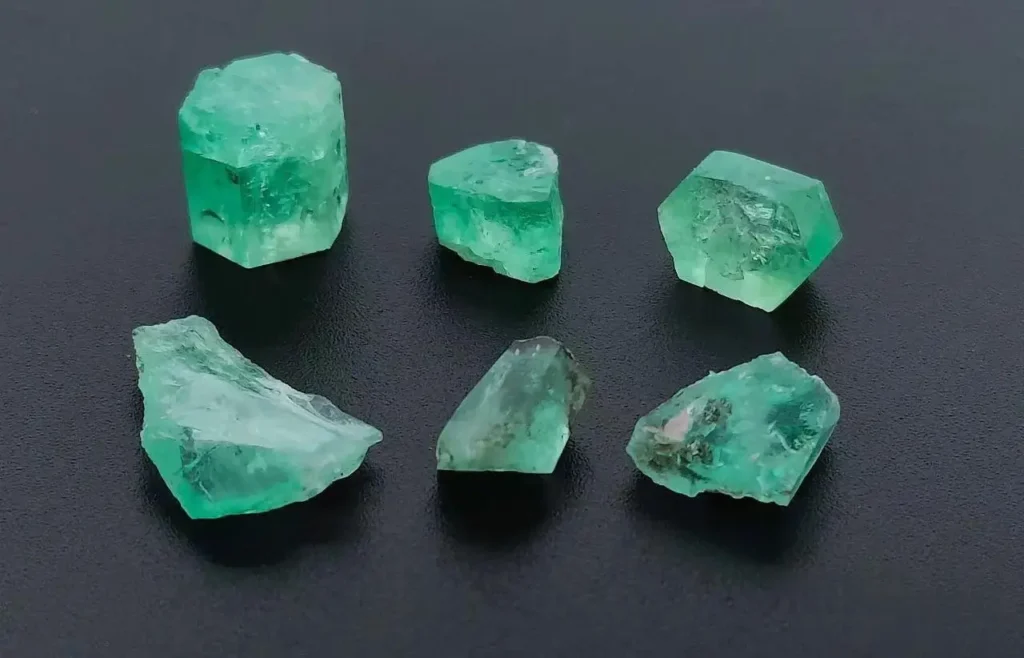
Inclusions: The Unique Signature of Russian Emeralds
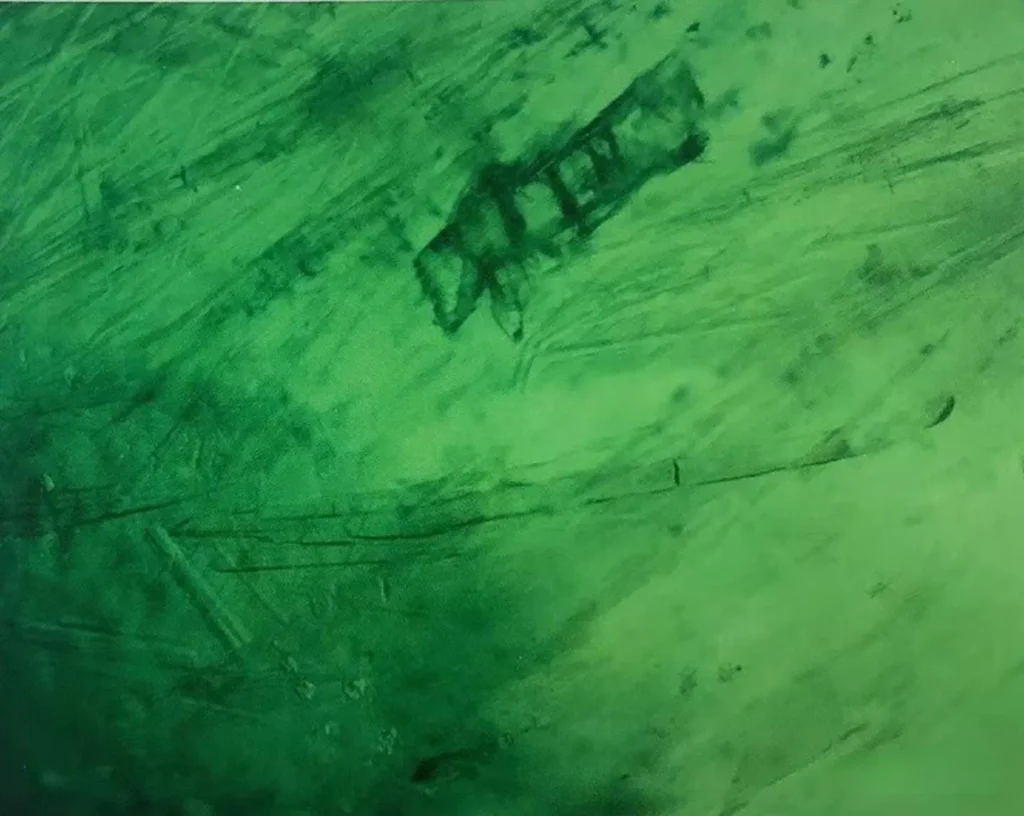
When viewed under magnification, Russian emeralds often reveal inclusions such as tourmaline, fluorite, and mica. One unique feature of Russian emeralds is the presence of “bamboo-like” inclusions of phlogopite mica. Other inclusions may include cavities, fluid-filled gaps, healed fractures, and color zoning.
The Decline of Russian Emeralds in the 20th Century
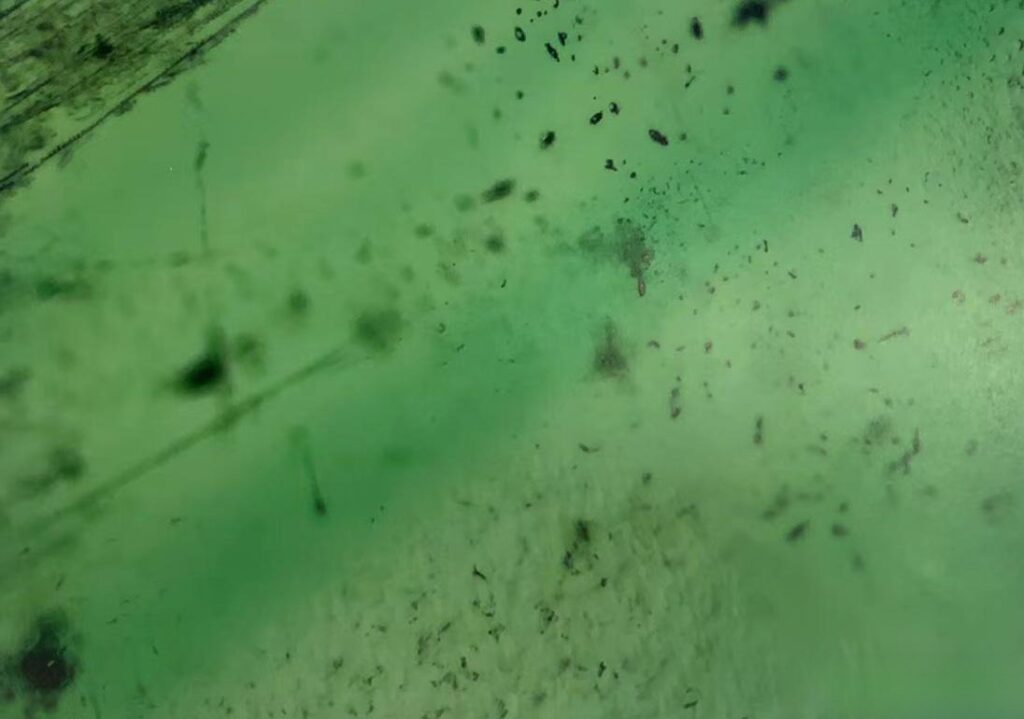
By the 20th century, the quality of Russian emeralds began to deteriorate. Most emeralds from the region showed more imperfections, and high-quality stones became rarer. Today, only the finest Russian emeralds appear in prestigious auction houses like Sotheby’s and Christie’s, making them highly sought after by collectors. Given the rarity and varying quality of these specimens, it is crucial to know what to look for before making an investment. For expert advice on selecting the perfect stone, consult our Emerald Buying Guide: 10 Essential Questions About Color, Origin, Cut, and Care.
Tsavorite Garnet: The Rare Russian Gemstones
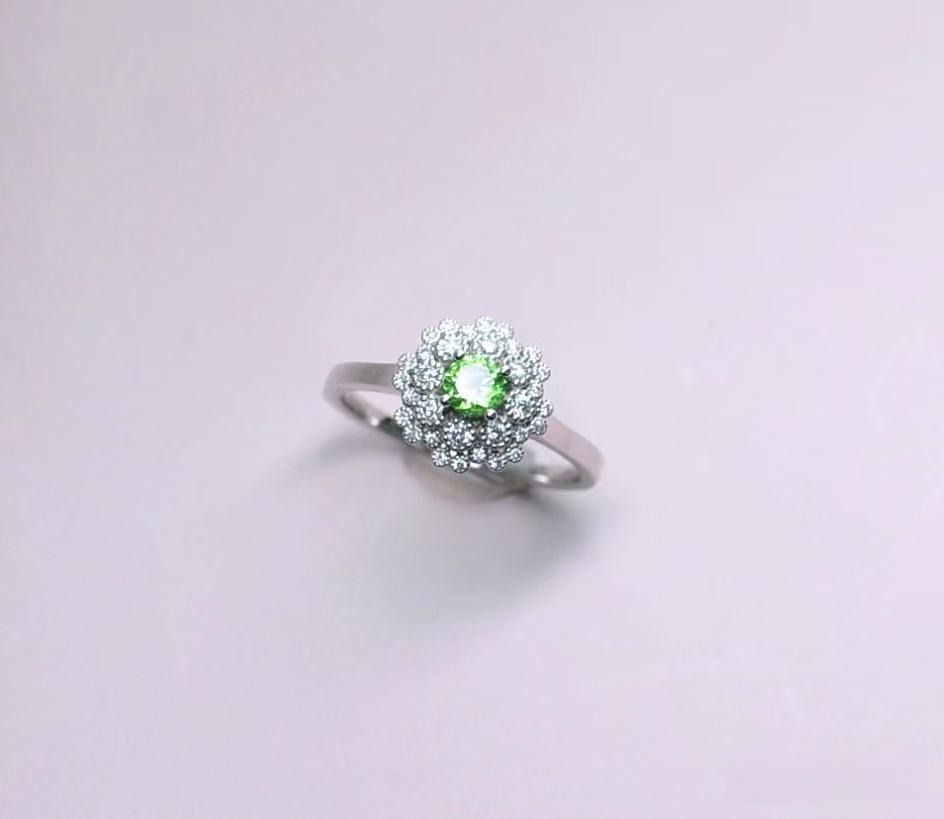
In our previous article: The Ultimate Guide to the Garnet Family – Types, Colors, and Buying Tips, we explored the wide variety of garnets. The garnet family is a powerhouse in the jewelry world, similar to L’Oréal in the beauty industry. It features both affordable varieties, like the iron-magnesium garnet, and high-end gemstones, such as Tsavorite, the “king” of the garnet family.
Colors and Brilliance of Russian Tsavorite
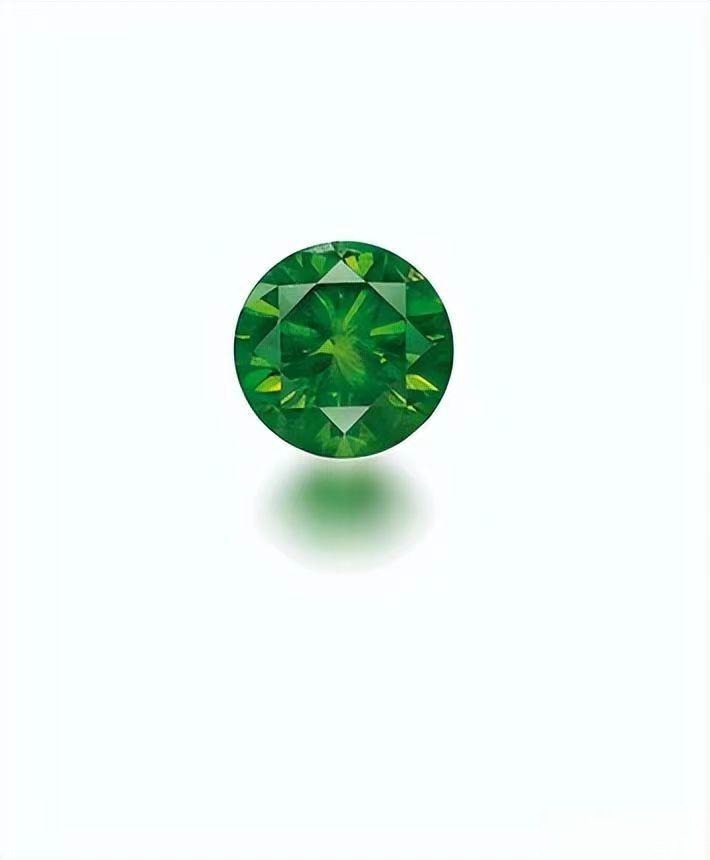
Tsavorite garnet, scientifically known as calcium-iron garnet, ranks among the rarest and most coveted gemstones in the garnet family. This Russian gemstone captivates collectors with its vivid green hues and dazzling sparkle. Its colors range from yellow-green and apple green to vivid emerald green, with the brightest shades commanding the highest value.
One of Tsavorite’s most remarkable features is its dispersion, which measures 0.057—higher than a diamond’s 0.044. Combined with its excellent refractive index, this high dispersion gives the gem a diamond-like brilliance, making it exceptionally radiant under light.
Russian Discovery and Unique Inclusions
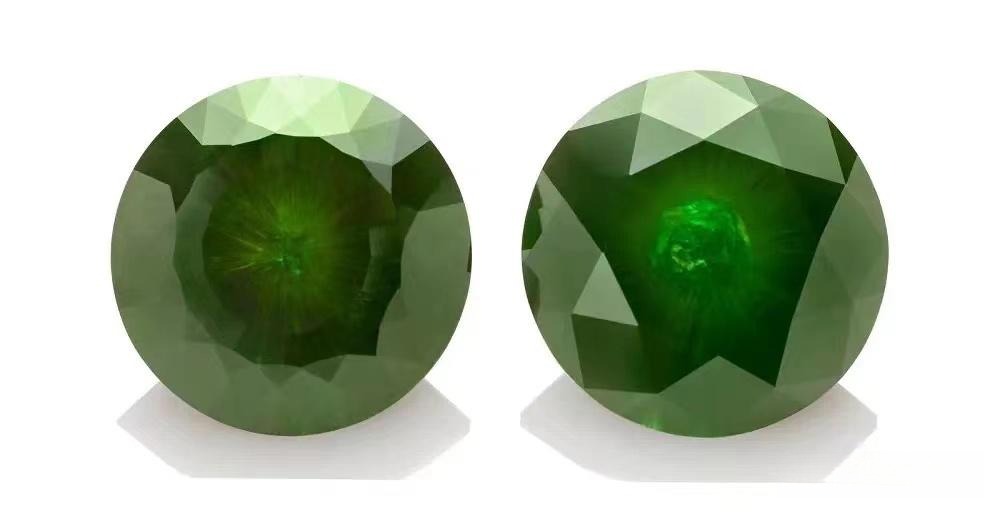
People first discovered Tsavorite garnet in 1853 in Russia’s Ural Mountains. Later, deposits appeared in Madagascar, Italy, and other locations. However, Russian Tsavorites remain the most prized for their vibrant color and superior clarity.
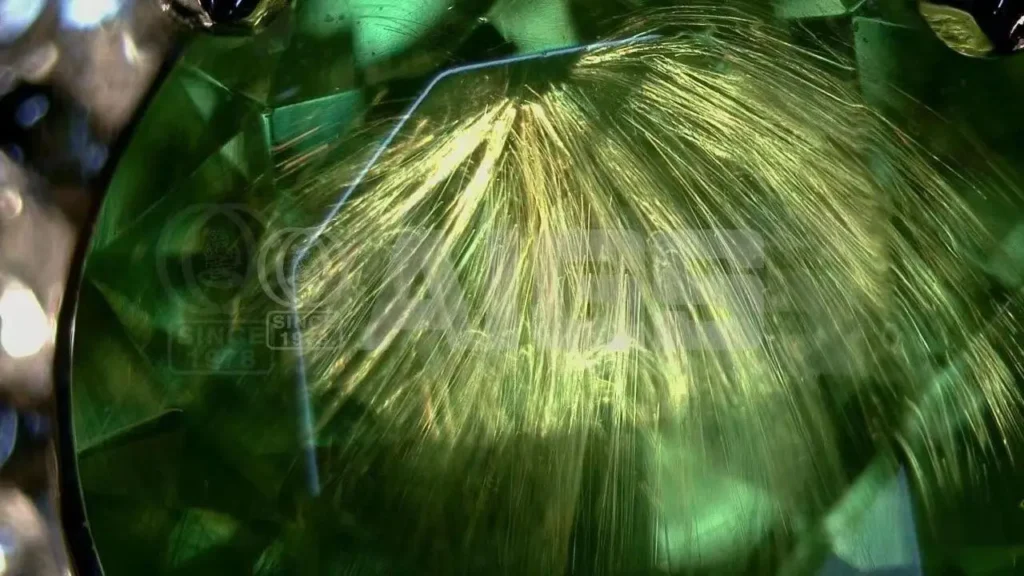
Top-quality Russian Tsavorite often displays unique tail-like inclusions radiating from the gem’s center. These formations, resembling fireworks, do not reduce the gem’s beauty. Instead, they add scientific interest and visual appeal, enhancing its value as a collector’s gemstone.
Rarity and Market Value
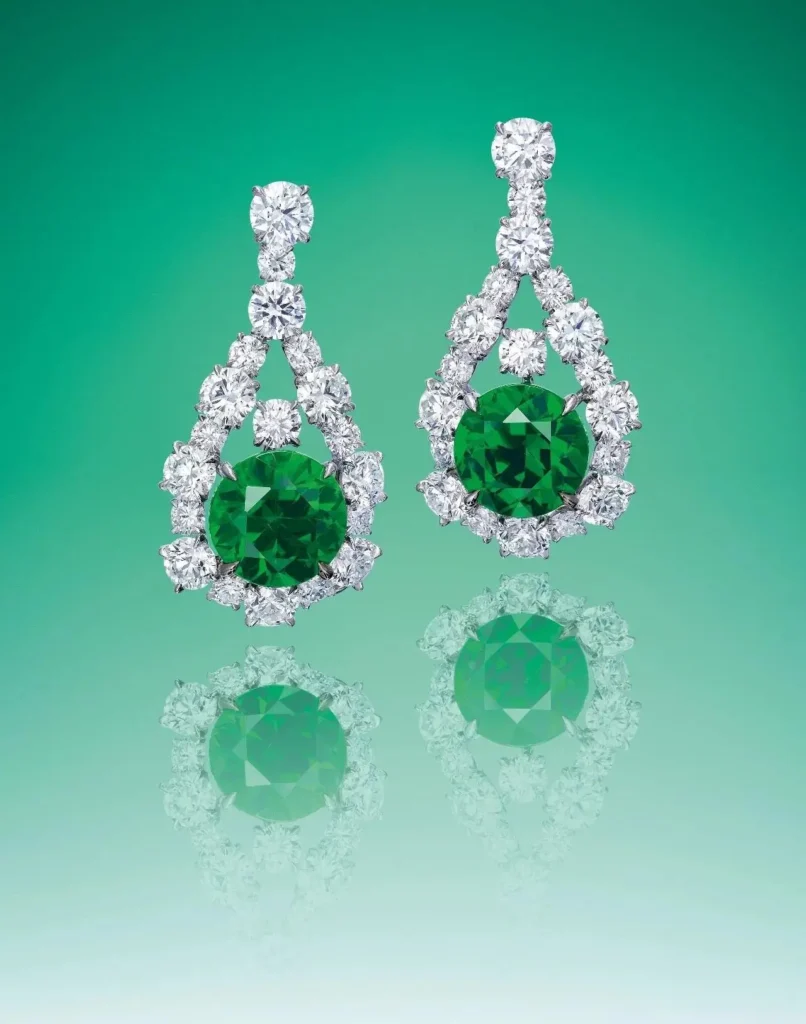
High-quality Russian Tsavorite garnets are scarce, particularly in larger sizes. Stones over 5 carats appear only at top-tier auction houses, commanding premium prices. Collectors seeking this Russian gemstone must therefore act quickly to secure these rare treasures.
Jadeite: A Deep Dive into Russia’s Gemstone Deposits
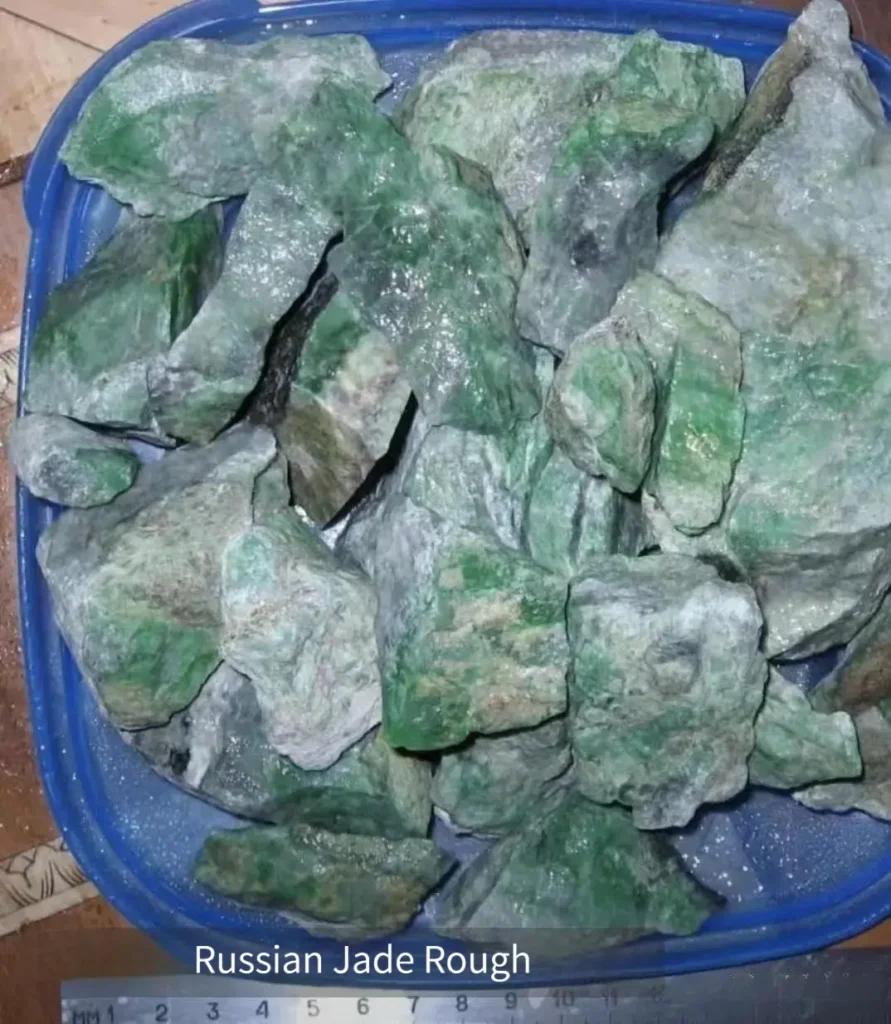
Russia’s jadeite deposits were first discovered in 1959. By the late 1990s, agents began selling small quantities of Russian jadeite in Hong Kong’s jade market, eventually bringing them to mainland China. As these stones entered the professional trade, the question of authenticity became paramount for buyers. To understand how these specimens are evaluated in the lab, see our investigative report: Does Russian Jadeite Qualify for Certification? The Truth About Jadeite Certification and Origins.
Quality and Characteristics of Russian jadeite
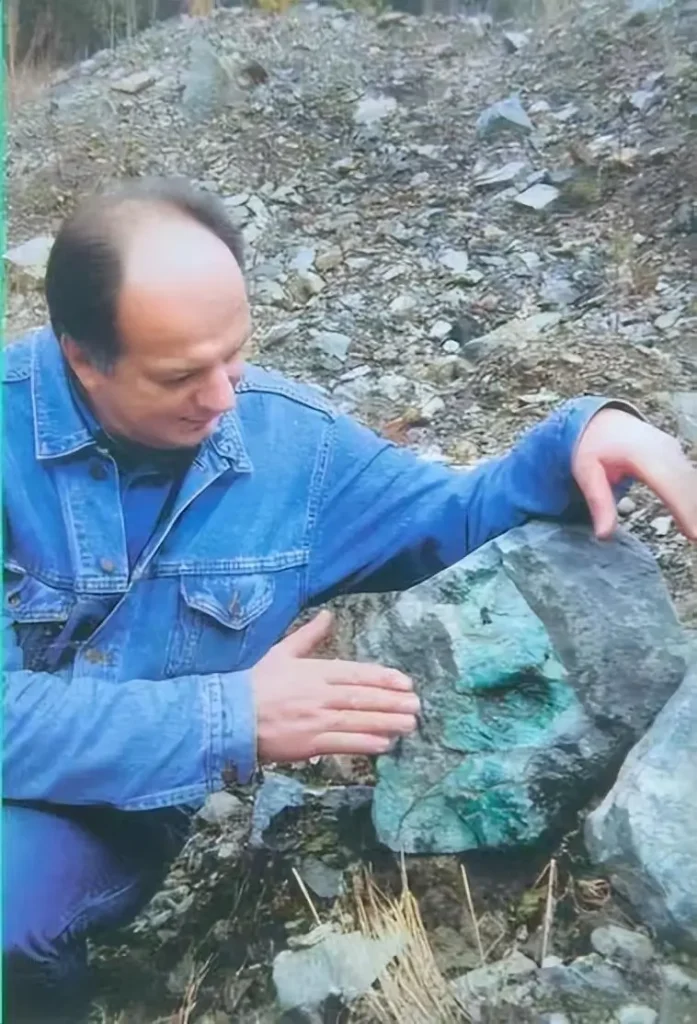
Collectors and buyers often debate the quality of Russian jadeite. In reality, the raw material varies widely. Many stones have a coarser texture and stronger green highlights, while only a small portion achieves a fine, smooth texture. Despite these variations, Russian jade displays unique features that differentiate it from other jadeite sources.
Comparing Russian and Burmese Jadeite
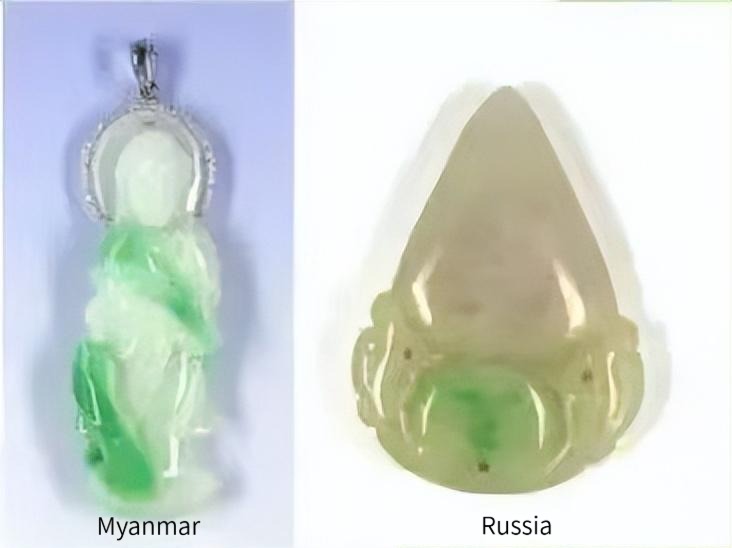
In general, Russian jadeite does not match Burmese jadeite in overall quality. The variety of colors is limited, with green tones dominating, and white jadeite with green patches being most common. Although Russian jadeite generally exhibits a consistent green, it can appear slightly dull compared to the rich, vibrant hues of Burmese jadeite. Nevertheless, some Russian jadeite closely resembles Burmese jadeite, making identification challenging for buyers and enthusiasts alike.
Conclusion
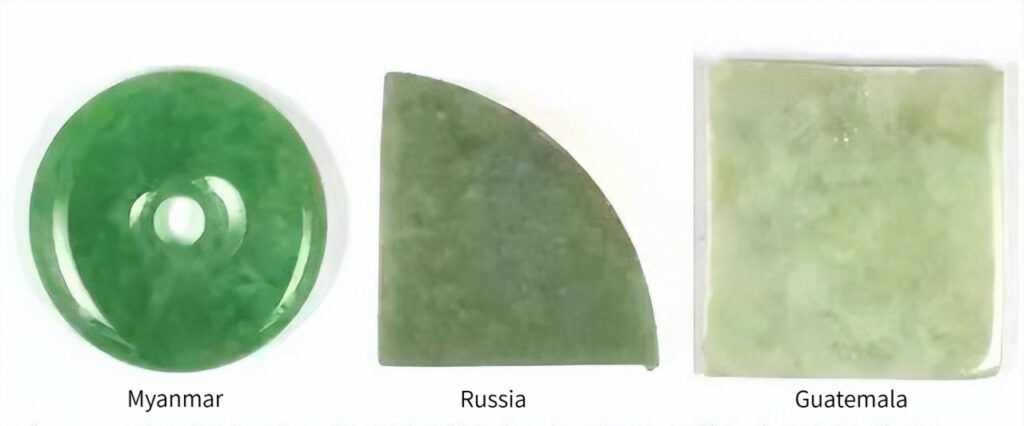
While Russian jadeite may not surpass Burmese jadeite in all aspects, it still represents a unique Russian gemstone with distinct characteristics and historical significance. For collectors seeking a rare and interesting addition, Russian jadeite offers both quality and provenance, especially from the Ural Mountains deposits.
Chromium Diopside: A Rare Russian Gemstones from Siberia
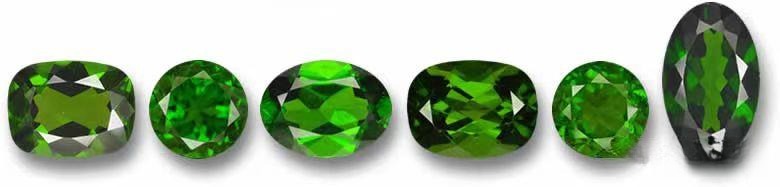
Chromium diopside, part of the Russian gemstones family, is the only gemstone-quality variety of diopside. Its vibrant green color and unique characteristics make it a standout among collectors and jewelry enthusiasts.
Vibrant Green Color from Chromium
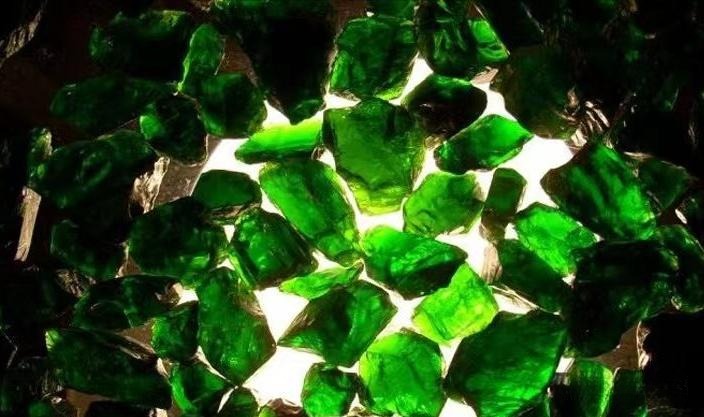
Thanks to the presence of chromium, this gemstone exhibits a rich, intense green hue. High-quality specimens, with deep and consistent color, have earned the nickname “substitute for emerald” in the gem industry. Nevertheless, despite its vivid tones, chromium diopside has a notable drawback: it is relatively soft. With a Mohs hardness of only around 5, it cannot match the durability of emerald.
Siberia’s Inagli Mine: Source of Gem-Quality Chromium Diopside
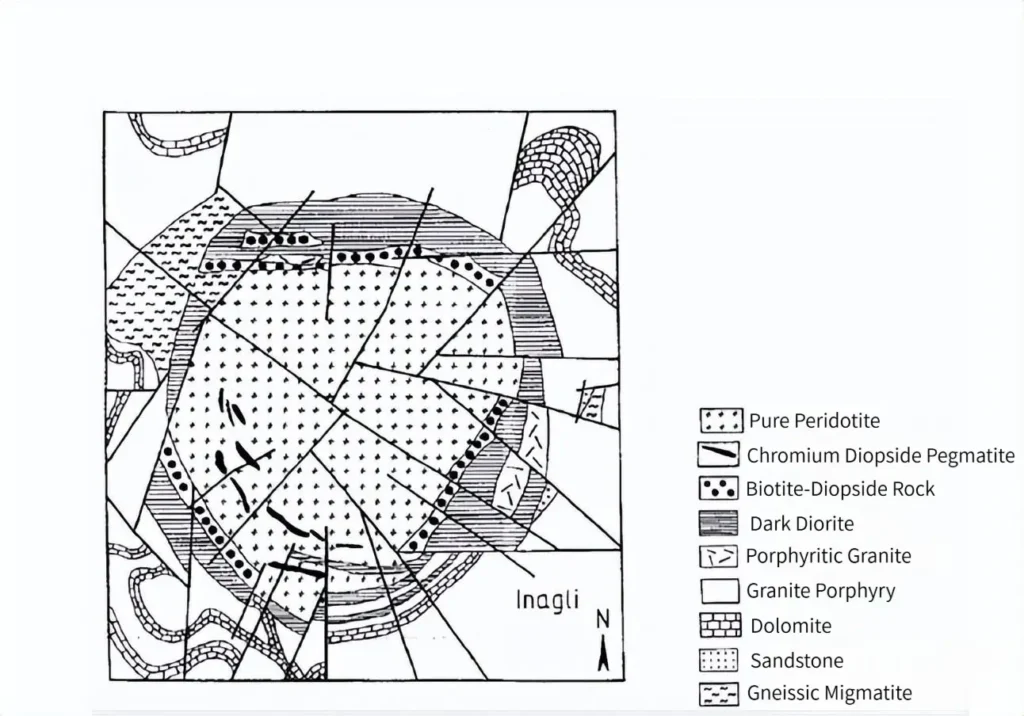
The Inagli mining region in Eastern Siberia produces the finest gem-quality chromium diopside. Here, crystals are generally large and irregular in shape. Most stones appear in shades of green or yellow-green, displaying fresh, bright emerald-like colors and good transparency. Some of the highest-quality gems are marketed under the commercial name “Siberian Emerald.”
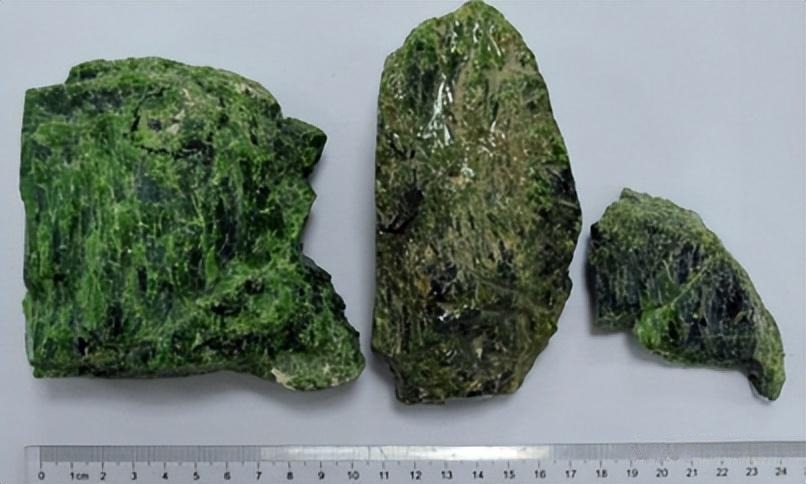
Softness and Caution in the Market
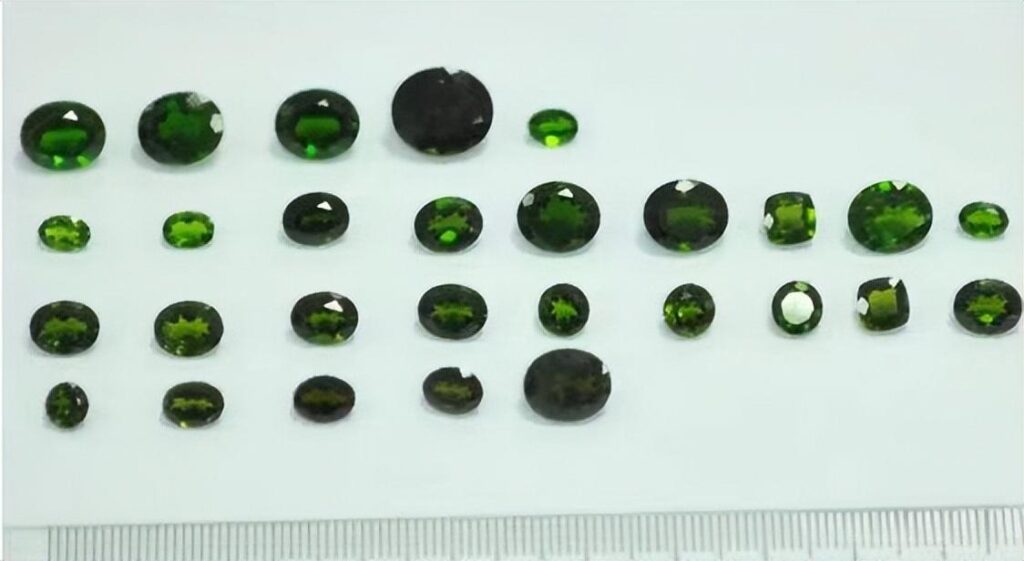
Although Siberian chromium diopside offers a captivating green color, its softness limits its practical use in jewelry. With a Mohs hardness of only 5, it scratches easily. Furthermore, some unscrupulous sellers may try to pass chromium diopside as Russian emerald. Therefore, buyers should exercise caution and carefully verify the gemstone’s identity.
Tourmaline: The Russian Gemstone Loved by Collectors
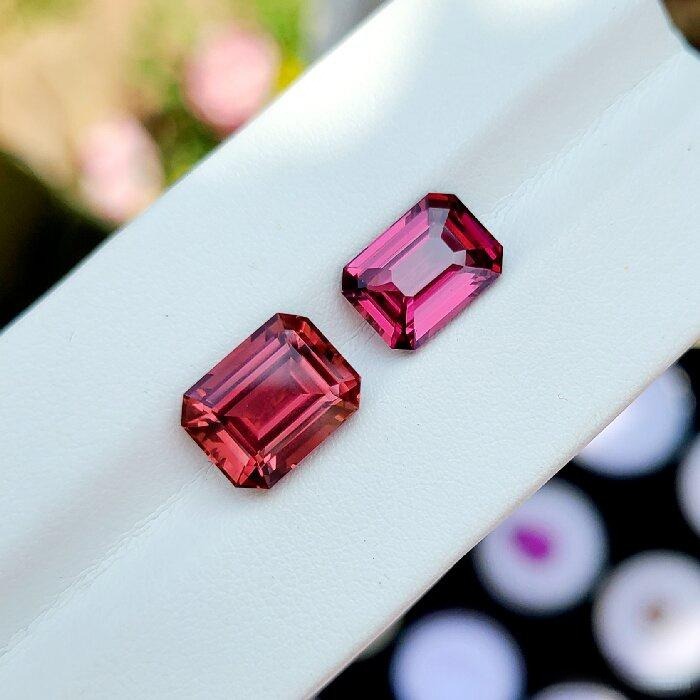
Tourmaline, known for its stunning array of colors, is a gemstone you are likely familiar with if you’re a gemstone enthusiast. Scientifically named Elbaite, tourmaline is a borosilicate crystal. It comes in a variety of colors, including red, green, blue, and more. With a hardness of around 7 on the Mohs scale, it often contains inclusions like bubbles and cracks, making high-quality, clear tourmaline relatively rare.
Global Tourmaline Deposits
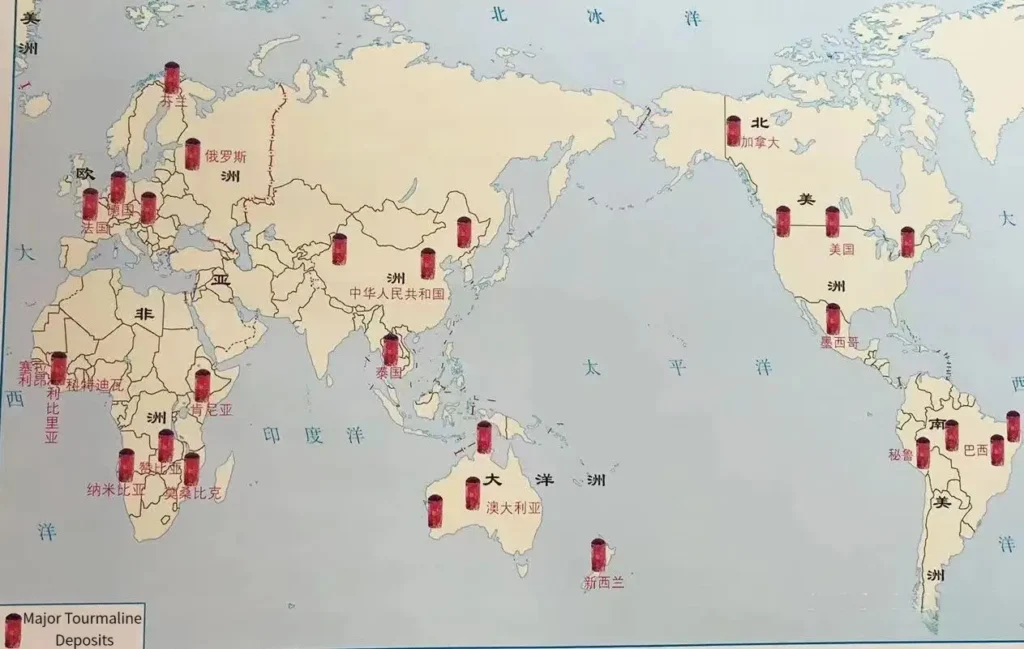
To date, over 300 tourmaline deposits have been discovered across various continents. Major sources of gem-quality tourmaline include Brazil, Sri Lanka, Tanzania, Kenya, Mozambique, Afghanistan, Russia, and several other locations.
Russian Tourmaline: Red and Blue Varieties
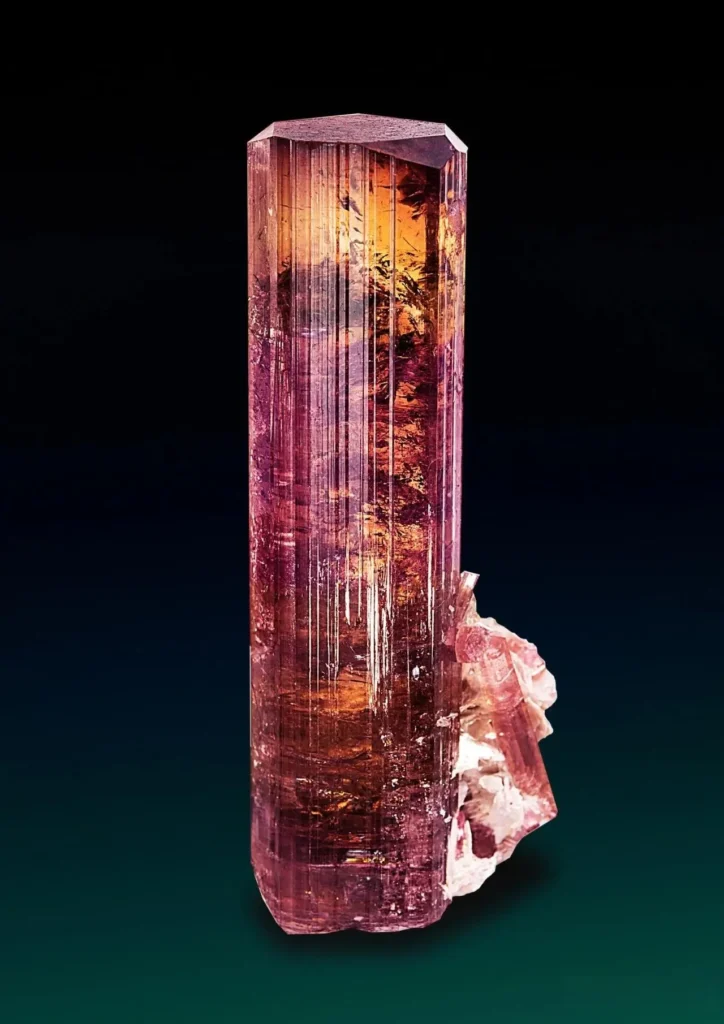
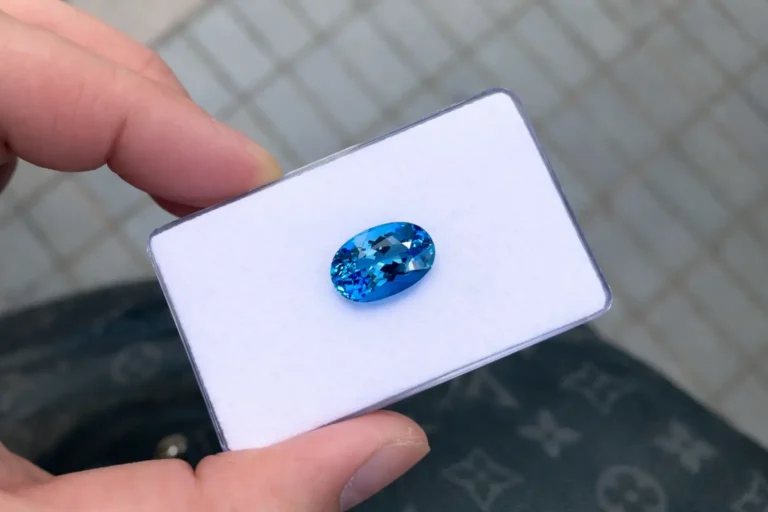
Russia is particularly known for producing red and blue tourmaline. The red tourmaline found in the Ural Mountains is especially renowned for its deep, intense color, earning it the nickname “Siberian Ruby.” On the other hand, blue tourmaline, which is found in the weathered granite of Siberia, is rarer and considered one of the most valuable varieties of tourmaline.
Amazonite: The Beautiful Green and Blue Russian Gemstone
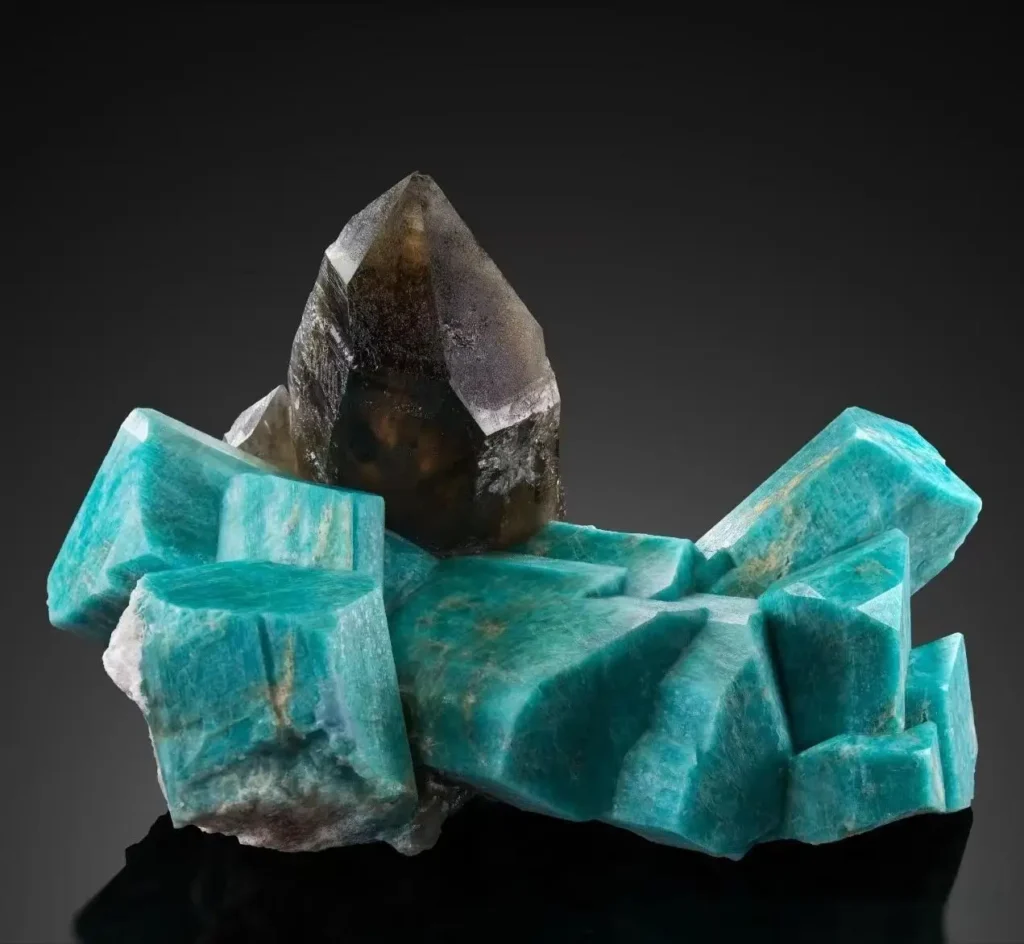
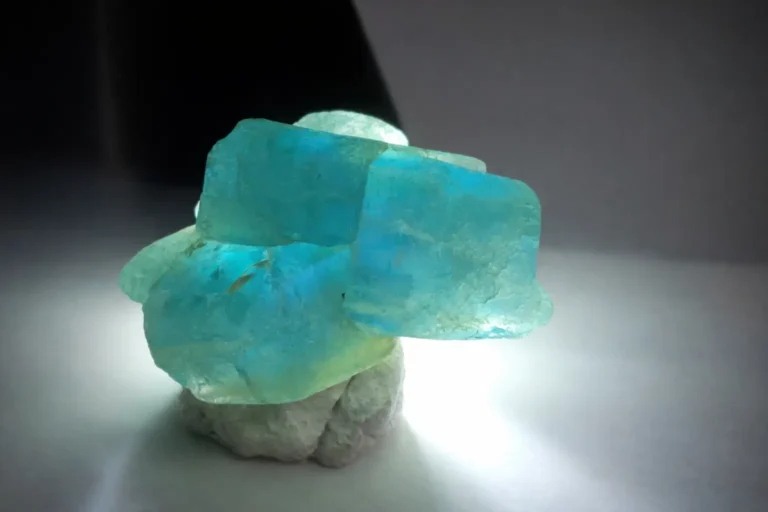
Amazonite, a variety of microcline feldspar, features a beautiful green to blue-green color. People first discovered it in the Amazon River Basin, which is why the gemstone is often called “Amazon Stone” in international markets.
What Makes Amazonite Unique?
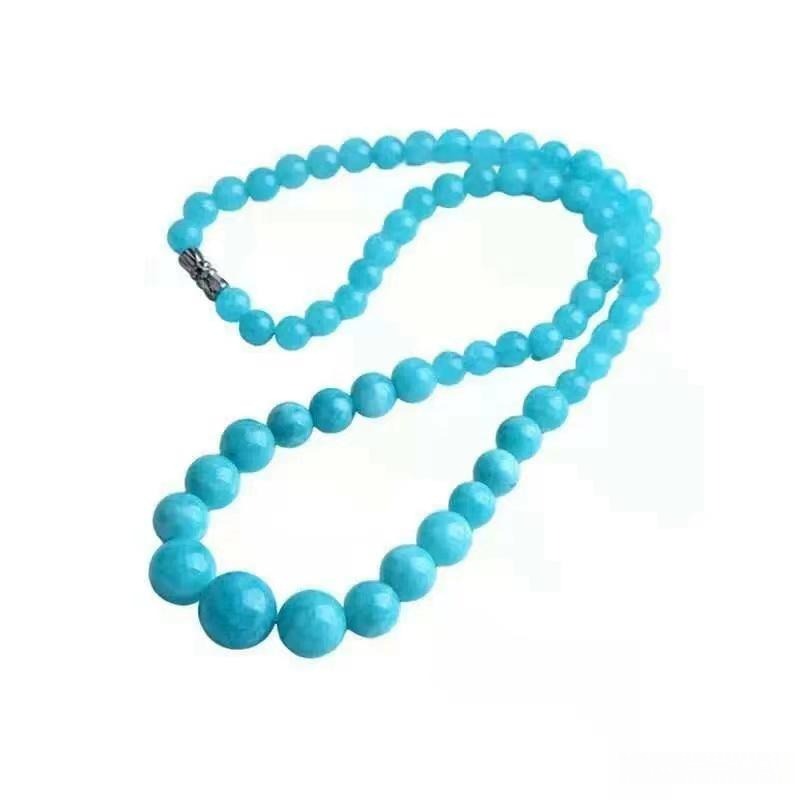
Amazonite primarily appears in shades of blue and blue-green, ranging from semi-transparent to slightly translucent. When you magnify it, you’ll often notice white, grid-like patterns or color spots. These distinctive characteristics make Amazonite highly sought after by collectors and jewelry designers.
Where Can You Find Amazonite?
Early Amazonite primarily came from the Misk region in the Ilmen Mountains of southwestern Russia. Over time, miners discovered deposits in other parts of the world, including India, Brazil, the United States, Russia, and Canada.
Amazonite from the Ural Mountains
In addition to the Misk region, the Ural Mountains also hold significant Amazonite deposits. Amazonite from this area typically has a light blue-green color with a fresh and natural appearance. It has a lower density compared to other varieties, and its white patterns are less prominent. As a result, this type of Amazonite is both more affordable and popular in the market.
Amber: Russian Gemstones from the Baltic Region
Amber, an organic gemstone, forms from the resin of coniferous plants dating back to the Mesozoic and Cenozoic eras. Over millions of years, complex geological processes transform this resin into a fossilized treasure. While the best-quality specimens feature crystal clarity and flawless purity, the market is often flooded with sophisticated imitations. To ensure your collection is authentic, consult our expert guide: Real Amber Identification – 10 Essential Tips from Peonyjewels.
What Is Amber and How It Forms
Ancient trees, especially conifers, produce resin that hardens over time. Through millions of years, this resin undergoes a transformation. The highest quality amber appears translucent and free of imperfections. It often contains preserved ancient plant or insect inclusions, which add to its beauty and value.
Major Amber Sources Worldwide
People have found amber in hundreds of locations worldwide. However, only a few regions hold rich deposits that are economically viable to mine. The Baltic Sea region stands as the largest source of amber, supplying over 85% of the high-quality amber on the market.
Baltic Amber: Russia’s Kaliningrad Deposits
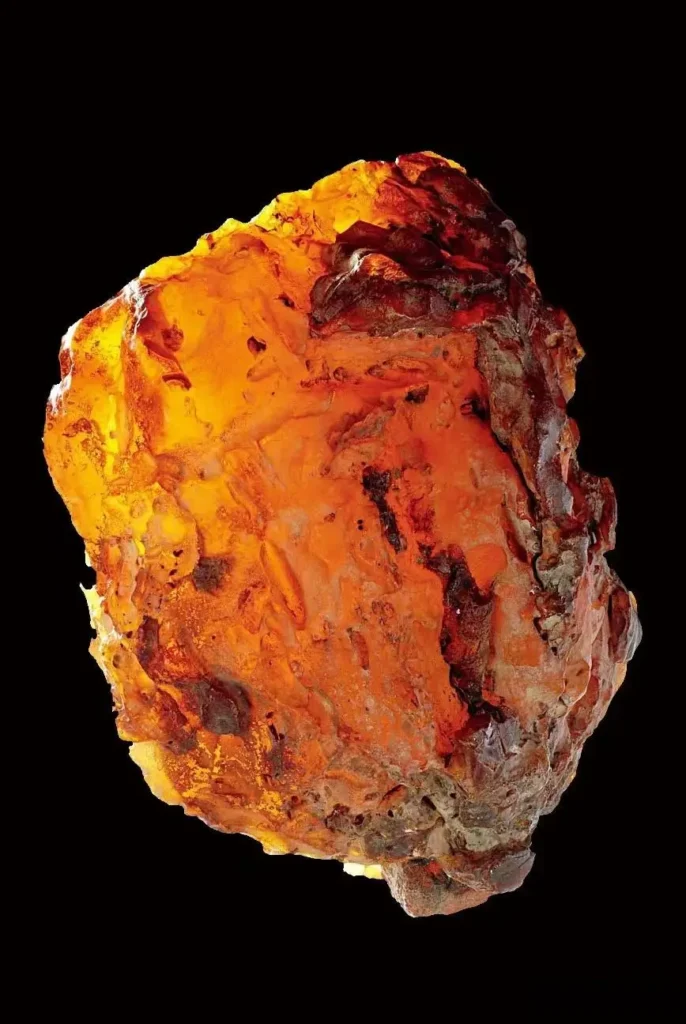
Baltic amber originates from the Eocene period, around 40 to 50 million years ago. It formed in the Fennoscandian landmass. The largest amber deposits in this region lie in Russia’s Kaliningrad area, which serves as one of the primary global sources of amber.
The Characteristics of Russian Baltic Amber
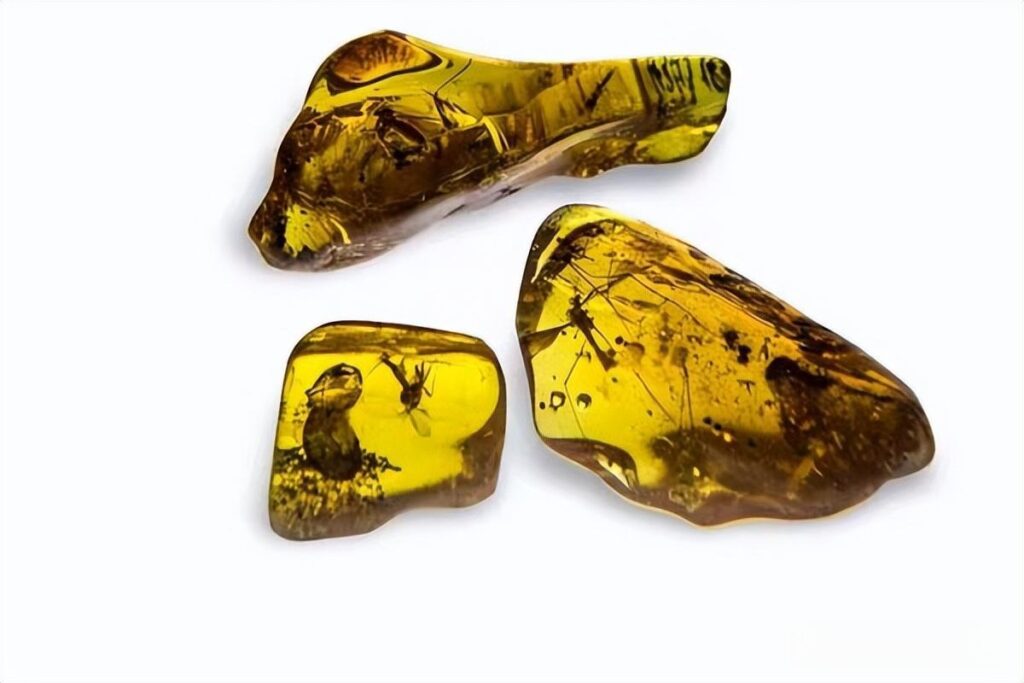
Kaliningrad amber is notable for its large size and waxy texture. Its dominant color is golden yellow, and it ranges from opaque to semi-translucent. The amber displays fresh, natural patterns and feels smooth and warm to the touch. However, this amber often contains more impurities, which results in a lower yield of high-quality finished products.
Nephrite Jade: The Dominant Force Among Russian Gemstones
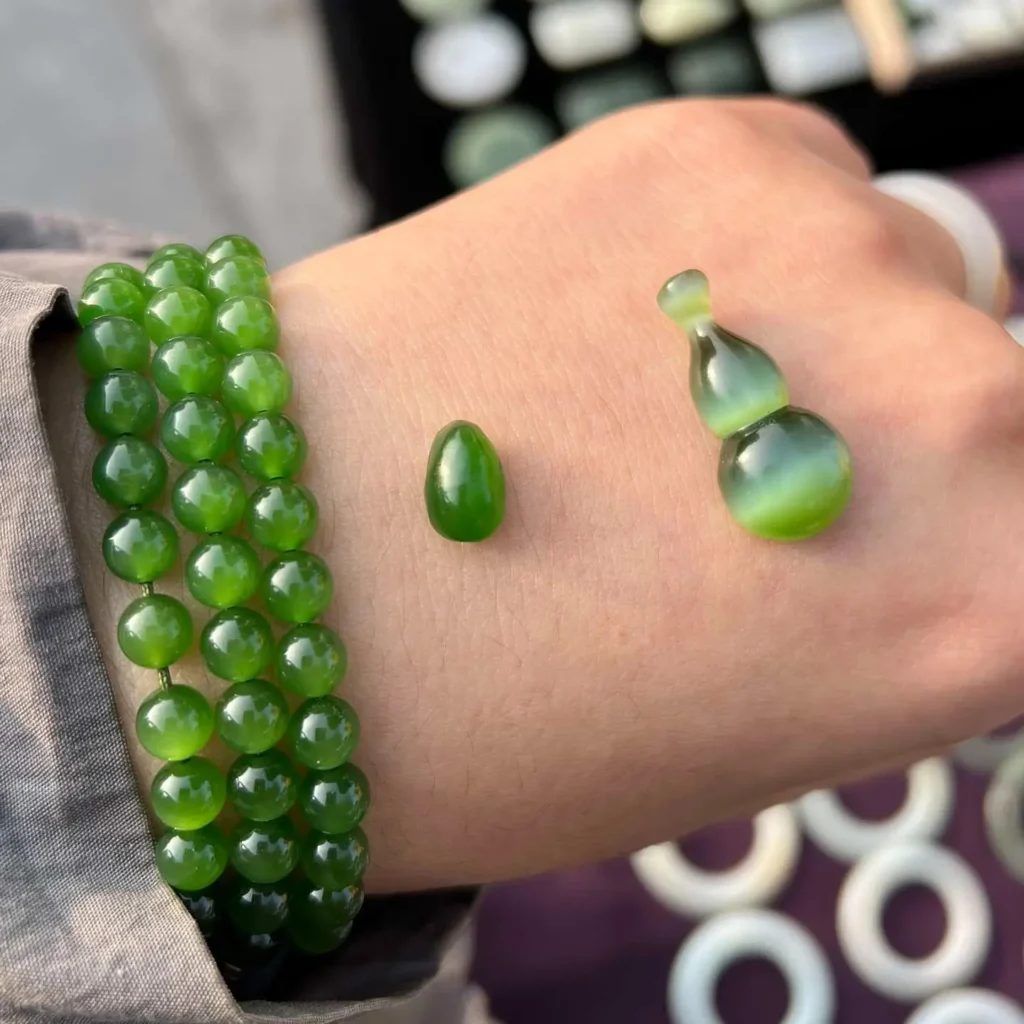
While Hetian jade remains the king of white jade, Russian nephrite jade is the undisputed leader in the world of colored nephrite. High-quality Russian nephrite exhibits vibrant green tones, even coloration, and a smooth, fine texture with minimal black inclusions. Collectors consider it one of the most valuable and desirable nephrite varieties.
Why Russian Nephrite Stands Out
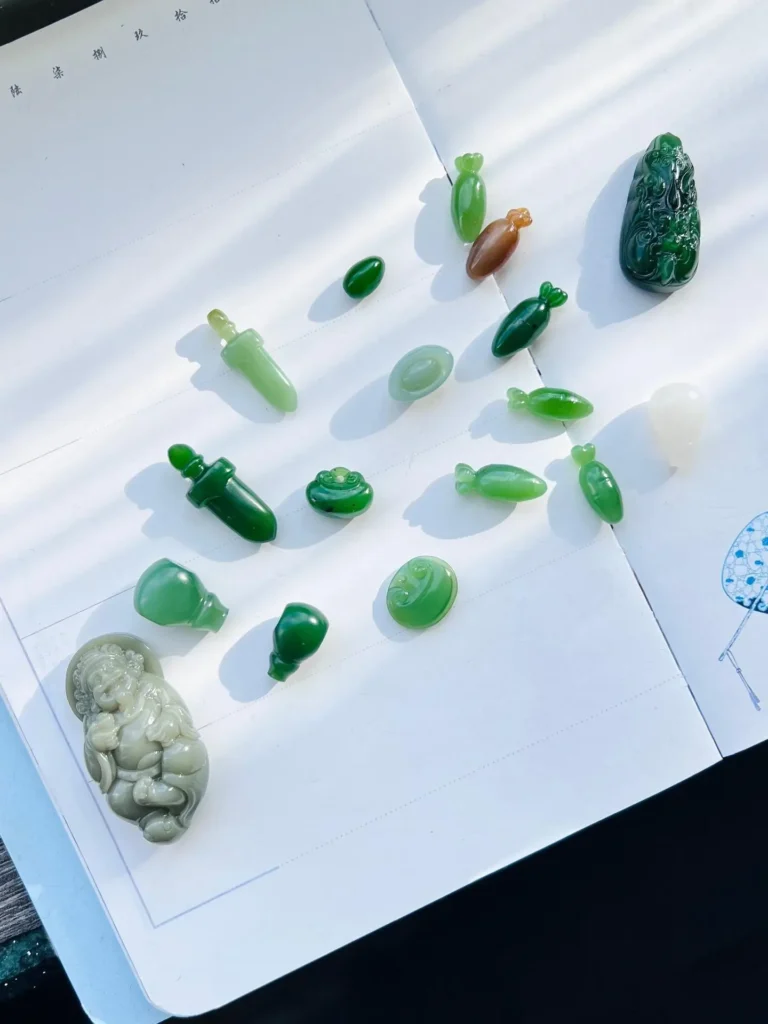
Russian nephrite comes primarily from mountain deposits, with raw materials often in their natural mineral form. These stones are generally large, structurally sound, and nearly free of cracks. Their bright and clean appearance makes them highly sought-after for jewelry and collectible pieces.
Major Russian Nephrite Sources
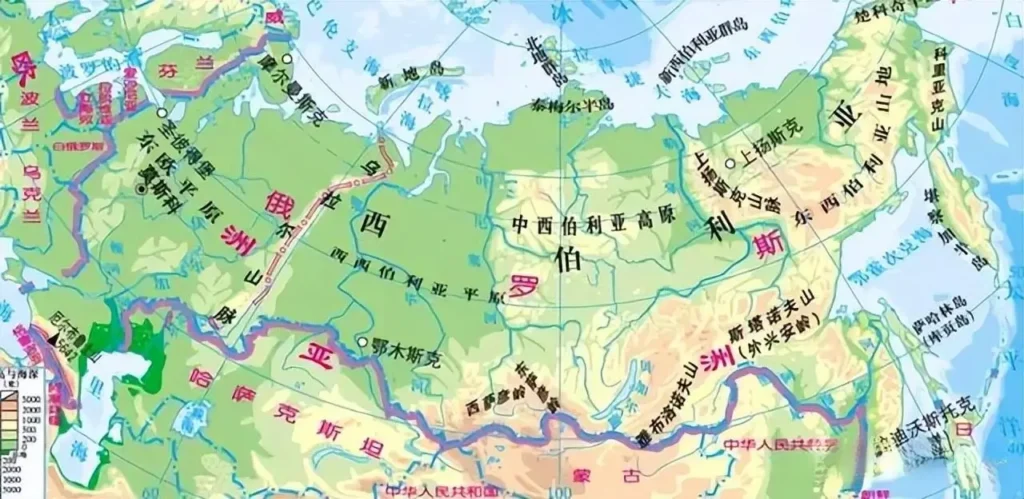
The four main regions producing Russian nephrite are the Ural Mountains, Krasnoyarsk, Buryatia, and Irkutsk. These locations, known collectively as the Four Great Jade Fields of Russia, yield large quantities of high-quality jade, making them the primary sources for premium nephrite.
Additional Popular Nephrite Sources
Beyond the Four Great Jade Fields, several smaller mining areas in Russia also produce nephrite jade that remains popular on the market. These secondary sources further cement Russia’s reputation as a major producer of quality nephrite. (Related article: Beyond Mine No. 7: The Complete Guide to Russian Nephrite Jade Deposits)
Alexandrite: The Chameleon of Russian Gemstones
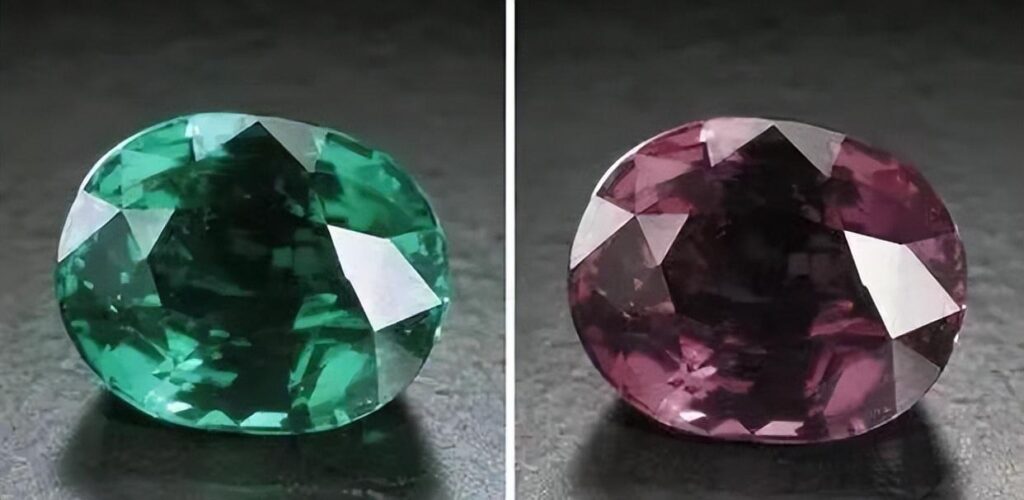
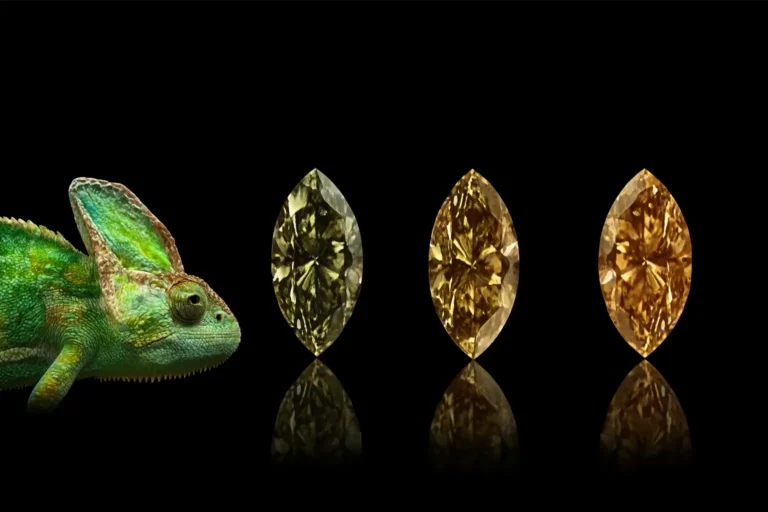
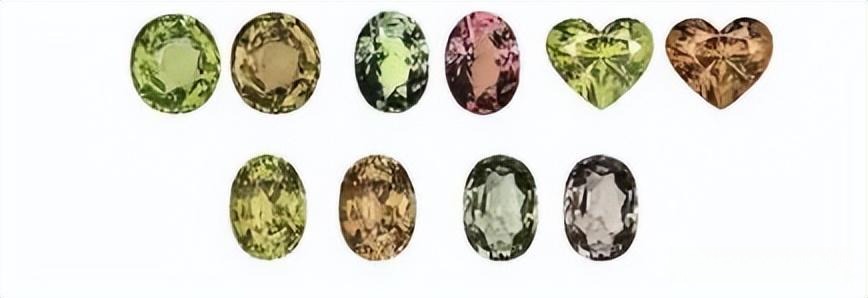
Alexandrite is a rare variety of chrysoberyl that possesses a remarkable ability to shift colors, earning it the nickname “The Chameleon Stone.” While various minerals exhibit color-change phenomena, the name “Alexandrite” belongs exclusively to chrysoberyl that displays this specific optical magic, a quality that has solidified [Alexandrite: The Rarest and Most Valuable June Birthstone] as a true icon in the world of high-end jewelry.
The Optical Magic: Emerald by Day, Ruby by Night
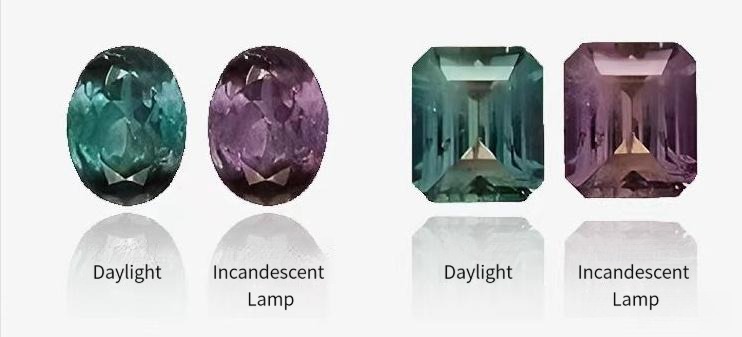
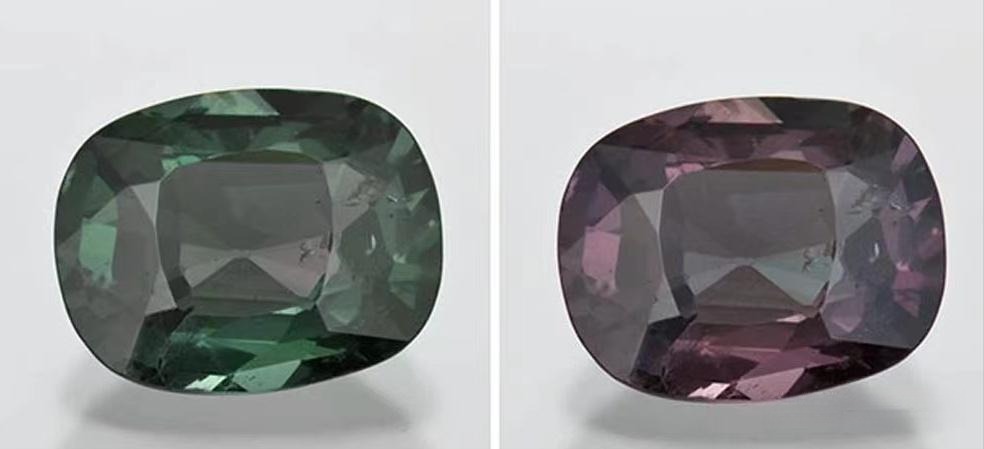
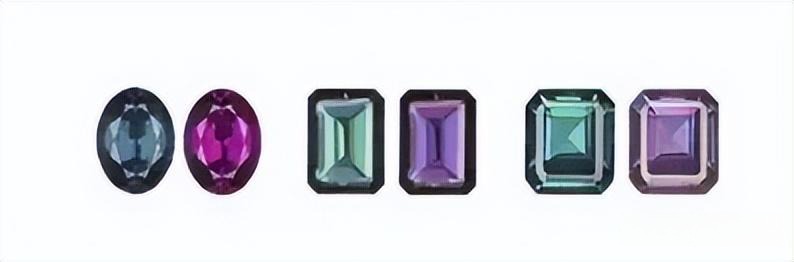
Under the cool rays of natural daylight or fluorescent bulbs, Alexandrite presents a lush green or bluish-green hue. However, when moved into the warm glow of incandescent light, it transforms into a vibrant raspberry red or purplish-red. This dramatic contrast—the result of complex chromium trace elements—has led gemologists to describe it as “emerald by day, ruby by night.”
A Royal Discovery in the Ural Mountains

The history of these Russian gemstones began in 1830. Miners first unearthed this extraordinary crystal within the emerald mines of the Ural Mountains near Yekaterinburg. Legend has it that the discovery coincided with the birthday of Tsarevich Alexander (later Tsar Alexander II), prompting the name “Alexandrite” in his honor. Beyond the date, the gem’s dual colors of red and green mirrored the official military colors of the Russian Imperial Guard, cementing its status as a patriotic symbol of the Tsar’s empire.
Rarity and Global Sources
While The Smithsonian Institution showcases three legendary specimens that highlight this geographical contrast: two impressive gems from Sri Lanka weighing 65.08 and 16.69 carats, and a smaller but historically significant 4.84-carat stone from Russia. Although the original Russian deposits are now nearly exhausted, these museum-grade pieces remain the gold standard. Today, while Brazil and Africa supply the majority of the market, their modern finds often exhibit more muted color shifts and “muddy” tones, rarely matching the vivid intensity of original 19th-century Russian gemstones.
Exploring Gemstone Treasures from Around the World
Today, we are thrilled to explore Russia and its rich collection of local gemstones. However, every country around the globe is home to its own unique mineral treasures. In our Gemstone Countries series, we’ve previously showcased the wonders of several nations, including:
- India:
Indian Specialty Gemstones: A Guide to Historic Diamonds, Kashmir Sapphires, and Investment Treasures - Colombia:
Colombian Gemstones: Emeralds, Mining Regions, and Investment Value - Thailand:
Thailand Gemstones: From Rubies and Sapphires to the Rising Star of Spinel - Brazil:
8 Treasured Brazilian Gemstones from the World’s Colored Gem Capital
Discover PeonyJewels: Handcrafted Vintage Earrings
At PeonyJewels, we believe that every piece of jewelry tells a unique story. Our handmade vintage earrings are a testament to timeless artistry, meticulously crafted with passion and attention to detail. Each pair is designed to add a touch of elegance and charm to any look, making them perfect for collectors and jewelry enthusiasts alike.
As we move forward, stay tuned as we continue to unveil more gemstone treasures from around the world. In addition, explore our curated selection of exquisite gemstone jewelry, where every piece is thoughtfully chosen to offer you both beauty and rarity.
Whether you’re seeking a vintage statement piece or a classic addition to your collection, PeonyJewels brings you the finest in both craftsmanship and design.
Disclaimer: This article is a translated and curated deep dive into Russia’s gemstone heritage. All gemological terms, including Demantoid Garnet and Siberian Nephrite, are localized for international trade standards. The content is based on geological data available as of January 2026. For professional appraisal, please consult a certified gemologist.