Beyond Mine No. 7: The Complete Guide to Russian Nephrite Jade Deposits
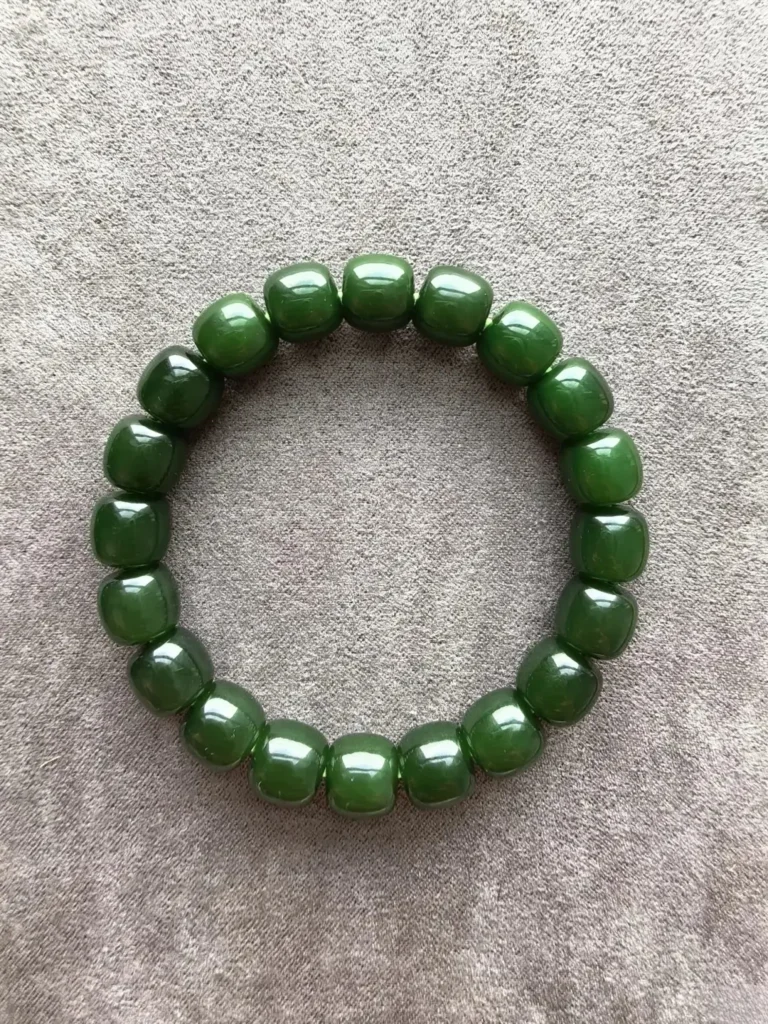
In recent years, Russian nephrite jade has gained increasing attention in the global jewelry and collectors’ market. Known for its vivid green tones, fine texture, and exceptional toughness, it is often regarded as one of the most reliable sources of high-quality green nephrite available today.
However, as interest grows, so does confusion. Terms such as “Mine No. 7,” “old mine material,” or “Baikal nephrite” circulate widely online, often without proper context. This guide focuses exclusively on Russian nephrite jade, breaking down its geological origins, major mining regions, and—most importantly—how professionals evaluate quality beyond labels and mine names.
Why Russian Nephrite Jade Holds a Leading Position
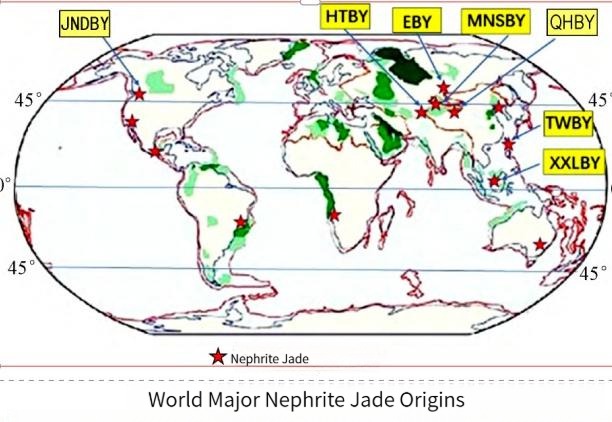
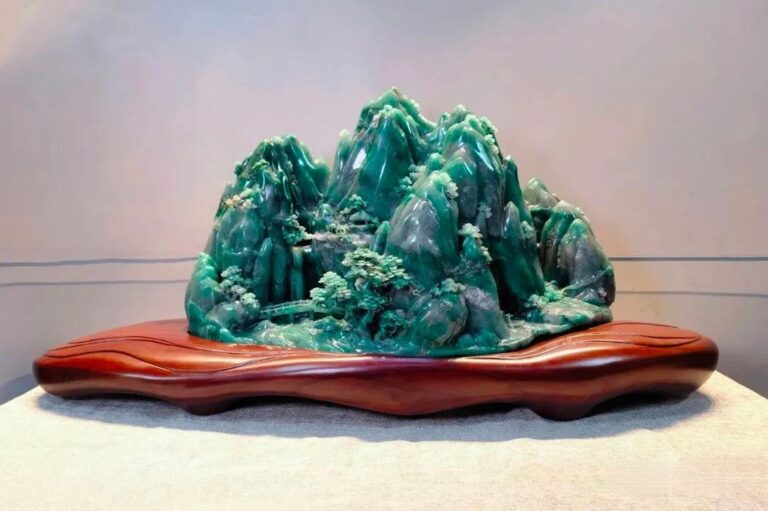
Within the world of green nephrite, Russia occupies a unique position. While nephrite jade occurs in many parts of the world, Russia consistently produces material with strong color saturation, stable internal structure, and large usable volumes. These qualities make Russian nephrite jade especially suitable for fine carving, statement jewelry, and long-term collecting.
Historically, Russian deposits were developed on an industrial scale earlier than many other regions. As a result, a significant portion of high-grade nephrite circulating in today’s market—particularly carving-grade material—originates from Russia. This is not a matter of hype, but of geological conditions and mining history aligning in rare harmony.
To explore the full breadth of Russia’s remarkable mineral wealth beyond jade, read more about Russian Gemstones: 9 Extraordinary Treasures from the Urals to Siberia.
What Is Nephrite Jade? A Practical Definition
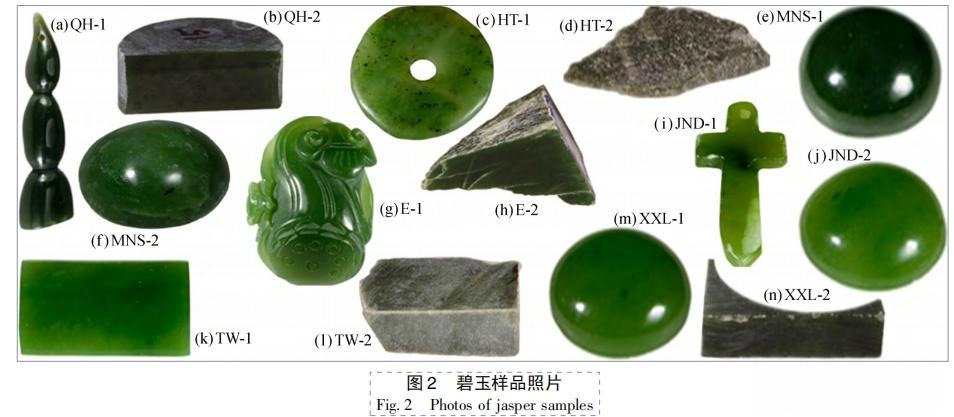
Nephrite jade is a tough, fibrous mineral aggregate dominated by tremolite. Unlike jadeite, nephrite owes its legendary durability to an interlocking crystal structure rather than hardness alone.
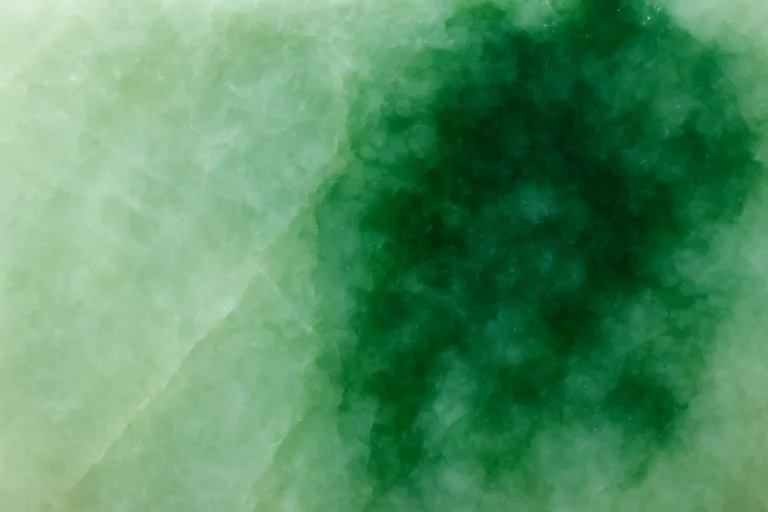
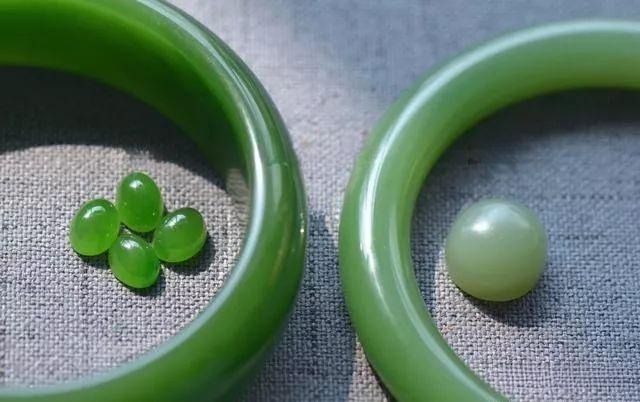
In Russian nephrite jade, green coloration typically results from trace elements such as iron, chromium, and nickel. Variations in concentration and distribution of these elements explain the wide spectrum of greens—from soft apple green to deep spinach green—found across different mining regions.
While mineral composition defines nephrite, visual quality and structural integrity determine its value. This distinction explains why two seemingly identical green stones can have vastly different market prices. To understand these price gaps and the specific differences between Russian vs. Xinjiang nephrite, see our Nephrite Jade Price Guide: Quality Grades, Value Factors, and Origins.
Geological Formation of Russian Nephrite Jade
Russian nephrite jade forms primarily along contact zones between serpentinite and mafic or ultramafic rocks. These geological environments promote the slow growth of dense, fibrous tremolite aggregates—ideal conditions for high-quality nephrite.
Most Russian deposits lie within major Eurasian mineral belts in northern latitudes. Compared with many southern hemisphere deposits, these northern formations tend to produce nephrite with greater structural cohesion and color stability, characteristics highly valued in both jewelry and sculpture.
How Russian Nephrite Is Mined
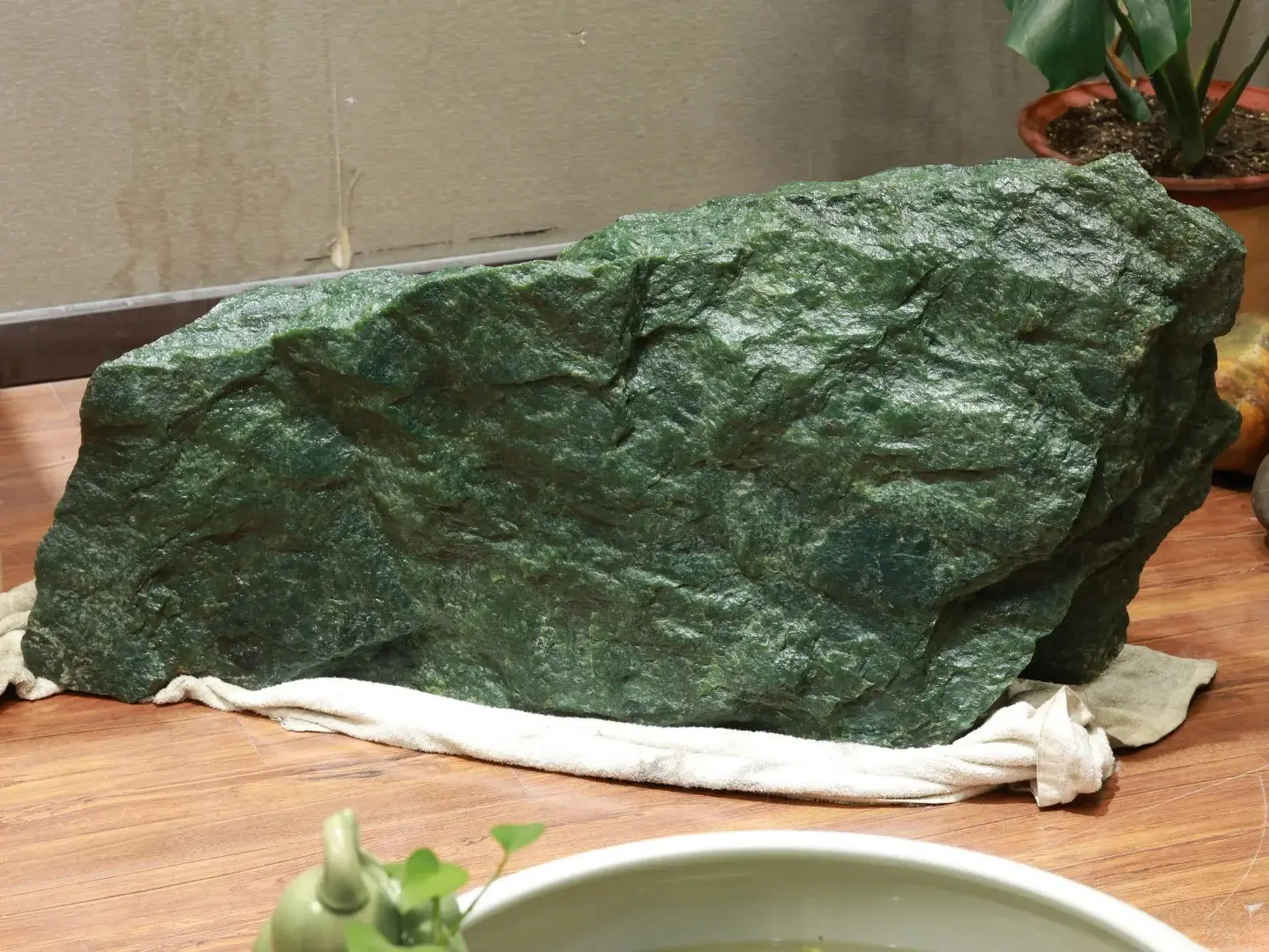
Unlike river-worn nephrite pebbles found in some regions, Russian nephrite jade is predominantly mined as primary mountain material. This means the stone is extracted directly from bedrock rather than shaped by natural water erosion.
As a result, Russian nephrite often appears in:
- Large block sizes
- Relatively low fracture density
- Consistent internal texture
These traits allow cutters and carvers greater freedom, reduce material loss, and support complex designs that would be risky with more brittle stone.
Major Russian Nephrite Jade Mining Regions and Deposits
Russia hosts some of the world’s most important nephrite jade mining regions, with production concentrated in four key areas: the Ural Mountains, Krasnoyarsk Territory, Buryatia, and Irkutsk Region. Together, these regions form what the trade commonly refers to as the four major Russian nephrite jade fields.
These areas not only yield large quantities of nephrite, but also produce material with consistently high structural integrity. Over time, individual deposits within these fields—often referred to by mine numbers or local names—have developed distinct reputations in the market. Understanding these mining regions and deposits is essential, as different mines directly influence material quality, visual character, and commercial value.
Western Sayan Range Nephrite Field
The earliest documented discovery of Russian nephrite jade originated in the Western Sayan Range. Mining began during the Soviet era at what became known as Mine No. 1, located along the Kantegir River, a tributary of the Yenisei River. This deposit is also known historically as the Kantegir nephrite mine.
Subsequent exploration led to the discovery of Mines No. 2 through No. 6 in the surrounding area. In practice, these deposits are collectively classified as the Western Sayan nephrite field, with Mines 1–6 forming its core production zone.
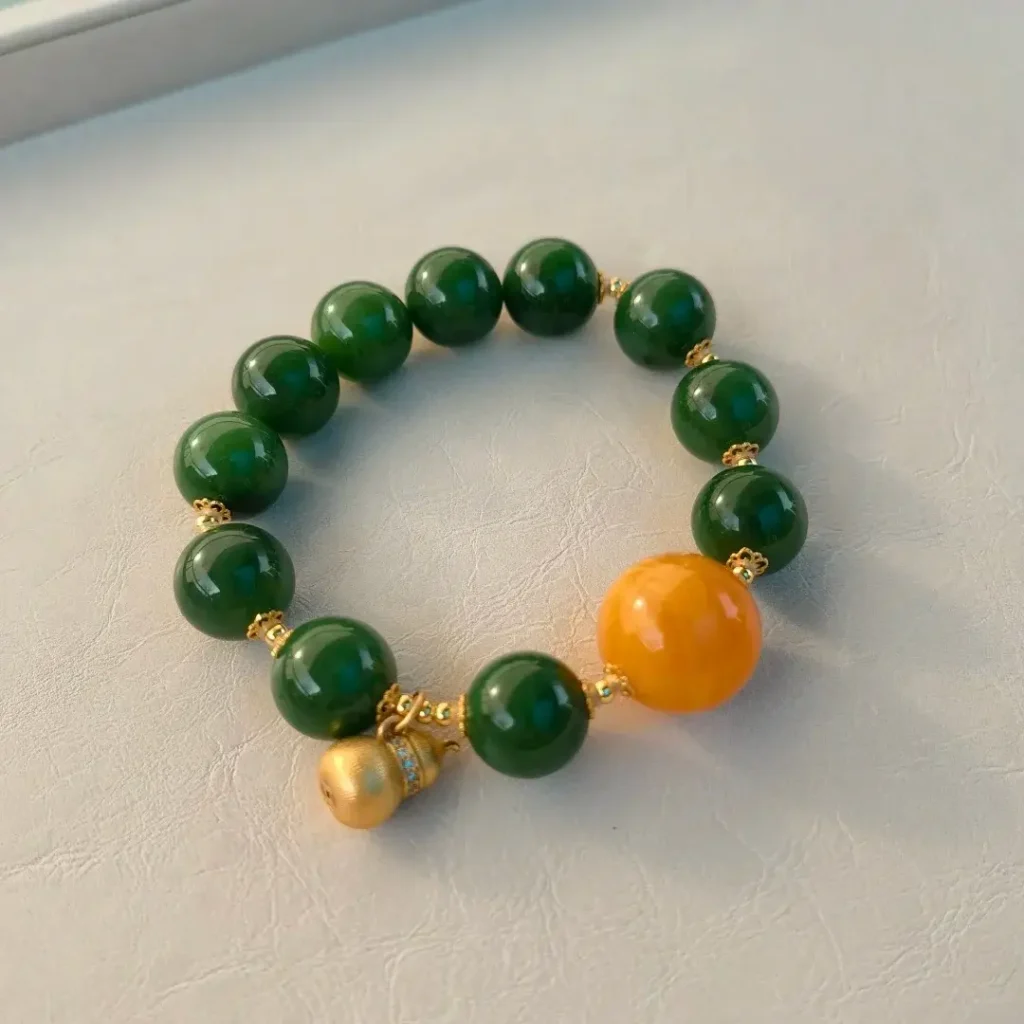
Among them, Mine No. 5 stands out for superior material quality. Nephrite from this deposit often displays:
- Dense, compact internal structure
- Fine, cohesive texture
- Distinct reddish-brown mineral spots or weathered skins that appear clustered rather than scattered
Although output from Mine No. 5 is relatively limited, its material is widely recognized for refinement and collectability, making it especially desirable in the high-end market.
Eastern Sayan Range Nephrite Field
The Eastern Sayan Range represents one of the most influential sources of premium Russian nephrite jade. This field lies southwest of Lake Baikal, along the Selenga River system, near the Mongolian border.
Its most famous deposit is Mine No. 7, also known as the Osberg (or Osbo) mine. Mining began in 1988, with large-scale extraction occurring between 2004 and 2008. Material from this period entered the Chinese market around 2005. By approximately 2010, active extraction had largely ceased, although limited inventories remain in storage near the original mining area. A nearby deposit, Mine No. 11, was discovered later and is commonly associated with the same field.
Characteristics of Mine No. 7 material include:
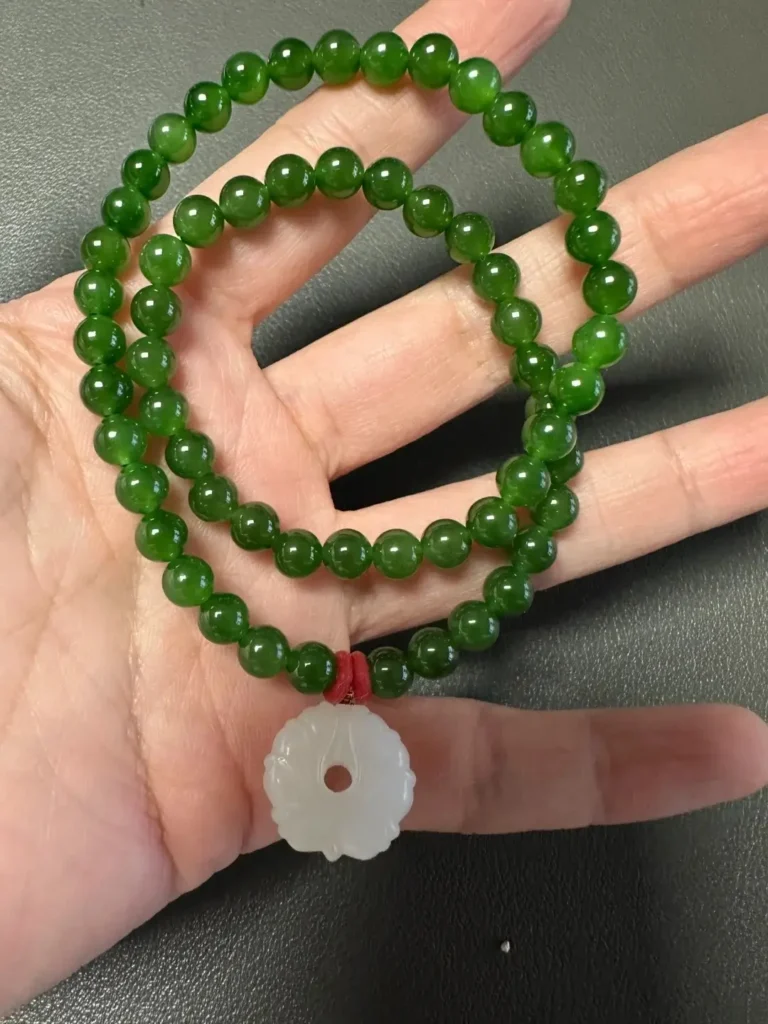
- Vivid, saturated green coloration
- Excellent oiliness and smooth luster after polishing
- Fine, compact texture with high toughness
- A signature feature of densely clustered dark inclusions, rather than evenly dispersed spots
Despite being fully mined, Mine No. 7 material remains abundant in circulation due to significant historical output. Its distinctive appearance and stable performance continue to place it among the most recognizable and commercially valuable Russian nephrite varieties.
Gida Nephrite Field (Lake Baikal Region)
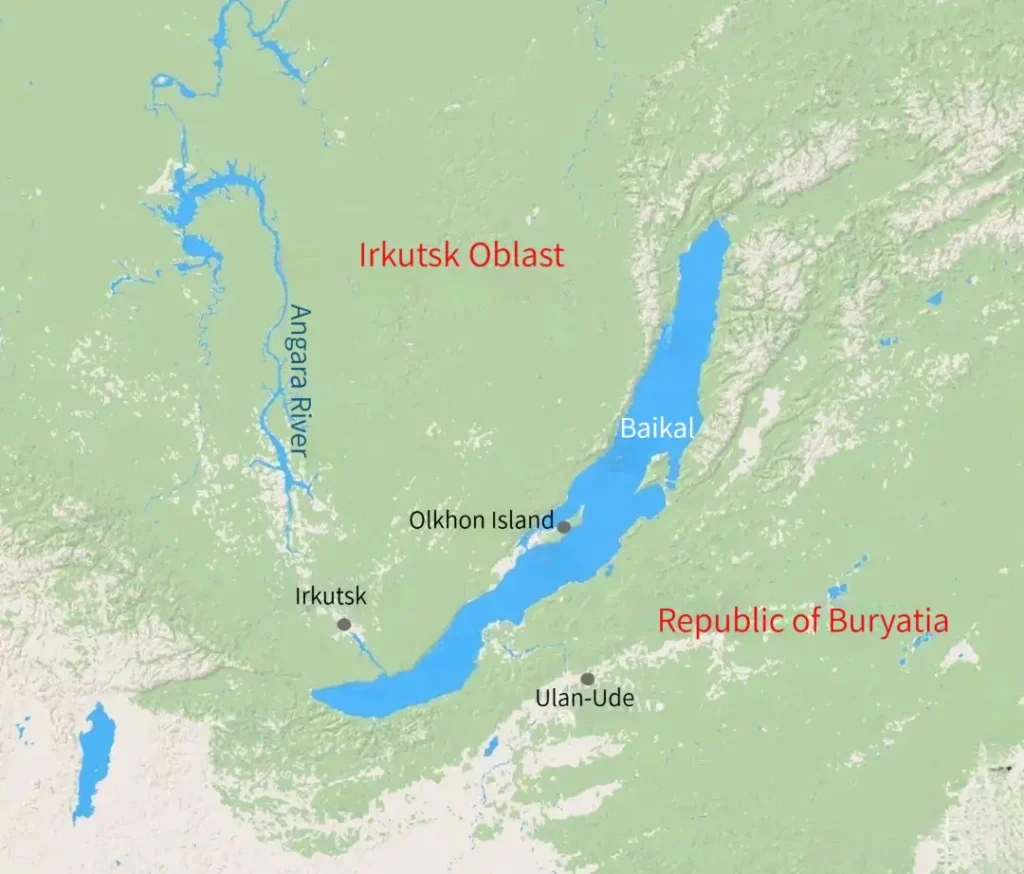
The Gida nephrite field is primarily associated with Mine No. 10, located on the eastern side of Lake Baikal in the Golygor area.
Compared with Eastern Sayan material, nephrite from Mine No. 10 typically shows:
- Softer, lighter green tones
- Less intense color saturation
- Black inclusions that appear as fine, needle-like points or broom-shaped clusters
This deposit often yields large raw blocks, making it especially suitable for carved vessels and sculptural works rather than small jewelry pieces. Its visual character favors subtlety over vibrancy, appealing to a different segment of the market.
Vitim Nephrite Field
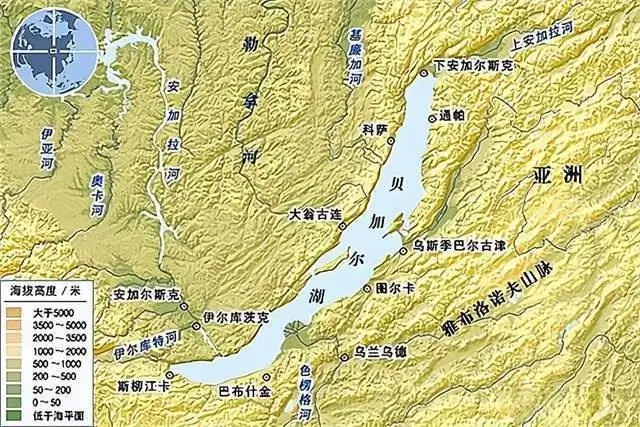
The Vitim nephrite field, formed primarily by Mines No. 8 and No. 9, lies along the upper Lena River, north of Lake Baikal.
Notably, Mine No. 9 produces a variety of nephrite characterized by:
- Bright, lively green coloration
- Fine, smooth texture
- Visual qualities comparable to well-known Ulan-Ude and Ulan-Hada nephrite
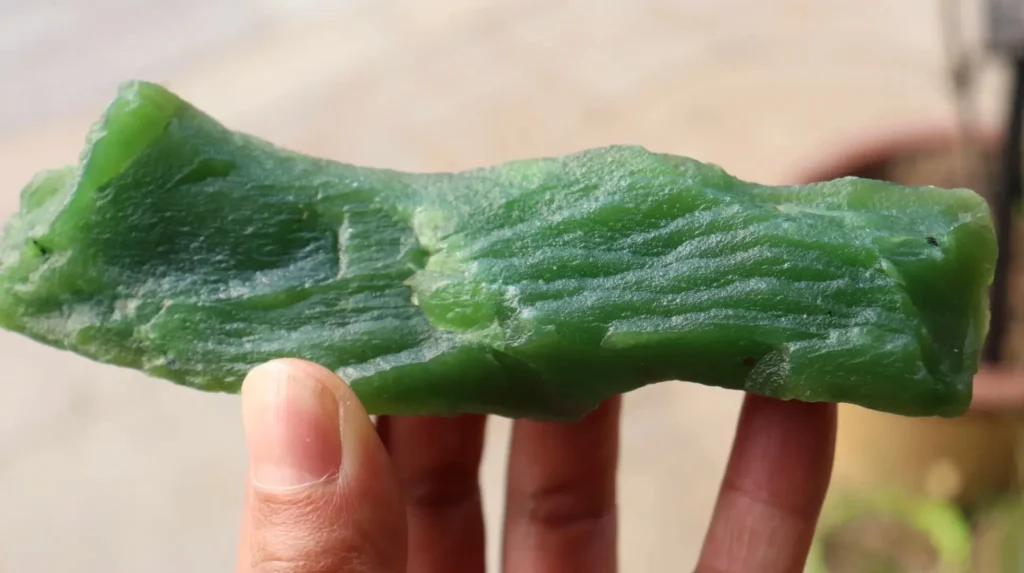
Its color typically falls between these two styles, offering a balanced alternative that combines saturation with refinement. This material has gained increasing recognition among collectors and professional buyers.
Well-Known Secondary and Dispersed Deposits
Beyond the four primary jade fields, several secondary Russian nephrite deposits have gained market attention due to their distinctive appearance or proximity to major mining zones.
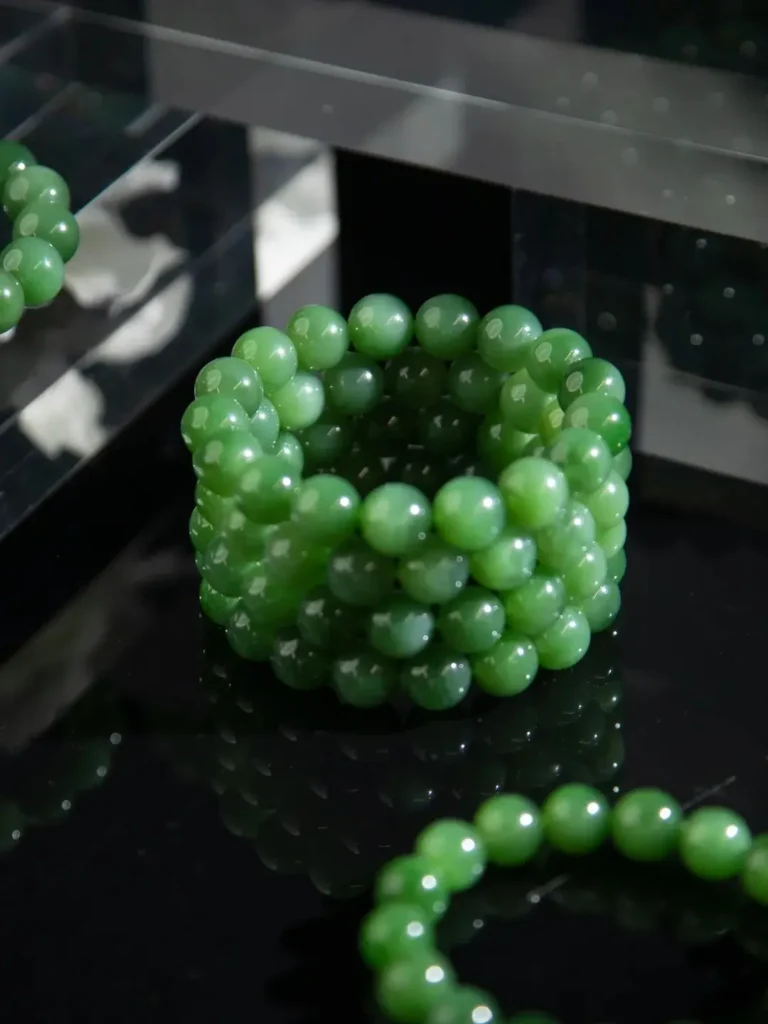
- Mine No. 32
Located near Mine No. 7, this deposit produces apple green, bright green, spinach green, and duck-egg green nephrite. While color can be attractive, internal structure is often looser, with broader stone textures and lower yield rates. Quality varies significantly, ranging from exceptional to ordinary, making material-specific evaluation essential. - Mine No. 37
A relatively newer deposit with unstable output. Some batches show good color and texture, while others contain extensive dark inclusions. Stones are generally large, with deeper green tones leaning toward spinach green. Inclusion patterns range from sheet-like areas to scattered points.
In addition, two regional varieties are commonly referenced by place name rather than mine number:
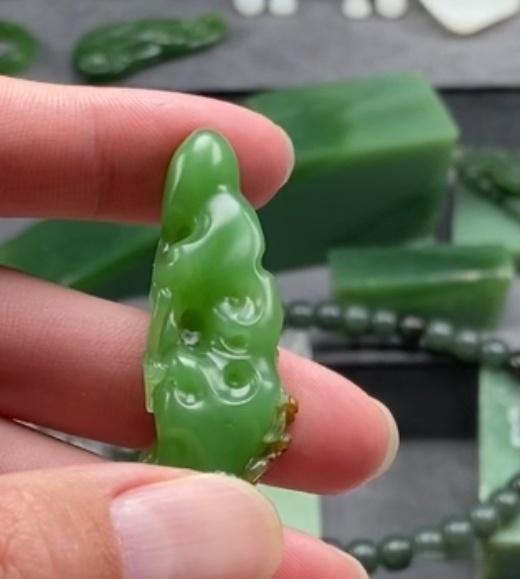
- Ulan-Ude Nephrite
Known for deeper, more saturated green color and higher visual intensity. Blocky dark inclusions are common. - Ulan-Hada Nephrite
Typically lighter in tone, often apple green, with dispersed black inclusions and a fresher overall appearance.
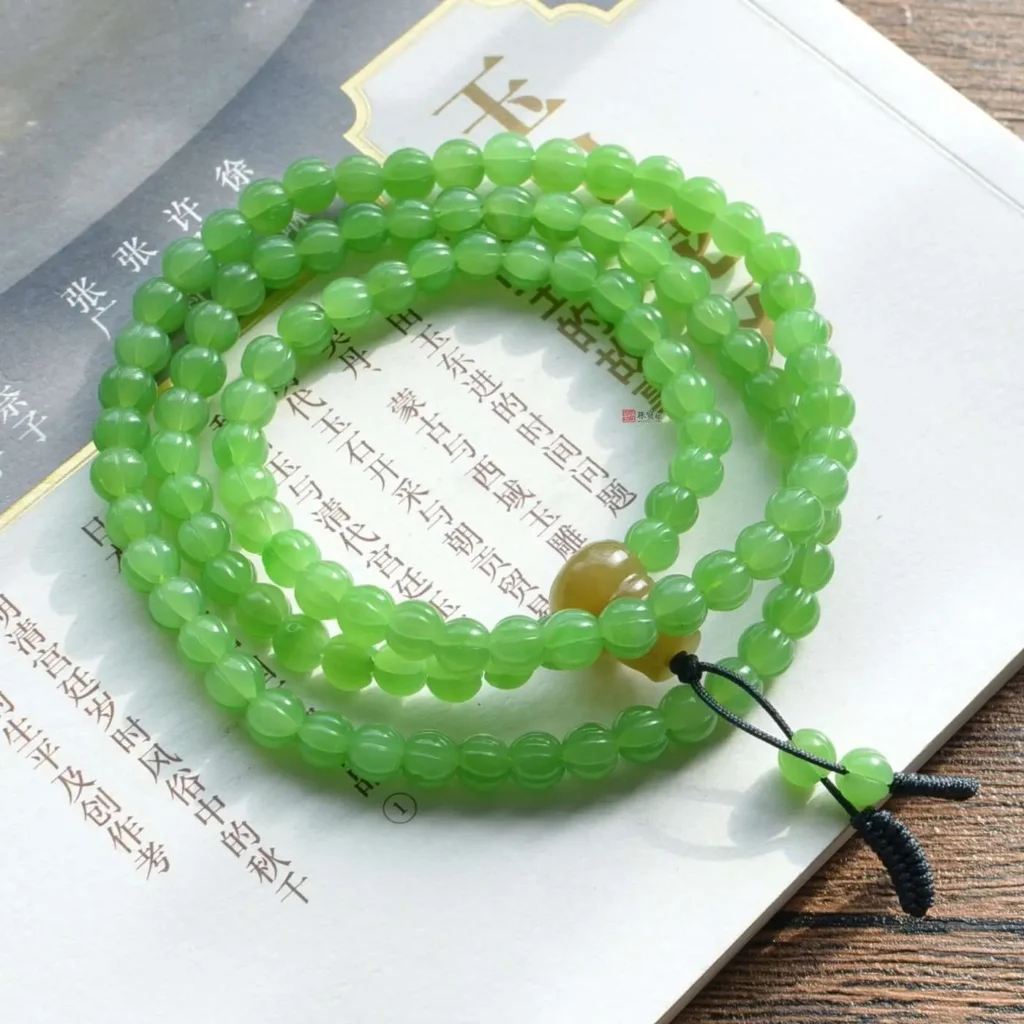
What Is “Old Mine” Russian Nephrite Jade?
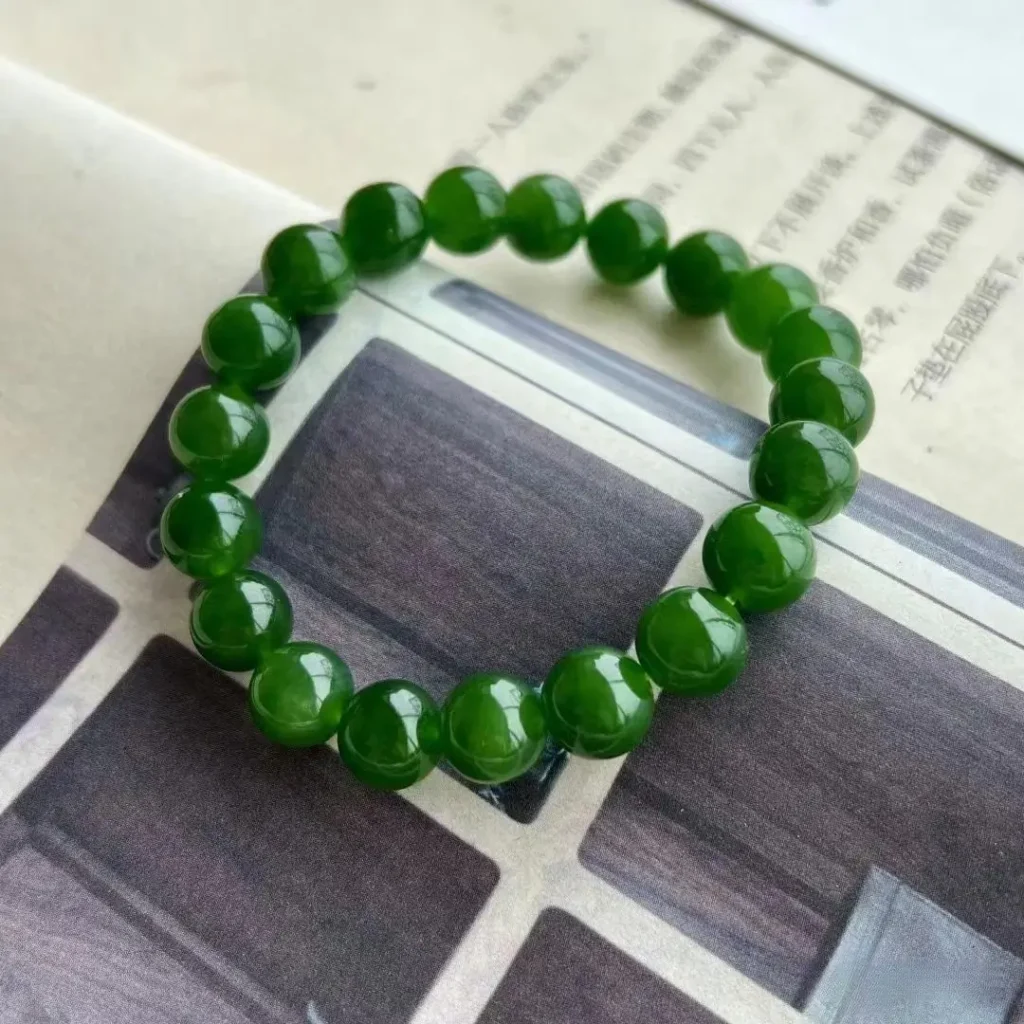
In trade usage, “old mine” Russian nephrite jade generally refers to material extracted from Mines No. 1 through No. 8.
From a geological and practical standpoint, higher-quality Russian nephrite tends to originate closer to the surface. Earlier mining phases accessed upper layers of deposits, where material often exhibits:
- Greater density
- More concentrated color
- Stronger structural cohesion
Some early-extracted material even retains traces of natural weathering skin. In contrast to jadeite—where deeper deposits may yield superior material—Russian nephrite often shows better overall quality in early mining zones. As a result, old mine material is widely regarded as more reliable than later-extracted stone, though individual evaluation remains critical.
Old Mine vs. Later Mine Russian Nephrite Jade: A Comparative Overview
In the Russian nephrite jade trade, professionals often distinguish material by mining period, commonly referred to as old mine and later mine material. This classification reflects consistent differences in structure, appearance, and overall refinement, rather than simple chronology.
Comparative Characteristics of Russian Nephrite by Mining Period
| Category | Old Mine | Later Mine |
|---|---|---|
| Associated Deposits | Mines No. 1–8 | Mines No. 9–37 |
| Overall Appearance | Dense, weighty feel with compact structure. Color appears concentrated and cohesive, with fewer impurities. Inclusions often appear as fine, star-like or flake-shaped patterns. From a distance, the stone shows bright, luminous green with even tone. | Looser internal structure with comparatively duller color. Impurities are more common. From a distance, color may still appear vivid green, but lacks depth and cohesion. |
| Close Examination | Color remains rich and vibrant up close. Texture is fine and smooth, with strong oiliness and natural luster. The surface appears soft, moist, and refined, often described as translucent and “gel-like” in quality. | Internal color distribution appears uneven, with visible streaks or spot-like patterns. Texture feels coarser, with hints of gray or earthy tones. Professionals often describe this material as having higher “stone character,” indicating reduced refinement. |
| Market Perception | Considered more reliable and collectible due to structural stability and visual harmony. | Quality varies widely; careful material-by-material evaluation is essential. |
Mine No. 7: The Most Representative Old Mine Russian Nephrite
Within old mine material, Mine No. 7 occupies a unique position. It is the largest-producing deposit among early Russian nephrite mines and remains one of the most recognizable and collectible varieties in the market.
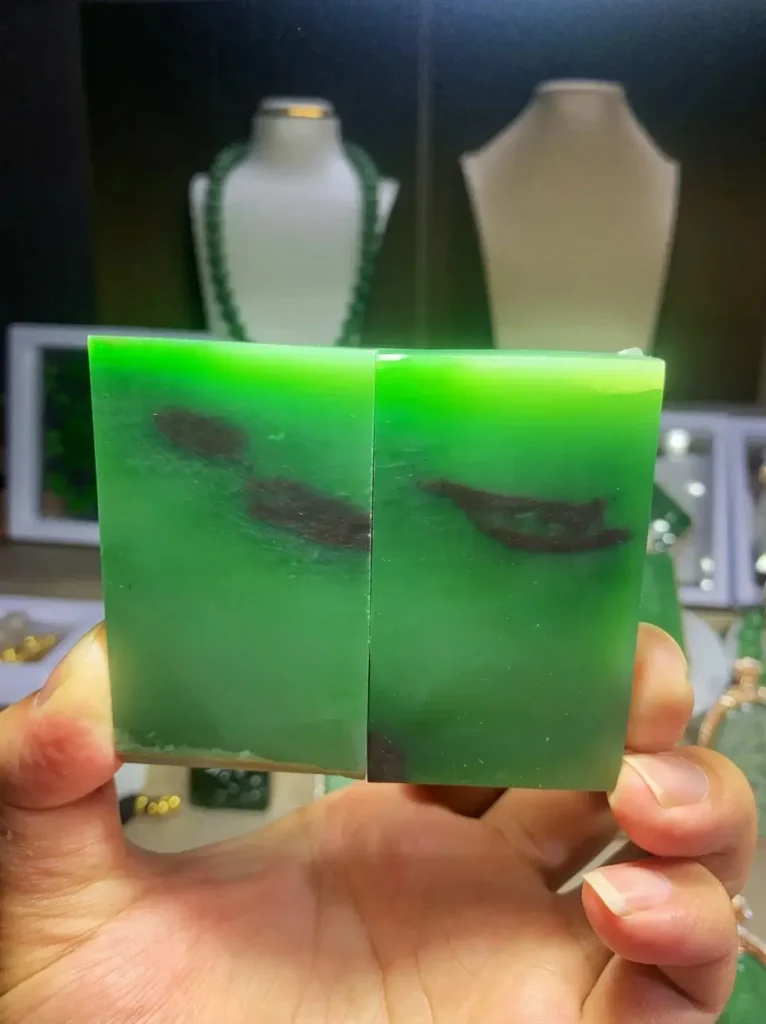
Material from Mine No. 7 typically shows:
- Extremely fine and compact texture
- High oil content and smooth polishing response
- Deep, saturated green coloration
- Overall refinement comparable to the highest standards of green nephrite
Its most distinctive identifying feature is the presence of dark brown to deep brown mineral patches that appear clustered rather than dispersed. These inclusions are cohesive and integrated into the stone, making Mine No. 7 material highly recognizable to experienced buyers.
Because of its combination of volume, consistency, and quality, Mine No. 7 is often regarded as the aristocrat of Russian nephrite jade, with enduring appeal for both collectors and high-end jewelry applications.
Named Local Varieties and Trade Terminology
Certain Russian nephrite jades are marketed under regional trade names rather than formal geological classifications. These names usually indicate color tendencies and inclusion patterns, not fixed quality grades.
Understanding these names as descriptive rather than authoritative helps buyers avoid overpaying for labels instead of material merit.
Can Russian Nephrite Jade Be Identified by Photos Alone?
Short answer: rarely.
Photographs distort color, flatten texture, and conceal structural details. Even experienced professionals hesitate to assign definitive origins or mining regions based on images alone.
Overconfident online identification often creates false certainty. In reality, accurate assessment requires in-hand examination, controlled lighting, and familiarity with how nephrite behaves when cut and polished.
How to Evaluate Russian Nephrite Jade
At PeonyJewels, we focus on three core criteria when assessing Russian nephrite jade:
- Color – saturation, balance, and natural harmony
- Texture and oiliness – fineness, density, and surface luster
- Inclusions – type, distribution, and integration within the stone
Mining region explains general tendencies, but quality defines value. Labels can guide expectations, yet the stone itself always delivers the final answer.
From Understanding Material to Choosing Craft
Learning about Russian nephrite jade ultimately leads to one clear conclusion: origin may explain tendencies, but material quality and craftsmanship define true value. Whether in jade or jewelry, refinement reveals itself through structure, balance, and the way a material responds to skilled hands.
This same principle guides everything we create at PeonyJewels.
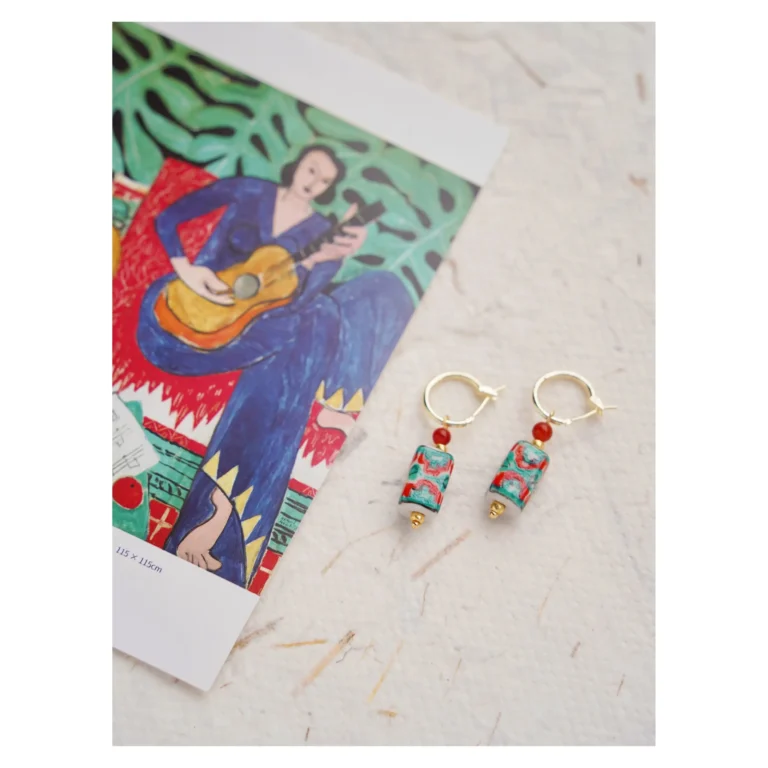
Our handmade vintage earrings are made with the same respect for material and process—slow shaping, careful selection, and an emphasis on natural character rather than artificial perfection. We favor traditional techniques, subtle textures, and timeless forms that allow each piece to age gracefully.
Rather than chasing trends, we focus on creating jewelry that feels considered, personal, and lasting. Pieces designed not to impress at first glance, but to grow more meaningful with time.
If you value craftsmanship over shortcuts and substance over surface, we invite you to explore our collection—where thoughtful materials meet handmade artistry, and quiet elegance speaks for itself.