Santa Maria Aquamarine: A Precious Investment Gem for Collectors
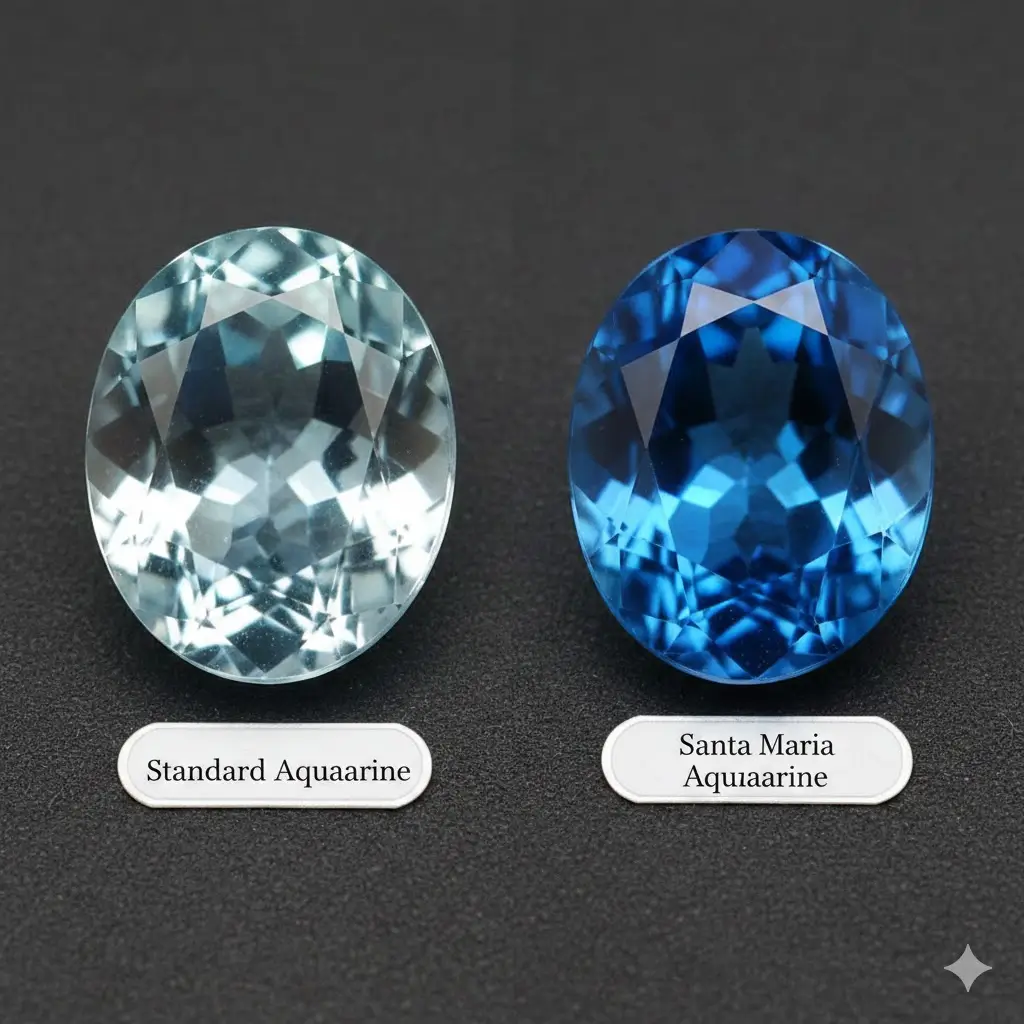
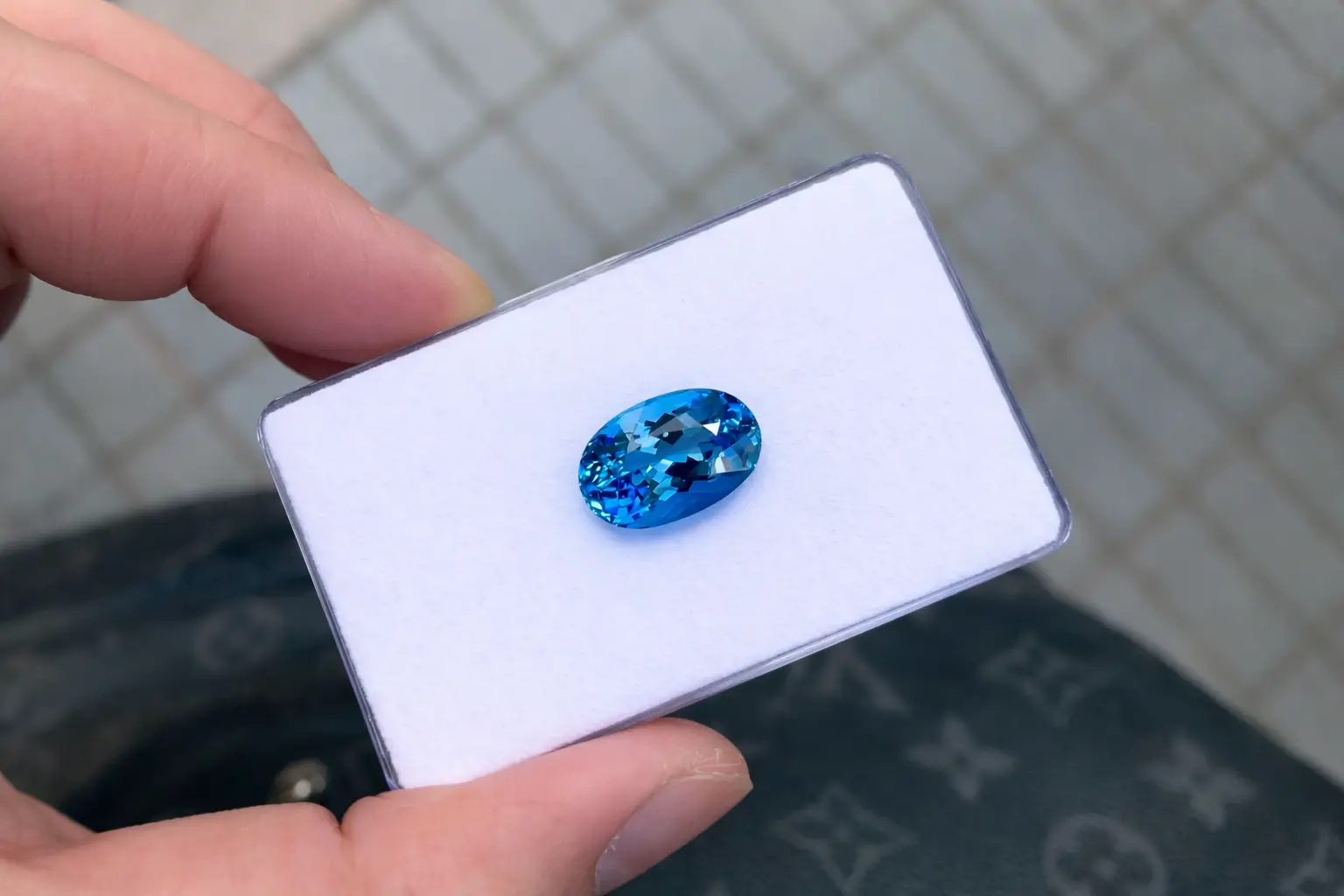
When most people think of aquamarine, they picture a light, airy blue or a slightly greenish-blue variety of beryl commonly seen in everyday jewelry. In the high-end gemstone market, however, Santa Maria Aquamarine stands apart as a distinct and far rarer category.
Gem professionals recognize Santa Maria Aquamarine as the highest commercial color grade of aquamarine. The stone is valued for its exceptional saturation, vivid blue hue, and limited availability. Compared with standard aquamarine, the visual difference is immediate. The price difference is equally striking. Stones that meet true Santa Maria color criteria consistently command significant premiums. As a result, they attract not only collectors but also long-term gemstone investors.
In this comprehensive guide, we examine Santa Maria Aquamarine from a professional gemological perspective. You will gain clear insight into:
- Gemological definitions — what truly qualifies as Santa Maria color
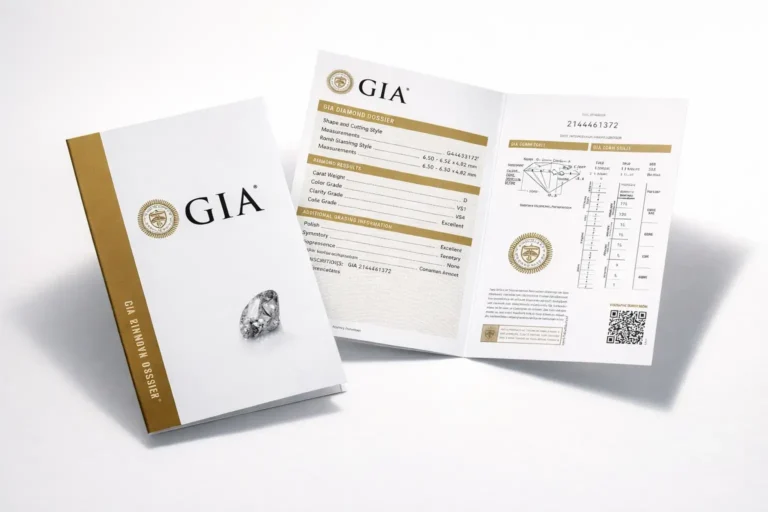
- Color grading and laboratory standards — how institutions such as GUILD and GRS evaluate and certify these stones
- Investment fundamentals — market scarcity, pricing structure, and long-term value considerations
- Expert buying strategies — how to identify authentic saturation and avoid common market misrepresentation
What Is Santa Maria Aquamarine?
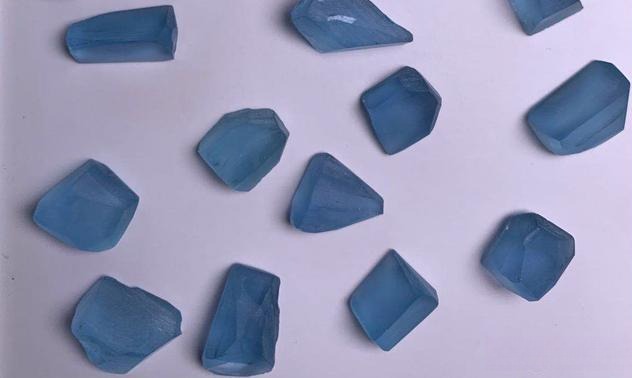
The term “Santa Maria” originated from the historic Santa Maria de Itabira mine in Brazil, a source once renowned for producing aquamarine with exceptionally rich, pure blue coloration.
As production from the original mine declined and eventually ceased, the meaning of Santa Maria Aquamarine evolved. Today, the term no longer guarantees geographic origin. Instead, it functions as a color designation used in modern gemology and international trade to describe aquamarine that meets strict color standards—regardless of where the stone is mined.
In professional gemological practice, Santa Maria Aquamarine refers to:
A pure blue aquamarine with high color saturation, balanced brightness, and no visible gray or brown modifiers
This definition explains why Santa Maria Aquamarine remains the most sought-after color grade in the aquamarine family and why certified examples continue to command strong premiums in the global gemstone market.
Aquamarine Color System and Grading Logic
Common Color Ranges in Standard Aquamarine
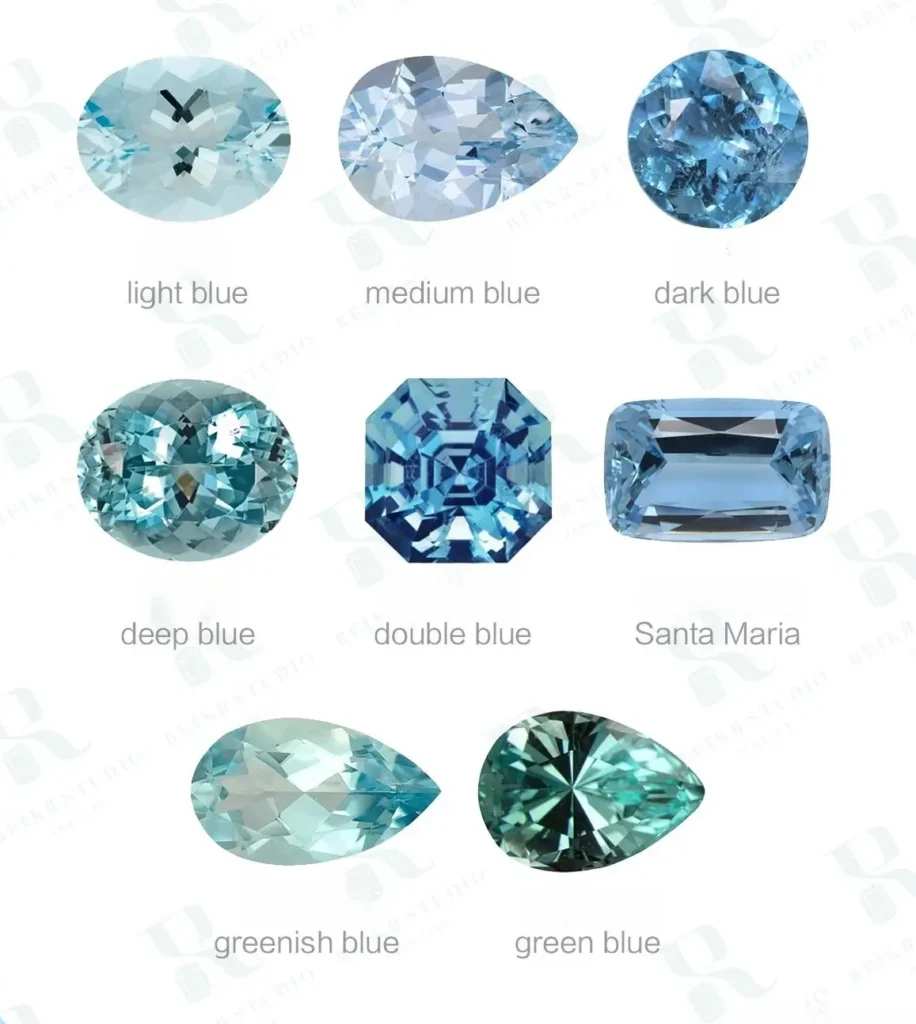
In the commercial gemstone market, aquamarine appears in a wide spectrum of blue tones. The most commonly encountered color descriptions include:
- Light Blue
- Medium Blue
- Dark / Deep Blue
- Double Blue
- Santa Maria
- Greenish Blue
- Green Blue
These terms serve primarily as commercial color descriptions rather than formal laboratory classifications. Jewelers and retailers use them to communicate general appearance, but they do not reflect standardized gemological grading criteria. As a result, stones described with the same color term may vary significantly in saturation, tone, and overall visual quality.
This distinction becomes especially important when evaluating higher color grades, such as Santa Maria Aquamarine, where laboratory-based color standards carry far greater weight than informal market terminology.
Read more: [The Allure of Aquamarine: From the Serene Seas to Your Jewelry Box]
Gemological Definition of Santa Maria Color
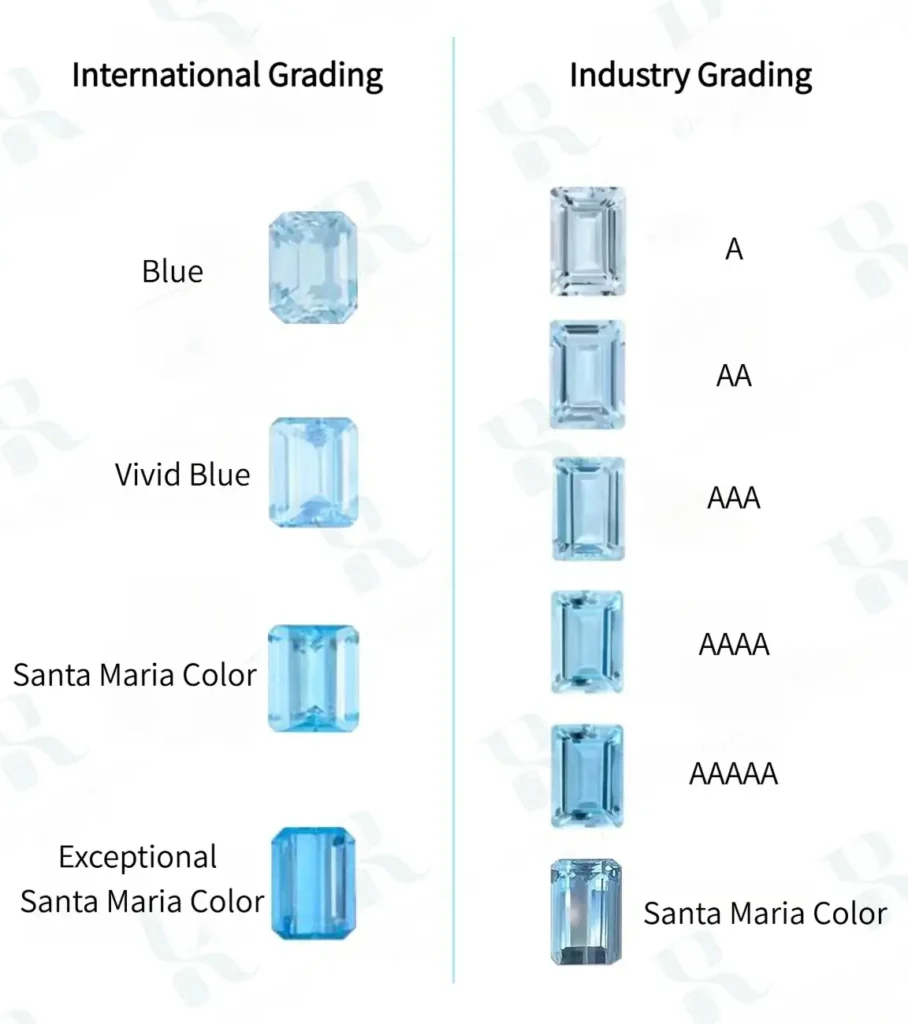
International gemological laboratories, such as GUILD, apply the Munsell color system—based on hue, tone (lightness), and saturation—to classify the highest color grades of aquamarine. Under this framework, premium aquamarine colors fall into four categories:
- Blue
- Vivid Blue
- Santa Maria Color
- Exceptional Santa Maria Color
Core Criteria for Santa Maria Color
Aquamarine qualifies as Santa Maria Color only when it meets all of the following conditions:
- Strong to high blue saturation
- Bright appearance without appearing overly dark
- No noticeable gray, brown, or yellow modifiers
These parameters define the classic, pure blue tone that distinguishes Santa Maria Aquamarine from standard aquamarine varieties.
Exceptional Santa Maria Color
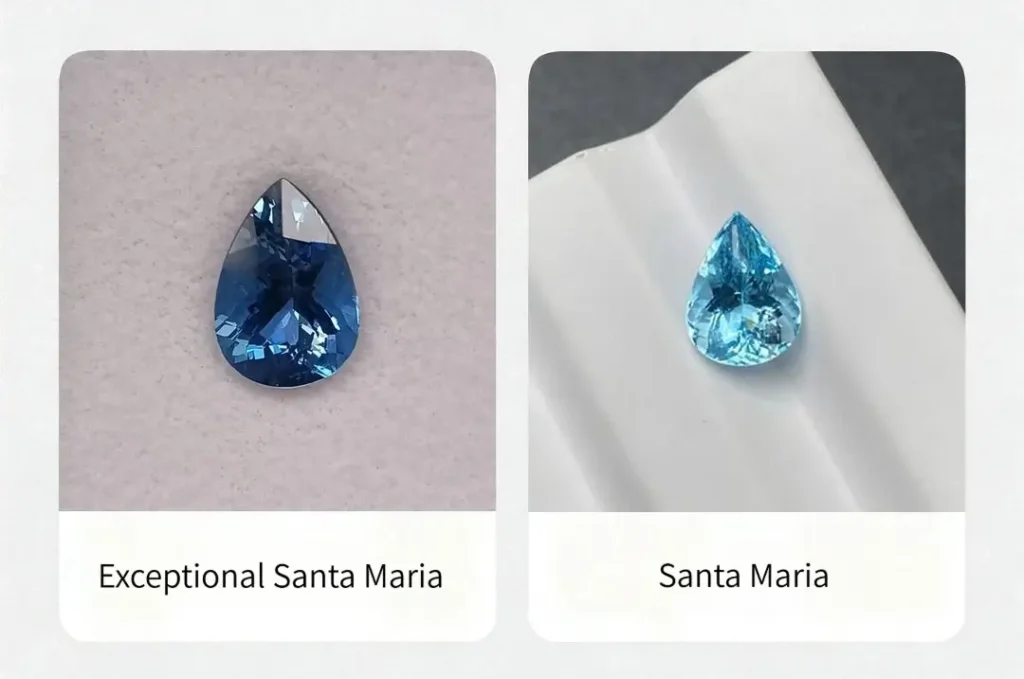
Exceptional Santa Maria Color represents an even more selective tier. Compared with standard Santa Maria Color, these stones exhibit:
- Higher color saturation
- Better-balanced brightness
- Extreme market rarity
As a result, aquamarine in this category commands the highest premiums within the Santa Maria color range.
How Laboratories Report Santa Maria Color
In GUILD and GRS laboratory reports:
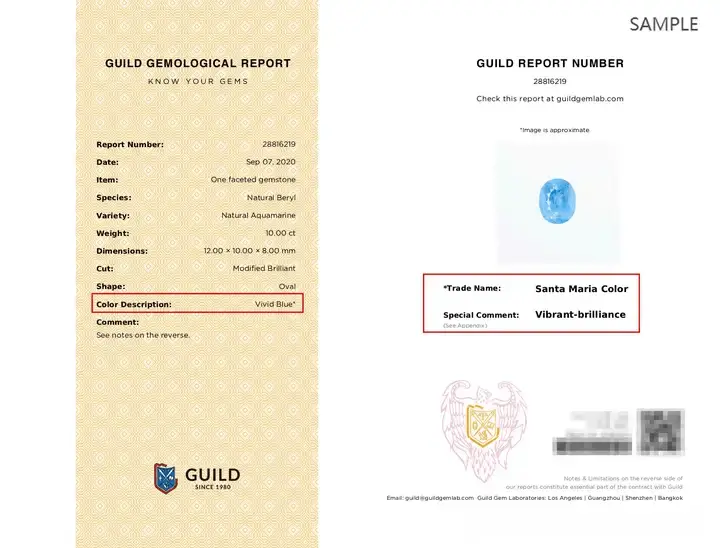
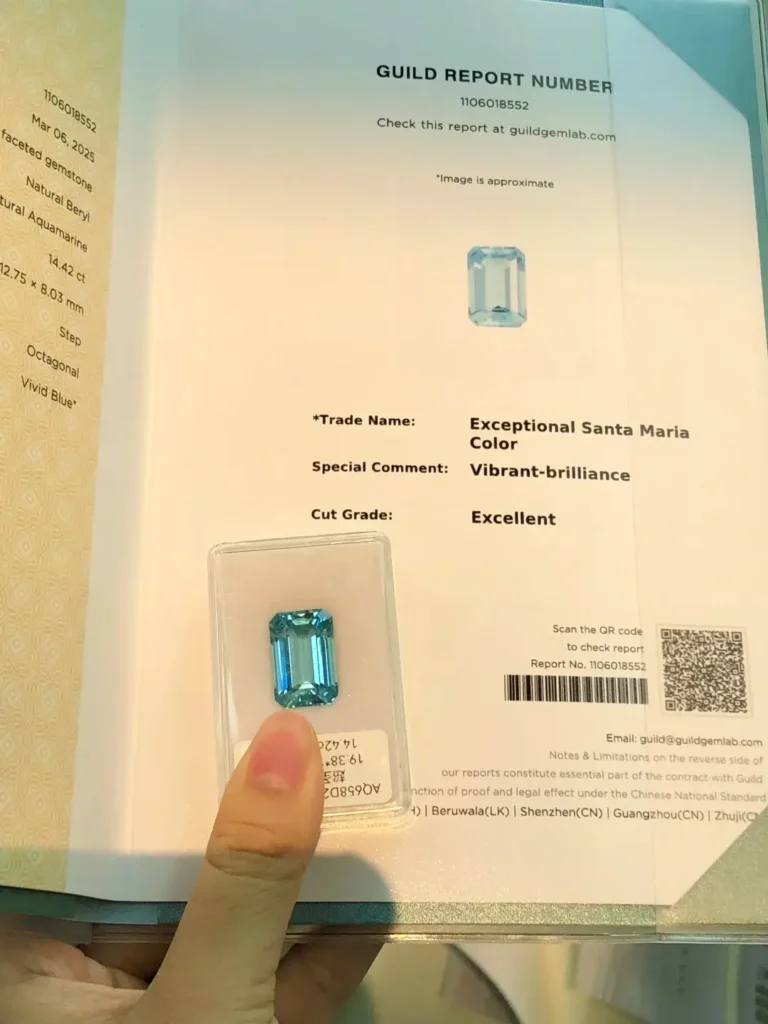
- Both Santa Maria Color and Exceptional Santa Maria Color typically appear under the designation “Vivid Blue*”
- The asterisk (*) indicates that the stone meets the laboratory’s criteria for the Santa Maria commercial color designation
- The specific color level—Santa Maria or Exceptional Santa Maria—is clarified in accompanying photographs or report remarks
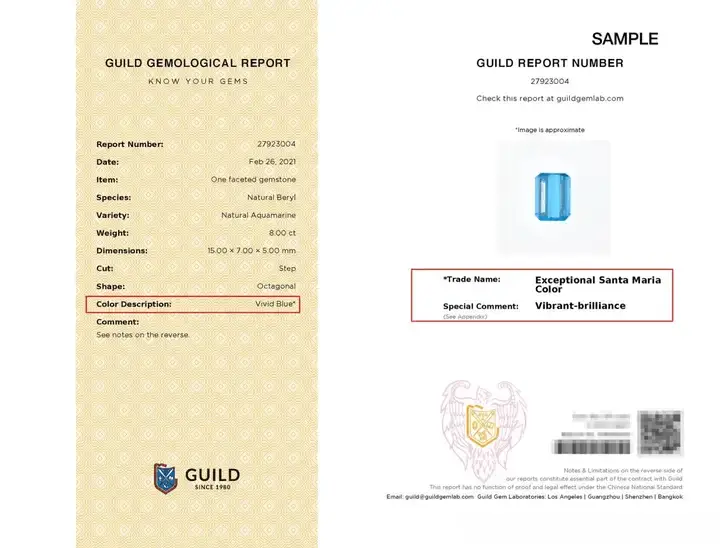
This reporting method highlights why laboratory certification plays a critical role when evaluating genuine Santa Maria Aquamarine in the international market.
Commercial Grading vs. Laboratory Grading: A Critical Distinction
In the aquamarine market, you will often encounter color labels such as 1A–5A, AAA, or AAAA. While these terms appear authoritative, it is important to understand their true meaning.
- ❌ They are not internationally recognized standards
- ✅ They represent internal color grading systems created by individual sellers
- Color grades such as “3A” or “AAAA” cannot be compared across different merchants
In general market usage, these designations roughly imply the following:
- AAAA: Approximately the top 10% of aquamarine in overall color quality
- AAA: A high-quality color suitable for everyday fine jewelry
However, these categories remain commercial descriptions, not gemological classifications. Their definitions vary widely depending on the seller, which limits their reliability in professional evaluation.
👉 In the international gemstone market, the only aquamarine color designation that enjoys broad, consistent recognition remains Santa Maria Aquamarine.
This distinction underscores why laboratory certification and standardized color terminology are essential when assessing high-value aquamarine.
Market Value Logic of Santa Maria Aquamarine
The market value of Santa Maria Aquamarine primarily depends on four key factors:
- Color (the most critical factor)
- Clarity
- Carat weight
- Cut quality
Why Larger Carat Sizes Command Premiums
Aquamarine crystals typically form in pegmatite deposits, allowing them to grow to considerable sizes in theory. However:
- High-quality Santa Maria-grade rough stones are usually limited in size
- Finished stones of larger carat weight are extremely rare
- As a result, the price per carat increases significantly with size, reflecting both scarcity and desirability in the market
This dynamic explains why collectors and investors often focus on medium- to large-sized Santa Maria Aquamarine when seeking long-term value and exceptional color impact.
Santa Maria Aquamarine Price Guide (USD)
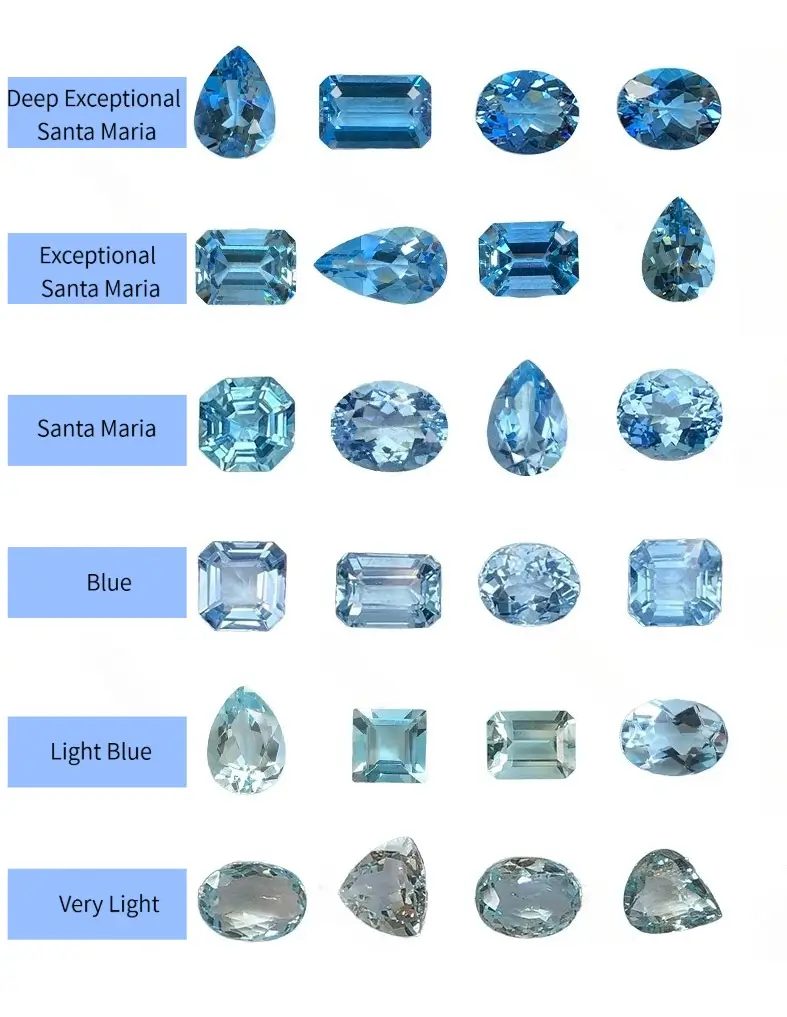
The following figures represent current retail reference values for loose stones on the international market. They are categorized by color grade, ranging from investment-grade specimens to everyday commercial quality.
1. Deep Exceptional Santa Maria
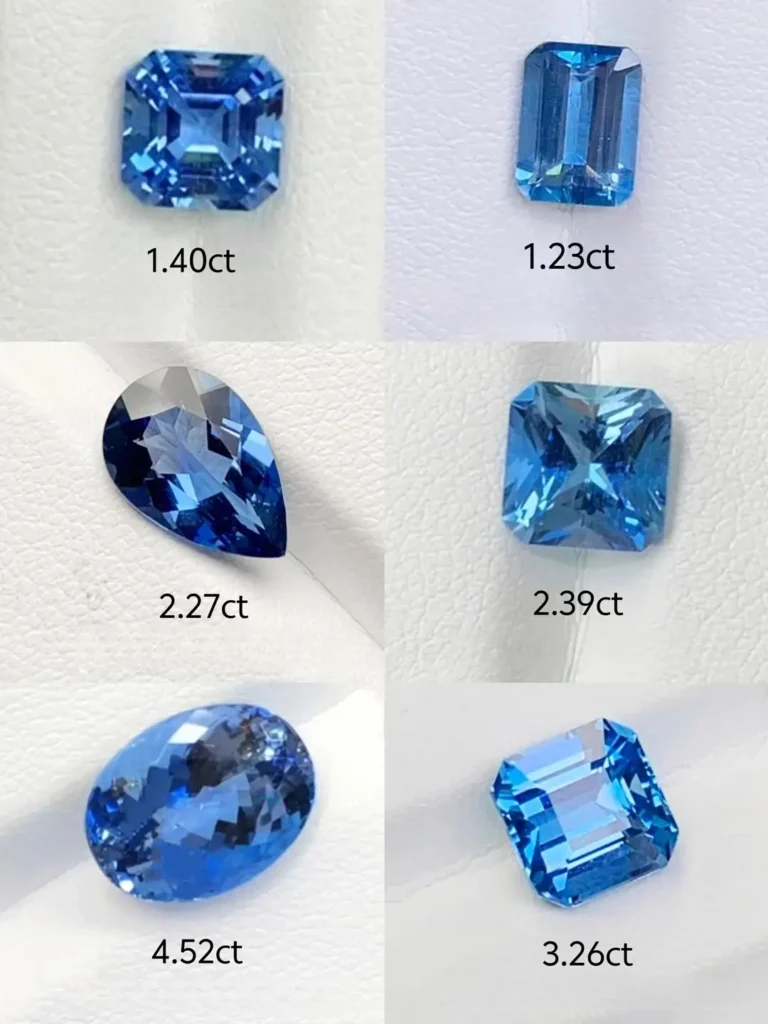
- Characteristics: These specimens represent the pinnacle of aquamarine quality, showcasing a profoundly rich and deep blue that is incredibly rare in nature.
- Reference Price: Approx. USD 830+ / ct.
- Note: Prices for this tier are highly volatile due to extreme scarcity; consequently, larger specimens often command significantly higher premiums.
- Certification: GUILD / GRS specifically labeled “Exceptional Santa Maria color”
The Royal Connection Santa Maria aquamarine is far from just a trend; its status as an investment asset is echoed by royal collections worldwide. Discover why style icons like Princess Diana favored this ‘underrated’ gem: [“Underrated” Aquamarine? Why Princess Diana and Queen Elizabeth Wore It]
2. Exceptional Santa Maria
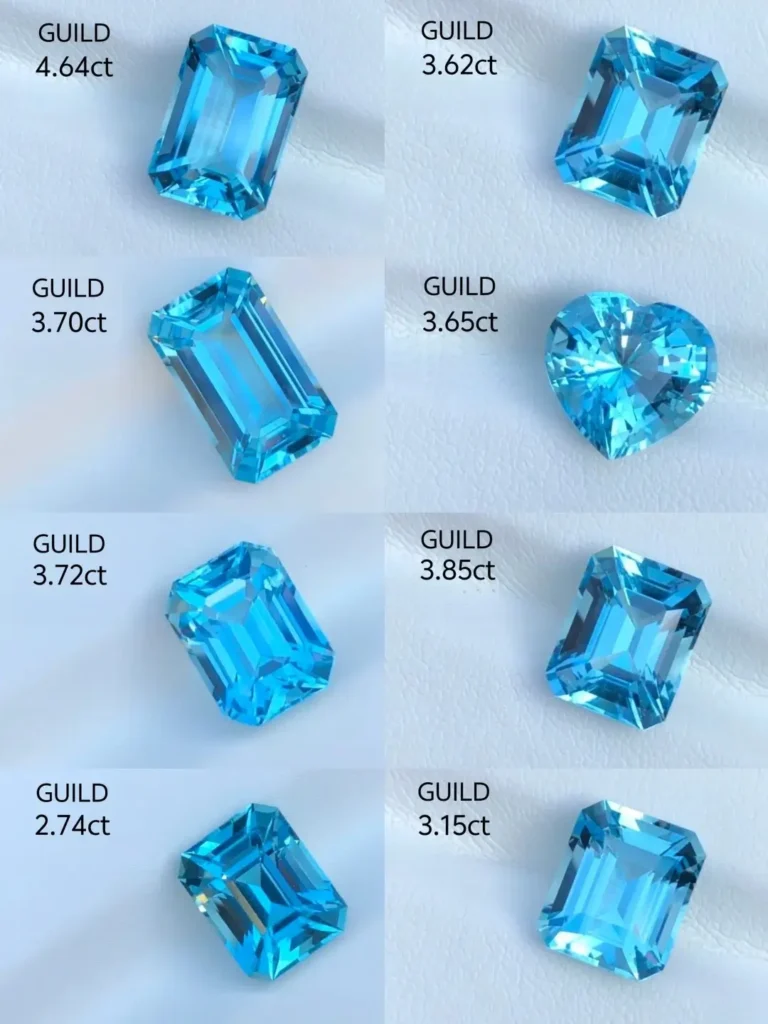
- Characteristics: These stones are defined by their rich, deep blue coloration, showcasing a profound intensity that remains entirely free of gray or brown undertones.
- Reference Price: Approx. USD 420+ / ct
- Note: Price per carat rises significantly with larger sizes.
- Certification: GUILD / GRS specifically labeled “Santa Maria Color.”
3. Standard Santa Maria
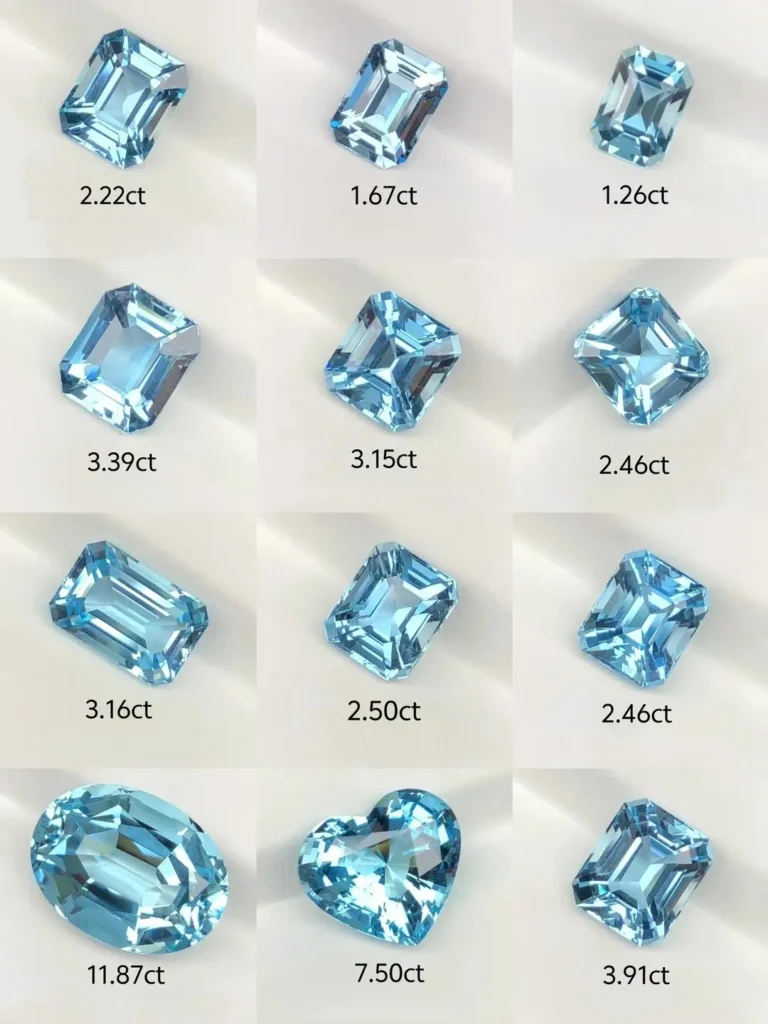
- Characteristics: This category represents a remarkably vibrant blue with high saturation, ensuring the stone remains entirely free of secondary or “muddy” undertones.
- Reference Price: Approx. USD 250+ / ct.
- Certification: Typically marked as “Santa Maria color” on laboratory reports.
4. 5A and Lower-Grade Aquamarine
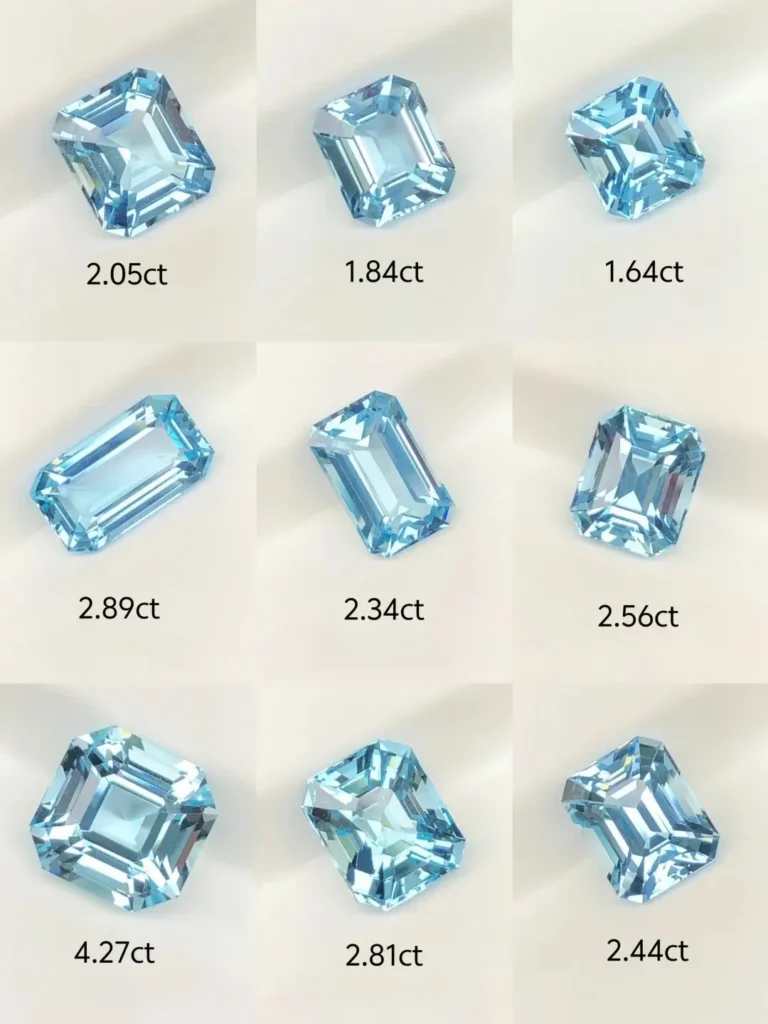
- Characteristics: These represent entry-level commercial stones, usually light blue or grayish-blue in appearance. They lack internationally recognized commercial names, and some sellers use internal labels such as 1A–5A to indicate varying saturation levels.
- Reference Price: Approx. USD 14 – USD 195 / ct.
⚠️ Valuation Note: While these prices serve as a professional baseline, actual market value can fluctuate 20–30%. Factors such as neon effect, total carat weight, internal clarity, and precision of the cut ultimately determine the final price.
How to Choose High-Quality Santa Maria Aquamarine
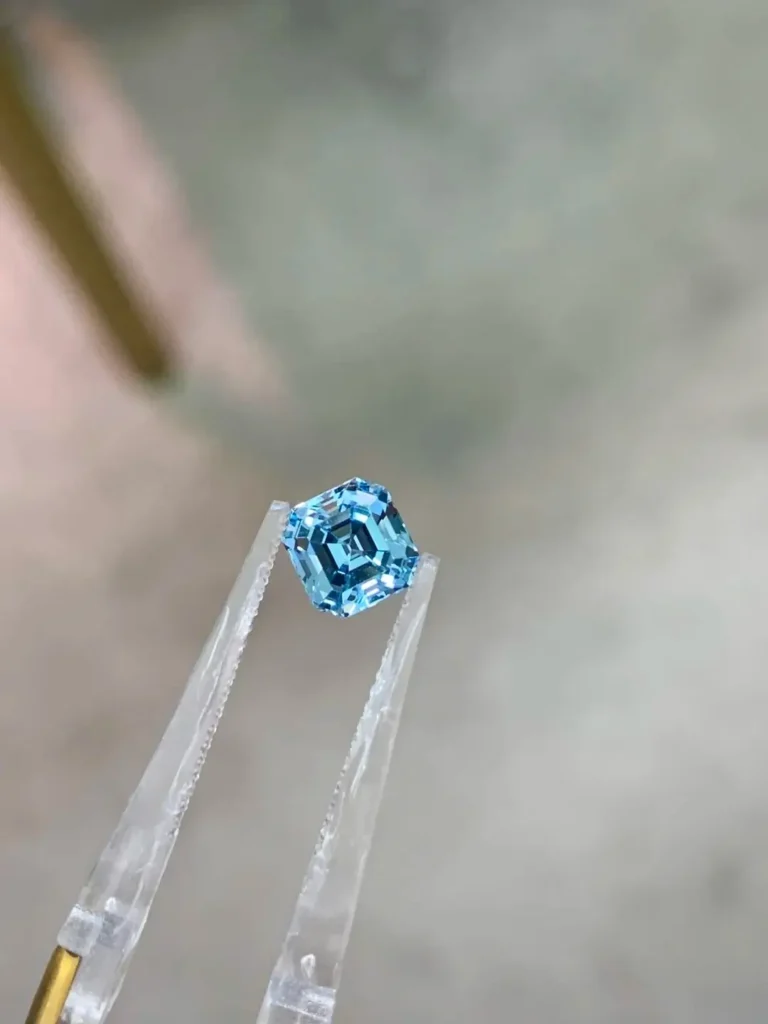
Selecting the right Santa Maria Aquamarine requires careful attention to color, clarity, cut, and carat weight. Follow these guidelines to ensure you pick a stone that delivers both beauty and investment value.
1. Color (Highest Priority)
- Always prioritize Santa Maria Color
- Avoid stones with grayish or overly dark tones
- A slight greenish tint is acceptable—it is a natural feature of some specimens
- Be cautious of stones with overly uniform or unnaturally vivid color, as they may have undergone artificial dyeing or filling. However, note that routine heat treatment is universally accepted in the trade and does not diminish the ‘Santa Maria’ designation, provided the resulting color is stable and natural in appearance.
2. Clarity
- Stones should appear clean to the naked eye
- Minor inclusions visible under 10× magnification are normal and natural
- Avoid stones with obvious cracks, cloudiness, or compromised transparency
3. Cut
- Emerald cut best highlights the stone’s transparency and brilliance
- Oval and pear shapes are also popular and visually appealing
- Ensure the cut is symmetrical, and the surface reflects light evenly for maximum sparkle
4. Carat Weight Recommendations
- Everyday wear: 2–3 ct stones strike the perfect balance of size and wearability
- Collector’s pieces: 5 ct or larger, especially for premium Santa Maria Aquamarine
- Tip: Always prioritize color and clarity over size—the best hue enhances value more than a bigger stone
Essential Care and Maintenance Guide for Santa Maria Aquamarine
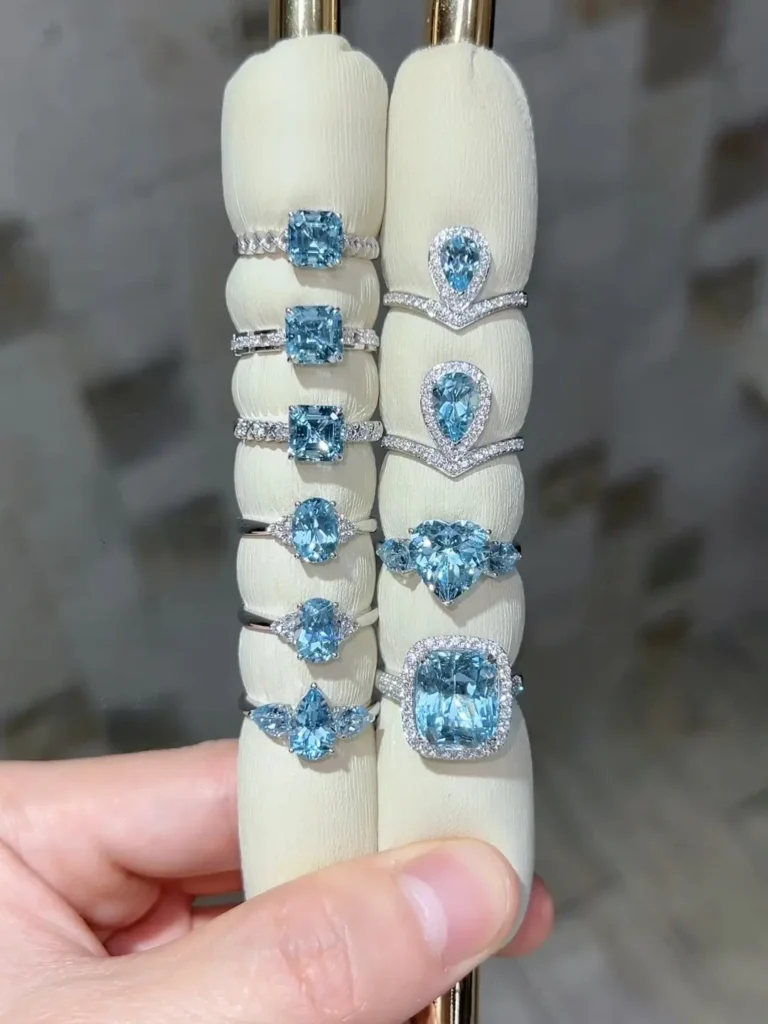
Avoid High-Temperature Exposure
Aquamarine’s color is primarily driven by trace elements of iron. Consequently, you should avoid leaving your jewelry in direct sunlight for extended periods or near high-heat sources. Excessive heat can potentially alter the delicate oxidation state of the iron, leading to permanent color fading.
Prevent Chemical Contact
To preserve the stone’s surface luster, always keep it away from harsh chemicals. Specifically, avoid contact with strong acids, alkalis, and household cleaning agents. Furthermore, we recommend applying perfumes and lotions before putting on your jewelry to prevent chemical buildup.
Remove During Physical Activity
Despite its hardness, aquamarine is susceptible to “brittle” fractures if struck at the right angle. Therefore, you should always remove your rings or bracelets before engaging in strenuous exercise, sports, or manual labor to avoid accidental impact or scratches.
Professional Cleaning Methods
The safest way to clean an untreated stone is by using warm, soapy water and a soft-bristled brush. However, if your aquamarine contains natural fluid inclusions or minute internal fissures, you must strictly avoid ultrasonic or steam cleaners. The high-frequency vibrations of these machines can cause internal fractures to expand, potentially shattering the gem.
Safe Storage Practices
Finally, store your Santa Maria Aquamarine in a separate fabric-lined compartment. By doing so, you prevent harder gemstones, such as diamonds or sapphires, from scratching its surface during storage.
FAQ – Santa Maria Aquamarine
Santa Maria Aquamarine is the highest commercial color grade, commanding a 3–5x premium due to its “perfect trifecta”: exceptional saturation, ideal brightness, and zero gray undertones. Because less than 5% of all mined aquamarines meet these elite criteria, their scarcity directly drives high investment value.
No. Although the name originates from Brazil’s now-depleted Santa Maria de Itabira mine, estimated about 90% of today’s high-quality Santa Maria aquamarines come from Mozambique. As a result, the industry treats “Santa Maria” as a universal trade designation for this vivid blue color profile, regardless of the stone’s geographic source.
To ensure authenticity, always follow these professional steps:
Request Certification: Only buy stones with reports from reputable labs like GRS or GUILD.
Inspect Color: Natural stones show organic color transitions; therefore, avoid specimens that appear unnaturally uniform or “flat.”
Verify Pricing: If the price seems suspiciously low for the saturation level, the stone is likely a synthetic or chemically enhanced imitation.
The ideal weight depends on your specific goals:
For Investment: Choose stones 5 carats or larger, as they best showcase the deep blue saturation and command higher resale premiums.
For Daily Wear: Stones between 1–3 carats offer the best balance of elegance and value for earrings or rings. Regardless of size, the high color density of a Santa Maria grade ensures it remains a valuable asset.
Conclusion: A Timeless Investment in Color
Investing in Santa Maria Aquamarine goes beyond acquiring a gemstone—it is a way to own nature’s rarest and most vivid blue brilliance. Whether you value its high saturation for long-term investment or its striking “neon” allure for personal enjoyment, understanding color grading, clarity, and certification remains essential to securing a stone that retains its value over generations.
At Jewea, we celebrate these exceptional stones through carefully crafted jewelry that highlights their natural beauty. Our designs, including handmade vintage earrings, are created to complement the deep, vivid tones of Santa Maria-grade aquamarine while maintaining a refined, timeless aesthetic. Each piece emphasizes the gemstone itself, allowing its color and brilliance to shine without unnecessary embellishment.
This approach ensures that collectors and enthusiasts alike can enjoy both the artistry and enduring value of Santa Maria Aquamarine in wearable form.