Sugar Jade Fading Explained: Causes, Myths, and What Collectors Should Know
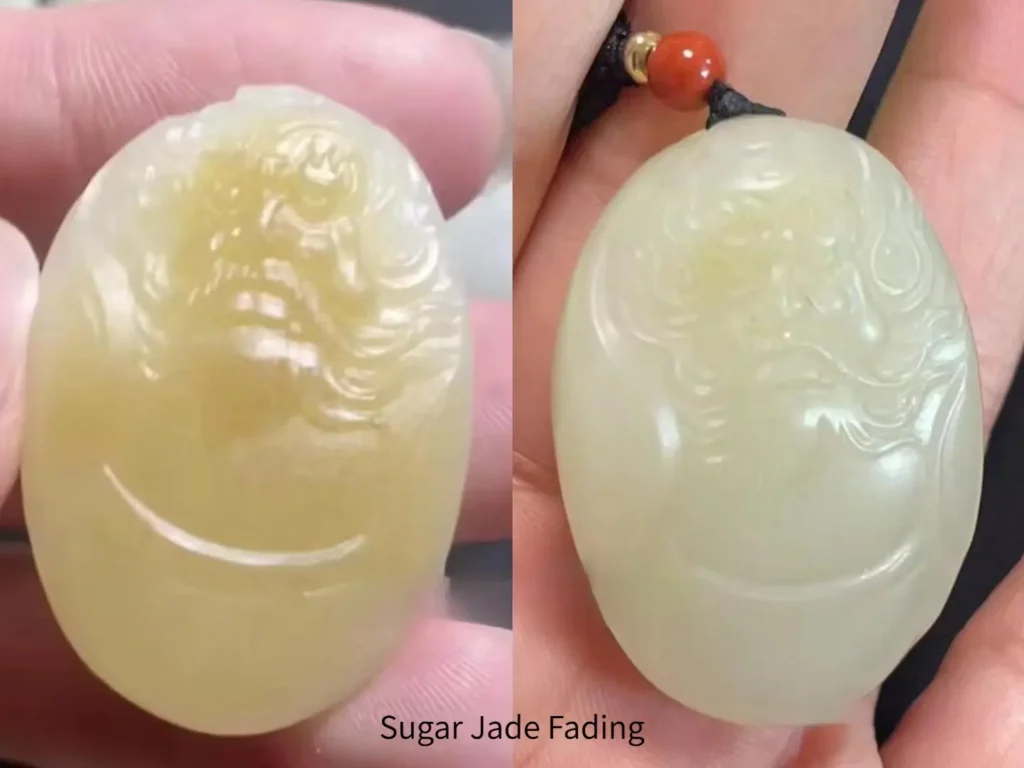
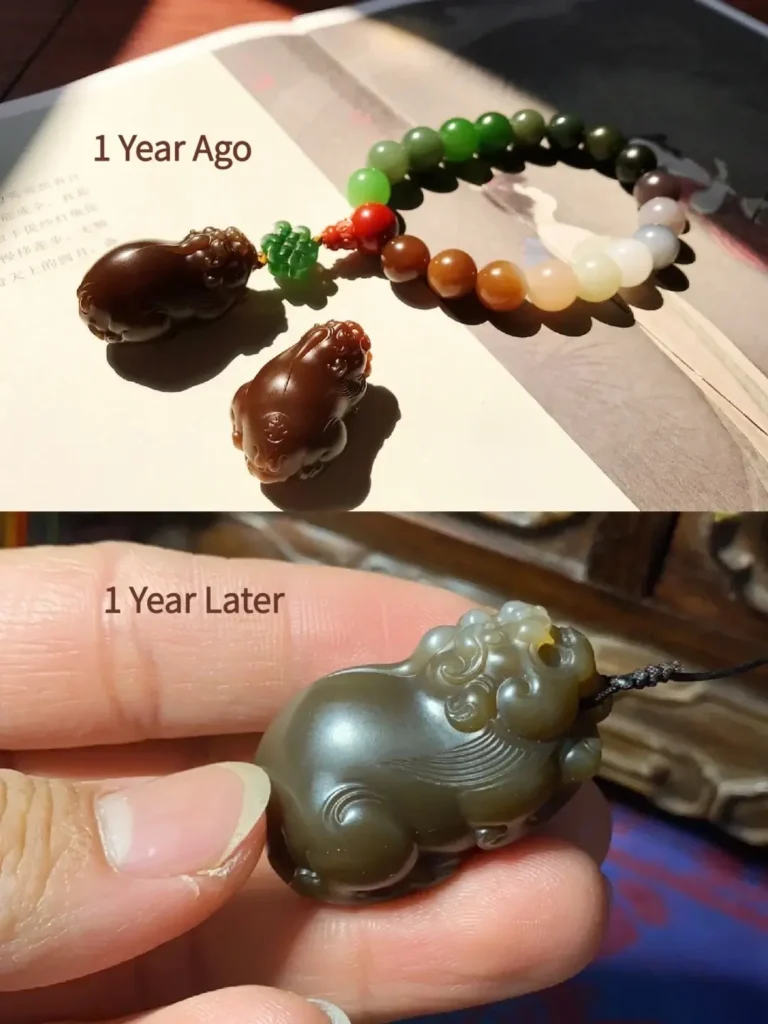
Many buyers feel confused and frustrated when Sugar Jade Fading occurs.
Why?
“My sugar jade pendant was simply stored at home — has it faded? Did I buy a fake?”
The short answer: Not necessarily.
Natural Hetian Sugar Jade can fade over time, but this does not automatically mean the piece is fake, treated, or artificially dyed.
So why does sugar jade fade?
Does color loss relate to jade texture or its geological origin?
Is fading inevitable — and if so, is sugar jade still worth buying?
In this guide, we explain what sugar jade truly is, why Sugar Jade Fading can occur even in natural stones, how common this phenomenon actually is, and — most importantly — how proper care can significantly reduce the risk. Our goal is to help you avoid unnecessary panic and make confident, informed decisions.
What Is Sugar Jade Fading?
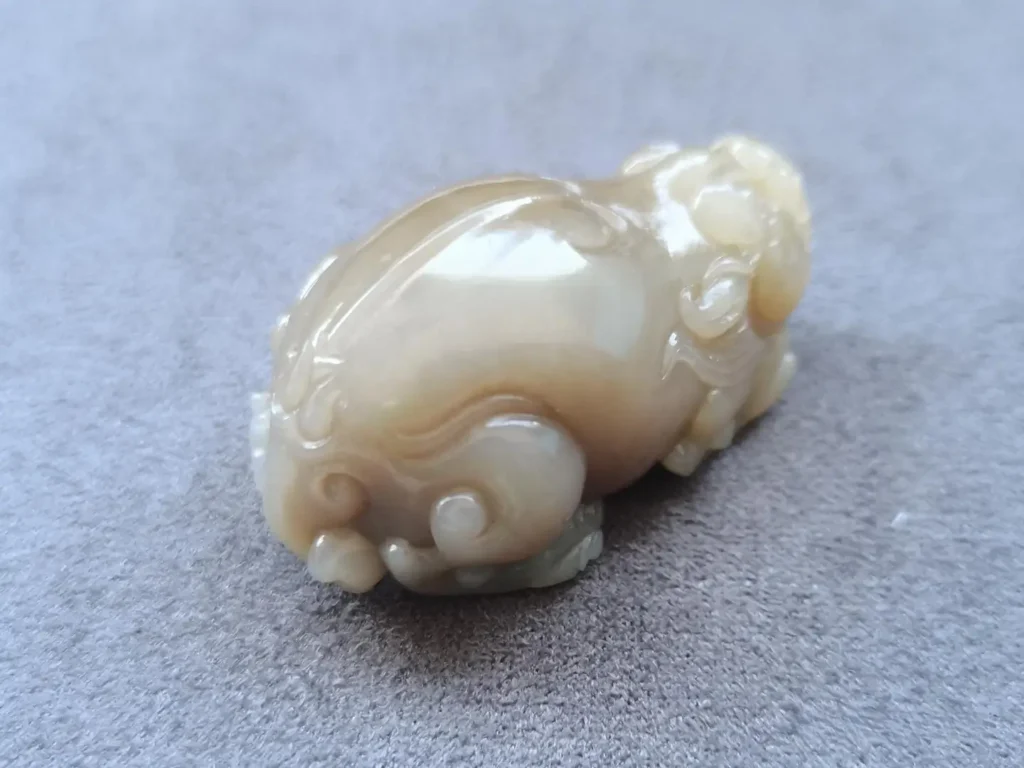
Sugar Jade Fading—often referred to in the jade trade as “Running Sugar”—describes a gradual lightening or weakening of the brownish-red coloration in sugar jade over time. This change can occur even in natural, untreated Hetian Sugar Jade, which is why the phenomenon often causes confusion among buyers.
To understand why this happens, we first need to look at what creates sugar color in jade.
What Causes the Color of Sugar Jade?
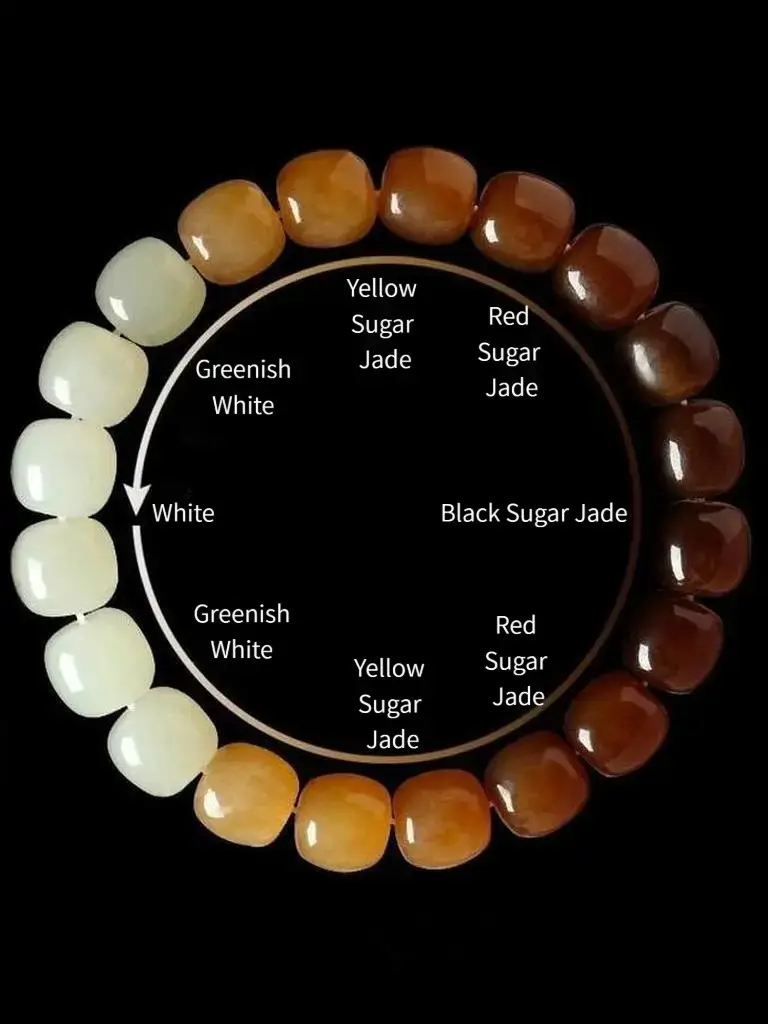
According to China’s National Standard (GB/T 38821-2020)—widely regarded as the authoritative global benchmark for Nephrite (Hetian) Jade identification and classification—sugar color is a formally defined gemological term rather than a trade nickname.
The standard describes sugar color as:
A collective term for red-brown, brown, yellow-brown, or dark brown coloration in Hetian jade, caused by the natural infiltration of iron- and manganese-based oxides or hydroxides, affecting all or part of the stone.
In other words, sugar color forms not from the jade’s primary mineral structure, but from external mineral elements introduced during geological formation.
Sugar Color Is a Secondary Color — Not the Jade’s Core Color
This definition leads to an important conclusion:
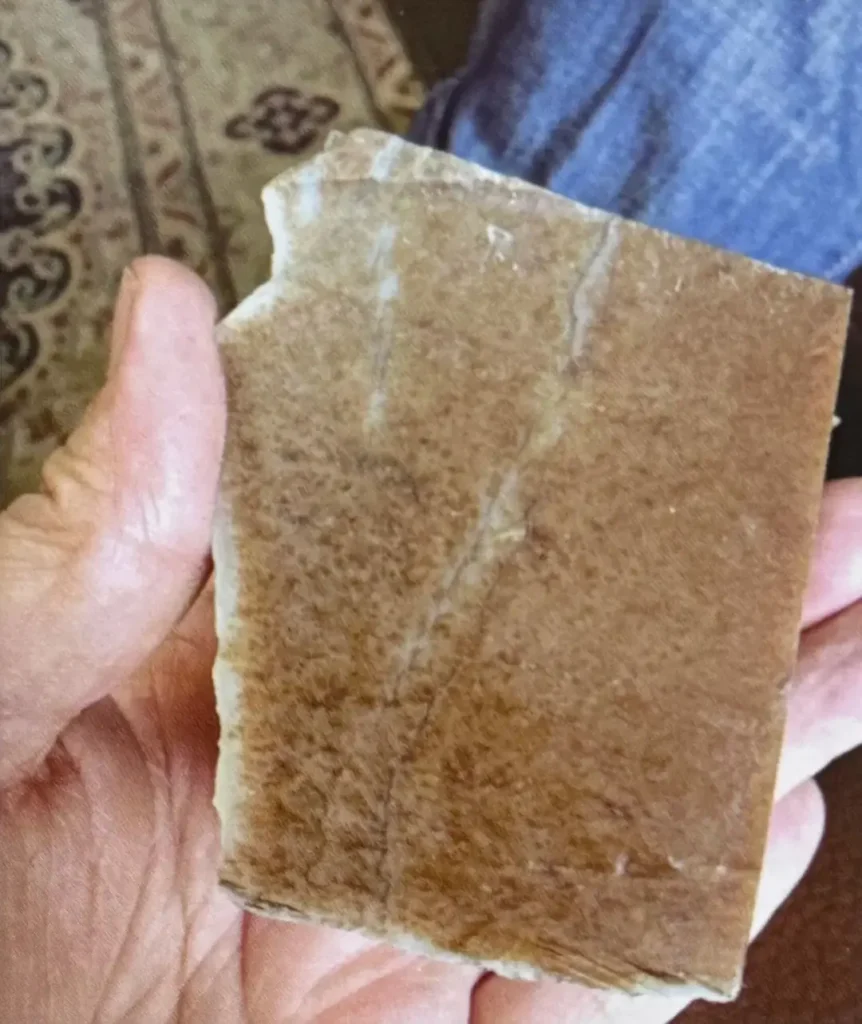
Sugar color is a secondary color, not the jade’s primary, structural color.
To put it simply, the jade’s base color—such as the white of white jade—is like its DNA. It formed deep underground under stable geological conditions and defines the stone’s core identity.
Sugar color, by contrast, is more like a tattoo or a natural stain. It developed later, influenced by external minerals and environmental factors during the jade’s long geological history. Because it is not part of the jade’s original “genetic code,” sugar color is inherently more susceptible to change over time.
This fundamental difference explains why the jade itself can remain structurally stable, while the sugar color may gradually lighten under certain conditions.
Why Can Sugar Jade Fade Over Time?
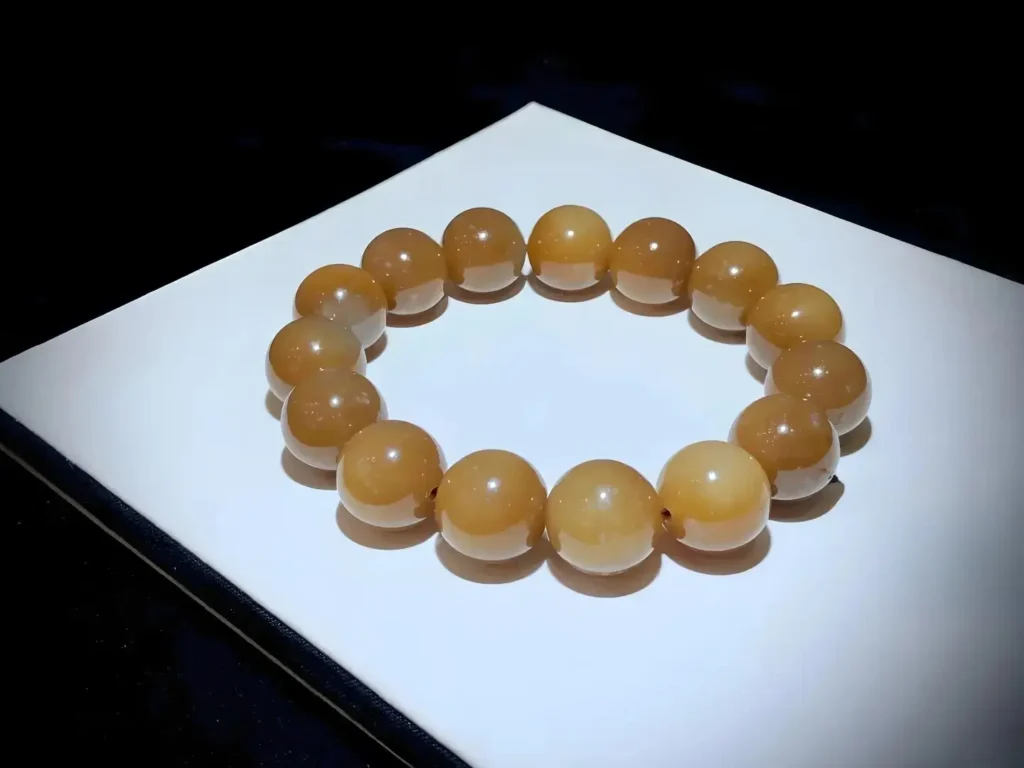
From a gemological perspective, sugar color primarily results from iron and manganese compounds. Under certain conditions—such as changes in temperature, humidity, or oxidation-reduction balance—these compounds may undergo subtle chemical reactions.
If iron oxides or hydroxides partially reduce or alter their state, the visual result can be a gradual lightening of red-brown, brown, or yellow-brown tones. When this process becomes noticeable to the naked eye, the jade appears to have “lost” some of its sugar color.
Within the trade, this visible lightening of sugar color is known as Sugar Jade Fading, or colloquially, “Running Sugar.”
Do All Sugar Jades Fade?
The short answer is no.
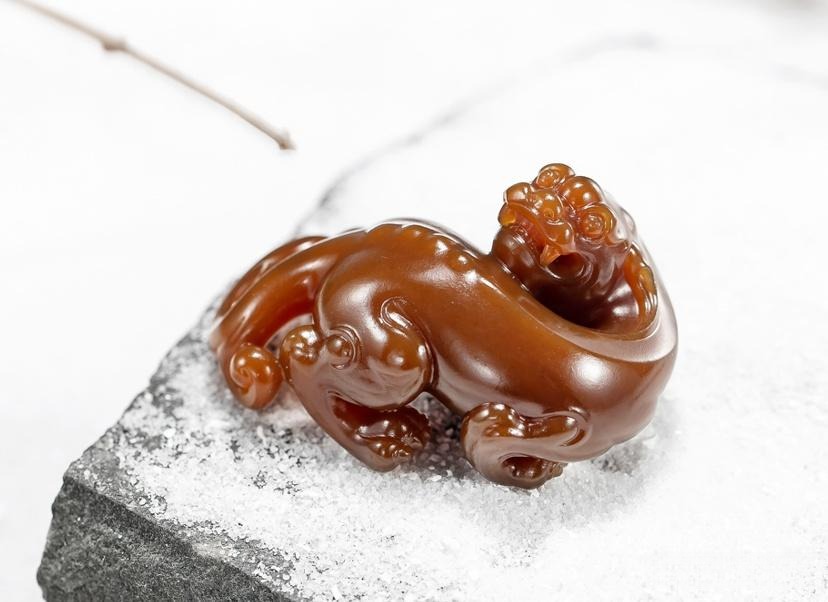
Among experienced Hetian jade collectors, there is broad consensus on one point: Sugar Jade Fading is statistically rare. Based on the proportion of sugar jade and sugar-white jade we have personally handled—combined with long-term exchanges with other professionals in the trade—the likelihood of noticeable fading appears to be limited to only a small percentage of cases.
In other words, fading exists—but it is the exception, not the rule.
Sugar Jade Fading Is Rare — and Largely Unpredictable
What makes Sugar Jade Fading particularly challenging to interpret is its lack of consistent patterns.
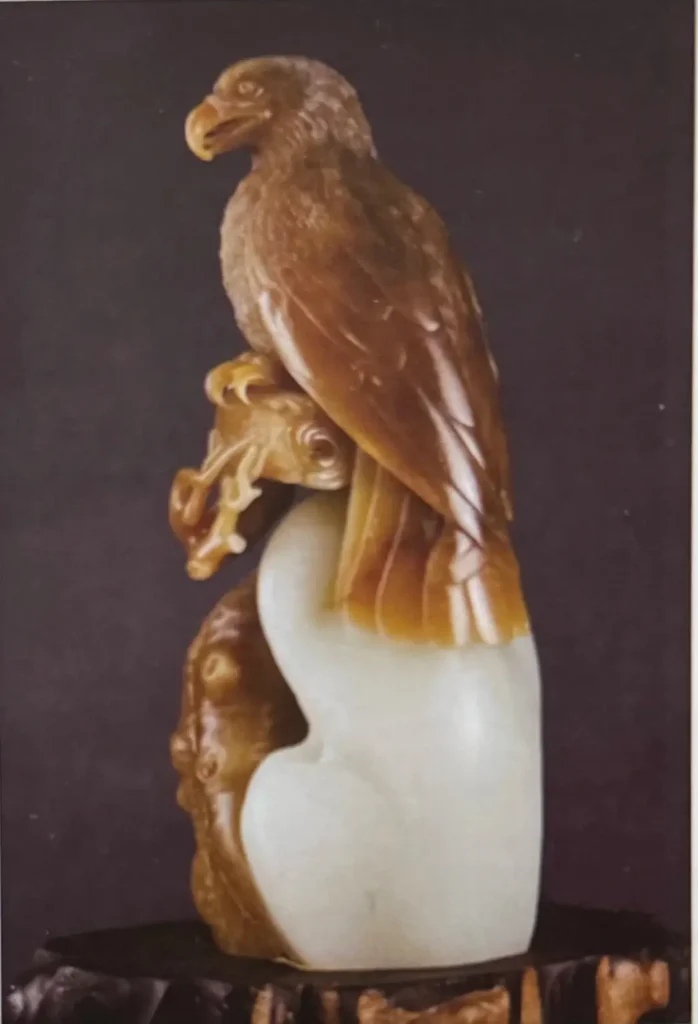
In real-world cases, fading has occurred across a wide range of materials: Xinjiang-origin sugar jade, Russian sugar jade, fine-textured jade, and even relatively coarse-textured pieces have all shown isolated examples of color change. At the same time, many comparable pieces have remained completely stable for years.
To establish a definitive explanation, researchers would need to track large sample groups from raw material to finished jewelry over extended periods, supported by laboratory analysis. At present, no such comprehensive, peer-reviewed research exists.
As a result, Sugar Jade Fading remains a phenomenon that is widely observed, yet still not fully understood.
How Unfounded Rumors and Generalized Myths Take Shape
In the absence of clear scientific conclusions, unfounded rumors and generalized myths often fill the gap. Some are repeated as simplified “rules,” while others are used to amplify fear—such as claims that “sugar jade should never be bought” or “Russian sugar jade always fades.”
These statements lack empirical support and fail to reflect the complexity of jade formation and behavior. In practice, they are overly simplistic and misleading, especially for new buyers.
Natural Fading vs. Dyed Color Loss — How to Tell the Difference
It is important to separate natural Sugar Jade Fading from artificial color loss caused by dyeing.
Natural sugar jade may experience gradual, subtle lightening over long periods—often taking years before the change becomes noticeable. The transition tends to be slow and uneven, without obvious surface damage.
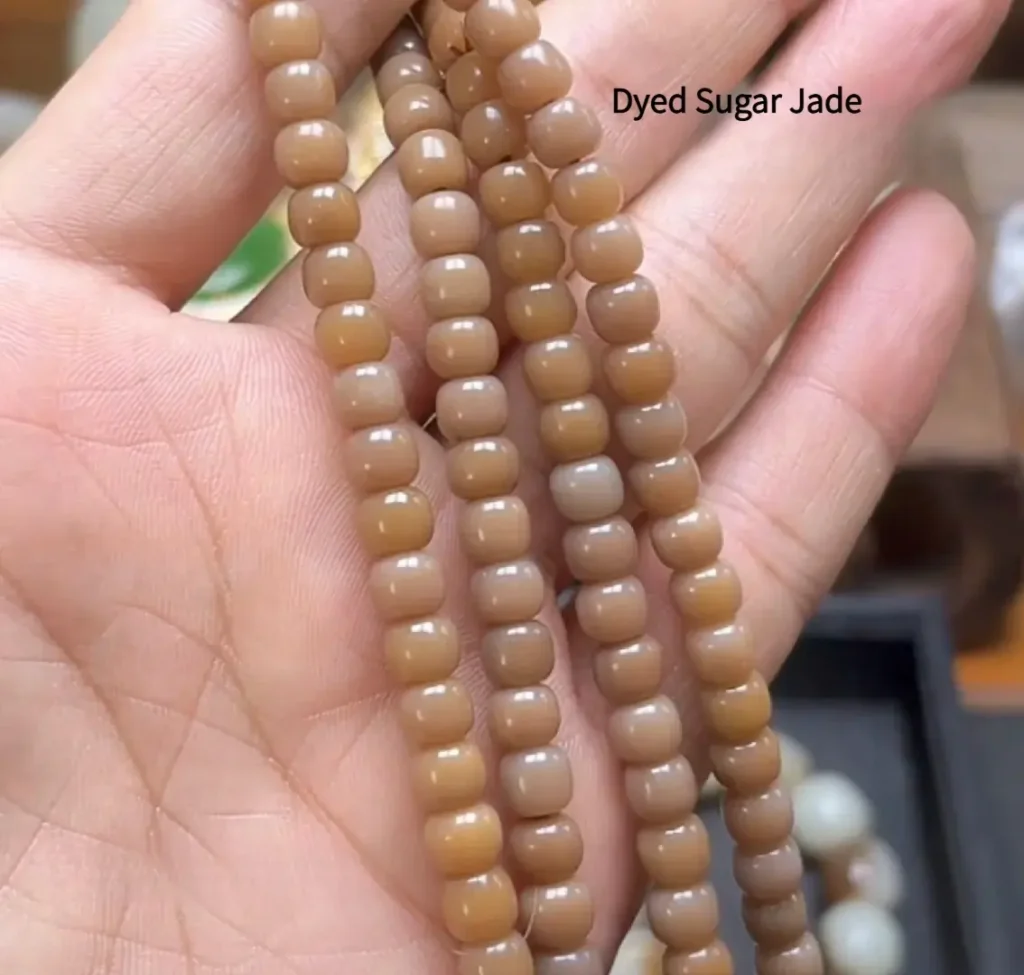
Dyed sugar jade, by contrast, usually shows rapid and inconsistent color loss. The color may fade quickly, appear patchy, or concentrate along cracks and surface pores. In many cases, the color looks superficial rather than integrated into the stone.
Understanding this distinction helps buyers avoid unnecessary panic and prevents natural, untreated jade from being wrongly dismissed as fake.
How Long Does Sugar Jade Fading Take?
To better understand the pace of Sugar Jade Fading, we tracked two real-world specimens over several years:
Specimen A – Qiemo, Xinjiang
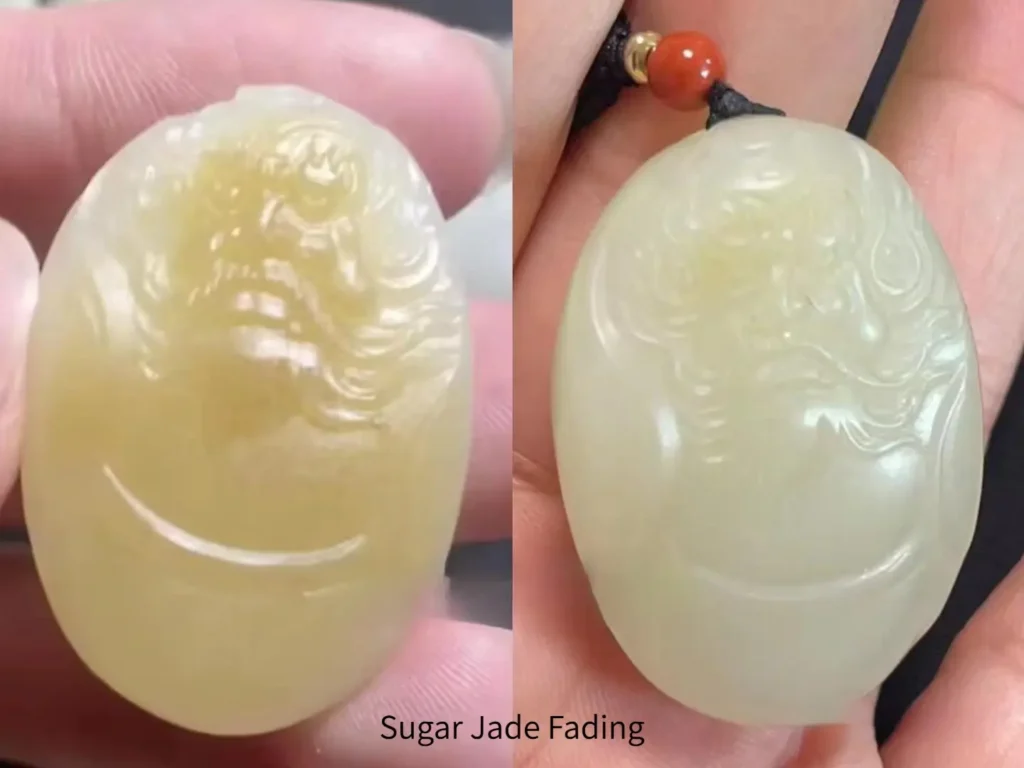
- A premium Sugar-White Jade pendant finished in April 2021.
- By December 2023 (32 months later), we observed noticeable lightening of the sugar pigment.
Specimen B – Russian Origin
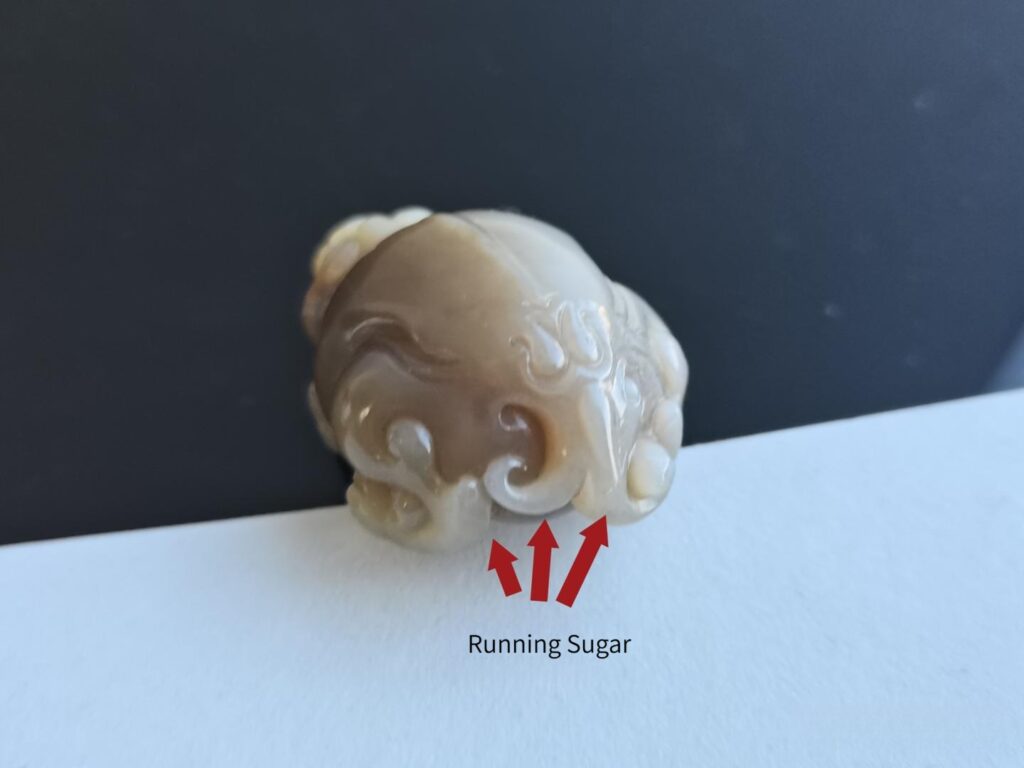
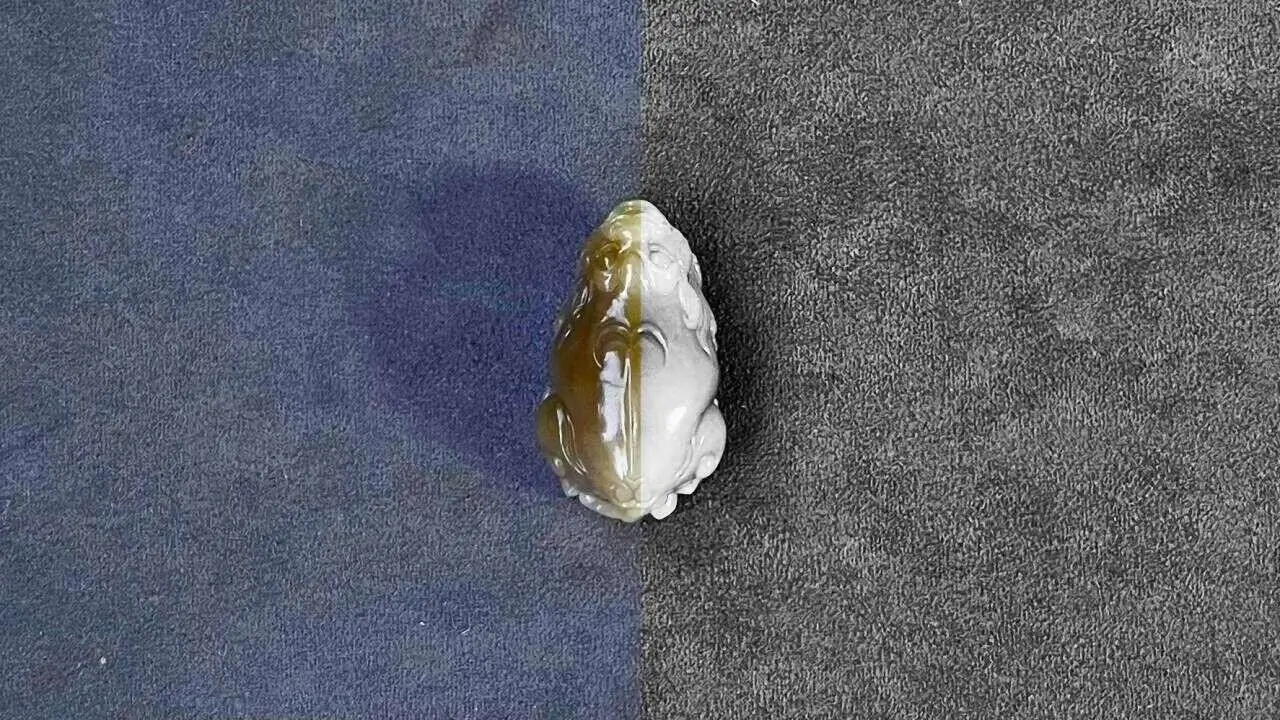
- A “Full Sugar” Pixiu acquired in late 2022.
- Despite initially deep color saturation, the piece began slow, observable fading over a 12-month period, even after controlled sunlight exposure tests.
Key Insight: Fading is a long-term process, not an overnight event.
- Natural Sugar Jade rarely changes color quickly.
- Subtle, gradual fading over 1–3 years is normal for untreated specimens.
- Early changes can be nearly imperceptible, so careful observation and proper care are essential.
Key takeaway for buyers: patience and proper care are more important than short-term panic. Slow fading does not indicate poor quality or artificial treatment.
Does Jade Texture Predict Color Fading?
It is a logical assumption: one might think a “looser” or coarser jade structure would allow color to “leak” or fade more easily. However, in the world of mineralogy, intuition often contradicts reality.
Our long-term observations reveal a surprising truth: Sugar Jade Fading is not strictly determined by texture.
- The Fine-Grain Paradox: We have documented premium, “fine-meat” (tightly structured) sugar-white jades that experienced significant fading. These pieces were top-tier in terms of density and polish, yet their color was not “locked in.”
- The Coarse-Grain Stability: Conversely, many coarser specimens—which are typically considered lower grade—have remained color-vibrant for decades without a hint of fading.
The Science Behind It: While structure (grain size and density) dictates the jade’s durability and “oiliness,” color stability depends on the chemical state of iron and manganese ions at the molecular level. Because these are two separate physical properties, a “perfect” texture does not serve as an insurance policy against “Running Sugar.”
The Takeaway: Choose a jade for its texture and luster first. These are permanent physical traits. Treat the sugar color as a “living” element—a natural, beautiful gift from the earth that may, in rare cases, evolve over time.
Does Origin Determine Sugar Jade Fading?
A common misconception in the jade world is that a stone’s origin predicts whether it will fade. Many believe that only Russian sugar jade fades easily, while Xinjiang sugar jade is always stable. Real-world experience, however, tells a very different story.
Case in Point — Qiemo Sugar-White Jade
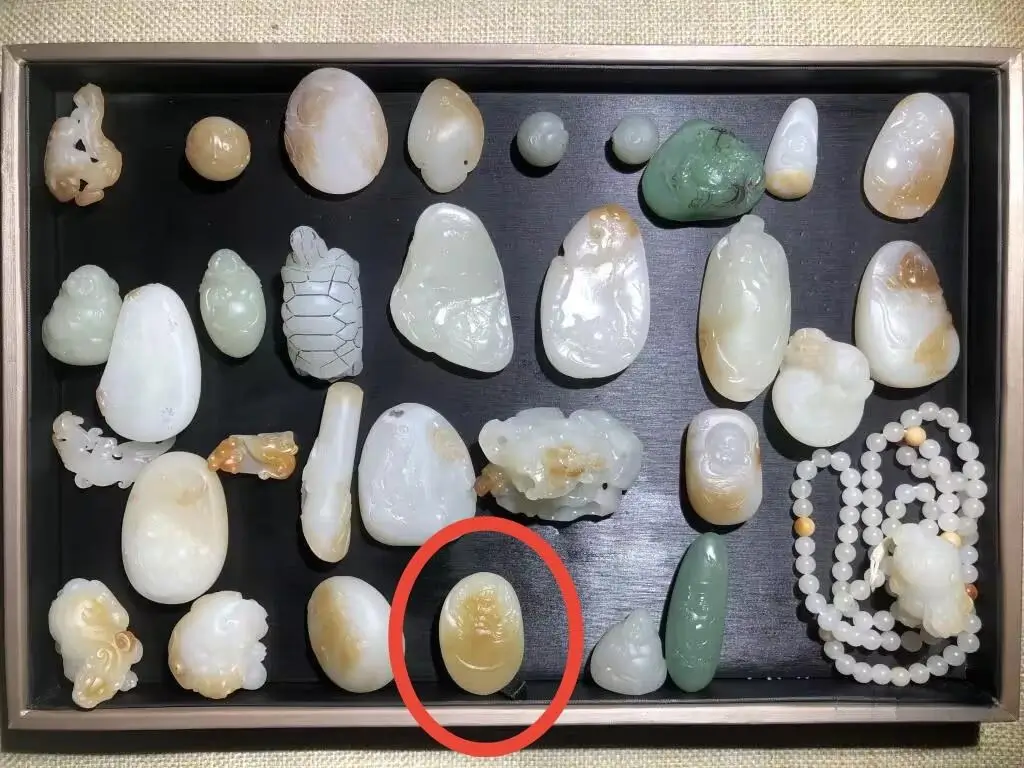
Xinjiang Qiemo sugar-white jade is widely celebrated for its tight structure, fine texture, and oily luster—qualities that generally indicate high stability. Years ago, we acquired a batch of premium Qiemo sugar-white raw material and oversaw every step of the crafting process, from rough carving to finished pendants.
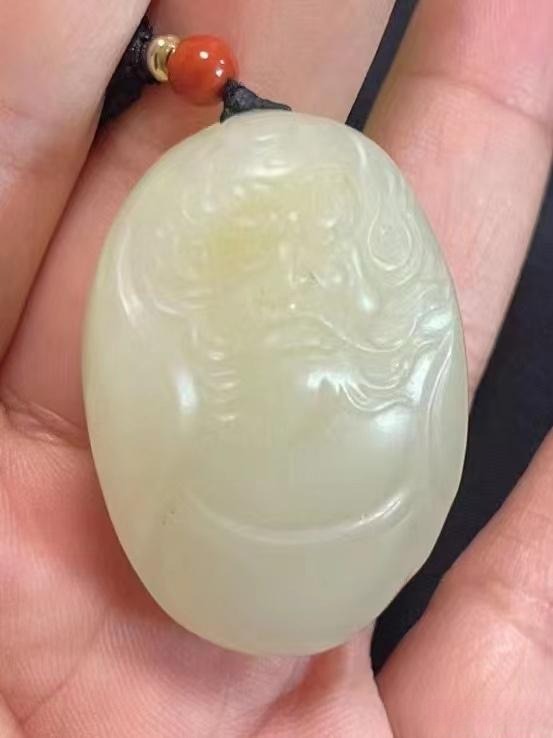
Recently, a long-term client returned one piece—a Qiemo sugar-white Guan Gong pendant—for consultation. To our surprise, this single piece showed noticeable fading, transitioning from sugar-white to a more neutral white. Remarkably, every other piece from the same batch remained unchanged.
Key Insight — Fading Is an Individual Phenomenon, Not a Regional One
Sugar Jade Fading is a highly individual phenomenon, not predetermined by region. Our case study demonstrates that even pieces carved from the same raw boulder can have significantly different internal distributions of iron and manganese ions. This unique chemical makeup determines how each specific piece responds to its environment.
One stone may gradually evolve over time, while its neighbor remains vibrant for decades.
The Bottom Line: Don’t let “origin bias” dictate your collection. A Xinjiang stone is not immune to fading, just as a Russian stone is not destined for it. Always evaluate a piece based on its intrinsic qualities—texture, luster, and mineral character—rather than relying solely on regional reputation.
How to Care for Sugar Jade to Minimize Fading
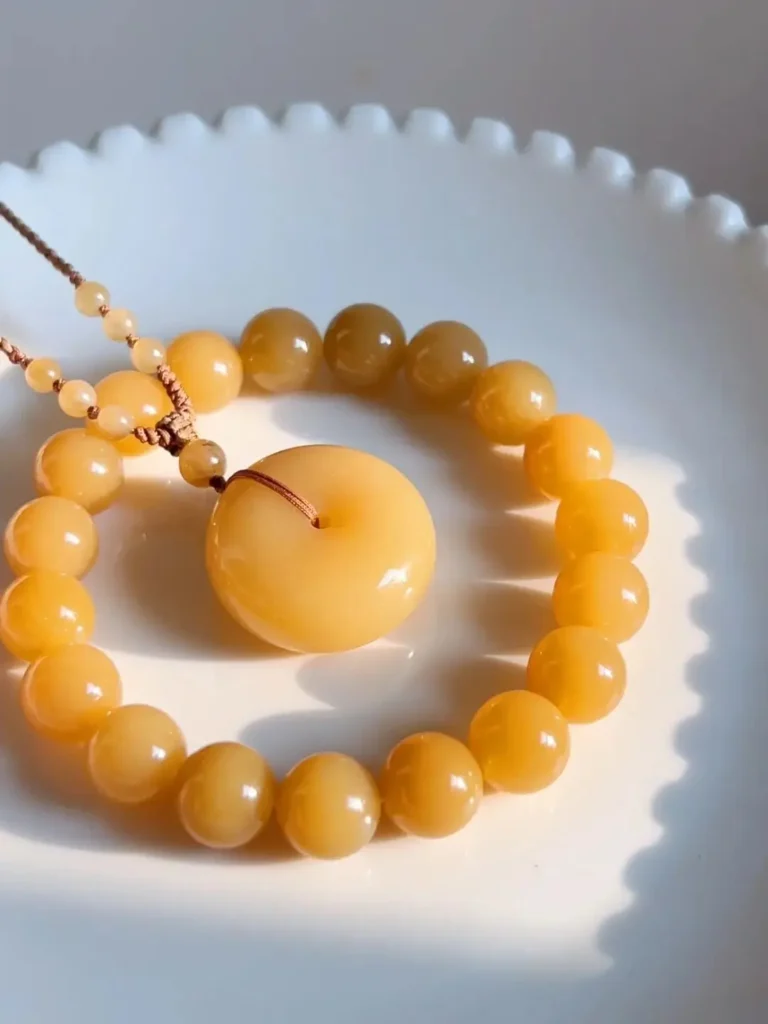
While Sugar Jade Fading is statistically rare, proper care can significantly reduce the risk.
1. Maintain Environmental Stability & UV Protection
- Avoid Direct Sunlight: Prolonged UV exposure can accelerate chemical changes in iron pigments, affecting sugar color.
- Keep Temperature Stable: Don’t place jade near heaters or air-conditioning vents; rapid temperature swings can stress the stone.
2. Moisture & Natural “Hydration”
- Wear Your Jade: Regular wear allows your skin’s natural oils to nourish the stone, maintaining its legendary oily luster and rich sugar color.
- Avoid Dry Storage: If storing long-term, keep a small glass of water nearby to preserve moderate humidity.
3. Chemical Awareness
- “Last On, First Off”: Apply perfumes, hairspray, or lotions before putting on your jade jewelry, and remove it first at night.
- Safe Cleaning Only: Use lukewarm water and a lint-free cloth. Never use ultrasonic or steam cleaners, which can disturb the stone’s secondary mineral structure.
4. Embrace the “Living” Stone
- Document Its Journey: Take a high-quality photo when you first acquire your jade. This serves as a baseline to track subtle changes over time.
- Shift Your Perspective: In rare cases of slight fading, remember that the jade’s core qualities—density, toughness, and heritage—remain unchanged. Its value lies in more than just color.
Quick Do’s & Don’ts
| Do | Don’t |
|---|---|
| Wear it regularly | Leave it on a sunny windowsill |
| Clean with lukewarm water | Use ultrasonic or steam cleaners |
| Store in a soft pouch | Expose to perfumes, lotions, or harsh chemicals |
Frequently Asked Questions About Sugar Jade Fading
1: Does Sugar Jade Fading mean my jade is fake or dyed?
Not necessarily. While sudden color loss can be a red flag for artificial treatment, natural Sugar Jade Fading (often called “Running Sugar”) is an organic, slow-motion process that occurs even in premium, untreated stones.
To tell the difference, look at the speed and pattern:
- Dyed Jade: Fades rapidly (within weeks or months), looks patchy, and often shows concentrated pigment along surface cracks or pores.
- Natural Fading: Happens gradually over 1–3 years and appears softly integrated within the jade’s structure.
2. Does Sugar Jade lose its value if it fades?
The answer depends on perspective. In terms of market pricing, significant fading can reduce resale value, since color is a key grading factor for sugar jade and collectors often pay a premium for vivid, well-saturated tones.
However, texture, luster, and craftsmanship remain unchanged and are equally important in evaluating a piece. These intrinsic qualities do not fade with color, meaning the jade’s core value and appeal endure even if its sugar color subtly lightens over time.
3: How common is Sugar Jade Fading?
It is statistically rare. Based on long-term industry experience, noticeable fading affects roughly 1 in 200–300 pieces. The majority of Sugar Jade remains vibrant for decades, so don’t let rare cases discourage you from buying natural jade.
4: Can I prevent my Sugar Jade from fading?
While you cannot alter the stone’s mineral chemistry, you can maximize stability:
- Avoid prolonged UV exposure and harsh chemicals.
- Wear your jade regularly—your skin’s oils naturally maintain hydration and luster.
- Store in a cool, stable, slightly humid environment.
Proper care slows fading and preserves the stone’s natural beauty.
5: Should I avoid buying Sugar Jade because of fading?
Not at all. Avoiding Sugar Jade is like skipping diamonds because of tiny inclusions. Focus on the stone’s intrinsic qualities—texture, density, and oiliness. If a piece resonates emotionally, its rare, evolving color only enhances its uniqueness and story.
FAQ: Understanding Color Stability in Sugar Jade (Nephrite)
Not necessarily. While dyed “Type C” jade fades rapidly due to unstable chemical pigments, natural Sugar Jade may also exhibit gradual color changes—a phenomenon known in the trade as “Running Sugar.”
Natural Fading: A slow redox process, typically 1–3 years, with uniform color change that does not affect the jade’s structure.
Artificial Fading: Dyed jade often shows patchy color loss within weeks, with pigments concentrated along surface fissures.
Color stability depends on mineral chemistry, not just density. The “sugar” hue comes from secondary iron or manganese ions. Even top-quality, fine-grained Qiemo jade can shift if these ions undergo redox changes under environmental conditions. Density reflects the stone’s toughness, but it does not guarantee permanence of the secondary color.
While you cannot reverse chemical changes, you can effectively preserve and enhance the stone’s color:
UV Protection: Sunlight is the primary cause of fading. Store your jade in a soft pouch or jewelry box, away from direct light.
Humidity Control: Keep relative humidity at 45–65%. In dry climates, place a small cup of water nearby; in humid areas, ventilate periodically.
Frequent Wear: Your skin’s natural oils form a protective layer, nourishing the stone and maintaining its rich, warm sugar tones.
The “Oil & Silk” Method is recommended: apply a thin layer of pure camellia oil, wrap the jade in natural silk, and store it in an airtight container. This prevents oxidation and often makes the sugar tones appear more translucent and rejuvenated when next worn.
The core value of jade lies in its inherent quality: fineness, oily luster, and structural integrity. While vivid color commands a premium, natural shifts are the “life marks” of a living stone. Ultimately, it is not merely fading, but a gift of time—a graceful evolution that enriches the stone’s story without diminishing its status as a rare, non-renewable treasure.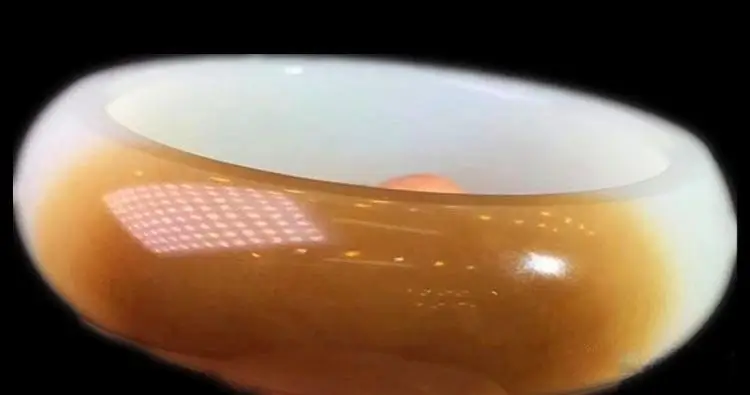
💡 Investor’s Note:
While natural evolution adds a layer of personal narrative to the stone, color stability remains a critical metric for assessing premiums in the secondary market.
- Quality Dictates Value: High-end specimens with extreme structural density (such as top-tier Qiemo Sugar Jade) typically exhibit exceptional color stability and are less prone to visible fading.
- Condition Affects Liquidity: Significant color dispersion or “dehydration” (loss of luster) may be appraised as a sign of “loose structure” (immature stone) in commercial evaluations, which can negatively impact its resale price and market liquidity.
- Pro Tip: For collectors focused on asset preservation, prioritizing fine texture, high oily luster, and structural density is the essential safeguard against the risks of color fluctuation.
The PeonyJewels Perspective: Beauty That Endures
While the industry continues to research the science of color stability, our commitment to you remains simple: we prioritize the soul of the stone over artificial perfection.
We believe jade should be approached the same way we approach people—what endures over time is what deserves to be cherished. This philosophy sits at the very heart of our design process.
Originally Designed, Handcrafted for You
Our collection of Handmade Vintage Earrings is born from this respect for nature. We don’t chase factory-made uniformity or visual sameness. Instead:
- Vintage Aesthetic: We draw inspiration from classic heritage, creating designs that feel like timeless heirlooms rather than trends.
- Handmade Soul: Every pair is handcrafted to highlight the unique texture and natural “oiliness” of each individual jade piece.
- Truth in Material: We value transparency. We embrace the living character of untreated Sugar Jade, focusing on intrinsic density and luster—the qualities that truly define jade’s lasting worth.
Final Thoughts for the Collector:
Jewelry is, above all, about emotional resonance. If a piece speaks to you and feels right in your hand, it already holds meaning. As long as your jade is natural and free from artificial treatments or chemical enhancements, it deserves appreciation rather than fear.
Take your time. Look more, rush less. With an eye for beauty and the wisdom of an informed collector, you will eventually find that one piece that feels unmistakably yours.