The Vital Role of Water in Gemstones: Why Hydration Matters for Your Jewelry
Water is the essence of life. Beyond being a fundamental requirement for survival, water is inextricably linked to beauty: when it is well-hydrated, water gives your skin a plump, supple, and elastic look. Conversely, insufficient skin moisture causes the cells that support your skin to “shrivel,” leading to a dull, lackluster appearance. This principle isn’t exclusive to humans; the presence of water in gemstones ensures the stability and splendor of your cherished minerals!
The Beauty and Durability Decline: The Impact of Dehydration on Water in Gemstones
The loss of water can significantly compromise a gemstone’s appeal:
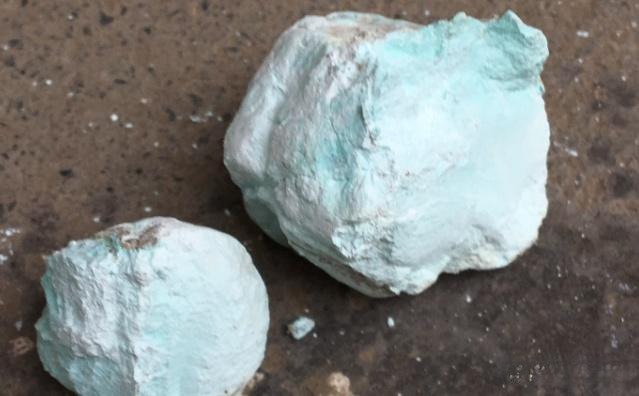
- Aesthetic Degradation: When hydrated gemstones lose their water content, they often develop dull color, suffer affected transparency, and lose unique optical phenomena. In short, water-containing minerals look less attractive when they dry out.
- Reduced Durability: From a durability perspective, the hardness of some gemstones decreases after they lose their water content.
So, how does this invisible and intangible water exist within gemstone minerals? And which types of water in gems are unstable?
You may have heard of a “water loss” or “running water” phenomenon in jade worn over time. Don’t worry, we’ll cover these questions in this comprehensive guide!
💧 The Forms of Water in Gemstones Minerals: A Structural Overview
Fundamentally, mineralogy classifies water into two main groups, based on its form and role within the crystal structure:
- Water Unrelated to the Crystal Lattice: This is broadly termed “Adsorbed Water.”
- Water that Participates in the Mineral’s Crystal Structure: This includes “Water of Crystallization,” “Structural Water,” “Zeolitic Water,” and “Interlayer Water.”
However, because “Zeolitic Water” and “Interlayer Water” are relatively uncommon in gems, systematic gemology primarily classifies water based on its structure into three main types: Adsorbed Water, Water of Crystallization, and Structural Water.
So, how do we distinguish these various forms of “water”? Let’s examine the specific differences between these types of water found in gemstones.
1. Structural Water: The Most Stable and Essential “Water”
Structural Water represents the most secure form of water in a gemstone. Also known as “chemically bonded water,” it is the most influential type of water for a gem’s properties.
- Form and Stability: Structural water exists as hydroxyl ions (OH⁻) or protons (H⁺) within the crystal structure. Its fixed position and content make it extremely stable and resistant to dehydration (requiring temperatures of 600–1000°C).
- Impact of Loss: Once structural water escapes, the loss destroys and alters the gemstone’s entire fundamental structure.
- Analogy: Think of this as the water your body has absorbed, which becomes part of your essential fluids (your tissue and cell water). You will not spontaneously expel it during normal activities.
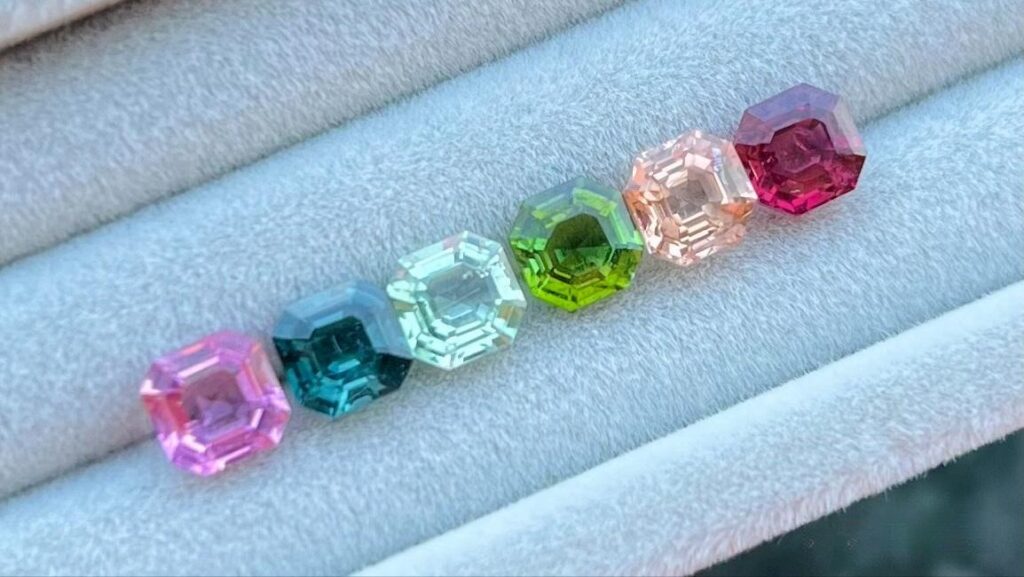
Many highly stable gemstone minerals contain structural water, including Tourmaline, Topaz, Prehnite, and Hetian Jade.
2. Water of Crystallization (Hydrates): The Moderately Stable “Water”
Water of Crystallization exists as neutral water molecules (H₂O) within the mineral. It acts as a structural unit and is an integral part of the mineral’s chemical composition, written into its chemical formula.
- Form and Stability: This water typically occupies large vacant spaces within the crystal structure, and its content is fixed. It is less resistant to dehydration than structural water (requiring 200–500°C), and dehydration will alter the structure.
- Analogy: This is like the water you’ve just ingested that hasn’t been absorbed yet (stomach contents). While it’s in you, a hard shock (like a blow to the stomach) could cause you to quickly expel it.
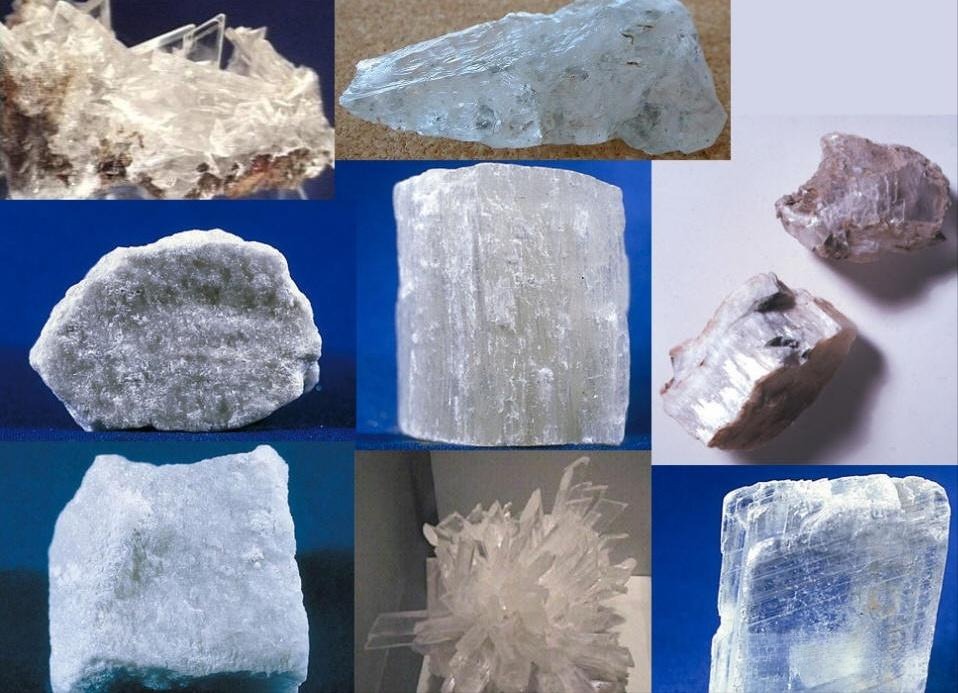
The classic example of a gemstone mineral containing Water of Crystallization is Gypsum.
3. Adsorbed Water: The Most Unstable “Water”
As expected, Adsorbed Water occupies the mineral’s surface and exists within its cracks or pores. Crucially, this water does not constitute the mineral’s chemical composition, nor does the chemical formula include it.
- Form and Stability: The content of adsorbed water is unstable, varying with temperature and humidity. It readily escapes from the mineral at low temperatures (100–110°C). It can exist as gas, liquid, or solid.
- Impact of Loss: Since it is external to the mineral’s core chemistry, the loss of adsorbed water does not affect the gemstone’s fundamental physical and chemical properties. However, for certain gems, the visual change upon losing adsorbed water can be dramatic.
- Analogy: This is the water you are literally carrying—a bucket of water in your hand. It can be easily dropped or lost (dehydrated).
All gemstone minerals contain adsorbed water.
💎 A Prime Example: The Dehydrated Opal
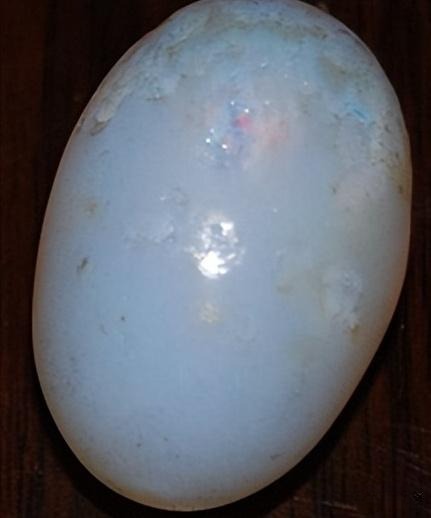
The most typical example of dramatic dehydration is the Opal. Opal will dehydrate at 100–125°C, causing its magnificent play-of-color (iridescence) to weaken or vanish. Even at room temperature, a very dry environment can cause African “water opals” to lose their water easily.
Special Note on Opal Water: The “water” in Opal is a unique type of adsorbed water called “Colloidal Water.” This water, contained in hydrogels (cryptocrystalline or amorphous substances), is an inherent characteristic of colloidal minerals and is included in their chemical composition, though its content is highly variable and unfixed. Its content profoundly affects the Opal’s visual appearance.
💧 Water in Gemstones: When Multiple Forms Combine, Causing the “Running Water” Phenomenon
Many types of jade and gemstones do not contain just one singular form of water. When a gem contains different types of water, what are the implications? Let’s explore two classic examples: Turquoise and Serpentine Jade (Xiuyu).
Turquoise: A Triple Threat of Water Content
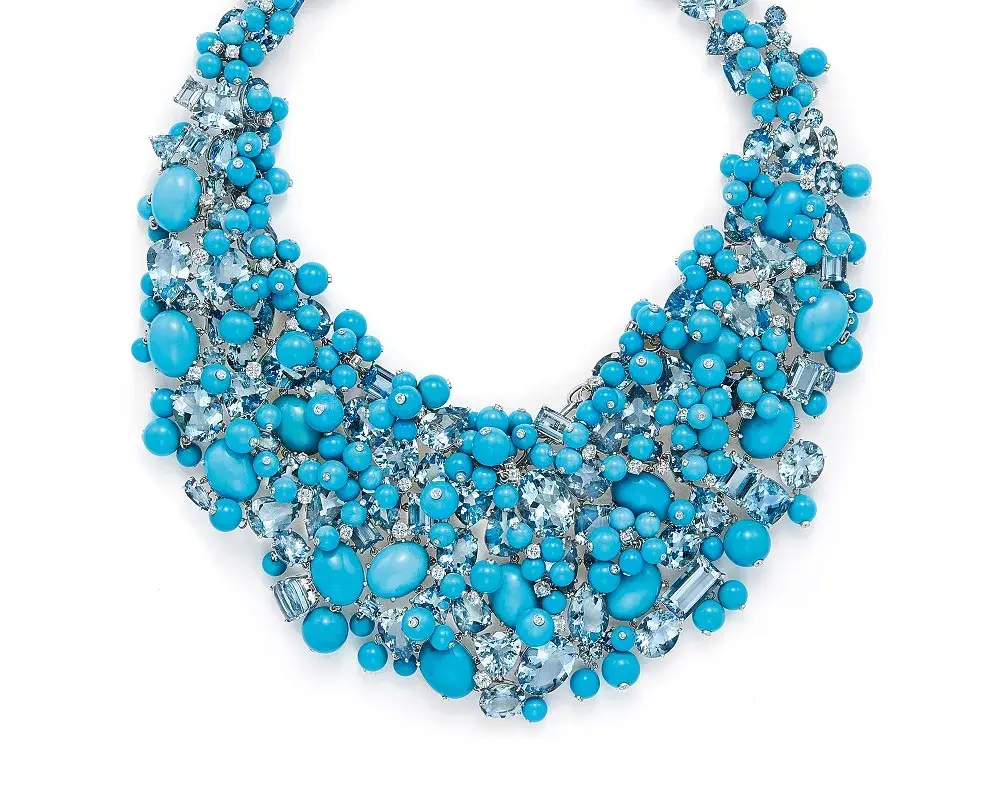
Turquoise is one of the few gemstone minerals that can simultaneously contain Structural Water, Water of Crystallization, and Adsorbed Water.
- The presence of Water of Crystallization is the standard state for most common Turquoise.
- For high-quality, high-density Turquoise (“high-porcelain” quality), a stable quantity of Structural Water is a necessary condition for its prized, porcelain-like appearance.
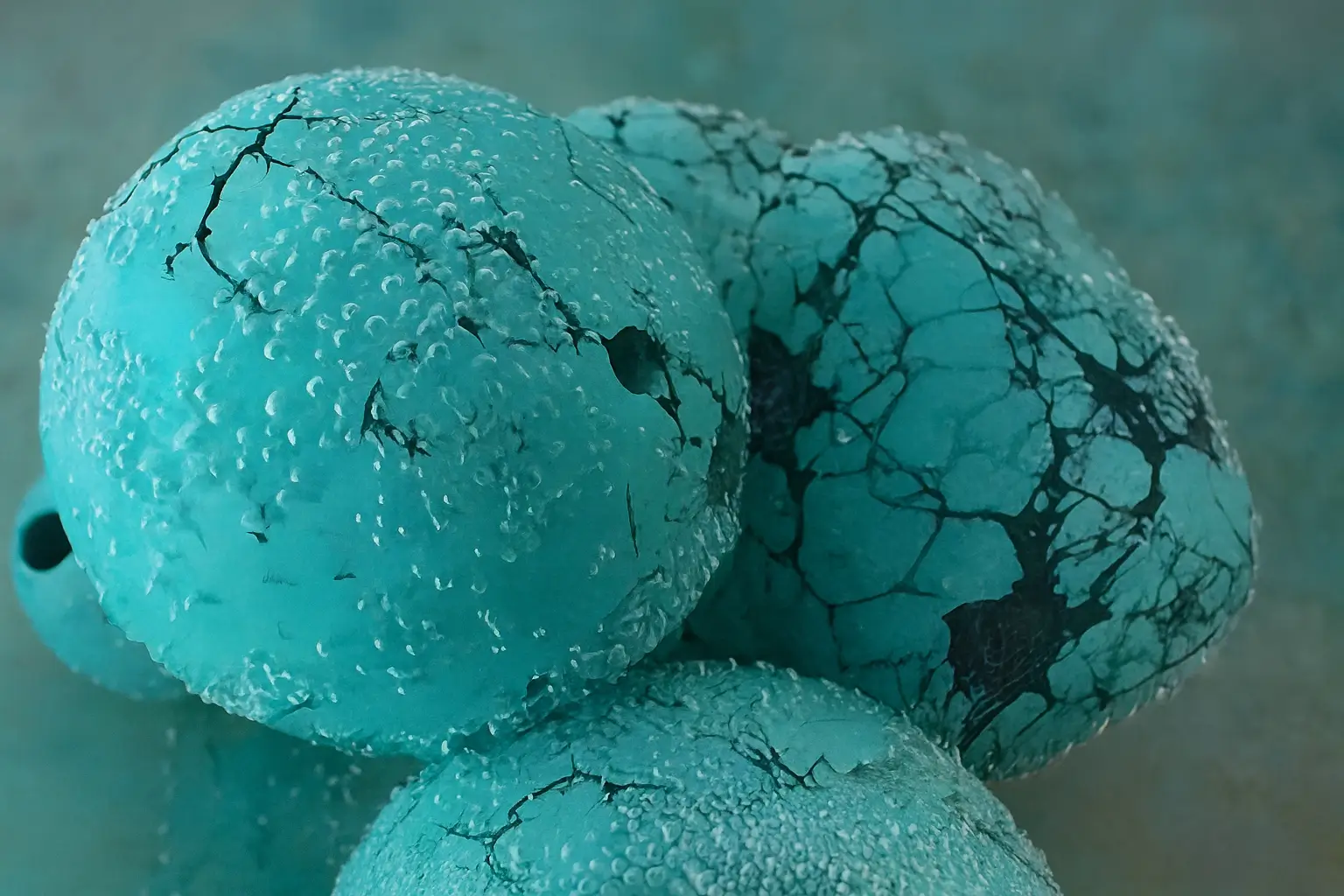
- Lower-density Turquoise, which has numerous surface pores, can hold Adsorbed Water within the spaces between its grains. When fully saturated, it looks better. However, once this adsorbed water evaporates, it reverts to its original, less desirable state: lighter color, lighter weight, and a dull surface—this is the result of Adsorbed Water.
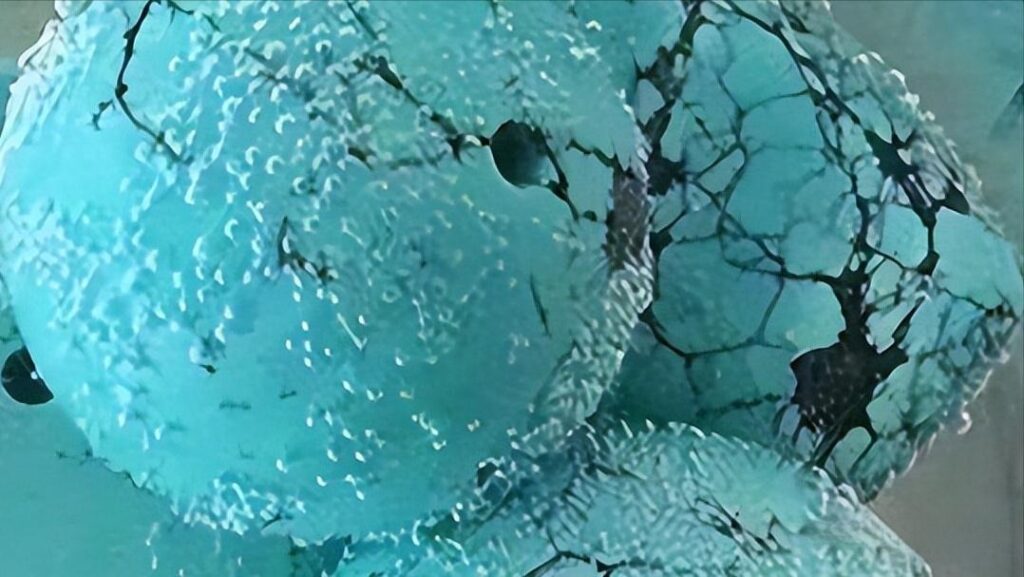
Buyer Beware: You might see vendors at cultural markets displaying low-density, low-quality Turquoise (often called mian song) soaked in water. When you buy this, a significant portion of the weight is the absorbed water. Days later, when the water in the surface cracks evaporates, you will see its true quality and color—and the stone will often look much “uglier” than when purchased (lighter color, loss of the oil-like sheen from the absorbed water).
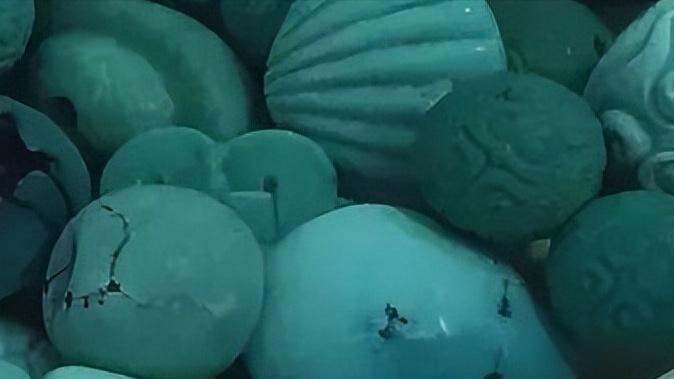
Further Reading on Care: Beyond the structural risks of dehydration, the porous nature of Turquoise makes it susceptible to absorbing external substances, which often manifest as noticeable surface issues. Therefore, proper maintenance is crucial for longevity.
For example, if you have ever encountered the frustrating appearance of white spots on your Turquoise after wear, we recommend diving into PeonyJewels blog: White Spots on Your Turquoise After Wear? An In-depth Analysis of the Three Main Causes and How to Solve It! This specialized article provides actionable solutions to keep your cherished piece pristine.
Serpentine Jade (Xiuyu): Not All Jade “Runs Water”
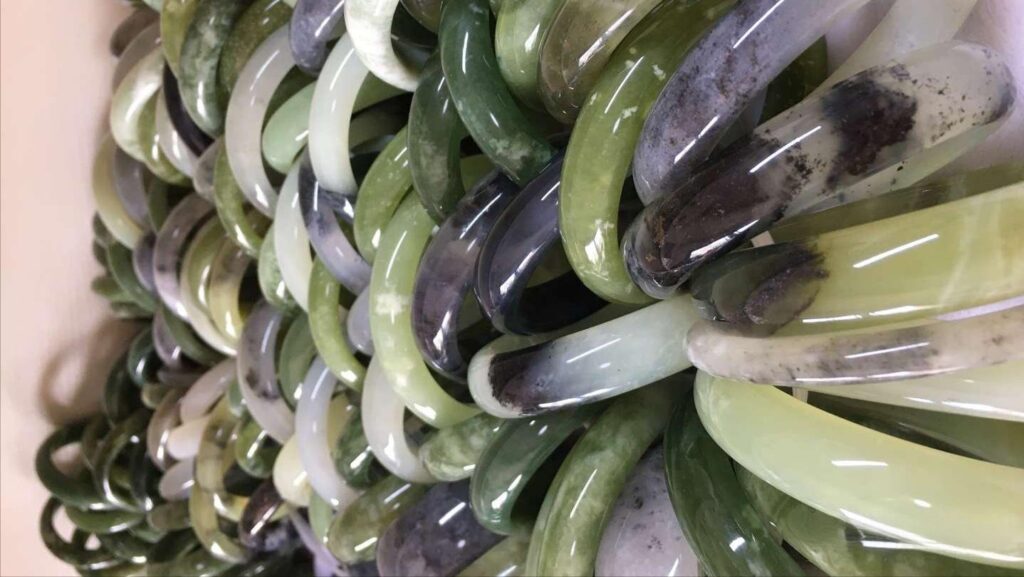
Many experienced collectors have heard that some Serpentine Jade can “run water” after being worn for a period. In fact, Serpentine Jade contains two forms of water:
1. Structural Water (The Stable Water): Serpentine Jade is a layered, hydrated magnesium silicate mineral, with the chemical formula (Mg,Fe,Ni)₃SiO₅(OH)₄. The hydrogen and oxygen exist as ions (OH⁻) within the crystal structure. As long as you don’t heat it above 600°C, it remains highly stable.
2. Adsorbed Water (The Unstable Water): The lower-quality, coarser varieties of Serpentine Jade have tightly packed antigorite crystal grains, leaving numerous pores between them. Adsorbed water can reside in these interstitial pores and will escape at around 150°C.
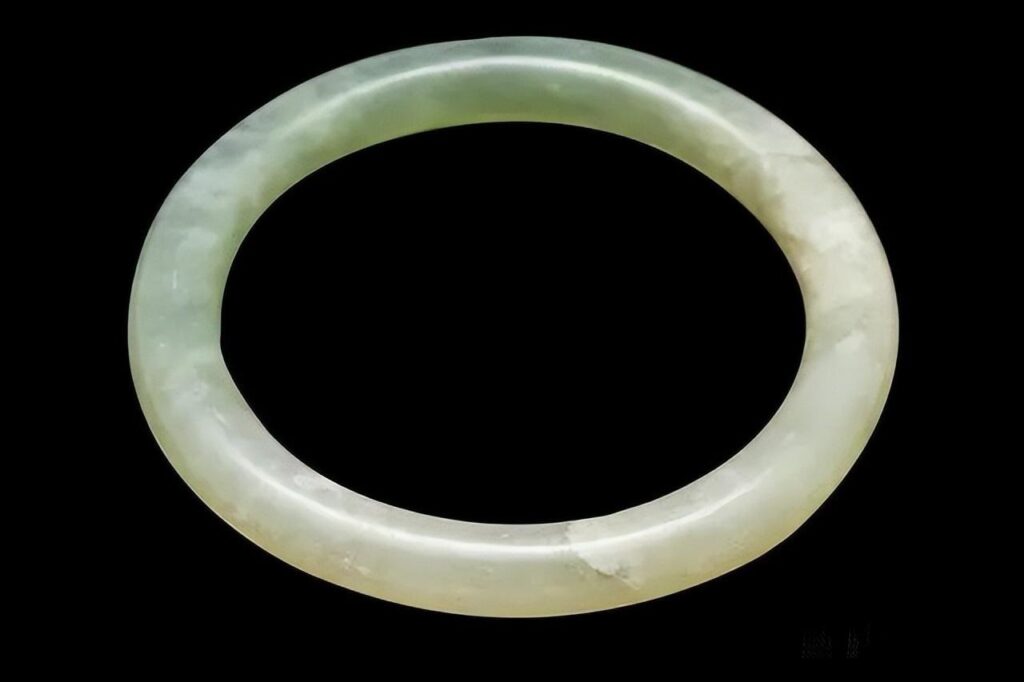
This is why not all Serpentine Jade “runs water”; only the lower-quality, porous material does. The “wateriness” (translucency) of high-quality, dense Serpentine Jade is due to its high content of antigorite, its ordered arrangement, and its compact structure, which creates a translucent visual effect that does not easily change. The loose-textured jade runs water because it easily adsorbs and loses the interstitial adsorbed water.
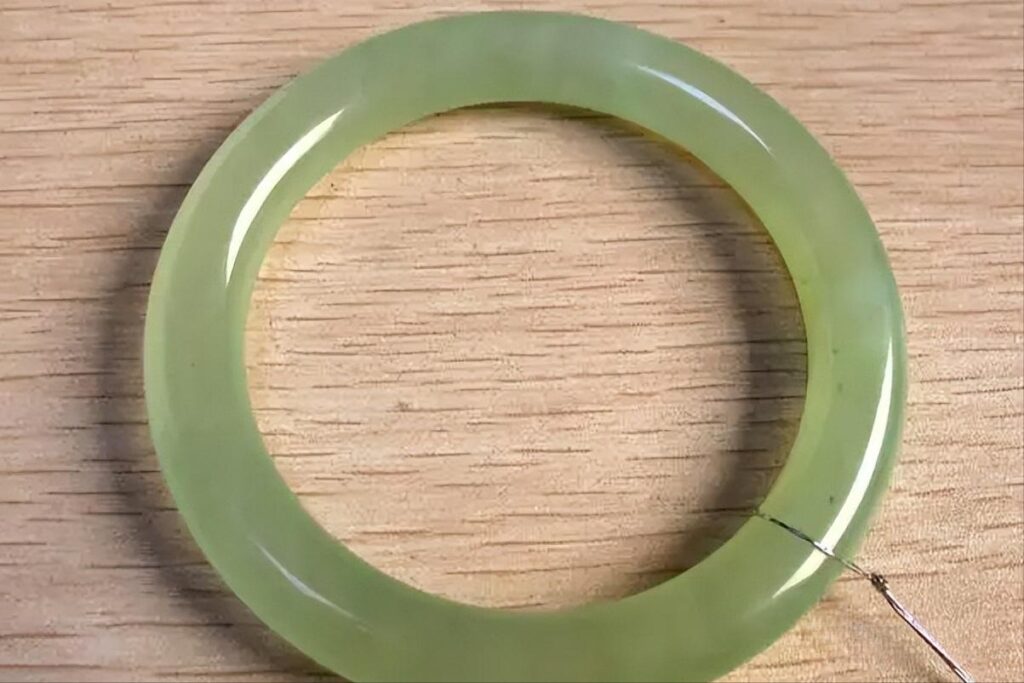
- Note on Wax: Furthermore, Serpentine Jade with cracks that has been wax-filled may appear dull and dry over time, or at high temperatures, as the wax leaches out or ages and yellows, making the surface look discolored.
- Note on Historical “Running Water”: For ancient Serpentine Jade, the perceived “running water” is usually a weathering phenomenon where the jade reacts with environmental substances to form secondary minerals.
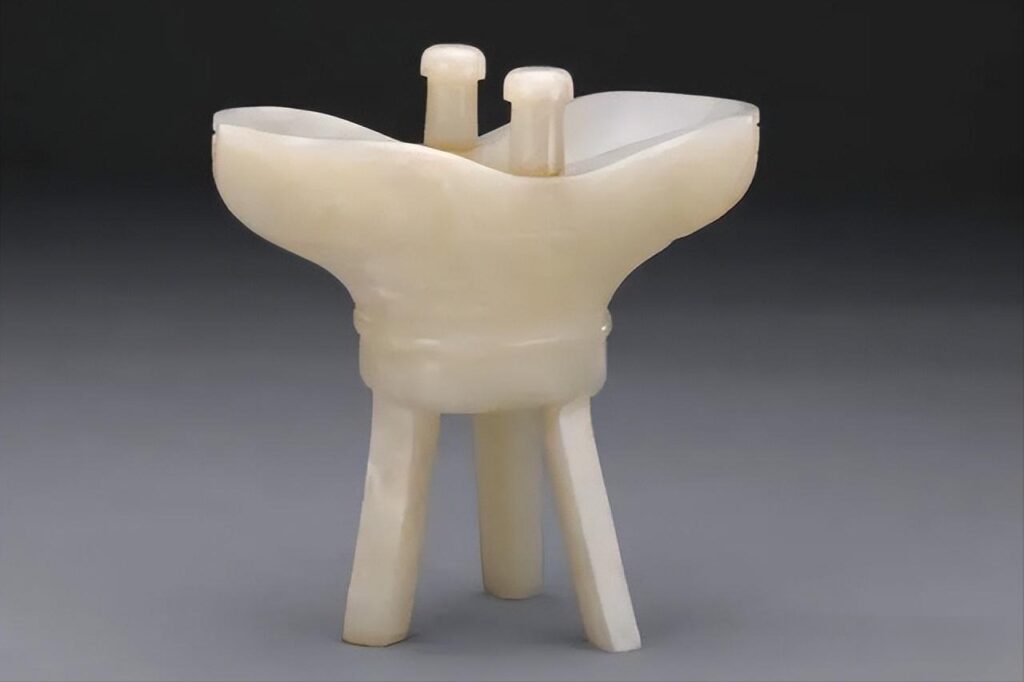
For specific, long-term maintenance advice tailored not only to Serpentine Jade but also to other intricate pieces, we invite you to review our dedicated brand guide: How to Wear and Care for Your Handmade Vintage Jewelry PeonyJewels. Proper handling ensures the stability and longevity of all your cherished accessories.
PeonyJewels’ Perspective: Caring for Your Gems and Jewelry
The “water” within a gemstone mineral, much like the water content in human skin, is invisible yet profoundly affects its appearance.
- The presence of Structural Water in a gem is like the natural, resilient skin of a healthy young adult: fundamentally hydrated, plump, and stable at its core.
- Water of Crystallization is like skin that has undergone a major cosmetic procedure: it looks great, but improper maintenance carries the risk of reverting to its original state.
- Adsorbed Water is akin to a temporary application of a hydrating moisturizer: it briefly enhances the skin’s appearance but is not a lasting change.
By understanding the different types of water your jewelry contains, you are better equipped to care for it and appreciate its true nature. Has this article given you a deeper insight into your cherished jewelry and jade pieces?
💖 Final Conclusion: Embracing Enduring Elegance
By understanding the different types of water your jewelry contains, you are better equipped to care for it and appreciate its true nature. This pursuit of structural stability—the very foundation that ensures a gem’s enduring brilliance—is the core principle behind the artistry of fine jewelry.
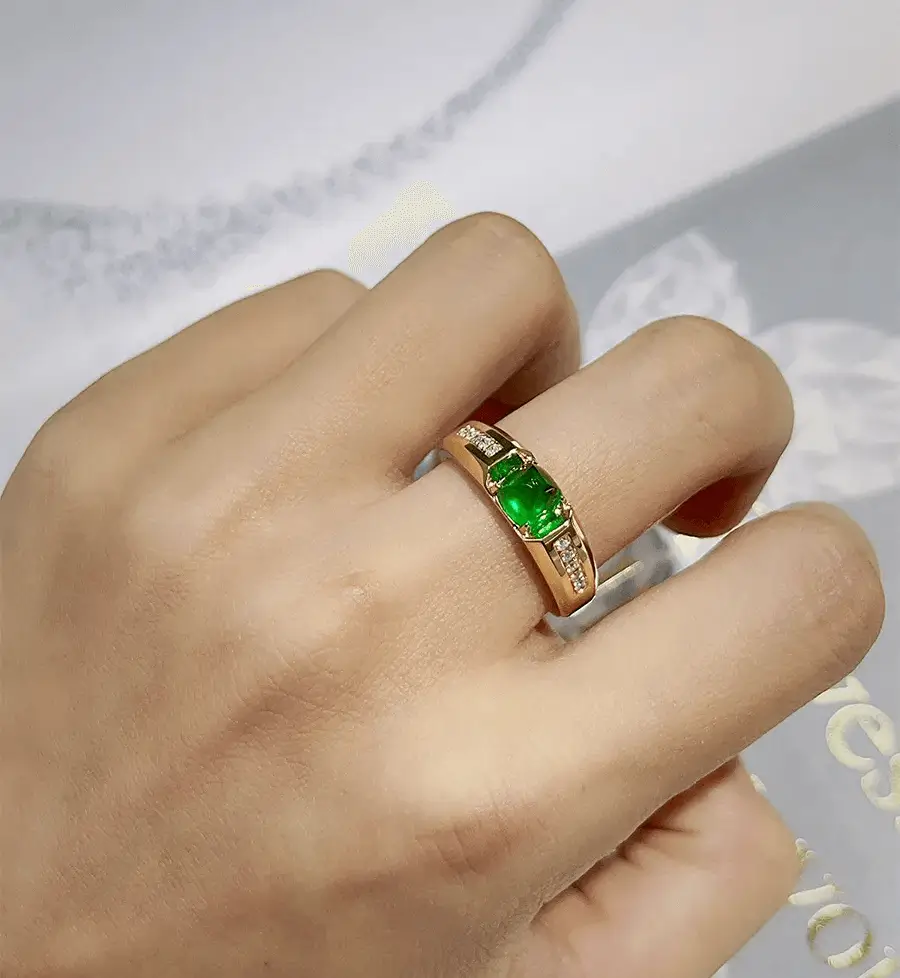
At PeonyJewels, we embody this philosophy. We believe every piece of jewelry should tell a story of lasting beauty and stable quality. That is why we specialize in creating custom pieces and exquisite, handmade vintage earrings that are designed for enduring elegance, reflecting the deep, unchanging beauty found in nature’s most stable forms.
Do you have a specific gemstone in your collection that you’re curious about, or would you like to discuss commissioning a bespoke piece that reflects your personal story? We welcome your inquiries!