Xiu Jade (Xiuyan Jade) Guide: Serpentine, Tremolite, and Why This Ancient Chinese Gem is Underrated
Xiu Jade: The Ancient Gemstone That Shaped Imperial China
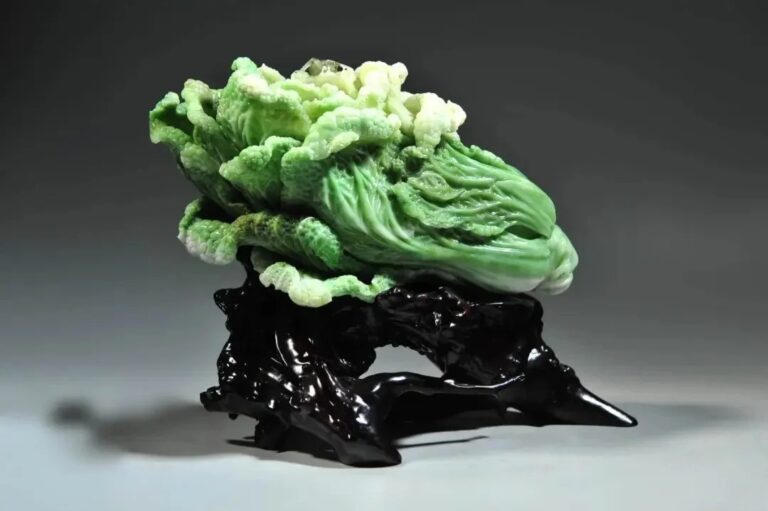
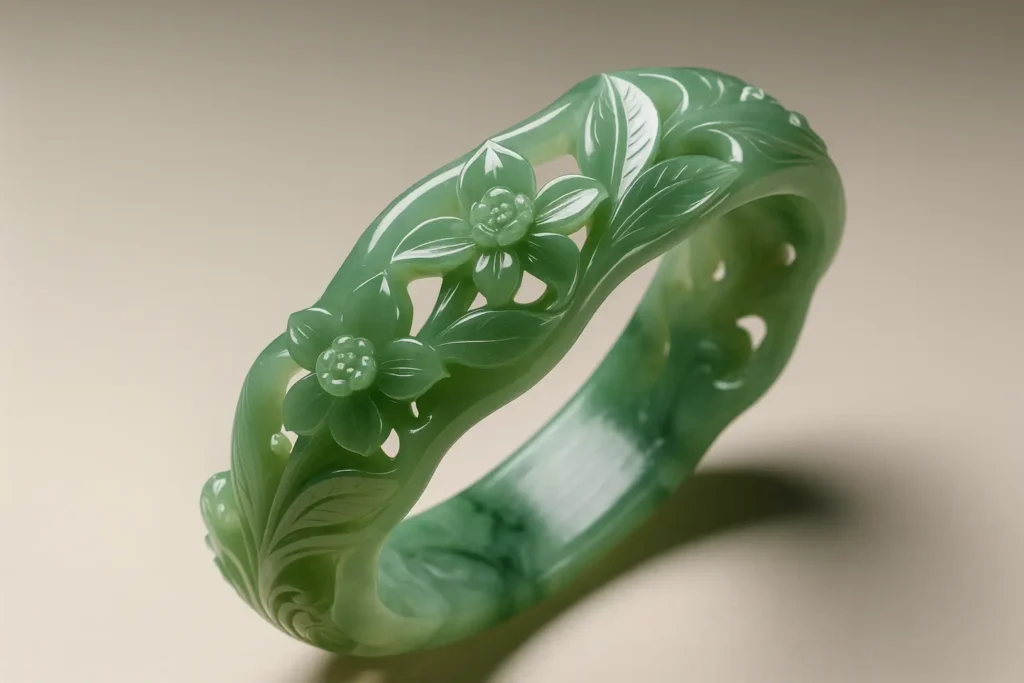
Xiu Jade, one of the Four Great Jades of China—alongside Shaanxi’s Lantian Jade, Xinjiang’s Hetian Jade, and Henan’s Dushan Jade—has a history dating back to the Neolithic Hongshan culture in Liaoning Province. It is a gemstone steeped in tradition, famously used for the imperial Gold-Threaded Jade Suits of the Western Han Dynasty—a testament to its profound cultural role.
Though more accessible and affordable than Hetian Jade today, Xiu Jade remains a fascinating subject. This complete guide will unveil its complex makeup (the key difference between Serpentine vs. Tremolite), explain the reasons behind its unique market position, and provide essential care tips to prevent the dreaded “Running Water” (Pao Shui) phenomenon.
💎 What Exactly is Xiu Jade? (The Mineralogical Definition)
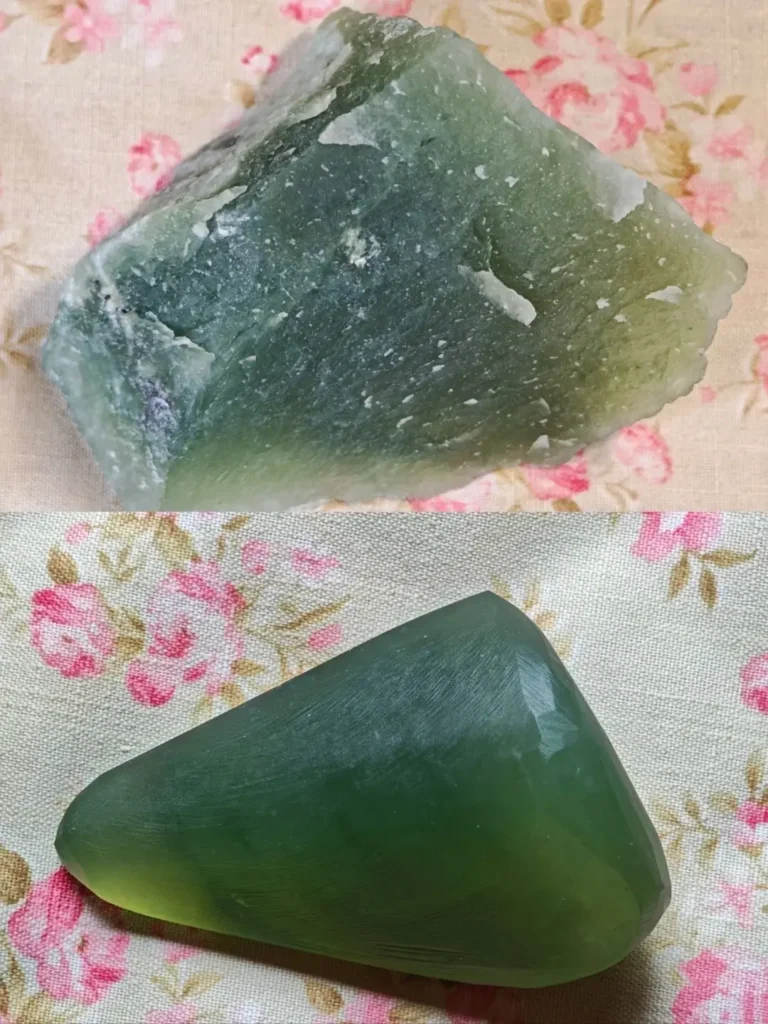
From a mineralogical perspective, “Xiu Jade” is an umbrella term, but it most commonly refers to the Serpentine Jade mined in Liaoning’s Xiuyan area. However, the term also encompasses the Tremolite Jade found in the same region, making it chemically complex.
- Primary Mineral Composition: Predominantly Serpentine, with secondary minerals including calcite, talc, magnetite, and tremolite.
- Color Range: Commonly exhibits beautiful yellow-green, deep green, pure green, grayish-yellow, white, brown, and black hues, often in combination.
- Luster and Texture: It displays a distinctive waxy or greasy luster and boasts a fine, often semi-transparent texture.
- Hardness Challenge: Xiu Jade is classified as a “soft jade.” Its Mohs hardness typically ranges from 2.5 to 5.5, making it significantly softer and more susceptible to wear than other famous jades.
📊 The Two Main Categories of Xiuyan Jade
Xiuyan Jade is typically divided into two major groups based on its mineral composition:
1. Serpentine Jade (The Common/New Xiu Jade)
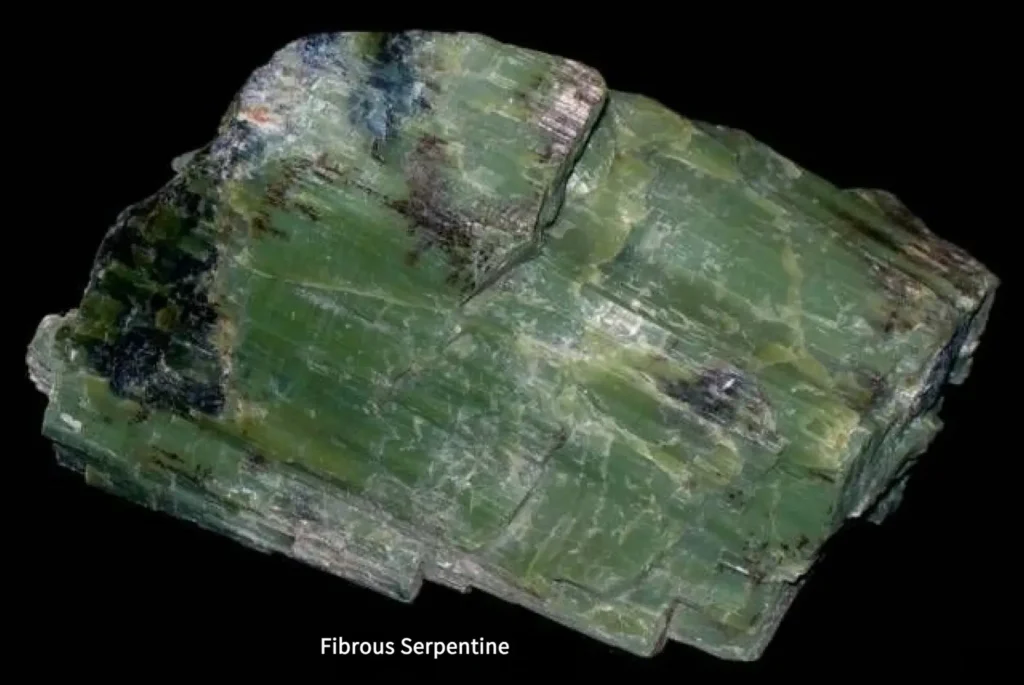
This is the largest and most widely used variety, primarily found in areas like Wagou in Xiuyan County. When people say “Xiu Jade,” this is usually what they are referring to.
- Common Names: Xin Shan Yu (New Mountain Jade), Xin Xiu Yu (New Xiu Jade), or simply Common Serpentine Jade.
- Key Composition: Serpentine.
- Key Characteristics:
- Colors are often fresh and bright, dominated by various shades of green, but also includes red, white, yellow, and black.
- It is generally semi-transparent with a waxy or greasy luster.
- It has the lower hardness, around 2.5–5.5 on the Mohs scale.
- Special Varieties: Huayu (Flower Jade – multi-colored Serpentine Jade) and Jiacui (often called “Cui Yu” – a white-base, green-flecked variety known for its toughness).
2. Tremolite Jade (The Old/Harder Xiu Jade)
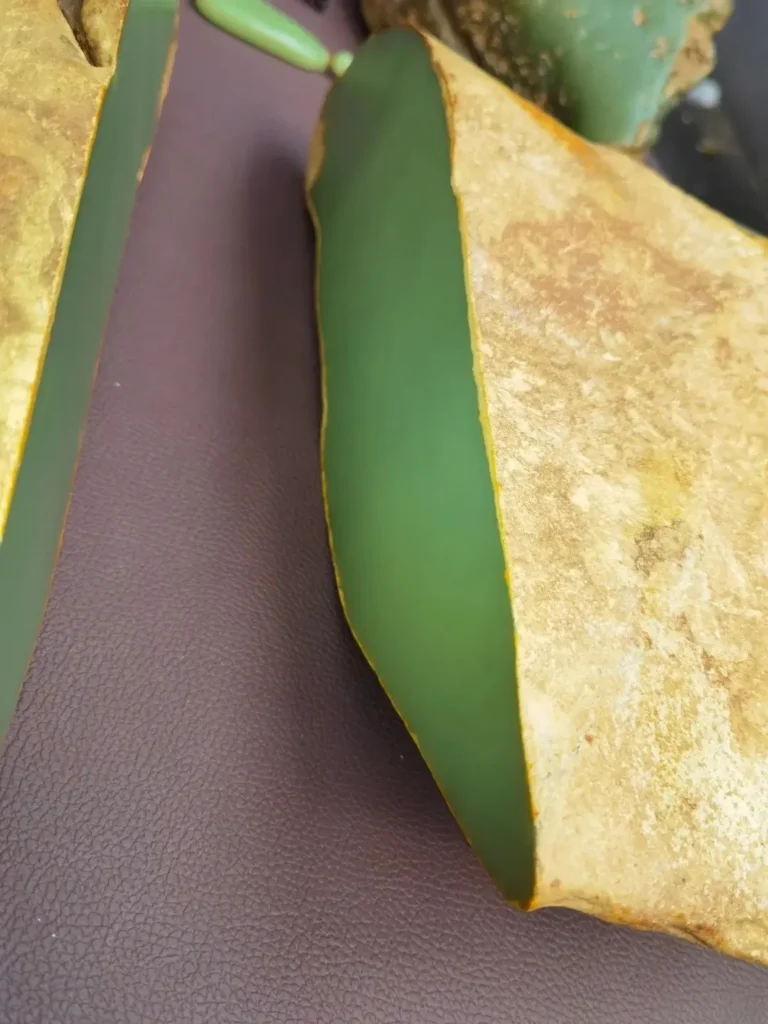
Mainly sourced from Pienling Xiyugou, this variety contains over 95% tremolite and was historically referred to as “true jade” in archaeological contexts.
- Common Names: Xiuyan Soft Jade, Lao Xiu Yu (Old Xiu Jade), or Lao Huang Yu (Old Yellow Jade).
- Key Composition: Tremolite.
- Key Characteristics:
- Colors include yellowish-white, light green, grayish-blue, and black.
- It exhibits a vitreous (glassy) and greasy luster.
- Crucially, it is significantly harder, ranking around 6.0–6.5 on the Mohs scale.
- Classification by Origin:
- Primary Deposits (Mountain Material – Shan Liao): Known as Old Xiu Jade.
- Alluvial Deposits (River Pebbles – Zi Liao): These smooth, water-worn pebbles are famously called He Mo Yu (River-Grinding Jade) and are highly valued.
⚖️ Xiu Jade vs. Hetian/Jadeite: Why Is It Less Expensive?
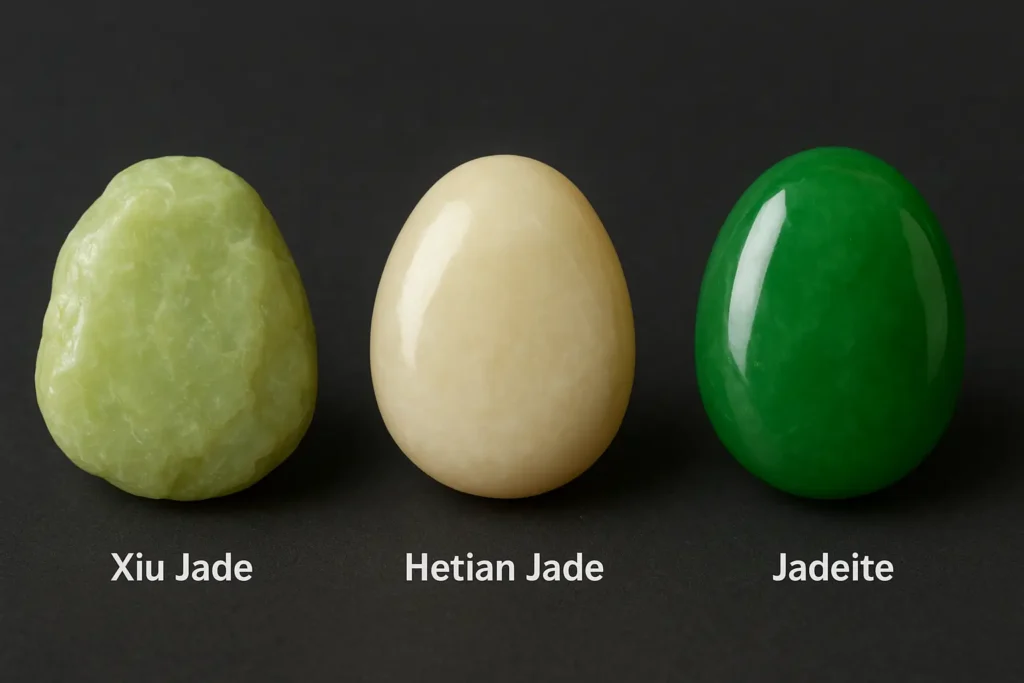
The stark price difference between Xiu Jade, Hetian Jade (nephrite), and Jadeite (jadeite) stems from fundamental geological and cultural differences.
1. Hardness and Stability: The Durability Test
| Characteristic | Xiu Jade (Serpentine) | Hetian Jade (Tremolite) | Jadeite (Hard Jade) | Impact on Value |
| Main Component | Serpentine | Tremolite | Jadeite (Sodium Aluminum Silicate) | More stable components lead to higher value. |
| Mohs Hardness | 2.5 – 5.5 | 6.0 – 6.5 | 6.5 – 7.0 | Hardness determines durability. Low hardness means easy scratching and poor longevity. |
| Toughness | Poor | Excellent | Good | High toughness (like Hetian’s interlocking structure) resists shattering. |
| Luster | Waxy, Greasy | Fine Greasy | Vitreous (Glassy) | Jadeite’s strong, high-transparency luster offers superior visual impact. |
| Stability | Easily affected by acids/alkalines; prone to dulling/discoloration over time. | Highly stable; resists discoloration. | Highly stable; resists discoloration. | Poor stability affects long-term collection value. |
2. Supply and Rarity
- Xiu Jade: Reserves are vast and the yield is high. This abundant supply prevents significant scarcity, keeping overall market prices relatively low.
- Hetian Jade: High-quality zi liao (river pebbles) are extremely rare, and premier Mutton Fat Jade is nearly exhausted. This resource scarcity drives prices to premium levels.
- Jadeite: Top-grade “Old Pit” material, especially the highly coveted “Imperial Green,” is sourced from a single, limited region (Myanmar), creating a monopoly on a highly scarce, high-value resource.
3. Cultural and Historical Status
- Hetian Jade: Occupies the ultimate core position in Chinese culture. Used for millennia as a symbol of virtue (“The Gentleman Compares Virtue to Jade”), its deep historical and cultural value commands premium prices.
- Jadeite: Introduced in the mid-Qing Dynasty, it quickly became the “King of Jade.” Its vibrant greens appealed to Chinese aesthetics, establishing modern gemstone value standards.
- Xiu Jade: Although one of the earliest jades used in China (dating back to the Hongshan culture), its lower hardness and softer nature led to it being gradually replaced by the more durable and stable Hetian Jade in subsequent dynasties. It lacks the continuous, high-end market dominance of the other two.
In Short: Hetian Jade and Jadeite are the “hard currency” of the jade world due to their superior hardness, durability, stability, and scarcity. Xiu Jade, while historically important, remains a more accessible, lower-grade material in the current high-end collector market.
It is worth noting, however, that the hardest, rarest forms of Xiu Jade—such as River-Grinding Jade (He Mo Yu)—can still command significant value due to their exceptional quality and historical significance.
📚 Deep Dive: Related Jades
Now that you’ve learned about the value and characteristics of Xiu Jade, we encourage you to continue exploring the two major authorities of the Chinese jade world: Hetian Jade (Nephrite) and Jadeite.
- Hetian Jade: The Truth Behind “Miracle Whitening” and Other Hetian Jade Forgery Techniques
- Jadeite: How to Identify Natural Jadeite: Color, Texture & Authenticity
💧 The Mystery of “Running Water” in Xiu Jade
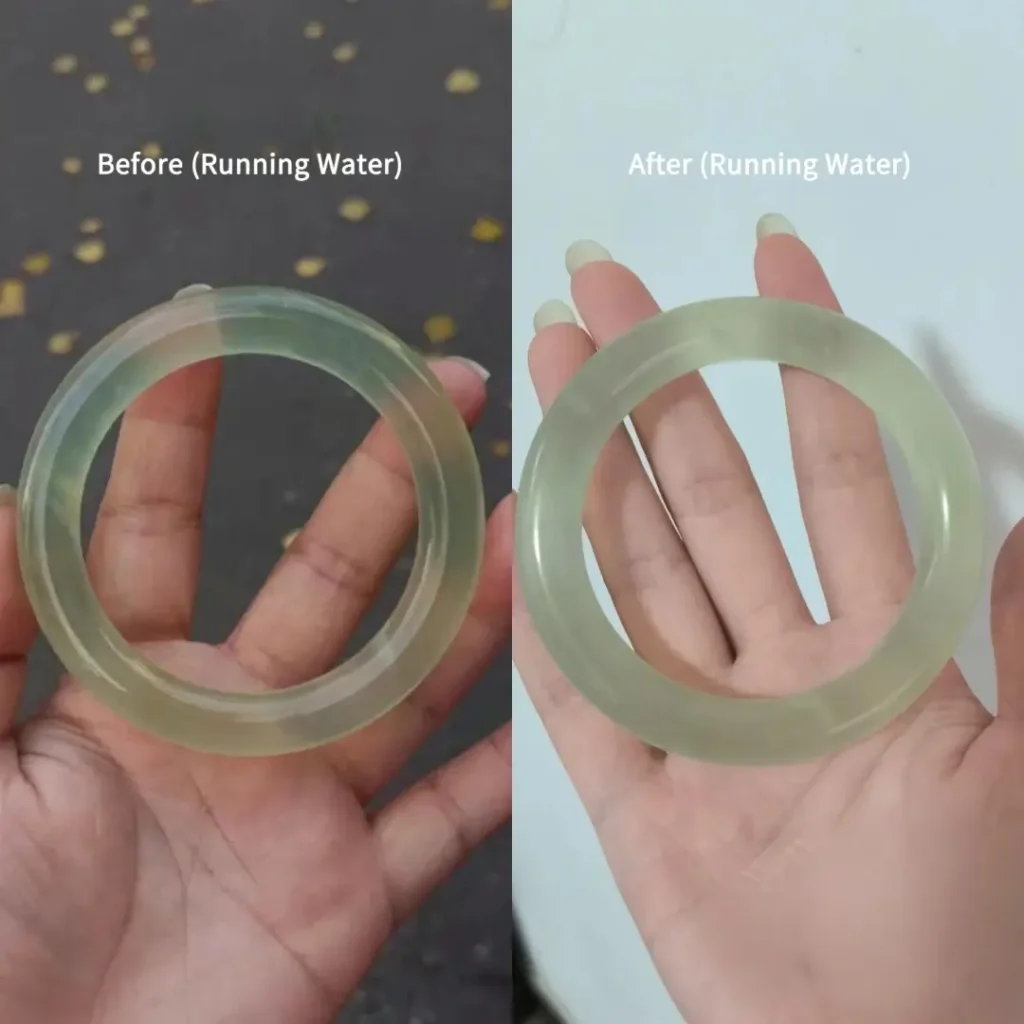
You may hear the term “Running Water” (Pao Shui) in the jade community. This vividly describes the phenomenon where Xiu Jade, particularly Serpentine Jade, loses its luster and develops a dry, dull surface when improperly stored or worn.
How Does Xiu Jade “Run Water”?
The issue lies in Xiu Jade’s mineral composition, specifically that of Serpentine:
- Hydrated Mineral Structure: Serpentine is a hydrated magnesium silicate mineral. Its chemical formula includes hydroxyl groups ($OH^-$), meaning its crystal structure naturally contains bound water (crystallization water).
- Porous Structure: Unlike the dense, interlocking grain structure of Hetian Jade and Jadeite, Serpentine has a layered or fibrous structure. This leaves behind microscopic pores and fissures within the jade.
- Loss of Free Water: These pores hold free water (the “moisture” people associate with jade’s luster). When exposed to certain conditions, this free water—and even some bound water—evaporates through the micro-pores:
- Dry Environments: Long-term storage in dry, well-ventilated areas causes internal moisture to evaporate outwards.
- High Temperatures: Exposure to direct sunlight or heat sources accelerates this evaporation.
- Chemical Exposure: Contact with harsh soaps or chemicals can strip the jade’s surface oils/wax, further accelerating moisture loss.
Once this moisture is gone, the surface luster diminishes, and the jade looks dull and dry—it has “run water.”
💡 Preventing and Reversing “Running Water”
Since the issue is moisture loss, the best remedy is replenishment and moisture retention.
1. Prevention (Daily Care)
- Wear It Often: Your skin’s natural oils and sweat are the best conditioners. They gently penetrate the jade’s micro-pores, providing “oil nourishment” and maintaining luster.
- Avoid Dryness/Heat: When not worn, store the jade in a relatively humid environment or wrap it in a soft cloth and place it in an enclosed box. Avoid direct sun or proximity to heat sources.
- Keep Away from Chemicals: Remove your Xiu Jade jewelry before showering, washing dishes, or engaging in any activity that involves contact with acids or soaps.
2. Remedy (Hydration Methods)
If your Xiu Jade appears dull or dry, you can try to restore its moisture:
- Soaking: Immerse the piece in clean, distilled water for several hours or up to a day to allow it to fully absorb water. Remove and dry with a soft cloth.
- Oiling: Apply a thin layer of stable, colorless, and odorless oil (such as baby oil, petroleum jelly, or professional jade maintenance oil) to the surface. Gently polish the jade with a soft cloth to help the oil penetrate and sustain the luster.
- Consistent Wearing: The most effective long-term solution is to consistently wear and handle the piece, allowing your body’s natural oils to provide continuous nourishment.
🔬 Common Treatments and Enhancements for Xiu Jade
Due to its relative softness and porous nature, Xiu Jade frequently undergoes treatments (unstable changes) and enhancements (stable, traditional improvements) to improve its look and stability.
1. Dyeing (Color Treatment) – The Most Common
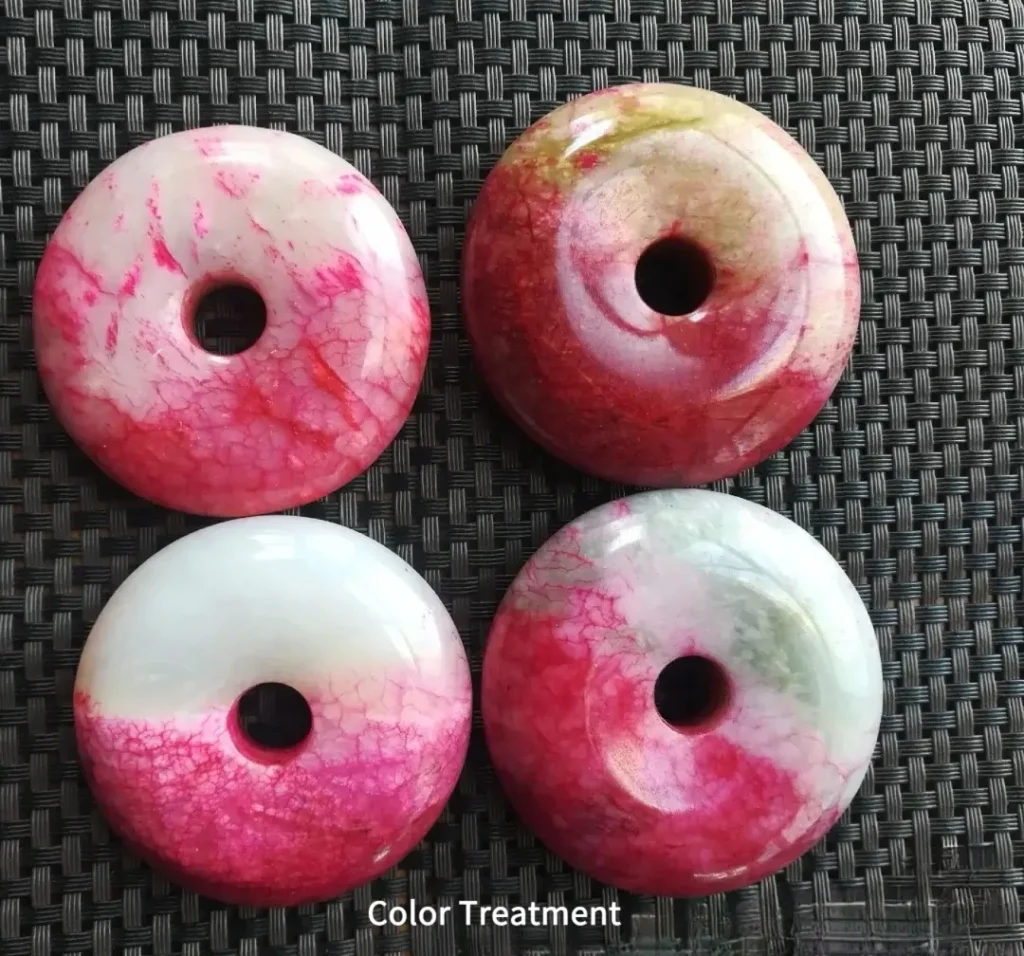
Dyeing is the most frequent treatment, often intended to mimic the rich, valuable green of high-end Jadeite or Hetian Jade.
- Goal: To achieve brighter, more uniform, or more desirable colors.
- Method: The jade is often acid-washed to open or enlarge surface micro-pores, then immersed in a dye solution to force the color into the stone.
- Identification Clues:
- Color often appears too bright or unnatural, lacking the subtle layers of natural color.
- Under magnification, the dye will be concentrated in fissures or grain boundaries, appearing as a net-like or dotted pattern.
- The color may fade or bleed over time, especially when exposed to chemicals.
2. Waxing/Oiling (Enhancement) – Generally Acceptable
The jade industry universally accepts this enhancement for most jades, especially to improve surface quality.
- Goal: To fill minor surface porosity, enhance surface luster (the greasy look), and mask tiny fissures.
- Method: The jade is heated and immersed in melted natural wax or polished with oil, allowing the substance to coat the surface and fill shallow cracks.
- Identification Clues: Can sometimes feel “greasy” to the touch. A hot needle test will cause the wax to melt and run (Note: Only authorized labs should perform destructive tests).
3. Resin Impregnation/Filling (Stability Treatment)
Manufacturers typically use this treatment for lower-quality Xiu Jade that has excessive cracks and poor stability.
- Goal: To inject colorless, transparent polymer resins (like epoxy) into internal cracks and pores to significantly increase stability and hardness, improve transparency, and prevent “running water.”
- Method: Resin is forced into the jade under vacuum or high pressure.
- Identification Clues:
- Magnification may reveal a clear, glue-like substance or tiny bubbles within the cracks.
- The surface luster might appear “plastic-like.”
- The resin may fluoresce yellow-green or blue-white under a UV light.
Warning: Resin-filled Xiu Jade is often referred to as B-Grade Xiu Jade, similar to the concept of B-Grade Jadeite, and holds significantly reduced value.
🛍️ How to Buy Quality Natural Xiu Jade (A-Grade)
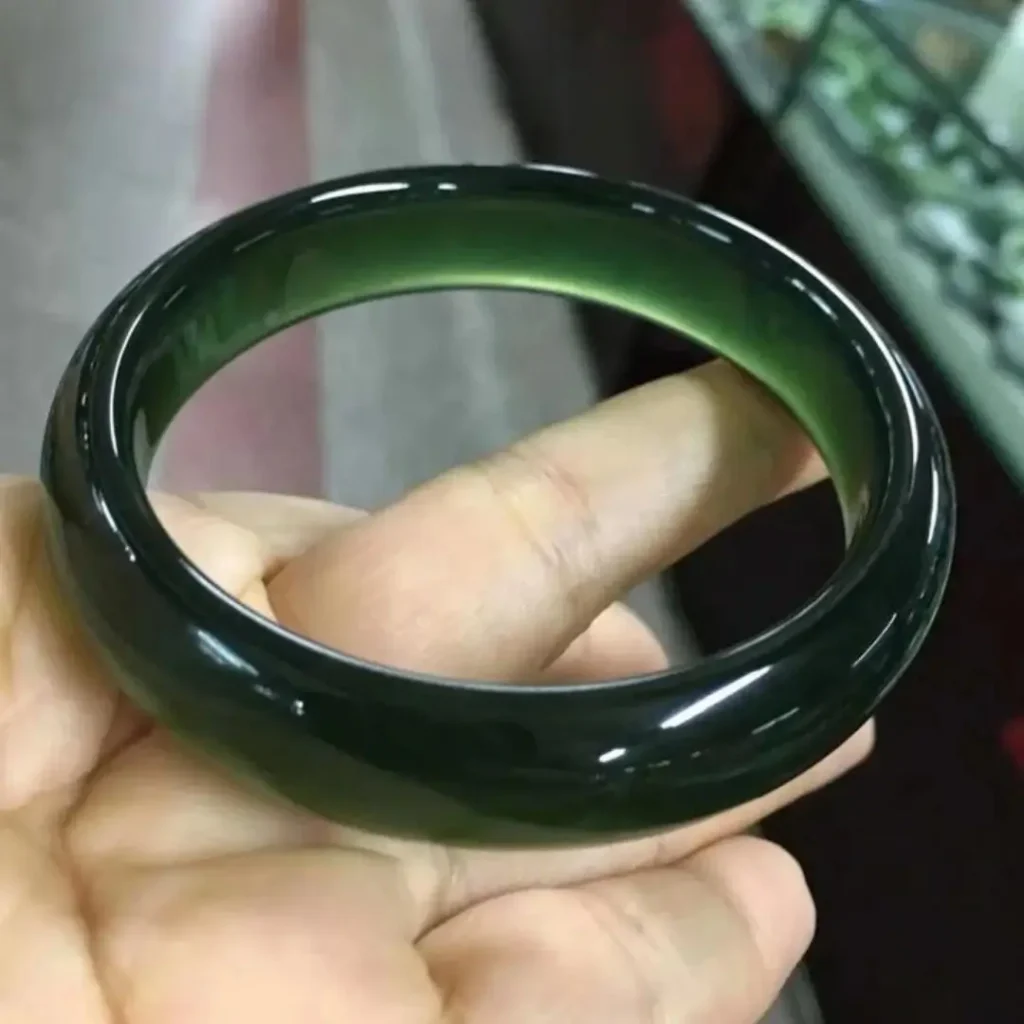
The secret to purchasing high-quality, natural Xiu Jade lies in identifying the variety, checking for treatments, and prioritizing excellent texture.
1. Select Your Variety
- Collector Grade (High Price): Focus on River-Grinding Jade (He Mo Yu) or Old Xiu Jade (Lao Xiu Yu). These Tremolite varieties offer higher hardness, tighter structure, and the best oil-rich texture, securing the highest value.
- Practical Grade (Mid-Low Price): Choose high-quality Serpentine Jade (Xin Shan Yu). These are brightly colored, have good transparency (“water head”), and are excellent for carvings and everyday wear.
2. Spotting Treatments (Avoid B-Grade)
Top-quality natural Xiu Jade (A-Grade) should only have undergone polishing and waxing (enhancement), never dyeing or resin filling (treatment).
| Check Point | Natural Xiu Jade (A-Grade) | Dyed/Filled Xiu Jade (Treated/B-Grade) |
| Color | Natural, layered, and transitions smoothly. | Too bright or uniform; color is concentrated in the fissures. |
| Luster | Has a natural waxy or greasy luster. | Filling can create a strange, plastic-like or overly glassy luster. |
| Magnification | Structure appears naturally dense. | Glue-like filling material or dye particles are visible in pores/cracks. |
| Touch | Feels delicate and warm/moist (if well-maintained). | Filled pieces might feel “dull” or less tactile. |
3. Core Quality Factors
- Luster/Moisture (Wen Run Du): Good Xiu Jade (especially River Jade) should have a greasy luster and feel warm and delicate, not dry (“run water”).
- Color: Opt for pieces with uniform, bright color and minimal discoloration. For Serpentine, look for emerald green or yellow-green; for Tremolite, yellowish-white is prized.
- Clarity: The best pieces have minimal internal “cotton” (structural inclusions), flaws, cracks, or black spots (magnetite impurities).
- Hardness (for collectors): If budget allows, always choose the harder Tremolite varieties (Lao Yu or He Mo Yu), as they are more durable and collectible.
Our Recommendation: Always insist on a certificate of authenticity from an accredited laboratory. The certificate will clearly state the mineral composition and explicitly list any “treatments” such as dyeing or resin filling.
💖 Beyond the Guide: Bringing Ancient Beauty into Modern Style
Whether you choose the durable Tremolite variety for your collection or the vibrant Serpentine for daily enjoyment, Xiu Jade offers a unique connection to China’s deep history without the prohibitive cost of Hetian Jade.
💡 Your Vision, Crafted
If the ancient spirit of Xiu Jade has sparked a singular jewelry idea—whether it’s an heirloom concept or a specific color story—don’t keep it a dream. PeonyJewels offers bespoke design services dedicated to bringing your unique vision to life. Let’s create your perfect piece, together.
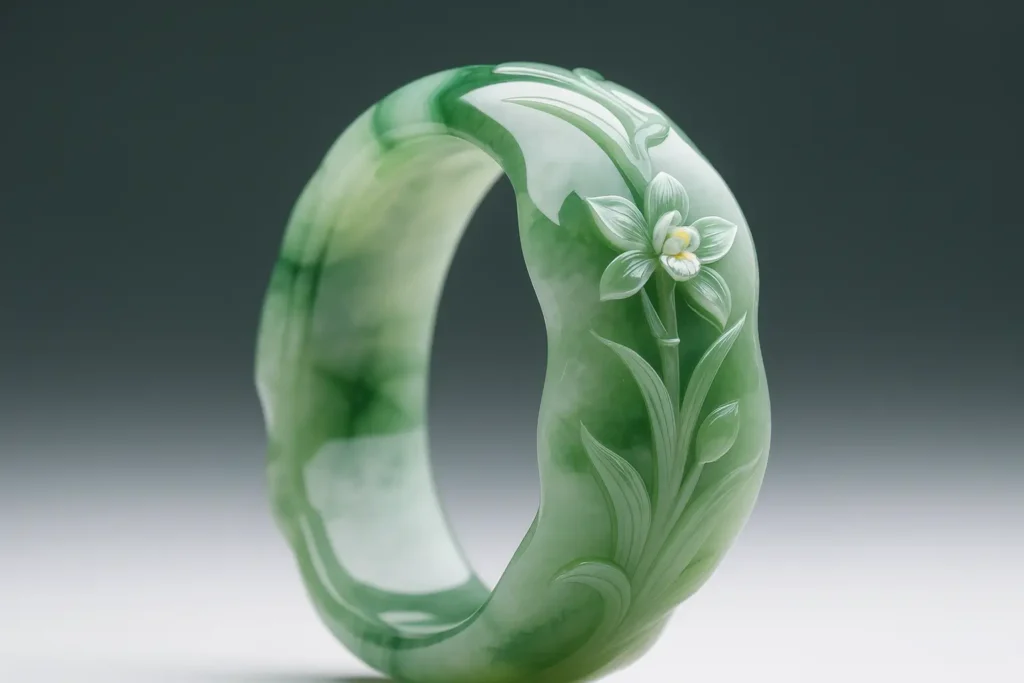
✨ Explore PeonyJewels: Elegance for Every Day
For those who cherish understated elegance and believe in the beauty of the everyday, we invite you to discover PeonyJewels.
Explore our signature line of handmade vintage earrings. Our original designs focus on pieces that are sophisticated yet simple, crafted to effortlessly elevate your daily style with timeless grace.